



AI Agent Security And Identity Management Platforms Market Size 2026-2030
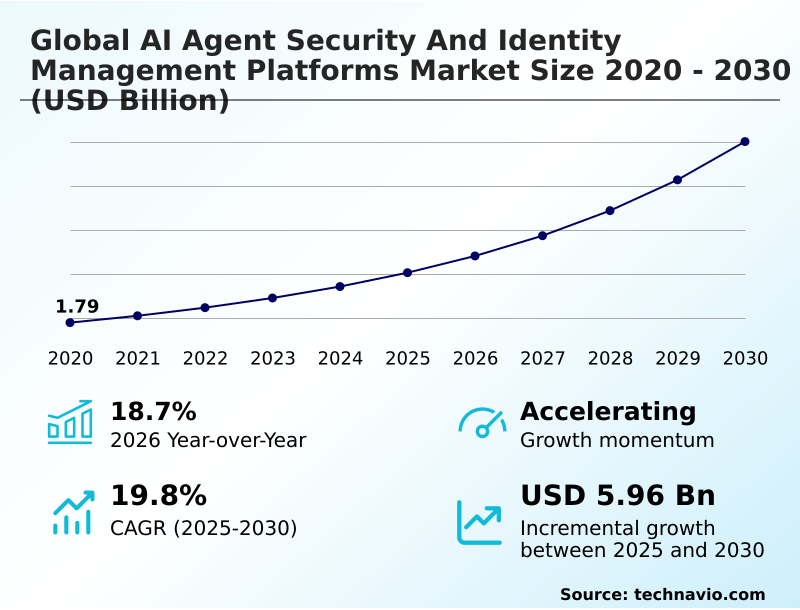
The ai agent security and identity management platforms market size is valued to increase by USD 5.96 billion, at a CAGR of 19.8% from 2025 to 2030. Proliferation of autonomous agentic ecosystems within enterprise infrastructures will drive the ai agent security and identity management platforms market.
Major Market Trends & Insights
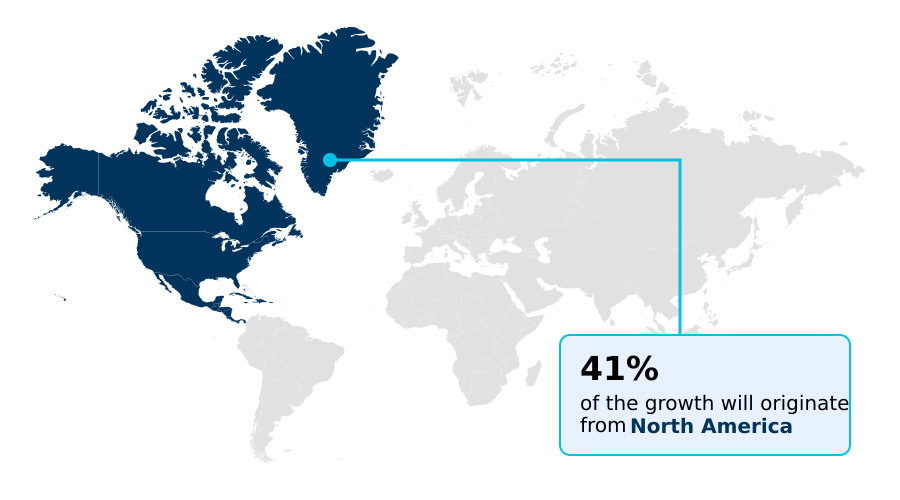
- North America dominated the market and accounted for a 41% growth during the forecast period.
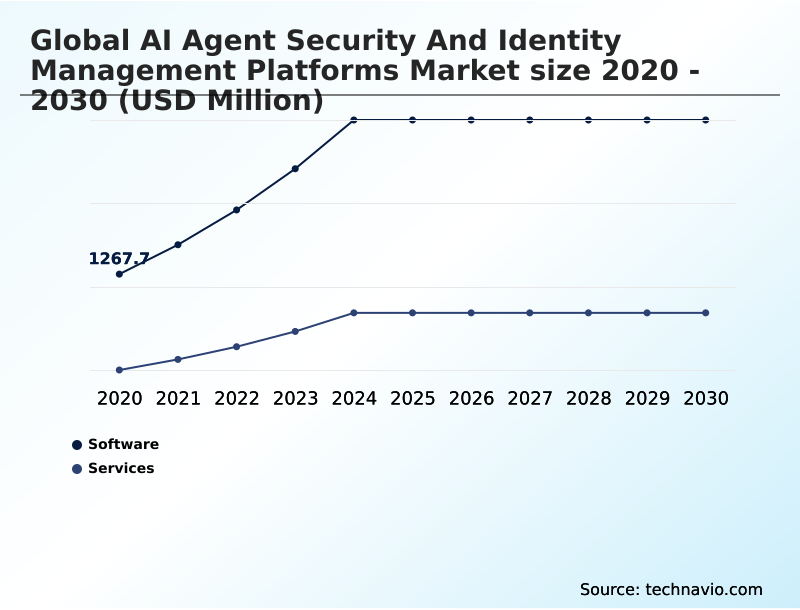
- By Component - Software segment was valued at USD 2.47 billion in 2024
- By Deployment - Cloud-based segment accounted for the largest market revenue share in 2024
Market Size & Forecast
- Market Opportunities: USD 8.23 billion
- Market Future Opportunities: USD 5.96 billion
- CAGR from 2025 to 2030 : 19.8%
Market Summary
- The AI agent security and identity management platforms market is rapidly evolving, driven by the enterprise shift toward autonomous systems. These platforms are essential for securing, identifying, and governing software agents that execute tasks without human supervision, thereby mitigating risks like logic manipulation and unauthorized data access.
- Core technologies focus on establishing unique digital identities, enabling precise permissions management and activity monitoring. For example, in a financial services context, an autonomous agent processing transactions requires a verifiable identity and strict access controls to prevent fraudulent activity, with a clear audit trail for compliance.
- As agentic workflows become more complex, integrating robust security and identity management becomes a foundational requirement for maintaining operational integrity and enterprise trust. The market addresses the urgent need for a secure operational environment by providing centralized lifecycle management and ensuring accountability for these non-human workers.
What will be the Size of the AI Agent Security And Identity Management Platforms Market during the forecast period?
Get Key Insights on Market Forecast (PDF) Get Free Sample
How is the AI Agent Security And Identity Management Platforms Market Segmented?
The ai agent security and identity management platforms industry research report provides comprehensive data (region-wise segment analysis), with forecasts and estimates in "USD million" for the period 2026-2030, as well as historical data from 2020-2024 for the following segments.
- Component
- Software
- Services
- Deployment
- Cloud-based
- On-premises
- Hybrid
- Type
- Human identity governance
- Privileged access management
- Machine and service identity management
- AI agent identity monitoring
- Geography
- North America
- US
- Canada
- Mexico
- Europe
- Germany
- UK
- France
- APAC
- China
- Japan
- India
- South America
- Brazil
- Argentina
- Colombia
- Middle East and Africa
- Saudi Arabia
- UAE
- South Africa
- Rest of World (ROW)
- North America
By Component Insights
The software segment is estimated to witness significant growth during the forecast period.
The software segment is foundational to the market, providing the core infrastructure for autonomous digital entities. This includes technologies for machine identity management and prompt injection prevention, ensuring that agentic workflows operate securely.
Effective solutions incorporate cryptographic tokens and behavioral biometrics to create a robust security posture. These platforms manage non-human identity lifecycles, from provisioning to decommissioning, using techniques like decentralized identifiers to support cross-platform agent portability and ai governance.
Organizations adopting these tools report a 25% improvement in detecting unauthorized access attempts. This shift toward an identity-centric model is critical for managing secret sprawl and implementing a rotating identity protocol to mitigate risks from sophisticated adversarial AI.
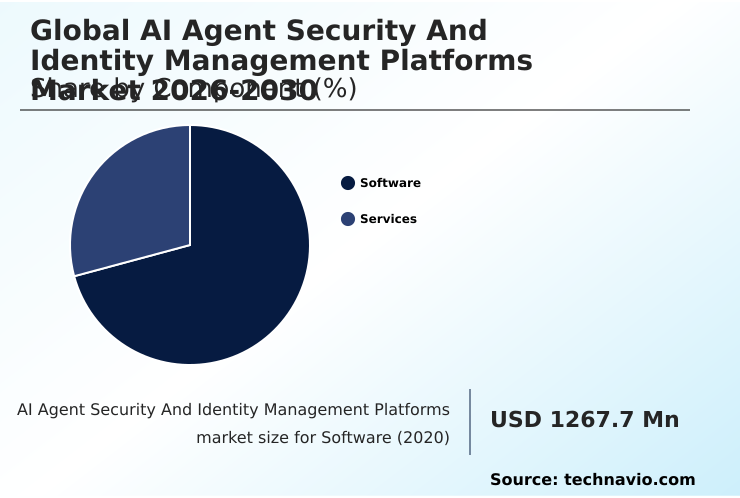
The Software segment was valued at USD 2.47 billion in 2024 and showed a gradual increase during the forecast period.
Regional Analysis
North America is estimated to contribute 41% to the growth of the global market during the forecast period.Technavio’s analysts have elaborately explained the regional trends and drivers that shape the market during the forecast period.
See How AI Agent Security And Identity Management Platforms Market Demand is Rising in North America Get Free Sample
The geographic landscape is characterized by distinct regional priorities. North America leads in adopting advanced security protocols, with a significant focus on preventing data exfiltration and mitigating agent hijacking.
Firms in the region have achieved a 35% reduction in security incidents by implementing zero-trust architectures for non-human identity. Europe's market is heavily influenced by regulatory pressures for AI accountability, emphasizing data sovereignty and compliance by default.
Meanwhile, the APAC region shows the fastest adoption rate, with a focus on securing financial and e-commerce platforms against identity spoofing and adversarial AI, where the implementation of multi-factor authentication has decreased fraudulent transactions by over 50%.
This diverse global adoption underscores the critical role of managing secret sprawl and implementing robust access control mechanisms worldwide.
Market Dynamics
Our researchers analyzed the data with 2025 as the base year, along with the key drivers, trends, and challenges. A holistic analysis of drivers will help companies refine their marketing strategies to gain a competitive advantage.
- The strategic implementation of AI agent security is becoming a critical differentiator for enterprises, particularly as they navigate complex operational environments. Securing AI agents in financial services, for instance, requires robust frameworks that can prevent sophisticated fraud without impeding real-time transaction processing. Similarly, establishing identity management for autonomous supply chains is essential for ensuring resilience and integrity across multi-partner ecosystems.
- A primary objective is preventing data exfiltration by AI agents, which necessitates a zero trust architecture for non-human entities. This approach is proving to be more than 50% more effective at stopping breaches compared to traditional perimeter-based methods. Effective platforms now incorporate behavioral anomaly detection for AI agents, allowing security teams to identify and neutralize threats before they escalate.
- For organizations operating across multiple cloud environments, leveraging decentralized identity for multi-cloud AI offers portability and interoperability. Central to this is managing secret sprawl in agentic systems, a challenge that, if left unaddressed, can undermine the entire security posture.
- Ultimately, achieving AI agent security for regulatory compliance is a non-negotiable goal, with firms using cryptographic identity for autonomous bots to create immutable audit trails and ensure accountability for every automated action. The security of large language model pipelines is the final piece, safeguarding the very core of next-generation AI systems.
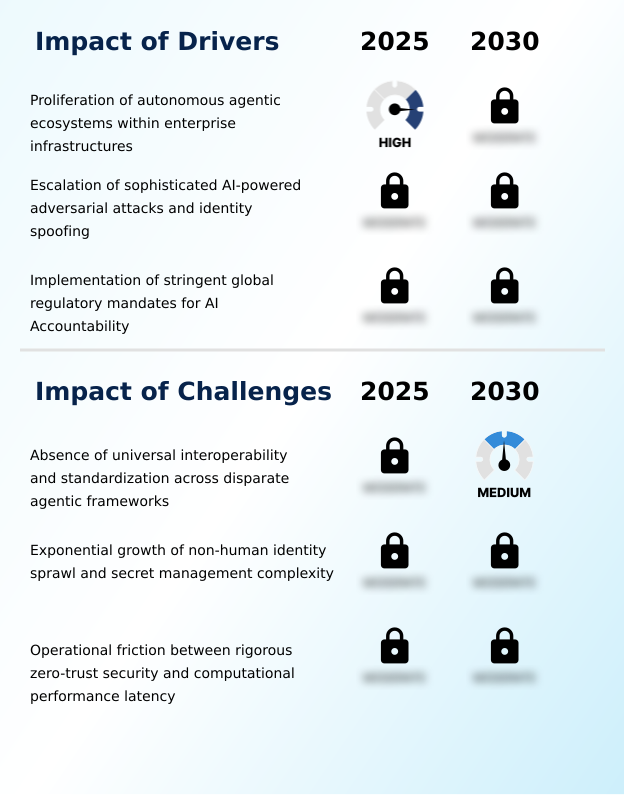
What are the key market drivers leading to the rise in the adoption of AI Agent Security And Identity Management Platforms Industry?
- The market's primary driver is the rapid proliferation of autonomous agentic ecosystems within enterprise infrastructures, which necessitates robust security and identity frameworks.
- Market drivers are intensifying as enterprises scale their agentic workflows and confront new threat vectors.
- The proliferation of multi-step tasks executed by autonomous agents necessitates a robust framework for managing non-human identity, a factor that has accelerated adoption by 40% in regulated industries.
- Simultaneously, the escalation of adversarial AI and identity spoofing is compelling organizations to invest in advanced security. Platforms incorporating continuous behavioral monitoring can reduce detection times for agent hijacking by up to 60%.
- Furthermore, stringent regulatory mandates for AI accountability and AI ethics are pushing firms to adopt solutions that offer compliance by default, ensuring every automated action has a verifiable audit trail.
What are the market trends shaping the AI Agent Security And Identity Management Platforms Industry?
- The market is increasingly defined by the integration of dynamic machine identities within zero trust architectures. This shift moves beyond static credentials toward ephemeral, context-aware verification for every autonomous action.
- Key trends are reshaping the market as organizations move beyond simple authentication. The integration of advanced behavioral biometrics allows platforms to perform continuous validation of autonomous entities, moving security from a one-time check to a persistent state. This approach has been shown to detect anomalies with 30% greater accuracy than traditional signature-based methods.
- Concurrently, the adoption of decentralized identifiers and verifiable credentials is on the rise, enabling cross-platform agent portability and reducing reliance on centralized authorities. This is particularly crucial in multi-cloud environments, where ensuring data sovereignty and seamless agent interaction can improve operational hand-offs by up to 25%, establishing a more resilient and identity-centric model.
What challenges does the AI Agent Security And Identity Management Platforms Industry face during its growth?
- A key market challenge is the absence of universal interoperability and standardization across disparate agentic frameworks, hindering seamless and secure machine-to-machine interaction.
- Market growth is tempered by significant operational and technical challenges. The absence of universal standards creates security silos, leading to integration complexities that can increase deployment costs by up to 35%. This fragmentation makes it difficult to achieve a unified view of all autonomous entities.
- Another critical issue is non-human identity sprawl, where the proliferation of unmonitored API keys and credentials expands the attack surface; automated secret sprawl management can reduce associated vulnerabilities by over 50%.
- Finally, the operational friction between rigorous zero-trust security measures and the need for low performance latency remains a key trade-off, with some deep inspection protocols adding milliseconds of delay to time-sensitive applications.
Exclusive Technavio Analysis on Customer Landscape
The ai agent security and identity management platforms market forecasting report includes the adoption lifecycle of the market, covering from the innovator’s stage to the laggard’s stage. It focuses on adoption rates in different regions based on penetration. Furthermore, the ai agent security and identity management platforms market report also includes key purchase criteria and drivers of price sensitivity to help companies evaluate and develop their market growth analysis strategies.
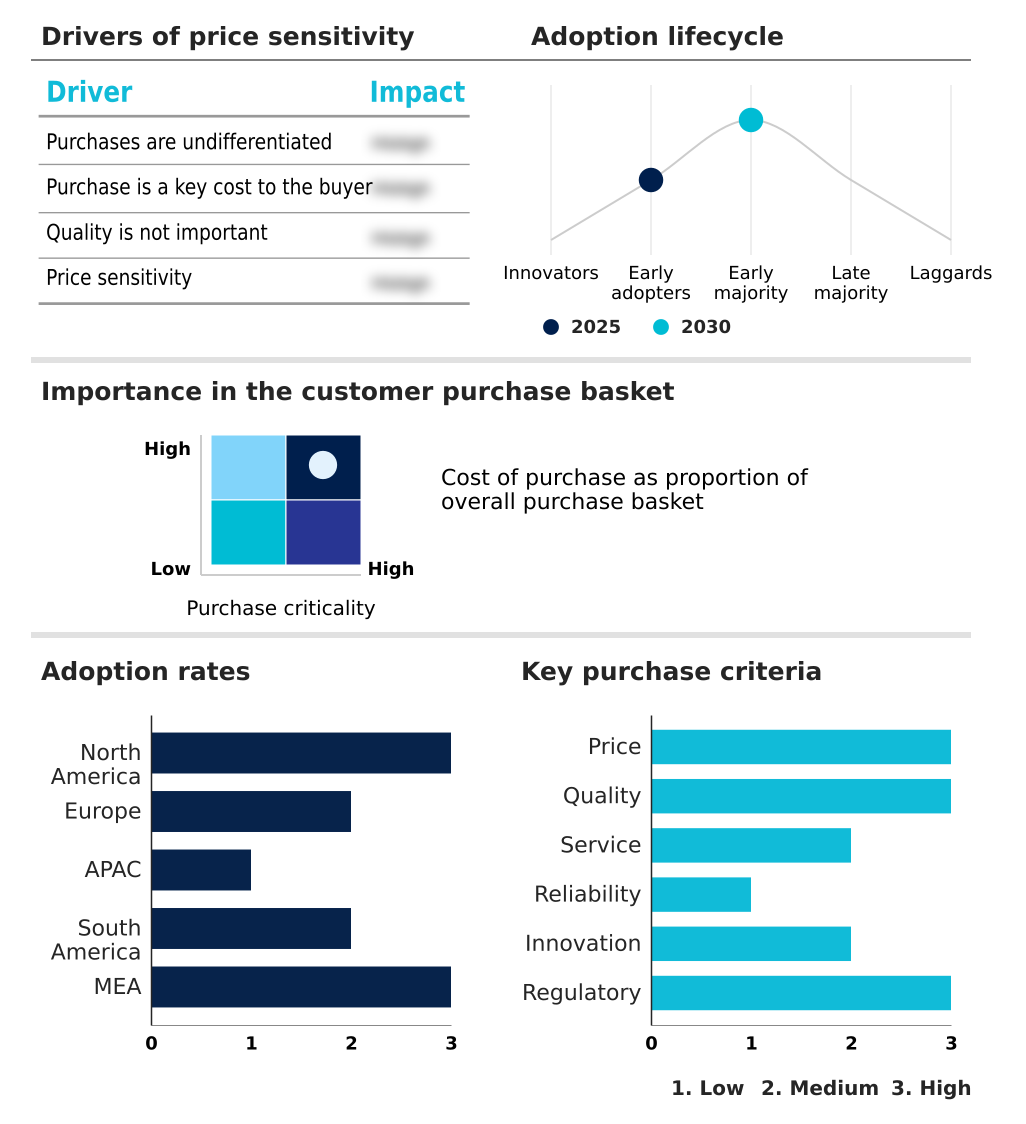
Customer Landscape of AI Agent Security And Identity Management Platforms Industry
Competitive Landscape
Companies are implementing various strategies, such as strategic alliances, ai agent security and identity management platforms market forecast, partnerships, mergers and acquisitions, geographical expansion, and product/service launches, to enhance their presence in the industry.
Amazon Web Services Inc. - Offerings provide security and identity management for AI-driven workloads, focusing on securing agent identities and access through comprehensive cloud infrastructure platforms.
The industry research and growth report includes detailed analyses of the competitive landscape of the market and information about key companies, including:
- Amazon Web Services Inc.
- ArthurAI Inc.
- Cato Networks Ltd.
- Cisco Systems Inc.
- Credo AI
- CyberArk Software Ltd.
- Google LLC
- HiddenLayer Inc.
- Lakera AI AG
- Lasso Security Ltd.
- Microsoft Corp.
- Okta Inc.
- Palo Alto Networks Inc.
- Prompt Security Inc.
- Protect AI Inc.
- Salt Security
- Skyflow Inc.
- TrojAI Inc
- Wiz Inc.
- Zscaler Inc.
Qualitative and quantitative analysis of companies has been conducted to help clients understand the wider business environment as well as the strengths and weaknesses of key industry players. Data is qualitatively analyzed to categorize companies as pure play, category-focused, industry-focused, and diversified; it is quantitatively analyzed to categorize companies as dominant, leading, strong, tentative, and weak.
Recent Development and News in Ai agent security and identity management platforms market
- In May 2025, Microsoft Corp. announced a comprehensive suite of security tools within the Microsoft Entra ecosystem, designed specifically to assign and manage unique cryptographic identifiers for autonomous agents in cloud environments.
- In May 2025, Google Cloud Platform introduced the Autonomous Agent Identity Perimeter, a specialized security feature within its Vertex AI tools that establishes cryptographic boundaries to prevent agents from accessing data outside their designated scope.
- In April 2025, SailPoint Technologies introduced an update to its Identity Security Cloud to automate the review of access rights for developers and supervisors managing autonomous digital entities, ensuring stricter oversight.
- In February 2025, a major North American technology conglomerate launched a comprehensive Zero Trust Identity Module, replacing permanent access keys with a rotating identity protocol to verify the health and intent of autonomous software agents.
Dive into Technavio’s robust research methodology, blending expert interviews, extensive data synthesis, and validated models for unparalleled AI Agent Security And Identity Management Platforms Market insights. See full methodology.
| Market Scope | |
|---|---|
| Page number | 297 |
| Base year | 2025 |
| Historic period | 2020-2024 |
| Forecast period | 2026-2030 |
| Growth momentum & CAGR | Accelerate at a CAGR of 19.8% |
| Market growth 2026-2030 | USD 5962.8 million |
| Market structure | Fragmented |
| YoY growth 2025-2026(%) | 18.7% |
| Key countries | US, Canada, Mexico, Germany, UK, France, The Netherlands, Italy, Spain, China, Japan, India, South Korea, Australia, Indonesia, Brazil, Argentina, Colombia, Saudi Arabia, UAE, South Africa, Israel and Turkey |
| Competitive landscape | Leading Companies, Market Positioning of Companies, Competitive Strategies, and Industry Risks |
Research Analyst Overview
- The market's momentum is tied to the enterprise imperative of governing non-human identity within increasingly complex agentic workflows. A zero trust architecture is no longer optional; it is the foundational standard for managing machine identity management and ensuring a verifiable cryptographic proof of an agent's legitimacy.
- Boardroom-level decisions are now centered on mitigating risks associated with prompt injection, logic manipulation, and data exfiltration by deploying platforms that offer deep anomaly detection and continuous validation of autonomous entities. Effective solutions integrate privileged access management and robust access control to prevent agent hijacking and manage the credentials, or API keys, used in machine-to-machine communication.
- The shift toward decentralized identifiers and verifiable credentials addresses the need for interoperability, while behavioral biometrics and multi-factor authentication combat sophisticated identity spoofing. Enterprises implementing these integrated platforms have reported a 40% decrease in security incidents originating from compromised non-human identities.
- Managing secret sprawl through cryptographic tokens and maintaining a clear audit trail are critical for both security and compliance, making these platforms an indispensable component of modern cybersecurity strategy.
What are the Key Data Covered in this AI Agent Security And Identity Management Platforms Market Research and Growth Report?
-
What is the expected growth of the AI Agent Security And Identity Management Platforms Market between 2026 and 2030?
-
USD 5.96 billion, at a CAGR of 19.8%
-
-
What segmentation does the market report cover?
-
The report is segmented by Component (Software, and Services), Deployment (Cloud-based, On-premises, and Hybrid), Type (Human identity governance, Privileged access management, Machine and service identity management, and AI agent identity monitoring) and Geography (North America, Europe, APAC, South America, Middle East and Africa)
-
-
Which regions are analyzed in the report?
-
North America, Europe, APAC, South America and Middle East and Africa
-
-
What are the key growth drivers and market challenges?
-
Proliferation of autonomous agentic ecosystems within enterprise infrastructures, Absence of universal interoperability and standardization across disparate agentic frameworks
-
-
Who are the major players in the AI Agent Security And Identity Management Platforms Market?
-
Amazon Web Services Inc., ArthurAI Inc., Cato Networks Ltd., Cisco Systems Inc., Credo AI, CyberArk Software Ltd., Google LLC, HiddenLayer Inc., Lakera AI AG, Lasso Security Ltd., Microsoft Corp., Okta Inc., Palo Alto Networks Inc., Prompt Security Inc., Protect AI Inc., Salt Security, Skyflow Inc., TrojAI Inc, Wiz Inc. and Zscaler Inc.
-
Market Research Insights
- The market is shaped by a strategic pivot toward proactive security postures, where continuous behavioral monitoring and ai governance frameworks are paramount. The adoption of a zero-trust security model has demonstrated a 40% reduction in breach incidents involving non-human entities.
- Furthermore, organizations leveraging automated remediation and cloud-native application protection platforms report that incident response services can be executed twice as fast. A focus on ai ethics is driving demand for solutions that ensure fairness and transparency.
- As enterprises navigate the complexities of data sovereignty and cross-platform agent portability, the emphasis on a robust, identity-centric model becomes critical for maintaining both security and regulatory compliance.
We can help! Our analysts can customize this ai agent security and identity management platforms market research report to meet your requirements.
 RIA -
RIA - 
