
AI For Customer Service Market Size 2025-2029
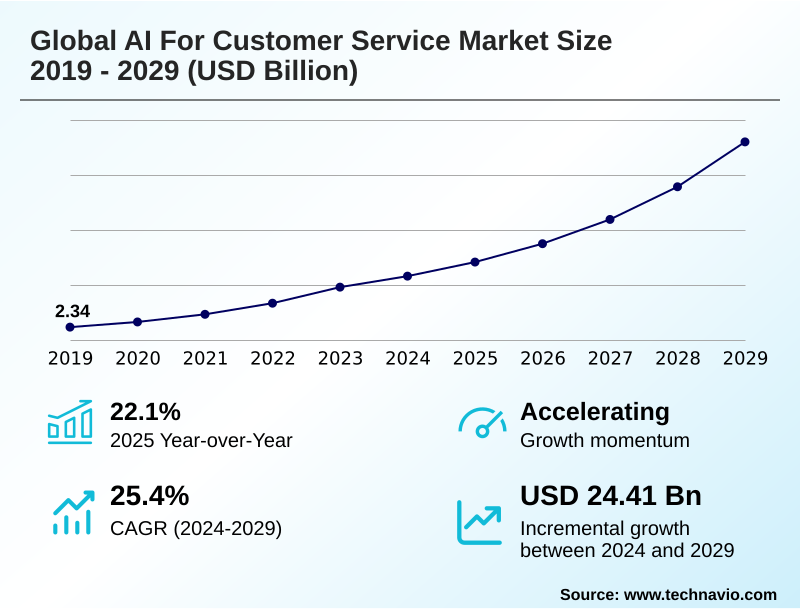
The ai for customer service market size is forecast to increase by USD 24.4 billion, at a CAGR of 25.4% between 2024 and 2029.
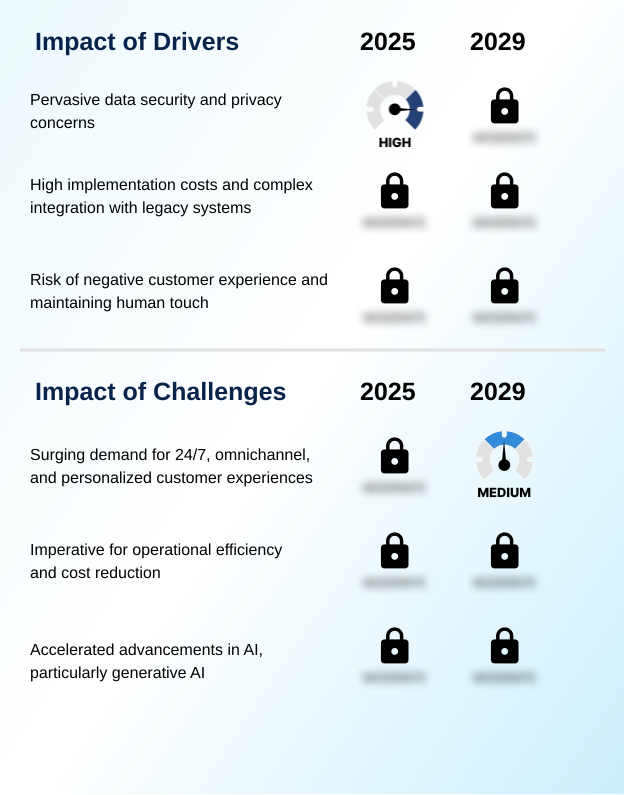
The global AI for customer service market is shaped by the surging demand for 24/7, omnichannel, and personalized customer experiences. This has spurred the adoption of AI-driven customer support agents and conversational AI platforms. The integration of generative AI enhances these systems, moving them from simple automation to sophisticated partners in communication. This evolution enables fluid, context-aware dialogues through natural language processing. However, a significant challenge arises from pervasive data security and privacy concerns, as AI systems require vast amounts of data, creating risks related to sensitive business and consumer information. Businesses must navigate this complex landscape to build trust while leveraging technology for a competitive edge.The pervasive integration of generative AI into customer service platforms is a defining market trend, elevating chatbots and virtual assistants into context-aware conversationalists. This shift is critical for artificial intelligence in marketing and delivering hyper-personalized customer engagement. These advanced systems, built on large language models, can understand complex dialogues and generate empathetic responses aligned with brand voice. The market's primary driver remains the modern consumer's expectation for immediate and seamless support, which AI is uniquely positioned to provide at scale. Simultaneously, concerns over data security and privacy act as a major hurdle, requiring robust data governance and transparent policies to maintain customer trust and ensure regulatory compliance.
What will be the Size of the AI For Customer Service Market during the forecast period?
Explore in-depth regional segment analysis with market size data - historical 2019 - 2023 and forecasts 2025-2029 - in the full report.
Request Free Sample
The global AI for customer service market is defined by the ongoing integration of sophisticated technologies such as conversational AI platforms and natural language processing. These systems are evolving to support proactive customer engagement and hyper-personalization engines. As part of this progression, ai-driven customer support agents are becoming more adept at handling complex queries. The development of an AI reasoning engine is central to this advancement, enabling more autonomous and effective service automation technology. The market continues to see advancements in AI-powered self-service options that empower customers and reduce operational loads.A key dynamic is the widespread adoption of large language models, which are transforming intelligent virtual assistants from scripted bots into context-aware conversational partners. This shift is crucial for omnichannel customer support and is a core component of generative AI in customer services. The deployment of an AI copilot for agents provides real-time agent assistance, boosting productivity and consistency. Concurrently, AI-driven ticketing systems are being enhanced with intelligent routing and automated case summarization capabilities, streamlining the entire support lifecycle.Sentiment and feedback analysis tools are gaining traction, allowing organizations to monitor customer intent detection and emotional tone analysis in real time. This capability, combined with predictive support analytics, facilitates proactive issue resolution and helps in customer churn prediction. Furthermore, automated workflow management systems are orchestrating complex customer journeys across departments. The focus on data-driven personalization and customer lifetime value optimization is driving the development of more intelligent and integrated platforms for digital customer engagement.Ensuring security and compliance remains a critical aspect, with a focus on voice biometrics security, AI ethics and governance, and robust AI guardrail implementation. Both cloud-based AI deployment and on-premises AI infrastructure models are being refined to meet diverse enterprise needs. The effectiveness of these systems is continuously evaluated through metrics like first-contact resolution rate and customer satisfaction scoring. The ongoing refinement of AI model training data and dialogue management systems is essential for improving accuracy and preventing issues like AI hallucination.
How is this AI For Customer Service Industry segmented?
The ai for customer service industry research report provides comprehensive data (region-wise segment analysis), with forecasts and estimates in "USD million" for the period 2025-2029, as well as historical data from 2019 - 2023 for the following segments.
- Deployment
- Application
- Chatbot and virtual assistance
- AI agent
- Personalized recommendation
- AI driven ticketing system
- Others
- End-user
- Retail and e-commerce
- BFSI
- Telecommunication
- Healthcare and life sciences
- Others
- Geography
- North America
- Europe
- Germany
- UK
- France
- Italy
- Spain
- The Netherlands
- APAC
- China
- Japan
- India
- South Korea
- Australia
- Indonesia
- Middle East and Africa
- South America
- Rest of World (ROW)
By Deployment Insights
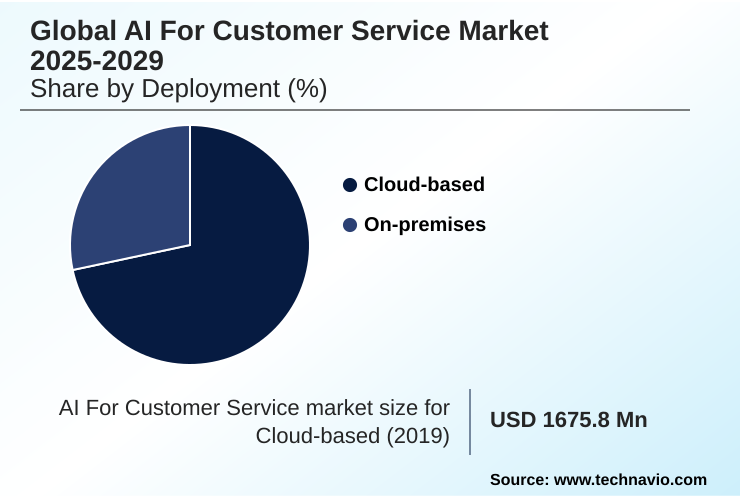
The cloud-based segment is estimated to witness significant growth during the forecast period.
The cloud-based segment is the dominant force in the global AI for customer service market, driven by its inherent scalability, operational agility, and cost-effectiveness. The software as a service (SAAS) model eliminates the need for large upfront capital expenditures, democratizing access to sophisticated technologies like large language models. This model allows organizations to scale their AI capabilities in response to business demands. The immense computational power required for advanced AI is most efficiently delivered through major cloud providers.
Cloud providers handle all maintenance, security, and updates, enabling clients to focus on core objectives. The pace of innovation is relentless, with companies continuously rolling out new features. For instance, some autonomous AI agents offered via the cloud can resolve up to 83% of customer issues without human intervention. This ongoing enhancement of cloud-native platforms ensures that businesses have access to the latest advancements in AI, making the cloud the primary engine of growth and innovation for AI in customer service.

Request Free Sample
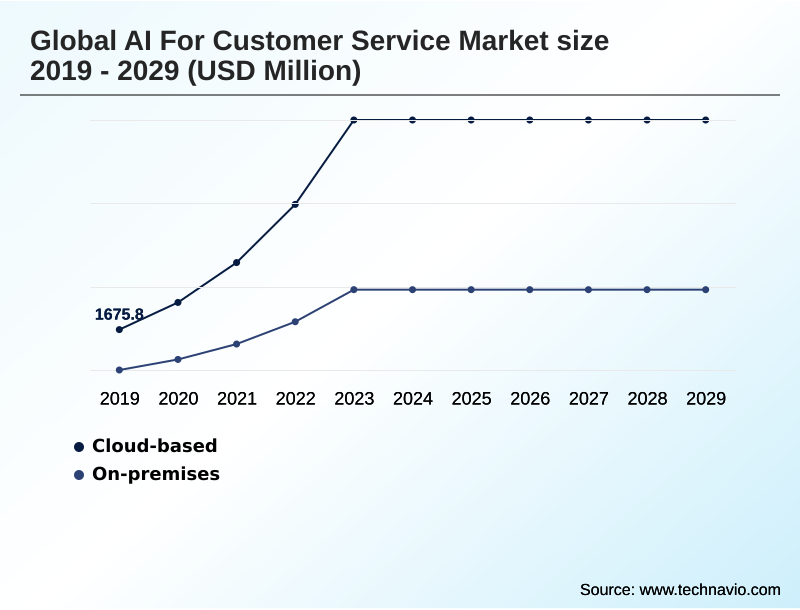
The Cloud-based segment was valued at USD 1.7 billion in 2019 and showed a gradual increase during the forecast period.
Regional Analysis
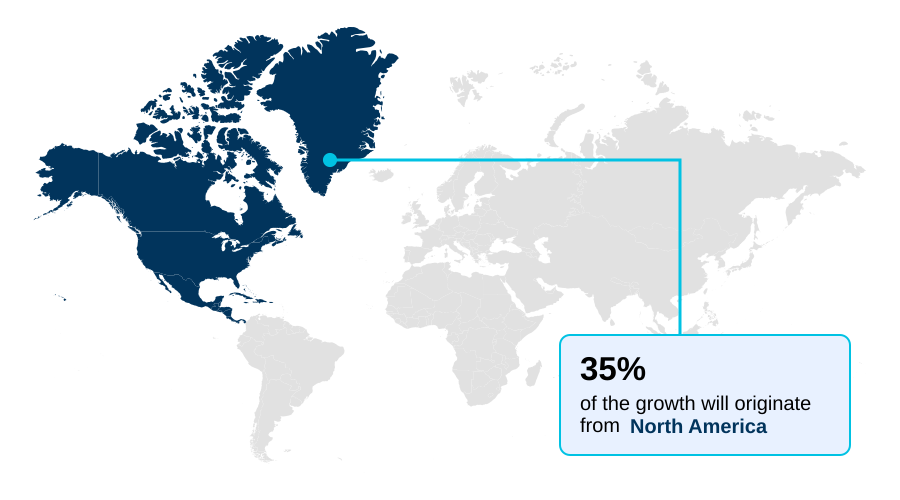
North America is estimated to contribute 35.1% to the growth of the global market during the forecast period.Technavio’s analysts have elaborately explained the regional trends and drivers that shape the market during the forecast period.
Request Free Sample
North America is the most mature and dominant market for AI in customer service, a leadership position supported by a high concentration of leading technology companies and substantial investment in research and development. The region, particularly the United States, is the global epicenter of AI innovation, fostering a highly competitive ecosystem where cutting-edge solutions are rapidly developed and deployed. The primary drivers are the relentless pursuit of operational efficiency and the strategic imperative to deliver hyper-personalized customer experiences.
Enterprises in North America across sectors like BFSI, retail, and healthcare are aggressively integrating AI to meet the demands of a digitally savvy populace. A key trend is the rapid integration of generative AI into existing customer service platforms, with a focus on deploying autonomous agents and AI-powered analytics. With an expected contribution of 35.1% to the global market's growth, the combination of intense competition, significant venture capital, and a large addressable market ensures the region will continue to set global trends.
Market Dynamics
Our researchers analyzed the data with 2024 as the base year, along with the key drivers, trends, and challenges. A holistic analysis of drivers will help companies refine their marketing strategies to gain a competitive advantage.
The global AI for customer service market is rapidly evolving, driven by the need for enhanced efficiency and superior customer experiences. Modern solutions offer omnichannel support with unified customer profiles, enabled by AI-driven ticketing for intelligent routing to direct queries effectively. The rise of generative AI for personalized customer replies and a comprehensive AI-powered self-service knowledge base empowers customers directly. Behind the scenes, natural language understanding for intent detection is crucial, while sentiment analysis of customer feedback provides invaluable insights. For human agents, real-time agent assist for productivity and AI copilots for case summarization are game-changers. Furthermore, businesses are leveraging proactive engagement using predictive analytics and machine learning for churn prediction to retain customers. Advanced systems even deploy autonomous AI agents for complex resolutions, enabling hyper-personalization in real-time interactions and facilitating automated workflow for cross-departmental tasks for a seamless service ecosystem.Successful adoption hinges on strategic implementation, with many organizations preferring flexible cloud-based conversational AI deployment models. A key technical hurdle remains integrating AI with legacy CRM systems to create a cohesive data environment. To compete globally, providing multilingual support using advanced NLP is essential. However, paramount to this technological integration are data security in AI customer interactions and establishing robust AI governance for responsible deployment. Ultimately, the business case is proven by carefully measuring ROI of AI in customer service. The most successful strategies focus on balancing automation with human agent touchpoints, ensuring technology augments rather than replaces the critical human element in building lasting customer relationships.

What are the key market drivers leading to the rise in the adoption of AI For Customer Service Industry?
- A primary driver for the market is the fundamental shift in consumer expectations toward instantaneous, seamless, and highly personalized support available 24/7 across any channel.
A primary driver for the global AI for customer service market is the fundamental shift in consumer expectations. Modern customers demand instantaneous, seamless, and highly personalized support at any time, through any channel. The traditional nine-to-five support model is obsolete. AI is the only technology capable of meeting these heightened expectations at scale by enabling 24/7 availability through AI-powered chatbots and virtual assistants. These systems create a unified customer profile, ingesting data from every touchpoint to maintain context and ensure a fluid journey. This demand for personalization, proactive support, and omnichannel customer support is forcing businesses to view customer service as a critical differentiator. For instance, one fintech's AI assistant now handles the work equivalent of 700 full-time human agents, demonstrating the technology's capacity to meet modern consumer demands efficiently.An equally powerful driver for the adoption of AI in customer service is the relentless pressure on businesses to enhance operational efficiency and reduce the significant costs of traditional support centers. AI provides a direct solution by automating a large volume of routine tasks, such as order status updates and password resets, through a conversational user interface. This automation reduces the need for human agents for low-level queries and facilitates a strategic allocation of human resources to high-value activities requiring complex problem-solving. The impact on efficiency extends throughout the service workflow, with AI-driven ticketing systems and real-time agent assistance from an AI copilot for agents streamlining processes, reducing response times, and improving first-contact resolution rates. This leads to massive productivity gains and a significant reduction in the operational burden of customer support.
What are the market trends shaping the AI For Customer Service Industry?
- A defining trend reshaping the market is the deep and pervasive integration of generative AI into every facet of the customer support ecosystem.
A defining trend in the global AI for customer service market is the pervasive integration of generative AI into the customer support ecosystem, a key component of modern artificial intelligence in marketing. This represents a paradigm shift from predictive models to sophisticated communication and content creation partners. This trend is visible in three main areas: enhancing conversational AI, augmenting human agents, and automating content generation. Generative models have transformed chatbots into fluid, context-aware conversationalists capable of understanding complex dialogues. One company's AI bot built on advanced generative AI was able to achieve a 50% resolution rate for customer queries. The concept of an AI copilot for agents is now central, empowering human agents with real-time assistance, such as summarizing conversations and suggesting optimal responses, thereby improving efficiency and accuracy. This represents a fundamental architectural shift toward a more intelligent and human-centric customer service experience.The market is also seeing a rapid evolution from simple chatbots to highly capable, autonomous AI agents, a significant advance in call center artificial intelligence (AI). This trend marks a move beyond mere conversation to the automation of complete resolutions and complex workflows. Unlike traditional chatbots, these new autonomous agents are engineered to reason, make decisions, and execute multi-step tasks across various backend systems. They actively solve customer problems from start to finish, requiring a level of intelligence and integration far beyond their predecessors. This shift is driven by advancements in AI reasoning engines and API integrations, allowing AI to securely interact with enterprise systems. The strategic implication is profound, moving the goal of AI in customer service from call deflection to the complete automation of entire service request categories, promising unprecedented operational efficiency and scalability.
What challenges does the AI For Customer Service Industry face during its growth?
- A paramount challenge impeding widespread adoption is the profound and legitimate concern surrounding data security and privacy.
A paramount challenge impeding the widespread adoption of AI for customer service is the profound concern surrounding data security and privacy. As AI systems, particularly those using generative AI integration and large language models, require access to vast quantities of data, businesses and consumers are increasingly wary of how this information is handled. For businesses, the risk involves exposing sensitive proprietary data to third-party AI platforms, with fears of security breaches or data absorption into foundational models. For consumers, concerns revolve around the handling of personally identifiable information. With intensifying regulatory scrutiny globally, organizations must navigate a complex compliance landscape. Building and maintaining customer trust requires a commitment to transparency and robust data governance policies, a significant hurdle the industry must collectively address.While the long-term return on investment from AI in customer service is compelling, the initial costs and complexity of implementation present a significant barrier, especially for smaller enterprises. A successful AI deployment requires substantial upfront investment beyond software licensing. The integration with existing legacy systems, such as older CRM platforms and disparate knowledge bases, is a highly technical and resource-intensive task. The effectiveness of any AI system is also dependent on the quality of the data it is trained on, and many organizations suffer from poor data hygiene. The process of cleaning and structuring this data is a massive undertaking. Finally, a pronounced global shortage of skilled AI and machine learning specialists makes the talent required to implement and manage these systems both scarce and expensive.
Exclusive Customer Landscape
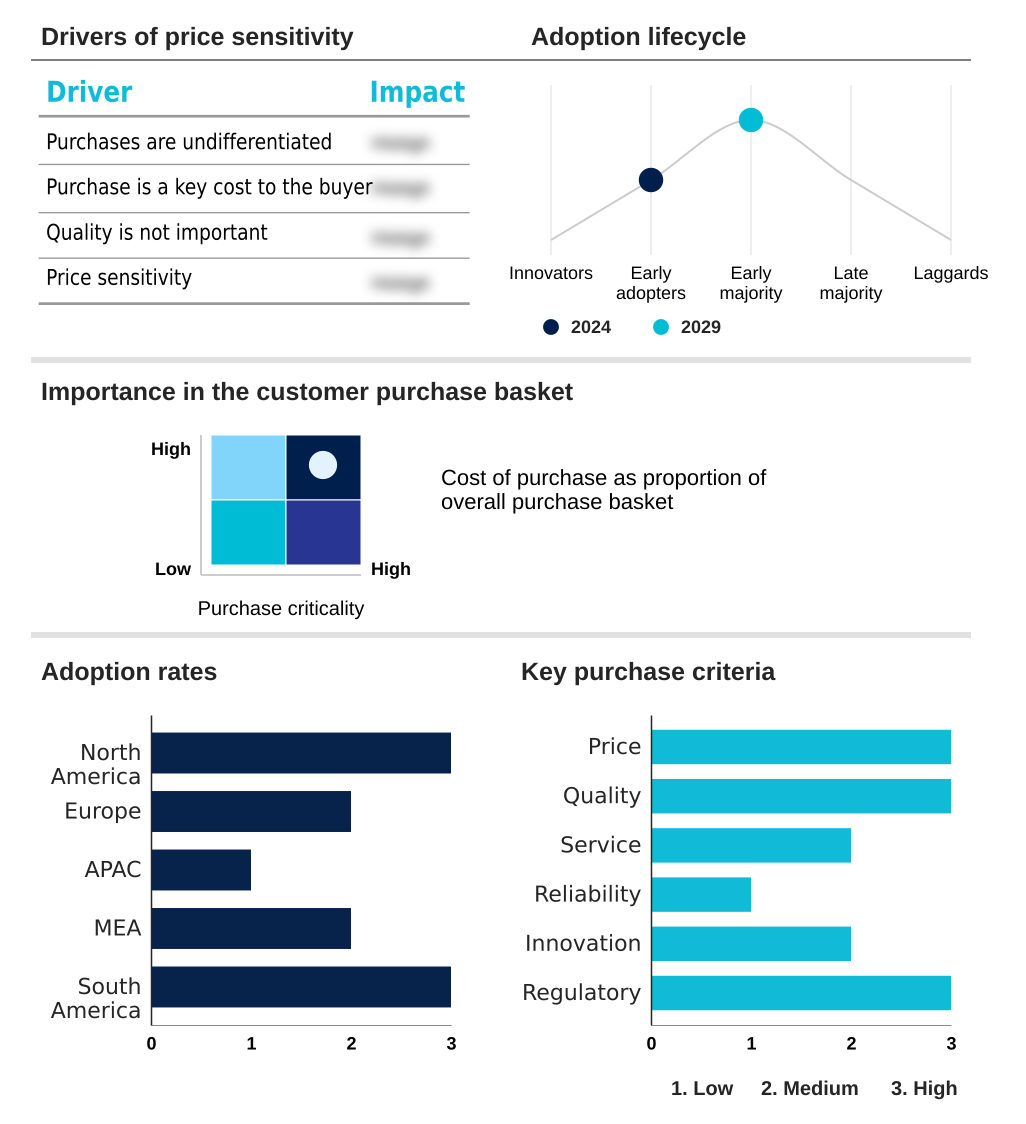
The ai for customer service market forecasting report includes the adoption lifecycle of the market, covering from the innovator’s stage to the laggard’s stage. It focuses on adoption rates in different regions based on penetration. Furthermore, the ai for customer service market report also includes key purchase criteria and drivers of price sensitivity to help companies evaluate and develop their market growth analysis strategies.
Customer Landscape
Key Companies & Market Insights
Companies are implementing various strategies, such as strategic alliances, ai for customer service market forecast, partnerships, mergers and acquisitions, geographical expansion, and product/service launches, to enhance their presence in the industry.
Ada Support Inc. - The company provides advanced AI for customer service, featuring autonomous AI agents that deliver personalized, omnichannel support across various digital channels including chat, voice, and social media. These agents are engineered to resolve a high percentage of customer issues autonomously, ensuring both operational scalability and adherence to compliance standards, thereby enabling businesses to enhance brand interactions through fast and scalable AI-driven automation.
The industry research and growth report includes detailed analyses of the competitive landscape of the market and information about key companies, including:
- Ada Support Inc.
- Amazon Web Services Inc.
- Bitonic Technology Labs Inc.
- Chatfuel.
- Cognigy GmbH
- Drift.com Inc.
- Forethought
- Freshworks Inc.
- Google LLC
- HubSpot Inc.
- Intercom Inc.
- International Business Machines Corp.
- Kustomer
- Microsoft Corp.
- OpenAI
- Replicant Inc.
- Salesforce Inc.
- Sprinklr Inc.
- Tidio LLC
- Zendesk Inc.
Qualitative and quantitative analysis of companies has been conducted to help clients understand the wider business environment as well as the strengths and weaknesses of key industry players. Data is qualitatively analyzed to categorize companies as pure play, category-focused, industry-focused, and diversified; it is quantitatively analyzed to categorize companies as dominant, leading, strong, tentative, and weak.
Recent Development and News in Ai For Customer Service Market
In April 2024, Zendesk Inc. announced a significant expansion of its AI capabilities, introducing autonomous AI agents designed to resolve complex inquiries without human intervention, alongside an agent copilot feature to assist human agents in real-time.In April 2024, ServiceNow announced a collaboration with NVIDIA to create generative AI agents specifically for the telecommunications industry, aiming to automate complex tasks in customer service and network operations.In February 2024, Klarna revealed that its AI assistant, powered by OpenAI, was handling two-thirds of its customer service chats, performing work equivalent to 700 full-time agents and achieving satisfaction scores on par with human agents.In February 2024, Salesforce Inc. made its Einstein Copilot for Service Cloud publicly available in beta, offering a customizable, conversational, and generative AI assistant integrated into the workflow of service agents.
Research Analyst Overview
The global AI for customer service market is advancing as organizations integrate sophisticated technologies to refine interactions, with market adoption of these systems expanding by over 22%. The deployment of a conversational AI platform, powered by advanced natural language processing and large language models, is central to this development. These systems facilitate a dynamic conversational user interface and enable intelligent virtual assistants to deliver a context-aware AI response. The application of machine learning models supports extensive data-driven personalization through a hyper-personalization engine, facilitating proactive customer engagement. This evolution in omnichannel customer support leverages generative AI integration and AI-powered self-service solutions, directly impacting metrics like the first-contact resolution rate and expanding accessibility through multilingual nlp capabilities.Operational efficiency is being redefined through the implementation of advanced AI frameworks. The deployment of an intelligent routing system and an AI-driven ticketing system, supported by robotic process automation and automated workflow management, streamlines backend processes. For human agents, the AI copilot for agents provides real-time agent assistance and automated case summarization. An AI reasoning engine is becoming critical for complex problem-solving, enhancing customer journey orchestration and intelligent knowledge management. The use of predictive support analytics for customer churn prediction and customer lifetime value optimization is gaining traction, relying on effective customer intent detection, emotional tone analysis, and sentiment and feedback analysis, with human-in-the-loop AI and clear AI ethics and governance principles ensuring responsible deployment.
Dive into Technavio’s robust research methodology, blending expert interviews, extensive data synthesis, and validated models for unparalleled AI For Customer Service Market insights. See full methodology.
|
Market Scope
|
|
Report Coverage
|
Details
|
|
Page number
|
309
|
|
Base year
|
2024
|
|
Historic period
|
2019 - 2023 |
|
Forecast period
|
2025-2029
|
|
Growth momentum & CAGR
|
Accelerating at a CAGR of 25.4%
|
|
Market growth 2024-2029
|
USD 24.4 billion
|
|
Market structure
|
Fragmented
|
|
YoY growth 2024-2029(%)
|
22.1%
|
|
Key countries
|
US, Canada, Mexico, Germany, UK, France, Italy, Spain, The Netherlands, China, Japan, India, South Korea, Australia, Indonesia, Saudi Arabia, UAE, South Africa, Israel, Turkey, Brazil, Argentina, Colombia
|
|
Competitive landscape
|
Leading Companies, Market Positioning of Companies, Competitive Strategies, and Industry Risks
|
Request Free Sample
What are the Key Data Covered in this AI For Customer Service Market Research and Growth Report?
- CAGR of the AI For Customer Service industry during the forecast period
- Detailed information on factors that will drive the growth and forecasting between 2024 and 2029
- Precise estimation of the size of the market and its contribution of the industry in focus to the parent market
- Accurate predictions about upcoming growth and trends and changes in consumer behaviour
- Growth of the market across North America, Europe, APAC, Middle East and Africa, South America
- Thorough analysis of the market’s competitive landscape and detailed information about companies
- Comprehensive analysis of factors that will challenge the ai for customer service market growth of industry companies
We can help! Our analysts can customize this ai for customer service market research report to meet your requirements.
Get in touch
1 Executive Summary
- 1 Executive Summary
- 1.1 Market overview
- Executive Summary - Chart on Market Overview
- Executive Summary - Data Table on Market Overview
- Executive Summary - Chart on Global Market Characteristics
- Executive Summary - Chart on Market by Geography
- Executive Summary - Chart on Market Segmentation by Deployment
- Executive Summary - Chart on Market Segmentation by Application
- Executive Summary - Chart on Market Segmentation by End-user
- Executive Summary - Chart on Incremental Growth
- Executive Summary - Data Table on Incremental Growth
- Executive Summary - Chart on Company Market Positioning
2 Technavio Analysis
- 2 Technavio Analysis
- 2.1 Analysis of price sensitivity, lifecycle, customer purchase basket, adoption rates, and purchase criteria
- Analysis of price sensitivity, lifecycle, customer purchase basket, adoption rates, and purchase criteria
- 2.2 Criticality of inputs and Factors of differentiation
- Chart on Overview on criticality of inputs and factors of differentiation
- 2.3 Factors of disruption
- Chart on Overview on factors of disruption
- 2.4 Impact of drivers and challenges
- Chart on Impact of drivers and challenges in 2024 and 2029
3 Market Landscape
- 3 Market Landscape
- 3.1 Market ecosystem
- Chart on Parent Market
- Data Table on - Parent Market
- 3.2 Market characteristics
- Chart on Market characteristics analysis
- 3.3 Value chain analysis
- Chart on Value chain analysis
4 Market Sizing
- 4 Market Sizing
- 4.1 Market definition
- Data Table on Offerings of companies included in the market definition
- 4.2 Market segment analysis
- 4.3 Market size 2024
- 4.4 Market outlook: Forecast for 2024-2029
- Chart on Global - Market size and forecast 2024-2029 ($ billion)
- Data Table on Global - Market size and forecast 2024-2029 ($ billion)
- Chart on Global Market: Year-over-year growth 2024-2029 (%)
- Data Table on Global Market: Year-over-year growth 2024-2029 (%)
5 Historic Market Size
- 5 Historic Market Size
- 5.1 Global AI For Customer Service Market 2019 - 2023
- Historic Market Size - Data Table on Global AI For Customer Service Market 2019 - 2023 ($ billion)
- 5.2 Deployment segment analysis 2019 - 2023
- Historic Market Size - Deployment Segment 2019 - 2023 ($ billion)
- 5.3 Application segment analysis 2019 - 2023
- Historic Market Size - Application Segment 2019 - 2023 ($ billion)
- 5.4 End-user segment analysis 2019 - 2023
- Historic Market Size - End-user Segment 2019 - 2023 ($ billion)
- 5.5 Geography segment analysis 2019 - 2023
- Historic Market Size - Geography Segment 2019 - 2023 ($ billion)
- 5.6 Country segment analysis 2019 - 2023
- Historic Market Size - Country Segment 2019 - 2023 ($ billion)
6 Five Forces Analysis
- 6 Five Forces Analysis
- 6.1 Five forces summary
- Five forces analysis - Comparison between 2024 and 2029
- 6.2 Bargaining power of buyers
- Bargaining power of buyers - Impact of key factors 2024 and 2029
- 6.3 Bargaining power of suppliers
- Bargaining power of suppliers - Impact of key factors in 2024 and 2029
- 6.4 Threat of new entrants
- Threat of new entrants - Impact of key factors in 2024 and 2029
- 6.5 Threat of substitutes
- Threat of substitutes - Impact of key factors in 2024 and 2029
- 6.6 Threat of rivalry
- Threat of rivalry - Impact of key factors in 2024 and 2029
- 6.7 Market condition
- Chart on Market condition - Five forces 2024 and 2029
7 Market Segmentation by Deployment
- 7 Market Segmentation by Deployment
- 7.1 Market segments
- Chart on Deployment - Market share 2024-2029 (%)
- Data Table on Deployment - Market share 2024-2029 (%)
- 7.2 Comparison by Deployment
- Chart on Comparison by Deployment
- Data Table on Comparison by Deployment
- 7.3 Cloud-based - Market size and forecast 2024-2029
- Chart on Cloud-based - Market size and forecast 2024-2029 ($ billion)
- Data Table on Cloud-based - Market size and forecast 2024-2029 ($ billion)
- Chart on Cloud-based - Year-over-year growth 2024-2029 (%)
- Data Table on Cloud-based - Year-over-year growth 2024-2029 (%)
- 7.4 On-premises - Market size and forecast 2024-2029
- Chart on On-premises - Market size and forecast 2024-2029 ($ billion)
- Data Table on On-premises - Market size and forecast 2024-2029 ($ billion)
- Chart on On-premises - Year-over-year growth 2024-2029 (%)
- Data Table on On-premises - Year-over-year growth 2024-2029 (%)
- 7.5 Market opportunity by Deployment
- Market opportunity by Deployment ($ billion)
- Data Table on Market opportunity by Deployment ($ billion)
8 Market Segmentation by Application
- 8 Market Segmentation by Application
- 8.1 Market segments
- Chart on Application - Market share 2024-2029 (%)
- Data Table on Application - Market share 2024-2029 (%)
- 8.2 Comparison by Application
- Chart on Comparison by Application
- Data Table on Comparison by Application
- 8.3 Chatbot and virtual assistance - Market size and forecast 2024-2029
- Chart on Chatbot and virtual assistance - Market size and forecast 2024-2029 ($ billion)
- Data Table on Chatbot and virtual assistance - Market size and forecast 2024-2029 ($ billion)
- Chart on Chatbot and virtual assistance - Year-over-year growth 2024-2029 (%)
- Data Table on Chatbot and virtual assistance - Year-over-year growth 2024-2029 (%)
- 8.4 AI agent - Market size and forecast 2024-2029
- Chart on AI agent - Market size and forecast 2024-2029 ($ billion)
- Data Table on AI agent - Market size and forecast 2024-2029 ($ billion)
- Chart on AI agent - Year-over-year growth 2024-2029 (%)
- Data Table on AI agent - Year-over-year growth 2024-2029 (%)
- 8.5 Personalized recommendation - Market size and forecast 2024-2029
- Chart on Personalized recommendation - Market size and forecast 2024-2029 ($ billion)
- Data Table on Personalized recommendation - Market size and forecast 2024-2029 ($ billion)
- Chart on Personalized recommendation - Year-over-year growth 2024-2029 (%)
- Data Table on Personalized recommendation - Year-over-year growth 2024-2029 (%)
- 8.6 AI driven ticketing system - Market size and forecast 2024-2029
- Chart on AI driven ticketing system - Market size and forecast 2024-2029 ($ billion)
- Data Table on AI driven ticketing system - Market size and forecast 2024-2029 ($ billion)
- Chart on AI driven ticketing system - Year-over-year growth 2024-2029 (%)
- Data Table on AI driven ticketing system - Year-over-year growth 2024-2029 (%)
- 8.7 Others - Market size and forecast 2024-2029
- Chart on Others - Market size and forecast 2024-2029 ($ billion)
- Data Table on Others - Market size and forecast 2024-2029 ($ billion)
- Chart on Others - Year-over-year growth 2024-2029 (%)
- Data Table on Others - Year-over-year growth 2024-2029 (%)
- 8.8 Market opportunity by Application
- Market opportunity by Application ($ billion)
- Data Table on Market opportunity by Application ($ billion)
9 Market Segmentation by End-user
- 9 Market Segmentation by End-user
- 9.1 Market segments
- Chart on End-user - Market share 2024-2029 (%)
- Data Table on End-user - Market share 2024-2029 (%)
- 9.2 Comparison by End-user
- Chart on Comparison by End-user
- Data Table on Comparison by End-user
- 9.3 Retail and e-commerce - Market size and forecast 2024-2029
- Chart on Retail and e-commerce - Market size and forecast 2024-2029 ($ billion)
- Data Table on Retail and e-commerce - Market size and forecast 2024-2029 ($ billion)
- Chart on Retail and e-commerce - Year-over-year growth 2024-2029 (%)
- Data Table on Retail and e-commerce - Year-over-year growth 2024-2029 (%)
- 9.4 BFSI - Market size and forecast 2024-2029
- Chart on BFSI - Market size and forecast 2024-2029 ($ billion)
- Data Table on BFSI - Market size and forecast 2024-2029 ($ billion)
- Chart on BFSI - Year-over-year growth 2024-2029 (%)
- Data Table on BFSI - Year-over-year growth 2024-2029 (%)
- 9.5 Telecommunication - Market size and forecast 2024-2029
- Chart on Telecommunication - Market size and forecast 2024-2029 ($ billion)
- Data Table on Telecommunication - Market size and forecast 2024-2029 ($ billion)
- Chart on Telecommunication - Year-over-year growth 2024-2029 (%)
- Data Table on Telecommunication - Year-over-year growth 2024-2029 (%)
- 9.6 Healthcare and life sciences - Market size and forecast 2024-2029
- Chart on Healthcare and life sciences - Market size and forecast 2024-2029 ($ billion)
- Data Table on Healthcare and life sciences - Market size and forecast 2024-2029 ($ billion)
- Chart on Healthcare and life sciences - Year-over-year growth 2024-2029 (%)
- Data Table on Healthcare and life sciences - Year-over-year growth 2024-2029 (%)
- 9.7 Others - Market size and forecast 2024-2029
- Chart on Others - Market size and forecast 2024-2029 ($ billion)
- Data Table on Others - Market size and forecast 2024-2029 ($ billion)
- Chart on Others - Year-over-year growth 2024-2029 (%)
- Data Table on Others - Year-over-year growth 2024-2029 (%)
- 9.8 Market opportunity by End-user
- Market opportunity by End-user ($ billion)
- Data Table on Market opportunity by End-user ($ billion)
10 Customer Landscape
- 10 Customer Landscape
- 10.1 Customer landscape overview
- Analysis of price sensitivity, lifecycle, customer purchase basket, adoption rates, and purchase criteria
11 Geographic Landscape
- 11 Geographic Landscape
- 11.1 Geographic segmentation
- Chart on Market share by geography 2024-2029 (%)
- Data Table on Market share by geography 2024-2029 (%)
- 11.2 Geographic comparison
- Chart on Geographic comparison
- Data Table on Geographic comparison
- 11.3 North America - Market size and forecast 2024-2029
- Chart on North America - Market size and forecast 2024-2029 ($ billion)
- Data Table on North America - Market size and forecast 2024-2029 ($ billion)
- Chart on North America - Year-over-year growth 2024-2029 (%)
- Data Table on North America - Year-over-year growth 2024-2029 (%)
- Chart on Regional Comparison - North America
- Data Table on Regional Comparison - North America
- 11.3.1 US - Market size and forecast 2024-2029
- Chart on US - Market size and forecast 2024-2029 ($ billion)
- Data Table on US - Market size and forecast 2024-2029 ($ billion)
- Chart on US - Year-over-year growth 2024-2029 (%)
- Data Table on US - Year-over-year growth 2024-2029 (%)
- 11.3.2 Canada - Market size and forecast 2024-2029
- Chart on Canada - Market size and forecast 2024-2029 ($ billion)
- Data Table on Canada - Market size and forecast 2024-2029 ($ billion)
- Chart on Canada - Year-over-year growth 2024-2029 (%)
- Data Table on Canada - Year-over-year growth 2024-2029 (%)
- 11.3.3 Mexico - Market size and forecast 2024-2029
- Chart on Mexico - Market size and forecast 2024-2029 ($ billion)
- Data Table on Mexico - Market size and forecast 2024-2029 ($ billion)
- Chart on Mexico - Year-over-year growth 2024-2029 (%)
- Data Table on Mexico - Year-over-year growth 2024-2029 (%)
- 11.4 Europe - Market size and forecast 2024-2029
- Chart on Europe - Market size and forecast 2024-2029 ($ billion)
- Data Table on Europe - Market size and forecast 2024-2029 ($ billion)
- Chart on Europe - Year-over-year growth 2024-2029 (%)
- Data Table on Europe - Year-over-year growth 2024-2029 (%)
- Chart on Regional Comparison - Europe
- Data Table on Regional Comparison - Europe
- 11.4.1 Germany - Market size and forecast 2024-2029
- Chart on Germany - Market size and forecast 2024-2029 ($ billion)
- Data Table on Germany - Market size and forecast 2024-2029 ($ billion)
- Chart on Germany - Year-over-year growth 2024-2029 (%)
- Data Table on Germany - Year-over-year growth 2024-2029 (%)
- 11.4.2 UK - Market size and forecast 2024-2029
- Chart on UK - Market size and forecast 2024-2029 ($ billion)
- Data Table on UK - Market size and forecast 2024-2029 ($ billion)
- Chart on UK - Year-over-year growth 2024-2029 (%)
- Data Table on UK - Year-over-year growth 2024-2029 (%)
- 11.4.3 France - Market size and forecast 2024-2029
- Chart on France - Market size and forecast 2024-2029 ($ billion)
- Data Table on France - Market size and forecast 2024-2029 ($ billion)
- Chart on France - Year-over-year growth 2024-2029 (%)
- Data Table on France - Year-over-year growth 2024-2029 (%)
- 11.4.4 Italy - Market size and forecast 2024-2029
- Chart on Italy - Market size and forecast 2024-2029 ($ billion)
- Data Table on Italy - Market size and forecast 2024-2029 ($ billion)
- Chart on Italy - Year-over-year growth 2024-2029 (%)
- Data Table on Italy - Year-over-year growth 2024-2029 (%)
- 11.4.5 Spain - Market size and forecast 2024-2029
- Chart on Spain - Market size and forecast 2024-2029 ($ billion)
- Data Table on Spain - Market size and forecast 2024-2029 ($ billion)
- Chart on Spain - Year-over-year growth 2024-2029 (%)
- Data Table on Spain - Year-over-year growth 2024-2029 (%)
- 11.4.6 The Netherlands - Market size and forecast 2024-2029
- Chart on The Netherlands - Market size and forecast 2024-2029 ($ billion)
- Data Table on The Netherlands - Market size and forecast 2024-2029 ($ billion)
- Chart on The Netherlands - Year-over-year growth 2024-2029 (%)
- Data Table on The Netherlands - Year-over-year growth 2024-2029 (%)
- 11.5 APAC - Market size and forecast 2024-2029
- Chart on APAC - Market size and forecast 2024-2029 ($ billion)
- Data Table on APAC - Market size and forecast 2024-2029 ($ billion)
- Chart on APAC - Year-over-year growth 2024-2029 (%)
- Data Table on APAC - Year-over-year growth 2024-2029 (%)
- Chart on Regional Comparison - APAC
- Data Table on Regional Comparison - APAC
- 11.5.1 China - Market size and forecast 2024-2029
- Chart on China - Market size and forecast 2024-2029 ($ billion)
- Data Table on China - Market size and forecast 2024-2029 ($ billion)
- Chart on China - Year-over-year growth 2024-2029 (%)
- Data Table on China - Year-over-year growth 2024-2029 (%)
- 11.5.2 Japan - Market size and forecast 2024-2029
- Chart on Japan - Market size and forecast 2024-2029 ($ billion)
- Data Table on Japan - Market size and forecast 2024-2029 ($ billion)
- Chart on Japan - Year-over-year growth 2024-2029 (%)
- Data Table on Japan - Year-over-year growth 2024-2029 (%)
- 11.5.3 India - Market size and forecast 2024-2029
- Chart on India - Market size and forecast 2024-2029 ($ billion)
- Data Table on India - Market size and forecast 2024-2029 ($ billion)
- Chart on India - Year-over-year growth 2024-2029 (%)
- Data Table on India - Year-over-year growth 2024-2029 (%)
- 11.5.4 South Korea - Market size and forecast 2024-2029
- Chart on South Korea - Market size and forecast 2024-2029 ($ billion)
- Data Table on South Korea - Market size and forecast 2024-2029 ($ billion)
- Chart on South Korea - Year-over-year growth 2024-2029 (%)
- Data Table on South Korea - Year-over-year growth 2024-2029 (%)
- 11.5.5 Australia - Market size and forecast 2024-2029
- Chart on Australia - Market size and forecast 2024-2029 ($ billion)
- Data Table on Australia - Market size and forecast 2024-2029 ($ billion)
- Chart on Australia - Year-over-year growth 2024-2029 (%)
- Data Table on Australia - Year-over-year growth 2024-2029 (%)
- 11.5.6 Indonesia - Market size and forecast 2024-2029
- Chart on Indonesia - Market size and forecast 2024-2029 ($ billion)
- Data Table on Indonesia - Market size and forecast 2024-2029 ($ billion)
- Chart on Indonesia - Year-over-year growth 2024-2029 (%)
- Data Table on Indonesia - Year-over-year growth 2024-2029 (%)
- 11.6 Middle East and Africa - Market size and forecast 2024-2029
- Chart on Middle East and Africa - Market size and forecast 2024-2029 ($ billion)
- Data Table on Middle East and Africa - Market size and forecast 2024-2029 ($ billion)
- Chart on Middle East and Africa - Year-over-year growth 2024-2029 (%)
- Data Table on Middle East and Africa - Year-over-year growth 2024-2029 (%)
- Chart on Regional Comparison - Middle East and Africa
- Data Table on Regional Comparison - Middle East and Africa
- 11.6.1 Saudi Arabia - Market size and forecast 2024-2029
- Chart on Saudi Arabia - Market size and forecast 2024-2029 ($ billion)
- Data Table on Saudi Arabia - Market size and forecast 2024-2029 ($ billion)
- Chart on Saudi Arabia - Year-over-year growth 2024-2029 (%)
- Data Table on Saudi Arabia - Year-over-year growth 2024-2029 (%)
- 11.6.2 UAE - Market size and forecast 2024-2029
- Chart on UAE - Market size and forecast 2024-2029 ($ billion)
- Data Table on UAE - Market size and forecast 2024-2029 ($ billion)
- Chart on UAE - Year-over-year growth 2024-2029 (%)
- Data Table on UAE - Year-over-year growth 2024-2029 (%)
- 11.6.3 South Africa - Market size and forecast 2024-2029
- Chart on South Africa - Market size and forecast 2024-2029 ($ billion)
- Data Table on South Africa - Market size and forecast 2024-2029 ($ billion)
- Chart on South Africa - Year-over-year growth 2024-2029 (%)
- Data Table on South Africa - Year-over-year growth 2024-2029 (%)
- 11.6.4 Israel - Market size and forecast 2024-2029
- Chart on Israel - Market size and forecast 2024-2029 ($ billion)
- Data Table on Israel - Market size and forecast 2024-2029 ($ billion)
- Chart on Israel - Year-over-year growth 2024-2029 (%)
- Data Table on Israel - Year-over-year growth 2024-2029 (%)
- 11.6.5 Turkey - Market size and forecast 2024-2029
- Chart on Turkey - Market size and forecast 2024-2029 ($ billion)
- Data Table on Turkey - Market size and forecast 2024-2029 ($ billion)
- Chart on Turkey - Year-over-year growth 2024-2029 (%)
- Data Table on Turkey - Year-over-year growth 2024-2029 (%)
- 11.7 South America - Market size and forecast 2024-2029
- Chart on South America - Market size and forecast 2024-2029 ($ billion)
- Data Table on South America - Market size and forecast 2024-2029 ($ billion)
- Chart on South America - Year-over-year growth 2024-2029 (%)
- Data Table on South America - Year-over-year growth 2024-2029 (%)
- Chart on Regional Comparison - South America
- Data Table on Regional Comparison - South America
- 11.7.1 Brazil - Market size and forecast 2024-2029
- Chart on Brazil - Market size and forecast 2024-2029 ($ billion)
- Data Table on Brazil - Market size and forecast 2024-2029 ($ billion)
- Chart on Brazil - Year-over-year growth 2024-2029 (%)
- Data Table on Brazil - Year-over-year growth 2024-2029 (%)
- 11.7.2 Argentina - Market size and forecast 2024-2029
- Chart on Argentina - Market size and forecast 2024-2029 ($ billion)
- Data Table on Argentina - Market size and forecast 2024-2029 ($ billion)
- Chart on Argentina - Year-over-year growth 2024-2029 (%)
- Data Table on Argentina - Year-over-year growth 2024-2029 (%)
- 11.7.3 Colombia - Market size and forecast 2024-2029
- Chart on Colombia - Market size and forecast 2024-2029 ($ billion)
- Data Table on Colombia - Market size and forecast 2024-2029 ($ billion)
- Chart on Colombia - Year-over-year growth 2024-2029 (%)
- Data Table on Colombia - Year-over-year growth 2024-2029 (%)
- 11.8 Market opportunity by geography
- Market opportunity by geography ($ billion)
- Data Tables on Market opportunity by geography ($ billion)
12 Drivers, Challenges, and Opportunity
- 12 Drivers, Challenges, and Opportunity
- 12.1 Market drivers
- Pervasive data security and privacy concerns
- High implementation costs and complex integration with legacy systems
- Risk of negative customer experience and maintaining human touch
- 12.2 Market challenges
- Surging demand for 24/7, omnichannel, and personalized customer experiences
- Imperative for operational efficiency and cost reduction
- Accelerated advancements in AI, particularly generative AI
- 12.3 Impact of drivers and challenges
- Impact of drivers and challenges in 2024 and 2029
- 12.4 Market opportunities
- Pervasive integration of generative AI into customer service platforms
- Evolution from simple chatbots to autonomous AI agents
- Rise of hyper-personalization and proactive customer engagement
13 Competitive Landscape
- 13 Competitive Landscape
- 13.1 Overview
- 13.2 Competitive Landscape
- Overview on criticality of inputs and factors of differentiation
- 13.3 Landscape disruption
- Overview on factors of disruption
- 13.4 Industry risks
- Impact of key risks on business
14 Competitive Analysis
- 14 Competitive Analysis
- 14.1 Companies profiled
- 14.2 Company ranking index
- 14.3 Market positioning of companies
- Matrix on companies position and classification
- 14.4 Ada Support Inc.
- Ada Support Inc. - Overview
- Ada Support Inc. - Product / Service
- Ada Support Inc. - Key offerings
- SWOT
- 14.5 Amazon Web Services Inc.
- Amazon Web Services Inc. - Overview
- Amazon Web Services Inc. - Product / Service
- Amazon Web Services Inc. - Key news
- Amazon Web Services Inc. - Key offerings
- SWOT
- 14.6 Cognigy GmbH
- Cognigy GmbH - Overview
- Cognigy GmbH - Product / Service
- Cognigy GmbH - Key offerings
- SWOT
- 14.7 Drift.com Inc.
- Drift.com Inc. - Overview
- Drift.com Inc. - Product / Service
- Drift.com Inc. - Key offerings
- SWOT
- 14.8 Freshworks Inc.
- Freshworks Inc. - Overview
- Freshworks Inc. - Product / Service
- Freshworks Inc. - Key offerings
- SWOT
- 14.9 Google LLC
- Google LLC - Overview
- Google LLC - Product / Service
- Google LLC - Key offerings
- SWOT
- 14.10 HubSpot Inc.
- HubSpot Inc. - Overview
- HubSpot Inc. - Product / Service
- HubSpot Inc. - Key offerings
- SWOT
- 14.11 Intercom Inc.
- Intercom Inc. - Overview
- Intercom Inc. - Product / Service
- Intercom Inc. - Key offerings
- SWOT
- 14.12 International Business Machines Corp.
- International Business Machines Corp. - Overview
- International Business Machines Corp. - Business segments
- International Business Machines Corp. - Key news
- International Business Machines Corp. - Key offerings
- International Business Machines Corp. - Segment focus
- SWOT
- 14.13 Kustomer
- Kustomer - Overview
- Kustomer - Product / Service
- Kustomer - Key offerings
- SWOT
- 14.14 Microsoft Corp.
- Microsoft Corp. - Overview
- Microsoft Corp. - Business segments
- Microsoft Corp. - Key news
- Microsoft Corp. - Key offerings
- Microsoft Corp. - Segment focus
- SWOT
- 14.15 OpenAI
- OpenAI - Overview
- OpenAI - Product / Service
- OpenAI - Key offerings
- SWOT
- 14.16 Salesforce Inc.
- Salesforce Inc. - Overview
- Salesforce Inc. - Product / Service
- Salesforce Inc. - Key news
- Salesforce Inc. - Key offerings
- SWOT
- 14.17 Sprinklr Inc.
- Sprinklr Inc. - Overview
- Sprinklr Inc. - Product / Service
- Sprinklr Inc. - Key offerings
- SWOT
- 14.18 Zendesk Inc.
- Zendesk Inc. - Overview
- Zendesk Inc. - Product / Service
- Zendesk Inc. - Key offerings
- SWOT
15 Appendix
- 15 Appendix
- 15.1 Scope of the report
- Market definition
- Objectives
- Notes and caveats
- 15.2 Inclusions and exclusions checklist
- Inclusions checklist
- Exclusions checklist
- 15.3 Currency conversion rates for US$
- Currency conversion rates for US$
- 15.4 Research methodology
- 15.5 Data procurement
- 15.6 Data validation
- 15.7 Validation techniques employed for market sizing
- Validation techniques employed for market sizing
- 15.8 Data synthesis
- 15.9 360 degree market analysis
- 360 degree market analysis
- 15.10 List of abbreviations