
AI GPU Orchestration Platforms Market Analysis, Size, and Forecast 2026-2030: North America (US, Canada, and Mexico), Europe (UK, Germany, and France), APAC (China, Japan, and India), South America (Brazil, Argentina, and Colombia), Middle East and Africa (Saudi Arabia, Israel, and UAE), and Rest of World (ROW)

AI GPU Orchestration Platforms Market Analysis, Size, and Forecast 2026-2030:
North America (US, Canada, and Mexico), Europe (UK, Germany, and France), APAC (China, Japan, and India), South America (Brazil, Argentina, and Colombia), Middle East and Africa (Saudi Arabia, Israel, and UAE), and Rest of World (ROW)

Published: Apr 2026 315 Pages SKU: IRTNTR81372

Market Overview at a Glance

$6.59 B
Market Opportunity
25.9%
CAGR 2025 - 2030
36.3%
North America Growth
$1.40 B
Cloud segment 2024

AI GPU Orchestration Platforms Market Size 2026-2030

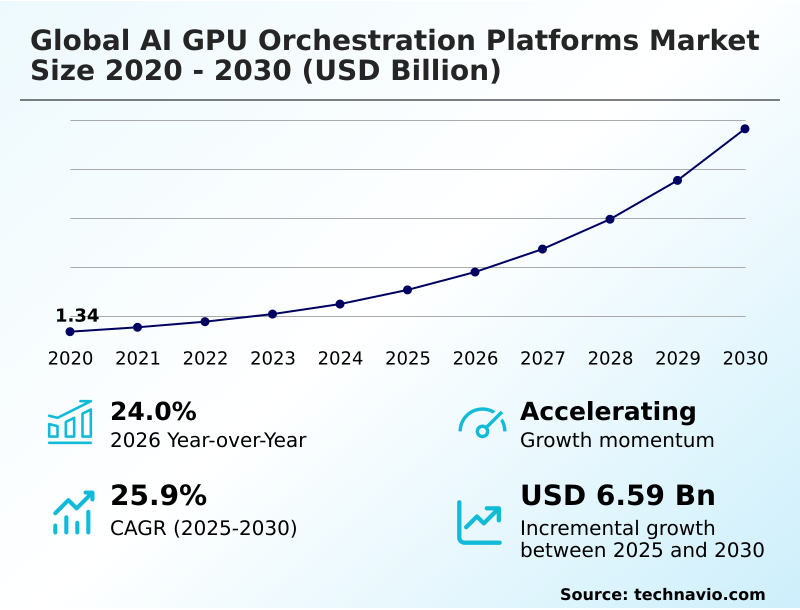
The ai gpu orchestration platforms market size is valued to increase by USD 6.59 billion, at a CAGR of 25.9% from 2025 to 2030. Escalating demand for large language model training and inference capabilities will drive the ai gpu orchestration platforms market.

Major Market Trends & Insights

  • North America dominated the market and accounted for a 36.3% growth during the forecast period.
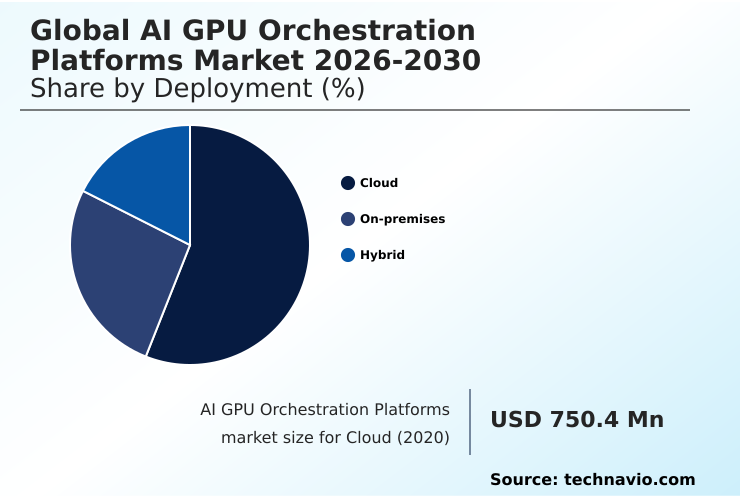
  • By Deployment - Cloud segment was valued at USD 1.40 billion in 2024
  • By End-user - Tech companies segment accounted for the largest market revenue share in 2024

Market Size & Forecast

  • Market Opportunities: USD 8.30 billion
  • Market Future Opportunities: USD 6.59 billion
  • CAGR from 2025 to 2030 : 25.9%

Market Summary

  • The AI GPU orchestration platforms market is expanding to address the critical need for efficient compute resource management in enterprise AI. As organizations deploy complex neural networks, these platforms provide the necessary software layer to automate deployment, scaling, and monitoring.
  • Key drivers include the escalating demand for large language model training and the necessity to optimize costs associated with high-performance computing components. A primary trend involves the integration of edge computing orchestration to support real-time AI processing. For instance, in manufacturing, orchestration platforms manage predictive maintenance algorithms by processing sensor data across edge devices and centralized clouds, ensuring operational continuity.
  • However, the market faces challenges related to interoperability across diverse hardware, a shortage of skilled personnel, and data security complexities within multi-tenant environments. The strategic shift toward hybrid and multi-cloud architectures further fuels demand for unified control planes that abstract hardware differences, allowing developers to focus on model refinement rather than infrastructure configuration.
  • These platforms are indispensable for maximizing computational efficiency and unlocking the full potential of enterprise AI initiatives.

What will be the Size of the AI GPU Orchestration Platforms Market during the forecast period?

Get Key Insights on Market Forecast (PDF) Request Free Sample

How is the AI GPU Orchestration Platforms Market Segmented?

The ai gpu orchestration platforms industry research report provides comprehensive data (region-wise segment analysis), with forecasts and estimates in "USD million" for the period 2026-2030, as well as historical data from 2020-2024 for the following segments.

  • Deployment
    • Cloud
    • On-premises
    • Hybrid
  • End-user
    • Tech companies
    • BFSI
    • Healthcare
    • Manufacturing
    • Research and academia
  • Application
    • Workload orchestration
    • GPU scheduling and allocation
    • Cluster management
    • Multi-tenancy and governance
    • Cost optimization
  • Geography
    • North America
      • US
      • Canada
      • Mexico
    • Europe
      • UK
      • Germany
      • France
    • APAC
      • China
      • Japan
      • India
    • South America
      • Brazil
      • Argentina
      • Colombia
    • Middle East and Africa
      • Saudi Arabia
      • Israel
      • UAE
    • Rest of World (ROW)

By Deployment Insights

The cloud segment is estimated to witness significant growth during the forecast period.

Cloud deployment models are foundational to the AI GPU orchestration platforms market, offering the elasticity essential for variable AI workloads.

This approach eliminates large upfront hardware costs, shifting expenditures to an operational model where enterprises pay only for consumed compute resources. Such flexibility is critical for large language model training, which has fluctuating demands.

Cloud orchestration platforms automate resource provisioning and de-provisioning, with dynamic provisioning improving hardware utilization by over 40% compared to static methods.

This segment enables seamless integration with managed services, creating a streamlined ecosystem for MLOps orchestration platforms that supports containerization technologies and multi-cloud environments, enhancing agility and accelerating time-to-market.

The use of cloud GPU optimization is central to this model, providing the necessary workload orchestration.

Request Free Sample

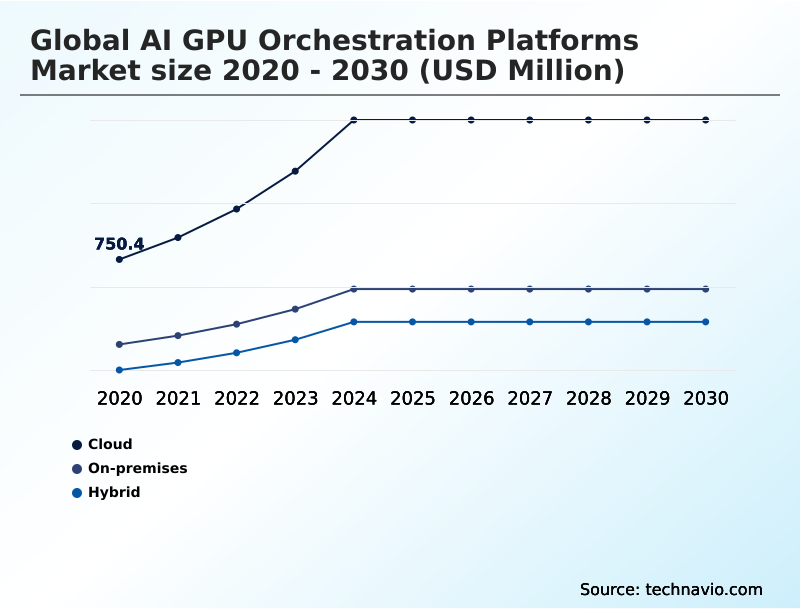
The Cloud segment was valued at USD 1.40 billion in 2024 and showed a gradual increase during the forecast period.
Request Free Sample

Regional Analysis

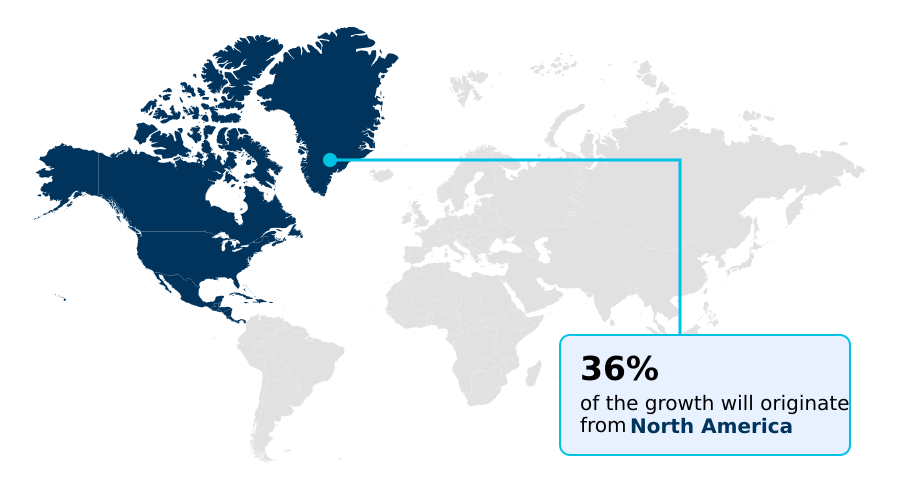
North America is estimated to contribute 36.3% to the growth of the global market during the forecast period.Technavio’s analysts have elaborately explained the regional trends and drivers that shape the market during the forecast period.

See How AI GPU Orchestration Platforms Market Demand is Rising in North America Request Free Sample

The geographic landscape of the AI GPU orchestration platforms market is led by North America, which accounts for over 36% of the incremental growth, driven by its high concentration of technology firms and cloud providers.

The region is a hub for workload orchestration and advanced cluster management. APAC is the fastest-growing region, with a projected CAGR of 27.2%, fueled by rapid digital transformation and government-led AI initiatives in countries like China and India.

Europe's market, growing at 24.7%, is shaped by stringent data sovereignty regulations and a focus on sustainable GPU allocation, promoting hybrid infrastructure strategies.

This regional dynamic highlights the global need for multi-cloud GPU management and MLOps orchestration platforms to navigate diverse regulatory and operational environments.

Market Dynamics

Our researchers analyzed the data with 2025 as the base year, along with the key drivers, trends, and challenges. A holistic analysis of drivers will help companies refine their marketing strategies to gain a competitive advantage.

  • Achieving efficiency in the global AI GPU orchestration platforms market requires a deep focus on specific operational challenges. Optimizing GPU utilization for LLM training is a primary goal, compelling organizations to adopt advanced scheduling and allocation frameworks. As enterprises embrace hybrid models, multi-cloud GPU orchestration best practices become essential for maintaining performance and controlling costs.
  • Many are leveraging Kubernetes for AI GPU cluster management to standardize deployments and enhance scalability. However, security in multi-tenant GPU environments remains a critical concern, necessitating robust isolation and governance protocols. To address budget pressures, the use of fractional GPU for cost-effective inference is gaining traction, allowing multiple smaller workloads to run on a single physical processor.
  • This approach is central to scaling AI workloads with GPU orchestration. The complexity of managing heterogeneous GPU clusters effectively requires sophisticated hardware abstraction and integration. The need extends to specialized domains, with firms exploring orchestration for edge AI and GPU to enable real-time processing. Serverless GPU for deep learning further simplifies infrastructure management for developers.
  • Forward-thinking organizations are also implementing confidential computing in GPU clusters to protect sensitive data during processing. These granular strategies, including dynamic GPU provisioning for AI and automating GPU resource allocation policies, are vital for unlocking the full potential of high-performance computing infrastructure.
  • Integrating GPU orchestration with MLOps ensures a cohesive development and deployment lifecycle, while topology-aware GPU placement strategies optimize performance for distributed tasks. The move towards zero-touch provisioning for GPU servers and securing shared GPU resources is becoming standard. These AI infrastructure cost optimization techniques are being applied across industries, including for complex tasks like GPU orchestration for financial modeling.

What are the key market drivers leading to the rise in the adoption of AI GPU Orchestration Platforms Industry?

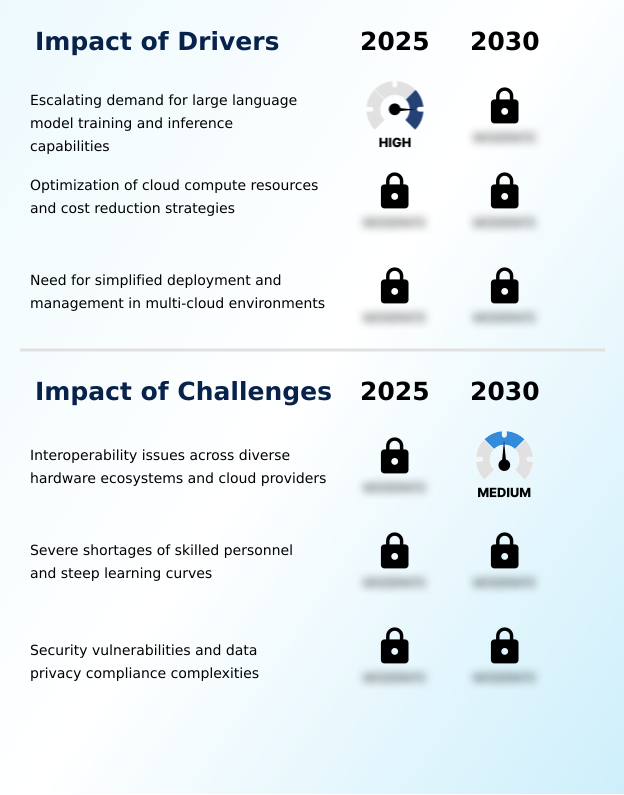
  • The escalating demand for large language model training and inference capabilities is a primary driver fueling market expansion.

  • Market growth is driven by the insatiable demand for computational power for large language model training and inference.
  • The need for efficient hardware abstraction layers that support distributed training is paramount, with effective orchestration reducing model training times by over 50%.
  • Another major driver is the strategic imperative for cost reduction, pushing enterprises toward cloud native architectures and dynamic resource provisioning to optimize cloud compute resources. This focus on financial efficiency also propels the adoption of AI model deployment pipelines.
  • The complexity of modern IT has also made simplified deployment and management in multi-cloud GPU management and hybrid environments a necessity, driving demand for platforms that offer automated scaling capabilities and a unified control plane.

What are the market trends shaping the AI GPU Orchestration Platforms Industry?

  • A key market trend is the integration of edge computing with GPU orchestration. This enables real-time AI processing for latency-sensitive applications.

  • Key trends are reshaping the market, driven by the need for real-time AI processing and greater operational intelligence. The integration of edge computing with GPU orchestration is critical, with adoption in industrial automation reducing latency by over 60% in some use cases. This shift demands platforms that can handle deep learning frameworks and fault tolerance in distributed settings.
  • There is also a strong move toward sustainable and energy-efficient GPU frameworks, with new software capable of cutting power consumption by up to 15% through intelligent scheduling. Concurrently, the implementation of advanced security through confidential computing protocols and zero trust architectures is becoming standard, ensuring data is encrypted even during processing.
  • These innovations in compute resource management and containerized GPU workloads are vital for modern enterprises.

What challenges does the AI GPU Orchestration Platforms Industry face during its growth?

  • Interoperability issues across diverse hardware ecosystems and cloud providers present a significant challenge affecting industry growth and adoption.

  • Significant challenges constrain market growth, led by persistent interoperability issues across diverse hardware from various silicon manufacturers and their proprietary drivers. This fragmentation hinders the creation of a truly heterogeneous computing cluster and makes managing ML workflows difficult. Enterprises report that integration complexities can delay project timelines by up to 30%.
  • A severe shortage of skilled personnel with expertise in software development kits and network engineering creates a steep learning curve for deploying these systems. Furthermore, security vulnerabilities and data privacy compliance in multi-tenant environments pose major risks, particularly when ensuring absolute memory isolation between workloads. These challenges in data center optimization and high-performance computing management require industry-wide standards to resolve.

Exclusive Technavio Analysis on Customer Landscape

The ai gpu orchestration platforms market forecasting report includes the adoption lifecycle of the market, covering from the innovator’s stage to the laggard’s stage. It focuses on adoption rates in different regions based on penetration. Furthermore, the ai gpu orchestration platforms market report also includes key purchase criteria and drivers of price sensitivity to help companies evaluate and develop their market growth analysis strategies.
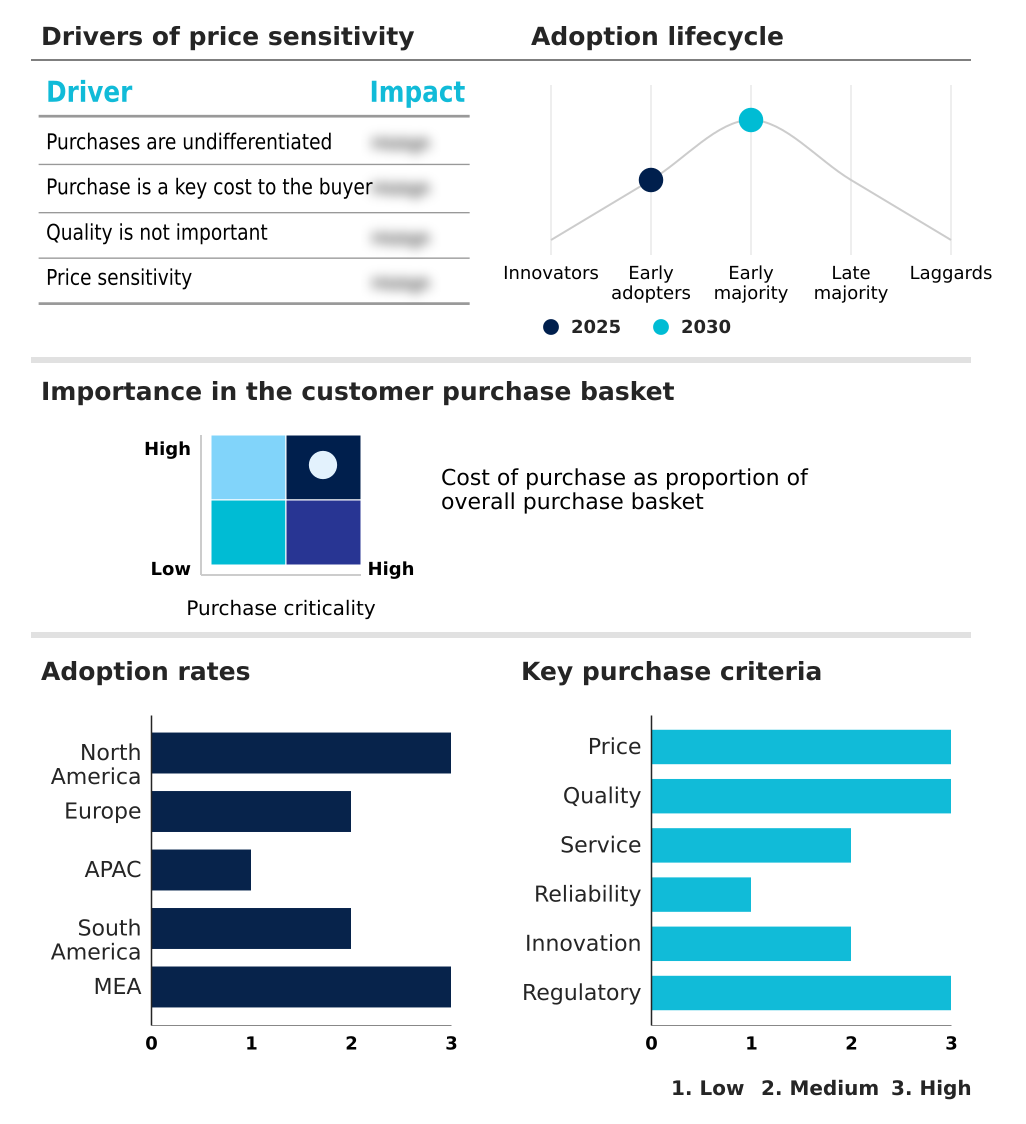
Customer Landscape of AI GPU Orchestration Platforms Industry

Competitive Landscape

Companies are implementing various strategies, such as strategic alliances, ai gpu orchestration platforms market forecast, partnerships, mergers and acquisitions, geographical expansion, and product/service launches, to enhance their presence in the industry.

Amazon.com Inc. - Key offerings center on enterprise-grade AI GPU orchestration platforms, designed to automate and manage the entire machine learning lifecycle from experimentation to large-scale deployment.

The industry research and growth report includes detailed analyses of the competitive landscape of the market and information about key companies, including:

  • Amazon.com Inc.
  • Anyscale Inc
  • Broadcom Inc.
  • ClearML Inc
  • Databricks Inc.
  • DigitalOcean Holdings Inc.
  • Domino Data Lab Inc.
  • Google LLC
  • Hewlett Packard Enterprise Co.
  • IBM Corp.
  • Intel Corp.
  • Lambda Labs, Inc.
  • Lightning AI
  • Microsoft Corp.
  • NVIDIA Corp.
  • Together AI
  • VULTR

Qualitative and quantitative analysis of companies has been conducted to help clients understand the wider business environment as well as the strengths and weaknesses of key industry players. Data is qualitatively analyzed to categorize companies as pure play, category-focused, industry-focused, and diversified; it is quantitatively analyzed to categorize companies as dominant, leading, strong, tentative, and weak.

Recent Development and News in Ai gpu orchestration platforms market

  • In March, 2025, CoreWeave announced it entered an agreement to acquire Weights and Biases, aiming to enhance its purpose-built cloud offering with a comprehensive, end-to-end solution for AI developers.
  • In March, 2025, the International Energy Agency introduced a new regulatory guideline that requires major data centers to report hourly power consumption metrics tied to AI hardware usage.
  • In July, 2025, C-Gen.AI, an AI infrastructure startup, launched a new platform designed to help data center operators automate deployment and optimize the utilization of high-cost AI hardware.
  • In November, 2025, Huawei introduced Flex:AI, an open-source software platform for its AI chips, designed to improve chipset utilization and provide developers with high-performance training capabilities.

Dive into Technavio’s robust research methodology, blending expert interviews, extensive data synthesis, and validated models for unparalleled AI GPU Orchestration Platforms Market insights. See full methodology.

Market Scope
Page number 315
Base year 2025
Historic period 2020-2024
Forecast period 2026-2030
Growth momentum & CAGR Accelerate at a CAGR of 25.9%
Market growth 2026-2030 USD 6589.8 million
Market structure Fragmented
YoY growth 2025-2026(%) 24.0%
Key countries US, Canada, Mexico, UK, Germany, France, Italy, The Netherlands, Spain, China, Japan, India, South Korea, Australia, Indonesia, Brazil, Argentina, Colombia, Saudi Arabia, Israel, UAE, South Africa and Turkey
Competitive landscape Leading Companies, Market Positioning of Companies, Competitive Strategies, and Industry Risks

Request Free Sample

Research Analyst Overview

  • The AI GPU orchestration platforms market is fundamentally reshaping enterprise computing by providing the essential GPU scheduling and allocation and multi-tenancy and governance needed for modern AI. As organizations build out a heterogeneous computing cluster, the focus shifts to cluster management and workload orchestration to maximize hardware ROI.
  • This involves using fractional GPU allocation for compute resource management, especially for large language model training. In a boardroom context, adopting cloud native architectures and a hybrid infrastructure strategy is no longer a technical choice but a core business decision impacting capital expenditure and operational agility.
  • For example, implementing predictive maintenance algorithms through effective orchestration has been shown to reduce unplanned downtime by up to 25%. Key technologies like automated scaling capabilities, data center optimization, and hardware abstraction layers are central to this transformation. Success depends on mastering distributed training, containerization technologies, and network engineering within unified ML workflows supported by deep learning frameworks.
  • Ensuring fault tolerance across systems built with components from various silicon manufacturers and their proprietary drivers and software development kits is paramount.

What are the Key Data Covered in this AI GPU Orchestration Platforms Market Research and Growth Report?

  • What is the expected growth of the AI GPU Orchestration Platforms Market between 2026 and 2030?

    • USD 6.59 billion, at a CAGR of 25.9%

  • What segmentation does the market report cover?

    • The report is segmented by Deployment (Cloud, On-premises, and Hybrid), End-user (Tech companies, BFSI, Healthcare, Manufacturing, and Research and academia), Application (Workload orchestration, GPU scheduling and allocation, Cluster management, Multi-tenancy and governance, and Cost optimization) and Geography (North America, Europe, APAC, South America, Middle East and Africa)

  • Which regions are analyzed in the report?

    • North America, Europe, APAC, South America and Middle East and Africa

  • What are the key growth drivers and market challenges?

    • Escalating demand for large language model training and inference capabilities, Interoperability issues across diverse hardware ecosystems and cloud providers

  • Who are the major players in the AI GPU Orchestration Platforms Market?

    • Amazon.com Inc., Anyscale Inc, Broadcom Inc., ClearML Inc, Databricks Inc., DigitalOcean Holdings Inc., Domino Data Lab Inc., Google LLC, Hewlett Packard Enterprise Co., IBM Corp., Intel Corp., Lambda Labs, Inc., Lightning AI, Microsoft Corp., NVIDIA Corp., Together AI and VULTR

Market Research Insights

  • The market is defined by a dynamic push toward operational efficiency and intelligent infrastructure management. Enterprises are adopting AI workload management and GPU cluster orchestration to maximize the return on expensive hardware, with some achieving over 40% better utilization rates compared to static allocation.
  • The move toward cloud GPU optimization is clear, as it offers a 20-30% reduction in operational expenditures through automated resource allocation and inference workload scaling. Platforms enabling deep learning infrastructure and multi-cloud GPU management are critical, as they provide the flexibility to avoid vendor lock-in.
  • Adopting MLOps orchestration platforms with features like virtual GPU management and support for bare metal GPU servers streamlines AI model deployment pipelines, improving developer productivity significantly.

We can help! Our analysts can customize this ai gpu orchestration platforms market research report to meet your requirements.

Get in touch

1. Executive Summary

1.1 Market overview

Executive Summary - Chart on Market Overview
Executive Summary - Data Table on Market Overview
Executive Summary - Chart on Global Market Characteristics
Executive Summary - Chart on Market by Geography
Executive Summary - Chart on Market Segmentation by Deployment
Executive Summary - Chart on Market Segmentation by End-user
Executive Summary - Chart on Market Segmentation by Application
Executive Summary - Chart on Incremental Growth
Executive Summary - Data Table on Incremental Growth
Executive Summary - Chart on Company Market Positioning

2. Technavio Analysis

2.1 Analysis of price sensitivity, lifecycle, customer purchase basket, adoption rates, and purchase criteria

2.2 Criticality of inputs and Factors of differentiation

Chart on Overview on criticality of inputs and factors of differentiation

2.3 Factors of disruption

Chart on Overview on factors of disruption

2.4 Impact of drivers and challenges

Chart on Impact of drivers and challenges in 2025 and 2030

3. Market Landscape

3.1 Market ecosystem

Chart on Parent Market
Data Table on - Parent Market

3.2 Market characteristics

Chart on Market characteristics analysis

3.3 Value chain analysis

Chart on Value chain analysis

4. Market Sizing

4.1 Market definition

Data Table on Offerings of companies included in the market definition

4.2 Market segment analysis

Market segments

4.3 Market size 2025

4.4 Market outlook: Forecast for 2025-2030

Chart on Global - Market size and forecast 2025-2030 ($ million)
Data Table on Global - Market size and forecast 2025-2030 ($ million)
Chart on Global Market: Year-over-year growth 2025-2030 (%)
Data Table on Global Market: Year-over-year growth 2025-2030 (%)

5. Historic Market Size

5.1 Global AI GPU Orchestration Platforms Market 2020 - 2024

Historic Market Size - Data Table on Global AI GPU Orchestration Platforms Market 2020 - 2024 ($ million)

5.2 Deployment segment analysis 2020 - 2024

Historic Market Size - Deployment Segment 2020 - 2024 ($ million)

5.3 End-user segment analysis 2020 - 2024

Historic Market Size - End-user Segment 2020 - 2024 ($ million)

5.4 Application segment analysis 2020 - 2024

Historic Market Size - Application Segment 2020 - 2024 ($ million)

5.5 Geography segment analysis 2020 - 2024

Historic Market Size - Geography Segment 2020 - 2024 ($ million)

5.6 Country segment analysis 2020 - 2024

Historic Market Size - Country Segment 2020 - 2024 ($ million)

6. Qualitative Analysis

6.1 Impact of Geopolitical Conflicts on Global AI GPU Orchestration Platforms Market

7. Five Forces Analysis

7.1 Five forces summary

Five forces analysis - Comparison between 2025 and 2030

7.2 Bargaining power of buyers

Bargaining power of buyers - Impact of key factors 2025 and 2030

7.3 Bargaining power of suppliers

Bargaining power of suppliers - Impact of key factors in 2025 and 2030

7.4 Threat of new entrants

Threat of new entrants - Impact of key factors in 2025 and 2030

7.5 Threat of substitutes

Threat of substitutes - Impact of key factors in 2025 and 2030

7.6 Threat of rivalry

Threat of rivalry - Impact of key factors in 2025 and 2030

7.7 Market condition

Chart on Market condition - Five forces 2025 and 2030

8. Market Segmentation by Deployment

8.1 Market segments

Chart on Deployment - Market share 2025-2030 (%)
Data Table on Deployment - Market share 2025-2030 (%)

8.2 Comparison by Deployment

Chart on Comparison by Deployment
Data Table on Comparison by Deployment

8.3 Cloud - Market size and forecast 2025-2030

Chart on Cloud - Market size and forecast 2025-2030 ($ million)
Data Table on Cloud - Market size and forecast 2025-2030 ($ million)
Chart on Cloud - Year-over-year growth 2025-2030 (%)
Data Table on Cloud - Year-over-year growth 2025-2030 (%)

8.4 On-premises - Market size and forecast 2025-2030

Chart on On-premises - Market size and forecast 2025-2030 ($ million)
Data Table on On-premises - Market size and forecast 2025-2030 ($ million)
Chart on On-premises - Year-over-year growth 2025-2030 (%)
Data Table on On-premises - Year-over-year growth 2025-2030 (%)

8.5 Hybrid - Market size and forecast 2025-2030

Chart on Hybrid - Market size and forecast 2025-2030 ($ million)
Data Table on Hybrid - Market size and forecast 2025-2030 ($ million)
Chart on Hybrid - Year-over-year growth 2025-2030 (%)
Data Table on Hybrid - Year-over-year growth 2025-2030 (%)

8.6 Market opportunity by Deployment

Market opportunity by Deployment ($ million)
Data Table on Market opportunity by Deployment ($ million)

9. Market Segmentation by End-user

9.1 Market segments

Chart on End-user - Market share 2025-2030 (%)
Data Table on End-user - Market share 2025-2030 (%)

9.2 Comparison by End-user

Chart on Comparison by End-user
Data Table on Comparison by End-user

9.3 Tech companies - Market size and forecast 2025-2030

Chart on Tech companies - Market size and forecast 2025-2030 ($ million)
Data Table on Tech companies - Market size and forecast 2025-2030 ($ million)
Chart on Tech companies - Year-over-year growth 2025-2030 (%)
Data Table on Tech companies - Year-over-year growth 2025-2030 (%)

9.4 BFSI - Market size and forecast 2025-2030

Chart on BFSI - Market size and forecast 2025-2030 ($ million)
Data Table on BFSI - Market size and forecast 2025-2030 ($ million)
Chart on BFSI - Year-over-year growth 2025-2030 (%)
Data Table on BFSI - Year-over-year growth 2025-2030 (%)

9.5 Healthcare - Market size and forecast 2025-2030

Chart on Healthcare - Market size and forecast 2025-2030 ($ million)
Data Table on Healthcare - Market size and forecast 2025-2030 ($ million)
Chart on Healthcare - Year-over-year growth 2025-2030 (%)
Data Table on Healthcare - Year-over-year growth 2025-2030 (%)

9.6 Manufacturing - Market size and forecast 2025-2030

Chart on Manufacturing - Market size and forecast 2025-2030 ($ million)
Data Table on Manufacturing - Market size and forecast 2025-2030 ($ million)
Chart on Manufacturing - Year-over-year growth 2025-2030 (%)
Data Table on Manufacturing - Year-over-year growth 2025-2030 (%)

9.7 Research and academia - Market size and forecast 2025-2030

Chart on Research and academia - Market size and forecast 2025-2030 ($ million)
Data Table on Research and academia - Market size and forecast 2025-2030 ($ million)
Chart on Research and academia - Year-over-year growth 2025-2030 (%)
Data Table on Research and academia - Year-over-year growth 2025-2030 (%)

9.8 Market opportunity by End-user

Market opportunity by End-user ($ million)
Data Table on Market opportunity by End-user ($ million)

10. Market Segmentation by Application

10.1 Market segments

Chart on Application - Market share 2025-2030 (%)
Data Table on Application - Market share 2025-2030 (%)

10.2 Comparison by Application

Chart on Comparison by Application
Data Table on Comparison by Application

10.3 Workload orchestration - Market size and forecast 2025-2030

Chart on Workload orchestration - Market size and forecast 2025-2030 ($ million)
Data Table on Workload orchestration - Market size and forecast 2025-2030 ($ million)
Chart on Workload orchestration - Year-over-year growth 2025-2030 (%)
Data Table on Workload orchestration - Year-over-year growth 2025-2030 (%)

10.4 GPU scheduling and allocation - Market size and forecast 2025-2030

Chart on GPU scheduling and allocation - Market size and forecast 2025-2030 ($ million)
Data Table on GPU scheduling and allocation - Market size and forecast 2025-2030 ($ million)
Chart on GPU scheduling and allocation - Year-over-year growth 2025-2030 (%)
Data Table on GPU scheduling and allocation - Year-over-year growth 2025-2030 (%)

10.5 Cluster management - Market size and forecast 2025-2030

Chart on Cluster management - Market size and forecast 2025-2030 ($ million)
Data Table on Cluster management - Market size and forecast 2025-2030 ($ million)
Chart on Cluster management - Year-over-year growth 2025-2030 (%)
Data Table on Cluster management - Year-over-year growth 2025-2030 (%)

10.6 Multi-tenancy and governance - Market size and forecast 2025-2030

Chart on Multi-tenancy and governance - Market size and forecast 2025-2030 ($ million)
Data Table on Multi-tenancy and governance - Market size and forecast 2025-2030 ($ million)
Chart on Multi-tenancy and governance - Year-over-year growth 2025-2030 (%)
Data Table on Multi-tenancy and governance - Year-over-year growth 2025-2030 (%)

10.7 Cost optimization - Market size and forecast 2025-2030

Chart on Cost optimization - Market size and forecast 2025-2030 ($ million)
Data Table on Cost optimization - Market size and forecast 2025-2030 ($ million)
Chart on Cost optimization - Year-over-year growth 2025-2030 (%)
Data Table on Cost optimization - Year-over-year growth 2025-2030 (%)

10.8 Market opportunity by Application

Market opportunity by Application ($ million)
Data Table on Market opportunity by Application ($ million)

11. Customer Landscape

11.1 Customer landscape overview

Analysis of price sensitivity, lifecycle, customer purchase basket, adoption rates, and purchase criteria

12. Geographic Landscape

12.1 Geographic segmentation

Chart on Market share by geography 2025-2030 (%)
Data Table on Market share by geography 2025-2030 (%)

12.2 Geographic comparison

Chart on Geographic comparison
Data Table on Geographic comparison

12.3 North America - Market size and forecast 2025-2030

Chart on North America - Market size and forecast 2025-2030 ($ million)
Data Table on North America - Market size and forecast 2025-2030 ($ million)
Chart on North America - Year-over-year growth 2025-2030 (%)
Data Table on North America - Year-over-year growth 2025-2030 (%)
Chart on Regional Comparison - North America
Data Table on Regional Comparison - North America

12.3.1 US - Market size and forecast 2025-2030

Chart on US - Market size and forecast 2025-2030 ($ million)
Data Table on US - Market size and forecast 2025-2030 ($ million)
Chart on US - Year-over-year growth 2025-2030 (%)
Data Table on US - Year-over-year growth 2025-2030 (%)

12.3.2 Canada - Market size and forecast 2025-2030

Chart on Canada - Market size and forecast 2025-2030 ($ million)
Data Table on Canada - Market size and forecast 2025-2030 ($ million)
Chart on Canada - Year-over-year growth 2025-2030 (%)
Data Table on Canada - Year-over-year growth 2025-2030 (%)

12.3.3 Mexico - Market size and forecast 2025-2030

Chart on Mexico - Market size and forecast 2025-2030 ($ million)
Data Table on Mexico - Market size and forecast 2025-2030 ($ million)
Chart on Mexico - Year-over-year growth 2025-2030 (%)
Data Table on Mexico - Year-over-year growth 2025-2030 (%)

12.4 Europe - Market size and forecast 2025-2030

Chart on Europe - Market size and forecast 2025-2030 ($ million)
Data Table on Europe - Market size and forecast 2025-2030 ($ million)
Chart on Europe - Year-over-year growth 2025-2030 (%)
Data Table on Europe - Year-over-year growth 2025-2030 (%)
Chart on Regional Comparison - Europe
Data Table on Regional Comparison - Europe

12.4.1 UK - Market size and forecast 2025-2030

Chart on UK - Market size and forecast 2025-2030 ($ million)
Data Table on UK - Market size and forecast 2025-2030 ($ million)
Chart on UK - Year-over-year growth 2025-2030 (%)
Data Table on UK - Year-over-year growth 2025-2030 (%)

12.4.2 Germany - Market size and forecast 2025-2030

Chart on Germany - Market size and forecast 2025-2030 ($ million)
Data Table on Germany - Market size and forecast 2025-2030 ($ million)
Chart on Germany - Year-over-year growth 2025-2030 (%)
Data Table on Germany - Year-over-year growth 2025-2030 (%)

12.4.3 France - Market size and forecast 2025-2030

Chart on France - Market size and forecast 2025-2030 ($ million)
Data Table on France - Market size and forecast 2025-2030 ($ million)
Chart on France - Year-over-year growth 2025-2030 (%)
Data Table on France - Year-over-year growth 2025-2030 (%)

12.4.4 Italy - Market size and forecast 2025-2030

Chart on Italy - Market size and forecast 2025-2030 ($ million)
Data Table on Italy - Market size and forecast 2025-2030 ($ million)
Chart on Italy - Year-over-year growth 2025-2030 (%)
Data Table on Italy - Year-over-year growth 2025-2030 (%)

12.4.5 The Netherlands - Market size and forecast 2025-2030

Chart on The Netherlands - Market size and forecast 2025-2030 ($ million)
Data Table on The Netherlands - Market size and forecast 2025-2030 ($ million)
Chart on The Netherlands - Year-over-year growth 2025-2030 (%)
Data Table on The Netherlands - Year-over-year growth 2025-2030 (%)

12.4.6 Spain - Market size and forecast 2025-2030

Chart on Spain - Market size and forecast 2025-2030 ($ million)
Data Table on Spain - Market size and forecast 2025-2030 ($ million)
Chart on Spain - Year-over-year growth 2025-2030 (%)
Data Table on Spain - Year-over-year growth 2025-2030 (%)

12.5 APAC - Market size and forecast 2025-2030

Chart on APAC - Market size and forecast 2025-2030 ($ million)
Data Table on APAC - Market size and forecast 2025-2030 ($ million)
Chart on APAC - Year-over-year growth 2025-2030 (%)
Data Table on APAC - Year-over-year growth 2025-2030 (%)
Chart on Regional Comparison - APAC
Data Table on Regional Comparison - APAC

12.5.1 China - Market size and forecast 2025-2030

Chart on China - Market size and forecast 2025-2030 ($ million)
Data Table on China - Market size and forecast 2025-2030 ($ million)
Chart on China - Year-over-year growth 2025-2030 (%)
Data Table on China - Year-over-year growth 2025-2030 (%)

12.5.2 Japan - Market size and forecast 2025-2030

Chart on Japan - Market size and forecast 2025-2030 ($ million)
Data Table on Japan - Market size and forecast 2025-2030 ($ million)
Chart on Japan - Year-over-year growth 2025-2030 (%)
Data Table on Japan - Year-over-year growth 2025-2030 (%)

12.5.3 India - Market size and forecast 2025-2030

Chart on India - Market size and forecast 2025-2030 ($ million)
Data Table on India - Market size and forecast 2025-2030 ($ million)
Chart on India - Year-over-year growth 2025-2030 (%)
Data Table on India - Year-over-year growth 2025-2030 (%)

12.5.4 South Korea - Market size and forecast 2025-2030

Chart on South Korea - Market size and forecast 2025-2030 ($ million)
Data Table on South Korea - Market size and forecast 2025-2030 ($ million)
Chart on South Korea - Year-over-year growth 2025-2030 (%)
Data Table on South Korea - Year-over-year growth 2025-2030 (%)

12.5.5 Australia - Market size and forecast 2025-2030

Chart on Australia - Market size and forecast 2025-2030 ($ million)
Data Table on Australia - Market size and forecast 2025-2030 ($ million)
Chart on Australia - Year-over-year growth 2025-2030 (%)
Data Table on Australia - Year-over-year growth 2025-2030 (%)

12.5.6 Indonesia - Market size and forecast 2025-2030

Chart on Indonesia - Market size and forecast 2025-2030 ($ million)
Data Table on Indonesia - Market size and forecast 2025-2030 ($ million)
Chart on Indonesia - Year-over-year growth 2025-2030 (%)
Data Table on Indonesia - Year-over-year growth 2025-2030 (%)

12.6 South America - Market size and forecast 2025-2030

Chart on South America - Market size and forecast 2025-2030 ($ million)
Data Table on South America - Market size and forecast 2025-2030 ($ million)
Chart on South America - Year-over-year growth 2025-2030 (%)
Data Table on South America - Year-over-year growth 2025-2030 (%)
Chart on Regional Comparison - South America
Data Table on Regional Comparison - South America

12.6.1 Brazil - Market size and forecast 2025-2030

Chart on Brazil - Market size and forecast 2025-2030 ($ million)
Data Table on Brazil - Market size and forecast 2025-2030 ($ million)
Chart on Brazil - Year-over-year growth 2025-2030 (%)
Data Table on Brazil - Year-over-year growth 2025-2030 (%)

12.6.2 Argentina - Market size and forecast 2025-2030

Chart on Argentina - Market size and forecast 2025-2030 ($ million)
Data Table on Argentina - Market size and forecast 2025-2030 ($ million)
Chart on Argentina - Year-over-year growth 2025-2030 (%)
Data Table on Argentina - Year-over-year growth 2025-2030 (%)

12.6.3 Colombia - Market size and forecast 2025-2030

Chart on Colombia - Market size and forecast 2025-2030 ($ million)
Data Table on Colombia - Market size and forecast 2025-2030 ($ million)
Chart on Colombia - Year-over-year growth 2025-2030 (%)
Data Table on Colombia - Year-over-year growth 2025-2030 (%)

12.7 Middle East and Africa - Market size and forecast 2025-2030

Chart on Middle East and Africa - Market size and forecast 2025-2030 ($ million)
Data Table on Middle East and Africa - Market size and forecast 2025-2030 ($ million)
Chart on Middle East and Africa - Year-over-year growth 2025-2030 (%)
Data Table on Middle East and Africa - Year-over-year growth 2025-2030 (%)
Chart on Regional Comparison - Middle East and Africa
Data Table on Regional Comparison - Middle East and Africa

12.7.1 Saudi Arabia - Market size and forecast 2025-2030

Chart on Saudi Arabia - Market size and forecast 2025-2030 ($ million)
Data Table on Saudi Arabia - Market size and forecast 2025-2030 ($ million)
Chart on Saudi Arabia - Year-over-year growth 2025-2030 (%)
Data Table on Saudi Arabia - Year-over-year growth 2025-2030 (%)

12.7.2 Israel - Market size and forecast 2025-2030

Chart on Israel - Market size and forecast 2025-2030 ($ million)
Data Table on Israel - Market size and forecast 2025-2030 ($ million)
Chart on Israel - Year-over-year growth 2025-2030 (%)
Data Table on Israel - Year-over-year growth 2025-2030 (%)

12.7.3 UAE - Market size and forecast 2025-2030

Chart on UAE - Market size and forecast 2025-2030 ($ million)
Data Table on UAE - Market size and forecast 2025-2030 ($ million)
Chart on UAE - Year-over-year growth 2025-2030 (%)
Data Table on UAE - Year-over-year growth 2025-2030 (%)

12.7.4 South Africa - Market size and forecast 2025-2030

Chart on South Africa - Market size and forecast 2025-2030 ($ million)
Data Table on South Africa - Market size and forecast 2025-2030 ($ million)
Chart on South Africa - Year-over-year growth 2025-2030 (%)
Data Table on South Africa - Year-over-year growth 2025-2030 (%)

12.7.5 Turkey - Market size and forecast 2025-2030

Chart on Turkey - Market size and forecast 2025-2030 ($ million)
Data Table on Turkey - Market size and forecast 2025-2030 ($ million)
Chart on Turkey - Year-over-year growth 2025-2030 (%)
Data Table on Turkey - Year-over-year growth 2025-2030 (%)

12.8 Market opportunity by geography

Market opportunity by geography ($ million)
Data Tables on Market opportunity by geography ($ million)

13. Drivers, Challenges, and Opportunity

13.1 Market drivers

Escalating demand for large language model training and inference capabilities
Optimization of cloud compute resources and cost reduction strategies
Need for simplified deployment and management in multi-cloud environments

13.2 Market challenges

Interoperability issues across diverse hardware ecosystems and cloud providers
Severe shortages of skilled personnel and steep learning curves
Security vulnerabilities and data privacy compliance complexities

13.3 Impact of drivers and challenges

Impact of drivers and challenges in 2025 and 2030

13.4 Market opportunities

Integration of edge computing with GPU orchestration for real-time AI processing
Shift toward sustainable and energy-efficient GPU allocation frameworks
Implementation of advanced security and confidential computing protocols

14. Competitive Landscape

14.1 Overview

14.2

Overview on criticality of inputs and factors of differentiation

14.3 Landscape disruption

Overview on factors of disruption

14.4 Industry risks

Impact of key risks on business

15. Competitive Analysis

15.1 Companies profiled

Companies covered

15.2 Company ranking index

15.3 Market positioning of companies

Matrix on companies position and classification

15.4 Amazon.com Inc.

Amazon.com Inc. - Overview
Amazon.com Inc. - Business segments
Amazon.com Inc. - Key news
Amazon.com Inc. - Key offerings
Amazon.com Inc. - Segment focus
SWOT

15.5 Broadcom Inc.

Broadcom Inc. - Overview
Broadcom Inc. - Business segments
Broadcom Inc. - Key offerings
Broadcom Inc. - Segment focus
SWOT

15.6 ClearML Inc

ClearML Inc - Overview
ClearML Inc - Product / Service
ClearML Inc - Key offerings
SWOT

15.7 Databricks Inc.

Databricks Inc. - Overview
Databricks Inc. - Product / Service
Databricks Inc. - Key offerings
SWOT

15.8 DigitalOcean Holdings Inc.

DigitalOcean Holdings Inc. - Overview
DigitalOcean Holdings Inc. - Business segments
DigitalOcean Holdings Inc. - Key offerings
DigitalOcean Holdings Inc. - Segment focus
SWOT

15.9 Domino Data Lab Inc.

Domino Data Lab Inc. - Overview
Domino Data Lab Inc. - Product / Service
Domino Data Lab Inc. - Key offerings
SWOT

15.10 Google LLC

Google LLC - Overview
Google LLC - Product / Service
Google LLC - Key offerings
SWOT

15.11 Hewlett Packard Enterprise Co.

Hewlett Packard Enterprise Co. - Overview
Hewlett Packard Enterprise Co. - Business segments
Hewlett Packard Enterprise Co. - Key news
Hewlett Packard Enterprise Co. - Key offerings
Hewlett Packard Enterprise Co. - Segment focus
SWOT

15.12 IBM Corp.

IBM Corp. - Overview
IBM Corp. - Business segments
IBM Corp. - Key news
IBM Corp. - Key offerings
IBM Corp. - Segment focus
SWOT

15.13 Intel Corp.

Intel Corp. - Overview
Intel Corp. - Business segments
Intel Corp. - Key news
Intel Corp. - Key offerings
Intel Corp. - Segment focus
SWOT

15.14 Lambda Labs, Inc.

Lambda Labs, Inc. - Overview
Lambda Labs, Inc. - Product / Service
Lambda Labs, Inc. - Key offerings
SWOT

15.15 Lightning AI

Lightning AI - Overview
Lightning AI - Product / Service
Lightning AI - Key offerings
SWOT

15.16 Microsoft Corp.

Microsoft Corp. - Overview
Microsoft Corp. - Business segments
Microsoft Corp. - Key news
Microsoft Corp. - Key offerings
Microsoft Corp. - Segment focus
SWOT

15.17 NVIDIA Corp.

NVIDIA Corp. - Overview
NVIDIA Corp. - Business segments
NVIDIA Corp. - Key news
NVIDIA Corp. - Key offerings
NVIDIA Corp. - Segment focus
SWOT

15.18 Together AI

Together AI - Overview
Together AI - Product / Service
Together AI - Key offerings
SWOT

16. Appendix

16.1 Scope of the report

Market definition
Objectives
Notes and caveats

16.2 Inclusions and exclusions checklist

Inclusions checklist
Exclusions checklist

16.3 Currency conversion rates for US$

16.4 Research methodology

16.5 Data procurement

Information sources

16.6 Data validation

16.7 Validation techniques employed for market sizing

16.8 Data synthesis

16.9 360 degree market analysis

16.10 List of abbreviations

Research Methodology

Technavio presents a detailed picture of the market by way of study, synthesis, and summation of data from multiple sources. The analysts have presented the various facets of the market with a particular focus on identifying the key industry influencers. The data thus presented is comprehensive, reliable, and the result of extensive research, both primary and secondary.

INFORMATION SOURCES

Primary sources

  • Manufacturers and suppliers
  • Channel partners
  • Industry experts
  • Strategic decision makers

Secondary sources

  • Industry journals and periodicals
  • Government data
  • Financial reports of key industry players
  • Historical data
  • Press releases

DATA ANALYSIS

Data Synthesis

  • Collation of data
  • Estimation of key figures
  • Analysis of derived insights

Data Validation

  • Triangulation with data models
  • Reference against proprietary databases
  • Corroboration with industry experts

REPORT WRITING

Qualitative

  • Market drivers
  • Market challenges
  • Market trends
  • Five forces analysis

Quantitative

  • Market size and forecast
  • Market segmentation
  • Geographical insights
  • Competitive landscape

Interested in this report?

Get your sample now to see our research methodology and insights!

Download Now

Frequently Asked Questions

AI GPU Orchestration Platforms market growth will increase by USD 6589.8 million during 2026-2030.

The AI GPU Orchestration Platforms market is expected to grow at a CAGR of 25.9% during 2026-2030.

AI GPU Orchestration Platforms market is segmented by Deployment (Cloud, On-premises, Hybrid) End-user (Tech companies, BFSI, Healthcare, Manufacturing, Research and academia) Application (Workload orchestration, GPU scheduling and allocation, Cluster management, Multi-tenancy and governance, Cost optimization)

Amazon.com Inc., Anyscale Inc, Broadcom Inc., ClearML Inc, Databricks Inc., DigitalOcean Holdings Inc., Domino Data Lab Inc., Google LLC, Hewlett Packard Enterprise Co., IBM Corp., Intel Corp., Lambda Labs, Inc., Lightning AI, Microsoft Corp., NVIDIA Corp., Together AI, VULTR are a few of the key vendors in the AI GPU Orchestration Platforms market.

North America will register the highest growth rate of 36.3% among the other regions. Therefore, the AI GPU Orchestration Platforms market in North America is expected to garner significant business opportunities for the vendors during the forecast period.

US, Canada, Mexico, UK, Germany, France, Italy, The Netherlands, Spain, China, Japan, India, South Korea, Australia, Indonesia, Brazil, Argentina, Colombia, Saudi Arabia, Israel, UAE, South Africa, Turkey

  • Escalating demand for large language model training and inference capabilities is the driving factor this market.

The AI GPU Orchestration Platforms market vendors should focus on grabbing business opportunities from the Deployment segment as it accounted for the largest market share in the base year.
RIA - Research AI Assistant
Ask RIA