


Air Cargo Market Size 2026-2030
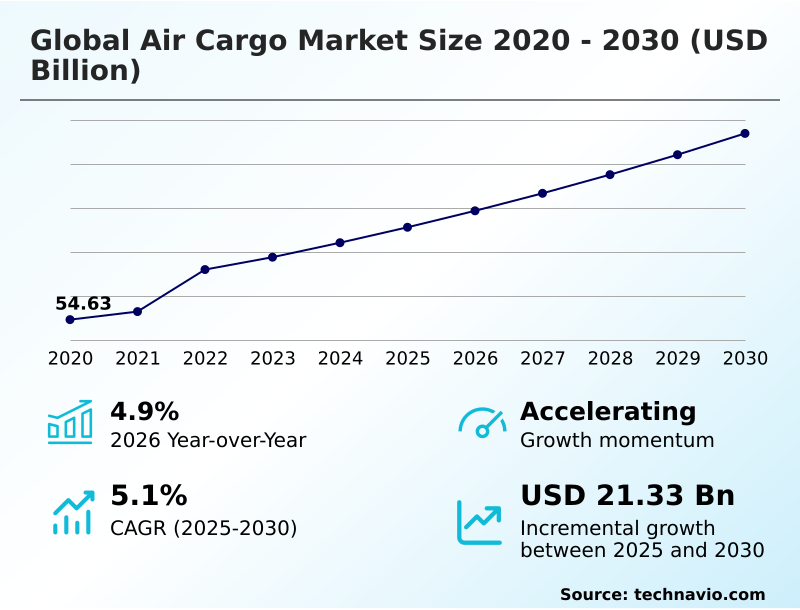
The air cargo market size is valued to increase by USD 21.33 billion, at a CAGR of 5.1% from 2025 to 2030. Exponential expansion of cross-border e-commerce demand will drive the air cargo market.
Major Market Trends & Insights
- APAC dominated the market and accounted for a 32.4% growth during the forecast period.
- By End-user - Manufacturing segment was valued at USD 28.90 billion in 2024
- By Type - Belly cargo segment accounted for the largest market revenue share in 2024
Market Size & Forecast
- Market Opportunities: USD 42.32 billion
- Market Future Opportunities: USD 21.33 billion
- CAGR from 2025 to 2030 : 5.1%
Market Summary
- The Air Cargo Market is characterized by its dynamic adaptation to global commerce, facilitating the rapid transit of high-value and time-sensitive goods. The industry's operational framework relies on a sophisticated integration of dedicated freighter services and belly-hold capacity, supported by advanced logistics platforms.
- A primary driver is the growth of cross-border e-commerce, which necessitates greater speed and transparency within the supply chain. Consequently, there is a significant trend towards digitalization, with the adoption of digital freight marketplaces and predictive analytics for capacity planning.
- For instance, a global electronics firm can leverage real-time visibility to manage a global product launch, ensuring simultaneous inventory availability across continents while minimizing warehousing costs. However, the sector faces challenges from stringent environmental regulations, pushing for investments in sustainable aviation fuel and fleet modernization.
- The ongoing shift toward specialized cargo segments, particularly in life sciences and pharmaceuticals, underscores the need for precise temperature-controlled containers and a secure chain of custody, defining a high-value niche for specialized operators.
What will be the Size of the Air Cargo Market during the forecast period?
Get Key Insights on Market Forecast (PDF) Get Free Sample
How is the Air Cargo Market Segmented?
The air cargo industry research report provides comprehensive data (region-wise segment analysis), with forecasts and estimates in "USD million" for the period 2026-2030, as well as historical data from 2020-2024 for the following segments.
- End-user
- Manufacturing
- FMCG and retail
- Pharmaceuticals and chemicals
- Others
- Type
- Belly cargo
- Freighter
- Service type
- Express cargo
- General cargo
- Special cargo
- Geography
- APAC
- China
- Japan
- India
- North America
- US
- Canada
- Mexico
- Europe
- Germany
- UK
- France
- Middle East and Africa
- UAE
- Saudi Arabia
- Turkey
- South America
- Brazil
- Colombia
- Rest of World (ROW)
- APAC
By End-user Insights
The manufacturing segment is estimated to witness significant growth during the forecast period.
The manufacturing segment underpins air cargo demand through its requirement for high-velocity transit of industrial components. This reliance supports just-in-time production schedules that are highly sensitive to disruption.
Supply chain diversification and the near-shoring impact drive demand for intermodal connectivity and efficient ground handling efficiency to manage complex international logistics.
To maintain lean inventories, manufacturers prioritize air freight for critical parts, utilizing widebody freighter capacity for heavy and oversized consignments. The adoption of smart airport infrastructure enables better cargo build-up optimization and reduces aircraft turnaround time.
As operations become more globally interconnected, carriers that offer specialized special cargo handling and can meet rigorous standards, such as the ICAO 2027 CO2 emissions benchmark, are gaining a competitive advantage.
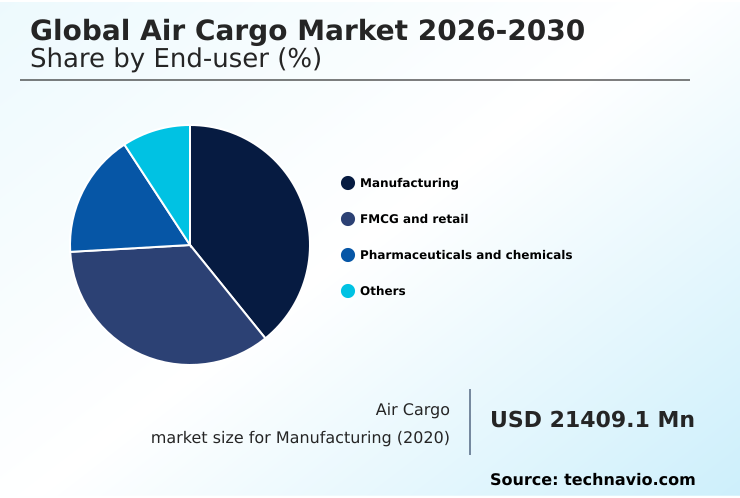
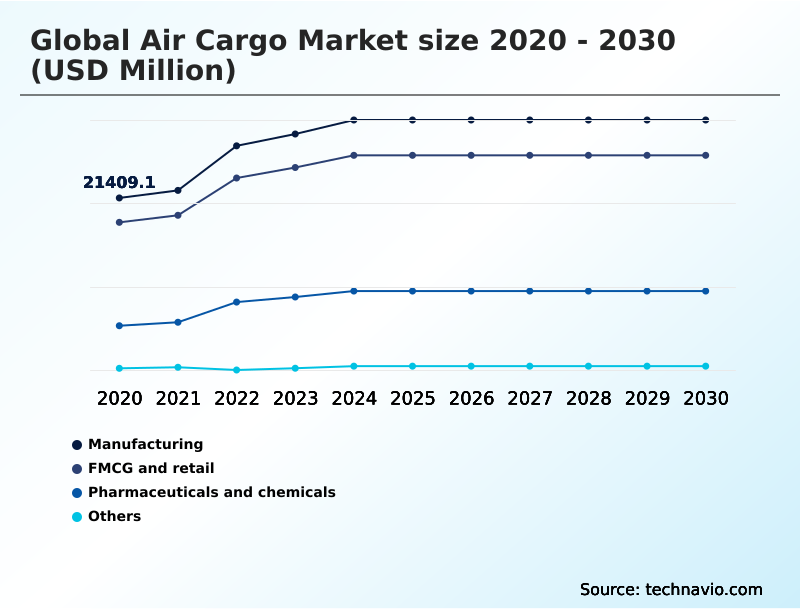
The Manufacturing segment was valued at USD 28.90 billion in 2024 and showed a gradual increase during the forecast period.
Regional Analysis
APAC is estimated to contribute 32.4% to the growth of the global market during the forecast period.Technavio’s analysts have elaborately explained the regional trends and drivers that shape the market during the forecast period.
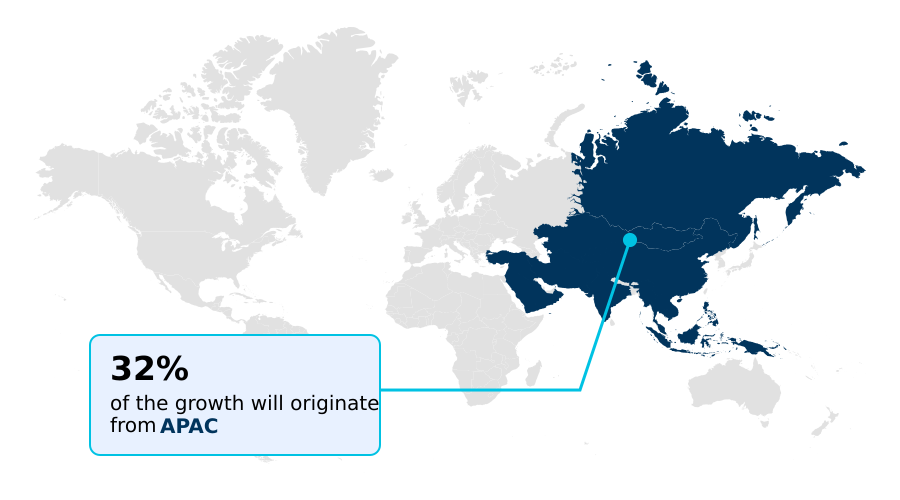
See How Air Cargo Market Demand is Rising in APAC Get Free Sample
The geographic landscape of the market is led by the APAC region, which is expanding at a rate approximately 15% faster than Europe, driven by massive manufacturing output and e-commerce activity.
The US market remains the largest single country by value, with a market size more than double that of China, reflecting its mature integrated express networks.
In this competitive environment, the use of specialized freighter aircraft for pharmaceutical transport and perishable goods handling is critical.
Key trade corridors rely on advanced cold chain logistics, utilizing temperature-controlled containers to move goods from production hubs in South America and APAC to consumer markets in North America and Europe.
Effective air cargo security screening and the ability to manage high-value electronics transport are essential for maintaining dominance at major transit hubs.
Market Dynamics
Our researchers analyzed the data with 2025 as the base year, along with the key drivers, trends, and challenges. A holistic analysis of drivers will help companies refine their marketing strategies to gain a competitive advantage.
- The global air cargo market 2026-2030 is rapidly evolving, driven by the need to balance efficiency, security, and sustainability. A core focus is optimizing cargo build up with AI, which allows handlers to maximize space and reduce loading times. This pairs with efforts in improving aircraft turnaround time efficiency, a critical metric for profitability at congested hubs.
- For shippers, real time visibility in air freight has become a standard expectation, particularly for high-value shipments. However, significant hurdles remain, especially the challenges in pharmaceutical air transport, where maintaining the integrity of biologics through advanced cold chain logistics for biologics is non-negotiable.
- The impact of e commerce on belly cargo is reshaping network strategies, forcing carriers to re-evaluate capacity on passenger routes. This is compounded by the need for regulatory compliance for special cargo, including the transport of high value electronics and adhering to strict guidelines for hazardous materials.
- Financially, all operators are focused on managing fuel price volatility costs, with some exploring sustainable aviation fuel in logistics to meet both environmental and economic goals. Digital freight marketplaces for SMEs are democratizing access to capacity, while automation is key for integrating last mile delivery services and automating customs clearance for express cargo.
- The benefits of passenger to freighter conversions are being weighed against new-builds, as security screening technology advancements and predictive maintenance for freighter fleets become standard. Finally, mitigating geopolitical risks in shipping requires network agility, where the choice between ACMI leasing vs owning freighters and leveraging dynamic pricing in freight plays a crucial role.
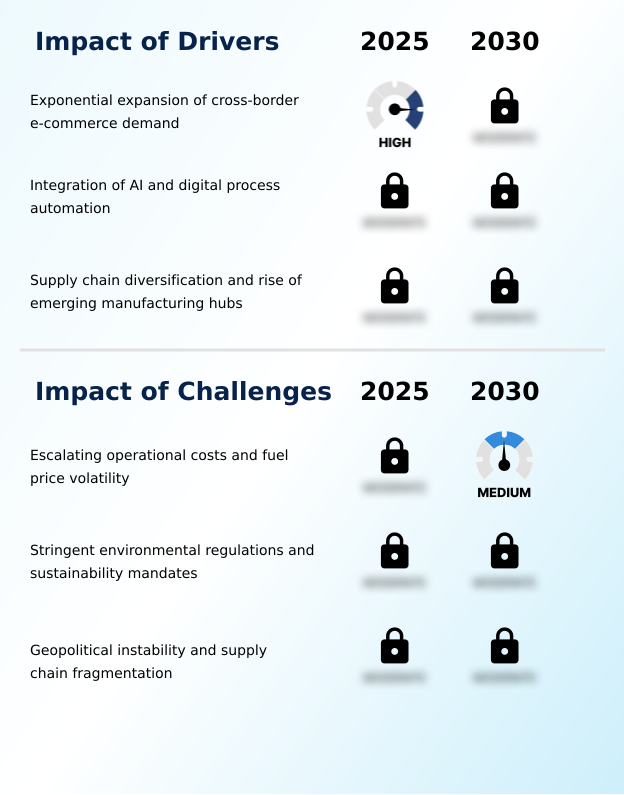
What are the key market drivers leading to the rise in the adoption of Air Cargo Industry?
- The exponential expansion of cross-border e-commerce demand serves as a key driver for the market's growth.
- The market's primary growth engine is the relentless expansion of cross-border e-commerce fulfillment, which has structurally shifted demand towards faster, more reliable express cargo services.
- This has fueled the growth of multi-nodal supply chains, where automated sorting systems at key hubs can accelerate parcel processing by over 30%.
- Freight forwarding platforms are becoming essential for managing the complexity of these networks, which increasingly require seamless last-mile delivery integration. To meet the surge in volume, operators are expanding capacity through strategic ACMI leasing and investments in new aircraft.
- The boom in APAC, where demand recently surged by 13.6% in a single period, underscores this trend.
- Advanced demand forecasting models and customs clearance automation are critical for handling the millions of individual shipments that now define a significant portion of total cargo tonne-kilometers.
What are the market trends shaping the Air Cargo Industry?
- The accelerated proliferation of digital freight marketplaces and real-time visibility solutions is a key upcoming trend. This shift is reshaping how capacity is booked and tracked across the industry.
- Key trends are reshaping the market, pushing it towards greater efficiency and sustainability. The widespread adoption of digital freight marketplaces provides shippers with unprecedented real-time visibility, allowing for dynamic pricing models that optimize spend. This digital shift, where some carriers now process over 90% of bookings online, is supported by air waybill automation, drastically reducing administrative overhead.
- Concurrently, a strategic pivot toward sustainability is driving significant fleet modernization. Carriers are investing in next-generation aircraft and exploring passenger-to-freighter conversions to improve fuel efficiency.
- The push for carbon offsetting schemes is accelerating the uptake of sustainable aviation fuel, with new aircraft models offering up to a 25% reduction in CO2 emissions per ton-kilometer, aligning with stricter global environmental standards and enhancing capacity management systems.
What challenges does the Air Cargo Industry face during its growth?
- Escalating operational costs, alongside significant fuel price volatility, present a key challenge affecting the industry's growth trajectory.
- The market faces significant financial and regulatory pressures that challenge profitability and operational fluidity. Escalating operational costs, with fuel surcharges constituting over 30% of expenses for some carriers, require disciplined fuel surcharge management. This is compounded by the need for geopolitical risk mitigation as trade-lane disruptions can force costly rerouting.
- Furthermore, adhering to stringent dangerous goods regulations and implementing advanced cargo screening technology add layers of complexity and expense. Maintaining a secure chain of custody and ensuring precise unit load device tracking are non-negotiable but require continuous investment. While belly cargo capacity offers a cost-effective option, its availability is tied to passenger-route volatility.
- Navigating these challenges while managing reverse logistics operations and the transport of hazardous materials remains a primary focus for all stakeholders.
Exclusive Technavio Analysis on Customer Landscape
The air cargo market forecasting report includes the adoption lifecycle of the market, covering from the innovator’s stage to the laggard’s stage. It focuses on adoption rates in different regions based on penetration. Furthermore, the air cargo market report also includes key purchase criteria and drivers of price sensitivity to help companies evaluate and develop their market growth analysis strategies.
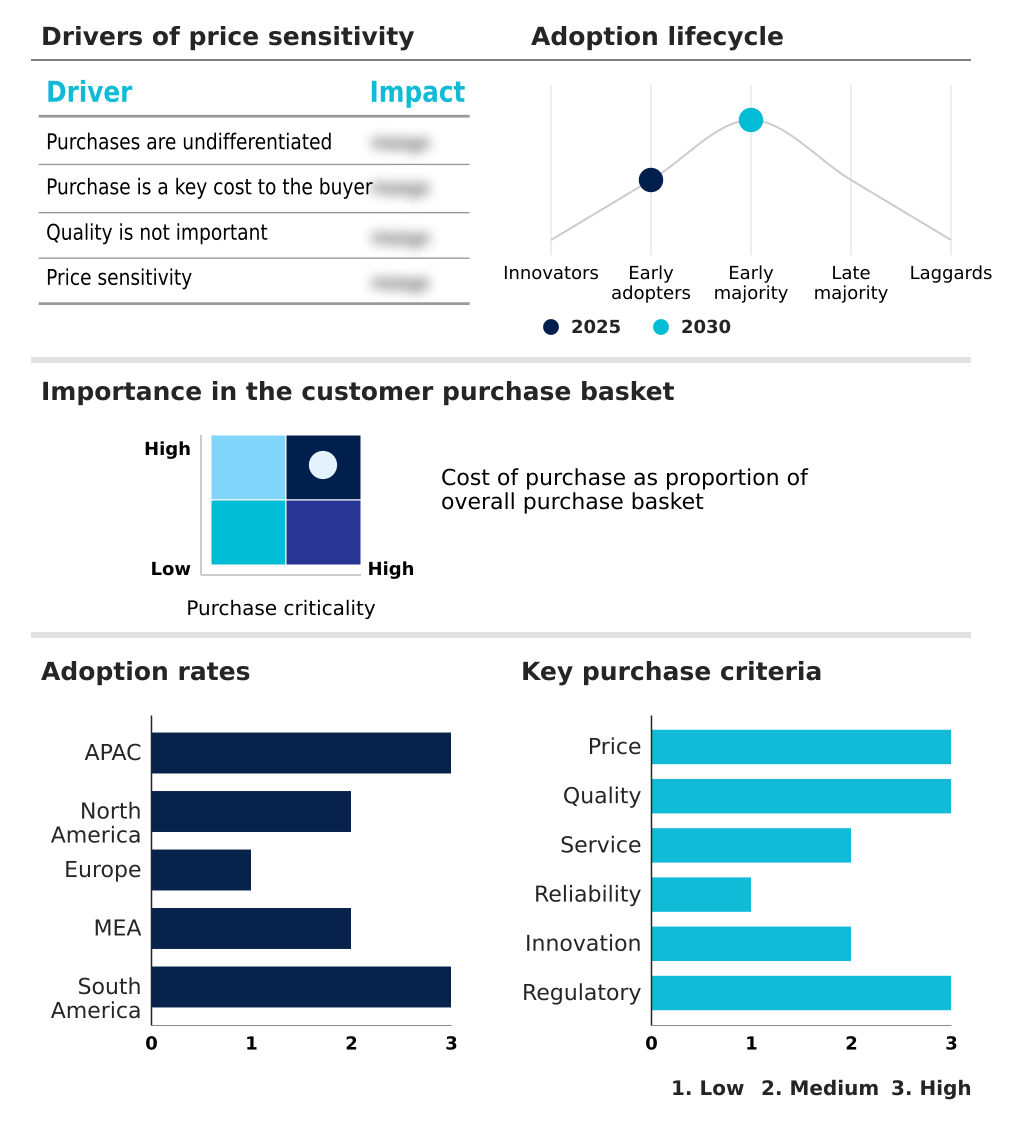
Customer Landscape of Air Cargo Industry
Competitive Landscape
Companies are implementing various strategies, such as strategic alliances, air cargo market forecast, partnerships, mergers and acquisitions, geographical expansion, and product/service launches, to enhance their presence in the industry.
Air France KLM Martinair Cargo - Digital booking platforms and specialized cargo services are enhancing flexibility, streamlining air freight procurement for evolving global trade dynamics.
The industry research and growth report includes detailed analyses of the competitive landscape of the market and information about key companies, including:
- Air France KLM Martinair Cargo
- AirBridgeCargo Airlines
- Ana Holdings Inc.
- Atlas Air Worldwide Holdings
- Cargolux Airlines International
- Cathay Pacific Airways Ltd.
- China Airlines Ltd.
- DHL International GmbH
- Etihad Cargo
- EVA Airways Corporation
- FedEx Corp.
- Japan Airlines Co. Ltd.
- Korean Air Lines Co. Ltd.
- Lufthansa Cargo AG
- Qatar Airways Cargo
- Silk Way West Airlines
- Singapore Airlines Ltd.
- The Emirates Group
- United Parcel Service Inc.
- Western Global Airlines LLC
Qualitative and quantitative analysis of companies has been conducted to help clients understand the wider business environment as well as the strengths and weaknesses of key industry players. Data is qualitatively analyzed to categorize companies as pure play, category-focused, industry-focused, and diversified; it is quantitatively analyzed to categorize companies as dominant, leading, strong, tentative, and weak.
Recent Development and News in Air cargo market
- In April 2025, Japan Airlines Co. Ltd. and Cargolux Airlines International began a strategic partnership on cargo routes connecting Narita with Luxembourg and Chicago to enhance connectivity between Asia, Europe, and North America.
- In March 2025, DHL International GmbH expanded its dedicated air freight capacity between Asia and Europe with new weekly Boeing 777F rotations to address surging demand on strategic trade lanes.
- In February 2025, Air France KLM Martinair Cargo launched a new dedicated freighter service to Seoul Incheon to strengthen its presence in the North Asian market and capitalize on its digital booking platform's success.
- In November 2024, Atlas Air Worldwide Holdings placed a firm order for 20 Airbus A350F freighters to modernize its fleet and enhance fuel efficiency, meeting upcoming ICAO CO2 emission standards.
Dive into Technavio’s robust research methodology, blending expert interviews, extensive data synthesis, and validated models for unparalleled Air Cargo Market insights. See full methodology.
| Market Scope | |
|---|---|
| Page number | 301 |
| Base year | 2025 |
| Historic period | 2020-2024 |
| Forecast period | 2026-2030 |
| Growth momentum & CAGR | Accelerate at a CAGR of 5.1% |
| Market growth 2026-2030 | USD 21328.8 million |
| Market structure | Fragmented |
| YoY growth 2025-2026(%) | 4.9% |
| Key countries | China, Japan, India, South Korea, Singapore, Australia, US, Canada, Mexico, Germany, UK, France, The Netherlands, Belgium, Italy, UAE, Saudi Arabia, Qatar, Turkey, South Africa, Brazil, Chile and Colombia |
| Competitive landscape | Leading Companies, Market Positioning of Companies, Competitive Strategies, and Industry Risks |
Research Analyst Overview
- The Air Cargo Market is navigating a period of profound structural change, where digital transformation and specialization are paramount for competitive positioning. Boardroom decisions are increasingly focused on balancing fleet modernization with stringent environmental mandates.
- A core element of this evolution is the widespread adoption of digital freight marketplaces and freight forwarding platforms, which streamline operations by automating the air waybill and customs clearance processes. Technology for cargo build-up optimization and predictive maintenance algorithms are delivering tangible efficiency gains, with some automated sorting systems reducing cargo processing times by over 30%.
- The industry's pivot toward high-value segments is evident in the expansion of specialized services for pharmaceutical transport and perishable goods handling, which demand sophisticated cold chain logistics, including certified temperature-controlled containers and a secure chain of custody.
- Simultaneously, the rise of e-commerce logistics continues to drive demand for express cargo services, measured in cargo tonne-kilometers, and necessitates resilient unit load device tracking.
- This dynamic environment requires adherence to complex dangerous goods regulations and the strategic use of dynamic pricing models to manage volatile operational costs, ensuring that carriers offering special cargo handling and superior aircraft turnaround time maintain a market advantage.
What are the Key Data Covered in this Air Cargo Market Research and Growth Report?
-
What is the expected growth of the Air Cargo Market between 2026 and 2030?
-
USD 21.33 billion, at a CAGR of 5.1%
-
-
What segmentation does the market report cover?
-
The report is segmented by End-user (Manufacturing, FMCG and retail, Pharmaceuticals and chemicals, and Others), Type (Belly cargo, and Freighter), Service Type (Express cargo, General cargo, and Special cargo) and Geography (APAC, North America, Europe, Middle East and Africa, South America)
-
-
Which regions are analyzed in the report?
-
APAC, North America, Europe, Middle East and Africa and South America
-
-
What are the key growth drivers and market challenges?
-
Exponential expansion of cross-border e-commerce demand, Escalating operational costs and fuel price volatility
-
-
Who are the major players in the Air Cargo Market?
-
Air France KLM Martinair Cargo, AirBridgeCargo Airlines, Ana Holdings Inc., Atlas Air Worldwide Holdings, Cargolux Airlines International, Cathay Pacific Airways Ltd., China Airlines Ltd., DHL International GmbH, Etihad Cargo, EVA Airways Corporation, FedEx Corp., Japan Airlines Co. Ltd., Korean Air Lines Co. Ltd., Lufthansa Cargo AG, Qatar Airways Cargo, Silk Way West Airlines, Singapore Airlines Ltd., The Emirates Group, United Parcel Service Inc. and Western Global Airlines LLC
-
Market Research Insights
- The market is undergoing a significant operational transformation, driven by technological integration and shifting trade dynamics. Digitalization is paramount, with some carriers achieving over 90% of bookings through online portals, which drastically reduces administrative overhead. This shift allows for enhanced capacity management systems and route network optimization, improving load factors by up to 15%.
- The strategic move towards supply chain diversification has increased the complexity of multi-nodal supply chains, compelling operators to adopt more flexible solutions like ACMI leasing and on-demand cargo charter services. Furthermore, advanced demand forecasting models are being deployed to mitigate the financial impact of fuel surcharge management and navigate geopolitical risk mitigation strategies effectively.
- This data-centric approach ensures carriers can maintain resilience while adapting to evolving global trade patterns.
We can help! Our analysts can customize this air cargo market research report to meet your requirements.
 RIA -
RIA - 
