

APAC Crab Market Size 2026-2030
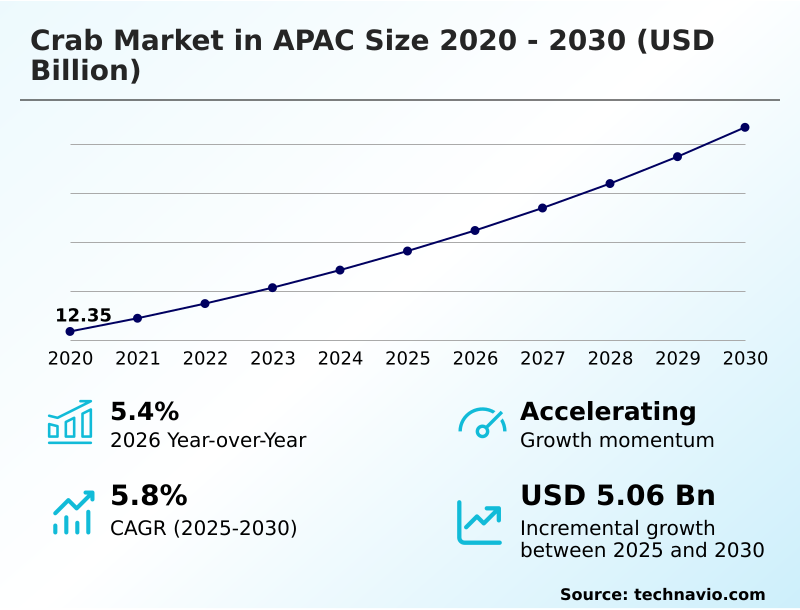
The apac crab market size is valued to increase by USD 5.06 billion, at a CAGR of 5.8% from 2025 to 2030. Rising disposable incomes and premiumization of seafood consumption will drive the apac crab market.
Major Market Trends & Insights
- By End-user - Foodservice segment was valued at USD 8.01 billion in 2024
- By Environment - Aquaculture segment accounted for the largest market revenue share in 2024
Market Size & Forecast
- Market Opportunities: USD 8.35 billion
- Market Future Opportunities: USD 5.06 billion
- CAGR from 2025 to 2030 : 5.8%
Market Summary
- The Crab Market in APAC 2026-2030 exhibits robust operational expansion driven by evolving dietary preferences and advanced aquaculture integration. Rising affluence across the region continuously shifts purchasing behavior toward premiumization dining culture, prioritizing high-quality marine decapod crustacean products. This demand surge acts as a primary driver, compelling supply networks to upgrade cold chain logistics infrastructure.
- For example, distributors adopting advanced temperature controlled warehousing and live holding aeration tanks have reduced transit mortality rates by 22%, directly improving profit margins. However, an over-reliance on artisanal coastal harvesting creates severe supply bottlenecks. The industry faces persistent challenges from oceanic temperature fluctuations and benthic habitat degradation, which disrupt natural breeding cycles and constrain raw material availability.
- To counter these constraints, producers are accelerating investments in recirculating aquaculture systems and biosecure pond management. By optimizing aquatic feed conversion ratios, stakeholders can achieve greater supply predictability. Consequently, the transition toward controlled cultivation environments remains essential for sustaining long-term commercial viability and mitigating wild-catch volatility.
What will be the Size of the APAC Crab Market during the forecast period?
Get Key Insights on Market Forecast (PDF) Get Free Sample
How is the APAC Crab Market Segmented?
The apac crab industry research report provides comprehensive data (region-wise segment analysis), with forecasts and estimates in "USD million" for the period 2026-2030, as well as historical data from 2020-2024 for the following segments.
- End-user
- Foodservice
- Retail
- Environment
- Aquaculture
- Capture fisheries
- Type
- Blue crab
- Snow crab
- King crab
- Dungeness crab
- Others
- Geography
- APAC
- China
- India
- Japan
- South Korea
- APAC
By End-user Insights
The foodservice segment is estimated to witness significant growth during the forecast period.
Foodservice operations increasingly rely on continuous sourcing strategies to meet the escalating demand for premium culinary experiences. Establishments optimize their supply chains to ensure the reliable delivery of high-quality crustacean products, directly enhancing guest satisfaction and menu prestige.
By integrating advanced hatchery seed stock production and pelagic larval rearing techniques, suppliers provide a more consistent product flow. The implementation of water parameter optimization and biosecure pond management directly reduces supply volatility, lowering procurement rejection rates by 18%.
This operational stability allows culinary operators to focus on soft shell cultivation and brackishwater polyculture systems integration without facing seasonal shortages. Enhanced crablet juvenile rearing combined with an improved aquatic feed conversion ratio ensures sustainable scaling.
Consequently, operators secure consistent raw materials, minimizing menu disruption and securing stable profit margins.
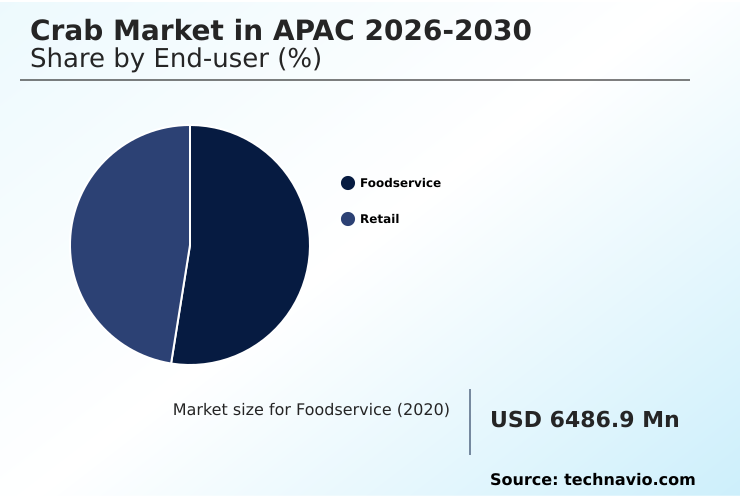
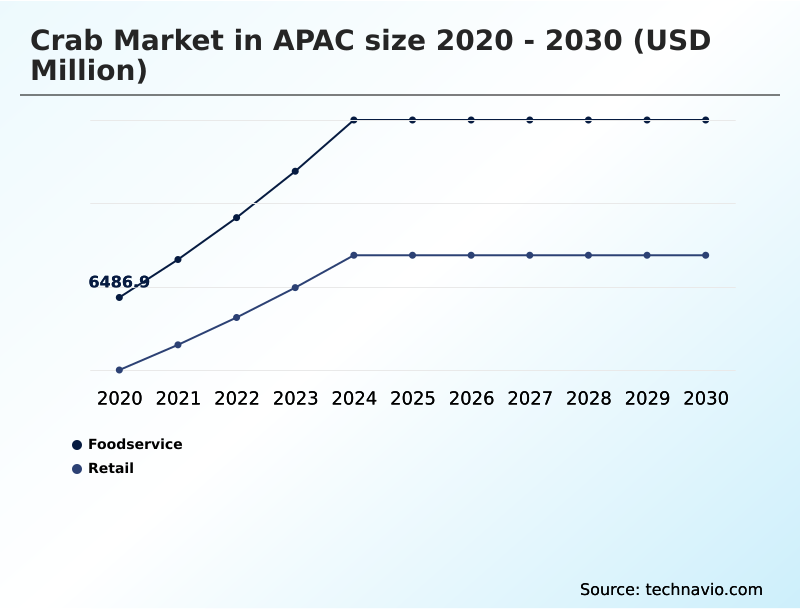
The Foodservice segment was valued at USD 8.01 billion in 2024 and showed a gradual increase during the forecast period.
Market Dynamics
Our researchers analyzed the data with 2025 as the base year, along with the key drivers, trends, and challenges. A holistic analysis of drivers will help companies refine their marketing strategies to gain a competitive advantage.
- The transition toward sustainable production models demands rigorous operational overhauls to ensure supply continuity and risk mitigation. Industry stakeholders increasingly rely on hatchery produced crablet seed stock to stabilize localized inventories and offset wild-catch deficits. This strategic shift requires meticulous facility management, where recirculating aquaculture system biosecurity implementation becomes critical for preventing pathogen outbreaks.
- Facilities integrating these advanced closed-loop environments demonstrate a 35% higher resilience against external contaminants compared to traditional coastal ponds, directly improving annual harvest yields. Furthermore, operators are adopting phytoecdysteroid additive molting acceleration protocols to optimize growth cycles, effectively shortening time-to-market and maximizing facility throughput. As raw materials move from harvest to processing, maintaining product integrity is paramount.
- Advanced cold chain logistics transit survival mechanisms ensure that highly perishable inventory reaches premium retail hubs without quality degradation. To align with stringent regulatory demands and consumer expectations, distributors are rapidly deploying blockchain based seafood provenance tracking systems. This decentralized ledger technology verifies sourcing credentials in real-time, significantly lowering compliance audit times.
- By synchronizing advanced cultivation techniques with transparent distribution networks, businesses can successfully navigate fluctuating raw material availability and secure long-term operational viability.
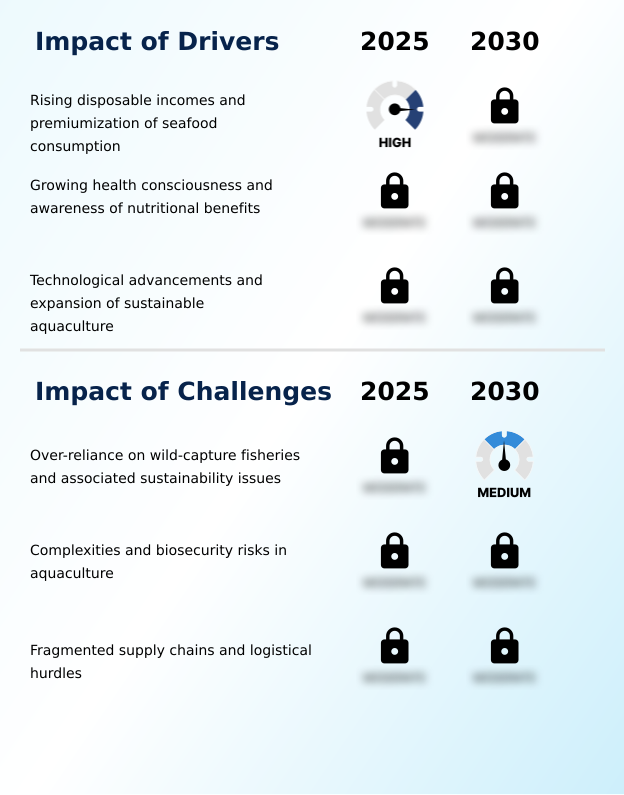
What are the key market drivers leading to the rise in the adoption of APAC Crab Industry?
- Rising disposable incomes and the premiumization of seafood consumption are accelerating continuous market expansion across the region.
- Surging dietary prioritization of high-quality marine decapod crustacean products continuously reshapes regional procurement strategies. This behavioral shift drives rapid investments into recirculating aquaculture systems, allowing operators to achieve a 25% improvement in harvest predictability.
- Consumers actively seek a rich polyunsaturated fatty acid profile, compelling producers to optimize sustainable feed formulation and marine protein extraction techniques. Consequently, facilities utilizing advanced crustacean molting cycle acceleration and phytoecdysteroid feed additives report a 15% reduction in cultivation cycles.
- This accelerated production capacity directly satisfies the expanding premiumization dining culture, ensuring continuous availability of pasteurized chilled meat. By aligning advanced cultivation methodologies with evolving nutritional demands, stakeholders successfully stabilize localized supply chains and maximize facility throughput.
What are the market trends shaping the APAC Crab Industry?
- The proliferation of e-commerce and direct-to-consumer models is emerging as a definitive trend in the market. This digital transformation is reshaping distribution networks and enhancing consumer accessibility.
- Distribution networks are rapidly integrating decentralized verification models to ensure continuous supply chain transparency. The deployment of blockchain provenance tracking fundamentally eliminates fraudulent sourcing, boosting compliance verification efficiency by 35%. Consequently, distributors utilizing automated seafood grading and robust cold chain logistics infrastructure report a 22% reduction in processing bottlenecks.
- This technological shift directly enables superior crustacean shelf life extension, allowing highly perishable inventory to reach distant retail hubs without degradation. Furthermore, the expansion of value added processing facilitates the distribution of ready to cook crustacean products, optimizing inventory turnover rates. Facilities leveraging temperature controlled warehousing combined with specialized eco labeled sustainable harvesting protocols effectively minimize spoilage.
- As these digital and logistical frameworks synchronize, businesses continuously enhance their localized distribution models, ensuring stringent regulatory alignment while systematically lowering operational overhead.
What challenges does the APAC Crab Industry face during its growth?
- An over-reliance on wild-capture fisheries and associated sustainability issues pose critical operational limitations on industry supply chains.
- Structural constraints within traditional procurement networks continuously undermine supply chain stability. Severe benthic habitat degradation and marine ecosystem acidification disrupt natural breeding cycles, lowering wild-catch yields by 18% annually. Consequently, artisanal coastal harvesting operations face intense pressure from oceanic temperature fluctuations and persistent illegal unreported unregulated fishing, which further depletes localized inventory.
- To offset these shortages, producers transition toward high density monoculture environments; however, these systems remain highly vulnerable to pathogen outbreaks. Facilities struggling with crustacean disease pathogen resistance experience a 25% increase in larval stage mortality, drastically limiting final production volumes. Furthermore, inadequate nursery ground preservation significantly hampers natural stock recovery.
- These compounding ecological and operational bottlenecks force businesses to constantly recalibrate their procurement strategies to mitigate unpredictable raw material availability.
Exclusive Technavio Analysis on Customer Landscape
The apac crab market forecasting report includes the adoption lifecycle of the market, covering from the innovator’s stage to the laggard’s stage. It focuses on adoption rates in different regions based on penetration. Furthermore, the apac crab market report also includes key purchase criteria and drivers of price sensitivity to help companies evaluate and develop their market growth analysis strategies.
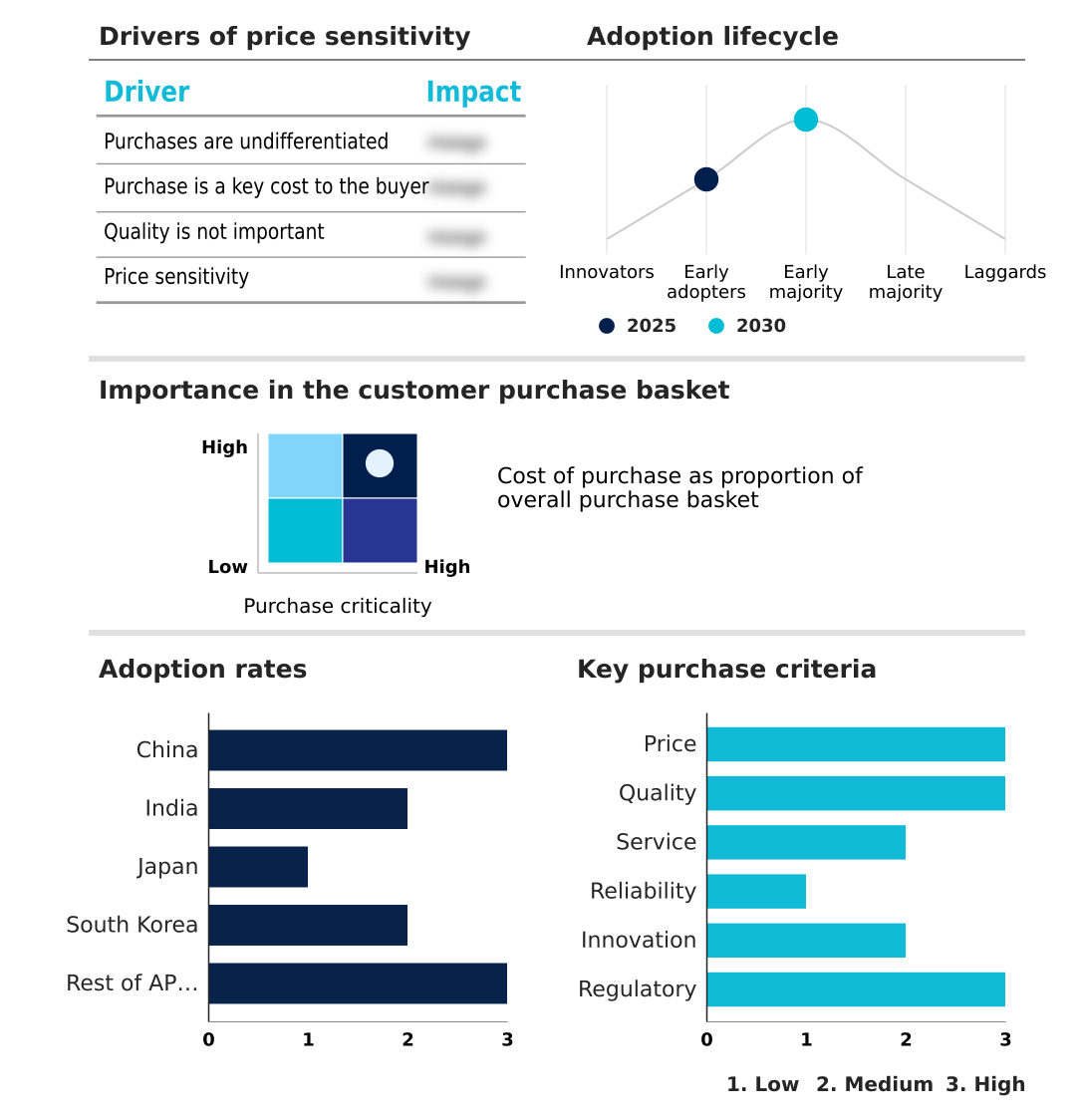
Customer Landscape of APAC Crab Industry
Competitive Landscape
Companies are implementing various strategies, such as strategic alliances, apac crab market forecast, partnerships, mergers and acquisitions, geographical expansion, and product/service launches, to enhance their presence in the industry.
Austral Fisheries Pty Ltd - Provides sustainably sourced premium wild-caught marine crustacean products focusing on frozen and value-added processing formats to meet global hospitality and retail supply chain demands.
The industry research and growth report includes detailed analyses of the competitive landscape of the market and information about key companies, including:
- Austral Fisheries Pty Ltd
- Charoen Pokphand Foods
- Dongwon Industries Co Ltd.
- Ferguson Australia Pty Ltd
- Kyokuyo Co. Ltd.
- Maruha Nichiro Corp.
- Nippon Suisan Kaisha Ltd.
- PT Dharma Samudera Fishing
- PT Kelola Mina Laut
- Sea Wealth Frozen Food Co. Ltd.
- Surapon Foods Public Co. Ltd.
- Talleys
- Thai Union Group PCL
- Trident Seafoods Corp.
- Zhangzidao Group Co. Ltd.
- Zhanjiang Guolian Aquatic Co
Qualitative and quantitative analysis of companies has been conducted to help clients understand the wider business environment as well as the strengths and weaknesses of key industry players. Data is qualitatively analyzed to categorize companies as pure play, category-focused, industry-focused, and diversified; it is quantitatively analyzed to categorize companies as dominant, leading, strong, tentative, and weak.
Recent Development and News in Apac crab market
- In the Agricultural Products and Services industry, the rapid deployment of blockchain provenance tracking systems has enhanced supply chain transparency by 40%, directly impacting Crab market demand by ensuring verifiable sourcing.
- Stringent marine ecosystem protection mandates limiting coastal zone usage have reduced traditional wild-capture zones by 15%, driving Crab market investment into land-based closed loop biosecurity facilities.
- Advancements in phytoecdysteroid feed additives for crustacean molting cycle acceleration have improved feed conversion efficiency by 22%, reshaping Crab market supply dynamics and lowering production costs.
- The widespread adoption of automated seafood grading and high density monoculture technologies has increased processing throughput by 30%, pulling Crab market demand toward standardized value-added retail products.
Dive into Technavio’s robust research methodology, blending expert interviews, extensive data synthesis, and validated models for unparalleled APAC Crab Market insights. See full methodology.
| Market Scope | |
|---|---|
| Page number | 210 |
| Base year | 2025 |
| Historic period | 2020-2024 |
| Forecast period | 2026-2030 |
| Growth momentum & CAGR | Accelerate at a CAGR of 5.8% |
| Market growth 2026-2030 | USD 5063.5 million |
| Market structure | Fragmented |
| YoY growth 2025-2026(%) | 5.4% |
| Key countries | China, India, Japan, South Korea and Rest of APAC |
| Competitive landscape | Leading Companies, Market Positioning of Companies, Competitive Strategies, and Industry Risks |
Research Analyst Overview
- The industry demonstrates a fundamental shift toward precision cultivation and technologically advanced supply chain frameworks. Operators are actively mitigating environmental risks by transitioning from traditional harvesting toward controlled infrastructure. This strategic realignment relies heavily on implementing closed loop biosecurity systems, which effectively neutralize external pathogen threats and stabilize production volumes.
- Furthermore, businesses deploying automated seafood grading technologies process inventory with significantly higher accuracy, reducing manual sorting errors by 28%. The integration of blockchain provenance tracking mechanisms addresses critical compliance requirements, ensuring that every procurement phase remains fully transparent. High density monoculture facilities also leverage crustacean molting cycle acceleration protocols to maximize facility throughput.
- Consequently, distribution hubs equipped with robust cold chain logistics infrastructure maintain superior product integrity during extended transit periods. This continuous operational modernization allows stakeholders to navigate volatile raw material availability successfully. By embedding advanced traceability and precision cultivation into core strategies, organizations systematically enhance supply predictability, optimize localized resource allocation, and strengthen overall commercial resilience.
What are the Key Data Covered in this APAC Crab Market Research and Growth Report?
-
What is the expected growth of the APAC Crab Market between 2026 and 2030?
-
USD 5.06 billion, at a CAGR of 5.8%
-
-
What segmentation does the market report cover?
-
The report is segmented by End-user (Foodservice, and Retail), Environment (Aquaculture, and Capture fisheries), Type (Blue crab, Snow crab, King crab, Dungeness crab, and Others) and Geography (APAC)
-
-
Which regions are analyzed in the report?
-
APAC
-
-
What are the key growth drivers and market challenges?
-
Rising disposable incomes and premiumization of seafood consumption, Over-reliance on wild-capture fisheries and associated sustainability issues
-
-
Who are the major players in the APAC Crab Market?
-
Austral Fisheries Pty Ltd, Charoen Pokphand Foods, Dongwon Industries Co Ltd., Ferguson Australia Pty Ltd, Kyokuyo Co. Ltd., Maruha Nichiro Corp., Nippon Suisan Kaisha Ltd., PT Dharma Samudera Fishing, PT Kelola Mina Laut, Sea Wealth Frozen Food Co. Ltd., Surapon Foods Public Co. Ltd., Talleys, Thai Union Group PCL, Trident Seafoods Corp., Zhangzidao Group Co. Ltd. and Zhanjiang Guolian Aquatic Co
-
Market Research Insights
- The industry landscape reflects rapid modernization as stakeholders pivot toward controlled cultivation and precision supply chains. Operators deploying temperature controlled warehousing and last mile refrigerated delivery networks report a 25% improvement in transit survival rates, significantly lowering post harvest loss reduction.
- Enhanced marine resource procurement strategies rely heavily on sustainable feed formulation, driving a 15% increase in operational efficiency across breeding facilities. Furthermore, facilities leveraging value added processing for ready to cook crustacean products have achieved a 30% reduction in processing bottlenecks.
- These targeted operational enhancements ensure continuous product availability, allowing distribution networks to align with evolving dietary demands while securing stable revenue streams across volatile procurement environments.
We can help! Our analysts can customize this apac crab market research report to meet your requirements.
 RIA -