


AR/VR Smart Glasses Market Size 2023-2027
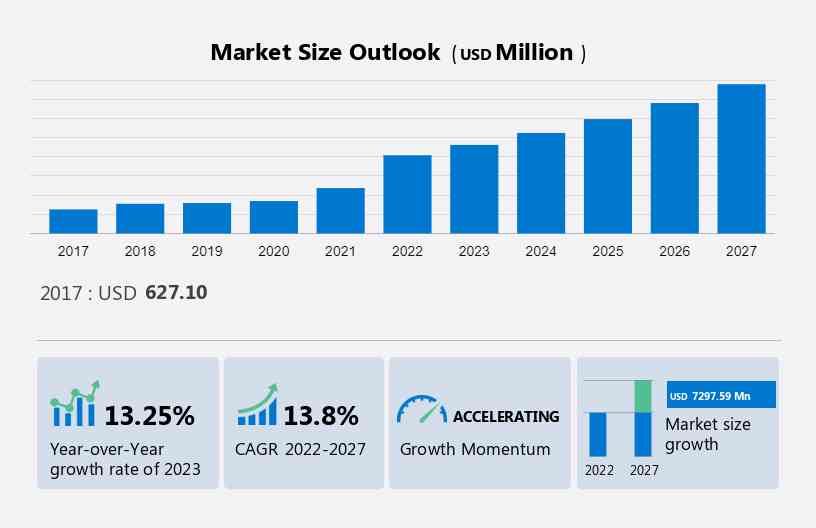
The augmented reality (AR) and virtual reality (VR) smart glasses market size is forecast to increase by USD 7.30 billion, at a CAGR of 13.8% between 2022 and 2027. Market expansion hinges on various factors, notably the rising adoption of AR/VR smart glasses, spurred by their immersive capabilities and applications across diverse sectors. Furthermore, the growing popularity of AR gaming among individuals fuels demand for these innovative devices, amplifying their market presence. Another contributing factor is the proliferation of crowdfunding campaigns, which serve as a catalyst for product development and market entry. By leveraging crowdfunding platforms, companies can garner support from a wide audience and secure funding for AR/VR smart glasses projects, driving innovation and market growth. Collectively, these factors create a conducive environment for the expansion of the AR/VR smart glasses market, paving the way for enhanced user experiences and broader adoption across various domains.
What will be the size of the Market During the Forecast Period?
To learn more about this report, Download Report Sample
Market Segmentation
The AR VR smart glasses market is witnessing significant growth across various sectors, such as entertainment, training, healthcare, and e-commerce. These glasses offer immersive experiences in augmented reality games and provide surgical support and medical training in healthcare settings. With advancements in artificial intelligence (AI) and machine learning (ML), coupled with high-speed 5G internet, these glasses incorporate features like voice recognition and machine vision for enhanced functionality. They utilize carbon fiber and titanium frames for durability, while OLED display technology ensures a superior visual experience.
This market forecast report extensively covers market segmentation by application (gaming, education, industrial, and military), product (optical see-through and video see-through), and geography (North America, APAC, Europe, South America, and Middle East and Africa). It also includes an in-depth analysis of drivers, trends, and challenges.
By Application
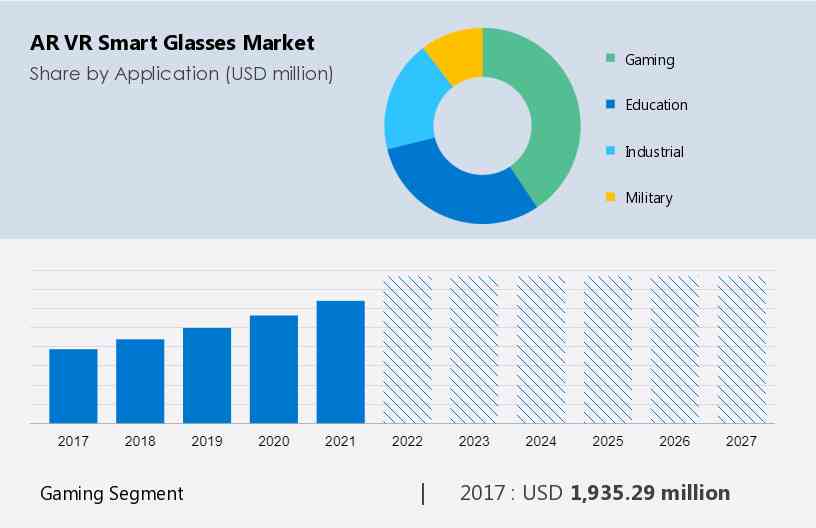
The market share growth by the gaming segment will be significant during the forecast period. The term augmented reality (AR) gaming describes the real-time blending of game visual and audio material with the user environment. AR/VR smart glasses for gaming deliver a simulated world with AR technology and software, which provide users with a virtual experience. Such factors will increase the market growth during the forecast period.
Get a glance at the market contribution of various segments Request a PDF Sample
The gaming segment was valued at USD 1.94 billion in 2017. The adoption of AR gadgets like smart glasses is anticipated to increase during the forecast period as a result of the increased popularity of AR gaming. As a result, AR devices are preferred by game developers over traditional gaming hardware. Innovative 3D technologies are being used by businesses to create smart glasses for the gaming industry. The above factors will increase the augmented reality (AR) and virtual reality (VR) smart glasses market growth during the forecast period.
By Region
For more insights on the market share of various regions Request PDF Sample now!
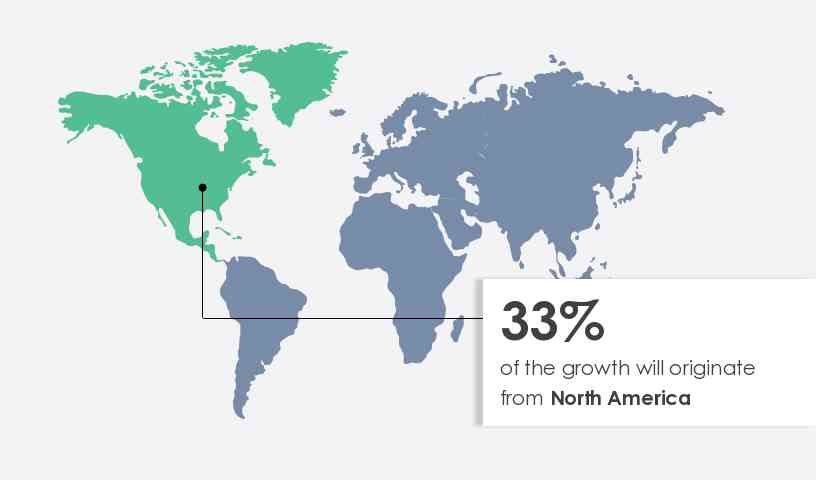
North America is estimated to contribute 33% to the growth of the global market during the forecast period. Technavio’s analysts have elaborately explained the regional trends and drivers that shape the market during the forecast period. One of the major reasons for the dominance of North America in the market is that the region has always been at the forefront of adopting new technologies. North America is a hub of major smart glasses OEMs. The country also benefits from products that are made available to US customers first. For instance, most startups introduce their products first in North America, specifically the US. This is attributed to the increased awareness of the potential benefits of using smart glasses in the region.
Market Dynamics and Customer Landscape
The market is expanding rapidly, finding applications in enterprise applications, patient care, and telemedicine. Leveraging the Internet of Things (IoT) and big data, these glasses provide real-time insights and personalized experiences. They cater to gamers with immersive gameplay and support rapid digitization trends. Equipped with microphones and four directional speakers, they offer interactive audio experiences. As part of the AR VR revolution, these glasses are driving innovation in various sectors, promising a transformative impact on how we interact with technology. Our researchers analyzed the data with 2022 as the base year, along with the key drivers, trends, and challenges. A holistic analysis of drivers will help companies refine their marketing strategies to gain a competitive advantage.
Key Market Driver
The increasing adoption of AR/VR smart glasses is the key factor driving market growth. AR/VR smart glasses are computer glasses that add contextual information to what the wearer views. AR/VR is primarily experienced via a wearable glass device, HUD, or smartphone application. The objective of smart glasses is to blend user vision with the virtual world effortlessly. Smart glasses work through an amalgamation of the display, sensors, and accelerometers coupled with smart software and internet connectivity.
Furthermore, AR/VR smart glasses, therefore, enhance a user experience in the real world rather than replacing it. Smart glasses can be equipped with AR VR smart technology for day-to-day domestic and professional uses. This will boost the demand for AR VR smart glasses. Thus, the growing adoption of AR VR smart glasses will positively impact the market in focus during the forecast period.
Primary Market Trends
The emergence of simultaneous localization and mapping (SLAM) technology is the primary trend in the market. SLAM is a popular and important autonomous mapping and navigation technology. It allows users to easily display 3D CAD models that are overlaid on a real-world view. The technology was first used in the eyes of NASA robots to create maps of unknown environments and position devices with extreme accuracy. The world’s first SLAM implementation in consumer electronics devices was brought by 13th Lab, which was acquired by Facebook LLC (Facebook) Oculus Rift division in 2014. Hence, the US was a prominent market for SLAM technology at its initial stages of development.
Further, SLAM is an ideal technology for smart glasses as it gives a markerless experience and requires images to be printed. Visual SLAM is ideal for tracking in unknown environments and spaces. The technology scans and learns about the environment constantly. It allows developers to augment useful content based on location within a space. Vendors have also started integrating SLAM technology into their smart glasses. This is expected to have a positive impact on the growth of the market during the forecast period.
Major Market Challenge
Privacy concerns over AR/VR smart glasses is a major challenge to the market growth. AR/VR smart glass collects and processes vast amounts of information about users and their environment. The ability of smart glasses to gather a large volume of data about users and record anyone and anything can cause security and privacy concerns. Hackers can access the data stored in devices, including the images recorded by the camera. They can also build 3D indoor models of different environments using the images recorded by smart glasses. With smart glasses, recording is simple and unnoticeable.
Hence, the use of smart glasses such as AR/VR smart glasses can be a threat to national security as the data stored in smart glasses can be accessed and misused for criminal or terrorist activities. Therefore, the governments of several countries are implementing rules and regulations related to the protection of private and confidential information. These regulations might discourage certain companies, especially ones that specialize in technologies such as facial recognition, from entering the market, which can hinder the growth of the market in focus during the forecast period.
Market Customer Landscape
The report includes the adoption lifecycle of the market, covering from the innovator’s stage to the laggard’s stage. It focuses on adoption rates in different regions based on penetration. Furthermore, the market forecasting report also includes key purchase criteria and drivers of price sensitivity to help companies evaluate and develop their growth strategies.
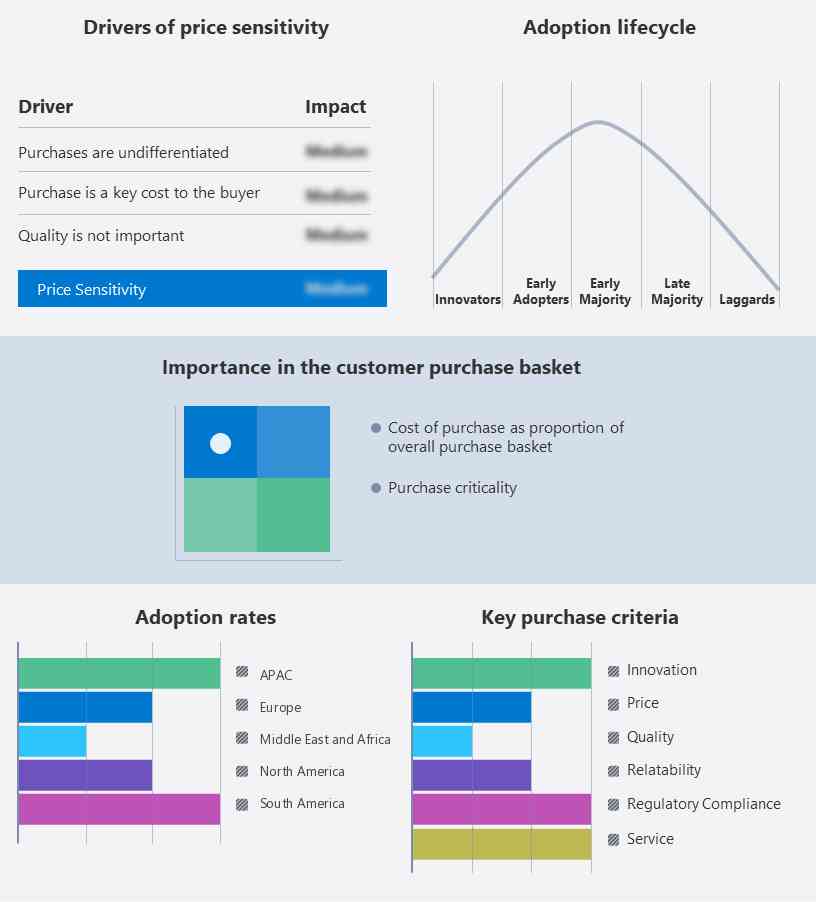
Market Customer Landscape
Who are the Major Market Players?
Companies are implementing various strategies, such as strategic alliances, partnerships, mergers and acquisitions, geographical expansion, and product/service launches, to enhance their presence in the market.
Alphabet Inc. - The company offers AR/VR smart glasses, namely Glass Enterprise Edition 2.
The report also includes detailed analyses of the competitive landscape of the market and information about 15 market companies, including:
- Atheer Inc
- Elbit Systems Ltd.
- HTC Corp.
- Iristick NV
- Lenovo Group Ltd.
- Lumus Ltd.
- Meta Platforms Inc.
- Microsoft Corp.
- Optinvent
- RealWear Inc.
- Ricoh Co. Ltd.
- Snap Inc.
- Tobii AB
- Vuzix Corp.
Qualitative and quantitative analysis of companies has been conducted to help clients understand the wider business environment as well as the strengths and weaknesses of key market players. Data is qualitatively analyzed to categorize companies as pure play, category-focused, industry-focused, and diversified; it is quantitatively analyzed to categorize companies as dominant, leading, strong, tentative, and weak.
Segment Overview
The market research report provides comprehensive data (region wise segment analysis), with forecasts and estimates in "USD billion" for the period 2023 to 2027, as well as historical data from 2017 to 2021 for the following segments
- Application Outlook
- Gaming
- Education
- Industrial
- Military
- Product Outlook
- Optical see-through
- Video see-through
- Region Outlook
- North America
- The U.S.
- Canada
- Europe
- The U.K.
- Germany
- France
- Rest of Europe
- APAC
- China
- India
- South America
- Chile
- Brazil
- Middle East & Africa
- Saudi Arabia
- South Africa
- Rest of the Middle East & Africa
- North America
You may also interested in below market reports:
Smart Glasses Market Global Smart Glasses Market Analysis North America, Europe, APAC, Middle East and Africa, South America - US, China, France, UK, Germany - Size and Forecast
Augmented Reality (AR) Market Augmented Reality (AR) Market Analysis North America,APAC,Europe,South America,Middle East and Africa - US,China,Japan,Germany,UK - Size and Forecast
Metaverse Market Metaverse Market Analysis North America, Europe, APAC, South America, Middle East and Africa - US, China, Germany, UK, Canada - Size and Forecast
Market Analyst Overview:
The market is witnessing significant growth across various sectors, including retail establishments, e-commerce platforms, and automotive and transportation applications. These glasses offer immersive experiences through advanced technologies like optical projection and waveguide displays, catering to consumer entertainment, healthcare, and industrial applications. Equipped with features such as 360-degree video, speech recognition, and face and object tracking, they enable remote maintenance and content creation with ease. Enhanced by 5G technology and high-bandwidth connections, they deliver lifelike virtual environments and realistic lighting effects for gaming consoles and social media interactions. With wearable electronics and MicroLED integration, these glasses offer high-resolution displays and immersive interactions, paving the way for a new era of digital transformation in AR and VR experiences.
|
Market Scope |
|
|
Report Coverage |
Details |
|
Page number |
164 |
|
Base year |
2022 |
|
Historic period |
2017-2021 |
|
Forecast period |
2023-2027 |
|
Growth momentum & CAGR |
Accelerate at a CAGR of 13.8% |
|
Market growth 2023-2027 |
USD 7.30 billion |
|
Market structure |
Fragmented |
|
YoY growth 2022-2023(%) |
13.25 |
|
Regional analysis |
North America, APAC, Europe, South America, and Middle East and Africa |
|
Performing market contribution |
North America at 33% |
|
Key countries |
US, Canada, China, India, and Germany |
|
Competitive landscape |
Leading Companies, Market Positioning of Companies, Competitive Strategies, and Industry Risks |
|
Key companies profiled |
Alphabet Inc., Atheer Inc, Elbit Systems Ltd., HTC Corp., Iristick NV, Kopin Corp., Lenovo Group Ltd., Lumus Ltd., Meta Platforms Inc., Microsoft Corp., Optinvent, RealWear Inc., Ricoh Co. Ltd., Snap Inc., Tobii AB, Vuzix Corp., Samsung Electronics Co. Ltd., Sony Group Corp., Toshiba Corp., and Seiko Epson Corp. |
|
Market dynamics |
Parent market analysis, Market growth inducers and obstacles, Fast-growing and slow-growing segment analysis, COVID-19 impact and recovery analysis and future consumer dynamics, Market condition analysis for the forecast period |
|
Customization purview |
If our report has not included the data that you are looking for, you can reach out to our analysts and get segments customized. |
What are the Key Data Covered in this Market Report?
- CAGR of the market during the forecast period
- Detailed information on factors that will drive the market growth and forecasting of the market between 2023 and 2027
- Precise estimation of the market size and its contribution to the parent market
- Accurate predictions about upcoming market trends and analysis and changes in consumer behavior
- Growth of the market across Europe, North America, APAC, South America, and Middle East and Africa
- Thorough market growth analysis of the market’s competitive landscape and detailed information about companies
- Comprehensive market analysis and report on the factors that will challenge the market research and growth of market companies
We can help! Our analysts can customize this report to meet your requirements. Get in touch
 RIA -
RIA - 
