



The artificial intelligence in manufacturing and supply chain market share in Japan is expected to increase by USD 1.79 billion from 2021 to 2026, and the market’s growth momentum will accelerate at a CAGR of 13.27%.
This artificial intelligence in manufacturing and supply chain market in Japan research report provides valuable insights on the post COVID-19 impact on the market, which will help companies evaluate their business approaches. Furthermore, this report extensively covers artificial intelligence in manufacturing and supply chain market segmentation in Japan by end-user (automotive, aerospace, building construction, chemical, and others) and type (software, hardware, and others services). The artificial intelligence in manufacturing and supply chain market in Japan report also offers information on several market vendors, including Alphabet Inc., General Electric Co., Intel Corp., International Business Machines Corp., Microsoft Corp., NVIDIA Corp., RapidMiner Inc., Salesforce.com Inc., Samsung Electronics Co. Ltd., and Siemens AG among others.
What will the Artificial Intelligence in Manufacturing and Supply Chain Market Size in Japan be During the Forecast Period?
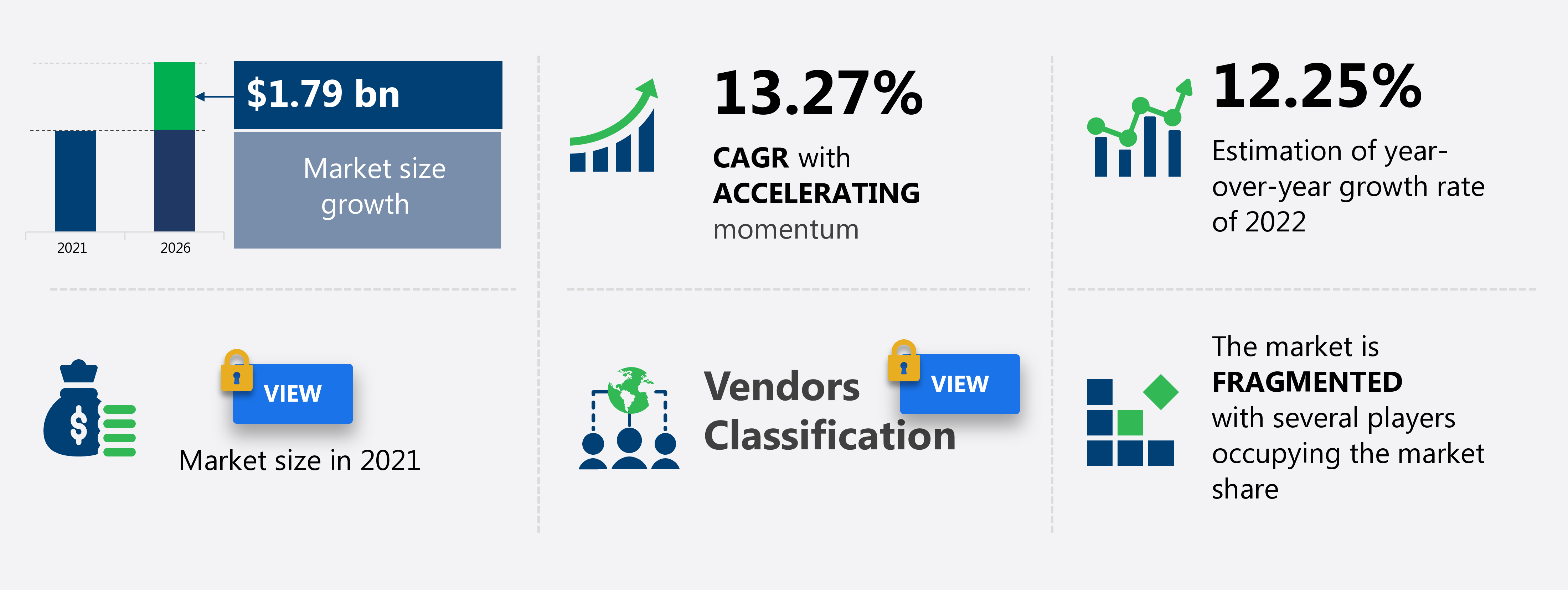
Download the Free Report Sample to Unlock the Artificial Intelligence in Manufacturing and Supply Chain Market Size in Japan for the Forecast Period and Other Important Statistics
Artificial Intelligence in Manufacturing and Supply Chain Market in Japan: Key Drivers, Trends, and Challenges
The demand for automation to improve productivity is notably driving the artificial intelligence in manufacturing and supply chain market growth in Japan, although factors such as shortage of ai technology experts may impede the market growth. Our research analysts have studied the historical data and deduced the key market drivers and the COVID-19 pandemic impact on the artificial intelligence in manufacturing and supply chain industry in Japan. The holistic analysis of the drivers will help in deducing end goals and refining marketing strategies to gain a competitive edge.
Key Artificial Intelligence in Manufacturing and Supply Chain Market Driver in Japan
One of the key factors driving growth in the artificial intelligence in manufacturing and supply chain market in Japan is the demand for automation to improve productivity. Advancements in cloud computing technologies, big data storage, and analytics have driven the adoption of AI solutions in the manufacturing sector. This is mainly because they improve production efficiency and performance. For manufacturing companies, integrating AI into the existing information and communications system is time-consuming and expensive. AI solutions provide plant managers with critical information such as machinery health and maintenance data to make more informed business decisions. Integrating AI into the legacy system will improve the bottom-line productivity of the organization through intelligent automation, labor and capital growth, and innovation. Innovation and intelligent automation are helping manufacturers to increase productivity. Manufacturers are increasingly investing in automation technologies, IoT, and AI to increase production efficiency, thus driving market growth during the forecast period.
Key Artificial Intelligence in Manufacturing and Supply Chain Market Trend in Japan
The increased availability of cloud-based applications is artificial intelligence in manufacturing and supply chain market trend in Japan that’s is expected to have a positive impact in the coming years. The foundation of AI consists of ML and deep-learning neural network technologies. Based on the perception and interaction with technology, AI has prompted many companies to use the technology for a wide variety of user cases. AI applications across supply chain operations include recommendation engines, pricing optimization, lead generation, chatbots, supply chain optimization, and many others. However, to adopt AI technologies in an on-premises data center, companies would require enough computers and data storage capabilities to process the data faster. Also, companies looking at establishing their own in-house products have realized that this can be an expensive proposition. Therefore, cloud-based software and platforms help companies in overcoming the barriers involved in AI adoption. These factors have increased the adoption of cloud-based AI products and services in supply chain operations. Early adopters of AI have also revealed that to acquire AI capabilities; the easiest path is integrating enterprise software with AI. This software is primarily cloud-based and accessed through either a public or private cloud. Thus, the increasing adoption of cloud-based AI solutions in manufacturing and supply chain operations is anticipated to boost market growth during the forecast period.
Key Artificial Intelligence in Manufacturing and Supply Chain Market Challenge in Japan
The shortage of AI technology experts will be a major challenge for the artificial intelligence in manufacturing and supply chain market in Japan during the forecast period. Most companies do not take full advantage of AI due to a lack of expertise and required resources. Machine learning and deep learning applications need access to large data sets and specialized infrastructure and processing power. AI experts are difficult to find as there is big competition among the top technology companies to hire the best talent. Companies also need to look at the appropriate use-cases of AI/machine learning algorithm deployment before implementing it on a large scale. All of these require high investments, which put the ability to take advantage of AI out of reach for most companies. The lack of experts is slowing down the development of strong AI technology. The expertise currently is toward the development of narrow criteria for AI technology. This will result in the lower adoption of AI in some major sectors such as automotive, aerospace, construction, and others. Furthermore, the development of AI has created many jobs, and some institutions have courses designed to train individuals. However, this has not been beneficial for the expert base of strong AI developers, which has been one of the potential challenges.
This artificial intelligence in manufacturing and supply chain market in Japan analysis report also provides detailed information on other upcoming trends and challenges that will have a far-reaching effect on the market growth. The actionable insights on the trends and challenges will help companies evaluate and develop growth strategies for 2022-2026.
Parent Market Analysis
Technavio categorizes the artificial intelligence in manufacturing and supply chain market in Japan as a part of the global systems software market. Our research report has extensively covered external factors influencing the parent market growth potential in the coming years, which will determine the levels of growth of the artificial intelligence in manufacturing and supply chain market in Japan during the forecast period.
Who are the Major Artificial Intelligence in Manufacturing and Supply Chain Market Vendors in Japan?
The report analyzes the market’s competitive landscape and offers information on several market vendors, including:
- Alphabet Inc.
- General Electric Co.
- Intel Corp.
- International Business Machines Corp.
- Microsoft Corp.
- NVIDIA Corp.
- RapidMiner Inc.
- Salesforce.com Inc.
- Samsung Electronics Co. Ltd.
- Siemens AG
This statistical study of the artificial intelligence in manufacturing and supply chain market in Japan encompasses successful business strategies deployed by the key vendors. The artificial intelligence in manufacturing and supply chain market in Japan is fragmented and the vendors are deploying growth strategies such as focusing on acquiring smaller brands to increase their market presence to compete in the market.
Product Insights and News
-
Alphabet Inc. - The company offers artificial intelligence solutions in manufacturing and supply chain to optimize operations and product development.
To make the most of the opportunities and recover from post COVID-19 impact, market vendors should focus more on the growth prospects in the fast-growing segments, while maintaining their positions in the slow-growing segments.
The artificial intelligence in manufacturing and supply chain market in Japan forecast report offers in-depth insights into key vendor profiles. The profiles include information on the production, sustainability, and prospects of the leading companies.
Artificial Intelligence in Manufacturing and Supply Chain Market in Japan Value Chain Analysis
Our report provides extensive information on the value chain analysis for the artificial intelligence in manufacturing and supply chain market in Japan, which vendors can leverage to gain a competitive advantage during the forecast period. The end-to-end understanding of the value chain is essential in profit margin optimization and evaluation of business strategies. The data available in our value chain analysis segment can help vendors drive costs and enhance customer services during the forecast period.
The value chain of the systems software market includes the following core components:
- Inputs
- Software development
- Marketing and distribution
- Post-sales services
- Market innovation
The report has further elucidated on other innovative approaches being followed by service providers to ensure a sustainable market presence.
What are the Revenue-generating End-user Segments in the Artificial Intelligence in Manufacturing and Supply Chain Market in Japan?
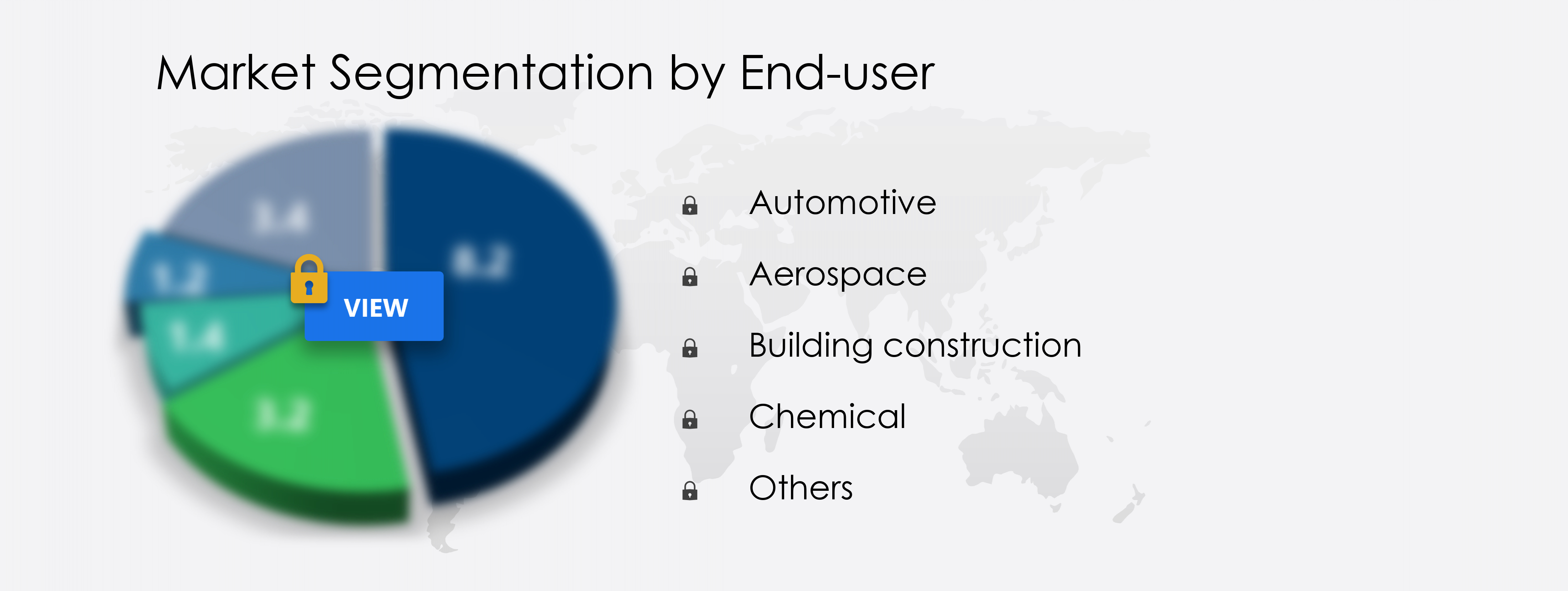
To gain further insights on the market contribution of various segments Request for a FREE sample
The artificial intelligence in manufacturing and supply chain market share growth in Japan by the automotive segment will be significant during the forecast period. As the middle-class population grows and increases in disposable income, the sales of the automotive sector are expected to increase as one of the aspirations of the middle-class population is owning a car. The automotive production in Japan is estimated to increase during the forecast period. As the market for the automotive sector grows, original equipment manufacturers (OEMs) will increase the production of auto parts that are used in the final automotive vehicles. Thus, the increasing demand for efficient and advanced solutions is needed to manufacture and supply raw materials automotive parts and distribute the final vehicles, which, in turn, will drive the AI in manufacturing and supply chain market in Japan.
This report provides an accurate prediction of the contribution of all the segments to the growth of the artificial intelligence in manufacturing and supply chain market size in Japan and actionable market insights on post COVID-19 impact on each segment.
You may be interested in:
China Artificial Intelligence market in Supply Chain - The market share is expected to increase by USD 5.92 billion from 2021 to 2026, and the market's growth momentum will accelerate at a CAGR of 40.54%.
Artificial Intelligence (AI) market in Manufacturing Industry - The market share is expected to increase by USD 7.87 billion from 2020 to 2025, and the market’s growth momentum will accelerate at a CAGR of 28%.
|
Artificial Intelligence in Manufacturing and Supply Chain Market Scope in Japan |
|
|
Report Coverage |
Details |
|
Page number |
120 |
|
Base year |
2021 |
|
Forecast period |
2022-2026 |
|
Growth momentum & CAGR |
Accelerate at a CAGR of 13.27% |
|
Market growth 2022-2026 |
$ 1.79 billion |
|
Market structure |
Fragmented |
|
YoY growth (%) |
12.25 |
|
Regional analysis |
Japan |
|
Competitive landscape |
Leading companies, Competitive strategies, Consumer engagement scope |
|
Key companies profiled |
Alphabet Inc., General Electric Co., Intel Corp., International Business Machines Corp., Microsoft Corp., NVIDIA Corp., RapidMiner Inc., Salesforce.com Inc., Samsung Electronics Co. Ltd., and Siemens AG |
|
Market dynamics |
Parent market analysis, Market growth inducers and obstacles, Fast-growing and slow-growing segment analysis, COVID 19 impact and recovery analysis and future consumer dynamics, Market condition analysis for the forecast period |
|
Customization purview |
If our report has not included the data that you are looking for, you can reach out to our analysts and get segments customized. |
What are the Key Data Covered in this Artificial Intelligence in Manufacturing and Supply Chain Market in Japan Report?
- CAGR of the market during the forecast period 2022-2026
- Detailed information on factors that will drive artificial intelligence in manufacturing and supply chain market growth in Japan during the next five years
- Precise estimation of the artificial intelligence in manufacturing and supply chain market size in Japan and its contribution to the parent market
- Accurate predictions on upcoming trends and changes in consumer behavior
- The growth of the artificial intelligence in manufacturing and supply chain industry in Japan
- A thorough analysis of the market’s competitive landscape and detailed information on vendors
- Comprehensive details of factors that will challenge the growth of artificial intelligence in manufacturing and supply chain market vendors in Japan
We can help! Our analysts can customize this report to meet your requirements. Get in touch
 RIA -
RIA - 
