


Aviation Lubricants Market Analysis North America, APAC, Europe, South America, Middle East and Africa - US, China, Germany, France, UK - Size and Forecast 2024-2028

Aviation Lubricants Market Analysis North America, APAC, Europe, South America, Middle East and Africa - US, China, Germany, France, UK - Size and Forecast 2024-2028

Published: Jul 2024 146 Pages SKU: IRTNTR74461

Market Overview at a Glance

$877.1 Mn
Market Opportunity
6.05%
CAGR
5.61
YoY growth 2023-2024(%)

Aviation Lubricants Market Size 2024-2028 

The aviation lubricants market size is estimated to grow by USD 877.1 million at a CAGR of 6.05% between 2023 and 2028. The aviation industry is experiencing significant growth, driven by the increasing demand for reliable machinery and effective maintenance. This need is particularly acute in the booming tourism sector, where air travel is a key mode of transportation. Moreover, the high demand for aviation lubricants from end-user industries such as aerospace, defense, and commercial aviation further underscores the importance of this market. Aviation lubricants play a crucial role in ensuring the smooth operation of aircraft engines and reducing downtime. As such, manufacturers and suppliers of high-quality aviation lubricants are well-positioned to capitalize on this trend and meet the growing demand. With a focus on innovation, sustainability, and regulatory compliance, these companies are delivering superior products and services to meet the evolving needs of their customers.

What will be the Size of the Market During the Forecast Period?
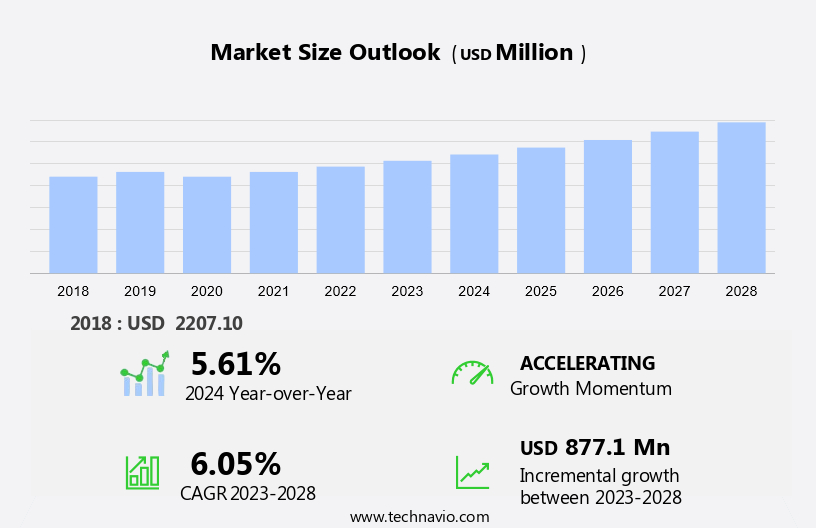
Aviation Lubricants Market Size

For More Highlights About this Report, Request Free Sample

Market Dynamic and Customer Landscape

The market is a significant sector within the broader aviation industry, catering to the lubrication needs of commercial and military aircrafts. This market is driven by the increasing demand for air travel and defense budgets. Exxon Mobil and TotalEnergies are among the key players in this market, providing a range of engine oils, greases, and special lubricants & additives. The market offers both mineral-based and synthetic technology lubricants to meet the diverse requirements of various aircraft components, including engines, hydraulic systems, landing gear, and airframes. Commercial aviation and military aviation are the primary segments of this market, with the former accounting for a larger share due to the high volume of aircraft in service. The aftermarket plays a crucial role in the aviation lubricants market, providing maintenance, repair, and overhaul services for aircraft components. Sustainable aviation is also gaining traction, with the development of bio-based lubricants and the adoption of energy-efficient technologies. The use of aviation lubricants in OEM equipment and aircraft manufacturing processes is another area of growth. Our researchers analyzed the data with 2023 as the base year, along with the key drivers, trends, and challenges. A holistic analysis of drivers will help companies refine their marketing strategies to gain a competitive advantage.

Key Market Driver

The increasing need for reliable machinery and effective maintenance is notably driving market growth. In the realm of aviation, the significance of lubrication in ensuring machine reliability is often underestimated. Factors such as contamination, poor fitting, and fatigue can negatively impact the performance and longevity of aircraft components, leading to premature failure. For instance, approximately 36% of bearing failures are attributed to inadequate or excessive lubrication. Contamination is another prevalent issue, with nearly 14% of failures caused by poor seals or mishandling of lubricants. Commercial aviation and defense budgets depend on the reliability of aircrafts, making the use of high-quality lubricants essential. Exxon Mobil and TotalEnergies are among the major players in the aviation lubricants market, providing solutions that cater to various aircraft systems, including hydraulic systems, engines, landing gear, and airframes. The shift towards Sustainable Aviation and eco-friendly practices has led to the development of synthetic lubricants and additives, which offer enhanced performance and reduced environmental impact. Mineral-based technology still holds a significant market share, but synthetic technology is gaining popularity due to its superior properties. During travel restrictions and declared lockdowns, airports have seen reduced activity, affecting the demand for aviation lubricants in the aftermarket. However, the importance of lubrication in maintaining the health of hydraulic systems, engines, and other critical components remains unchanged. Eastman Chemical and other equipment manufacturers contribute to the aviation lubricants market by providing specialized lubricants and additives that address rust and corrosion, ensuring the longevity of aircraft components. In military aviation and general aviation, proper lubrication is crucial for maintaining the readiness of the fleet. The grade of lubricants plays a vital role in machine reliability. Using the right lubricant for each application can significantly reduce the risk of failures and ensure the smooth operation of hydraulic systems, engines, and landing gears. Proper handling and storage of lubricants are also essential to prevent contamination and ensure the optimal performance of aviation equipment. Thus, such factors are driving the growth of the market during the forecast period.

Significant Market Trends

The rising need for technological upgrades is the key trend in the market. The global market is experiencing significant growth due to advancements in commercial aviation technology and the increasing focus on sustainable aviation practices. With defense budgets prioritizing modernization and upgrades, the demand for high-performance lubricants in both military and commercial aviation sectors is increasing. Exxon Mobil and TotalEnergies, among other OEMs and equipment manufacturers, are responding to this trend by developing synthetic lubricants and additives that cater to the specific needs of aircraft hydraulic systems, engines, landing gear, and airframes. The aviation industry's shift towards eco-friendliness has also influenced the lubricants market, with a growing demand for low density, ecofriendly aviation lubricants. Travel restrictions and declared lockdowns due to the pandemic have further emphasized the importance of maintaining aircraft performance and preventing contamination of lubricants. As a result, manufacturers are investing in research and development to create innovative lubrication systems that address the challenges of rust and corrosion in engines, landing gears, and airframes. Key players in the market, including Eastman Chemical, are focusing on developing synthetic technology and mineral-based technology to cater to the aftermarket demand for hydraulic fluids, engine oils, greases, and special lubricants. The aviation lubricants market is expected to continue growing as air transportation resumes and the industry adapts to new technologies and regulations. Thus, such trends will shape the growth of the market during the forecast period.

Major Market Challenge

Increasing adoption of electric vehicles is the major challenge that affects the growth of the market. The global market is experiencing significant growth due to the increasing demand in commercial aviation and military aviation sectors. The defense budgets of various countries continue to prioritize aircraft maintenance and upkeep, leading to a steady demand for aviation lubricants. Sustainable aviation is also gaining traction, with companies like Exxon Mobil and TotalEnergies introducing eco-friendly aviation lubricants. However, travel restrictions and declared lockdowns due to the pandemic have affected airline passengers and, consequently, the aviation industry. This, in turn, has impacted the demand for aviation lubricants. Synthetic lubricants, such as hydraulic fluids, engine oils, grease, and special lubricants & additives, are widely used in aviation for various applications, including hydraulic systems, engines, landing gear, and airframes. Mineral-based technology and synthetic technology are the two primary types of aviation lubricant technologies. OEMs and equipment manufacturers rely on these lubricants to ensure the smooth functioning of aircraft components. Despite the positive growth in the aviation lubricants market, there are challenges.

Contamination of lubricants and the need for low density lubricants to reduce aircraft weight are some of the issues being addressed by market players. Rust and corrosion are also significant concerns in aviation lubricants, necessitating the use of high-quality lubricants. The market for aviation lubricants is diverse, with applications in both commercial and general aviation sectors. Companies like Eastman Chemical cater to the aftermarket for aviation lubricants, providing solutions for various aircraft types and systems. The grade of lubricants used in aviation applications is critical to ensure optimal performance and safety. The aviation lubricants market is expected to face challenges due to the growing adoption of electric vehicles, which use minimal lubricants. For instance, France plans to ban all gasoline and diesel vehicles by 2040, and other regions have similar plans, which may negatively impact the aviation lubricants market. However, the market is expected to continue growing due to the ongoing demand for aviation lubricants in the commercial and military sectors. Hence, the above factors will impede the growth of the market during the forecast period.

Exclusive Customer Landscape

The market forecasting report includes the adoption lifecycle of the market, covering from the innovator’s stage to the laggard’s stage. It focuses on adoption rates in different regions based on penetration. Furthermore, the report also includes key purchase criteria and drivers of price sensitivity to help companies evaluate and develop their market growth analysis strategies.
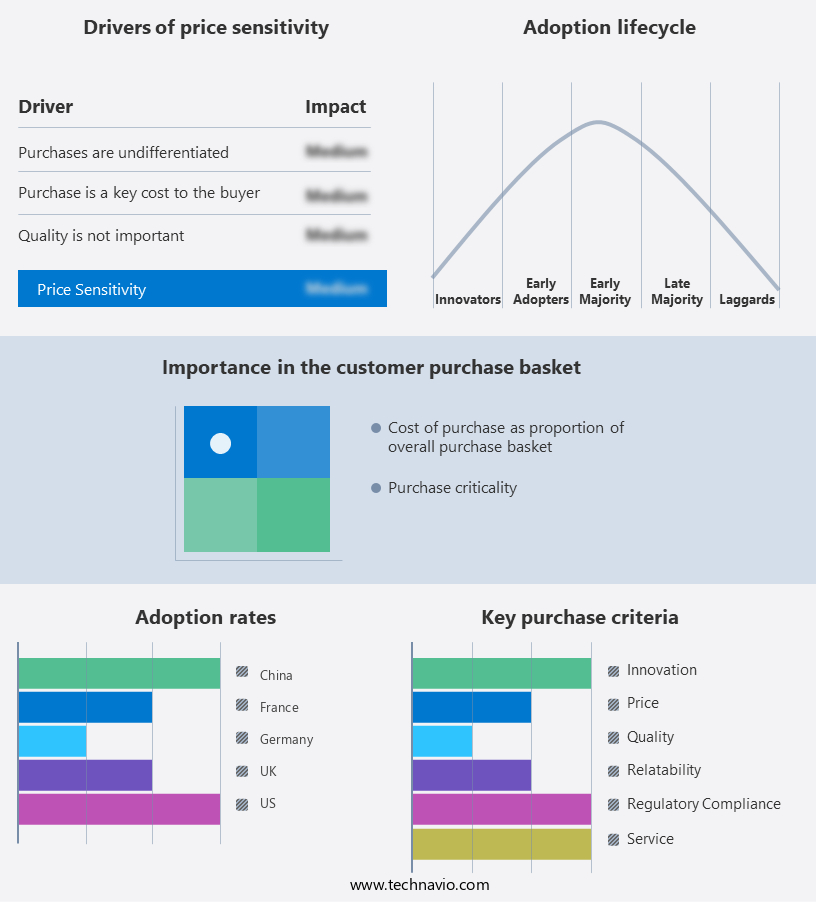
Aviation Lubricants Market Share by Geography

 Customer Landscape

Key Companies & Market Insights

Companies are implementing various strategies, such as strategic alliances, partnerships, mergers and acquisitions, geographical expansion, and product/service launches, to enhance their presence in the market.

BP Plc - The company offers aviation lubricants such as Air bp.

The market research and growth report also includes detailed analyses of the competitive landscape of the market and information about key companies, including:

  • AVI OIL India Pvt. Ltd.
  • Avioparts
  • BP Plc
  • Chevron Corp.
  • Exxon Mobil Corp.
  • Gazpromneft Lubricants Ltd.
  • Gevo Inc.
  • Honeywell International Inc.
  • LanzaJet Inc.
  • Marathon Petroleum Corp.
  • MOL Group
  • Neste Corp.
  • Petroleo Brasileiro SA
  • PJSC LUKOIL
  • Shell plc
  • SkyNRG BV
  • Swedish Biofuels AB
  • Targray Technology International Inc.
  • TotalEnergies SE
  • Valero Energy Corp.

Qualitative and quantitative analysis of companies has been conducted to help clients understand the wider business environment as well as the strengths and weaknesses of key market players. Data is qualitatively analyzed to categorize companies as pure play, category-focused, industry-focused, and diversified; it is quantitatively analyzed to categorize companies as dominant, leading, strong, tentative, and weak.

Market Segmentation

By Platform 

The commercial aviation segment is estimated to witness significant growth during the forecast period. The market caters to the requirements of commercial aviation and military aviation sectors. The market is significantly influenced by defense budgets and travel restrictions due to declared lockdowns, impacting airline passengers and airport operations.
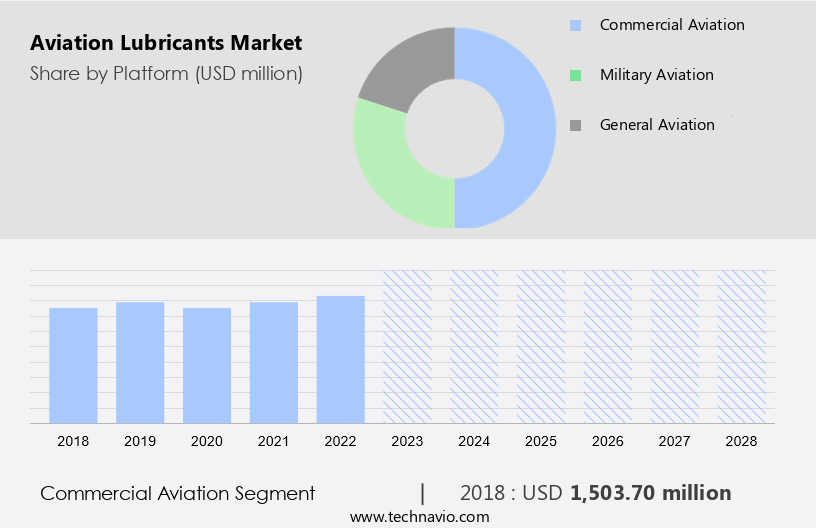
Aviation Lubricants Market Size

Get a glance at the market share of various regions Download the PDF Sample

The commercial aviation segment accounted for USD 1.50 billion in 2018. Exxon Mobil and TotalEnergies are major players in the aviation lubricants industry, offering a wide range of products including synthetic lubricants, hydraulic fluid, engine oil, grease, and special lubricants & additives. These lubricants are essential for various aircraft systems such as hydraulic systems, engines, landing gear, and airframes. Mineral-based technology and synthetic technology are the two primary types of lubricant technologies used. SAE, OEM, and equipment manufacturers specify the grade of lubricants for different aircraft components. Ecofriendly aviation lubricants are gaining popularity due to increasing environmental concerns. Synthetic lubricants offer advantages such as low density, reduced contamination, and enhanced performance. Companies like Eastman Chemical are investing in research and development to produce advanced aviation lubricants. Rust and corrosion protection are crucial considerations for aviation lubricants, especially in harsh operating environments. The aftermarket for aviation lubricants is significant, with many players catering to the needs of general aviation and maintenance, repair, and overhaul (MRO) services.

Regional Analysis
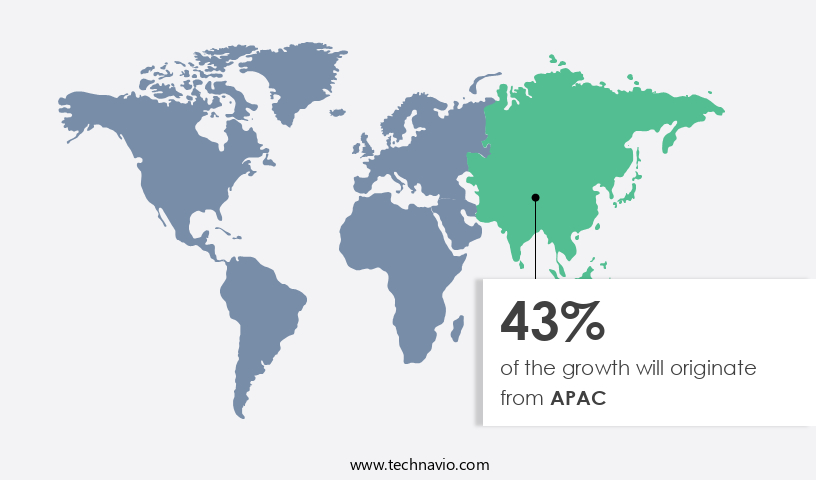
Aviation Lubricants Market Share by Geography

For more insights on the market share of various regions Download PDF Sample now!

APAC is estimated to contribute 43% to the growth of the global market during the market forecast period. Technavio’s analysts have elaborately explained the regional trends and drivers that shape the market during the forecast period.

The market encompasses the production and supply of lubricants used in Commercial Aviation and Military Aviation. With the Defense budget focusing on modernizing fleets, the demand for high-performance lubricants has surged. Sustainable Aviation is a growing trend, driving the need for ecofriendly aviation lubricants, such as those produced by Exxon Mobil and TotalEnergies. The SAE sets the standards for lubricant grades, with OEMs and Equipment Manufacturers specifying the use of specific lubricants for aircraft hydraulic systems, engines, landing gear, and airframes. Travel restrictions and declared lockdowns due to the pandemic have impacted airline passengers and airport operations, leading to a shift in focus towards aftermarket sales of hydraulic fluid, engine oil, grease, and special lubricants & additives. Mineral based technology and synthetic technology continue to compete in the market. Eastman Chemical and other key players offer rust and corrosion protection in their lubricants. The grade of lubricants used varies based on the application, with hydraulic systems requiring low density lubricants to prevent contamination.

Segment Overview

The market report provides comprehensive data (region-wise segment analysis), with forecasts and estimates in "USD million " for the period 2024-2028, as well as historical data from 2018-2022 for the following segments.

  • Platform Outlook
    • Commercial aviation
    • Military aviation
    • General aviation
  • Region Outlook
    • North America
      • The U.S.
      • Canada
    • Europe
      • U.K.
      • Germany
      • France
      • Rest of Europe
    • APAC
      • China
      • India
    • Middle East & Africa
      • Saudi Arabia
      • South Africa
      • Rest of the Middle East & Africa
    • South America
      • Argentina
      • Brazil
      • Chile

You may also be interested in:

  • Automatic Lubrication System Market Analysis Europe, North America, APAC, South America, Middle East and Africa - US, China, Japan, Germany, UK - Size and Forecast 
  • Grease Market Analysis APAC, North America, Europe, Middle East and Africa, South America - US, China, India, Japan, Germany - Size and Forecast 
  • Industrial Gear Oil Market by Application, Product and Geography - Forecast and Analysis

Market Analyst Overview

The market caters to the demand for lubricants used in Commercial Aviation and Military Aviation. Exxon Mobil and TotalEnergies are prominent players in this market. The market is segmented based on the type of lubricants, including Synthetic lubricants, Mineral based technology, and Special lubricants & additives. Commercial aviation is the major consumer of aviation lubricants, with a significant portion being used in Hydraulic systems, Engines, and Landing gears of Aircrafts. Travel restrictions and declared lockdowns due to the COVID-19 pandemic have impacted the Airline passengers and, consequently, the demand for aviation lubricants. Defense budgets have been a significant driver for the Military aviation segment. Sustainable Aviation is gaining momentum, leading to the increasing demand for Ecofriendly aviation lubricants. Contamination of lubricants is a major concern, leading to the use of Low density lubricants. The market also includes OEMs and Equipment Manufacturers. Hydraulic fluid, Engine oil, Grease, and Special lubricants & additives are the primary product categories. Rust and corrosion are common issues addressed by aviation lubricants, especially in Engines, Landing gears, and Airframes. Eastman Chemical and Air transportation are other notable entities in the aviation lubricants industry. The market is expected to grow due to the continuous development of new technologies like Synthetic technology and Mineral based technology in the Aftermarket.

Market Scope

Report Coverage

Details

Page number

146

Base year

2023

Historic period

2018-2022

Forecast period

2024-2028

Growth momentum & CAGR

Accelerate at a CAGR of 6.05%

Market growth 2024-2028

USD 877.1 million

Market structure

Fragmented

YoY growth 2023-2024(%)

5.61

Regional analysis

North America, APAC, Europe, South America, and Middle East and Africa

Performing market contribution

APAC at 43%

Key countries

US, China, Germany, France, and UK

Competitive landscape

Leading Companies, Market Positioning of Companies, Competitive Strategies, and Industry Risks

Key companies profiled

AVI OIL India Pvt. Ltd., Avioparts, BP Plc, Chevron Corp., Exxon Mobil Corp., Gazpromneft Lubricants Ltd., Gevo Inc., Honeywell International Inc., LanzaJet Inc., Marathon Petroleum Corp., MOL Group, Neste Corp., Petroleo Brasileiro SA, PJSC LUKOIL, Shell plc, SkyNRG BV, Swedish Biofuels AB, Targray Technology International Inc., TotalEnergies SE, and Valero Energy Corp.

Market dynamics

Parent market analysis, Market growth inducers and obstacles, Fast-growing and slow-growing segment analysis, COVID-19 impact and recovery analysis and future consumer dynamics, Market condition analysis for forecast period

Customization purview

If our report has not included the data that you are looking for, you can reach out to our analysts and get segments customized.

Download PDF Sample

What are the Key Data Covered in this Market Research Report?

  • CAGR of the market during the forecast period
  • Detailed information on factors that will drive the market growth and forecasting between 2024 and 2028
  • Precise estimation of the size of the market  and its contribution of the market in focus to the parent market
  • Accurate predictions about upcoming market growth and trends and changes in consumer behavior
  • Growth of the market across North America, APAC, Europe, South America, and Middle East and Africa
  • Thorough analysis of the market’s competitive landscape and detailed information about companies
  • Comprehensive analysis of factors that will challenge the growth of market companies

1 Executive Summary

  • 1.1 Market overview
    • Executive Summary - Chart on Market Overview
    • Executive Summary - Data Table on Market Overview
    • Executive Summary - Chart on Global Market Characteristics
    • Executive Summary - Chart on Market by Geography
    • Executive Summary - Chart on Market Segmentation by Platform
    • Executive Summary - Chart on Incremental Growth
    • Executive Summary - Data Table on Incremental Growth
    • Executive Summary - Chart on Company Market Positioning

2 Market Landscape

  • 2.1 Market ecosystem
    • Parent Market
    • Data Table on - Parent Market
  • 2.2 Market characteristics
    • Market characteristics analysis
  • 2.3 Value chain analysis
    • Value Chain Analysis

3 Market Sizing

  • 3.1 Market definition
    • Offerings of companies included in the market definition
  • 3.2 Market segment analysis
    • Market segments
  • 3.3 Market size 2023
    • 3.4 Market outlook: Forecast for 2023-2028
      • Chart on Global - Market size and forecast 2023-2028 ($ million)
      • Data Table on Global - Market size and forecast 2023-2028 ($ million)
      • Chart on Global Market: Year-over-year growth 2023-2028 (%)
      • Data Table on Global Market: Year-over-year growth 2023-2028 (%)

    4 Historic Market Size

    • 4.1 Global Aviation Lubricants Market 2018 - 2022
      • Historic Market Size - Data Table on Global Aviation Lubricants Market 2018 - 2022 ($ million)
    • 4.2 Platform segment analysis 2018 - 2022
      • Historic Market Size - Platform Segment 2018 - 2022 ($ million)
    • 4.3 Geography segment analysis 2018 - 2022
      • Historic Market Size - Geography Segment 2018 - 2022 ($ million)
    • 4.4 Country segment analysis 2018 - 2022
      • Historic Market Size - Country Segment 2018 - 2022 ($ million)

    5 Five Forces Analysis

    • 5.1 Five forces summary
      • Five forces analysis - Comparison between 2023 and 2028
    • 5.2 Bargaining power of buyers
      • Bargaining power of buyers - Impact of key factors 2023 and 2028
    • 5.3 Bargaining power of suppliers
      • Bargaining power of suppliers - Impact of key factors in 2023 and 2028
    • 5.4 Threat of new entrants
      • Threat of new entrants - Impact of key factors in 2023 and 2028
    • 5.5 Threat of substitutes
      • Threat of substitutes - Impact of key factors in 2023 and 2028
    • 5.6 Threat of rivalry
      • Threat of rivalry - Impact of key factors in 2023 and 2028
    • 5.7 Market condition
      • Chart on Market condition - Five forces 2023 and 2028

    6 Market Segmentation by Platform

    • 6.1 Market segments
      • Chart on Platform - Market share 2023-2028 (%)
      • Data Table on Platform - Market share 2023-2028 (%)
    • 6.2 Comparison by Platform
      • Chart on Comparison by Platform
      • Data Table on Comparison by Platform
    • 6.3 Commercial aviation - Market size and forecast 2023-2028
      • Chart on Commercial aviation - Market size and forecast 2023-2028 ($ million)
      • Data Table on Commercial aviation - Market size and forecast 2023-2028 ($ million)
      • Chart on Commercial aviation - Year-over-year growth 2023-2028 (%)
      • Data Table on Commercial aviation - Year-over-year growth 2023-2028 (%)
    • 6.4 Military aviation - Market size and forecast 2023-2028
      • Chart on Military aviation - Market size and forecast 2023-2028 ($ million)
      • Data Table on Military aviation - Market size and forecast 2023-2028 ($ million)
      • Chart on Military aviation - Year-over-year growth 2023-2028 (%)
      • Data Table on Military aviation - Year-over-year growth 2023-2028 (%)
    • 6.5 General aviation - Market size and forecast 2023-2028
      • Chart on General aviation - Market size and forecast 2023-2028 ($ million)
      • Data Table on General aviation - Market size and forecast 2023-2028 ($ million)
      • Chart on General aviation - Year-over-year growth 2023-2028 (%)
      • Data Table on General aviation - Year-over-year growth 2023-2028 (%)
    • 6.6 Market opportunity by Platform
      • Market opportunity by Platform ($ million)
      • Data Table on Market opportunity by Platform ($ million)

    7 Customer Landscape

    • 7.1 Customer landscape overview
      • Analysis of price sensitivity, lifecycle, customer purchase basket, adoption rates, and purchase criteria

    8 Geographic Landscape

    • 8.1 Geographic segmentation
      • Chart on Market share by geography 2023-2028 (%)
      • Data Table on Market share by geography 2023-2028 (%)
    • 8.2 Geographic comparison
      • Chart on Geographic comparison
      • Data Table on Geographic comparison
    • 8.3 North America - Market size and forecast 2023-2028
      • Chart on North America - Market size and forecast 2023-2028 ($ million)
      • Data Table on North America - Market size and forecast 2023-2028 ($ million)
      • Chart on North America - Year-over-year growth 2023-2028 (%)
      • Data Table on North America - Year-over-year growth 2023-2028 (%)
    • 8.4 APAC - Market size and forecast 2023-2028
      • Chart on APAC - Market size and forecast 2023-2028 ($ million)
      • Data Table on APAC - Market size and forecast 2023-2028 ($ million)
      • Chart on APAC - Year-over-year growth 2023-2028 (%)
      • Data Table on APAC - Year-over-year growth 2023-2028 (%)
    • 8.5 Europe - Market size and forecast 2023-2028
      • Chart on Europe - Market size and forecast 2023-2028 ($ million)
      • Data Table on Europe - Market size and forecast 2023-2028 ($ million)
      • Chart on Europe - Year-over-year growth 2023-2028 (%)
      • Data Table on Europe - Year-over-year growth 2023-2028 (%)
    • 8.6 South America - Market size and forecast 2023-2028
      • Chart on South America - Market size and forecast 2023-2028 ($ million)
      • Data Table on South America - Market size and forecast 2023-2028 ($ million)
      • Chart on South America - Year-over-year growth 2023-2028 (%)
      • Data Table on South America - Year-over-year growth 2023-2028 (%)
    • 8.7 Middle East and Africa - Market size and forecast 2023-2028
      • Chart on Middle East and Africa - Market size and forecast 2023-2028 ($ million)
      • Data Table on Middle East and Africa - Market size and forecast 2023-2028 ($ million)
      • Chart on Middle East and Africa - Year-over-year growth 2023-2028 (%)
      • Data Table on Middle East and Africa - Year-over-year growth 2023-2028 (%)
    • 8.8 US - Market size and forecast 2023-2028
      • Chart on US - Market size and forecast 2023-2028 ($ million)
      • Data Table on US - Market size and forecast 2023-2028 ($ million)
      • Chart on US - Year-over-year growth 2023-2028 (%)
      • Data Table on US - Year-over-year growth 2023-2028 (%)
    • 8.9 China - Market size and forecast 2023-2028
      • Chart on China - Market size and forecast 2023-2028 ($ million)
      • Data Table on China - Market size and forecast 2023-2028 ($ million)
      • Chart on China - Year-over-year growth 2023-2028 (%)
      • Data Table on China - Year-over-year growth 2023-2028 (%)
    • 8.10 Germany - Market size and forecast 2023-2028
      • Chart on Germany - Market size and forecast 2023-2028 ($ million)
      • Data Table on Germany - Market size and forecast 2023-2028 ($ million)
      • Chart on Germany - Year-over-year growth 2023-2028 (%)
      • Data Table on Germany - Year-over-year growth 2023-2028 (%)
    • 8.11 France - Market size and forecast 2023-2028
      • Chart on France - Market size and forecast 2023-2028 ($ million)
      • Data Table on France - Market size and forecast 2023-2028 ($ million)
      • Chart on France - Year-over-year growth 2023-2028 (%)
      • Data Table on France - Year-over-year growth 2023-2028 (%)
    • 8.12 UK - Market size and forecast 2023-2028
      • Chart on UK - Market size and forecast 2023-2028 ($ million)
      • Data Table on UK - Market size and forecast 2023-2028 ($ million)
      • Chart on UK - Year-over-year growth 2023-2028 (%)
      • Data Table on UK - Year-over-year growth 2023-2028 (%)
    • 8.13 Market opportunity by geography
      • Market opportunity by geography ($ million)
      • Data Tables on Market opportunity by geography ($ million)

    9 Drivers, Challenges, and Opportunity/Restraints

    • 9.1 Market drivers
      • 9.2 Market challenges
        • 9.3 Impact of drivers and challenges
          • Impact of drivers and challenges in 2023 and 2028
        • 9.4 Market opportunities/restraints

          10 Competitive Landscape

          • 10.1 Overview
            • 10.2 Competitive Landscape
              • Overview on criticality of inputs and factors of differentiation
            • 10.3 Landscape disruption
              • Overview on factors of disruption
            • 10.4 Industry risks
              • Impact of key risks on business

            11 Competitive Analysis

            • 11.1 Companies profiled
              • Companies covered
            • 11.2 Market positioning of companies
              • Matrix on companies position and classification
            • 11.3 BP Plc
              • BP Plc - Overview
              • BP Plc - Business segments
              • BP Plc - Key news
              • BP Plc - Key offerings
              • BP Plc - Segment focus
            • 11.4 Chevron Corp.
              • Chevron Corp. - Overview
              • Chevron Corp. - Business segments
              • Chevron Corp. - Key news
              • Chevron Corp. - Key offerings
              • Chevron Corp. - Segment focus
            • 11.5 Exxon Mobil Corp.
              • Exxon Mobil Corp. - Overview
              • Exxon Mobil Corp. - Business segments
              • Exxon Mobil Corp. - Key news
              • Exxon Mobil Corp. - Key offerings
              • Exxon Mobil Corp. - Segment focus
            • 11.6 Gazpromneft Lubricants Ltd.
              • Gazpromneft Lubricants Ltd. - Overview
              • Gazpromneft Lubricants Ltd. - Product / Service
              • Gazpromneft Lubricants Ltd. - Key offerings
            • 11.7 Gevo Inc.
              • Gevo Inc. - Overview
              • Gevo Inc. - Business segments
              • Gevo Inc. - Key news
              • Gevo Inc. - Key offerings
              • Gevo Inc. - Segment focus
            • 11.8 Honeywell International Inc.
              • Honeywell International Inc. - Overview
              • Honeywell International Inc. - Business segments
              • Honeywell International Inc. - Key news
              • Honeywell International Inc. - Key offerings
              • Honeywell International Inc. - Segment focus
            • 11.9 LanzaJet Inc.
              • LanzaJet Inc. - Overview
              • LanzaJet Inc. - Product / Service
              • LanzaJet Inc. - Key offerings
            • 11.10 Neste Corp.
              • Neste Corp. - Overview
              • Neste Corp. - Business segments
              • Neste Corp. - Key news
              • Neste Corp. - Key offerings
              • Neste Corp. - Segment focus
            • 11.11 Shell plc
              • Shell plc - Overview
              • Shell plc - Business segments
              • Shell plc - Key news
              • Shell plc - Key offerings
              • Shell plc - Segment focus
            • 11.12 TotalEnergies SE
              • TotalEnergies SE - Overview
              • TotalEnergies SE - Business segments
              • TotalEnergies SE - Key news
              • TotalEnergies SE - Key offerings
              • TotalEnergies SE - Segment focus

            12 Appendix

            • 12.1 Scope of the report
              • 12.2 Inclusions and exclusions checklist
                • Inclusions checklist
                • Exclusions checklist
              • 12.3 Currency conversion rates for US$
                • Currency conversion rates for US$
              • 12.4 Research methodology
                • Research methodology
              • 12.5 Data procurement
                • Information sources
              • 12.6 Data validation
                • Data validation
              • 12.7 Validation techniques employed for market sizing
                • Validation techniques employed for market sizing
              • 12.8 Data synthesis
                • Data synthesis
              • 360 degree market analysis
                • 360 degree market analysis
              • 12.10 List of abbreviations
                • List of abbreviations

              Research Methodology

              Technavio presents a detailed picture of the market by way of study, synthesis, and summation of data from multiple sources. The analysts have presented the various facets of the market with a particular focus on identifying the key industry influencers. The data thus presented is comprehensive, reliable, and the result of extensive research, both primary and secondary.

              INFORMATION SOURCES

              Primary sources

              • Manufacturers and suppliers
              • Channel partners
              • Industry experts
              • Strategic decision makers

              Secondary sources

              • Industry journals and periodicals
              • Government data
              • Financial reports of key industry players
              • Historical data
              • Press releases

              DATA ANALYSIS

              Data Synthesis

              • Collation of data
              • Estimation of key figures
              • Analysis of derived insights

              Data Validation

              • Triangulation with data models
              • Reference against proprietary databases
              • Corroboration with industry experts

              REPORT WRITING

              Qualitative

              • Market drivers
              • Market challenges
              • Market trends
              • Five forces analysis

              Quantitative

              • Market size and forecast
              • Market segmentation
              • Geographical insights
              • Competitive landscape

              Interested in this report?

              Get your sample now to see our research methodology and insights!

              Download Now

              Frequently Asked Questions

              Aviation Lubricants market growth will increase by $ 877.1 mn during 2024-2028 .

              The Aviation Lubricants market is expected to grow at a CAGR of 6.05% during 2024-2028 .

              Aviation Lubricants market is segmented by Platform( Commercial aviation, Military aviation, General aviation)

              AVI OIL INDIA Pvt. Ltd., Avioparts, BP Plc, Chevron Corp., Exxon Mobil Corp., Gazpromneft Lubricants Ltd., Gevo Inc., Honeywell International Inc., LanzaJet Inc., Marathon Petroleum Corp., MOL Group, Neste Corp., Petroleo Brasileiro SA, PJSC LUKOIL, Shell plc, SkyNRG BV, Swedish Biofuels AB, Targray Technology International Inc., TotalEnergies SE, Valero Energy Corp. are a few of the key vendors in the Aviation Lubricants market.

              APAC will register the highest growth rate of 43% among the other regions. Therefore, the Aviation Lubricants market in APAC is expected to garner significant business opportunities for the vendors during the forecast period.

              US, China, Germany, France, UK

              • Increasing need for reliable machinery and effective maintenanceFactors that may affect machine reliability are poor aviation lubrication is the driving factor this market.
              • contamination is the driving factor this market.
              • fatigue is the driving factor this market.
              • and poor fitting. Also is the driving factor this market.
              • due to the underestimated impact on the total cost of ownership of the equipment is the driving factor this market.
              • the importance of aviation lubrication is often overlooked. However is the driving factor this market.
              • to enhance machine reliability is the driving factor this market.
              • there should be proper aviation lubrication to all the points at regular intervals. The premature failure of bearings is one of the results of improper aviation lubrication is the driving factor this market.
              • which impacts machine reliability. About 36% of premature bearing failures are caused by either excessive or inadequate aviation lubrication. Contamination is another problem that affects machine reliability is the driving factor this market.
              • as nearly 14% of bearing failures are caused by poor seals or improper handling of aviation lubricants. Positive pressure is one of the remedies to eliminate contamination by preventing contaminants from entering the bearing through the seal. Some benefits of using adequate aviation lubrication are as follows:   Reduction in unplanned downtime Better use of workers Low cost of ownership for machinery Increased productivity is the driving factor this market.
              • as shutting down the equipment is not required Reduced costs of repairing machinery   China accounts for the largest is the driving factor this market.
              • fastest-growing value pool driven by growth across sectors is the driving factor this market.
              • including road transport is the driving factor this market.
              • construction is the driving factor this market.
              • and manufacturing. Emerging markets such as India is the driving factor this market.
              • China is the driving factor this market.
              • Vietnam is the driving factor this market.
              • and Malaysia are expected to grow at 3% per year is the driving factor this market.
              • or three times the rate of developed countries such as the US and Germany is the driving factor this market.
              • France is the driving factor this market.
              • UK adding $8 billion to the market value by 2035. Thus is the driving factor this market.
              • the rising economic development of developing countries is expected to drive the growth of the global aviation lubricants market during the forecast period.   is the driving factor this market.

              The Aviation Lubricants market vendors should focus on grabbing business opportunities from the Commercial aviation segment as it accounted for the largest market share in the base year.
