
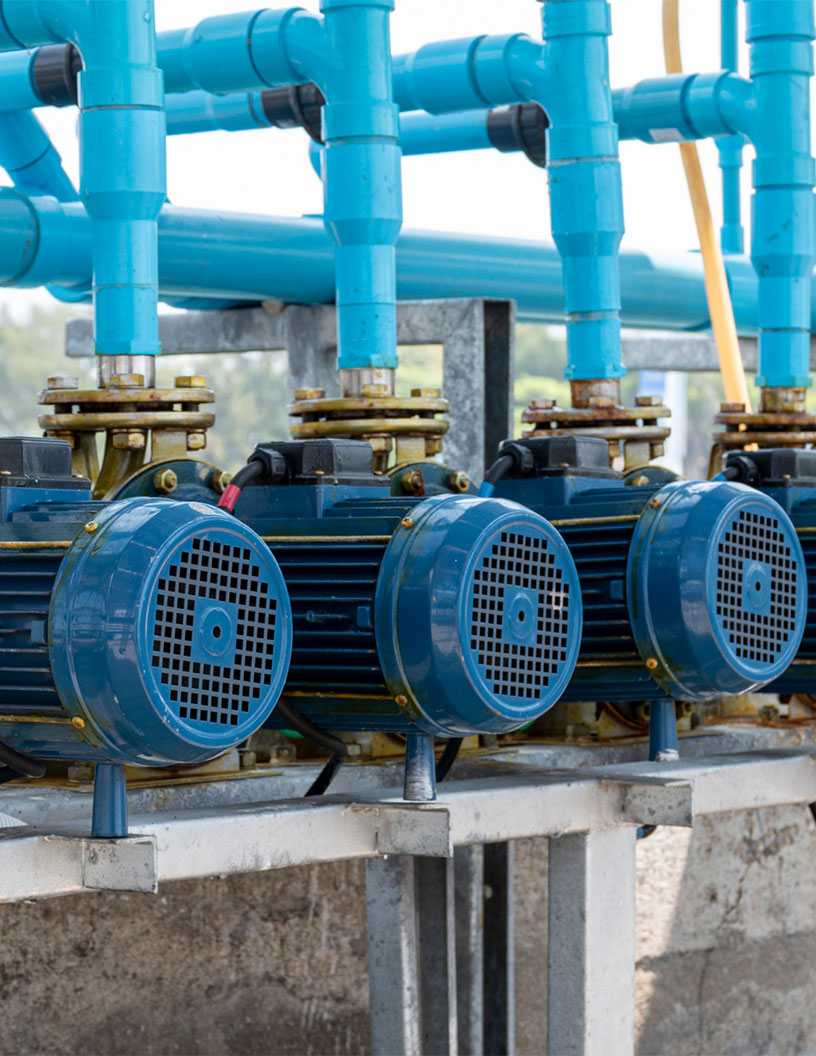


Axial Flow Pump Market Size 2024-2028
The axial flow pump market size is forecast to increase by USD 6.69 billion at a CAGR of 4.23% between 2023 and 2028.
- The market is experiencing significant growth due to various key trends and factors. One of the primary drivers is the increasing investments in water infrastructure projects worldwide. These projects require advanced and efficient water management solutions, leading to a rise in demand for axial flow pumps. Another trend influencing the market is the digitalization and integration of IoT technology in water management systems. This enables real-time monitoring and predictive maintenance, enhancing the overall performance and efficiency of axial flow pumps. The material used in manufacturing axial flow pumps varies, including cast iron, plastic, aluminum, brass, bronze, and ceramics. However, one challenge that the market faces is the high energy consumption associated with axial flow pumps. To mitigate this, manufacturers are focusing on developing energy-efficient designs and technologies to cater to the evolving market demands.
What will be the Size of the Market During the Forecast Period?
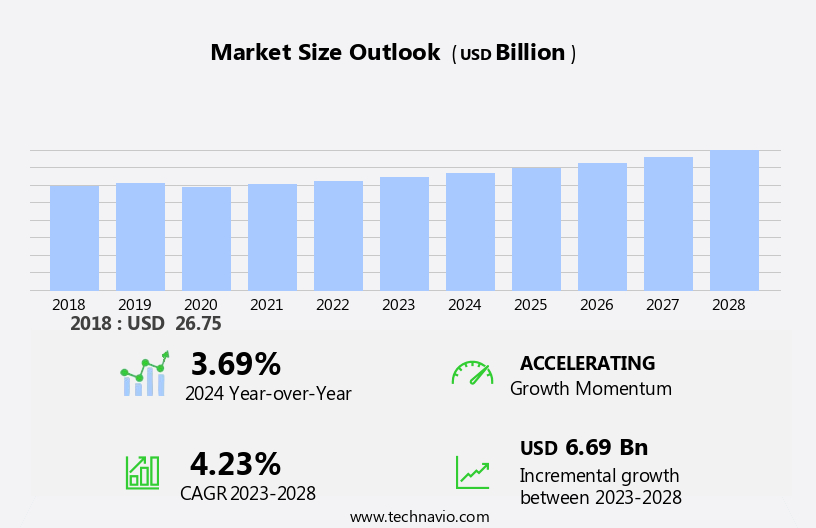
- Axial flow pumps, also known as propeller pumps, play a pivotal role in industrial pumps due to their unique design and functionality. These pumps utilize a propeller-type impeller that creates a flow by imparting centrifugal force on the fluid. The fluid enters the pump impeller along the axis of rotation, and the propeller blades push the fluid outward, creating a flow. The market is driven by several factors. The increasing demand for energy efficiency in industrial applications is one of the primary drivers. These pumps offer high energy efficiency due to their ability to handle large volumes of fluid at low-pressure heads.
Moreover, they are suitable for handling large discharge rates and controlled vertical heads, making them an ideal choice for various industries. Natural calamities, such as floods and waterlogged areas, have also fueled the demand for axial flow pumps. The spillage from the horizontal shaft, along with the suction and discharge lines, has caused significant waterlogging in the area, requiring the installation of positive displacement pumps to manage the high volume flow rates, while concrete inlet and outlet canals are being reinforced to direct water efficiently. These pumps are effective in moving large volumes of water quickly and efficiently, making them indispensable during emergencies. The versatility of axial flow pumps in handling various fluids, including water, makes them a popular choice for various industries. Each material offers unique advantages, such as durability, lightweight, and corrosion resistance, making them suitable for different applications.
How is this market segmented and which is the largest segment?
The market research report provides comprehensive data (region-wise segment analysis), with forecasts and estimates in "USD billion" for 2024-2028, as well as historical data from 2018-2022 for the following segments.
- Application
- Oil and gas
- Food and beverage
- Wastewater and water
- Mining
- Others
- Type
- Horizontal
- Vertical
- Geography
- APAC
- China
- Japan
- Europe
- Germany
- UK
- North America
- US
- South America
- Middle East and Africa
- APAC
By Application Insights
- The oil and gas segment is estimated to witness significant growth during the forecast period.
The market has witnessed significant growth, particularly in the sectors of drainage, municipal authorities, and the petroleum industry. In the oil and gas sector, the increase in exploration and production activities in 2021-2022, fueled by rising energy demands, has led to heightened requirements for pumping solutions. Notable projects are driving the demand for axial flow pumps due to their ability to efficiently transport fluids. Additionally, the power generation sector and water management plants are adopting axial flow pumps for their multi-stage capabilities in handling chemicals and sewage systems.
Furthermore, the trend towards sustainable energy solutions, including carbon capture and storage (CCS) projects, presents further opportunities for manufacturers to contribute to eco-friendly initiatives.
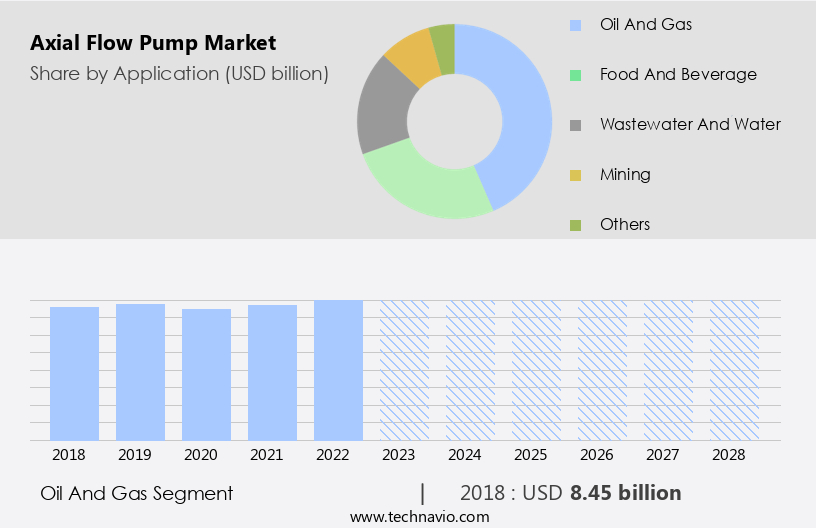
Get a glance at the market report of share of various segments Request Free Sample
The oil and gas segment was valued at USD 8.45 billion in 2018 and showed a gradual increase during the forecast period.
Regional Analysis
- APAC is estimated to contribute 42% to the growth of the global market during the forecast period.
Technavio's analysts have elaborately explained the regional trends and drivers that shape the market during the forecast period.
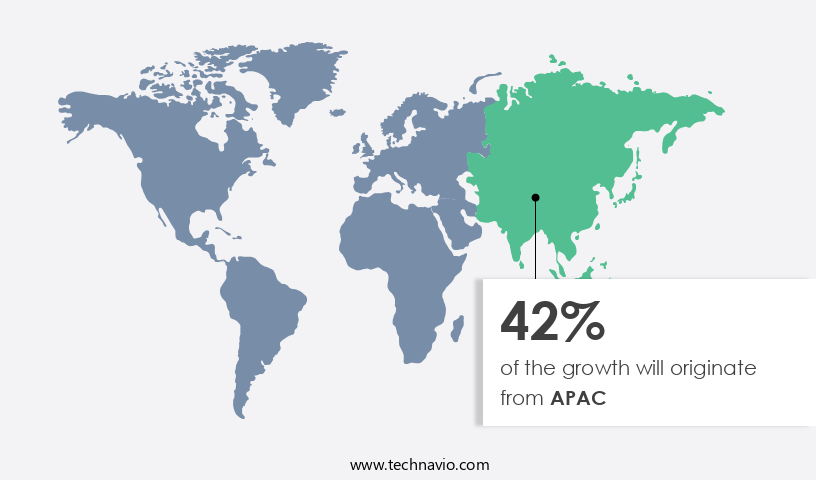
For more insights on the market share of various regions Request Free Sample
The market in the Asia Pacific (APAC) region is experiencing significant expansion due to the increasing demand for efficient water management systems. The region's rapid urbanization and industrialization have led to an increased need for large-scale water transportation in industries such as agriculture, wastewater treatment, and aquaculture. In agricultural regions like India and China, axial flow pumps are essential for irrigation systems. Moreover, the APAC region is susceptible to natural calamities like floods, which necessitates the use of axial flow pumps for flood control and drainage systems. These pumps operate by utilizing centrifugal force generated by a propeller-type impeller to move fluids.
Furthermore, the pump shaft rotates, transferring the fluid from the inlet to the outlet. Axial flow pumps are particularly suitable for low-pressure heads and are widely used in power plants for cooling purposes. The market is poised for continued growth due to the region's development needs and the essential role these pumps play in water management and industrial processes.
Market Dynamics
Our researchers analyzed the data with 2023 as the base year, along with the key drivers, trends, and challenges. A holistic analysis of drivers will help companies refine their marketing strategies to gain a competitive advantage.
What are the key market drivers leading to the rise in the adoption of Axial Flow Pump Market?
Growing investments in water infrastructure projects is the key driver of the market.
- The market is experiencing significant growth due to increased investment in water infrastructure projects worldwide. These projects encompass various applications, including irrigation, flood control, and wastewater treatment, which necessitate efficient water management and movement. In India, for instance, the Pradhan Mantri Krishi Sinchayee Yojana (PMKSY) aims to enhance irrigation efficiency by implementing axial flow pumps for optimal water distribution in agricultural fields. Additionally, these pumps are utilized in flood-prone areas to manage excess water, shielding communities and valuable farmland. Furthermore, the heightened focus on wastewater treatment to tackle environmental issues and water scarcity is driving the adoption of axial flow pumps in sewage and effluent treatment plants.
- Power plants, oil and gas, petrochemical, chemical, pharmaceutical, food and beverages, mining, and energy demand sectors also rely on axial flow pumps for diverse applications, such as cooling water circulation, fluid transfer, and controlled vertical heads. The market is further fueled by energy efficiency, high discharge rate, and ability to handle a wide range of fluids, including viscous ones, in various industries. Infrastructural development and rapid industrialization are also key factors contributing to the market's expansion. Axial flow pumps are available in various materials, such as cast iron, plastic, aluminum, brass, bronze, and ceramics, catering to diverse applications and industries.
The market is segmented into single-stage and multi-stage pumps, with different blade lengths, dimensions, and stage efficiencies to meet the specific requirements of various end-use segments, including wastewater, drainage, and municipal authorities. Axial flow pumps play a crucial role in pumping solutions for the petroleum industry, power generation sector, water management plants, and other applications, making them an essential component in addressing energy demands and managing water and wastewater.
What are the market trends shaping the Axial Flow Pump Market?
Digitalization and IoT Integration is the upcoming trend in the market.
- The market is witnessing significant growth due to the increasing demand for efficient and cost-effective pumping solutions in various end-use segments. Axial flow pumps, also known as propeller-type pumps, operate based on Centrifugal force, which moves the fluid by pushing it against the direction of rotation of the pump shaft. These pumps are commonly used in low-pressure head applications, including flood dewatering, water and wastewater treatment, and drainage systems. Natural calamities such as floods and waterlogged areas require immediate pumping solutions, making axial flow pumps a popular choice due to their high discharge rate and controlled vertical heads. In power plants, these pumps are used for cooling water and in evaporators, sewage digesters, and irrigation systems in agriculture.
- Additionally, they are utilized in fisheries, oil and gas, petrochemical, chemical, pharmaceutical, food and beverages, mining, and energy demand sectors. Axial flow pumps are available in various materials such as cast iron, plastic, aluminum, brass, bronze, and ceramics, catering to different application requirements. The market is driven by the need for energy efficiency, increased energy demand, and infrastructure development. The integration of IoT sensors and smart controls in axial flow pumps is a transformational trend, enabling real-time data monitoring and predictive maintenance, thereby improving operational efficiency and saving maintenance costs. In industrial settings, predictive maintenance algorithms use sensor data to identify possible pump failures, allowing for preventive maintenance and minimizing downtime.
What challenges does Axial Flow Pump Market face during the growth?
High energy consumption associated with axial flow pumps is a key challenge affecting the market growth.
- The market faces challenges due to the energy-intensive nature of these pumps, particularly in applications requiring high flow rates. While axial flow pumps are effective in transporting large quantities of fluid, their energy consumption can be substantial. This raises concerns for businesses, especially those in agriculture, where irrigation demands are significant. The increased energy usage leads to higher utility costs, impacting profitability. Additionally, there is growing environmental concern as energy consumption contributes to greenhouse gas emissions. In industries such as oil and gas, petrochemical, chemical, pharmaceutical, food and beverages, mining, and energy demand-driven sectors, axial flow pumps are widely used in various applications, including water management plants, power plants, and wastewater treatment.
- Infrastructural development and rapid industrialization have increased the demand for pumping solutions, particularly in wastewater treatment, cooling water pumps, and operating drainage systems. However, the high energy consumption of axial flow pumps can hinder market growth. Factors such as natural calamities like floods and waterlogged areas require immediate pumping solutions, leading to increased demand for these pumps. Despite these challenges, market drivers like oil field activities, exploration activities, and energy efficiency improvements are expected to fuel market growth. The market caters to various end-use segments, including wastewater, oil and gas, petrochemical, chemical, pharmaceutical, food and beverages, mining, and energy demand-driven sectors.
Exclusive Customer Landscape
The market forecasting report includes the adoption lifecycle of the market, covering from the innovator's stage to the laggard's stage. It focuses on adoption rates in different regions based on penetration. Furthermore, the market report also includes key purchase criteria and drivers of price sensitivity to help companies evaluate and develop their market growth analysis strategies.
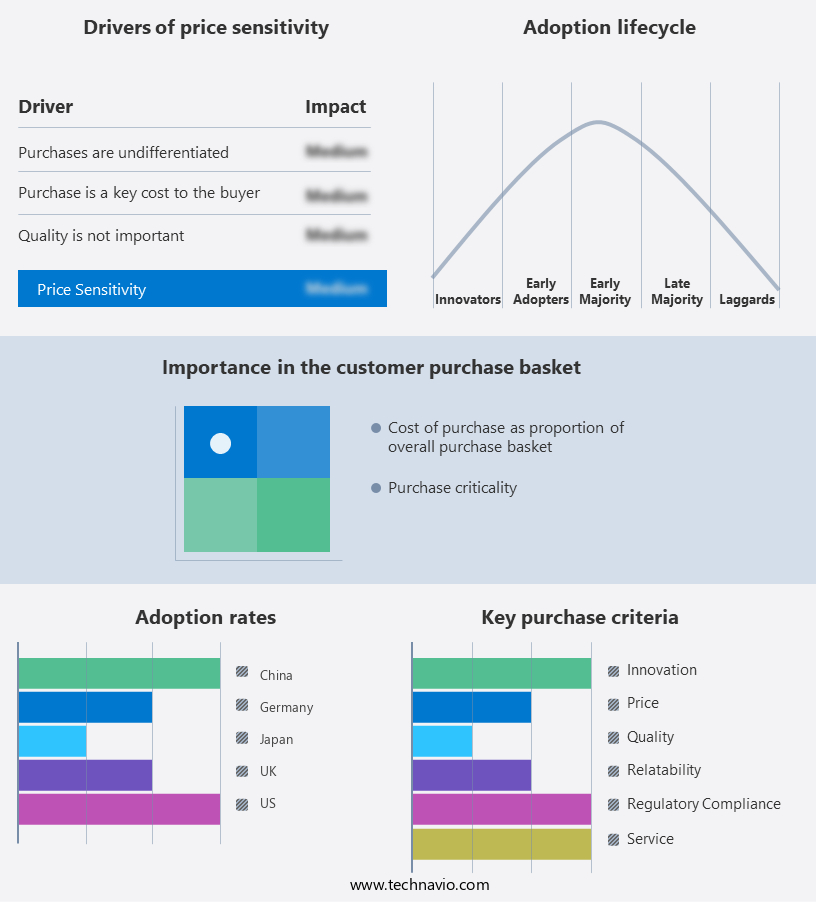
Customer Landscape
Key Companies & Market Insights
Companies are implementing various strategies, such as strategic alliances, market forecast , partnerships, mergers and acquisitions, geographical expansion, and product/service launches, to enhance their presence in the market.
The market research and growth report includes detailed analyses of the competitive landscape of the market and information about key companies, including:
- Ebara Corp.
- Emile Egger and Cie SA
- Flowmore Ltd.
- Flowserve Corp.
- Fluid Engineering
- Grundfos Holding AS
- Holland Pump
- ITT Inc.
- KSB SE and Co. KGaA
- MWI Pumps
- Pentair Plc
- Pioneer Group
- Propeller Pumps
- Ruhrpumpen Group
- Sintech Precision Products Ltd.
- Sulzer Management Ltd.
- The Gorman Rupp Co.
- The Weir Group Plc
- Tsurumi Manufacturing Co. Ltd.
- Xylem Inc.
Qualitative and quantitative analysis of companies has been conducted to help clients understand the wider business environment as well as the strengths and weaknesses of key market players. Data is qualitatively analyzed to categorize companies as pure play, category-focused, industry-focused, and diversified; it is quantitatively analyzed to categorize companies as dominant, leading, strong, tentative, and weak.
Research Analyst Overview
Axial flow pumps, a type of fluid transporting machinery, have gained significant traction in various industries due to their unique design and operational efficiency. These pumps utilize a propeller-type impeller that functions based on centrifugal force to move fluids. The market is driven by several factors, including the increasing demand for water and wastewater treatment, oil field activities, and energy demand in power plants and industries. Natural calamities such as floods and waterlogged areas further necessitate the use of pumping solutions for flood dewatering and drainage systems. The market for axial flow pumps is segmented into various end-use industries.
Furthermore, in the water and wastewater sector, these pumps are used for wastewater treatment, controlled vertical heads, and flood dewatering. In the oil and gas industry, they are employed for oil field activities and the petrochemical sector for handling viscous fluids. The chemical industry, pharmaceutical sector, food and beverages, mining, and energy efficiency are other significant end-users. The design and construction of axial flow pumps vary based on their application. Single-stage and multi-stage pumps are commonly used, with dimensions and blade lengths tailored to meet specific requirements. Materials like cast iron, plastic, aluminum, brass, bronze, and ceramics are used for manufacturing axial flow pumps, depending on the fluid properties and operating conditions.
|
Market Scope |
|
|
Report Coverage |
Details |
|
Page number |
161 |
|
Base year |
2023 |
|
Historic period |
2018-2022 |
|
Forecast period |
2024-2028 |
|
Growth momentum & CAGR |
Accelerate at a CAGR of 4.23% |
|
Market Growth 2024-2028 |
USD 6.69 billion |
|
Market structure |
Fragmented |
|
YoY growth 2023-2024(%) |
3.69 |
|
Key countries |
US, China, Japan, Germany, and UK |
|
Competitive landscape |
Leading Companies, Market Positioning of Companies, Competitive Strategies, and Industry Risks |
What are the Key Data Covered in this Market Research and Growth Report?
- CAGR of the market during the forecast period
- Detailed information on factors that will drive the market growth and forecasting between 2024 and 2028
- Precise estimation of the size of the market and its contribution of the market in focus to the parent market
- Accurate predictions about upcoming market growth and trends and changes in consumer behaviour
- Growth of the market across APAC, Europe, North America, South America, and Middle East and Africa
- Thorough analysis of the market's competitive landscape and detailed information about companies
- Comprehensive analysis of factors that will challenge the growth of market companies
We can help! Our analysts can customize this market research report to meet your requirements. Get in touch
 RIA -
RIA - 
