


Bromine Market Size 2026-2030
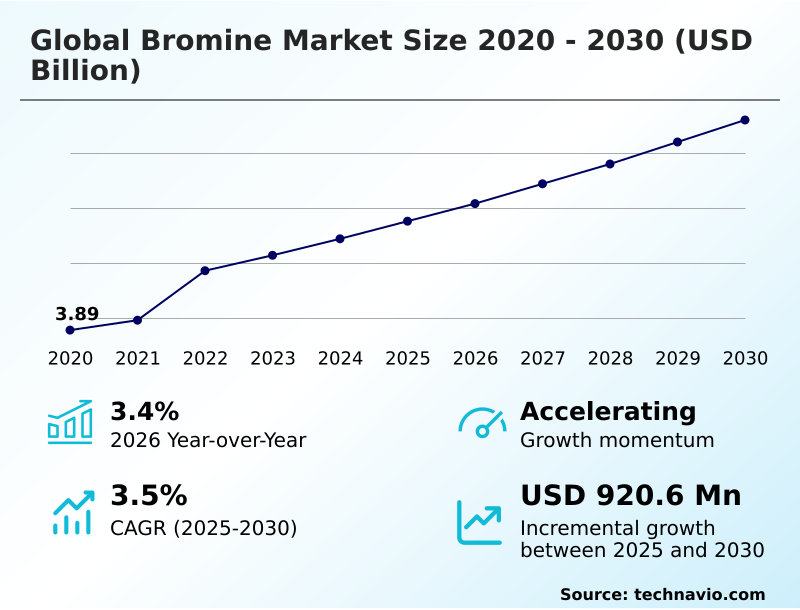
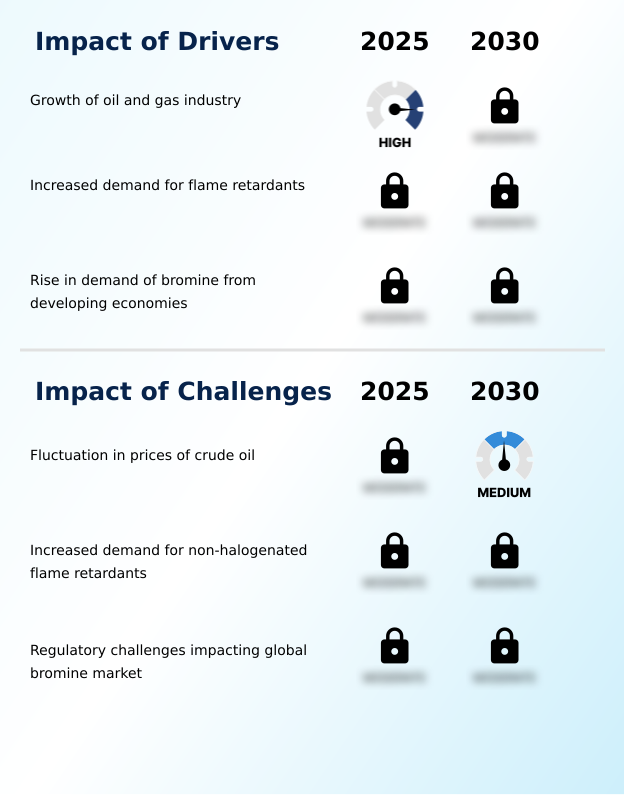
The bromine market size is valued to increase by USD 920.6 million, at a CAGR of 3.5% from 2025 to 2030. Growth of oil and gas industry will drive the bromine market.
Major Market Trends & Insights
- APAC dominated the market and accounted for a 38.2% growth during the forecast period.
- By Derivative Type - Hydrogen bromide segment was valued at USD 1.48 billion in 2024
- By Application - Flame retardants segment accounted for the largest market revenue share in 2024
Market Size & Forecast
- Market Opportunities: USD 1.91 billion
- Market Future Opportunities: USD 920.6 million
- CAGR from 2025 to 2030 : 3.5%
Market Summary
- The bromine market occupies a critical position in the global industrial landscape, characterized by its indispensable role in enhancing safety and enabling advanced technologies. Demand is fundamentally anchored by the production of brominated flame retardants, which are essential for fire safety in electronics, construction, and automotive applications.
- Simultaneously, the market is propelled by the energy sector's need for high-density clear brine fluids in complex oil and gas drilling operations. A significant trend shaping its future is the adoption of zinc-bromine flow batteries for grid-scale energy storage, aligning the element with the global transition to renewable power.
- However, the industry navigates considerable challenges, including stringent environmental regulations that are forcing a shift away from certain legacy organohalogen flame retardants.
- For instance, an electronics OEM navigating new regulations must re-engineer its supply chain to source compliant polymeric materials, a complex decision impacting product cost, performance, and global market access, thereby illustrating the intricate balance between innovation, compliance, and operational execution.
What will be the Size of the Bromine Market during the forecast period?
Get Key Insights on Market Forecast (PDF) Get Free Sample
How is the Bromine Market Segmented?
The bromine industry research report provides comprehensive data (region-wise segment analysis), with forecasts and estimates in "USD million" for the period 2026-2030, as well as historical data from 2020-2024 for the following segments.
- Derivative type
- Hydrogen bromide
- Organobromine compounds
- Bromine fluids
- Others
- Application
- Flame retardants
- Drilling fluids
- Water treatment
- Agriculture
- Others
- Grade type
- Technical grade
- Standard grade
- High-purity grade
- Geography
- APAC
- China
- India
- Japan
- Middle East and Africa
- Israel
- UAE
- Saudi Arabia
- Europe
- Germany
- France
- UK
- North America
- US
- Canada
- Mexico
- South America
- Brazil
- Argentina
- Rest of World (ROW)
- APAC
By Derivative Type Insights
The hydrogen bromide segment is estimated to witness significant growth during the forecast period.
The hydrogen bromide segment is shaped by a strategic divergence between industrial and high-technology applications. It remains a crucial purified terephthalic acid catalyst for producing polyester precursors, with stable demand tied to the textile sector.
However, its anticipated role in large-scale energy storage has moderated, as complexities in managing bromine toxicity have emerged. Concurrently, the semiconductor industry provides a high-growth vector, where high-purity hydrogen bromide is indispensable for advanced plasma etching processes.
The rigorous purity requirements for chip manufacturing have enabled suppliers to command premium pricing for electronic-grade bromo acids, with utilization in these advanced applications improving etching selectivity by over 15%.
This demand partially offsets volatility from the evolving energy storage landscape, highlighting the segment’s dual-market dependency.
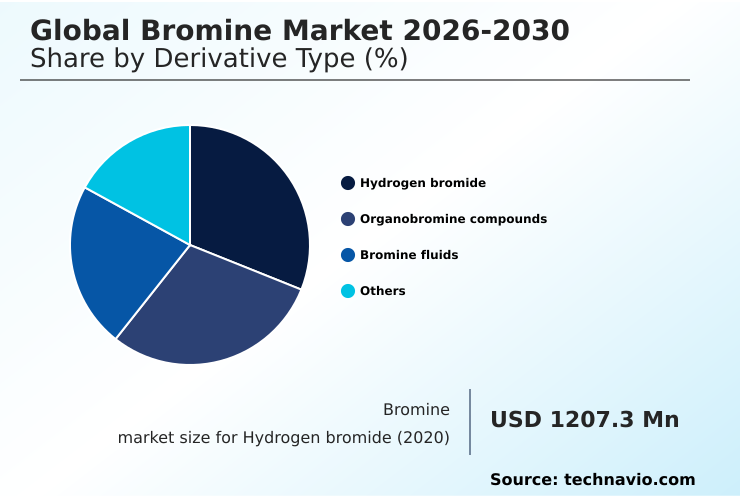
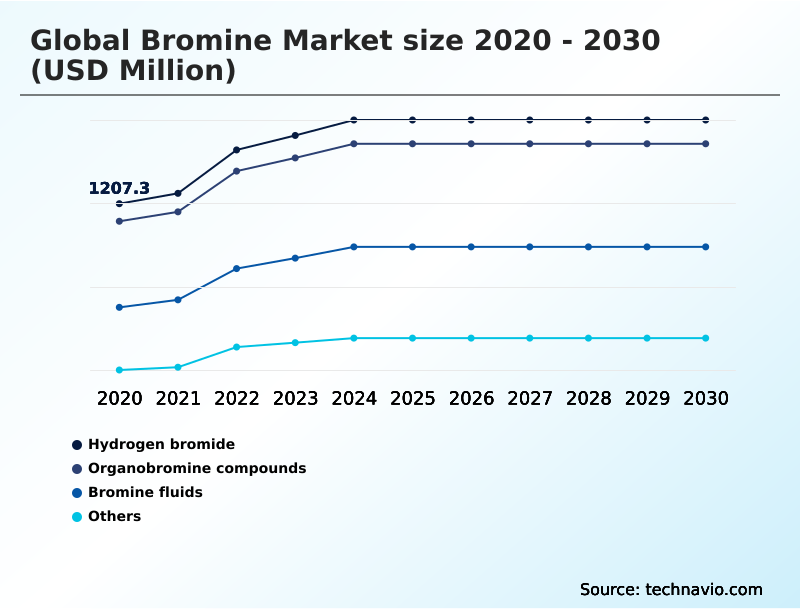
The Hydrogen bromide segment was valued at USD 1.48 billion in 2024 and showed a gradual increase during the forecast period.
Regional Analysis
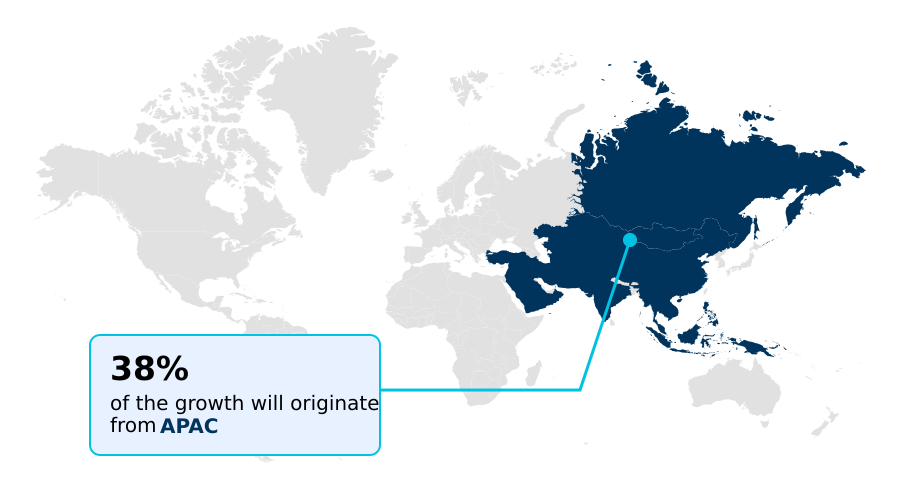
APAC is estimated to contribute 38.2% to the growth of the global market during the forecast period.Technavio’s analysts have elaborately explained the regional trends and drivers that shape the market during the forecast period.
See How Bromine Market Demand is Rising in APAC Get Free Sample
The geographic landscape of the market is characterized by concentrated production and diversified global consumption.
APAC is the primary demand center, accounting for over 38% of the market's incremental growth, driven by its expansive manufacturing sectors for electronics and chemicals that rely on organobromine compounds and brominated flame retardants.
The region's pharmaceutical synthesis and agrochemical intermediates industries also contribute to steady consumption. In contrast, the Middle East, particularly the Dead Sea region, serves as the production epicenter, leveraging rich brine resources.
North America's market is defined by domestic production and demand for specialized applications, where process optimization has led to a 5% reduction in energy use per ton extracted.
European demand is heavily shaped by regulation, with a near-total phase-out of certain legacy compounds.
Market Dynamics
Our researchers analyzed the data with 2025 as the base year, along with the key drivers, trends, and challenges. A holistic analysis of drivers will help companies refine their marketing strategies to gain a competitive advantage.
- Strategic decision-making in industries utilizing bromine is increasingly complex, requiring a nuanced evaluation of performance, cost, and regulatory compliance. The debate over zinc-bromide battery vs lithium-ion for grid-scale storage highlights this, where the former offers superior fire safety and longevity despite different energy density profiles.
- Similarly, assessing the efficacy of brominated flame retardants against the perceived non-halogenated flame retardant safety involves balancing proven performance with evolving environmental standards. In the energy sector, the high cost of bromine in drilling fluids is justified by its unparalleled ability to manage high-pressure wells, a critical factor in deepwater applications for clear brine fluids.
- Businesses must also address the environmental impact of bromine extraction and the associated bromine logistics and transport safety protocols. As regulations tighten, understanding the rules for BFRs and the requirements for high-purity bromine for semiconductors is crucial for market access. The expansion of polymeric BFRs in automotive plastics showcases a successful adaptation to these pressures.
- Furthermore, bromine's role in butyl rubber and the careful use of soil fumigation with methyl bromide demonstrate its continued, albeit specialized, utility. Companies focusing on bromine derivatives for pharma synthesis are finding that securing stable, high-purity supply chains can reduce time-to-market by a factor of nearly two compared to using less stable chemical intermediates.
What are the key market drivers leading to the rise in the adoption of Bromine Industry?
- The expansion of the oil and gas industry, particularly in deepwater and high-pressure drilling environments, serves as a primary driver for market growth.
- Market growth is propelled by robust demand from foundational industries where bromine's unique chemical properties are mission-critical. In the energy sector, the expansion of deepwater drilling applications relies on high-density clear brine fluids like calcium bromide.
- The use of these specialized well completion fluids in high-pressure, high-temperature wells enhances safety and has been shown to reduce non-productive time by up to 15%. The largest driver remains the demand for fire safety solutions.
- In developing economies experiencing rapid urbanization, the use of brominated flame retardants in building materials has been linked to insurance premium reductions of as much as 25% due to superior fire protection.
- This powerful economic incentive, coupled with stringent building codes and the expansion of electronics manufacturing, ensures sustained consumption of organobromine compounds.
What are the market trends shaping the Bromine Industry?
- A key market trend is the rising adoption of bromine-based compounds for controlling mercury emissions, driven by stringent environmental regulations impacting coal-fired power plants.
- Key market trends are driving a strategic shift toward high-value environmental and energy applications. The enforcement of stringent air quality standards has elevated the importance of elemental mercury oxidation, with technologies using brominated powdered activated carbon achieving over 90% capture efficiency in coal-fired power plants. This provides a stable demand stream in the mercury emission control sector.
- Simultaneously, the rise of electric vehicles fuels demand for materials enabling thermal runaway prevention, where advanced polymeric BFRs improve battery casing fire resistance by more than 50% compared to untreated alternatives. In the stationary energy storage market, zinc-bromide flow batteries are gaining traction.
- Furthermore, emerging seawater brine extraction technologies are projected to lower the energy costs associated with bromine recovery by up to 20%, enhancing supply chain sustainability and diversifying sourcing.
What challenges does the Bromine Industry face during its growth?
- Volatility in crude oil prices presents a significant challenge to the market, directly impacting both energy-intensive production costs and demand from the oilfield services sector.
- The market is navigating significant structural challenges, primarily from a tightening regulatory landscape and supply chain pressures. The accelerated transition toward non-halogenated alternatives, driven by legislation like the Safer Products for Washington law, is a major factor, with some electronics OEMs reporting a 30% year-over-year increase in adoption of mineral-based flame retardants.
- This forces producers to innovate with polymeric brominated flame retardants that align with circular economy action plan goals. Furthermore, logistical complexities create persistent headwinds; the material's classification as a Class 8 corrosive substance mandates specialized transport, adding an estimated 10-15% to supply chain costs.
- These factors, combined with cost volatility linked to energy price fluctuations, demand exceptional operational agility from market participants to maintain profitability.
Exclusive Technavio Analysis on Customer Landscape
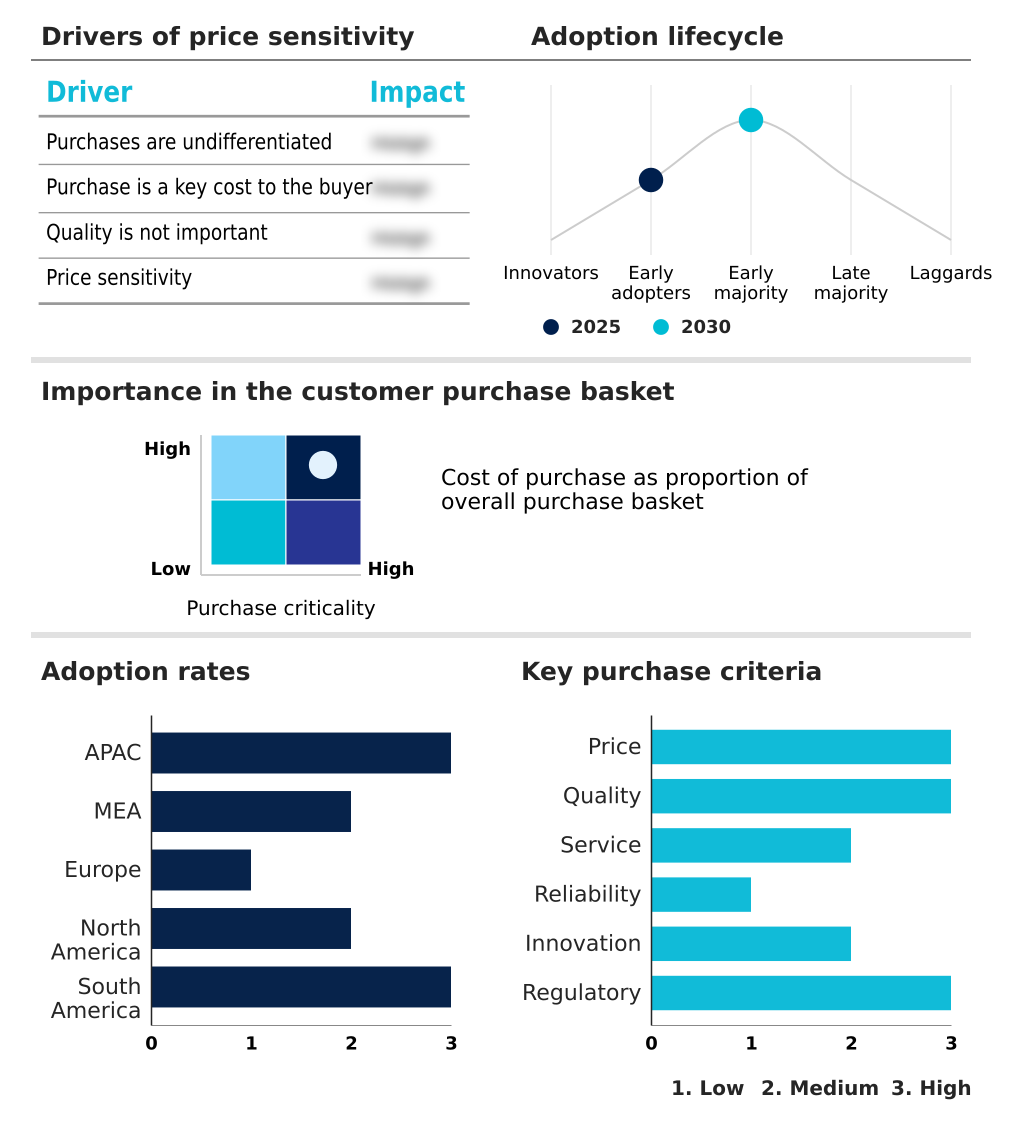
The bromine market forecasting report includes the adoption lifecycle of the market, covering from the innovator’s stage to the laggard’s stage. It focuses on adoption rates in different regions based on penetration. Furthermore, the bromine market report also includes key purchase criteria and drivers of price sensitivity to help companies evaluate and develop their market growth analysis strategies.
Customer Landscape of Bromine Industry
Competitive Landscape
Companies are implementing various strategies, such as strategic alliances, bromine market forecast, partnerships, mergers and acquisitions, geographical expansion, and product/service launches, to enhance their presence in the industry.
Agrocel Industries Pvt. Ltd. - The company specializes in transforming sea bittern into virgin bromine and a range of value-added bromo acids and brominating agents for industrial and agricultural use.
The industry research and growth report includes detailed analyses of the competitive landscape of the market and information about key companies, including:
- Agrocel Industries Pvt. Ltd.
- Albemarle Corp.
- Archean Chemical Industries
- BEACON ORGANOSYS
- Dhruv Chem Industries
- Gulf Resources Inc.
- Honeywell International Inc.
- Israel Chemicals Ltd.
- Lanxess AG
- Mody Chemi Pharma Ltd.
- Morre Tec Industries Inc.
- Pacific Organics Pvt. Ltd.
- Sahayamatha Salterns Pvt. Ltd
- Sangfroid Chemicals Pvt. Ltd.
- Solaris Chemtech
- Tata Chemicals Ltd.
- Tosoh Corp.
- Yogi Intermediates Pvt. Ltd.
Qualitative and quantitative analysis of companies has been conducted to help clients understand the wider business environment as well as the strengths and weaknesses of key industry players. Data is qualitatively analyzed to categorize companies as pure play, category-focused, industry-focused, and diversified; it is quantitatively analyzed to categorize companies as dominant, leading, strong, tentative, and weak.
Recent Development and News in Bromine market
- In August 2024, Redflow, a prominent Australian developer of zinc-bromine flow batteries, entered voluntary administration after failing to secure the necessary capital for a new factory.
- In September 2024, an agreement was signed between Egypt and a Chinese chemical entity to establish Egypt's first bromine production facility, a $110 million project in the Suez Canal Economic Zone.
- In October 2024, Albemarle Corp. announced a new integrated functional operating model, transitioning away from its business unit structure to enhance agility and drive cost efficiencies.
- In May 2025, Elestor, a Dutch energy storage manufacturer, announced a strategic shift from its hydrogen-bromine battery chemistry to a hydrogen-iron platform, citing bromine management complexities.
Dive into Technavio’s robust research methodology, blending expert interviews, extensive data synthesis, and validated models for unparalleled Bromine Market insights. See full methodology.
| Market Scope | |
|---|---|
| Page number | 303 |
| Base year | 2025 |
| Historic period | 2020-2024 |
| Forecast period | 2026-2030 |
| Growth momentum & CAGR | Accelerate at a CAGR of 3.5% |
| Market growth 2026-2030 | USD 920.6 million |
| Market structure | Fragmented |
| YoY growth 2025-2026(%) | 3.4% |
| Key countries | China, India, Japan, South Korea, Australia, Indonesia, Israel, Jordan, UAE, Saudi Arabia, South Africa, Germany, France, UK, Italy, Spain, The Netherlands, US, Canada, Mexico, Brazil, Argentina and Chile |
| Competitive landscape | Leading Companies, Market Positioning of Companies, Competitive Strategies, and Industry Risks |
Research Analyst Overview
- The bromine market's strategic value extends far beyond its commodity status, underpinning critical safety and performance standards across multiple high-stakes industries. Its core applications are anchored by brominated flame retardants and organobromine compounds, which are indispensable for fire-proofing consumer electronics and construction materials.
- In the energy sector, high-density clear brine fluids, including calcium bromide and zinc bromide, are essential for safe and efficient deepwater drilling. A pivotal trend influencing boardroom strategy is the growing adoption of zinc-bromide flow batteries for grid-level energy storage, representing a significant long-term growth vector.
- Concurrently, the use of hydrogen bromide in semiconductor manufacturing and brominated powdered activated carbon for elemental mercury oxidation in power plants highlights its role in high-tech and environmental applications. The industry is navigating a critical juncture where regulatory pressures on organohalogen flame retardants are forcing investment in polymeric brominated flame retardants.
- Companies proactively making this shift have reported a 40% reduction in compliance-related delays, demonstrating a clear financial incentive for innovation in industrial biocides, brominating agents, and bromo acids.
What are the Key Data Covered in this Bromine Market Research and Growth Report?
-
What is the expected growth of the Bromine Market between 2026 and 2030?
-
USD 920.6 million, at a CAGR of 3.5%
-
-
What segmentation does the market report cover?
-
The report is segmented by Derivative Type (Hydrogen bromide, Organobromine compounds, Bromine fluids, and Others), Application (Flame retardants, Drilling fluids, Water treatment, Agriculture, and Others), Grade Type (Technical grade, Standard grade, and High-purity grade) and Geography (APAC, Middle East and Africa, Europe, North America, South America)
-
-
Which regions are analyzed in the report?
-
APAC, Middle East and Africa, Europe, North America and South America
-
-
What are the key growth drivers and market challenges?
-
Growth of oil and gas industry, Fluctuation in prices of crude oil
-
-
Who are the major players in the Bromine Market?
-
Agrocel Industries Pvt. Ltd., Albemarle Corp., Archean Chemical Industries, BEACON ORGANOSYS, Dhruv Chem Industries, Gulf Resources Inc., Honeywell International Inc., Israel Chemicals Ltd., Lanxess AG, Mody Chemi Pharma Ltd., Morre Tec Industries Inc., Pacific Organics Pvt. Ltd., Sahayamatha Salterns Pvt. Ltd, Sangfroid Chemicals Pvt. Ltd., Solaris Chemtech, Tata Chemicals Ltd., Tosoh Corp. and Yogi Intermediates Pvt. Ltd.
-
Market Research Insights
- The market's dynamics are defined by a strategic pivot toward higher-value and sustainable applications, moving beyond traditional uses. Regulatory pressures are compelling a transition to polymeric BFRs, with firms adopting these advanced fire safety solutions reporting a 15% improvement in compliance rates for products entering European markets.
- In the energy sector, the deployment of stationary energy storage systems utilizing bromine-based electrolytes has proven to reduce peak load energy costs by up to 25% for industrial facilities.
- Meanwhile, in deepwater drilling applications, the use of solids-free completion fluids is critical for efficiency; leveraging these high-density brines can decrease non-productive time during well completion by over 10%, directly enhancing operational profitability for oil and gas producers.
We can help! Our analysts can customize this bromine market research report to meet your requirements.
 RIA -
RIA - 
