
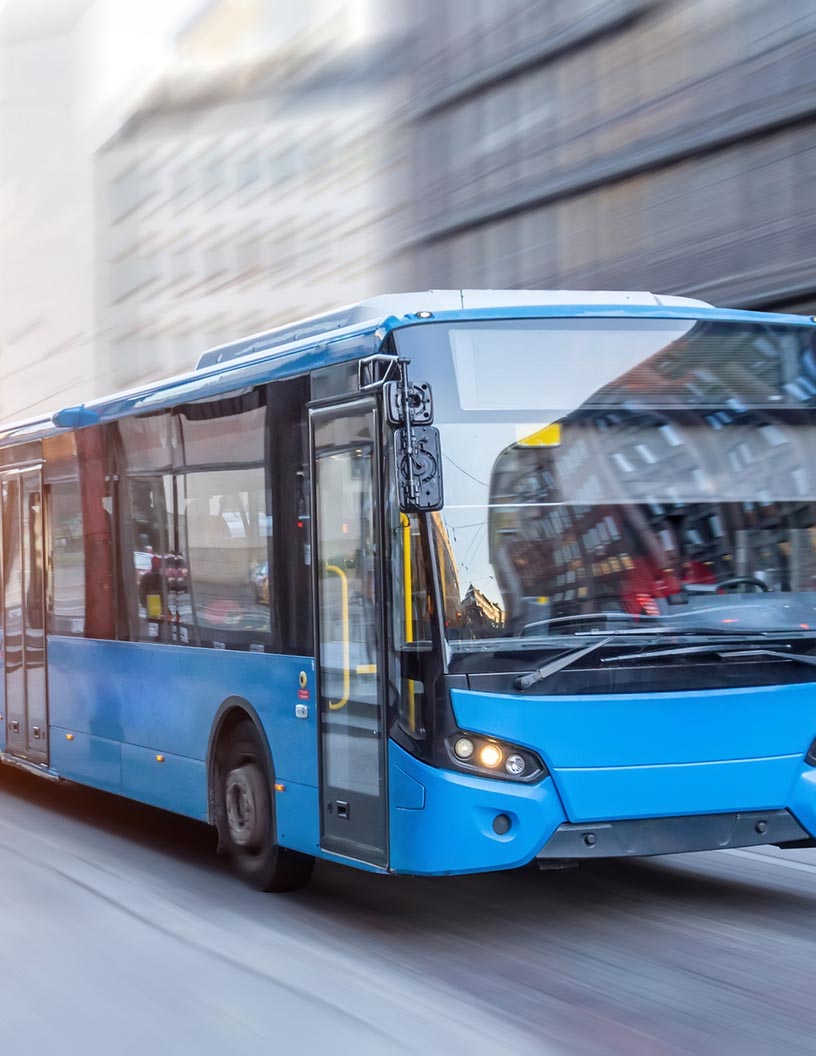


Bus Market Size 2024-2028
The bus market size is estimated to increase by USD 19.07 billion, growing at a CAGR of 6.73% between 2023 and 2028. Market expansion hinges on various factors such as accelerated urbanization, stringent government regulations, incentives, and effective congestion and traffic management strategies. As cities grow rapidly, there is an increased demand for solutions that streamline transportation and infrastructure development. Government policies and incentives play a pivotal role in shaping market dynamics, encouraging innovation and investment in urban planning and mobility solutions. Effective congestion and traffic management strategies are crucial to optimizing urban mobility, reducing environmental impact, and enhancing quality of life. These factors collectively drive market growth in sectors ranging from transportation infrastructure and smart city technologies to sustainable urban development initiatives. Emphasizing sustainable and efficient urban solutions remains essential in meeting the challenges posed by urbanization while fostering economic growth and environmental stewardship.
What will be the Size of the Bus Market During the Forecast Period?

To learn more about this report, View Report Sample
Market Dynamics
In the transportation sector, vehicle configuration and fuel category significantly influence operating costs and fuel expenditures for various vehicles, including diesel transit vehicles and luxury coaches used in the tourism sector. With fluctuations in fossil fuel prices, operators of transit buses and tour buses navigate economic challenges while balancing passenger revenue and optimizing routes across the road network. Digital innovations like online ticketing and machine learning (ML) enhance operational efficiencies and passenger experience, streamlining booking processes and optimizing schedules. Addressing environmental pollution, particularly from air travel and road-based transport such as intercity and intracity buses, remains a priority. Governments and industry leaders focus on sustainable practices and integrating digital technology to mitigate environmental impacts while meeting the demands of modern transportation systems and enhancing overall travel experiences.
Key Driver
Rapid urbanization is the key factor driving the growth of the global market. Rapid urbanization has become a key driver for the global market in several countries, including the US, China, and India. There is a growing need for effective and environmentally friendly public transport systems, especially these vehicles, as cities such as Mumbai and Bangalore expand and populations concentrate in urban areas. The requirement to meet the transit needs of an expanding metropolitan population is a major driver of the global bus market. The Chinese government has made significant investments in public transportation infrastructure to accommodate the increased demand for public transportation in metropolitan areas, notably BRT networks.
Moreover, in China, more than 40 BRT lines were operating by 2020, handling millions of passengers daily. According to the United Nations Department of Economic and Social Affairs, 68% of the world's population is expected to reside in urban areas by 2050. This indicates the increased future demand for buses across the world, which is expected to drive the growth of the market during the forecast period.
Significant Trends
Technological advancements in electric vehicles are the primary trend shaping the global bus market growth. Since the global market is growing moderately, many manufacturers are entering into electric vehicle manufacturing. In addition, the need for technological advancements is also high - a factor that is encouraging electric bus manufacturers to focus on advancements in collaboration with technology-based companies. In line with this, Volvo and Nanyang Technological University in Singapore have signed a cooperation agreement on an R&D program for autonomous electric buses as a drive to create new solutions for sustainable public transport. It is expected that this technology, which is being developed by Volvo, will contribute to the future autonomous applications of Volvo.
Another technological advancement has been made to address the difficulty in charging - Li-ion batteries that can be charged with the help of solar power. For instance, Kiira Motors, a Uganda-based company, has come up with the Kayoola bus concept, which can run on solar power. Hence, the adoption of electric buses and significant technological advancements are expected to drive the demand for electric buses, which, in turn, will drive the market growth and trends during the forecast period.
Major Challenge
Inadequate bus infrastructure is a major challenge impeding the growth of the global market. The global market has significant challenges due to poor infrastructure, particularly in urban regions that are experiencing increasing urbanization. The efficiency and dependability of these services are hampered by a lack of bus stops, terminals, and designated bus lanes, which results in operational inefficiencies, longer journey times, and lower passenger satisfaction. For instance, the lack of bus stops and terminals in many Indian cities is highlighted in a report by the Ministry of Housing and Urban Affairs.
However, only between 50,000-55,000 of more than 1,00,000 necessary bus stops are available, which causes congestion and aggravation for operators and passengers. These instances highlight the urgent issue of insufficient bus infrastructure, requiring significant expenditures and strategic planning to improve the effectiveness and dependability of services in urban areas around the world. Hence, the lack of adequate infrastructure is expected to hinder the operation of transportation, which, in turn, will hamper the growth of the market during the forecast period.
Key Market Customer Landscape
The market report includes the adoption lifecycle of the market, covering from the innovator's stage to the laggard's stage. It focuses on adoption rates in different regions based on penetration. Furthermore, the report also includes key purchase criteria and drivers of price sensitivity to help companies evaluate and develop their growth strategies.
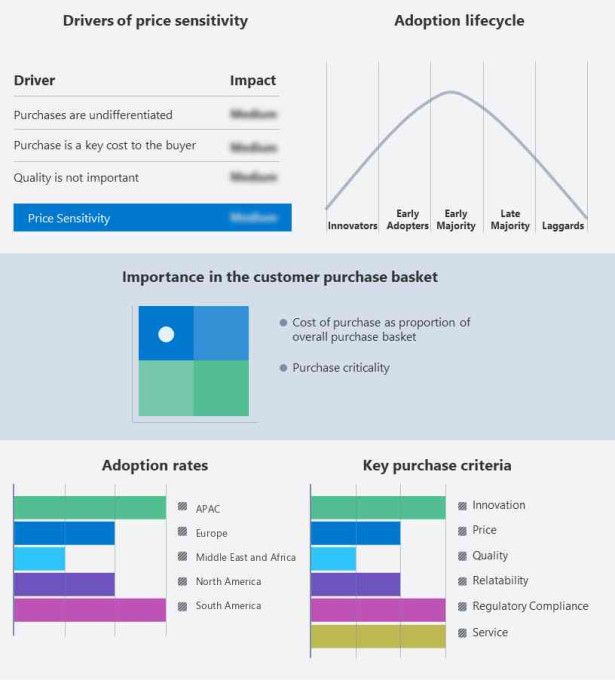
Global Market Customer Landscape
What is the Fastest-Growing Segment in the Market?
The market share growth by the single deck segment will be significant during the forecast period. The rising demand for public transport, government programs to ease traffic congestion, and the growing interest in environment-friendly mobility options contribute to the need for single-deck buses.
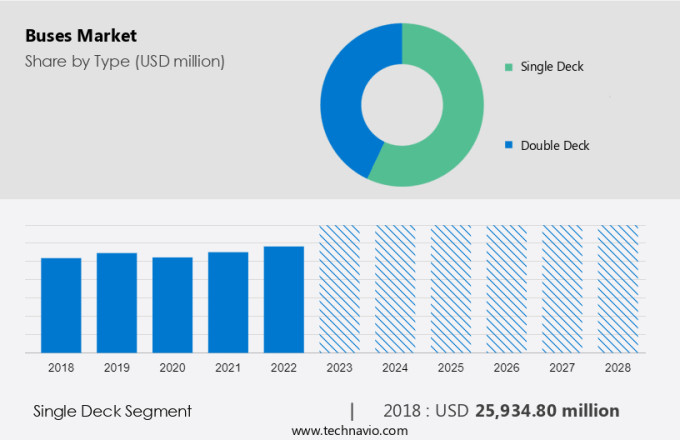
Get a glance at the market contribution of various segments View the PDF Sample
The single deck segment was valued at USD 25.93 billion in 2018. The single-deck bus segment of the global market has experienced consistent expansion. Due to their small size and maneuverability, these buses, which normally have one level of seating, are ideal for urban and suburban transportation. They are frequently employed for employee transportation, school buses, and public transportation. For instance, two well-known single-deck buses utilized in numerous cities throughout the world are the Alexander Dennis Enviro200 and the Volvo 7900 Electric. Single-deck bus sales are in high demand due to factors such as increased urbanization, the need for effective public transit, and growing environmental concerns. Such factors will increase segment growth during the forecast period.
Which are the Key Regions for the Market?
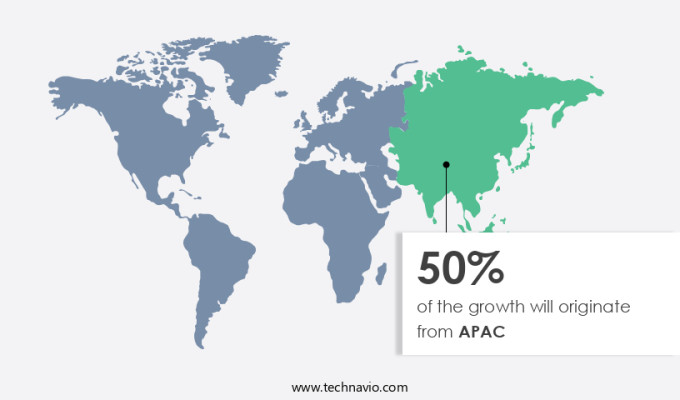
For more insights on the market share of various regions Download PDF Sample now!
APAC is estimated to contribute 50% to the growth of the global market during the forecast period. Technavio's analysts have elaborately explained the regional trends and drivers that shape the market during the forecast period. High awareness about the benefits of public transport among consumers is leading to the rapid transformation of buses from traditional diesel to electric buses. This is a crucial driver for the market in China. Every city that has a transit system operates buses, and bus services are easy to introduce and modify.
With the rising focus on reducing traffic congestion and vehicle emissions, authorities in China are pushing the adoption of public transportation over private transportation (which constitutes higher adoption among all modes). There has been a growing adoption of electric school buses in China to reduce carbon footprints; therefore, players have been launching electric school buses with new features.
Who are the Major Market Companies?
Companies are implementing various strategies, such as strategic alliances, partnerships, mergers and acquisitions, geographical expansion, and product/service launches, to enhance their presence in the market.
AB Volvo: The company offers premium buses, coaches and bus chassis under two brands, namely, Prevost and Novabus.
The research report also includes detailed analyses of the competitive landscape of the market and information about 15 market players, including:
- Anhui Jianghuai Automobile Group Co. Ltd.
- Ashok Leyland Ltd
- BYD Co. Ltd.
- FirstGroup plc
- Go Ahead Group Plc
- Mahindra and Mahindra Ltd.
- Mercedes Benz Group AG
- MTR Corp. Ltd.
- National Express Group Plc
- NFI Group Inc.
- Proterra Inc.
- RegioJet A.S.
- SNCF Group
- Stagecoach Group Plc
- Tata Motors Ltd.
Qualitative and quantitative analysis of vendors has been conducted to help clients understand the wider business environment as well as the strengths and weaknesses of key market players. Data is qualitatively analyzed to categorize vendors as pure play, category-focused, industry-focused, and diversified; it is quantitatively analyzed to categorize vendors as dominant, leading, strong, tentative, and weak.
Segment Overview
The market research report provides comprehensive data (region wise segment analysis), with forecasts and estimates in "USD Billion" for the period 2024 to 2028, as well as historical data from 2018 to 2022 for the following segments.
- Type Outlook
- Single deck
- Double deck
- Fuel Type Outlook
- Diesel
- Electric and hybrid
- Others
- Region Outlook
- North America
- The U.S.
- Canada
- Europe
- U.K.
- Germany
- France
- Rest of Europe
- APAC
- China
- India
- South America
- Chile
- Argentina
- Brazil
- Middle East & Africa
- Saudi Arabia
- South Africa
- Rest of the Middle East & Africa
- North America
You may also interested in below market reports:
School Bus Market: School Bus Market Analysis North America, APAC, Europe, Middle East and Africa, South America - US, China, Canada, Japan, UK - Size and Forecast
Electric Bus Market: Electric Bus Market Analysis APAC, Europe, North America, Middle East and Africa, South America - US, China, India, UK, Germany - Size and Forecast
Autonomous Bus Market: Autonomous Bus Market Analysis North America, APAC, Europe, Middle East and Africa, South America - US, China, Japan, Germany, UK - Size and Forecast
Market Analyst Overview
The automotive sector is experiencing a transformative shift towards electric vehicles (EVs), driven by initiatives to improve energy efficiency and reduce greenhouse gas emissions and pollution emissions. Global EV sales are on the rise, particularly in the segment of electric passenger cars and vehicles used in public transport sectors, such as single decker buses and double decker buses. This shift is supported by advancements in battery technology and vehicle electrification, essential for achieving carbon neutrality goals in transportation. While operating cost and maintenance costs for diesel transit vehicle have historically been significant, the adoption of electric mobility strategies promises lower fuel costs and reduced environmental impact. Emerging technologies like Artificial Intelligence (AI) are enhancing smart transportation solutions, optimizing routes, and improving overall efficiency across diverse vehicle types, including SUVs and intercity/coaches.
|
Market Scope |
|
|
Report Coverage |
Details |
|
Page number |
167 |
|
Base year |
2023 |
|
Historic period |
2018 - 2022 |
|
Forecast period |
2024-2028 |
|
Growth momentum & CAGR |
Accelerate at a CAGR of 6.73% |
|
Market growth 2024-2028 |
USD 19.07 Billion |
|
Market structure |
USD Fragmented |
|
YoY growth 2023-2024(%) |
5.94 |
|
Regional analysis |
APAC, Europe, North America, South America, and Middle East and Africa |
|
Performing market contribution |
APAC at 50% |
|
Key countries |
China, Germany, US, India, and UK |
|
Competitive landscape |
Leading Companies, Market Positioning of Companies, Competitive Strategies, and Industry Risks |
|
Key companies profiled |
AB Volvo, Anhui Jianghuai Automobile Group Co. Ltd., Ashok Leyland Ltd., BYD Co. Ltd., FirstGroup plc, Go Ahead Group Plc, Mahindra and Mahindra Ltd., Mercedes Benz Group AG, Mobico Group, MTR Corp. Ltd., NFI Group Inc., Proterra Inc., RegioJet A.S., SNCF Group., Stagecoach Group Plc, Tata Motors Ltd., Transdev Group SA, Xiamen King Long United Automotive Industry Co. Ltd., Zhengzhou Yutong Group Co. Ltd., and Zhongtong Bus Holding Co. Ltd. |
|
Market dynamics |
Parent market analysis, Market forecasting growth inducers and obstacles, Fast-growing and slow-growing segment analysis, Market growth and Forecasting, COVID-19 impact and recovery analysis and future consumer dynamics, Market condition analysis for the forecast period |
|
Customization purview |
If our market report has not included the data that you are looking for, you can reach out to our analysts and get segments customized. |
What are the Key Data Covered in this Market Forecast Report?
- CAGR of the market during the forecast period
- Detailed information on factors that will drive the market growth and forecasting of the market between 2024 and 2028
- Precise estimation of the market size and its contribution to the parent market
- Accurate predictions about upcoming market trends and analysis and changes in consumer behavior
- Growth of the market across Europe, North America, APAC, South America, and Middle East and Africa
- Thorough market growth analysis of the market's competitive landscape and detailed information about companies
- Comprehensive market analysis and report on the factors that will challenge the market research and growth of market companies
We can help! Our analysts can customize this market research report to meet your requirements.