
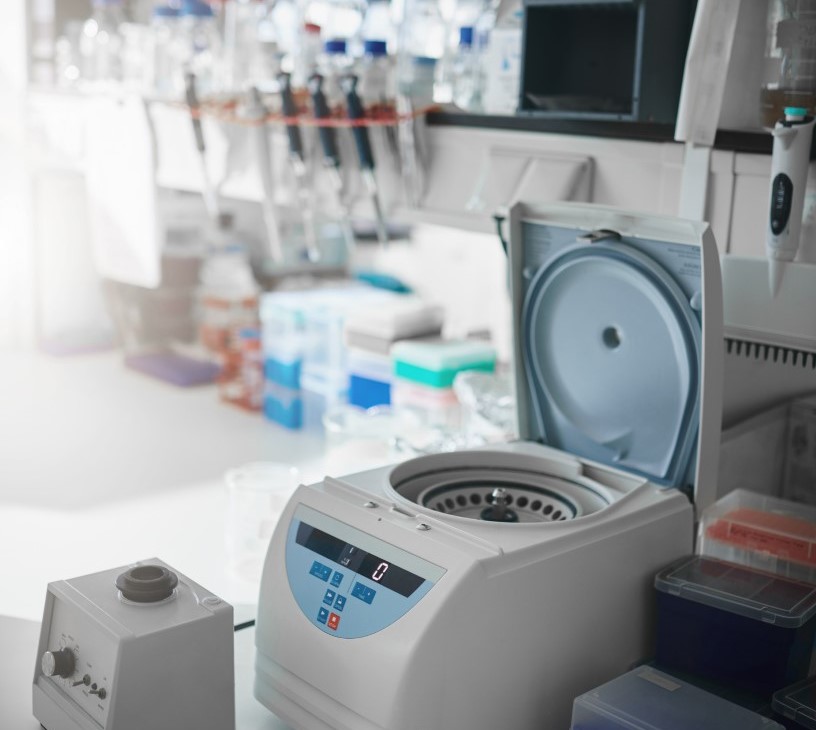

Clinical Chemistry Analyzers Market Analysis, Size, and Forecast 2026-2030: North America (US, Canada, and Mexico), Europe (Germany, UK, and France), APAC (China, Japan, and India), South America (Brazil, Argentina, and Colombia), Middle East and Africa (Saudi Arabia, South Africa, and UAE), Asia, Rest of World (ROW)

Clinical Chemistry Analyzers Market Analysis, Size, and Forecast 2026-2030:
North America (US, Canada, and Mexico), Europe (Germany, UK, and France), APAC (China, Japan, and India), South America (Brazil, Argentina, and Colombia), Middle East and Africa (Saudi Arabia, South Africa, and UAE), Asia, Rest of World (ROW)

Published: Dec 2025 306 Pages SKU: IRTNTR80126

Market Overview at a Glance

$3.51 B
Market Opportunity
4.3%
CAGR 2025 - 2030
38%
North America Growth
$8.51 B
Hospitals segment 2024

Clinical Chemistry Analyzers Market Size 2026-2030

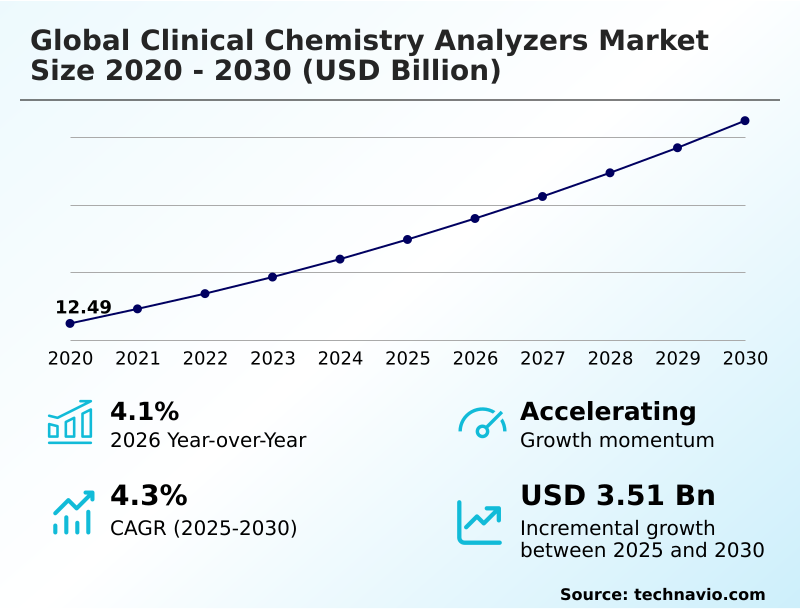
The clinical chemistry analyzers market size is valued to increase by USD 3.51 billion, at a CAGR of 4.3% from 2025 to 2030. Increasing global prevalence of chronic diseases and expanding geriatric population will drive the clinical chemistry analyzers market.

Major Market Trends & Insights

  • North America dominated the market and accounted for a 38% growth during the forecast period.
  • By End-user - Hospitals segment was valued at USD 8.51 billion in 2024
  • By Type - Fully automated clinical chemical analyzers segment accounted for the largest market revenue share in 2024

Market Size & Forecast

  • Market Opportunities: USD 5.99 billion
  • Market Future Opportunities: USD 3.51 billion
  • CAGR from 2025 to 2030 : 4.3%

Market Summary

  • The Clinical Chemistry Analyzers Market is foundational to modern healthcare, providing essential data for disease diagnosis and management. Growth is sustained by the rising global incidence of chronic conditions and an aging population, which together escalate the demand for routine biochemical monitoring.
  • Technological innovation is a primary catalyst, with a clear industry shift towards total laboratory automation (TLA) and integrated systems combining clinical chemistry and immunoassay testing. These advancements address persistent challenges such as the critical shortage of skilled laboratory professionals and downward pressure on test reimbursement.
  • For example, a large hospital network can implement a fully automated platform to consolidate testing from multiple departments, which reduces the cost-per-test and allows for the reallocation of staff to higher-value interpretive tasks. This drive for efficiency is balanced by the expansion of decentralized point-of-care testing (POCT), creating demand for compact, user-friendly devices in outpatient settings.
  • The market's trajectory is defined by this dual focus: maximizing efficiency in centralized labs while expanding access to diagnostics at the point of need.

What will be the Size of the Clinical Chemistry Analyzers Market during the forecast period?
Get Key Insights on Market Forecast (PDF) Request Free Sample

How is the Clinical Chemistry Analyzers Market Segmented?

The clinical chemistry analyzers industry research report provides comprehensive data (region-wise segment analysis), with forecasts and estimates in "USD million" for the period 2026-2030, as well as historical data from 2020-2024 for the following segments.

  • End-user
    • Hospitals
    • Diagnostic laboratories
    • Academic research centers
    • Others
  • Type
    • Fully automated clinical chemical analyzers
    • Semi automated clinical chemical analyzers
  • Product type
    • Reagents
    • Analyzers
    • Others
  • Geography
    • North America
      • US
      • Canada
      • Mexico
    • Europe
      • Germany
      • UK
      • France
    • Asia
    • Rest of World (ROW)

By End-user Insights

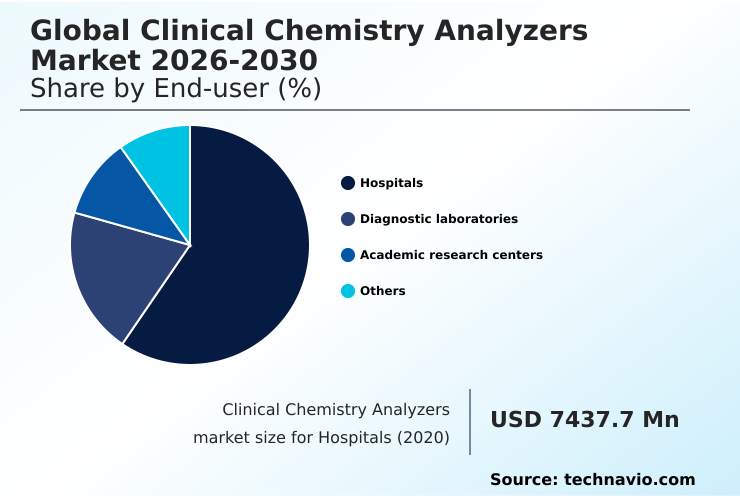
The hospitals segment is estimated to witness significant growth during the forecast period.

Hospitals are the primary end-user segment, driven by the critical need for high-throughput diagnostic operations supporting emergency, intensive care, and surgical units.

These facilities predominantly invest in modular, integrated systems that perform both clinical chemistry and immunoassay testing, often connected to total laboratory automation tracks. The main requirements are uncompromising reliability and rapid turnaround times to manage immense daily sample volumes.

Purchasing decisions are complex, typically involving multi-year contracts that factor in the total cost of ownership, the breadth of the test menu, and system efficiency.

The adoption of these advanced platforms, which feature automated quality control and intelligent sample routing, has been shown to reduce analytical errors by more than 20%, directly enhancing patient safety and operational effectiveness in demanding 24/7 environments.
Request Free Sample

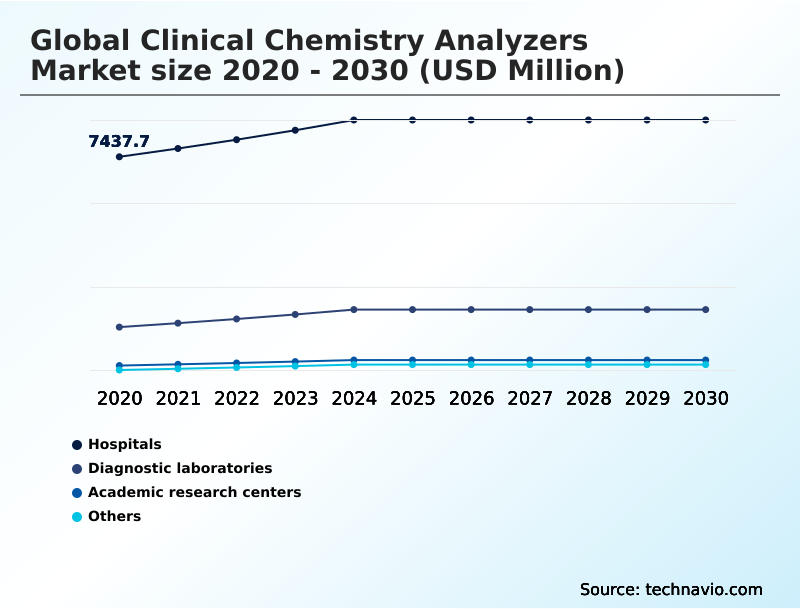
The Hospitals segment was valued at USD 8.51 billion in 2024 and showed a gradual increase during the forecast period.
Request Free Sample

Regional Analysis

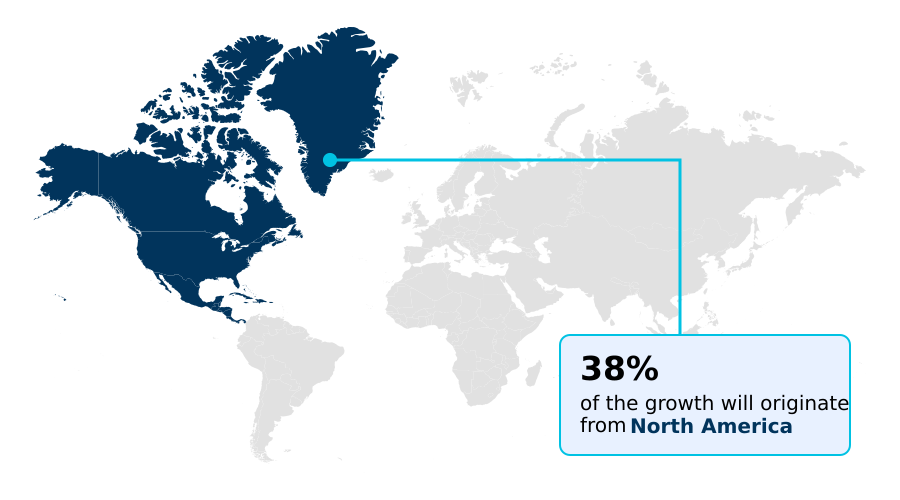
North America is estimated to contribute 38% to the growth of the global market during the forecast period.Technavio’s analysts have elaborately explained the regional trends and drivers that shape the market during the forecast period.
See How Clinical Chemistry Analyzers Market Demand is Rising in North America Request Free Sample

The geographic landscape of the market is defined by a dichotomy between mature and emerging regions.

North America represents the largest and most developed market, projected to contribute 38% of the incremental growth, driven by a focus on laboratory automation to counter workforce shortages and reimbursement pressures.

In this region, adoption of Total Laboratory Automation (TLA) systems can reduce pre-analytical errors by over 50%. Europe mirrors this maturity, with an emphasis on consolidating laboratory services and navigating the stringent IVDR regulatory framework.

In contrast, Asia is the fastest-growing region, fueled by significant healthcare infrastructure investment in countries like China and India.

This expansion creates substantial demand for a wide range of analyzers, from high-throughput systems in new urban hospitals to cost-effective benchtop models for developing rural healthcare networks, reflecting a global push for enhanced diagnostic access.

Market Dynamics

Our researchers analyzed the data with 2025 as the base year, along with the key drivers, trends, and challenges. A holistic analysis of drivers will help companies refine their marketing strategies to gain a competitive advantage.

  • Strategic decision-making in the clinical chemistry analyzers market increasingly revolves around optimizing laboratory architecture and assay portfolio management. The total laboratory automation vs standalone analyzers debate is central to this, with integrated networks showing a distinct advantage.
  • Facilities that adopt immunoassay and clinical chemistry integration on a single platform report up to a 20% faster turnaround time compared to those using separate systems, a critical factor for acute care diagnostics.
  • Furthermore, the role of point of care clinical chemistry systems is expanding beyond emergency use to chronic disease management in outpatient clinics, directly competing with traditional centralized lab testing models. The economic viability of these choices is often determined by the clinical chemistry analyzer reagent rental model, which minimizes upfront capital expenditure.
  • Vendor selection now heavily weighs the clinical chemistry analyzer software integration capabilities and the breadth of the specialty clinical chemistry assays menu, as these factors directly impact workflow efficiency and profitability. This is particularly true for labs looking to bring esoteric testing in-house, where the availability of specific therapeutic drug monitoring on chemistry analyzers can be a key differentiator.
  • The evaluation of clinical chemistry analyzer cost per test remains paramount, especially when comparing semi-automated vs fully automated systems for smaller labs. The clinical chemistry analyzer test menu expansion strategy is a core competitive lever, alongside the development of sustainable clinical chemistry consumables and adherence to evolving clinical chemistry analyzer regulatory standards.
  • A comprehensive clinical chemistry analyzer maintenance contract is also crucial for ensuring uptime and long-term performance.
What are the key market drivers leading to the rise in the adoption of Clinical Chemistry Analyzers Industry?

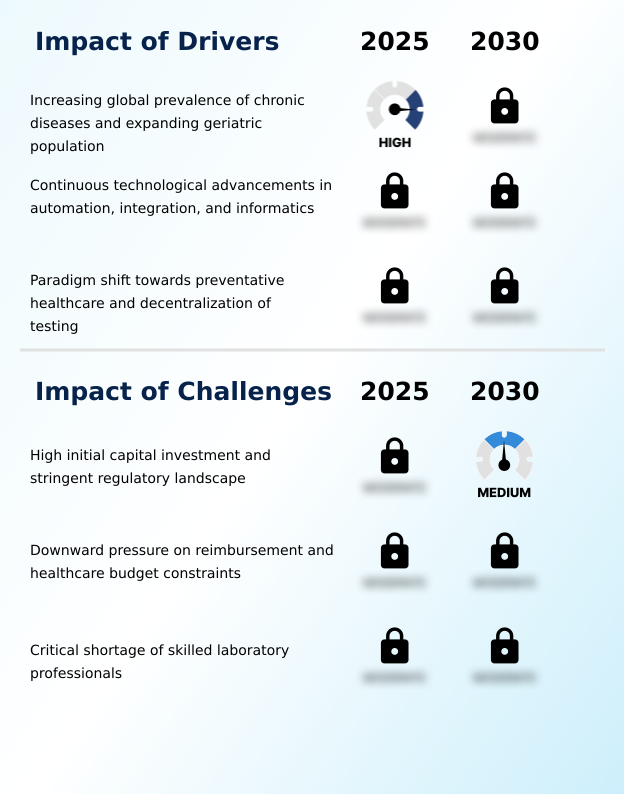
  • The increasing global prevalence of chronic diseases, coupled with an expanding geriatric population, is a key driver for the market.

  • Market growth is propelled by a convergence of clinical needs and technological advancements. The rising prevalence of chronic diseases necessitates continuous monitoring, driving demand for routine clinical chemistry testing and specialized photometric analysis.
  • Technological innovation serves as a powerful catalyst, with advancements in total laboratory automation (TLA) and integrated systems being paramount. These platforms, which can reduce sample processing time by up to 30%, address the critical global shortage of skilled laboratory professionals.
  • Furthermore, the paradigm shift toward preventative healthcare and the decentralization of diagnostics are creating robust demand for point-of-care testing (POCT) solutions. These compact, cartridge-based reagent systems can shorten diagnostic turnaround from hours to under 15 minutes, enabling immediate clinical decision-making.

What are the market trends shaping the Clinical Chemistry Analyzers Industry?

  • A growing emphasis on sustainability and eco-friendly laboratory solutions is emerging as a key trend. This shift influences purchasing decisions by incorporating criteria focused on reducing the environmental footprint of instruments and consumables.

  • Key trends are reshaping the market, moving beyond analytical performance to address operational and strategic goals. The dominance of the reagent rental model is a primary commercial trend, allowing laboratories to adopt state-of-the-art automated immunoassay systems and chemistry analyzers with minimal upfront capital. This model enhances profitability for manufacturers by ensuring long-term consumable sales.
  • Another pivotal trend is the expansion of assay menus to include high-value specialty tests, enabling laboratories to consolidate esoteric testing and improve their service offerings. This strategy can increase a lab's revenue per sample by over 15%.
  • Additionally, a growing emphasis on sustainability is influencing instrument design, with new systems engineered to reduce reagent consumption and waste, which can lower operational costs by 5-10% annually.

What challenges does the Clinical Chemistry Analyzers Industry face during its growth?

  • The high initial capital investment required for advanced systems and a stringent regulatory landscape represent a key challenge affecting industry growth.

  • The market faces significant financial and operational headwinds that temper growth. The high capital investment for automated clinical chemistry systems and the stringent regulatory landscape, including CE-IVDR certification and 510(k) clearance, create substantial barriers to adoption, especially for smaller facilities.
  • Compounding this is the persistent downward pressure on reimbursement, which has reduced revenue-per-test by an average of 8% in some high-volume assay categories, forcing laboratories to prioritize cost-per-test metrics above all else. A critical operational challenge is the severe shortage of skilled laboratory professionals, with some regions reporting staff vacancy rates as high as 20%.
  • This deficit limits the ability of labs to fully leverage the capabilities of advanced instrumentation and manage increasing test volumes effectively.

Exclusive Technavio Analysis on Customer Landscape

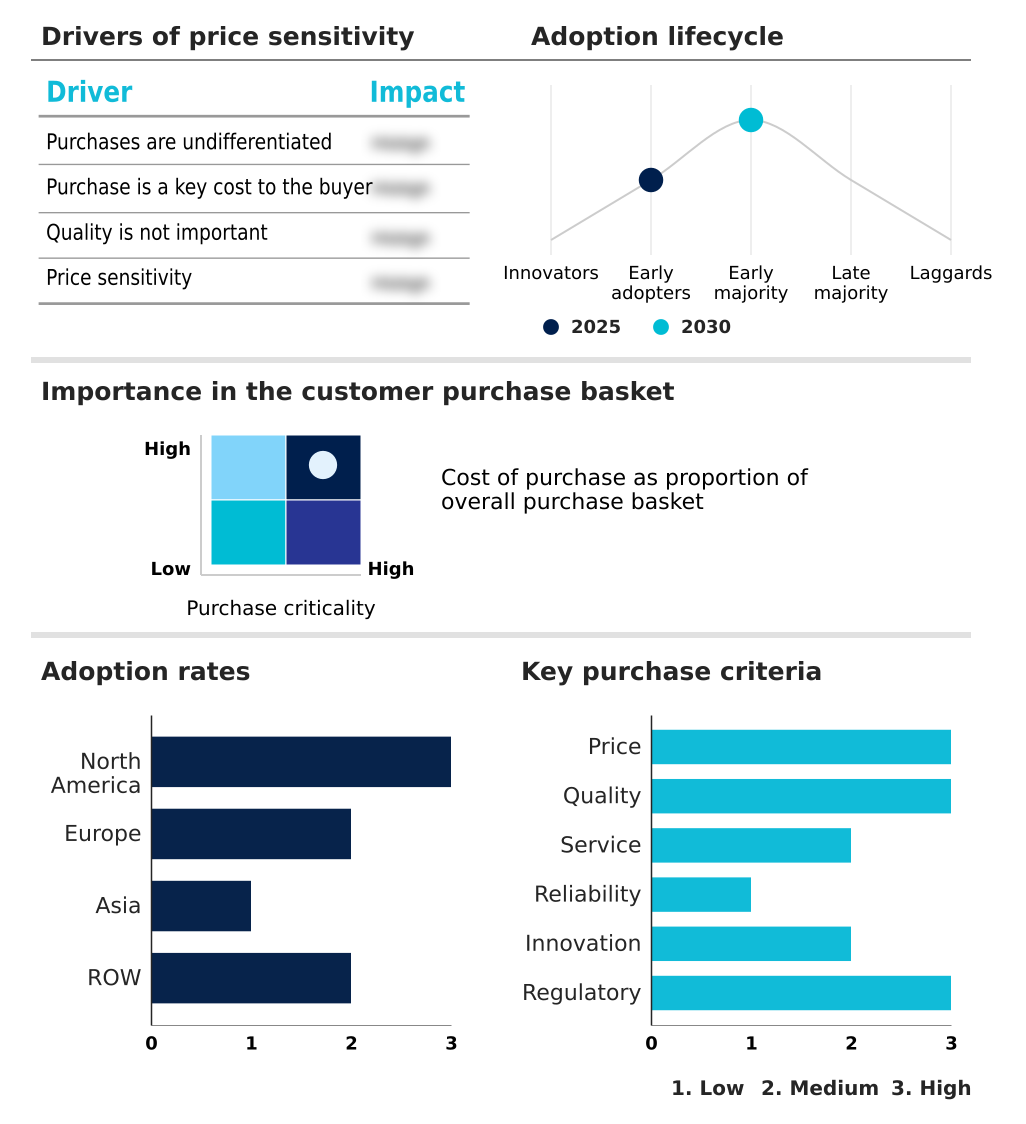
The clinical chemistry analyzers market forecasting report includes the adoption lifecycle of the market, covering from the innovator’s stage to the laggard’s stage. It focuses on adoption rates in different regions based on penetration. Furthermore, the clinical chemistry analyzers market report also includes key purchase criteria and drivers of price sensitivity to help companies evaluate and develop their market growth analysis strategies.
Customer Landscape of Clinical Chemistry Analyzers Industry

Competitive Landscape

Companies are implementing various strategies, such as strategic alliances, clinical chemistry analyzers market forecast, partnerships, mergers and acquisitions, geographical expansion, and product/service launches, to enhance their presence in the industry.

Abbott Laboratories - Offerings center on integrated diagnostic platforms and comprehensive assay menus designed to enhance laboratory workflow efficiency and support critical clinical decision-making.

The industry research and growth report includes detailed analyses of the competitive landscape of the market and information about key companies, including:

  • Abbott Laboratories
  • Arkray USA Inc.
  • Balio Diagnostics
  • Bio Rad Laboratories Inc.
  • Cardinal Health Inc.
  • Chengdu Seamaty Co. Ltd.
  • Danaher Corp.
  • DiaSorin SpA
  • Dirui Industrial Co. Ltd
  • Erba Group
  • F. Hoffmann La Roche Ltd.
  • Hitachi Ltd.
  • HORIBA Ltd.
  • Meril Life Sciences Pvt. Ltd.
  • Randox Laboratories Ltd.
  • Shenzhen Mindray BioMedical
  • Siemens AG
  • Sysmex Corp.
  • Thermo Fisher Scientific Inc.
  • Werfenlife SA

Qualitative and quantitative analysis of companies has been conducted to help clients understand the wider business environment as well as the strengths and weaknesses of key industry players. Data is qualitatively analyzed to categorize companies as pure play, category-focused, industry-focused, and diversified; it is quantitatively analyzed to categorize companies as dominant, leading, strong, tentative, and weak.

Recent Development and News in Clinical chemistry analyzers market

  • In January 2025, QuidelOrtho announced it received 510(k) clearance from the US Food and Drug Administration for its Vitros Immunodiagnostic Products Fructosamine Reagent, enhancing chronic disease management capabilities on its integrated platforms.
  • In October 2024, HORIBA Medical launched its Yumizen C100 CP, a compact clinical chemistry analyzer featuring a user-friendly interface and ready-to-use reagent cartridges specifically designed for point-of-care and smaller laboratory environments.
  • In September 2024, Palantir Technologies expanded its partnership with the University of Colorado Anschutz Medical Campus to apply its Foundry platform for aggregating and analyzing large-scale data generated by clinical chemistry analyzers, aiming to improve research and operational insights.
  • In March 2025, FUJIFILM Wako Diagnostics U.S.A. Corp. announced the commercial availability of its FDA-cleared beta-Hydroxybutyrate (BHB) assay for open clinical chemistry platforms, providing a critical tool for the rapid assessment of diabetic ketoacidosis.

Dive into Technavio’s robust research methodology, blending expert interviews, extensive data synthesis, and validated models for unparalleled Clinical Chemistry Analyzers Market insights. See full methodology.

Market Scope
Page number 306
Base year 2025
Historic period 2020-2024
Forecast period 2026-2030
Growth momentum & CAGR Accelerate at a CAGR of 4.3%
Market growth 2026-2030 USD 3506.3 million
Market structure Fragmented
YoY growth 2025-2026(%) 4.1%
Key countries US, Canada, Mexico, Germany, UK, France, Italy, The Netherlands, Spain, China, Japan, India, South Korea, Thailand, Indonesia, Brazil, Saudi Arabia, South Africa, UAE, Turkey, Israel, Argentina and Colombia
Competitive landscape Leading Companies, Market Positioning of Companies, Competitive Strategies, and Industry Risks

Request Free Sample

Research Analyst Overview

  • The clinical chemistry analyzers market is undergoing a significant operational and financial transformation. The foundational driver remains the high volume of routine testing, including metabolic panel testing and electrolyte analysis, fueled by an aging population. However, the competitive landscape is now shaped by advanced technological capabilities such as ion selective electrode technology and integrated immunoassay modules.
  • A key strategic trend impacting boardroom-level budgeting is the shift away from capital purchases toward long-term operational agreements like the reagent rental model. This approach can reduce initial capital outlay by nearly 100%, converting a major capital expenditure into a predictable operational expense, which is highly attractive for budget-constrained healthcare systems.
  • This model is sustained by the demand for proprietary consumables, including specialized calibrators and controls. Concurrently, innovation is focused on enhancing workflow through total laboratory automation (TLA) and the development of compact systems for point-of-care testing (POCT).
  • The expansion of test menus to include high-value assays for therapeutic drug monitoring is another critical value driver, transforming analyzers into more versatile diagnostic hubs that improve laboratory workflow efficiency and clinical utility.

What are the Key Data Covered in this Clinical Chemistry Analyzers Market Research and Growth Report?

  • What is the expected growth of the Clinical Chemistry Analyzers Market between 2026 and 2030?

    • USD 3.51 billion, at a CAGR of 4.3%

  • What segmentation does the market report cover?

    • The report is segmented by End-user (Hospitals, Diagnostic laboratories, Academic research centers, and Others), Type (Fully automated clinical chemical analyzers, and Semi automated clinical chemical analyzers), Product Type (Reagents, Analyzers, and Others) and Geography (North America, Europe, Asia, Rest of World (ROW))

  • Which regions are analyzed in the report?

    • North America, Europe, Asia and Rest of World (ROW)

  • What are the key growth drivers and market challenges?

    • Increasing global prevalence of chronic diseases and expanding geriatric population, High initial capital investment and stringent regulatory landscape

  • Who are the major players in the Clinical Chemistry Analyzers Market?

    • Abbott Laboratories, Arkray USA Inc., Balio Diagnostics, Bio Rad Laboratories Inc., Cardinal Health Inc., Chengdu Seamaty Co. Ltd., Danaher Corp., DiaSorin SpA, Dirui Industrial Co. Ltd, Erba Group, F. Hoffmann La Roche Ltd., Hitachi Ltd., HORIBA Ltd., Meril Life Sciences Pvt. Ltd., Randox Laboratories Ltd., Shenzhen Mindray BioMedical, Siemens AG, Sysmex Corp., Thermo Fisher Scientific Inc. and Werfenlife SA

Market Research Insights

  • Market dynamics are shaped by the convergence of technological innovation and economic pressures. The adoption of integrated systems combining clinical chemistry and immunoassay testing has been shown to improve sample throughput by up to 25%, a critical gain for laboratories facing staff shortages.
  • Simultaneously, the strategic shift toward reagent rental and managed service contracts helps healthcare facilities circumvent high initial capital costs, aligning with operational expenditure models. This business model is pivotal as laboratories grapple with reimbursement cuts that have reduced revenue-per-test by an average of 8% in certain high-volume assay categories.
  • The decentralization of testing further influences the landscape, with point-of-care testing (POCT) platforms reducing diagnostic turnaround from hours to minutes, directly impacting clinical workflow and patient management in outpatient settings.

We can help! Our analysts can customize this clinical chemistry analyzers market research report to meet your requirements.

Get in touch

1. Executive Summary

1.1 Market overview

Executive Summary - Chart on Market Overview
Executive Summary - Data Table on Market Overview
Executive Summary - Chart on Global Market Characteristics
Executive Summary - Chart on Market by Geography
Executive Summary - Chart on Market Segmentation by End-user
Executive Summary - Chart on Market Segmentation by Type
Executive Summary - Chart on Market Segmentation by Product Type
Executive Summary - Chart on Incremental Growth
Executive Summary - Data Table on Incremental Growth
Executive Summary - Chart on Company Market Positioning

2. Technavio Analysis

2.1 Analysis of price sensitivity, lifecycle, customer purchase basket, adoption rates, and purchase criteria

2.2 Criticality of inputs and Factors of differentiation

Chart on Overview on criticality of inputs and factors of differentiation

2.3 Factors of disruption

Chart on Overview on factors of disruption

2.4 Impact of drivers and challenges

Chart on Impact of drivers and challenges in 2025 and 2030

3. Market Landscape

3.1 Market ecosystem

Chart on Parent Market
Data Table on - Parent Market

3.2 Market characteristics

Chart on Market characteristics analysis

3.3 Value chain analysis

Chart on Value chain analysis

4. Market Sizing

4.1 Market definition

Data Table on Offerings of companies included in the market definition

4.2 Market segment analysis

Market segments

4.3 Market size 2025

4.4 Market outlook: Forecast for 2025-2030

Chart on Global - Market size and forecast 2025-2030 ($ million)
Data Table on Global - Market size and forecast 2025-2030 ($ million)
Chart on Global Market: Year-over-year growth 2025-2030 (%)
Data Table on Global Market: Year-over-year growth 2025-2030 (%)

5. Historic Market Size

5.1 Global Clinical Chemistry Analyzers Market 2020 - 2024

Historic Market Size - Data Table on Global Clinical Chemistry Analyzers Market 2020 - 2024 ($ million)

5.2 End-user segment analysis 2020 - 2024

Historic Market Size - End-user Segment 2020 - 2024 ($ million)

5.3 Type segment analysis 2020 - 2024

Historic Market Size - Type Segment 2020 - 2024 ($ million)

5.4 Product Type segment analysis 2020 - 2024

Historic Market Size - Product Type Segment 2020 - 2024 ($ million)

5.5 Geography segment analysis 2020 - 2024

Historic Market Size - Geography Segment 2020 - 2024 ($ million)

5.6 Country segment analysis 2020 - 2024

Historic Market Size - Country Segment 2020 - 2024 ($ million)

6. Qualitative Analysis

6.1 The AI impact on global clinical chemistry analyzers market

7. Five Forces Analysis

7.1 Five forces summary

Five forces analysis - Comparison between 2025 and 2030

7.2 Bargaining power of buyers

Bargaining power of buyers - Impact of key factors 2025 and 2030

7.3 Bargaining power of suppliers

Bargaining power of suppliers - Impact of key factors in 2025 and 2030

7.4 Threat of new entrants

Threat of new entrants - Impact of key factors in 2025 and 2030

7.5 Threat of substitutes

Threat of substitutes - Impact of key factors in 2025 and 2030

7.6 Threat of rivalry

Threat of rivalry - Impact of key factors in 2025 and 2030

7.7 Market condition

Chart on Market condition - Five forces 2025 and 2030

8. Market Segmentation by End-user

8.1 Market segments

Chart on End-user - Market share 2025-2030 (%)
Data Table on End-user - Market share 2025-2030 (%)

8.2 Comparison by End-user

Chart on Comparison by End-user
Data Table on Comparison by End-user

8.3 Hospitals - Market size and forecast 2025-2030

Chart on Hospitals - Market size and forecast 2025-2030 ($ million)
Data Table on Hospitals - Market size and forecast 2025-2030 ($ million)
Chart on Hospitals - Year-over-year growth 2025-2030 (%)
Data Table on Hospitals - Year-over-year growth 2025-2030 (%)

8.4 Diagnostic laboratories - Market size and forecast 2025-2030

Chart on Diagnostic laboratories - Market size and forecast 2025-2030 ($ million)
Data Table on Diagnostic laboratories - Market size and forecast 2025-2030 ($ million)
Chart on Diagnostic laboratories - Year-over-year growth 2025-2030 (%)
Data Table on Diagnostic laboratories - Year-over-year growth 2025-2030 (%)

8.5 Academic research centers - Market size and forecast 2025-2030

Chart on Academic research centers - Market size and forecast 2025-2030 ($ million)
Data Table on Academic research centers - Market size and forecast 2025-2030 ($ million)
Chart on Academic research centers - Year-over-year growth 2025-2030 (%)
Data Table on Academic research centers - Year-over-year growth 2025-2030 (%)

8.6 Others - Market size and forecast 2025-2030

Chart on Others - Market size and forecast 2025-2030 ($ million)
Data Table on Others - Market size and forecast 2025-2030 ($ million)
Chart on Others - Year-over-year growth 2025-2030 (%)
Data Table on Others - Year-over-year growth 2025-2030 (%)

8.7 Market opportunity by End-user

Market opportunity by End-user ($ million)
Data Table on Market opportunity by End-user ($ million)

9. Market Segmentation by Type

9.1 Market segments

Chart on Type - Market share 2025-2030 (%)
Data Table on Type - Market share 2025-2030 (%)

9.2 Comparison by Type

Chart on Comparison by Type
Data Table on Comparison by Type

9.3 Fully automated clinical chemical analyzers - Market size and forecast 2025-2030

Chart on Fully automated clinical chemical analyzers - Market size and forecast 2025-2030 ($ million)
Data Table on Fully automated clinical chemical analyzers - Market size and forecast 2025-2030 ($ million)
Chart on Fully automated clinical chemical analyzers - Year-over-year growth 2025-2030 (%)
Data Table on Fully automated clinical chemical analyzers - Year-over-year growth 2025-2030 (%)

9.4 Semi automated clinical chemical analyzers - Market size and forecast 2025-2030

Chart on Semi automated clinical chemical analyzers - Market size and forecast 2025-2030 ($ million)
Data Table on Semi automated clinical chemical analyzers - Market size and forecast 2025-2030 ($ million)
Chart on Semi automated clinical chemical analyzers - Year-over-year growth 2025-2030 (%)
Data Table on Semi automated clinical chemical analyzers - Year-over-year growth 2025-2030 (%)

9.5 Market opportunity by Type

Market opportunity by Type ($ million)
Data Table on Market opportunity by Type ($ million)

10. Market Segmentation by Product Type

10.1 Market segments

Chart on Product Type - Market share 2025-2030 (%)
Data Table on Product Type - Market share 2025-2030 (%)

10.2 Comparison by Product Type

Chart on Comparison by Product Type
Data Table on Comparison by Product Type

10.3 Reagents - Market size and forecast 2025-2030

Chart on Reagents - Market size and forecast 2025-2030 ($ million)
Data Table on Reagents - Market size and forecast 2025-2030 ($ million)
Chart on Reagents - Year-over-year growth 2025-2030 (%)
Data Table on Reagents - Year-over-year growth 2025-2030 (%)

10.4 Analyzers - Market size and forecast 2025-2030

Chart on Analyzers - Market size and forecast 2025-2030 ($ million)
Data Table on Analyzers - Market size and forecast 2025-2030 ($ million)
Chart on Analyzers - Year-over-year growth 2025-2030 (%)
Data Table on Analyzers - Year-over-year growth 2025-2030 (%)

10.5 Others - Market size and forecast 2025-2030

Chart on Others - Market size and forecast 2025-2030 ($ million)
Data Table on Others - Market size and forecast 2025-2030 ($ million)
Chart on Others - Year-over-year growth 2025-2030 (%)
Data Table on Others - Year-over-year growth 2025-2030 (%)

10.6 Market opportunity by Product Type

Market opportunity by Product Type ($ million)
Data Table on Market opportunity by Product Type ($ million)

11. Customer Landscape

11.1 Customer landscape overview

Analysis of price sensitivity, lifecycle, customer purchase basket, adoption rates, and purchase criteria

12. Geographic Landscape

12.1 Geographic segmentation

Chart on Market share by geography 2025-2030 (%)
Data Table on Market share by geography 2025-2030 (%)

12.2 Geographic comparison

Chart on Geographic comparison
Data Table on Geographic comparison

12.3 North America - Market size and forecast 2025-2030

Chart on North America - Market size and forecast 2025-2030 ($ million)
Data Table on North America - Market size and forecast 2025-2030 ($ million)
Chart on North America - Year-over-year growth 2025-2030 (%)
Data Table on North America - Year-over-year growth 2025-2030 (%)
Chart on Regional Comparison - North America
Data Table on Regional Comparison - North America

12.3.1 US - Market size and forecast 2025-2030

Chart on US - Market size and forecast 2025-2030 ($ million)
Data Table on US - Market size and forecast 2025-2030 ($ million)
Chart on US - Year-over-year growth 2025-2030 (%)
Data Table on US - Year-over-year growth 2025-2030 (%)

12.3.2 Canada - Market size and forecast 2025-2030

Chart on Canada - Market size and forecast 2025-2030 ($ million)
Data Table on Canada - Market size and forecast 2025-2030 ($ million)
Chart on Canada - Year-over-year growth 2025-2030 (%)
Data Table on Canada - Year-over-year growth 2025-2030 (%)

12.3.3 Mexico - Market size and forecast 2025-2030

Chart on Mexico - Market size and forecast 2025-2030 ($ million)
Data Table on Mexico - Market size and forecast 2025-2030 ($ million)
Chart on Mexico - Year-over-year growth 2025-2030 (%)
Data Table on Mexico - Year-over-year growth 2025-2030 (%)

12.4 Europe - Market size and forecast 2025-2030

Chart on Europe - Market size and forecast 2025-2030 ($ million)
Data Table on Europe - Market size and forecast 2025-2030 ($ million)
Chart on Europe - Year-over-year growth 2025-2030 (%)
Data Table on Europe - Year-over-year growth 2025-2030 (%)
Chart on Regional Comparison - Europe
Data Table on Regional Comparison - Europe

12.4.1 Germany - Market size and forecast 2025-2030

Chart on Germany - Market size and forecast 2025-2030 ($ million)
Data Table on Germany - Market size and forecast 2025-2030 ($ million)
Chart on Germany - Year-over-year growth 2025-2030 (%)
Data Table on Germany - Year-over-year growth 2025-2030 (%)

12.4.2 UK - Market size and forecast 2025-2030

Chart on UK - Market size and forecast 2025-2030 ($ million)
Data Table on UK - Market size and forecast 2025-2030 ($ million)
Chart on UK - Year-over-year growth 2025-2030 (%)
Data Table on UK - Year-over-year growth 2025-2030 (%)

12.4.3 France - Market size and forecast 2025-2030

Chart on France - Market size and forecast 2025-2030 ($ million)
Data Table on France - Market size and forecast 2025-2030 ($ million)
Chart on France - Year-over-year growth 2025-2030 (%)
Data Table on France - Year-over-year growth 2025-2030 (%)

12.4.4 Italy - Market size and forecast 2025-2030

Chart on Italy - Market size and forecast 2025-2030 ($ million)
Data Table on Italy - Market size and forecast 2025-2030 ($ million)
Chart on Italy - Year-over-year growth 2025-2030 (%)
Data Table on Italy - Year-over-year growth 2025-2030 (%)

12.4.5 The Netherlands - Market size and forecast 2025-2030

Chart on The Netherlands - Market size and forecast 2025-2030 ($ million)
Data Table on The Netherlands - Market size and forecast 2025-2030 ($ million)
Chart on The Netherlands - Year-over-year growth 2025-2030 (%)
Data Table on The Netherlands - Year-over-year growth 2025-2030 (%)

12.4.6 Spain - Market size and forecast 2025-2030

Chart on Spain - Market size and forecast 2025-2030 ($ million)
Data Table on Spain - Market size and forecast 2025-2030 ($ million)
Chart on Spain - Year-over-year growth 2025-2030 (%)
Data Table on Spain - Year-over-year growth 2025-2030 (%)

12.5 Asia - Market size and forecast 2025-2030

Chart on Asia - Market size and forecast 2025-2030 ($ million)
Data Table on Asia - Market size and forecast 2025-2030 ($ million)
Chart on Asia - Year-over-year growth 2025-2030 (%)
Data Table on Asia - Year-over-year growth 2025-2030 (%)
Chart on Regional Comparison - Asia
Data Table on Regional Comparison - Asia

12.5.1 China - Market size and forecast 2025-2030

Chart on China - Market size and forecast 2025-2030 ($ million)
Data Table on China - Market size and forecast 2025-2030 ($ million)
Chart on China - Year-over-year growth 2025-2030 (%)
Data Table on China - Year-over-year growth 2025-2030 (%)

12.5.2 Japan - Market size and forecast 2025-2030

Chart on Japan - Market size and forecast 2025-2030 ($ million)
Data Table on Japan - Market size and forecast 2025-2030 ($ million)
Chart on Japan - Year-over-year growth 2025-2030 (%)
Data Table on Japan - Year-over-year growth 2025-2030 (%)

12.5.3 India - Market size and forecast 2025-2030

Chart on India - Market size and forecast 2025-2030 ($ million)
Data Table on India - Market size and forecast 2025-2030 ($ million)
Chart on India - Year-over-year growth 2025-2030 (%)
Data Table on India - Year-over-year growth 2025-2030 (%)

12.5.4 South Korea - Market size and forecast 2025-2030

Chart on South Korea - Market size and forecast 2025-2030 ($ million)
Data Table on South Korea - Market size and forecast 2025-2030 ($ million)
Chart on South Korea - Year-over-year growth 2025-2030 (%)
Data Table on South Korea - Year-over-year growth 2025-2030 (%)

12.5.5 Thailand - Market size and forecast 2025-2030

Chart on Thailand - Market size and forecast 2025-2030 ($ million)
Data Table on Thailand - Market size and forecast 2025-2030 ($ million)
Chart on Thailand - Year-over-year growth 2025-2030 (%)
Data Table on Thailand - Year-over-year growth 2025-2030 (%)

12.5.6 Indonesia - Market size and forecast 2025-2030

Chart on Indonesia - Market size and forecast 2025-2030 ($ million)
Data Table on Indonesia - Market size and forecast 2025-2030 ($ million)
Chart on Indonesia - Year-over-year growth 2025-2030 (%)
Data Table on Indonesia - Year-over-year growth 2025-2030 (%)

12.6 Rest of World (ROW) - Market size and forecast 2025-2030

Chart on Rest of World (ROW) - Market size and forecast 2025-2030 ($ million)
Data Table on Rest of World (ROW) - Market size and forecast 2025-2030 ($ million)
Chart on Rest of World (ROW) - Year-over-year growth 2025-2030 (%)
Data Table on Rest of World (ROW) - Year-over-year growth 2025-2030 (%)
Chart on Regional Comparison - Rest of World (ROW)
Data Table on Regional Comparison - Rest of World (ROW)

12.6.1 Brazil - Market size and forecast 2025-2030

Chart on Brazil - Market size and forecast 2025-2030 ($ million)
Data Table on Brazil - Market size and forecast 2025-2030 ($ million)
Chart on Brazil - Year-over-year growth 2025-2030 (%)
Data Table on Brazil - Year-over-year growth 2025-2030 (%)

12.6.2 Saudi Arabia - Market size and forecast 2025-2030

Chart on Saudi Arabia - Market size and forecast 2025-2030 ($ million)
Data Table on Saudi Arabia - Market size and forecast 2025-2030 ($ million)
Chart on Saudi Arabia - Year-over-year growth 2025-2030 (%)
Data Table on Saudi Arabia - Year-over-year growth 2025-2030 (%)

12.6.3 South Africa - Market size and forecast 2025-2030

Chart on South Africa - Market size and forecast 2025-2030 ($ million)
Data Table on South Africa - Market size and forecast 2025-2030 ($ million)
Chart on South Africa - Year-over-year growth 2025-2030 (%)
Data Table on South Africa - Year-over-year growth 2025-2030 (%)

12.6.4 UAE - Market size and forecast 2025-2030

Chart on UAE - Market size and forecast 2025-2030 ($ million)
Data Table on UAE - Market size and forecast 2025-2030 ($ million)
Chart on UAE - Year-over-year growth 2025-2030 (%)
Data Table on UAE - Year-over-year growth 2025-2030 (%)

12.6.5 Turkey - Market size and forecast 2025-2030

Chart on Turkey - Market size and forecast 2025-2030 ($ million)
Data Table on Turkey - Market size and forecast 2025-2030 ($ million)
Chart on Turkey - Year-over-year growth 2025-2030 (%)
Data Table on Turkey - Year-over-year growth 2025-2030 (%)

12.6.6 Israel - Market size and forecast 2025-2030

Chart on Israel - Market size and forecast 2025-2030 ($ million)
Data Table on Israel - Market size and forecast 2025-2030 ($ million)
Chart on Israel - Year-over-year growth 2025-2030 (%)
Data Table on Israel - Year-over-year growth 2025-2030 (%)

12.6.7 Argentina - Market size and forecast 2025-2030

Chart on Argentina - Market size and forecast 2025-2030 ($ million)
Data Table on Argentina - Market size and forecast 2025-2030 ($ million)
Chart on Argentina - Year-over-year growth 2025-2030 (%)
Data Table on Argentina - Year-over-year growth 2025-2030 (%)

12.6.8 Colombia - Market size and forecast 2025-2030

Chart on Colombia - Market size and forecast 2025-2030 ($ million)
Data Table on Colombia - Market size and forecast 2025-2030 ($ million)
Chart on Colombia - Year-over-year growth 2025-2030 (%)
Data Table on Colombia - Year-over-year growth 2025-2030 (%)

12.7 Market opportunity by geography

Market opportunity by geography ($ million)
Data Tables on Market opportunity by geography ($ million)

13. Drivers, Challenges, and Opportunity

13.1 Market drivers

Increasing global prevalence of chronic diseases and expanding geriatric population
Continuous technological advancements in automation, integration, and informatics
Paradigm shift towards preventative healthcare and decentralization of testing

13.2 Market challenges

High initial capital investment and stringent regulatory landscape
Downward pressure on reimbursement and healthcare budget constraints
Critical shortage of skilled laboratory professionals

13.3 Impact of drivers and challenges

Impact of drivers and challenges in 2025 and 2030

13.4 Market opportunities

Growing emphasis on sustainability and eco-friendly laboratory solutions
Expansion of assay menus to include high-value specialty and esoteric tests
Dominance of reagent rental and managed service business models

14. Competitive Landscape

14.1 Overview

14.2

Overview on criticality of inputs and factors of differentiation

14.3 Landscape disruption

Overview on factors of disruption

14.4 Industry risks

Impact of key risks on business

15. Competitive Analysis

15.1 Companies profiled

Companies covered

15.2 Company ranking index

15.3 Market positioning of companies

Matrix on companies position and classification

15.4 Abbott Laboratories

Abbott Laboratories - Overview
Abbott Laboratories - Business segments
Abbott Laboratories - Key news
Abbott Laboratories - Key offerings
Abbott Laboratories - Segment focus
SWOT

15.5 Bio Rad Laboratories Inc.

Bio Rad Laboratories Inc. - Overview
Bio Rad Laboratories Inc. - Business segments
Bio Rad Laboratories Inc. - Key news
Bio Rad Laboratories Inc. - Key offerings
Bio Rad Laboratories Inc. - Segment focus
SWOT

15.6 Cardinal Health Inc.

Cardinal Health Inc. - Overview
Cardinal Health Inc. - Business segments
Cardinal Health Inc. - Key news
Cardinal Health Inc. - Key offerings
Cardinal Health Inc. - Segment focus
SWOT

15.7 Danaher Corp.

Danaher Corp. - Overview
Danaher Corp. - Business segments
Danaher Corp. - Key news
Danaher Corp. - Key offerings
Danaher Corp. - Segment focus
SWOT

15.8 DiaSorin SpA

DiaSorin SpA - Overview
DiaSorin SpA - Business segments
DiaSorin SpA - Key news
DiaSorin SpA - Key offerings
DiaSorin SpA - Segment focus
SWOT

15.9 Dirui Industrial Co. Ltd

Dirui Industrial Co. Ltd - Overview
Dirui Industrial Co. Ltd - Product / Service
Dirui Industrial Co. Ltd - Key offerings
SWOT

15.10 F. Hoffmann La Roche Ltd.

F. Hoffmann La Roche Ltd. - Overview
F. Hoffmann La Roche Ltd. - Business segments
F. Hoffmann La Roche Ltd. - Key news
F. Hoffmann La Roche Ltd. - Key offerings
F. Hoffmann La Roche Ltd. - Segment focus
SWOT

15.11 Hitachi Ltd.

Hitachi Ltd. - Overview
Hitachi Ltd. - Business segments
Hitachi Ltd. - Key news
Hitachi Ltd. - Key offerings
Hitachi Ltd. - Segment focus
SWOT

15.12 HORIBA Ltd.

HORIBA Ltd. - Overview
HORIBA Ltd. - Business segments
HORIBA Ltd. - Key news
HORIBA Ltd. - Key offerings
HORIBA Ltd. - Segment focus
SWOT

15.13 Randox Laboratories Ltd.

Randox Laboratories Ltd. - Overview
Randox Laboratories Ltd. - Product / Service
Randox Laboratories Ltd. - Key news
Randox Laboratories Ltd. - Key offerings
SWOT

15.14 Shenzhen Mindray BioMedical

Shenzhen Mindray BioMedical - Overview
Shenzhen Mindray BioMedical - Product / Service
Shenzhen Mindray BioMedical - Key offerings
SWOT

15.15 Siemens AG

Siemens AG - Overview
Siemens AG - Business segments
Siemens AG - Key news
Siemens AG - Key offerings
Siemens AG - Segment focus
SWOT

15.16 Sysmex Corp.

Sysmex Corp. - Overview
Sysmex Corp. - Business segments
Sysmex Corp. - Key offerings
Sysmex Corp. - Segment focus
SWOT

15.17 Thermo Fisher Scientific Inc.

Thermo Fisher Scientific Inc. - Overview
Thermo Fisher Scientific Inc. - Business segments
Thermo Fisher Scientific Inc. - Key news
Thermo Fisher Scientific Inc. - Key offerings
Thermo Fisher Scientific Inc. - Segment focus
SWOT

15.18 Werfenlife SA

Werfenlife SA - Overview
Werfenlife SA - Product / Service
Werfenlife SA - Key offerings
SWOT

16. Appendix

16.1 Scope of the report

Market definition
Objectives
Notes and caveats

16.2 Inclusions and exclusions checklist

Inclusions checklist
Exclusions checklist

16.3 Currency conversion rates for US$

16.4 Research methodology

16.5 Data procurement

Information sources

16.6 Data validation

16.7 Validation techniques employed for market sizing

16.8 Data synthesis

16.9 360 degree market analysis

16.10 List of abbreviations

Research Methodology

Technavio presents a detailed picture of the market by way of study, synthesis, and summation of data from multiple sources. The analysts have presented the various facets of the market with a particular focus on identifying the key industry influencers. The data thus presented is comprehensive, reliable, and the result of extensive research, both primary and secondary.

INFORMATION SOURCES

Primary sources

  • Manufacturers and suppliers
  • Channel partners
  • Industry experts
  • Strategic decision makers

Secondary sources

  • Industry journals and periodicals
  • Government data
  • Financial reports of key industry players
  • Historical data
  • Press releases

DATA ANALYSIS

Data Synthesis

  • Collation of data
  • Estimation of key figures
  • Analysis of derived insights

Data Validation

  • Triangulation with data models
  • Reference against proprietary databases
  • Corroboration with industry experts

REPORT WRITING

Qualitative

  • Market drivers
  • Market challenges
  • Market trends
  • Five forces analysis

Quantitative

  • Market size and forecast
  • Market segmentation
  • Geographical insights
  • Competitive landscape

Interested in this report?

Get your sample now to see our research methodology and insights!

Download Now

Frequently Asked Questions

Clinical Chemistry Analyzers market growth will increase by USD 3506.3 million during 2026-2030.

The Clinical Chemistry Analyzers market is expected to grow at a CAGR of 4.3% during 2026-2030.

Clinical Chemistry Analyzers market is segmented by End-user (Hospitals, Diagnostic laboratories, Academic research centers, Others) Type (Fully automated clinical chemical analyzers, Semi automated clinical chemical analyzers) Product type (Reagents, Analyzers, Others)

Abbott Laboratories, Arkray USA Inc., Balio Diagnostics, Bio Rad Laboratories Inc., Cardinal Health Inc., Chengdu Seamaty Co. Ltd., Danaher Corp., DiaSorin SpA, Dirui Industrial Co. Ltd, Erba Group, F. Hoffmann La Roche Ltd., Hitachi Ltd., HORIBA Ltd., Meril Life Sciences Pvt. Ltd., Randox Laboratories Ltd., Shenzhen Mindray BioMedical, Siemens AG, Sysmex Corp., Thermo Fisher Scientific Inc., Werfenlife SA are a few of the key vendors in the Clinical Chemistry Analyzers market.

North America will register the highest growth rate of 38% among the other regions. Therefore, the Clinical Chemistry Analyzers market in North America is expected to garner significant business opportunities for the vendors during the forecast period.

US, Canada, Mexico, Germany, UK, France, Italy, The Netherlands, Spain, China, Japan, India, South Korea, Thailand, Indonesia, Brazil, Saudi Arabia, South Africa, UAE, Turkey, Israel, Argentina, Colombia

  • Increasing global prevalence of chronic diseases and expanding geriatric population is the driving factor this market.

The Clinical Chemistry Analyzers market vendors should focus on grabbing business opportunities from the End-user segment as it accounted for the largest market share in the base year.