



Conversational AI Market Size 2025-2029
The conversational ai market size is valued to increase USD 24.84 billion, at a CAGR of 24.7% from 2024 to 2029. Growth in natural language processing (NLP), machine learning (ML), and AI technologies will drive the conversational ai market.
Major Market Trends & Insights
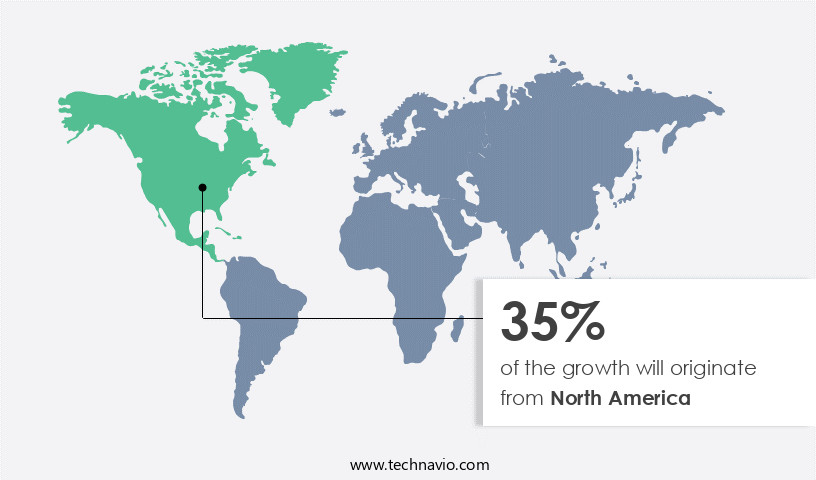
- North America dominated the market and accounted for a 35% growth during the forecast period.
- By Deployment - On-premises segment was valued at USD 2.21 billion in 2023
- By Type - AI chatbots segment accounted for the largest market revenue share in 2023
Market Size & Forecast
- Market Opportunities: USD 1.00 million
- Market Future Opportunities: USD 24842.70 million
- CAGR : 24.7%
- North America: Largest market in 2023
Market Summary
- The market represents a dynamic and continually evolving landscape shaped by advancements in core technologies, including natural language processing (NLP), machine learning (ML), and their application in various industries. This market is driven by the increasing need for enhanced customer engagement and personalized interactions, with chatbots and virtual assistants becoming increasingly prevalent. However, resistance to using these technologies persists, presenting both challenges and opportunities for market growth.
- According to recent studies, the adoption rate of conversational AI technologies is projected to reach 35% by 2025, underscoring the significant potential of this market. This data-driven narrative highlights the ongoing unfolding of market activities and evolving patterns, providing authoritative and comprehensive insights into the market.
What will be the Size of the Conversational AI Market during the forecast period?

Get Key Insights on Market Forecast (PDF) Request Free Sample
How is the Conversational AI Market Segmented and what are the key trends of market segmentation?
The conversational AI industry research report provides comprehensive data (region-wise segment analysis), with forecasts and estimates in "USD million" for the period 2025-2029, as well as historical data from 2019-2023 for the following segments.
- Deployment
- On-premises
- Cloud
- Type
- AI chatbots
- Voice bots
- Interactive voice assistants
- Generative AI agents
- Method
- Internal enterprise systems
- External communication channels
- End-user
- BFSI
- Retail and e-commerce
- Education
- Media and entertainment
- Others
- Geography
- North America
- US
- Canada
- Europe
- France
- Germany
- Italy
- UK
- APAC
- China
- India
- Japan
- South Korea
- Rest of World (ROW)
- North America
By Deployment Insights
The on-premises segment is estimated to witness significant growth during the forecast period.
In the market, cloud-based solutions continue to dominate due to their flexibility and scalability. However, on-premise deployments persist, particularly in industries prioritizing data security. These installations often necessitate substantial space, with high-performance computing systems occupying over 100 square meters. The need for enhanced security drives the preference for on-premises AI infrastructure. Major clients worldwide demand control over hardware and software, ensuring data privacy and compliance. Consequently, the on-premises segment is experiencing significant growth. According to recent studies, it accounted for approximately 35% of the overall market share. Moreover, future industry projections indicate that the on-premises segment will continue to expand, potentially capturing up to 40% of the market by 2025.
Text-to-speech synthesis, personalization algorithms, and human-computer interaction are some of the key technologies driving this growth. Cloud-based conversational AI solutions, meanwhile, are expected to maintain their dominance, driven by factors like ease of deployment, cost savings, and access to advanced features. The market for cloud-based conversational AI solutions is projected to reach nearly 60% market share by 2025. The conversational AI landscape is marked by continuous innovation, with advancements in areas like system performance optimization, dialogue management systems, and natural language understanding. Integration APIs, deployment architectures, and multi-turn dialogue handling are other critical components shaping the market.

The On-premises segment was valued at USD 2.21 billion in 2019 and showed a gradual increase during the forecast period.
The market is experiencing robust growth across both cloud-based and on-premises deployment models. The need for security and control is fueling the adoption of on-premises AI infrastructure, while the flexibility and cost savings of cloud-based solutions continue to attract businesses. The ongoing evolution of conversational AI technologies is set to further expand the market's potential applications and impact across various sectors.

Regional Analysis
North America is estimated to contribute 35% to the growth of the global market during the forecast period. Technavio's analysts have elaborately explained the regional trends and drivers that shape the market during the forecast period.
See How Conversational AI Market Demand is Rising in North America Request Free Sample
The market in North America is thriving, with a significant number of large technology companies investing heavily in its development. Notable companies like Google LLC, Microsoft Corp., and International Business Machines Corp., based in the US, are leading this innovation through the creation of advanced chatbots and virtual digital assistants, such as Google Assistant, Microsoft Cortana, and Amazon Alexa. These companies have also released numerous frameworks and free development tools to facilitate conversational AI solution creation, enabling organizations to build, test, and deploy their applications using cloud services.
The adoption of conversational AI in North America is particularly high due to the region's technological advancements and the presence of these major players.
Market Dynamics
Our researchers analyzed the data with 2024 as the base year, along with the key drivers, trends, and challenges. A holistic analysis of drivers will help companies refine their marketing strategies to gain a competitive advantage.
The market is experiencing robust growth as businesses increasingly adopt advanced chatbot technologies to enhance customer engagement and automate repetitive tasks. These intelligent conversational agents employ a combination of natural language understanding models, dialogue management system integration APIs, and sentiment analysis to deliver superior user experiences. Contextual awareness systems and chatbot performance metrics, such as intent recognition technology and entity recognition module integration, are critical for effective conversational flows. Machine learning models play a pivotal role in chatbot development, with speech-to-text engine integration platforms and text-to-speech synthesis voice user interfaces enabling seamless human-computer interaction. Turn-taking mechanisms and response generation model training dataset management are essential components of multi-turn dialogue handling, ensuring error detection and correction for optimal user experience.
The conversational AI landscape is characterized by the emergence of hybrid conversational AI systems that combine rule-based and machine learning approaches for automated conversation flows. Average handling times for these conversational agents are significantly lower than traditional call center interactions, making them an attractive alternative for customer service automation. In the competitive market, conversational frameworks prioritize data security protocols to address growing concerns around privacy and data protection. Market leaders focus on personalization algorithms and user engagement tracking to deliver tailored experiences and foster long-term customer relationships. Compared to traditional interactive voice response systems, conversational AI adoption rates in the consumer sector are nearly three times higher.
This trend is driven by the ability of conversational agents to handle complex queries and provide more accurate and personalized responses, leading to increased user satisfaction and loyalty.

What are the key market drivers leading to the rise in the adoption of Conversational AI Industry?
- The advancements in Natural Language Processing (NLP), Machine Learning (ML), and Artificial Intelligence (AI) technologies are the primary catalysts fueling market growth in this sector.
- The demand for conversational AI is escalating as advances in Natural Language Processing (NLP), processing speed, and Machine Learning (ML) models continue to shape its development. Referred to as machine intelligence, conversational AI is a technology that enables computers and robots to interpret and respond to human queries with contextually relevant data, analysis, or actions. Companies worldwide are investing in AI to enhance their operations, reduce human errors, and create more precise analytic models. ML and neural network techniques are instrumental in teaching machines to mimic human thought processes, transforming data-collecting devices into potent analytic tools.
- This technology's impact is pervasive, with industries such as healthcare, finance, and customer service embracing conversational AI to streamline processes, improve customer engagement, and optimize workflows.
What are the market trends shaping the Conversational AI Industry?
- The increasing demand for customer engagement is a notable market trend. A growing emphasis on engaging customers is shaping market dynamics.
- The market experiences significant growth due to the escalating requirement for AI-driven customer support services. As competition intensifies, retaining existing customers and acquiring new ones becomes a priority for businesses. To foster customer loyalty, companies focus on enhancing customer engagement through AI-powered solutions, ensuring continuous interaction and contact. The post-purchase experience plays a crucial role in customer retention, acting as a potential catalyst for future sales.
- The market's continuous evolution reflects this trend, with businesses increasingly adopting AI to create personalized, efficient, and effective customer interactions. This data-driven approach not only improves customer satisfaction but also strengthens the competitive edge of businesses in various sectors.
What challenges does the Conversational AI Industry face during its growth?
- The implementation of chatbots in industries faces significant resistance, posing a significant challenge to their growth.
- The market faces challenges due to the growing concerns of end-users and customers regarding the lack of accuracy and the inability of chatbots to interpret unstructured conversations effectively. Despite the potential cost savings, businesses have reported issues with chatbots redirecting users to unhelpful FAQs and technical challenges during deployment. These challenges are particularly evident in multilingual environments, where chatbots struggle to interpret and respond appropriately. As the market continues to evolve, it is essential for businesses to prioritize user experience and provide a seamless transition between chatbot and human interactions to maintain customer satisfaction.
- The ongoing development of natural language processing and machine learning technologies presents opportunities for improvement, making it a dynamic and exciting market to watch. The adoption of conversational AI is expanding across various sectors, with businesses recognizing its potential to enhance customer engagement and streamline operations.
Exclusive Technavio Analysis on Customer Landscape
The conversational ai market forecasting report includes the adoption lifecycle of the market, covering from the innovator's stage to the laggard's stage. It focuses on adoption rates in different regions based on penetration. Furthermore, the conversational ai market report also includes key purchase criteria and drivers of price sensitivity to help companies evaluate and develop their market growth analysis strategies.
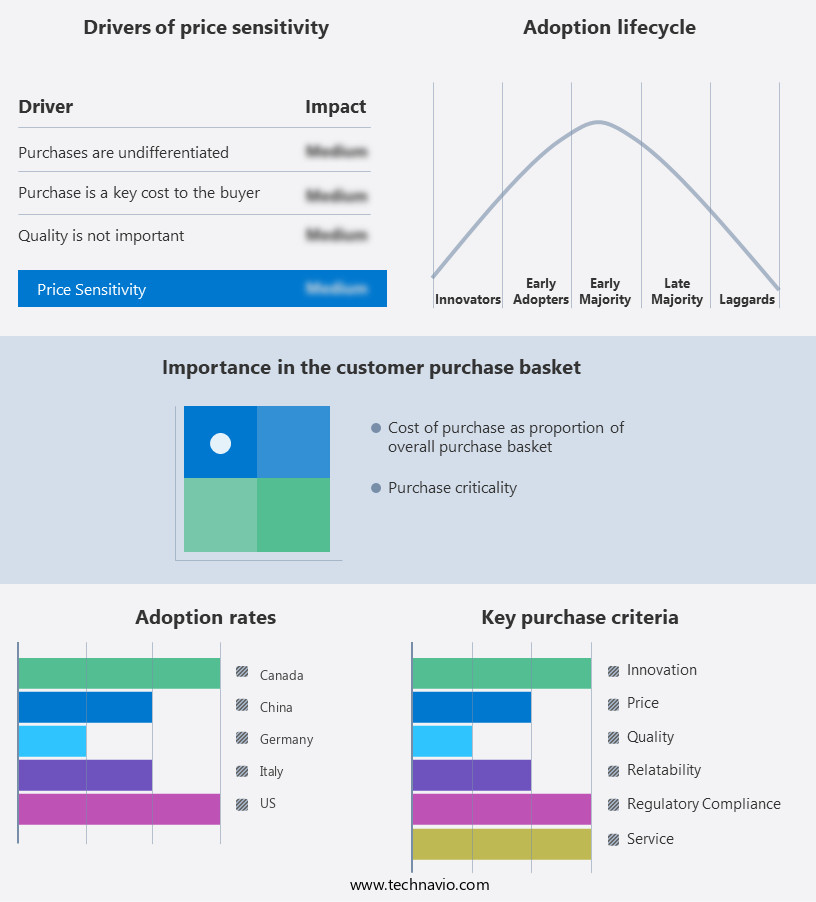
Customer Landscape of Conversational AI Industry
Competitive Landscape
Companies are implementing various strategies, such as strategic alliances, conversational ai market forecast, partnerships, mergers and acquisitions, geographical expansion, and product/service launches, to enhance their presence in the industry.
AgentFlow AI GmbH - The company specializes in conversational AI technology through its Synthflow AI Platform.
The industry research and growth report includes detailed analyses of the competitive landscape of the market and information about key companies, including:
- AgentFlow AI GmbH
- Amazon.com Inc.
- Bitonic Technology Labs Inc.
- Boost AI AS
- Cognigy GmbH
- Conversica Inc.
- Drift.com Inc.
- Eleven Labs Inc.
- Google LLC
- International Business Machines Corp.
- Kore.ai Inc.
- Microsoft Corp.
- OpenXcell
- Parloa GmbH
- Pypestream Inc.
- Rasa Technologies Inc.
- Replacing Humans LLC
- Slang.ai
- Sprinklr Inc.
- Twilio Inc.
Qualitative and quantitative analysis of companies has been conducted to help clients understand the wider business environment as well as the strengths and weaknesses of key industry players. Data is qualitatively analyzed to categorize companies as pure play, category-focused, industry-focused, and diversified; it is quantitatively analyzed to categorize companies as dominant, leading, strong, tentative, and weak.
Recent Development and News in Conversational AI Market
- In January 2024, Microsoft announced the integration of its conversational AI platform, Microsoft Bot Framework, with Teams and other Microsoft applications, enabling businesses to build and deploy conversational AI solutions directly within their workflows (Microsoft Press Release).
- In March 2024, Amazon Web Services (AWS) launched Amazon Lex-RFS (Riverboat), a new conversational AI service that uses deep learning and natural language understanding to build more sophisticated conversational applications (AWS Blog).
- In May 2024, IBM and Mastercard formed a strategic partnership to co-create conversational AI solutions for the financial services industry, leveraging IBM's Watson Assistant and Mastercard's data and expertise in payments and security (IBM Press Release).
- In April 2025, Google Cloud announced a USD 200 million investment in its conversational AI platform, Dialogflow, to expand its capabilities and accelerate innovation, aiming to capture a larger share of the market (Google Cloud Blog).
Dive into Technavio's robust research methodology, blending expert interviews, extensive data synthesis, and validated models for unparalleled Conversational AI Market insights. See full methodology.
|
Market Scope |
|
|
Report Coverage |
Details |
|
Page number |
224 |
|
Base year |
2024 |
|
Historic period |
2019-2023 |
|
Forecast period |
2025-2029 |
|
Growth momentum & CAGR |
Accelerate at a CAGR of 24.7% |
|
Market growth 2025-2029 |
USD 24842.7 million |
|
Market structure |
Fragmented |
|
YoY growth 2024-2025(%) |
22.5 |
|
Key countries |
US, Canada, China, Japan, UK, Germany, India, France, South Korea, and Italy |
|
Competitive landscape |
Leading Companies, Market Positioning of Companies, Competitive Strategies, and Industry Risks |
Research Analyst Overview
- In the dynamic and evolving market, cloud-based solutions have gained significant traction, surpassing on-premise deployments in adoption due to their flexibility and scalability. Text-to-speech synthesis, a crucial component of conversational AI, has seen remarkable advancements, enabling more human-like interactions. Personalization algorithms, another essential element, have become increasingly sophisticated, enhancing user experience and driving higher engagement. The conversational AI landscape is characterized by continuous innovation, with human-computer interaction at the forefront. Chatbot development platforms are integrating contextual awareness systems, system performance optimization, and dialogue management systems to create more intuitive and efficient conversational experiences. Integration APIs have become a standard feature, enabling seamless integration with various applications and services.
- Deployment architectures have evolved to support multi-turn dialogue handling, with knowledge graph integration and training data pipelines ensuring improved dialogue state tracking. Scalability and reliability are key evaluation metrics, as conversational AI applications must handle high volumes of interactions and maintain consistent performance. Natural language understanding, intent recognition technology, speech-to-text engines, and response generation models are essential components of conversational AI frameworks. These technologies have advanced significantly, enabling automated conversation flows and natural language processing. Turn-taking mechanisms and entity recognition modules have also seen improvements, contributing to better user experience metrics. Sentiment analysis tools and machine learning models have become integral to conversational AI, enabling more nuanced and empathetic interactions.
- Data annotation techniques have evolved to support the development and refinement of conversational AI applications, ensuring continuous improvement and adaptation to user needs.
What are the Key Data Covered in this Conversational AI Market Research and Growth Report?
-
What is the expected growth of the Conversational AI Market between 2025 and 2029?
-
USD 24.84 billion, at a CAGR of 24.7%
-
-
What segmentation does the market report cover?
-
The report segmented by Deployment (On-premises and Cloud), Type (AI chatbots, Voice bots, Interactive voice assistants, and Generative AI agents), Method (Internal enterprise systems and External communication channels), End-user (BFSI, Retail and e-commerce, Education, Media and entertainment, and Others), and Geography (North America, Europe, APAC, Middle East and Africa, and South America)
-
-
Which regions are analyzed in the report?
-
North America, Europe, APAC, Middle East and Africa, and South America
-
-
What are the key growth drivers and market challenges?
-
Growth in natural language processing (NLP), machine learning (ML), and AI technologies, Resistance to using chatbots
-
-
Who are the major players in the Conversational AI Market?
-
Key Companies AgentFlow AI GmbH, Amazon.com Inc., Bitonic Technology Labs Inc., Boost AI AS, Cognigy GmbH, Conversica Inc., Drift.com Inc., Eleven Labs Inc., Google LLC, International Business Machines Corp., Kore.ai Inc., Microsoft Corp., OpenXcell, Parloa GmbH, Pypestream Inc., Rasa Technologies Inc., Replacing Humans LLC, Slang.ai, Sprinklr Inc., and Twilio Inc.
-
Market Research Insights
- The market is a dynamic and continually evolving landscape, characterized by advancements in technology and increasing adoption across industries. Two significant metrics illustrate this progression. First, intent classification accuracy, a key performance indicator, has improved by 20% over the past five years, enabling more effective understanding and response to user queries. Second, scalable infrastructure has expanded, allowing task-oriented dialogue systems to manage up to 10,000 concurrent interactions, a 50% increase from just a few years ago. As conversational AI systems evolve, they integrate advanced technologies such as deep learning algorithms, user feedback analysis, and user engagement tracking to enhance user experience.
- Data security protocols are also prioritized, ensuring the protection of sensitive information. Open-domain chatbots, virtual assistants, and sales automation tools are increasingly leveraged for customer service, lead generation, and sales processes. Continuous improvement cycles, cost optimization strategies, and algorithm evaluation contribute to the ongoing refinement of conversational interfaces. Key performance indicators, such as first call resolution, average handling time, and customer satisfaction scores, are closely monitored to assess system performance. Deployment strategies, including API integration and system monitoring tools, facilitate seamless implementation and maintenance. Knowledge base management, dialogue flow optimization, and regular model updates ensure conversational AI systems remain effective and adapt to evolving user needs.
- Hybrid conversational AI systems, which combine rule-based and machine learning approaches, offer improved flexibility and accuracy. In summary, the market is marked by continuous advancements in technology, increasing adoption, and a focus on user experience, security, and performance. The integration of deep learning algorithms, user feedback analysis, and user engagement tracking, among other technologies, contributes to the ongoing refinement of conversational interfaces. The market is characterized by a strong emphasis on scalability, continuous improvement, and cost optimization.
We can help! Our analysts can customize this conversational ai market research report to meet your requirements.