


Coriander Oil Market Size 2026-2030
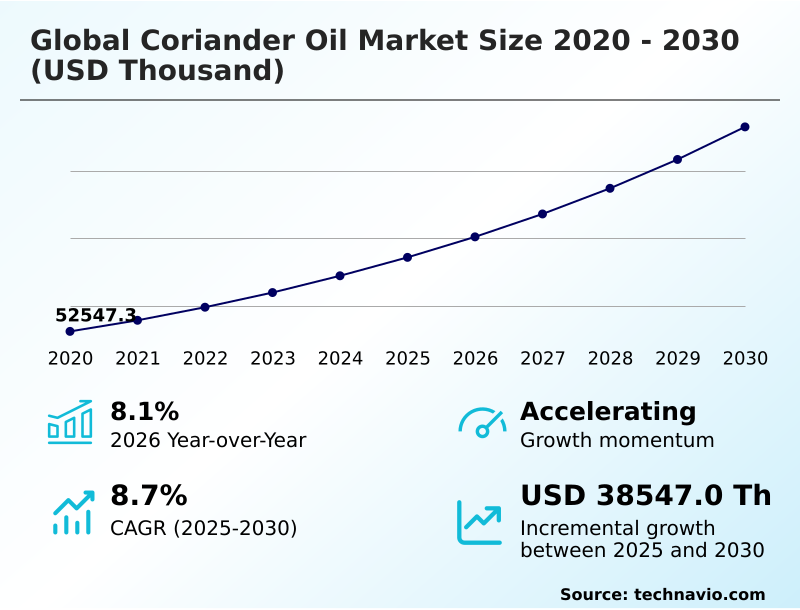
The coriander oil market size is valued to increase by USD 38.55 million, at a CAGR of 8.7% from 2025 to 2030. Health benefits associated with coriander oil will drive the coriander oil market.
Major Market Trends & Insights
- Europe dominated the market and accounted for a 41.4% growth during the forecast period.
- By Application - Food and beverage segment was valued at USD 43.97 million in 2024
- By Type - Organic segment accounted for the largest market revenue share in 2024
Market Size & Forecast
- Market Opportunities:
- Market Future Opportunities: USD 38.55 million
- CAGR from 2025 to 2030 : 8.7%
Market Summary
- The Coriander Oil Market is experiencing robust and sustained expansion, propelled by a fundamental consumer shift toward natural, plant-derived ingredients. This trend is most pronounced in the food and beverage sector, where the demand for clean-label products has spurred the use of coriander oil as a natural flavoring agent and preservative.
- Its inherent antimicrobial and antioxidant properties are leveraged to extend shelf life, addressing industry-wide goals for food safety and waste reduction. Concurrently, the burgeoning wellness and personal care markets provide strong growth impetus. Coriander oil is valued in aromatherapy for its stress-relieving effects and in cosmetics for its skin-soothing benefits. This diversified demand base creates market resilience.
- A key business scenario involves supply chain optimization, where manufacturers are increasingly adopting traceability technologies. These systems, tracking the oil from farm to final product, not only meet regulatory demands but also satisfy consumer calls for ethically sourced and transparently produced ingredients, enhancing brand value in a competitive landscape.
What will be the Size of the Coriander Oil Market during the forecast period?
Get Key Insights on Market Forecast (PDF) Get Free Sample
How is the Coriander Oil Market Segmented?
The coriander oil industry research report provides comprehensive data (region-wise segment analysis), with forecasts and estimates in "USD thousand" for the period 2026-2030, as well as historical data from 2020-2024 for the following segments.
- Application
- Food and beverage
- Medical
- Others
- Type
- Organic
- Conventional
- Product type
- Therapeutic grade
- Raw
- Roasted
- Others
- Geography
- Europe
- Germany
- France
- UK
- North America
- US
- Canada
- Mexico
- APAC
- India
- China
- Japan
- South America
- Brazil
- Argentina
- Colombia
- Middle East and Africa
- Turkey
- South Africa
- UAE
- Rest of World (ROW)
- Europe
By Application Insights
The food and beverage segment is estimated to witness significant growth during the forecast period.
The food and beverage segment is a critical demand center, heavily influenced by the consumer-driven push for natural ingredients and clean-label products.
Regulatory bodies approve the use of coriander oil as a versatile natural flavoring agent and an effective food preservative function, particularly in processed meats and sausages where it imparts a characteristic flavor.
Its antimicrobial properties are leveraged to achieve shelf life extension, aligning with industry goals for waste reduction. The adoption of advanced quality control methods, such as sensory profile analysis, ensures consistency.
This segment accounts for over 60% of total market applications, driven by its use in both traditional recipes and innovative food formulations that cater to evolving consumer preferences for ethnic and spicy flavors.
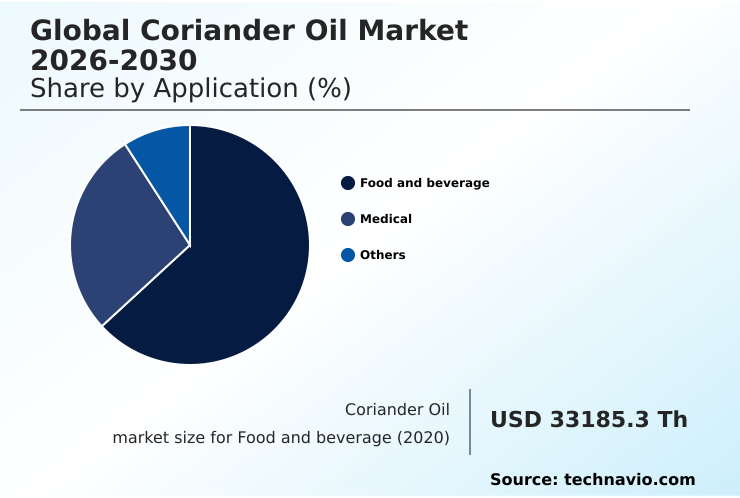
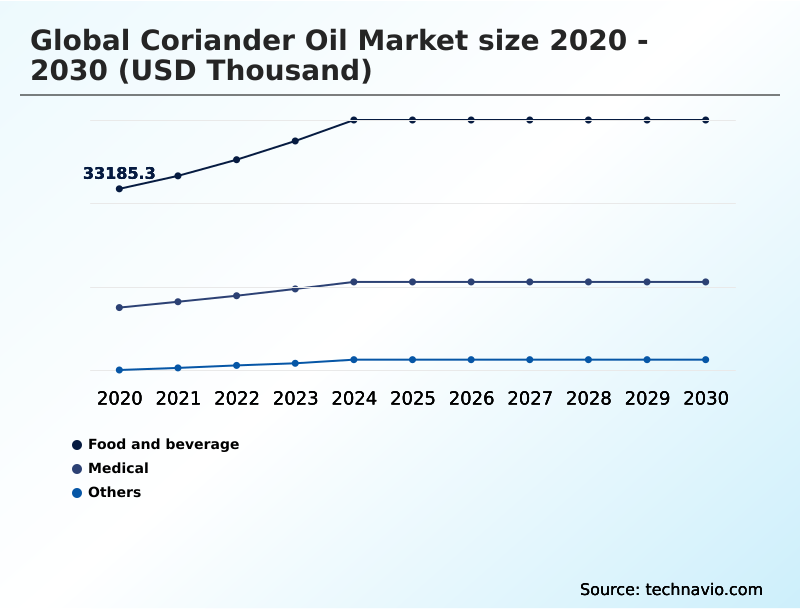
The Food and beverage segment was valued at USD 43.97 million in 2024 and showed a gradual increase during the forecast period.
Regional Analysis
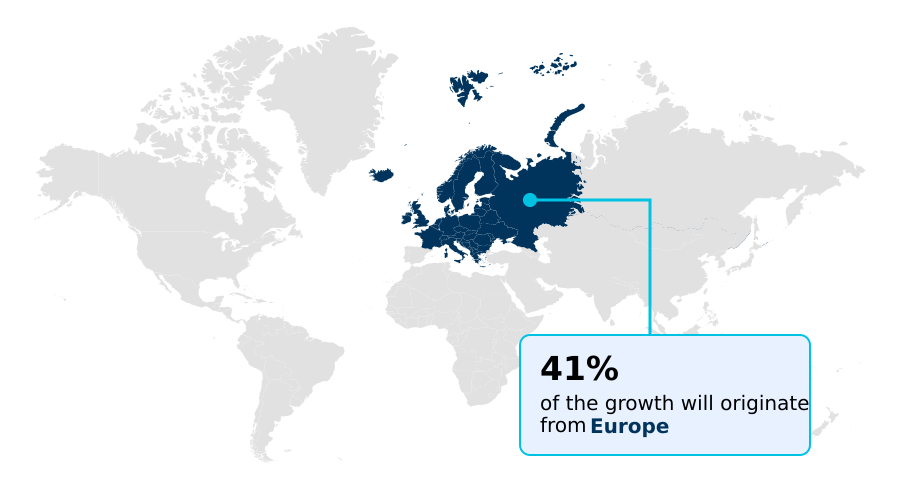
Europe is estimated to contribute 41.4% to the growth of the global market during the forecast period.Technavio’s analysts have elaborately explained the regional trends and drivers that shape the market during the forecast period.
See How Coriander Oil Market Demand is Rising in Europe Get Free Sample
The global market exhibits a distinct geographic landscape, with Europe, North America, and APAC representing the core demand hubs.
Europe, accounting for over 41% of incremental growth, is characterized by stringent regulations and a sophisticated consumer base prioritizing organic and clean-label products.
APAC, projected to grow at a rate of 9.3%, is both the largest producer and a rapidly expanding consumer market, led by India's dominance in cultivation and a growing food processing industry.
The region is a hub for high-value spice oils and traditional medicine ingredients.
North America, a major market for aromatherapy and natural wellness, is driven by multicultural culinary trends and a highly innovative food and beverage sector, where culinary essential oils and botanical extracts in cosmetics are in high demand.
Market Dynamics
Our researchers analyzed the data with 2025 as the base year, along with the key drivers, trends, and challenges. A holistic analysis of drivers will help companies refine their marketing strategies to gain a competitive advantage.
- The versatility of coriander oil is driving its adoption across diverse, high-value applications. In personal care, the focus is on coriander oil for anti-aging creams and coriander oil for skin rejuvenation, leveraging its antioxidant properties.
- For those seeking natural wellness solutions, understanding the coriander oil benefits for digestion is a key purchasing driver, alongside its use in formulations for coriander oil for joint pain relief and coriander oil for stress relief aromatherapy.
- The food industry's push for clean-label solutions has highlighted the effectiveness of organic coriander oil for food preservation and its role as one of the key natural preservatives for processed meats. This trend extends to agriculture, where coriander oil as a natural insecticide is gaining traction in organic farming.
- In the fragrance sector, the art of using coriander oil in perfumery is well-established. When making purchasing decisions, a coriander oil vs other essential oils comparison often reveals its unique, balanced profile. The complexities of the coriander oil extraction process comparison show how methods influence final quality for specific uses, such as in sustainable packaging.
- For instance, companies that master advanced extraction see processing efficiencies improve by nearly 15% over firms using dated techniques, a critical metric for operational planning in a competitive market.
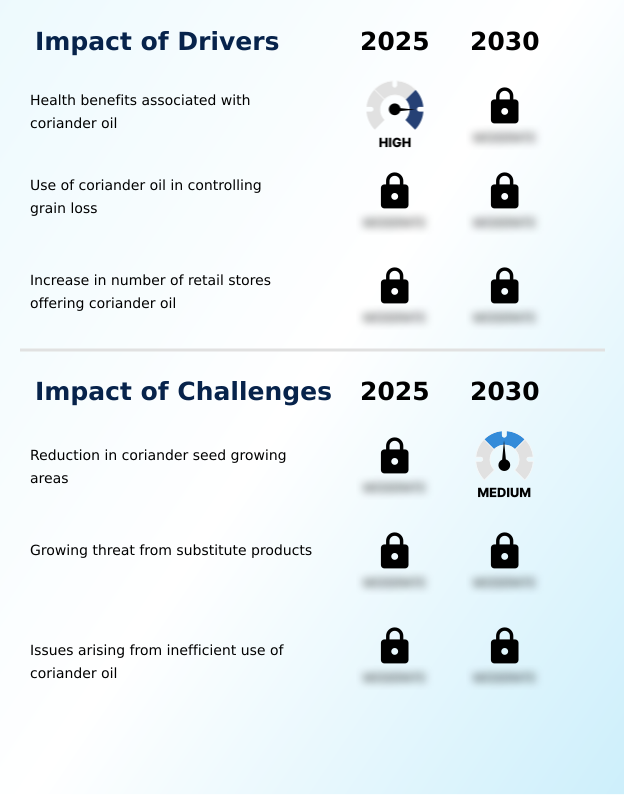
What are the key market drivers leading to the rise in the adoption of Coriander Oil Industry?
- The key driver propelling market growth is the extensive range of health benefits associated with coriander oil, spanning from digestive support to anti-inflammatory effects.
- Market growth is propelled by the oil's diverse functional benefits across multiple industries.
- The core driver is its wide application as a food preservative function, with studies showing its use can reduce spoilage by up to 25% in certain food products.
- Its anti-inflammatory properties are leveraged in both cosmetic and therapeutic contexts, while its phytochemical composition makes it valuable for digestive health remedies. In agriculture, its use in agrochemical formulation as a natural alternative is expanding.
- The demand for plant-derived ingredients in fine fragrance formulation and herbal infusion ingredients also contributes significantly to market expansion.
- As a result, the oil is a staple in everything from gourmet food flavoring to herbal supplement manufacturing, creating a broad and resilient demand base.
What are the market trends shaping the Coriander Oil Industry?
- A significant market trend is the increasing utilization of coriander oil to extend the shelf life of food products, a development driven by its natural antimicrobial properties.
- Key market trends are driven by consumer demand for sustainability and product purity. The growing popularity of organic coriander oil, underpinned by non-gmo certification, is a primary trend, with certified products showing a 30% higher repeat purchase rate. This aligns with the push for ethically sourced ingredients and transparent supply chains.
- Concurrently, there is rising interest in sustainable food packaging, where the oil's properties are explored. In personal care, anti-aging skincare formulation is a significant application area, valued for its natural profile. This is supported by advanced analytical techniques ensuring essential oil purity testing and validating the oil's composition.
- The trend towards holistic wellness products further boosts demand, positioning the oil as a versatile ingredient in numerous high-growth categories.
What challenges does the Coriander Oil Industry face during its growth?
- A key challenge affecting industry growth is the reduction in coriander seed cultivation areas in key producing regions, which directly impacts raw material availability and price stability.
- The market faces challenges related to supply chain volatility and competition. The threat from substitutes, including both natural botanical extracts and synthetic compounds, can impact pricing by up to 10%, particularly during periods of supply disruption. Issues with raw material availability, often linked to climate-related agricultural challenges, create uncertainty for producers.
- Maintaining a consistent petroselinic acid and volatile organic compounds profile requires stringent quality control, including cold-pressed extraction and other advanced methods. Furthermore, as the industry expands into new applications like aromatherapy blend components, ensuring consistent quality and avoiding adulteration becomes a more complex challenge for suppliers and manufacturers.
Exclusive Technavio Analysis on Customer Landscape
The coriander oil market forecasting report includes the adoption lifecycle of the market, covering from the innovator’s stage to the laggard’s stage. It focuses on adoption rates in different regions based on penetration. Furthermore, the coriander oil market report also includes key purchase criteria and drivers of price sensitivity to help companies evaluate and develop their market growth analysis strategies.
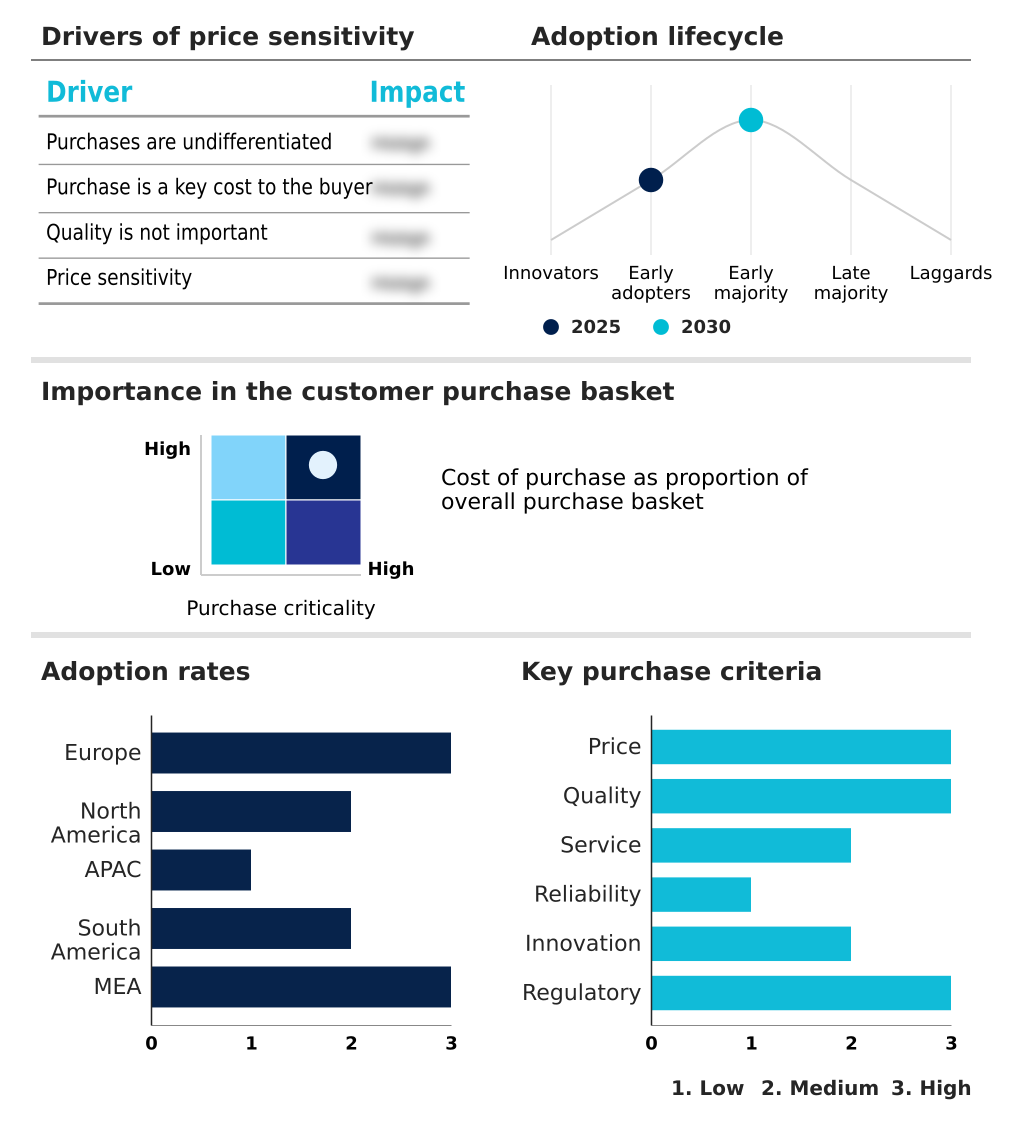
Customer Landscape of Coriander Oil Industry
Competitive Landscape
Companies are implementing various strategies, such as strategic alliances, coriander oil market forecast, partnerships, mergers and acquisitions, geographical expansion, and product/service launches, to enhance their presence in the industry.
Augustus Oils Ltd. - Offerings are centered on high-purity, application-specific coriander oil, utilizing advanced extraction to meet stringent quality standards for diverse industries including food, cosmetics, and pharmaceuticals.
The industry research and growth report includes detailed analyses of the competitive landscape of the market and information about key companies, including:
- Augustus Oils Ltd.
- Berje Inc.
- doTERRA International LLC
- DSM Firmenich AG
- Eden Botanicals
- ELIXENS GROUP
- Ernesto Ventos SA
- Excellentia International
- H. Interdonati Inc.
- iFRAGRANCE INDIA
- La Medicca India Pvt. Ltd.
- Lebermuth Inc.
- PerfumersWorld Ltd.
- Sydney Essential Oil Co. Pty
- Vigon International Inc.
Qualitative and quantitative analysis of companies has been conducted to help clients understand the wider business environment as well as the strengths and weaknesses of key industry players. Data is qualitatively analyzed to categorize companies as pure play, category-focused, industry-focused, and diversified; it is quantitatively analyzed to categorize companies as dominant, leading, strong, tentative, and weak.
Recent Development and News in Coriander oil market
- In May, 2025, The Government of India announced a new subsidy and export promotion scheme through its Ministry of Commerce, aimed at doubling high-value spice oil exports, including coriander oil, by 2030 through financial incentives for advanced technology and organic certification.
- In January, 2025, American Exchange Group acquired the skincare brand Urban Skin Rx, signaling a strategic move to capitalize on the growing demand for natural, plant-based ingredients like coriander oil in the beauty and wellness sector.
- In October, 2024, Givaudan opened its 'L Appartement 125' fragrance research and development center in Shanghai, aiming to collaborate with Chinese brands and enhance its natural ingredient portfolio, including coriander oil, for premium personal care products.
- In September, 2024, wellness brand NaturaVita Global launched a new line of organic digestive health tinctures featuring organic coriander oil as the primary active ingredient, leveraging USDA Organic certification and traceable sourcing to appeal to the premium functional ingredients market.
Dive into Technavio’s robust research methodology, blending expert interviews, extensive data synthesis, and validated models for unparalleled Coriander Oil Market insights. See full methodology.
| Market Scope | |
|---|---|
| Page number | 286 |
| Base year | 2025 |
| Historic period | 2020-2024 |
| Forecast period | 2026-2030 |
| Growth momentum & CAGR | Accelerate at a CAGR of 8.7% |
| Market growth 2026-2030 | USD 38547.0 thousand |
| Market structure | Fragmented |
| YoY growth 2025-2026(%) | 8.1% |
| Key countries | Germany, France, UK, Italy, Spain, The Netherlands, US, Canada, Mexico, India, China, Japan, South Korea, Indonesia, Australia, Brazil, Argentina, Colombia, Turkey, South Africa, Egypt, UAE and Saudi Arabia |
| Competitive landscape | Leading Companies, Market Positioning of Companies, Competitive Strategies, and Industry Risks |
Research Analyst Overview
- The coriander oil market's trajectory is defined by the convergence of consumer demand for wellness and industrial requirements for functional, plant-derived ingredients. The emphasis on clean-label ingredient sourcing compels manufacturers to ensure supply chain transparency, often starting with regenerative farming practices.
- Advanced extraction methods like supercritical co2 extraction are becoming standard for producing therapeutic grade essential oil, which is rich in anti-inflammatory compound structures and shows potent antioxidant activity. Quality assurance is paramount, with gas chromatography-mass spectrometry used to verify linalool content and overall purity for both cosmetic grade coriander oil and natural flavoring agent applications.
- This analytical rigor allows for precise oleoresin extraction and a consistent sensory profile analysis, which are critical for flavor and fragrance applications. For boardroom consideration, firms implementing these stringent quality controls have seen batch rejection rates fall by over 20%, directly impacting profitability.
- From its use in bioinsecticide formulation to its role in shelf life extension, the oil's multifaceted benefits are expanding its commercial footprint.
What are the Key Data Covered in this Coriander Oil Market Research and Growth Report?
-
What is the expected growth of the Coriander Oil Market between 2026 and 2030?
-
USD 38.55 million, at a CAGR of 8.7%
-
-
What segmentation does the market report cover?
-
The report is segmented by Application (Food and beverage, Medical, and Others), Type (Organic, and Conventional), Product Type (Therapeutic grade, Raw, Roasted, and Others) and Geography (Europe, North America, APAC, South America, Middle East and Africa)
-
-
Which regions are analyzed in the report?
-
Europe, North America, APAC, South America and Middle East and Africa
-
-
What are the key growth drivers and market challenges?
-
Health benefits associated with coriander oil, Reduction in coriander seed growing areas
-
-
Who are the major players in the Coriander Oil Market?
-
Augustus Oils Ltd., Berje Inc., doTERRA International LLC, DSM Firmenich AG, Eden Botanicals, ELIXENS GROUP, Ernesto Ventos SA, Excellentia International, H. Interdonati Inc., iFRAGRANCE INDIA, La Medicca India Pvt. Ltd., Lebermuth Inc., PerfumersWorld Ltd., Sydney Essential Oil Co. Pty and Vigon International Inc.
-
Market Research Insights
- The market's dynamics are increasingly shaped by a focus on verifiable quality and sustainable sourcing. For instance, the adoption of advanced essential oil purity testing has become a key differentiator, with suppliers demonstrating superior phytochemical composition reporting a 15% higher retention rate among premium buyers.
- In the cosmetic sector, brands using traceable, skin-soothing botanicals have seen a 20% increase in consumer engagement. This shift towards holistic wellness products and functional food ingredients is compelling manufacturers to innovate. As a result, the integration of traditional medicine ingredients into modern formulations is expanding, reflecting a strategic alignment with consumer preferences for natural and effective solutions.
We can help! Our analysts can customize this coriander oil market research report to meet your requirements.
 RIA -
RIA - 
