



Crop Monitoring Devices Market Size 2024-2028
The crop monitoring devices market size is forecast to increase by USD 762.17 million at a CAGR of 7.74% between 2023 and 2028.
- The market is experiencing significant growth due to the increasing prioritization of food security and safety in the agriculture sector. With the integration of advanced technologies such as Geo-positioning, the Internet of Things (IoT), and Artificial Intelligence (AI), farmers can now effectively monitor farm conditions in real-time. These devices enable the assessment of in-field crop health, soil moisture, water levels, weather status, fuel levels, and more. The adoption of these solutions is on the rise as farmers seek to enhance productivity and efficiency in their operations. However, a lack of awareness among farmers regarding these new technologies presents a challenge to market growth. Despite this, the potential benefits of these devices are undeniable, making them a valuable investment for farmers and the agriculture industry as a whole. By leveraging the power of AI and Machine Learning (ML), these devices offer accurate and timely insights, enabling farmers to make informed decisions and optimize their resources. Incorporating these technologies into crop monitoring devices is a key trend driving market growth.
What will be the Size of the Market During the Forecast Period?
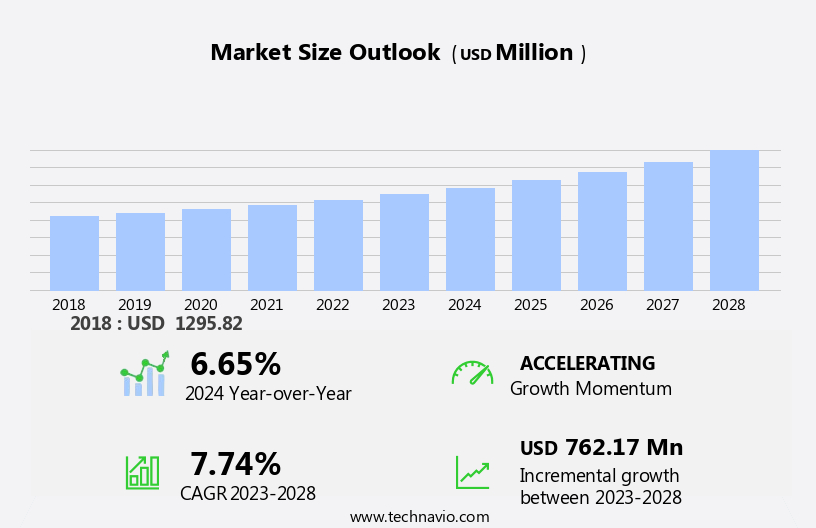
- The market is witnessing significant growth as farmers in both rural and urban areas seek to improve farm productivity and profitability. The implementation of digital agriculture automation and robotics technologies is bridging the digital divide between tech-savvy farmers and those with limited resources. Labor shortages in manufacturing facilities have accelerated the need for automation in agriculture. Medium-sized farms are increasingly adopting crop monitoring devices to optimize their operations and achieve economies of scale. These devices utilize intelligent sensors to collect real-time data on crop health, soil moisture, and weather conditions.
- The use of crop monitoring devices offers numerous benefits. By providing farmers with actionable insights, these technologies enable timely interventions to mitigate potential crop losses. Additionally, they help farmers make informed decisions regarding irrigation, fertilization, and pest management. The APAC region is a major market for crop monitoring devices due to its large agricultural sector and growing investment in digital agriculture. Government reforms and subsidies are also driving adoption in Southeast Asian countries. Digitization is transforming agriculture, allowing farmers to make data-driven decisions and improve overall efficiency. Crop monitoring devices are a crucial component of this digital transformation, providing farmers with valuable insights to enhance their returns.
How is this market segmented and which is the largest segment?
The market research report provides comprehensive data (region-wise segment analysis), with forecasts and estimates in "USD billion" for the period 2024-2028, as well as historical data from 2018-2022 for the following segments.
- Area
- Medium-sized
- Large-sized
- Small-sized
- Product
- Sensing and monitoring devices
- Automation and control
- Drones and others
- Geography
- North America
- US
- Europe
- Germany
- France
- APAC
- China
- Japan
- South America
- Middle East and Africa
- North America
By Area Insights
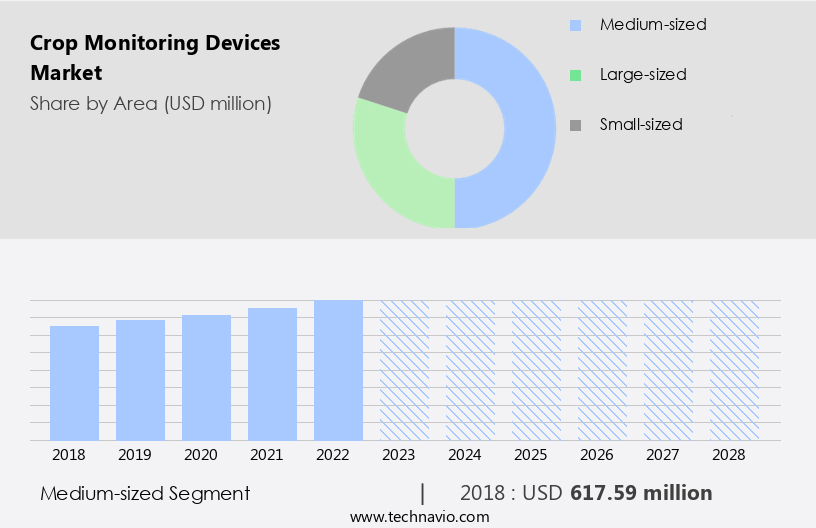
- The medium-sized segment is estimated to witness significant growth during the forecast period.
Medium-sized agricultural holdings have witnessed notable expansion over the last decade, particularly in Africa. In Kenya, Ghana, Tanzania, and Zambia, approximately 20%, 32%, 39%, and over 50% of the agricultural land, respectively, comprises medium-sized farms. This trend is driven by the increasing number of urban-based farmers or influencers, linked to burgeoning urban populations and escalating food demand. This growth is anticipated to fuel the expansion of the medium-sized farms segment in The market. Intelligent sensors play a pivotal role in this context, enabling farmers to monitor temperatures and moisture levels in their soil effectively. Companies such as Sensoterra provide advanced solutions to facilitate data collection and in-field observations.
Furthermore, these devices are essential for farmers to optimize crop yields and maintain soil health, thereby contributing to the market's growth. The market is expected to experience substantial growth during the forecast period due to the increasing demand for efficient farming practices and the need for accurate data to inform decision-making.
Get a glance at the market report of share of various segments Request Free Sample
The medium-sized segment was valued at USD 617.59 million in 2018 and showed a gradual increase during the forecast period.
Regional Analysis
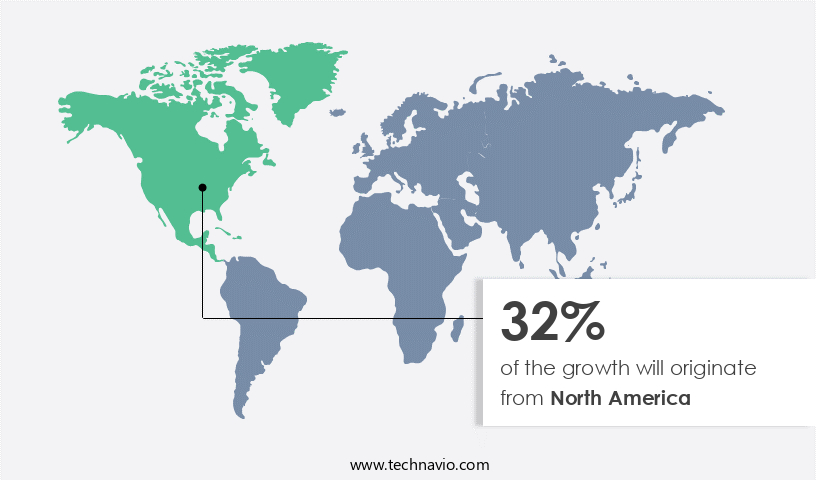
- North America is estimated to contribute 32% to the growth of the global market during the forecast period.
Technavio's analysts have elaborately explained the regional trends and drivers that shape the market during the forecast period.
For more insights on the market share of various regions Request Free Sample
In the United States, the agricultural sector is witnessing significant advancements due to government initiatives and the adoption of modern technologies. For instance, the National Institute of Food and Agriculture (NIFA), a part of the US Department of Agriculture (USDA), is promoting the use of geospatial, sensor, and precision technology projects to increase farm productivity and profitability. The implementation of cloud-based technology and the increasing popularity of smart farming techniques are key factors driving the growth of the market in the region. Furthermore, the Canadian government is supporting precision agriculture through financial incentives. The demand for food production to meet the needs of an expanding population is another significant factor fueling market expansion. Despite the digital divide between rural and urban areas, unskilled farmers are increasingly adopting tech-savvy solutions to mitigate labor shortages in manufacturing facilities. The market in North America is poised for steady growth due to these factors.
Market Dynamics
Our researchers analyzed the data with 2023 as the base year, along with the key drivers, trends, and challenges. A holistic analysis of drivers will help companies refine their marketing strategies to gain a competitive advantage.
What are the key market drivers leading to the rise in adoption of Crop Monitoring Devices Market?
Growing focus on increasing productivity and efficiency in agriculture sector is the key driver of the market.
- Crop monitoring devices, driven by automation and digitization, are revolutionizing digital agriculture in the US and beyond. These technologies enable farms, particularly medium-sized ones, to execute tasks with minimal human intervention, leading to increased productivity and efficiency. By deploying self-driving vehicles and automation and robotics, farmers can reduce downtime and focus on other essential farm-related tasks.
- Economies of scale are also attainable as multiple devices work in unison, enhancing the overall efficiency of the farming business. Agricultural mechanization, a crucial aspect of modernizing agriculture, is increasingly replacing labor-intensive farming practices. Machines, such as those offered by Trimble and John Deere, are transforming the agricultural landscape by optimizing the utilization of farm implements, thereby improving farm productivity.
What are the market trends shaping the Crop Monitoring Devices Market?
The incorporation of AI and ML into crop monitoring devices is the upcoming trend in the market.
- The integration of geo-positioning technology and the Internet of Things (IoT) is transforming the market in the United States. Artificial intelligence (AI) and machine learning (ML) technologies enable these systems to gather, process, and analyze data more intelligently, resulting in more accurate pest management and improved crop health. In real-time, these technologies assist in interpreting complex scenarios for robots used in farm monitoring.
- AI and ML capabilities include resource usage planning, maximizing crop yields, and analyzing soil moisture, water levels, and weather status. Furthermore, they automate farm management, optimize workflow, and provide valuable insights on animal health and species management. These advancements contribute significantly to food security and safety in the agricultural sector.
What challenges does Crop Monitoring Devices Market face during the growth?
Lack of awareness among farmers regarding new technologies in farming is a key challenge affecting the market growth.
- Advanced crop monitoring devices employ intelligent sensors and connected technologies to provide farmers with data-driven insights for optimizing crop production. However, the agricultural sector faces challenges in adopting these solutions due to a lack of awareness. Inconsistencies in crop monitoring can lead to significant resource losses and crop damage. These inconsistencies may result from various factors, including the movement of pests, changes in illumination, camera focus, and the presence of non-pest organisms or other objects. Image processing in crop monitoring devices involves several steps, including image capturing, pre-processing, conversion to grayscale, resizing, and filtering.
- These processes enable accurate identification and analysis of crop health, pests, and other factors affecting yield. Government reforms and initiatives aimed at promoting agricultural technology adoption can help bridge the gap and encourage farmers to invest in crop monitoring solutions. By leveraging these advanced tools, farmers can minimize crop losses and enhance overall productivity. In conclusion, crop monitoring devices play a crucial role in optimizing agricultural production by providing farmers with real-time insights into crop health and pest infestations. Despite their benefits, the adoption of these solutions remains limited due to a lack of awareness. To address this challenge, government initiatives, educational programs, and industry collaborations can help promote the adoption of crop monitoring devices and improve overall agricultural productivity.
Exclusive Customer Landscape
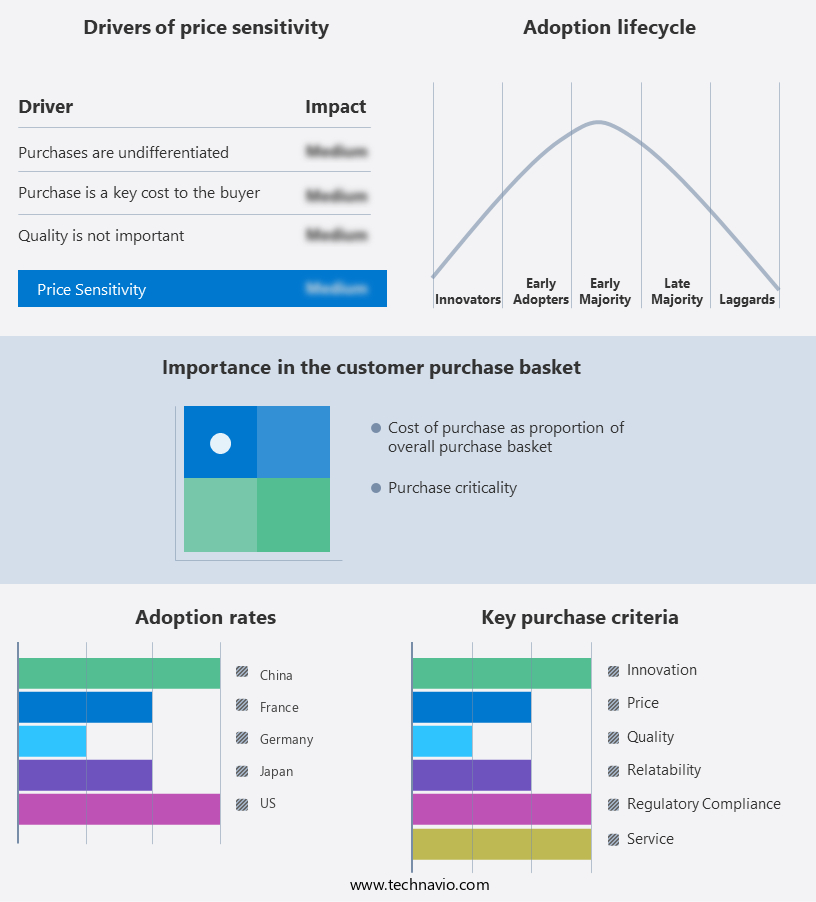
The market forecasting report includes the adoption lifecycle of the market, covering from the innovator's stage to the laggard's stage. It focuses on adoption rates in different regions based on penetration. Furthermore, the market report also includes key purchase criteria and drivers of price sensitivity to help companies evaluate and develop their market growth analysis strategies.
Customer Landscape
Key Companies & Market Insights
Companies are implementing various strategies, such as strategic alliances, market forecast, partnerships, mergers and acquisitions, geographical expansion, and product/service launches, to enhance their presence in the market. The market research and growth report includes detailed analyses of the competitive landscape of the market and information about key companies, including:
- Ag Leader Technology
- AGCO Corp.
- Chengdu JOUAV Automation Tech Co. Ltd.
- CNH Industrial NV
- CropX Technologies Ltd.
- Deere and Co.
- Hunan Rika Electronic Tech Co. Ltd.
- Libelium Comunicaciones Distribuidas SL
- MaxBotix Inc.
- Meropy
- METOS
- Parrot Drones SAS
- Sentera Inc.
- Supertech Agroline ApS
- Swift Sensors BV
- Topcon Corp.
- Trimble Inc.
- TSI Inc.
- Vyaprut Pvt. Ltd.
- Yara International ASA
Qualitative and quantitative analysis of companies has been conducted to help clients understand the wider business environment as well as the strengths and weaknesses of key market players. Data is qualitatively analyzed to categorize companies as pure play, category-focused, industry-focused, and diversified; it is quantitatively analyzed to categorize companies as dominant, leading, strong, tentative, and weak.
Research Analyst Overview
Crop monitoring devices have become essential tools for farmers in both rural and urban areas to enhance farm productivity and profitability. Advanced technologies, such as digital agriculture, automation, and robotics, are revolutionizing agriculture by providing real-time data-driven insights. The digital divide between tech-savvy farmers and those with limited resources is being bridged by the availability of affordable and user-friendly crop monitoring solutions. Labor shortages in manufacturing facilities have led to the automation and digitization of various processes, including crop monitoring. Medium-sized farms are reaping the benefits of economies of scale by implementing these solutions. Returns on investment are significant, as farmers can minimize crop losses through early detection of issues and make necessary adjustments on time.
Furthermore, Southeast Asian countries are witnessing a rise in the adoption of crop monitoring devices, with governments implementing reforms to promote digital agriculture. Intelligent sensors and connected technologies are being used to collect data on soil moisture, water levels, weather status, fuel levels, in-field crop health, temperatures, and other critical parameters. Farmers can access this information through smartphones or computers, enabling them to make informed decisions and improve crop growth performance. IoT and AI-based devices are the latest advancements in crop monitoring, with smart sensors and remote sensors providing real-time information on humidity, air temperature, soil quality, yields, irrigation, and harvests. These devices are transforming agricultural management, making it more efficient, sustainable, and profitable.
|
Market Scope |
|
|
Report Coverage |
Details |
|
Page number |
174 |
|
Base year |
2023 |
|
Historic period |
2018-2022 |
|
Forecast period |
2024-2028 |
|
Growth momentum & CAGR |
Accelerate at a CAGR of 7.74% |
|
Market Growth 2024-2028 |
USD 762.17 million |
|
Market structure |
Fragmented |
|
YoY growth 2023-2024(%) |
6.65 |
|
Key countries |
US, China, Japan, Germany, and France |
|
Competitive landscape |
Leading Companies, Market Positioning of Companies, Competitive Strategies, and Industry Risks |
What are the Key Data Covered in this Market Research and Growth Report?
- CAGR of the market during the forecast period
- Detailed information on factors that will drive the market growth and forecasting between 2024 and 2028
- Precise estimation of the size of the market and its contribution of the market in focus to the parent market
- Accurate predictions about upcoming market growth and trends and changes in consumer behaviour
- Growth of the market across North America, Europe, APAC, South America, and Middle East and Africa
- Thorough analysis of the market's competitive landscape and detailed information about companies
- Comprehensive analysis of factors that will challenge the growth of market companies
We can help! Our analysts can customize this market research report to meet your requirements. Get in touch
 RIA -
RIA - 
