



Data Mesh Enablement Services Market Size and Growth Forecast 2026-2030
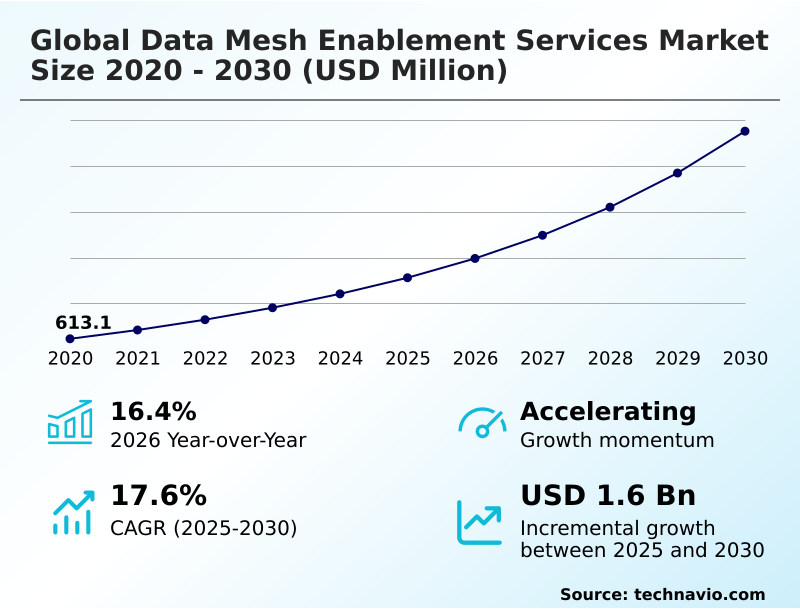
The Data Mesh Enablement Services Market size was valued at USD 1.28 billion in 2025 growing at a CAGR of 17.6% during the forecast period 2026-2030.
North America accounts for 42.1% of incremental growth during the forecast period. The Cloud based segment by Deployment was valued at USD 689.6 million in 2024, while the Large enterprises segment holds the largest revenue share by Business Segment.
The market is projected to grow by USD 2.26 billion from 2020 to 2030, with USD 1.60 billion of the growth expected during the forecast period of 2025 to 2030.
Get Key Insights on Market Forecast (PDF) Request Free Sample
Data Mesh Enablement Services Market Overview
The data mesh enablement services market is expanding as organizations abandon monolithic data lakes for decentralized data architectures that foster agility. This sociotechnical shift, emphasizing domain-oriented data ownership and treating data as a product, is essential for competing in a digital-first economy. The market's 16.4% year-over-year growth is fueled by the need to derive value from complex information landscapes. For instance, a multinational manufacturing firm implementing a data mesh framework for its Industrial IoT network can empower individual plant domains to manage sensor data as distinct data products. This approach of applying federated computational governance allows for localized predictive maintenance models, improving equipment uptime, while still enabling centralized analytics for global supply chain optimization. This move to a self-serve data infrastructure, governed by clear data contracts, is becoming a strategic imperative, with North America contributing over 42% of the market's incremental growth, indicating strong adoption in mature digital economies.
Drivers, Trends, and Challenges in the Data Mesh Enablement Services Market
The strategic decision to adopt a decentralized data architecture involves a complex analysis of the cost of data mesh vs data warehouse, factoring in both technology and organizational transformation. For large enterprises, the primary question is how to build a self-serve data platform that empowers business domains without creating anarchy.
The answer often lies in establishing clear data contracts, which are foundational to treating data as a product. In practice, a global financial services firm might leverage these principles for scaling data mesh for large enterprises by creating a data product marketplace for its risk, compliance, and trading domains.
This structure, which typically takes months to establish, can reduce the time for new regulatory report generation from weeks to days, a significant improvement over legacy systems.
A key part of this transformation is implementing federated governance in data mesh, which uses automated policy-as-code to enforce rules like GDPR's right to be forgotten across all data products, regardless of their location.
The role of data contracts in data mesh is to formally define the schema, quality metrics, and service-level objectives for each data product, ensuring trust and interoperability across the decentralized network and reducing downstream integration failures by over 50% in some implementations.
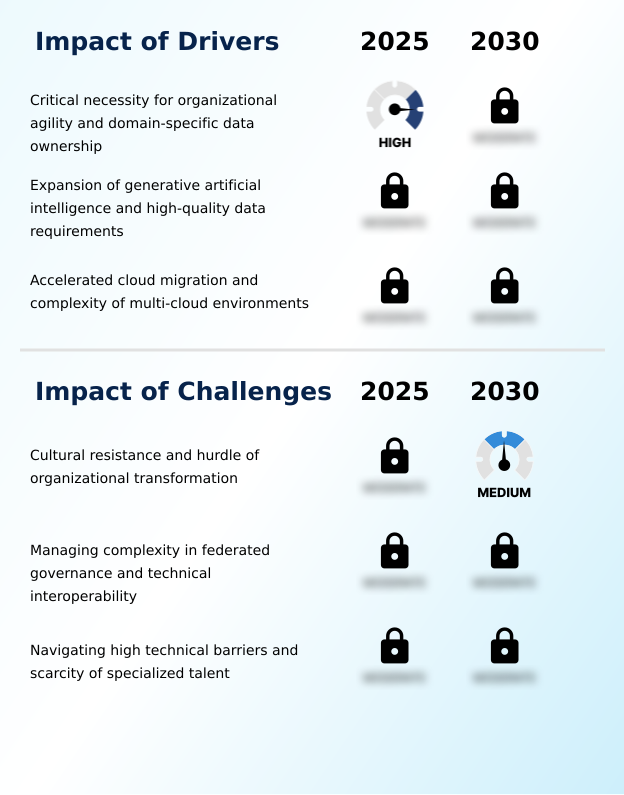
Primary Growth Driver: The critical necessity for organizational agility and domain-specific data ownership is a primary driver for the data mesh enablement services market.
The primary driver for market expansion, reflected in its 17.6% CAGR, is the organizational imperative to dismantle data silos and accelerate decision-making. Traditional data lakes have become bottlenecks, unable to support the agility required for modern digital business.
The rise of decentralized analytics and the need for a coherent data mesh architecture stem from this core challenge. Organizations are pursuing domain-driven design to place data ownership with the teams who understand its context, improving data quality and relevance.
Furthermore, the complexity of modern IT environments, characterized by a mix of on-premises, hybrid, and multi-cloud systems, makes data virtualization and a cohesive data mesh strategy essential for creating a unified view of enterprise information without costly data movement.
Emerging Market Trend: The synthesis of data mesh architecture with generative AI is a defining market trend. This convergence underscores the critical need for high-quality, domain-specific data to fuel advanced model training and deployment.
Market trends are defined by the synthesis of data mesh architecture with generative AI and the push toward automated federated governance. The demand for high-quality, reliable datasets for data mesh for AI applications is compelling organizations to adopt domain-driven design, ensuring information is curated by experts.
This move necessitates robust interoperability standards and comprehensive data catalogs so that AI models can seamlessly consume decentralized data products. Concurrently, the complexity of managing a distributed ecosystem is driving innovation in policy as code. This allows governance rules to be embedded directly into the self-serve data infrastructure, automating compliance checks and enforcing data contracts programmatically.
This ensures that as the data mesh scales, data lineage and security are maintained without creating manual bottlenecks, transforming data governance from a reactive function to a proactive, automated capability.
Key Industry Challenge: Cultural resistance to change and the inherent hurdles of large-scale organizational transformation present a key challenge to market growth.
The most significant market challenge is not technical but cultural. The transition to a data mesh organizational structure requires a profound shift in mindset, from centralized control to distributed responsibility. This often meets resistance, as it necessitates creating new roles, such as the data product owner role, and requires business domains to take on accountability for data quality.
A data mesh readiness assessment frequently reveals a critical skills gap; indeed, over 60% of enterprises cite the inability to hire qualified data architects as a primary reason for delaying transformation.
Moreover, implementing true federated computational governance is complex, demanding a delicate balance between domain autonomy and central oversight, which many organizations struggle to achieve without expert data mesh consulting and a clear data mesh strategy.
Explore Full Market Dynamics Analysis Request Free Sample
Data Mesh Enablement Services Market Segmentation
The data mesh enablement services industry research report provides comprehensive data including region-wise segment analysis, with forecasts and analysis for the period 2026-2030, as well as historical data from 2020-2024 for the following segments.
Deployment Segment Analysis
The cloud based segment is estimated to witness significant growth during the forecast period.
The cloud-based segment is pivotal for the data mesh enablement services market, leveraging cloud-native data architecture to deliver the scalability and elasticity essential for managing vast, distributed information assets.
This deployment model facilitates the rapid provisioning of a self-serve data infrastructure, empowering domain teams to build, deploy, and share data products without traditional IT bottlenecks.
Enablement services for cloud environments focus on automating federated computational governance, ensuring that security policies and metadata standards are applied consistently across all data products.
With organizations increasingly adopting multi-cloud data management strategies, the ability to maintain interoperability standards for hybrid cloud data is critical.
The segment's dominance reflects the enterprise shift toward flexible, consumption-based models that support a robust decentralized data architecture and drive operational agility.
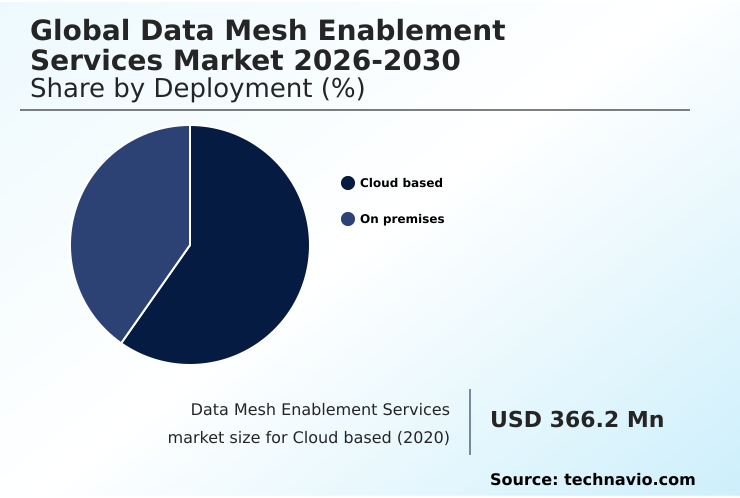
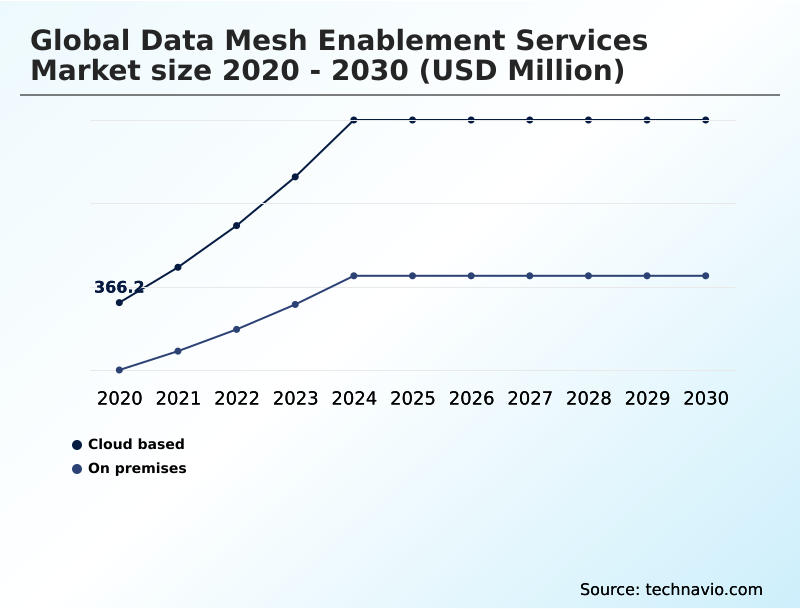
The Cloud based segment was valued at USD 689.6 million in 2024 and showed a gradual increase during the forecast period.
Data Mesh Enablement Services Market by Region: North America Leads with 42.1% Growth Share
North America is estimated to contribute 42.1% to the growth of the global market during the forecast period.
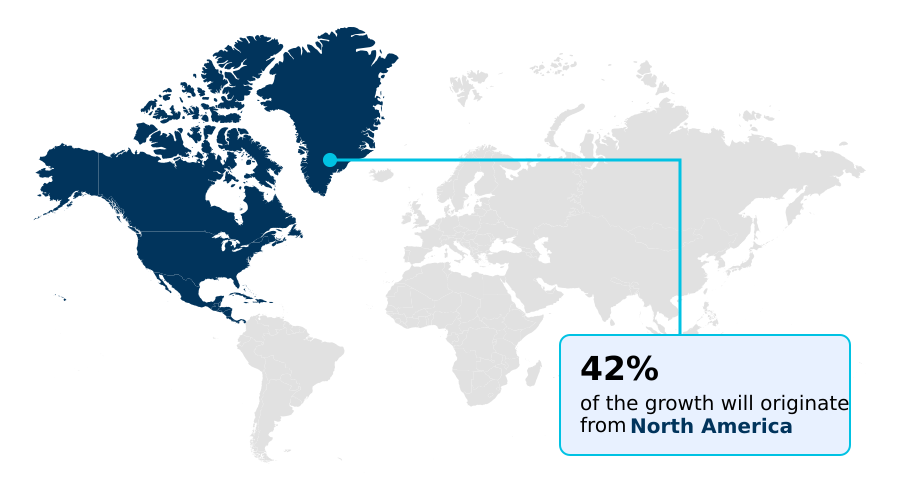
The geographic landscape of the market is led by North America, which accounts for over 42% of the market's incremental growth, driven by early adoption of cloud-native technologies and a mature data mesh consulting ecosystem.
In contrast, the APAC region is projected to be the fastest-growing market, with a CAGR of 18.5%, fueled by massive digital transformation in countries like India and China.
European adoption is heavily influenced by regulatory pressures, with a focus on implementing federated computational governance to comply with GDPR and ensure data sovereignty. This has spurred demand for data mesh implementation that supports complex multi-cloud data management across borders.
The need for localized expertise to navigate regional data residency laws and business cultures underscores the global demand for specialized professional services that can adapt the core principles of data mesh architecture to diverse operating environments.
Customer Landscape Analysis for the Data Mesh Enablement Services Market
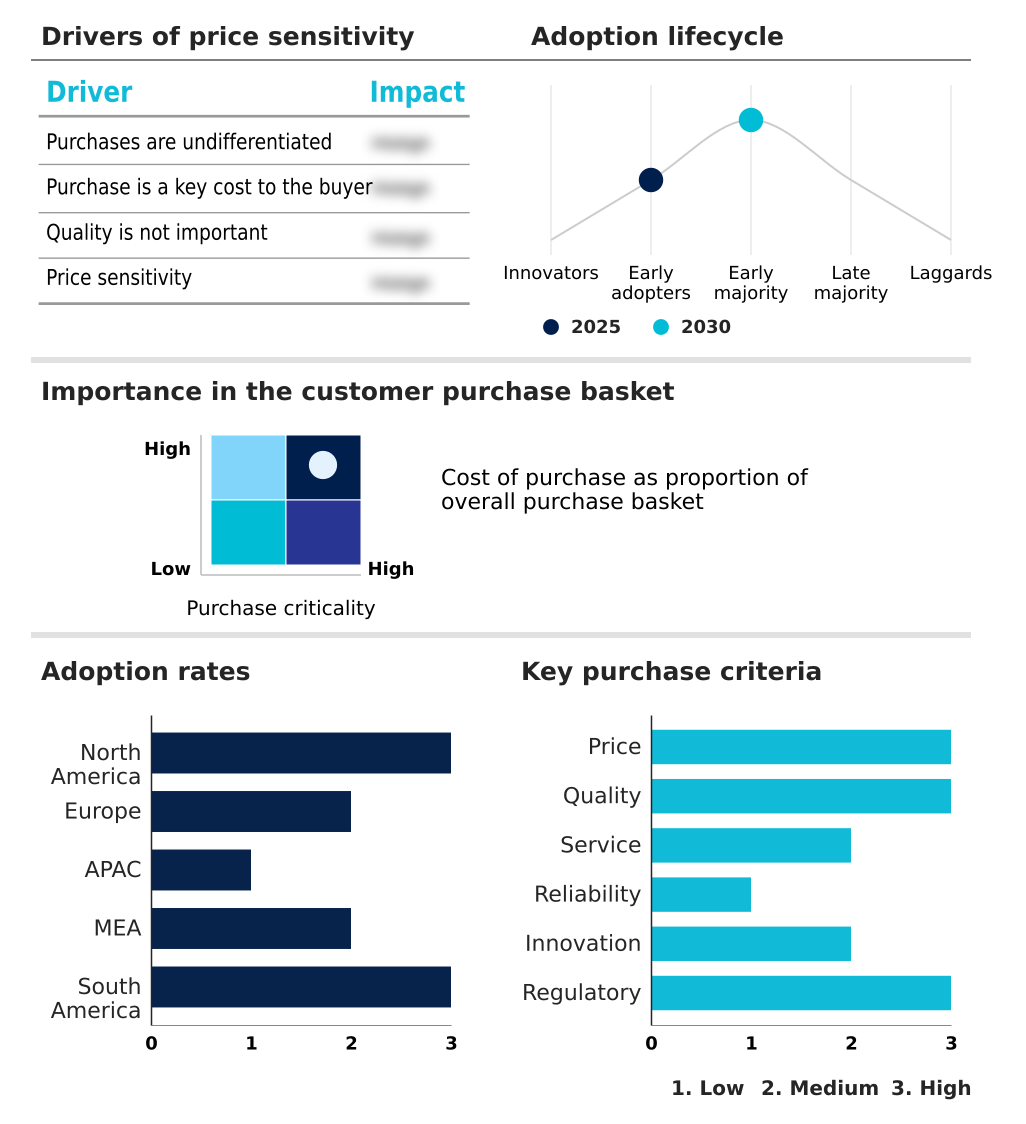
The data mesh enablement services market forecasting report includes the adoption lifecycle of the market, covering from the innovator’s stage to the laggard’s stage. It focuses on adoption rates in different regions based on penetration. Furthermore, the data mesh enablement services market report also includes key purchase criteria and drivers of price sensitivity to help companies evaluate and develop their market growth analysis strategies.
Competitive Landscape of the Data Mesh Enablement Services Market
Companies are implementing various strategies, such as strategic alliances, partnerships, mergers and acquisitions, geographical expansion, and product/service launches, to enhance their presence in the data mesh enablement services market industry.
Accenture Plc - Specialized services transition organizations to decentralized, domain-oriented data architectures, integrating governance and self-serve platforms to unlock the value of data as a product.
The industry research and growth report includes detailed analyses of the competitive landscape of the market and information about key companies, including:
- Accenture Plc
- Bain and Co. Inc.
- Boston Consulting Group Inc.
- Capgemini SE
- Cognizant Technology Solution
- Deloitte Touche Tohmatsu Ltd.
- DXC Technology Co.
- Ernst and Young Global Ltd.
- Genpact Ltd.
- HCL Technologies Ltd.
- IBM Corp.
- Infosys Ltd.
- KPMG International Ltd.
- Kyndryl Inc.
- LTIMindtree Ltd.
- NTT DATA Corp.
- PricewaterhouseCoopers LLP
- Publicis Sapient
- Slalom Consulting LLC
- Tata Consultancy Services
- Thoughtworks Holding Inc
Qualitative and quantitative analysis of companies has been conducted to help clients understand the wider business environment as well as the strengths and weaknesses of key industry players. Data is qualitatively analyzed to categorize companies as pure play, category-focused, industry-focused, and diversified; it is quantitatively analyzed to categorize companies as dominant, leading, strong, tentative, and weak.
Recent Developments in the Data Mesh Enablement Services Market
- In May 2025, Google Cloud launched the Data Product Hub, a specialized interface designed to help large organizations catalog and share domain-managed data products specifically for use in generative AI applications.
- In April 2025, Nextdata OS was launched by the original founder of the data mesh concept to provide a platform that packages data products into software-like containers for improved portability and consistency across diverse hybrid computing environments.
- In March 2025, a global consortium of retail organizations convened at the Digital Transformation Summit to address the primary causes of project stagnation in decentralized data initiatives, concluding that a lack of clear incentivization for domain teams remained the single largest barrier.
- In February 2025, a major global investment bank headquartered in New York announced the full-scale deployment of a domain-oriented data architecture across its global wealth management division to accelerate the delivery of personalized investment insights.
Research Analyst Overview: Data Mesh Enablement Services Market
The data mesh enablement services market is evolving from a niche architectural concept to a mainstream strategy for enterprise data management. This shift is driven by the mandate to treat data as a product, a principle that requires a fundamental rethinking of data ownership and governance.
For boardroom decision-makers, this translates into a direct impact on departmental budgets and cross-functional operating models, as investment shifts from a central IT function to domain-specific teams responsible for the entire data product lifecycle.
A key trend involves leveraging a semantic data model to ensure that decentralized data products are not only discoverable via a data catalog but are also understandable and interoperable across the business. This is crucial for enabling real-time data processing and analytics.
The market's 17.6% CAGR reflects the urgency for solutions that can handle the complexity of hybrid cloud data and multi-cloud data management while maintaining strict data sovereignty and enforcing data quality metrics in accordance with standards like ISO 8000.
Dive into Technavio’s robust research methodology, blending expert interviews, extensive data synthesis, and validated models for unparalleled Data Mesh Enablement Services Market insights. See full methodology.
| Market Scope | |
|---|---|
| Page number | 301 |
| Base year | 2025 |
| Historic period | 2020-2024 |
| Forecast period | 2026-2030 |
| Growth momentum & CAGR | Accelerate at a CAGR of 17.6% |
| Market growth 2026-2030 | USD 1598.7 million |
| Market structure | Fragmented |
| YoY growth 2025-2026(%) | 16.4% |
| Key countries | US, Canada, Mexico, Germany, UK, France, Italy, Spain, The Netherlands, China, India, Japan, South Korea, Australia, Indonesia, Saudi Arabia, UAE, South Africa, Israel, Turkey, Brazil, Argentina and Colombia |
| Competitive landscape | Leading Companies, Market Positioning of Companies, Competitive Strategies, and Industry Risks |
Data Mesh Enablement Services Market: Key Questions Answered in This Report
-
What is the expected growth of the Data Mesh Enablement Services Market between 2026 and 2030?
-
The Data Mesh Enablement Services Market is expected to grow by USD 1.60 billion during 2026-2030, registering a CAGR of 17.6%. Year-over-year growth in 2026 is estimated at 16.4%%. This acceleration is shaped by critical necessity for organizational agility and domain-specific data ownership, which is intensifying demand across multiple end-use verticals covered in the report.
-
-
What segmentation does the market report cover?
-
The report is segmented by Deployment (Cloud based, and On premises), Business Segment (Large enterprises, and Small and medium enterprises), End-user (BFSI, Healthcare, IT and telecom, Retail and e-commerce, and Others) and Geography (North America, Europe, APAC, Middle East and Africa, South America). Among these, the Cloud based segment is estimated to witness significant growth during the forecast period, driven by rising adoption across key application areas. Each segment includes detailed qualitative and quantitative analysis, along with historical data from 2020-2024 and forecasts through 2030 with year-over-year growth rates.
-
-
Which regions are analyzed in the report?
-
The report covers North America, Europe, APAC, Middle East and Africa and South America. North America is estimated to contribute 42.1% to market growth during the forecast period. Country-level analysis includes US, Canada, Mexico, Germany, UK, France, Italy, Spain, The Netherlands, China, India, Japan, South Korea, Australia, Indonesia, Saudi Arabia, UAE, South Africa, Israel, Turkey, Brazil, Argentina and Colombia, with dedicated market size tables and year-over-year growth for each.
-
-
What are the key growth drivers and market challenges?
-
The primary driver is critical necessity for organizational agility and domain-specific data ownership, which is accelerating investment and industry demand. The main challenge is cultural resistance and hurdle of organizational transformation, creating operational barriers for key market participants. The report quantifies the impact of each driver and challenge across 2026 and 2030 with comparative analysis.
-
-
Who are the major players in the Data Mesh Enablement Services Market?
-
Key vendors include Accenture Plc, Bain and Co. Inc., Boston Consulting Group Inc., Capgemini SE, Cognizant Technology Solution, Deloitte Touche Tohmatsu Ltd., DXC Technology Co., Ernst and Young Global Ltd., Genpact Ltd., HCL Technologies Ltd., IBM Corp., Infosys Ltd., KPMG International Ltd., Kyndryl Inc., LTIMindtree Ltd., NTT DATA Corp., PricewaterhouseCoopers LLP, Publicis Sapient, Slalom Consulting LLC, Tata Consultancy Services and Thoughtworks Holding Inc. The report provides qualitative and quantitative analysis categorizing companies as dominant, leading, strong, tentative, and weak based on their market positioning. Company profiles include business segment analysis, SWOT assessment, key offerings, and recent strategic developments.
-
Data Mesh Enablement Services Market Research Insights
Market dynamics are increasingly shaped by the enterprise need for a cohesive data mesh strategy that balances domain autonomy with centralized control. Large enterprises, representing the majority of the market, are pursuing data democratization to unlock innovation, while small and medium enterprises adopt leaner data mesh frameworks to compete.
A primary focus is on robust data mesh governance, ensuring compliance with regulations like the General Data Protection Regulation (GDPR) without stifling the agility gained from decentralized analytics. Successful data mesh use cases demonstrate that treating information as a high-quality, reliable asset is fundamental.
This requires a shift in enterprise data management philosophy, moving beyond technology to address the data mesh organizational structure and cultivate new roles like the data product owner role, turning architectural theory into operational reality.
We can help! Our analysts can customize this data mesh enablement services market research report to meet your requirements.
 RIA -
RIA - 
