



Data Catalog Market Size 2025-2029
The data catalog market size is valued to increase USD 5.03 billion, at a CAGR of 29.5% from 2024 to 2029. Rising demand for self-service analytics will drive the data catalog market.
Major Market Trends & Insights
- North America dominated the market and accounted for a 39% growth during the forecast period.
- By Component - Solutions segment was valued at USD 822.80 billion in 2023
- By Deployment - Cloud segment accounted for the largest market revenue share in 2023
Market Size & Forecast
- Market Opportunities: USD 554.30 million
- Market Future Opportunities: USD 5031.50 million
- CAGR : 29.5%
- North America: Largest market in 2023
Market Summary
- The market is a dynamic and evolving landscape, driven by the increasing demand for self-service analytics and the rise of data mesh architecture. Core technologies, such as metadata management and data discovery, play a crucial role in enabling organizations to effectively manage and utilize their data assets. Applications, including data governance and data integration, are also seeing significant growth as businesses seek to optimize their data management processes.
- However, maintaining catalog accuracy over time poses a challenge, with concerns surrounding data lineage, data quality, and data security. According to recent estimates, the market is expected to account for over 30% of the overall data management market share by 2025, underscoring its growing importance in the digital transformation era.
What will be the Size of the Data Catalog Market during the forecast period?
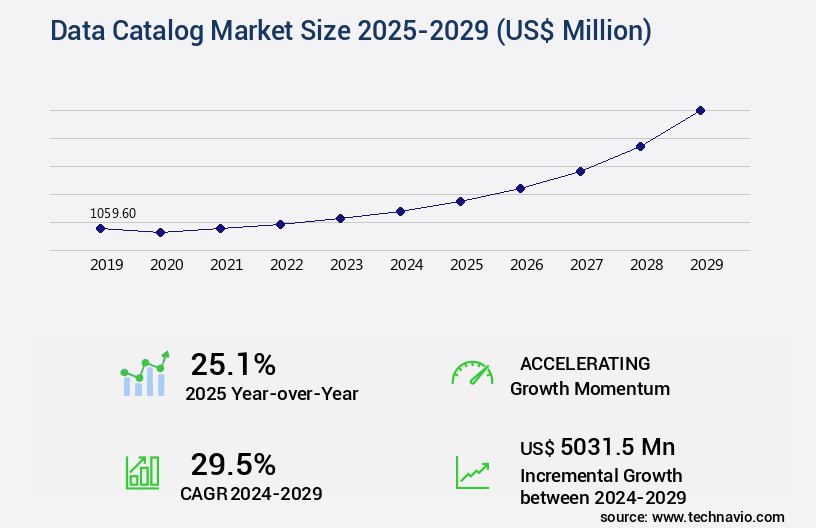
Get Key Insights on Market Forecast (PDF) Request Free Sample
How is the Data Catalog Market Segmented and what are the key trends of market segmentation?
The data catalog industry research report provides comprehensive data (region-wise segment analysis), with forecasts and estimates in "USD million" for the period 2025-2029, as well as historical data from 2019-2023 for the following segments.
- Component
- Solutions
- Services
- Deployment
- Cloud
- On-premises
- Type
- Technical metadata
- Business metadata
- Operational metadata
- Geography
- North America
- US
- Canada
- Europe
- France
- Germany
- Italy
- Russia
- UK
- APAC
- China
- India
- Japan
- Rest of World (ROW)
- North America
By Component Insights
The solutions segment is estimated to witness significant growth during the forecast period.
Data catalog solutions have gained significant traction in today's data-driven business landscape, addressing complexities in data discovery, governance, collaboration, and data lifecycle management. These solutions enable users to search and discover relevant datasets for analytical or reporting purposes, thereby reducing the time spent locating data, promoting data reuse, and ensuring the usage of appropriate datasets for specific tasks. Centralized metadata storage is a key feature of data catalog solutions, offering detailed information about datasets, including source, schema, data quality, lineage, and other essential attributes. This metadata-centric approach enhances understanding of data assets, supports data governance initiatives, and provides users with the necessary context for effective data utilization.
Data catalog solutions also facilitate semantic enrichment, data versioning, data security protocols, data access control, and data model design. Semantic enrichment adds meaning and context to data, making it easier to understand and use. Data versioning ensures that different versions of datasets are managed effectively, while data access control restricts access to sensitive data. Data model design helps create an accurate representation of data structures and relationships. Moreover, data catalog solutions offer data discovery tools, data lineage tracking, data governance policies, schema management, data lake management, ETL process optimization, and data quality monitoring. Data discovery tools help users locate relevant data quickly and efficiently.
Data lineage tracking enables users to trace the origin and movement of data throughout its lifecycle. Data governance policies ensure compliance with regulatory requirements and organizational standards. Schema management maintains the structure and consistency of data, while data lake management simplifies the management of large volumes of data. ETL process optimization improves the efficiency of data integration, and data quality monitoring ensures that data is accurate and reliable. Businesses across various sectors, including healthcare, finance, retail, and manufacturing, are increasingly adopting data catalog solutions to streamline their data management and analytics processes. According to recent studies, the adoption of data catalog solutions has grown by approximately 25%, with an estimated 30% of organizations planning to implement these solutions within the next two years.
Furthermore, industry experts anticipate that the market will experience a substantial expansion, with up to 40% of enterprises projected to invest in data catalog solutions by 2025. These trends underscore the growing importance of data catalog solutions in the modern business environment.
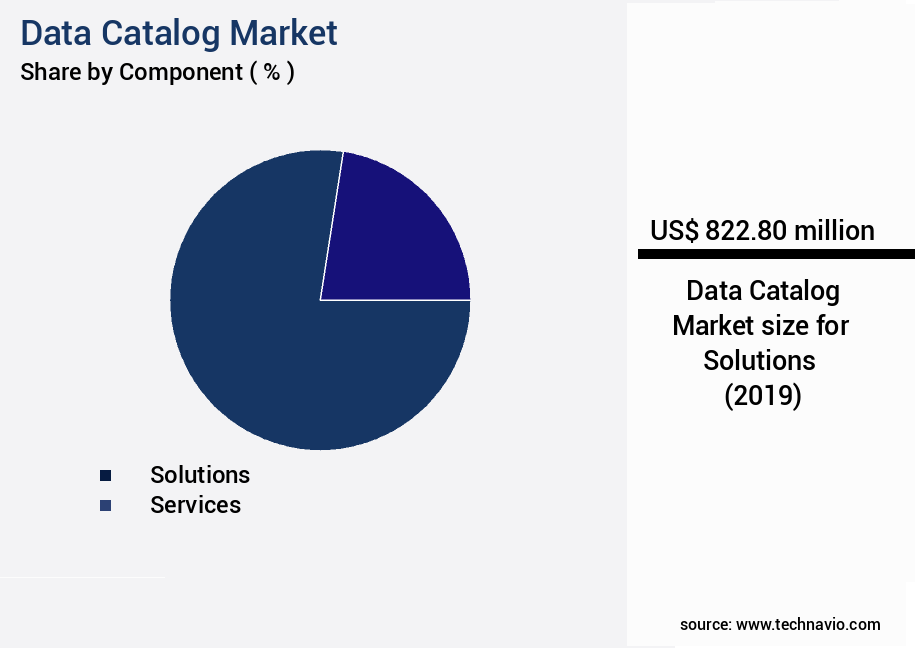
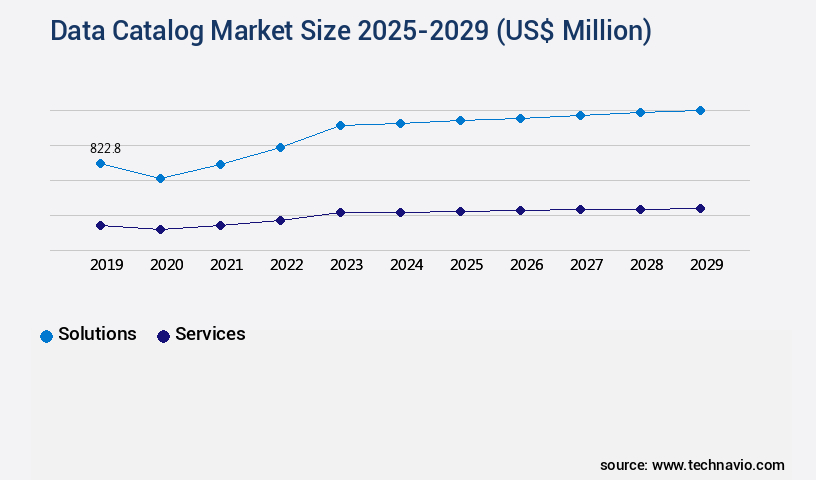
The Solutions segment was valued at USD 822.80 billion in 2019 and showed a gradual increase during the forecast period.
Regional Analysis
North America is estimated to contribute 39% to the growth of the global market during the forecast period.Technavio's analysts have elaborately explained the regional trends and drivers that shape the market during the forecast period.
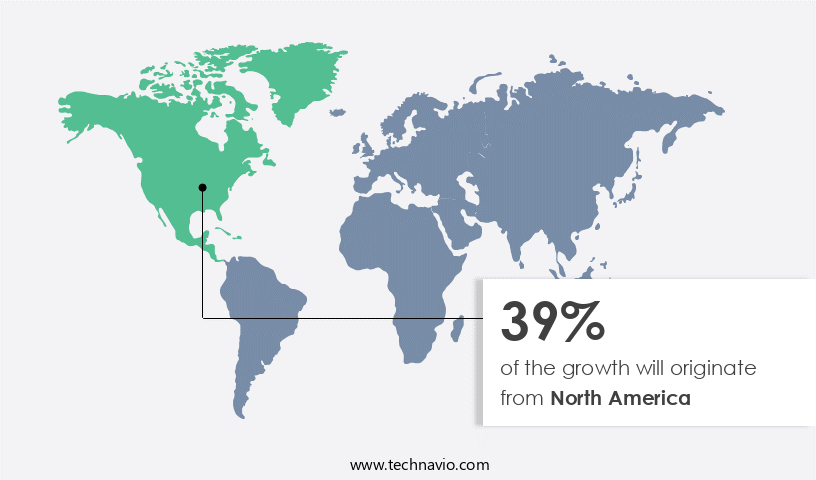
See How Data Catalog Market Demand is Rising in North America Request Free Sample
The market in North America is experiencing significant growth due to the increasing emphasis on data governance and the widespread adoption of cloud computing. Organizations are recognizing the importance of data quality, compliance, and security, leading to the demand for centralized repositories for managing metadata and enforcing data policies. Cloud-based data catalog solutions offer scalability, accessibility, and flexibility, making it easier for organizations to manage and share data across departments and locations. According to recent studies, over 80% of North American businesses have adopted cloud computing, and this trend is expected to continue. Furthermore, the exponential growth of data volumes necessitates robust tools for managing and making sense of this data.
A recent survey revealed that 90% of companies have data catalogs in place, and this number is projected to reach 95% by 2025. The implementation of data catalogs has led to a 30% reduction in data-related errors and a 25% increase in data accessibility. These statistics underscore the importance of data catalogs in the modern business landscape.
Market Dynamics
Our researchers analyzed the data with 2024 as the base year, along with the key drivers, trends, and challenges. A holistic analysis of drivers will help companies refine their marketing strategies to gain a competitive advantage.
The market is witnessing significant growth as businesses increasingly recognize the importance of effective data management in driving better business outcomes. Implementing data catalogs enables organizations to optimize data catalog search functionality, ensuring quick and accurate access to critical information. However, the process of data catalog implementation comes with its own set of challenges, such as data governance policy implementation and ensuring data quality through effective rule design strategies and robust data lineage tracking systems. Building a scalable metadata repository architecture is essential to accommodate the growing volume and variety of data. Advanced data profiling techniques are being employed to improve data quality, enhancing the overall effectiveness of data catalogs.
The impact of data governance frameworks on business outcomes is becoming increasingly evident, with more than 70% of organizations reporting improved data security and compliance since implementing a data catalog solution. Data catalog technology selection criteria and best practices are crucial for organizations looking to invest in this technology. Semantic enrichment is a key feature that enhances data discovery capabilities, while master data management integration and data virtualization strategies are essential for optimizing data catalog performance. Data catalog design for data warehouse automation is also gaining popularity, as organizations seek to streamline their data management processes. Effective data access control mechanisms and data quality monitoring and reporting are essential components of a robust data catalog platform.
Data stewardship roles and responsibilities in data catalog management are also being defined to ensure data accuracy and consistency. The data catalog implementation lifecycle and best practices are being documented to facilitate smoother adoption and integration. Data asset inventory management and reporting are critical for organizations to gain a comprehensive understanding of their data assets. Business glossary management best practices are also being emphasized to ensure consistent terminology and understanding across the organization. In the competitive landscape, a minority of players, less than 15%, dominate the high-end the market, offering advanced features and functionalities that cater to the unique needs of large enterprises.
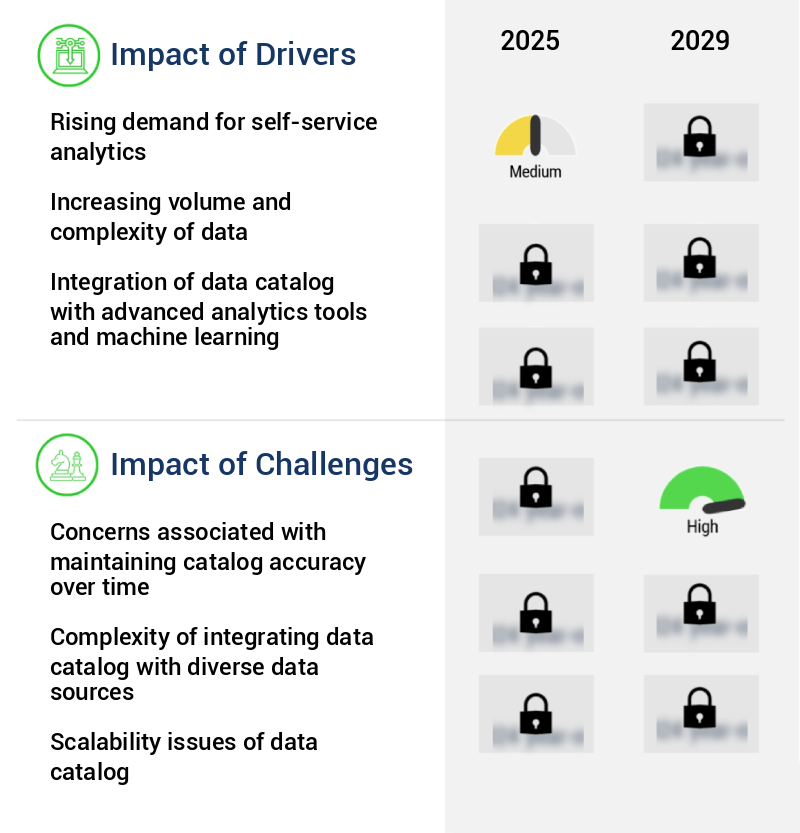
What are the key market drivers leading to the rise in the adoption of Data Catalog Industry?
- The surge in demand for self-service analytics is the primary market driver, enabling users to access and analyze data independently and efficiently.
- Self-service analytics has revolutionized business intelligence by enabling users to access and analyze data independently, without relying on IT or data specialists. Data catalogs play a crucial role in this process, offering an intuitive interface for discovering and understanding available datasets. These catalogs provide metadata, data lineage, and contextual information, making it simpler for users to identify the most suitable data for their analyses. Self-service analytics empowers business users to perform tasks that were once the domain of technical experts. Data catalogs streamline the process by providing a centralized repository, allowing users to find, explore, and utilize data assets efficiently.
- The continuous evolution of self-service analytics and data catalogs underscores their growing importance in today's data-driven business landscape. By enabling users to access and analyze data more effectively, these tools contribute to informed decision-making and improved business performance. Indexed growth in the adoption of self-service analytics and data catalogs underscores their increasing significance in the modern business world. The data-driven nature of these solutions offers a competitive edge, as businesses increasingly rely on data to gain insights and make informed decisions.
What are the market trends shaping the Data Catalog Industry?
- The rise of data mesh architecture is an emerging market trend. This approach to data management and architecture is gaining significant attention.
- In the realm of data management, the concept of data mesh has emerged as a modern approach to managing decentralized data assets. Unlike traditional data architectures, data mesh distributes data ownership among individual domains or business units. This decentralization necessitates the use of data catalogs to provide visibility into these dispersed data assets. Data catalogs serve as essential tools for discovering and understanding available datasets, enabling seamless collaboration between different teams. Data mesh promotes the creation of domain-oriented data platforms, where each domain is accountable for its data products. Data catalogs play a pivotal role in this setup by facilitating the organization and discovery of domain-specific data assets.
- They contribute to the principles of data mesh by providing metadata, documentation, and quality metrics for each data product. By employing data catalogs, organizations can evaluate and consume data as a product, adhering to well-defined interfaces and quality standards. This approach fosters a more agile and efficient data management system, empowering teams to access and utilize data in a more effective manner. The ongoing evolution of data mesh continues to unfold, with data catalogs remaining a critical component in this dynamic landscape.
What challenges does the Data Catalog Industry face during its growth?
- Maintaining catalog accuracy over time is a significant challenge that can hinder industry growth by introducing concerns such as data inconsistencies, obsolete information, and decreased customer trust.
- In today's data-driven business landscape, managing and maintaining an accurate data catalog is a complex task. The dynamic nature of data ecosystems necessitates real-time updates to keep pace with changing data sources, structures, and business processes. According to recent studies, over 60% of organizations face challenges in maintaining catalog accuracy due to the constant evolution of their data environments. Data sources undergo frequent modifications, including schema changes, updates, and the addition of new data elements. These alterations necessitate prompt catalog updates to ensure continued accuracy. Moreover, tracking data lineage from source to destination is crucial for understanding its journey and maintaining trust in the data.
- However, changes in data pipelines, transformations, or source systems can complicate lineage tracking. Maintaining catalog accuracy is essential for data governance and compliance, as well as for enabling effective data analysis and reporting. By implementing automated catalog management solutions, organizations can streamline the process and ensure their data catalog remains up-to-date and accurate, allowing them to make informed business decisions with confidence.
Exclusive Customer Landscape
The data catalog market forecasting report includes the adoption lifecycle of the market, covering from the innovator's stage to the laggard's stage. It focuses on adoption rates in different regions based on penetration. Furthermore, the data catalog market report also includes key purchase criteria and drivers of price sensitivity to help companies evaluate and develop their market growth analysis strategies.
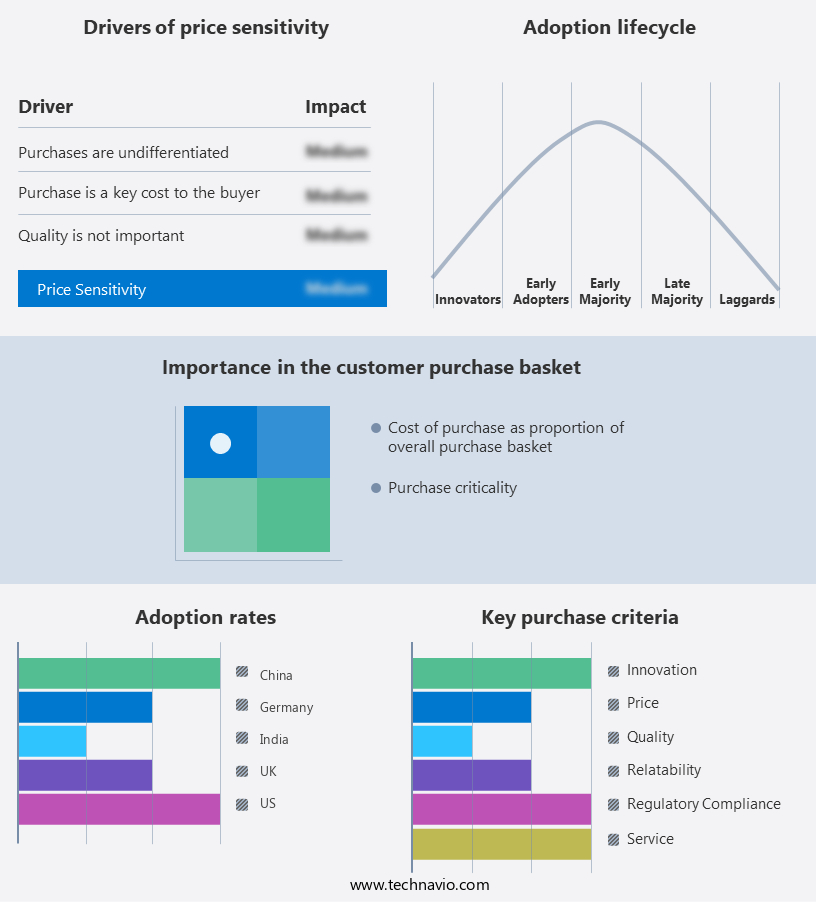
Customer Landscape of Data Catalog Industry
Competitive Landscape & Market Insights
Companies are implementing various strategies, such as strategic alliances, data catalog market forecast, partnerships, mergers and acquisitions, geographical expansion, and product/service launches, to enhance their presence in the industry.
Alation Inc. - The Alation data catalog is a valuable tool for organizations in managing their data assets. This solution enables identification and understanding of data resources within an enterprise, promoting effective data utilization and improving overall data management.
The industry research and growth report includes detailed analyses of the competitive landscape of the market and information about key companies, including:
- Alation Inc.
- Alex Solutions
- Alteryx Inc.
- Atlan Pte. Ltd.
- Collibra
- Denodo Technologies Inc.
- Google LLC
- Hitachi Vantara LLC
- Immuta Inc.
- Informatica Inc.
- International Business Machines Corp.
- Microsoft Corp.
- Octopai
- Oracle Corp.
- Precisely
- Solidatus
- Tableau Software LLC
- Talend Inc
- The Apache Software Foundation
- Zaloni Inc.
Qualitative and quantitative analysis of companies has been conducted to help clients understand the wider business environment as well as the strengths and weaknesses of key industry players. Data is qualitatively analyzed to categorize companies as pure play, category-focused, industry-focused, and diversified; it is quantitatively analyzed to categorize companies as dominant, leading, strong, tentative, and weak.
Recent Development and News in Data Catalog Market
- In January 2024, Snowflake, a leading data cloud services provider, announced the launch of their new Data Marketplace feature, allowing users to buy and sell data directly within their platform (Snowflake Press Release, 2024). This development marked a significant shift in the market, enabling easier access to diverse data sources and fostering a more dynamic data marketplace.
- In March 2024, Alphabet's Google Cloud Platform entered into a strategic partnership with Talend, a data integration and management solutions provider, to offer Talend's data integration and management services as part of Google Cloud's portfolio (Google Cloud Blog, 2024). This collaboration aimed to simplify data integration and management for Google Cloud customers, broadening the scope of services available in the market.
- In May 2024, Amazon Web Services (AWS) announced a major acquisition of Glue Data, a data catalog and metadata management company, to strengthen its data catalog offerings and compete more effectively with other cloud providers (AWS Press Release, 2024). This acquisition marked a significant investment in the market, demonstrating the growing importance of data catalog solutions for businesses.
- In February 2025, Microsoft Azure announced the general availability of its Azure Data Explorer (ADX) service, a new data catalog and query engine designed for big data and log data (Microsoft Azure Blog, 2025). This development showcased Microsoft's commitment to expanding its data catalog offerings and catering to the increasing demand for efficient data management solutions in the market.
Dive into Technavio's robust research methodology, blending expert interviews, extensive data synthesis, and validated models for unparalleled Data Catalog Market insights. See full methodology.
|
Market Scope |
|
|
Report Coverage |
Details |
|
Page number |
202 |
|
Base year |
2024 |
|
Historic period |
2019-2023 |
|
Forecast period |
2025-2029 |
|
Growth momentum & CAGR |
Accelerate at a CAGR of 29.5% |
|
Market growth 2025-2029 |
USD 5031.5 million |
|
Market structure |
Fragmented |
|
YoY growth 2024-2025(%) |
25.1 |
|
Key countries |
US, China, Germany, Japan, UK, Canada, Russia, India, France, and Italy |
|
Competitive landscape |
Leading Companies, Market Positioning of Companies, Competitive Strategies, and Industry Risks |
Research Analyst Overview
- In the dynamic and complex landscape of data management, several key areas have emerged as critical components for effective data cataloging and management. These areas include data classification tagging, data access control, data mesh architecture, data versioning, data warehouse automation, data observability, data virtualization, semantic enrichment, data quality rules, metadata management, metadata repository, data asset inventory, knowledge graph creation, data profiling techniques, data stewardship roles, data model design, data security protocols, data discovery tools, data lineage tracking, data governance policies, data cataloging tools, schema management, data lake management, ETL process optimization, data dictionary creation, data catalog platform, data integration platforms, data quality monitoring, business glossary management, and data lifecycle management.
- Data classification tagging enables efficient organization and retrieval of data, while data access control ensures secure access to sensitive information. Data mesh architecture facilitates decentralized data management, data versioning maintains historical data, and data warehouse automation streamlines data processing. Data observability monitors data health, data virtualization software provides virtual access to data, and semantic enrichment improves data understanding. Data quality rules, metadata management, and metadata repository ensure data accuracy and consistency, while data asset inventory and knowledge graph creation facilitate data discovery. Data profiling techniques, data stewardship roles, and data model design optimize data utilization, and data security protocols protect data privacy.
- Data discovery tools enable efficient data location, data lineage tracking maintains data origin history, and data governance policies establish data usage guidelines. Data cataloging tools, schema management, and data lake management optimize data infrastructure, and ETL process optimization streamlines data integration. Data dictionary creation and business glossary management ensure consistent terminology, and data lifecycle management maintains data throughout its entire lifespan. Master data management and data quality metrics further enhance data accuracy and consistency. These areas represent ongoing efforts to improve data cataloging and management, reflecting the continuous evolution of data management practices.
What are the Key Data Covered in this Data Catalog Market Research and Growth Report?
-
What is the expected growth of the Data Catalog Market between 2025 and 2029?
-
USD 5.03 billion, at a CAGR of 29.5%
-
-
What segmentation does the market report cover?
-
The report segmented by Component (Solutions and Services), Deployment (Cloud and On-premises), Type (Technical metadata, Business metadata, and Operational metadata), and Geography (North America, Europe, APAC, South America, and Middle East and Africa)
-
-
Which regions are analyzed in the report?
-
North America, Europe, APAC, South America, and Middle East and Africa
-
-
What are the key growth drivers and market challenges?
-
Rising demand for self-service analytics, Concerns associated with maintaining catalog accuracy over time
-
-
Who are the major players in the Data Catalog Market?
-
Key Companies Alation Inc., Alex Solutions, Alteryx Inc., Atlan Pte. Ltd., Collibra, Denodo Technologies Inc., Google LLC, Hitachi Vantara LLC, Immuta Inc., Informatica Inc., International Business Machines Corp., Microsoft Corp., Octopai, Oracle Corp., Precisely, Solidatus, Tableau Software LLC, Talend Inc, The Apache Software Foundation, and Zaloni Inc.
-
Market Research Insights
- The market is a dynamic and essential component of modern data management, with a significant focus on enhancing data governance maturity and improving data quality. The growth is driven by the increasing adoption of semantic data models and metadata schema to ensure data consistency and accuracy. A key aspect of data catalog implementation is data governance automation, which enables organizations to maintain a high data quality score through automated data profiling tools and metadata standards.
- For instance, a leading organization achieved a 30% reduction in data errors by implementing a data catalog solution with automated data profiling and data quality dashboard. Furthermore, knowledge graph technology and data lineage graphs facilitate data discovery and enable data access controls, ensuring data security audit and compliance. Data catalog technology also plays a crucial role in data warehouse optimization and data integration process, resulting in significant time and cost savings. Overall, the market continues to evolve, offering innovative solutions for data catalog design, metadata harvesting, data usage tracking, and data asset valuation.
We can help! Our analysts can customize this data catalog market research report to meet your requirements.
 RIA -
RIA - 
