



Digital Product Passport Platforms For Manufacturing Market Size and Growth Forecast 2026-2030
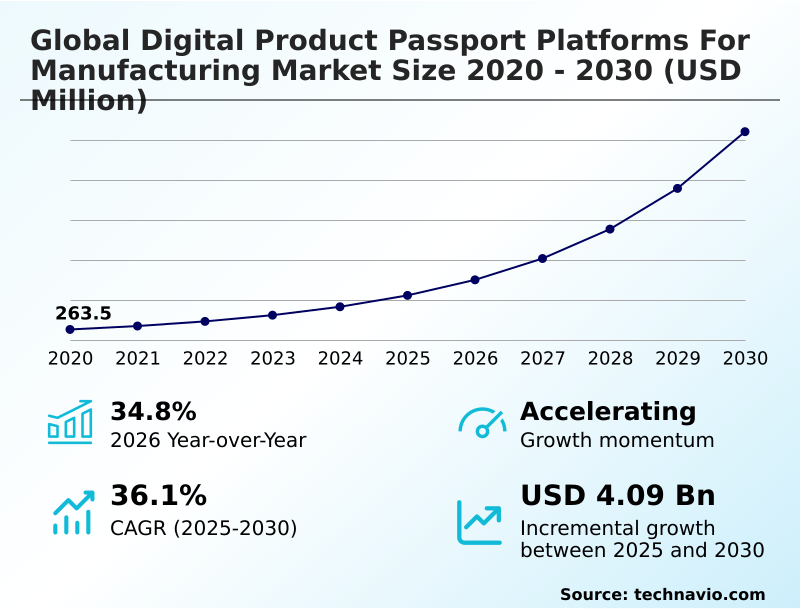
The Digital Product Passport Platforms For Manufacturing Market size was valued at USD 1.12 billion in 2025 growing at a CAGR of 36.1% during the forecast period 2026-2030.
Europe accounts for 38.1% of incremental growth during the forecast period. The Software segment by Component was valued at USD 565.2 million in 2024, while the Cloud based segment holds the largest revenue share by Deployment.
The market is projected to grow by USD 4.94 billion from 2020 to 2030, with USD 4.09 billion of the growth expected during the forecast period of 2025 to 2030.
Get Key Insights on Market Forecast (PDF) Request Free Sample
Digital Product Passport Platforms For Manufacturing Market Overview
The digital product passport platforms for manufacturing market is advancing rapidly, with a year-over-year growth of 34.8% driven by the non-negotiable demand for supply chain transparency. Mandates like the EU's Ecodesign for Sustainable Products Regulation (ESPR) are compelling organizations to adopt systems that provide an immutable data record of a product's journey. Europe leads this adoption, accounting for over 38% of the incremental growth. In practice, an automotive OEM deploying a platform can achieve ethical sourcing verification for its EV battery supply chain. By using smart sensor data for real-time data collection, the OEM can perform precise material provenance tracking for cobalt and lithium, from mine to factory. This enables accurate carbon footprint calculation for each vehicle and streamlines end-of-life management by providing recyclers with detailed material composition data, turning a compliance necessity into a competitive advantage. This level of granular detail, supported by blockchain-based traceability, is becoming standard vendor qualification criteria for suppliers aiming to participate in advanced manufacturing ecosystems, moving beyond simple compliance to active asset lifecycle management.
Drivers, Trends, and Challenges in the Digital Product Passport Platforms For Manufacturing Market
Procurement decision-makers now focus on how to implement a digital product passport, moving beyond the digital product passport vs digital twin debate to see them as complementary. For sectors facing stringent DPP compliance for electronics manufacturing, the cost of implementing a digital product passport is a critical investment.
The core benefits of DPP for circular economy are clear, but the secure sharing of proprietary manufacturing data remains a primary concern. A textile firm using blockchain for supply chain traceability in textiles must provide ESG data verification without exposing its unique processes, highlighting data privacy challenges in digital passports.
Meanwhile, automotive digital product passport requirements, especially the digital product passport for EV batteries, and the digital passport for chemical industry compliance under REACH, are setting new standards. A key goal is achieving interoperability in DPP platforms, as DPP integration with legacy ERP systems is complex.
Using IoT for real-time supply chain tracking helps, with cloud solutions growing nearly twice as fast as on-premise deployments. The ROI calculation for a digital product passport now includes factors like DPP and ESG reporting automation and verifying responsible sourcing with blockchain.
This extends to managing end-of-life data for electronics and even the digital product passport for food and beverage, creating new circular economy business models with DPP.
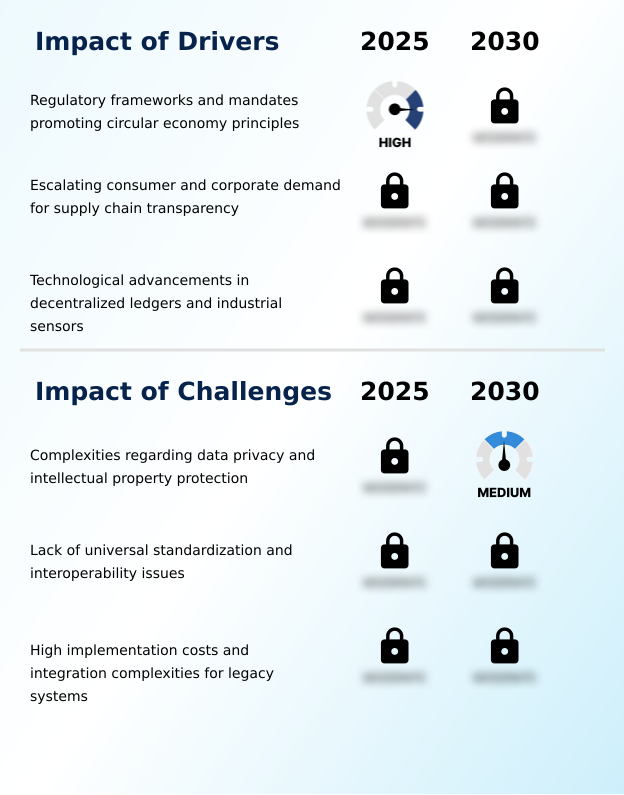
Primary Growth Driver: The primary market driver is the proliferation of regulatory frameworks and mandates designed to promote circular economy principles.
Market expansion, accelerating at a 34.8% year-over-year growth rate, is primarily driven by rigorous regulatory enforcement and escalating stakeholder demands.
Governments are mandating sustainable manufacturing practices and adherence to circular economy principles through frameworks like the ESPR, making regulatory compliance software a necessity.
Simultaneously, consumers and B2B partners demand greater supply chain visibility and ethical sourcing verification, pushing companies to provide transparent environmental impact reporting.
Digital product passports provide the foundational infrastructure to meet these dual pressures, offering an immutable record of a product's lifecycle.
This allows brands to substantiate their sustainability claims, mitigate reputational risk associated with greenwashing, and secure a competitive advantage in an increasingly conscious marketplace.
Emerging Market Trend: The integration of digital twins with product passport data represents a primary market trend. This synergy enables advanced predictive maintenance capabilities and optimizes complete asset lifecycle management.
Key market trends are moving beyond simple compliance toward value creation through data. The convergence of digital product passports with digital twin integration is creating dynamic virtual models for predictive maintenance and enhanced asset lifecycle management. This trend is particularly strong in the automotive sector, which accounts for over 27% of end-user demand.
Concurrently, enterprises are exploring data monetization strategies, transforming compliance data into a revenue stream by offering servitization models based on verified performance metrics. This shift is fueling the development of open architecture frameworks to ensure cross-industry interoperability, allowing data to flow seamlessly between different platforms and preventing vendor lock-in.
These trends signal a maturation of the market, where passports evolve from static records to active drivers of operational efficiency and profitability.
Key Industry Challenge: A key challenge affecting industry growth involves the complexities of ensuring data privacy while protecting intellectual property.
Significant market challenges stem from technical complexity and data governance issues. The high cost of implementing digital product passport systems, where software alone can represent over 68% of the initial market value, is a major barrier for SMEs. Furthermore, the complexities of DPP integration with legacy ERP systems create significant technical hurdles.
The most critical restraint, however, involves data privacy challenges in digital passports. Manufacturers are hesitant to adopt platforms without guaranteed secure data sharing protocols that can protect sensitive intellectual property from competitors.
While solutions like decentralized identity management offer a path forward, achieving a balance between transparency and confidentiality remains a profound challenge, hindering widespread adoption until universally trusted standards are established.
Explore Full Market Dynamics Analysis Request Free Sample
Digital Product Passport Platforms For Manufacturing Market Segmentation
The digital product passport platforms for manufacturing industry research report provides comprehensive data including region-wise segment analysis, with forecasts and analysis for the period 2026-2030, as well as historical data from 2020-2024 for the following segments.
Component Segment Analysis
The software segment is estimated to witness significant growth during the forecast period.
The market is segmented by component, deployment, end-user, and geography. The software segment, accounting for over two-thirds of the market, provides the core infrastructure for digital product passport platforms for manufacturing.
These solutions are critical for collecting, managing, and sharing complex product data. Modern platforms incorporate decentralized ledger technology for an immutable data record and facilitate secure data sharing across supply chains.
Key functionalities include advanced product lifecycle management (PLM), regulatory compliance software modules for standards like REACH, and streamlined enterprise resource planning (erp) integration.
By enabling blockchain-based traceability of material composition data from origin to end-of-life, this software is foundational for achieving supply chain transparency and supporting circular economy principles, meeting demands for verifiable environmental impact reporting.
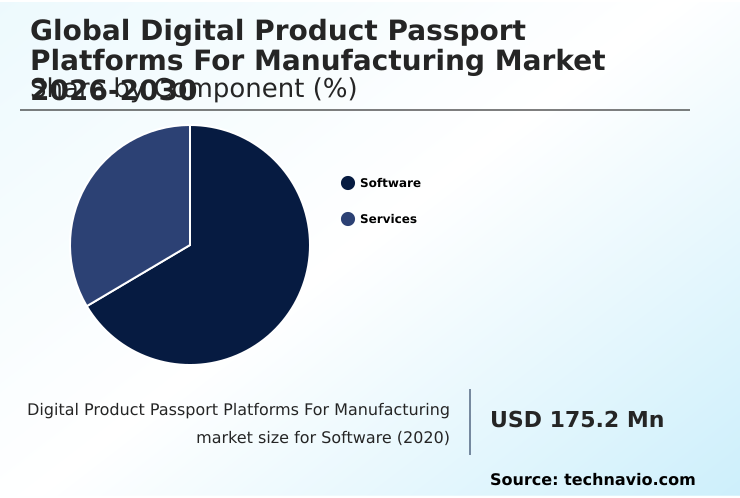
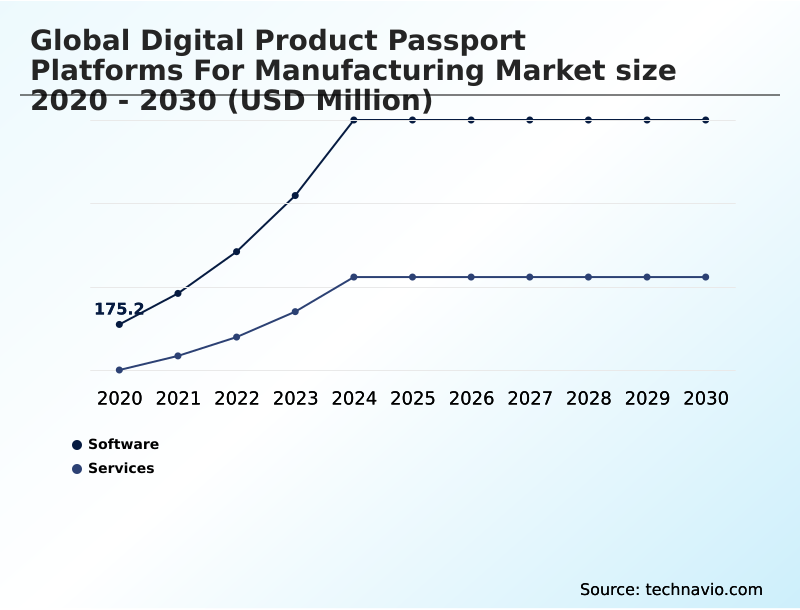
The Software segment was valued at USD 565.2 million in 2024 and showed a gradual increase during the forecast period.
Digital Product Passport Platforms For Manufacturing Market by Region: Europe Leads with 38.1% Growth Share
Europe is estimated to contribute 38.1% to the growth of the global market during the forecast period.
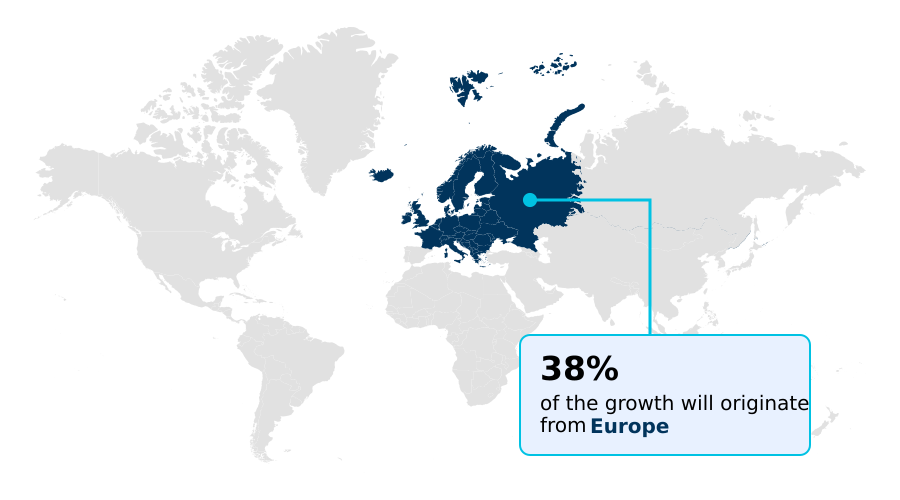
The geographic landscape for digital product passport platforms is led by Europe, which accounts for 38.13% of the market's growth, largely propelled by stringent mandates like the Ecodesign for Sustainable Products Regulation (ESPR).
This regulatory pressure forces manufacturers to prioritize comprehensive environmental impact reporting and supply chain due-diligence.
In contrast, North America, contributing 30.39% to growth, is driven by enterprise-led initiatives focused on technological advantage and operational efficiency, emphasizing digital thread continuity and component authenticity verification.
Across both regions, a key focus is achieving cross-industry interoperability to ensure that data from a unique digital identity is readable across disparate systems, which is critical for complex sectors like aerospace and automotive where lifecycle assessment (LCA) is paramount.
Customer Landscape Analysis for the Digital Product Passport Platforms For Manufacturing Market
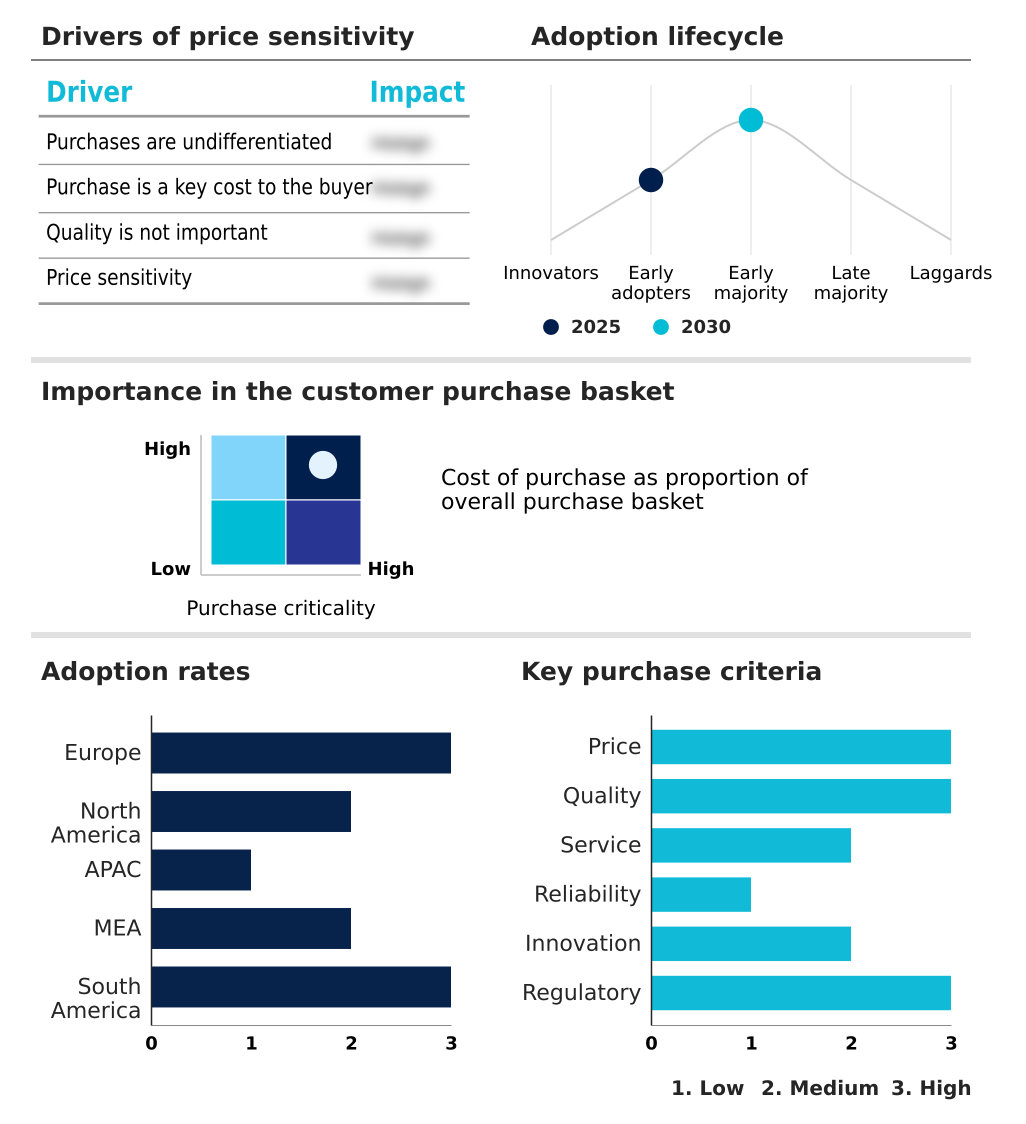
The digital product passport platforms for manufacturing market forecasting report includes the adoption lifecycle of the market, covering from the innovator’s stage to the laggard’s stage. It focuses on adoption rates in different regions based on penetration. Furthermore, the digital product passport platforms for manufacturing market report also includes key purchase criteria and drivers of price sensitivity to help companies evaluate and develop their market growth analysis strategies.
Competitive Landscape of the Digital Product Passport Platforms For Manufacturing Market
Companies are implementing various strategies, such as strategic alliances, partnerships, mergers and acquisitions, geographical expansion, and product/service launches, to enhance their presence in the digital product passport platforms for manufacturing market industry.
Arianee - Specialized platforms enable secure lifecycle data sharing across supply chains using proprietary smart questioning technology, protecting intellectual property while ensuring material traceability.
The industry research and growth report includes detailed analyses of the competitive landscape of the market and information about key companies, including:
- Arianee
- Authena AG
- Avery Dennison Corp.
- BanQu
- Circularise
- Circulor
- Dassault Systemes SE
- DNV Group AS
- IBM Corp.
- iPoint-systems gmbh
- Kezzler AS
- Minespider GmbH
- Protokol B.V.
- PSQR
- PTC Inc.
- SAP SE
- Siemens AG
- Spherity GmbH
- TrusTrace
Qualitative and quantitative analysis of companies has been conducted to help clients understand the wider business environment as well as the strengths and weaknesses of key industry players. Data is qualitatively analyzed to categorize companies as pure play, category-focused, industry-focused, and diversified; it is quantitatively analyzed to categorize companies as dominant, leading, strong, tentative, and weak.
Recent Developments in the Digital Product Passport Platforms For Manufacturing Market
- In March, 2025, Siemens completed the acquisition of Altair Engineering as part of its strategy to build a comprehensive AI-enabled industrial software portfolio, integrating Altair’s simulation and HPC capabilities into the Siemens Xcelerator platform to strengthen its end-to-end digital offerings.
- In February, 2025, a consortium of leading manufacturers including BASF, BMW, CATL, Henkel, and Siemens launched the Path.Era Digital Product Passport (DPP) system, a digital battery passport designed to collect and consolidate essential lifecycle data to enhance transparency and sustainability in the battery value chain.
- In December, 2024, the Bangladesh Garment Manufacturers and Exporters Association (BGMEA) partnered with GarmentTechBD.org to roll out a Digital Product Passport (DPP) program via the GarmentTech.express platform, aiming to improve supply chain transparency for the country's apparel industry.
- In October, 2024, Intertek introduced an enhanced suite of Digital Product Passport (DPP) solutions, including a comprehensive advisory component to help manufacturers and retailers navigate evolving regulatory requirements for circular economy compliance.
Research Analyst Overview: Digital Product Passport Platforms For Manufacturing Market
The market's trajectory is dictated by the operational need for end-to-end supply chain transparency, a mandate now enforced by regulations like the ESPR in Europe, which commands over 38% of the market. Boardroom decisions now pivot on capital allocation for overhauling legacy systems versus adopting modular regulatory compliance software.
The core technology, decentralized ledger technology, provides an immutable data record crucial for esg data verification and material provenance tracking. This is enabled by the industrial internet of things (iiot) for real-time data collection, feeding into product lifecycle management (plm) systems. A successful platform provides a unique digital identity for item-level traceability, often through a serialization platform.
This digital twin integration allows for precise carbon footprint calculation and effective end-of-life management. Advanced platforms leverage virtual twin technology and supply chain intelligence for deeper insights. The goal is achieving secure data sharing of material composition data via blockchain-based traceability, often using smart questioning technology or decentralized identity management to protect IP.
This entire ecosystem supports a shift towards the circular economy principles by making lifecycle assessment (lca) data on the product carbon footprint (pcf) accessible and verifiable.
Dive into Technavio’s robust research methodology, blending expert interviews, extensive data synthesis, and validated models for unparalleled Digital Product Passport Platforms For Manufacturing Market insights. See full methodology.
| Market Scope | |
|---|---|
| Page number | 308 |
| Base year | 2025 |
| Historic period | 2020-2024 |
| Forecast period | 2026-2030 |
| Growth momentum & CAGR | Accelerate at a CAGR of 36.1% |
| Market growth 2026-2030 | USD 4092.7 million |
| Market structure | Fragmented |
| YoY growth 2025-2026(%) | 34.8% |
| Key countries | Germany, UK, France, Italy, Spain, The Netherlands, US, Canada, Mexico, China, India, Japan, South Korea, Australia, Indonesia, Saudi Arabia, UAE, South Africa, Israel, Turkey, Brazil, Argentina and Colombia |
| Competitive landscape | Leading Companies, Market Positioning of Companies, Competitive Strategies, and Industry Risks |
Digital Product Passport Platforms For Manufacturing Market: Key Questions Answered in This Report
-
What is the expected growth of the Digital Product Passport Platforms For Manufacturing Market between 2026 and 2030?
-
The Digital Product Passport Platforms For Manufacturing Market is expected to grow by USD 4.09 billion during 2026-2030, registering a CAGR of 36.1%. Year-over-year growth in 2026 is estimated at 34.8%%. This acceleration is shaped by regulatory frameworks and mandates promoting circular economy principles, which is intensifying demand across multiple end-use verticals covered in the report.
-
-
What segmentation does the market report cover?
-
The report is segmented by Component (Software, and Services), Deployment (Cloud based, On premises, and Hybrid), End-user (Automotive and mobility, Electronics and electricals, Industrial and chemicals, Textile and apparel, and Food and beverages) and Geography (Europe, North America, APAC, Middle East and Africa, South America). Among these, the Software segment is estimated to witness significant growth during the forecast period, driven by rising adoption across key application areas. Each segment includes detailed qualitative and quantitative analysis, along with historical data from 2020-2024 and forecasts through 2030 with year-over-year growth rates.
-
-
Which regions are analyzed in the report?
-
The report covers Europe, North America, APAC, Middle East and Africa and South America. Europe is estimated to contribute 38.1% to market growth during the forecast period. Country-level analysis includes Germany, UK, France, Italy, Spain, The Netherlands, US, Canada, Mexico, China, India, Japan, South Korea, Australia, Indonesia, Saudi Arabia, UAE, South Africa, Israel, Turkey, Brazil, Argentina and Colombia, with dedicated market size tables and year-over-year growth for each.
-
-
What are the key growth drivers and market challenges?
-
The primary driver is regulatory frameworks and mandates promoting circular economy principles, which is accelerating investment and industry demand. The main challenge is complexities regarding data privacy and intellectual property protection, creating operational barriers for key market participants. The report quantifies the impact of each driver and challenge across 2026 and 2030 with comparative analysis.
-
-
Who are the major players in the Digital Product Passport Platforms For Manufacturing Market?
-
Key vendors include Arianee, Authena AG, Avery Dennison Corp., BanQu, Circularise, Circulor, Dassault Systemes SE, DNV Group AS, IBM Corp., iPoint-systems gmbh, Kezzler AS, Minespider GmbH, Protokol B.V., PSQR, PTC Inc., SAP SE, Siemens AG, Spherity GmbH and TrusTrace. The report provides qualitative and quantitative analysis categorizing companies as dominant, leading, strong, tentative, and weak based on their market positioning. Company profiles include business segment analysis, SWOT assessment, key offerings, and recent strategic developments.
-
Digital Product Passport Platforms For Manufacturing Market Research Insights
The market is fundamentally reshaped by the need for enhanced supply chain visibility, with cloud-based platforms seeing adoption rates more than double that of on-premise solutions. This shift is driven by the need for scalable and accessible data to support greenwashing prevention and comply with regulations like RoHS.
Successful deployment hinges on seamless enterprise resource planning (erp) integration, which transforms static product data into actionable intelligence. This enables advanced predictive maintenance capabilities and supports new servitization models where revenue is tied to asset performance.
Furthermore, these platforms are instrumental in executing effective remanufacturing and recycling protocols, providing the granular data needed to manage assets sustainably at their end of life and validating ethical sourcing verification claims.
We can help! Our analysts can customize this digital product passport platforms for manufacturing market research report to meet your requirements.
 RIA -
RIA - 
