


Dust Control Systems Market Size 2024-2028
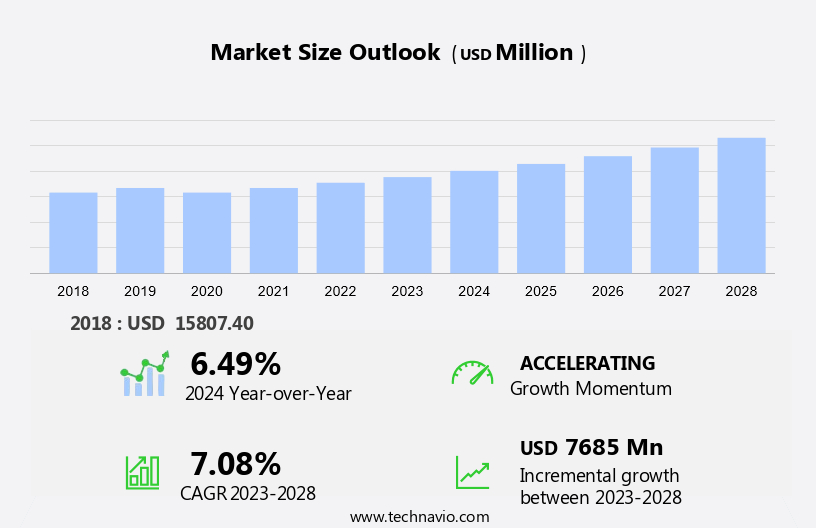
The dust control systems market size is forecast to increase by USD 7.69 billion at a CAGR of 7.08% between 2023 and 2028. The market is experiencing significant growth due to the increasing economic activity and rapid industrialization in various sectors such as mining, construction, and power generation. This growth is driven by the development of innovative products designed to address the high cost and ineffective deployment of traditional dust control systems. Key trends in the market include the adoption of advanced technologies like electrostatic precipitators, fabric filters, and wet scrubbers, as well as the integration of IoT and automation in dust control systems for improved efficiency and productivity. However, challenges persist, including the high initial investment costs, complex regulatory requirements, and the need for ongoing maintenance and replacement of filters and other components. Despite these challenges, the market is expected to continue growing due to the increasing demand for cleaner and healthier work environments and stricter regulations on air quality.
The market is driven by various macroeconomic and microeconomic factors. Macroeconomic factors include the growth of industries such as construction, mining, wood processing, farming, and others, which generate large amounts of dust and require effective control systems. Microeconomic factors include the increasing awareness of air quality and health concerns, leading to stricter regulations on dust emissions. On the supply side, component suppliers play a crucial role in providing raw materials and technologies for dust control systems. Wet and dry systems are commonly used, with wet scrubbers being a popular choice due to their high efficiency. The mining, oil and gas, chemical, textile, pharmaceutical, food and beverage, power utility, metal, and other industries are significant consumers of dust control systems.
Furthermore, the regulatory side plays a significant role in the market growth, with various regulations being implemented to control dust emissions. For instance, the Occupational Safety and Health Administration (OSHA) in the US sets standards for permissible dust levels in workplaces. In the RoW, governments are also implementing regulations to reduce dust emissions from industries and improve air quality. The demand side includes construction and mining contractors, farmers, and various industries. In the residential sector, there is an increasing trend towards the use of industrial air filters to improve indoor air quality. Overall, the market is expected to grow significantly in the coming years due to the increasing demand for cleaner air and stricter regulations.
Market Segmentation
The market research report provides comprehensive data (region-wise segment analysis), with forecasts and estimates in "USD Billion" for the period 2024-2028, as well as historical data from 2018-2022 for the following segments.
- End-user
- Construction
- Mining and metallurgy
- Energy
- Chemical
- Others
- Geography
- APAC
- China
- India
- Japan
- North America
- US
- Europe
- Germany
- Middle East and Africa
- South America
- APAC
By End-user Insights
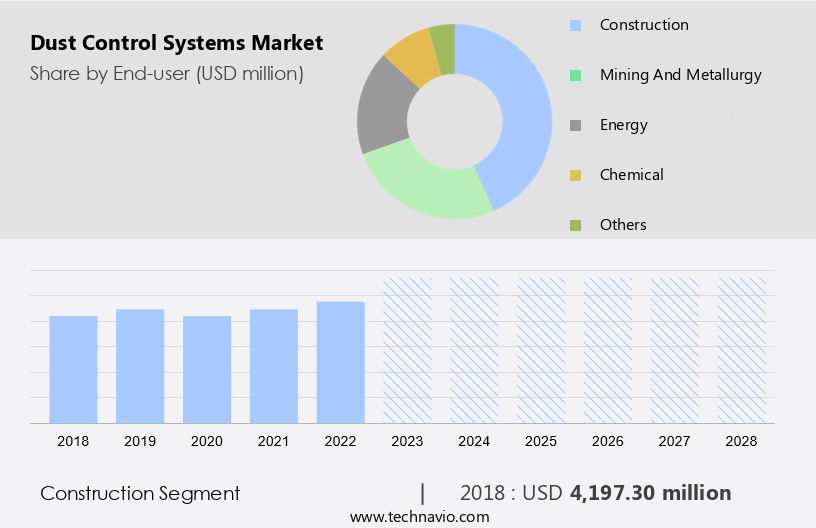
The construction segment is estimated to witness significant growth during the forecast period. The market is influenced by both macroeconomic and microeconomic factors. Macroeconomic factors include industrial growth, urbanization, and infrastructure development in the Region of the World (RoW). On the supply side, the market is driven by the availability of advanced technologies such as wet and dry dust control systems, which include wet scrubbers, wet electrostatic precipitators, bag dust collectors, electrostatic dust collectors, vacuum dust collectors, modular dust collectors, cyclones, mobile controllers, and fixed controllers. Demand for dust control systems is primarily driven by industries such as mining, oil, gas, chemical, textile, pharmaceutical, food, beverage, power, utility, and metal. Construction contractors, wood processing, and farmers also require dust control systems for hazardous dust prevention and environmental preservation.
Furthermore, regulatory bodies play a significant role in driving the market, with stringent regulations on industrial air quality and workplace safety. Industrial Air Filters are essential components in these systems, ensuring air quality in the Residential and Commercial sectors, Construction Sites, and various industries. Major component suppliers dominate the market, providing solutions for various industries' specific requirements. The market is segmented based on technology, application, and region. The mining industry's significant demand for dust control systems is attributed to the need to comply with regulatory requirements and ensure worker safety. The oil, gas, and chemical industries also have a high demand due to the production processes' inherent dust generation.
In conclusion, the market is a growing industry, driven by macroeconomic factors, microeconomic factors, and regulatory requirements. The market caters to various industries, including construction, mining, wood processing, farming, and various manufacturing sectors. Component suppliers play a crucial role in providing advanced technologies to meet the industry's specific requirements, ensuring air quality and environmental preservation.
Get a glance at the market share of various segments Request Free Sample
The construction segment was valued at USD 4.19 billion in 2018 and showed a gradual increase during the forecast period.
Regional Insights
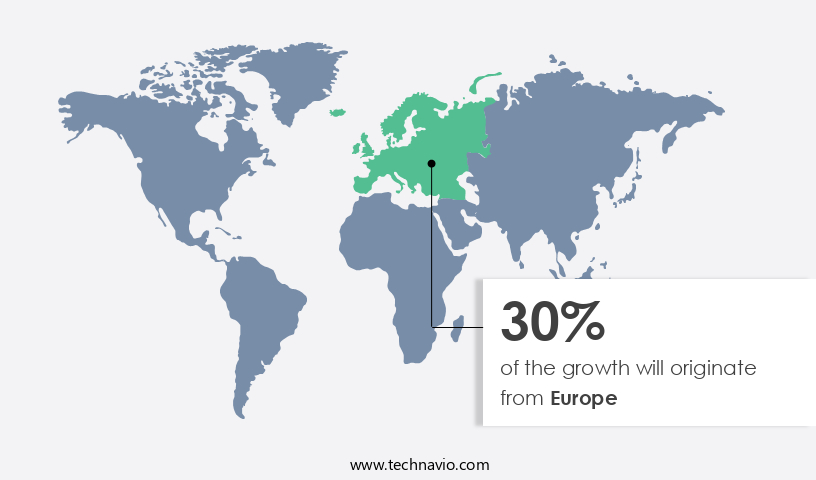
Europe is estimated to contribute 30% to the growth of the global market during the forecast period. Technavio's analysts have elaborately explained the regional trends and drivers that shape the market during the forecast period.
For more insights on the market share of various regions Request Free Sample
The market is influenced by both macroeconomic and microeconomic factors in the region of the world (RoW). Macroeconomic factors include industrial growth, urbanization, and infrastructure development. Microeconomic factors comprise pricing trends, technological advancements, and competitive dynamics. Supply-side factors include the availability and cost of raw materials, while demand-side factors are driven by construction, mining contractors, wood processing, farmers, and component suppliers. Regulations and standards play a significant role on the regulatory side, with stringent norms for air quality in industries such as mining, oil, gas, chemical, textile, pharmaceutical, food, beverage, power, utility, and metal. Wet and dry dust control technologies, including wet scrubbers, wet electrostatic precipitators, bag dust collectors, electrostatic dust collectors, vacuum dust collectors, modular dust collectors, cyclones, mobile controllers, and fixed controllers, are employed to mitigate hazardous dust and preserve the environment.
Furthermore, industrial Air Filters are crucial in the residential and commercial sectors, as well as construction sites, to ensure clean indoor air quality. The market is further segmented based on application, technology, end-use industry, and region. Key players in the market include leading component suppliers and system integrators.
Our researchers analyzed the data with 2023 as the base year, along with the key drivers, trends, and challenges. A holistic analysis of drivers will help companies refine their marketing strategies to gain a competitive advantage.
Market Driver
Increasing economic activity and rapid industrialization is the key driver of the market. The manufacturing and construction sectors have witnessed significant growth due to increasing economic activity and industrialization. This expansion has led to an increase in emissions, particularly in the form of dust. To mitigate the environmental impact and ensure compliance with air pollution norms, the implementation of dust control systems has become essential. The food and beverage industry, with its growing market and increasing demand for packaged food, is a key consumer of dust control systems. Mining activities and the expansion of mineral processing and metallurgy industries further boost the demand. Advancements in technology, such as artificial intelligence and nanotechnology, are being integrated into dust control systems to lower maintenance costs and improve efficiency.
Furthermore, dust capturing, conveying, and collection systems are being developed using wet and dry methods, as well as mobile and fixed solutions. New product launches in the market include air filtration systems and dust suppression technologies. Safety measures are a top priority in industries prone to respiratory problems and brain complications caused by dust exposure. Dust control products are essential in road maintenance and construction to ensure clean water and air, in line with regulations such as the Clean Water Act and Federal Water Quality Standards. Adherence to these norms is crucial to prevent health hazards and minimize the environmental impact.
Market Trends
The development of innovative products is the upcoming trend in the market. Advanced technologies, including artificial intelligence (AI), machine learning (ML), and the Internet of Things (IoT), are revolutionizing the market. Manufacturers in the construction sector are increasingly adopting these technologies to reduce maintenance costs and improve efficiency. For instance, Donaldson's Packaged Downflo Evolution (DFEP) and Torit Downflo Evolution dust collectors utilize preassembled components with integrated electrical controls, motors, and fans, enabling easy installation and operation. These systems collect industrial dust and fumes, contributing to health awareness by mitigating respiratory problems and brain complications. Moreover, dust control systems play a crucial role in addressing water and air pollution concerns. Compliance with regulations such as the Clean Water Act and Federal Water Pollution Control Act is essential.
Furthermore, wet dust control methods are gaining popularity due to their effectiveness in reducing dust generation and minimizing environmental impact. New product launches in the market include both wet and dry dust control systems, as well as mobile and fixed solutions. Air filtration technologies, such as Donaldson's next-generation sterile air filters in its P-SRF line, improve air quality and reduce production costs. Adherence to air pollution norms is crucial for maintaining safety measures and ensuring a healthy work environment.
Market Challenge
The high cost and ineffective deployment of dust control systems. is a key challenge affecting the market growth. Dust control systems are essential for various manufacturing and construction sectors to mitigate the environmental impact and health risks associated with air and water pollution. The manufacturing industry generates significant amounts of dust during production processes, necessitating the implementation of effective dust control solutions. In contrast, the construction sector requires dust suppression methods during road maintenance and demolition activities. Advancements in technology, such as artificial intelligence and nanotechnology, have led to the development of innovative dust control products. These include water-based dust suppression systems, wet and dry dust control methods, mobile and fixed systems, and air filtration technologies. Despite their benefits, dust control systems entail a substantial capital expenditure (CAPEX) due to the customized nature of the solutions required by different industries.
Furthermore, the varying needs of industries, ranging from continuous dust generation to intermittent dust production, necessitate customized systems. Moreover, the high cost of maintenance, including filter replacements, part replacement, and energy consumption, further increases the overall cost. Regulatory standards, such as the Clean Water Act and Federal Water Quality Standards, mandate stringent air pollution norms. Compliance with these norms requires the implementation of efficient dust control systems. Failure to adhere to these regulations can result in respiratory problems, brain complications, and other health risks for workers and the general population. New product launches in the market, including advanced dust control technologies, aim to reduce maintenance costs and improve system efficiency. These advancements will drive the growth of the market in the coming years.
Exclusive Customer Landscape
The market forecasting report includes the adoption lifecycle of the market, covering from the innovator's stage to the laggard's stage. It focuses on adoption rates in different regions based on penetration. Furthermore, the report also includes key purchase criteria and drivers of price sensitivity to help companies evaluate and develop their market growth analysis strategies.
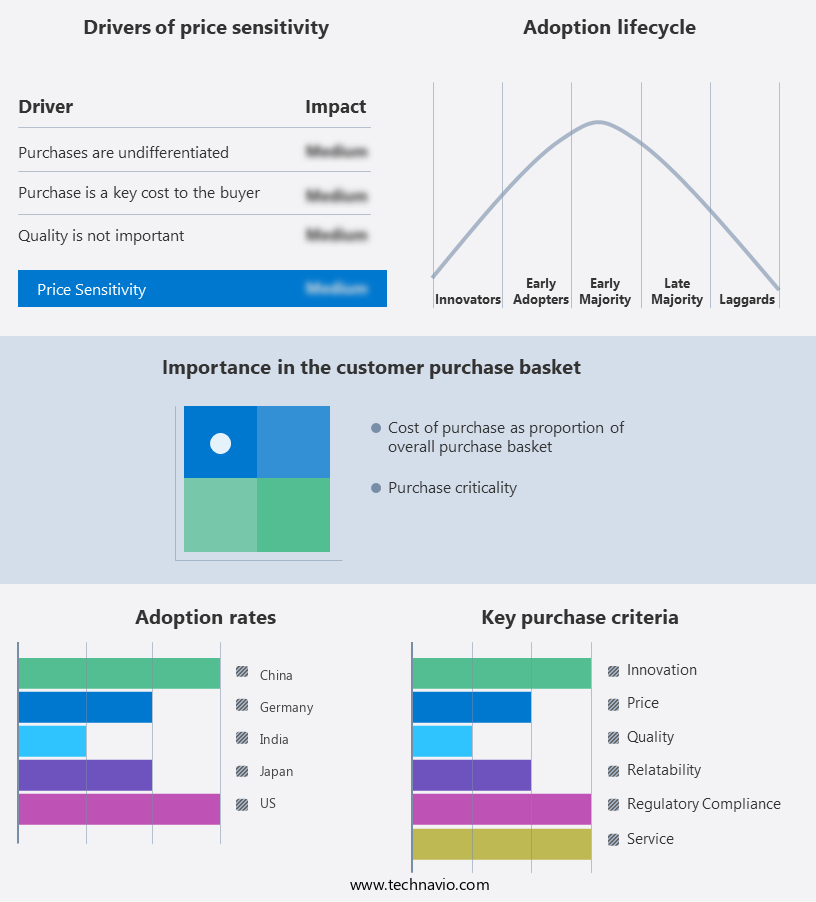
Customer Landscape
Key Companies & Market Insights
Companies are implementing various strategies, such as strategic alliances, partnerships, mergers and acquisitions, geographical expansion, and product/service launches, to enhance their presence in the market.
Beltran Technologies Inc. - The company offers Dust Control Systems that employ wet electrostatic precipitators which are utilized in various metallurgical processes such as zinc, lead, gold and molybdenum roasting plants, nickel and copper flash smelters and sulfuric acid regeneration plants as well as sulfuric acid mist tail gas cleaning plants.
The market research and growth report includes detailed analyses of the competitive landscape of the market and information about key companies, including:
- ABSOLENT AB
- Beltran Technologies Inc.
- Bosstek
- Camfil AB
- CW Machine Worx
- Daikin Industries Ltd.
- Donaldson Co. Inc.
- DSH Systems Ltd.
- Dust Control Technologies Inc.
- Duztech AB
- EmiControls GmbH
- Global Road Technology Ltd.
- HEYLO GmbH
- Horizon International
- Impact Air Systems
- Imperial Systems Inc.
- JKF Industri AS
- Nederman Holding AB
- Quaker Chemical Corp.
- Rensa Filtration
- Rieco Industries Ltd.
- Savic Group
- Sly Inc.
- Spraying Systems Co.
- Teral Aerotech Fans Pvt. Ltd.
- Trimech Engineers Pvt. Ltd
Qualitative and quantitative analysis of companies has been conducted to help clients understand the wider business environment as well as the strengths and weaknesses of key market players. Data is qualitatively analyzed to categorize companies as pure play, category-focused, industry-focused, and diversified; it is quantitatively analyzed to categorize companies as dominant, leading, strong, tentative, and weak.
Research Analyst Overview
The market is witnessing significant growth due to the increasing awareness of Air Quality and Environmental Preservation. Macroeconomic factors such as industrialization, urbanization, and infrastructure development in the Construction, Mining, and Manufacturing sectors are driving the demand for effective Dust Control Systems. Microeconomic factors like the rising cost of raw materials and labor, stringent regulations, and increasing health concerns are also influencing the market's growth. The RoW (Rest of the World) market is expected to witness substantial growth due to the expanding industrial base and growing focus on environmental preservation.
Moreover, the supply side of the market comprises component suppliers, mining contractors, and wood processing industries. The demand side includes farmers, textile, pharmaceutical, food, beverage, power utility, metal, and oil & gas industries. Wet and dry dust control systems are the most commonly used technologies, with Wet Scrubbers, Wet Electrostatic Precipitators, Bag Dust Collectors, Electrostatic Dust Collectors, Vacuum Dust Collectors, Modular Dust Collectors, Cyclone Dust Control, Mobile Controllers, and Fixed Controllers being the major types. Regulatory bodies play a crucial role in the market by setting standards and guidelines for dust control. Industries such as Construction Sites, Hazardous Dust, and Residential and Commercial Sectors are major consumers of Dust Control Systems.
Furthermore, industrial Air Filters are an essential component of Dust Control Systems, ensuring clean air for workers and the surrounding environment. In conclusion, the market is poised for growth due to the increasing focus on Air Quality and Environmental Preservation, driven by both macroeconomic and microeconomic factors. The market's diverse applications across various industries, including Construction, Mining, and Manufacturing, make it a promising investment opportunity.
|
Market Scope |
|
|
Report Coverage |
Details |
|
Page number |
154 |
|
Base year |
2023 |
|
Historic period |
2018-2022 |
|
Forecast period |
2024-2028 |
|
Growth momentum & CAGR |
Accelerate at a CAGR of 7.08% |
|
Market growth 2024-2028 |
USD 7.68 billion |
|
Market structure |
Fragmented |
|
YoY growth 2023-2024(%) |
6.49 |
|
Regional analysis |
APAC, North America, Europe, Middle East and Africa, and South America |
|
Performing market contribution |
Europe at 30% |
|
Key countries |
China, US, Germany, India, and Japan |
|
Competitive landscape |
Leading Companies, Market Positioning of Companies, Competitive Strategies, and Industry Risks |
|
Key companies profiled |
ABSOLENT AB, Beltran Technologies Inc., Bosstek, Camfil AB, CW Machine Worx, Daikin Industries Ltd., Donaldson Co. Inc., DSH Systems Ltd., Dust Control Technologies Inc., Duztech AB, EmiControls GmbH, Global Road Technology Ltd., HEYLO GmbH, Horizon International, Impact Air Systems, Imperial Systems Inc., JKF Industri AS, Nederman Holding AB, Quaker Chemical Corp., Rensa Filtration, Rieco Industries Ltd., Savic Group, Sly Inc., Spraying Systems Co., Teral Aerotech Fans Pvt. Ltd., and Trimech Engineers Pvt. Ltd |
|
Market dynamics |
Parent market analysis, market growth inducers and obstacles, market forecast, fast-growing and slow-growing segment analysis, COVID-19 impact and recovery analysis and future consumer dynamics, market condition analysis for the forecast period |
|
Customization purview |
If our market report has not included the data that you are looking for, you can reach out to our analysts and get segments customized. |
What are the Key Data Covered in this Market Research and Growth Report?
- CAGR of the market during the forecast period
- Detailed information on factors that will drive the market growth and forecasting between 2024 and 2028
- Precise estimation of the size of the market and its contribution of the market in focus to the parent market
- Accurate predictions about upcoming market growth and trends and changes in consumer behaviour
- Growth of the market across APAC, North America, Europe, Middle East and Africa, and South America
- Thorough analysis of the market's competitive landscape and detailed information about companies
- Comprehensive analysis of factors that will challenge the growth of market companies
We can help! Our analysts can customize this market research report to meet your requirements. Get in touch
 RIA -
RIA - 
