

Education ERP For Private Institutions Market Analysis, Size, and Forecast 2026-2030: North America (US, Canada, and Mexico), Europe (Germany, UK, and France), APAC (China, Japan, and India), Middle East and Africa (Saudi Arabia, UAE, and South Africa), South America (Brazil, Argentina, and Colombia), and Rest of World (ROW)

Education ERP For Private Institutions Market Analysis, Size, and Forecast 2026-2030:
North America (US, Canada, and Mexico), Europe (Germany, UK, and France), APAC (China, Japan, and India), Middle East and Africa (Saudi Arabia, UAE, and South Africa), South America (Brazil, Argentina, and Colombia), and Rest of World (ROW)

Published: Mar 2026 280 Pages SKU: IRTNTR81310

Market Overview at a Glance

$9.88 B
Market Opportunity
15.9%
CAGR 2025 - 2030
31.1%
North America Growth
$5.37 B
Software segment 2024

Education ERP For Private Institutions Market Size 2026-2030

The education erp for private institutions market size is valued to increase by USD 9.88 billion, at a CAGR of 15.9% from 2025 to 2030. Acceleration of cloud-based deployment and SaaS models will drive the education erp for private institutions market.

Major Market Trends & Insights

  • North America dominated the market and accounted for a 31.1% growth during the forecast period.
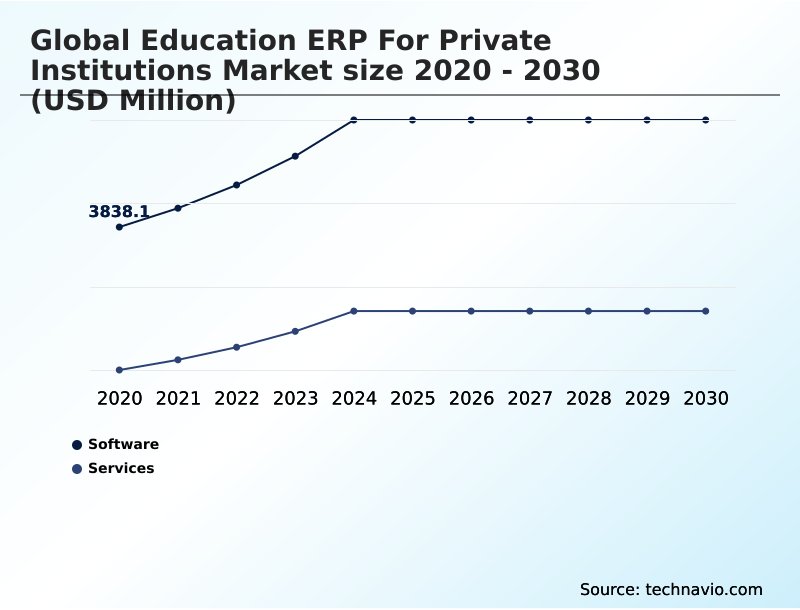
  • By Component - Software segment was valued at USD 5.37 billion in 2024
  • By End-user - Higher education segment accounted for the largest market revenue share in 2024

Market Size & Forecast

  • Market Opportunities: USD 13.29 billion
  • Market Future Opportunities: USD 9.88 billion
  • CAGR from 2025 to 2030 : 15.9%

Market Summary

  • The education ERP for private institutions market is defined by the imperative for digital modernization to enhance financial sustainability and competitive positioning. Institutions are progressively moving from legacy systems to integrated platforms that centralize data across admissions, finance, and academics.
  • This transition is fueled by the need for a unified operational view, enabling leaders to make informed, data-driven decisions on resource allocation and strategic planning. A key application involves leveraging ERP systems for student lifecycle management, which helps in personalizing the student journey and improving retention rates.
  • For instance, a private university can use its ERP's analytics module to identify at-risk students based on engagement metrics, allowing for proactive intervention that reduces dropout rates. Furthermore, these systems are crucial for navigating complex regulatory environments, automating compliance reporting, and ensuring data security.
  • The market's momentum is sustained by technological advancements, particularly the integration of AI to automate administrative workflows and provide predictive insights, making comprehensive ERP frameworks essential for long-term success.

What will be the Size of the Education ERP For Private Institutions Market during the forecast period?

Get Key Insights on Market Forecast (PDF) Request Free Sample

How is the Education ERP For Private Institutions Market Segmented?

The education erp for private institutions industry research report provides comprehensive data (region-wise segment analysis), with forecasts and estimates in "USD million" for the period 2026-2030, as well as historical data from 2020-2024 for the following segments.

  • Component
    • Software
    • Services
  • End-user
    • Higher education
    • K-12
  • Deployment
    • Cloud
    • On-premises
  • Geography
    • North America
      • US
      • Canada
      • Mexico
    • Europe
      • Germany
      • UK
      • France
    • APAC
      • China
      • Japan
      • India
    • Middle East and Africa
      • Saudi Arabia
      • UAE
      • South Africa
    • South America
      • Brazil
      • Argentina
      • Colombia
    • Rest of World (ROW)

By Component Insights

The software segment is estimated to witness significant growth during the forecast period.

The software segment is the technological core of the education ERP market for private institutions, encompassing integrated applications for core administrative functions. These systems provide a single source of truth, facilitating data-driven decision making and enhancing institutional effectiveness.

Private institutions are adopting platforms with robust admissions management modules and curriculum planning software to gain a competitive edge.

This shift toward a unified digital ecosystem, driven by the need for operational agility and improved resource allocation optimization, has led to a 15% improvement in administrative task completion times.

The focus on software with a modern user experience (UX) design is critical for achieving a holistic student view and supporting digital transformation initiatives across campus.

Request Free Sample

The Software segment was valued at USD 5.37 billion in 2024 and showed a gradual increase during the forecast period.
Request Free Sample

Regional Analysis

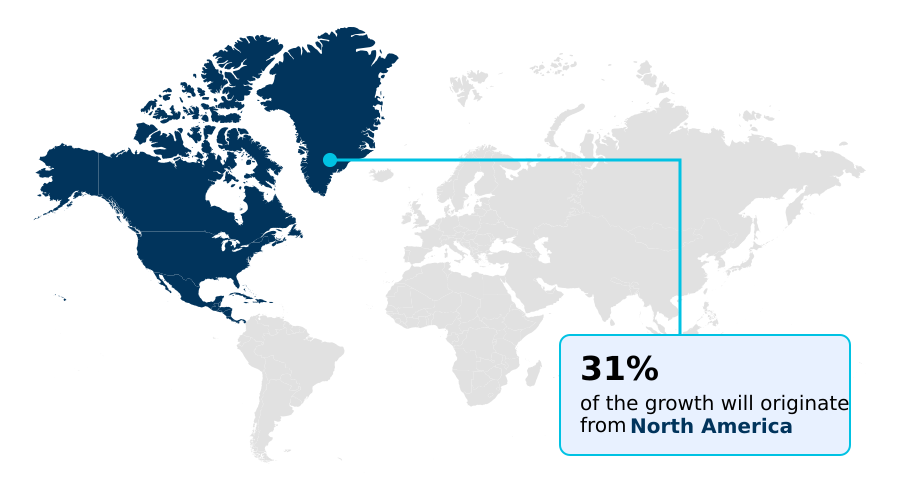
North America is estimated to contribute 31.1% to the growth of the global market during the forecast period.Technavio’s analysts have elaborately explained the regional trends and drivers that shape the market during the forecast period.
See How Education ERP For Private Institutions Market Demand is Rising in North America Request Free Sample

The geographic landscape of the education ERP for private institutions market reveals a tale of two distinct trajectories. Mature markets like North America, which accounts for 31.1% of the incremental growth, are focused on modernization and replacement of legacy systems.

Here, institutions leverage sophisticated student retention analytics and statutory reporting automation to navigate a competitive environment.

In contrast, APAC is the fastest-growing region, with a CAGR of 17.7%, representing a greenfield opportunity where many institutions are adopting their first comprehensive ERP.

This region demands scalable, mobile-first user interfaces and cloud-native architecture to support massive student populations and leapfrog older technologies, emphasizing the need for robust human capital management (HCM) and financial aid processing.

Market Dynamics

Our researchers analyzed the data with 2025 as the base year, along with the key drivers, trends, and challenges. A holistic analysis of drivers will help companies refine their marketing strategies to gain a competitive advantage.

  • Strategic adoption in the education ERP for private institutions market is increasingly specialized, with institutions seeking tailored solutions to distinct operational needs. For instance, SaaS ERP for private K-12 schools is a rapidly growing niche, focused on parent communication and admissions management.
  • In parallel, the demand for cloud ERP for higher education institutions centers on complex functionalities like research grant tracking and multi-campus operations management. The integration of AI in student enrollment forecasting allows universities to model recruitment scenarios with greater precision. A critical technical requirement is seamless ERP integration with learning management systems, creating a unified academic and administrative environment.
  • The push for improved accessibility has prioritized mobile ERP for student self-service, empowering users to manage their academic journey independently. Furthermore, specialized ERP solutions for donor and alumni relations are essential for institutional fundraising and long-term financial health.
  • Institutions now use data analytics for student retention strategies, with some reporting a 10% improvement in student persistence by leveraging predictive insights from their ERP. The emphasis on ERP systems for financial aid compliance and secure ERP for student data privacy highlights the growing importance of risk management.
  • As institutions automate administrative tasks with ERP, they realize significant gains, with a noted focus on student lifecycle management software benefits and improving operational efficiency with education ERP. The ERP selection criteria for private colleges now heavily weighs the ability to customize for curriculum management and manage multi-campus operations with ERP, while acknowledging the ERP implementation challenges in education.
  • Ultimately, the role of ERP in institutional fundraising and tracking student performance metrics solidifies the benefits of unified ERP in education and ensures compliance reporting with education ERP systems.

What are the key market drivers leading to the rise in the adoption of Education ERP For Private Institutions Industry?

  • The acceleration of cloud-based deployments and the adoption of Software as a Service (SaaS) models are key drivers propelling market growth.

  • The market is significantly driven by the integration of AI-powered automation and the demand for data-driven decision making.
  • Private institutions are adopting enterprise resource planning (ERP) systems with advanced institutional analytics to enhance operational efficiency, with some achieving a 15% reduction in administrative workload through automated administrative workflows.
  • The need for real-time performance metrics is compelling upgrades from legacy systems. This push for modernization is also fueled by the need for sophisticated financial aid processing and alumni relations management tools to ensure financial sustainability.
  • As institutions strive for a competitive edge, the ability to leverage a single, unified platform for everything from curriculum planning software to donor management is a powerful catalyst for market growth.

What are the market trends shaping the Education ERP For Private Institutions Industry?

  • The market is experiencing a significant shift toward solutions that provide holistic student lifecycle management, prioritizing comprehensive engagement from recruitment through alumni relations.

  • A primary market trend is the shift toward comprehensive student lifecycle management (SLM) platforms, which create a holistic student view from recruitment to alumni status. This evolution demands robust procurement optimization and seamless integration using an application programming interface (API), with institutions reporting up to a 20% improvement in inter-departmental data flows.
  • The focus on a mobile-first user interface is non-negotiable, as digital-native students expect consumer-grade experiences. This trend prioritizes personalized student engagement and constituent relationship management, leading to enhanced retention. Furthermore, strict adherence to accessibility compliance (WCAG) is becoming a key differentiator, ensuring platforms are usable by all individuals and mitigating legal risks for private institutions.

What challenges does the Education ERP For Private Institutions Industry face during its growth?

  • Substantial initial implementation costs and persistent budgetary constraints represent a key challenge impacting the industry's growth trajectory.

  • A significant challenge is the complexity and cost of implementation, encompassing data migration services and often requiring extensive business process reengineering. Resistance to change among staff can hinder adoption, undermining the goal of achieving a unified system and leading to fragmented campus-wide data integration.
  • Institutions face difficulties ensuring their enterprise resource planning (ERP) systems comply with evolving digital accessibility standards, a process that can be resource-intensive. Furthermore, securing the necessary budget for a comprehensive student information system (SIS) with advanced regulatory compliance reporting remains a primary hurdle for many smaller private institutions, delaying critical digital transformation initiatives.

Exclusive Technavio Analysis on Customer Landscape

The education erp for private institutions market forecasting report includes the adoption lifecycle of the market, covering from the innovator’s stage to the laggard’s stage. It focuses on adoption rates in different regions based on penetration. Furthermore, the education erp for private institutions market report also includes key purchase criteria and drivers of price sensitivity to help companies evaluate and develop their market growth analysis strategies.

Customer Landscape of Education ERP For Private Institutions Industry

Competitive Landscape

Companies are implementing various strategies, such as strategic alliances, education erp for private institutions market forecast, partnerships, mergers and acquisitions, geographical expansion, and product/service launches, to enhance their presence in the industry.

Academia - Solutions include a unified Student Information System (SIS) and CRM platform designed to streamline operations for modern educational institutions, enhancing student engagement and administrative efficiency.

The industry research and growth report includes detailed analyses of the competitive landscape of the market and information about key companies, including:

  • Academia
  • Anthology Inc.
  • Blackbaud Inc.
  • Classe365
  • Creatrix Campus
  • Ellucian Co.
  • Foradian Technologies Pvt Ltd.
  • iSAMS Pty Ltd
  • Jenzabar Inc.
  • Kuali Inc
  • MasterSoft
  • Oracle Corp.
  • Populi
  • PowerSchool Holdings Inc.
  • SAP SE
  • Skyward Inc.
  • Tribal Group Plc
  • Unit4 Group Holding BV
  • Veracross
  • Workday Inc.

Qualitative and quantitative analysis of companies has been conducted to help clients understand the wider business environment as well as the strengths and weaknesses of key industry players. Data is qualitatively analyzed to categorize companies as pure play, category-focused, industry-focused, and diversified; it is quantitatively analyzed to categorize companies as dominant, leading, strong, tentative, and weak.

Recent Development and News in Education erp for private institutions market

  • In October 2025, DualEntry, an AI-focused enterprise software startup, secured $90 million in a funding round aimed at enhancing its AI-powered ERP capabilities and accelerating system migration processes for educational institutions.
  • In November 2025, Workday Inc. completed its acquisition of Sana Labs for approximately $1.1 billion, a move designed to strengthen the AI-powered learning and talent development functionalities within its broader ERP ecosystem.
  • In January 2025, the Government of Uttar Pradesh in India accelerated the implementation of its Samarth ERP platform across state universities and colleges to standardize academic administration, finance, and HR processes.
  • In March 2025, Jadavpur University announced it had received funding approval for a comprehensive ERP system intended to cover academic management, examinations, payroll, and various administrative workflows.

Dive into Technavio’s robust research methodology, blending expert interviews, extensive data synthesis, and validated models for unparalleled Education ERP For Private Institutions Market insights. See full methodology.

Market Scope
Page number 280
Base year 2025
Historic period 2020-2024
Forecast period 2026-2030
Growth momentum & CAGR Accelerate at a CAGR of 15.9%
Market growth 2026-2030 USD 9881.3 million
Market structure Fragmented
YoY growth 2025-2026(%) 13.7%
Key countries US, Canada, Mexico, Germany, UK, France, Italy, The Netherlands, Spain, China, Japan, India, Australia, South Korea, Indonesia, Saudi Arabia, UAE, South Africa, Israel, Turkey, Brazil, Argentina and Colombia
Competitive landscape Leading Companies, Market Positioning of Companies, Competitive Strategies, and Industry Risks

Request Free Sample

Research Analyst Overview

  • The education ERP for private institutions market is evolving from administrative record-keeping to strategic intelligence hubs. The adoption of a cloud-native architecture is now standard, driven by the need for scalable and secure platforms.
  • Core functionalities such as the student information system (SIS), learning management system (LMS), and financial aid processing are being integrated into unified platforms to enable comprehensive student lifecycle management (SLM). This integration is critical for data-driven decision making and provides institutions with robust institutional analytics.
  • Boardroom decisions are increasingly influenced by the insights from enrollment management tools and curriculum planning software. For example, AI-powered automation within the tuition billing system has enabled institutions to reduce billing errors by over 25%. Key modules, including the admissions management module and the donor management platform, are essential for revenue generation and sustainability.
  • The use of an application programming interface (API) facilitates connectivity, while a mobile-first user interface and adherence to accessibility compliance (WCAG) are now baseline expectations. Vendors also provide critical data migration services and support for business process reengineering to ensure successful digital transformations.

What are the Key Data Covered in this Education ERP For Private Institutions Market Research and Growth Report?

  • What is the expected growth of the Education ERP For Private Institutions Market between 2026 and 2030?

    • USD 9.88 billion, at a CAGR of 15.9%

  • What segmentation does the market report cover?

    • The report is segmented by Component (Software, and Services), End-user (Higher education, and K-12), Deployment (Cloud, and On-premises) and Geography (North America, Europe, APAC, Middle East and Africa, South America)

  • Which regions are analyzed in the report?

    • North America, Europe, APAC, Middle East and Africa and South America

  • What are the key growth drivers and market challenges?

    • Acceleration of cloud-based deployment and SaaS models, Initial implementation costs and budgetary constraints

  • Who are the major players in the Education ERP For Private Institutions Market?

    • Academia, Anthology Inc., Blackbaud Inc., Classe365, Creatrix Campus, Ellucian Co., Foradian Technologies Pvt Ltd., iSAMS Pty Ltd, Jenzabar Inc., Kuali Inc, MasterSoft, Oracle Corp., Populi, PowerSchool Holdings Inc., SAP SE, Skyward Inc., Tribal Group Plc, Unit4 Group Holding BV, Veracross and Workday Inc.

Market Research Insights

  • The market's momentum is shaped by a strategic focus on achieving a single source of truth for institutional data, enabling real-time performance metrics and advanced predictive enrollment modeling. Institutions leveraging integrated systems report up to a 20% increase in the efficiency of their automated administrative workflows.
  • This push for a unified digital ecosystem is critical for supporting hybrid learning models and delivering personalized student engagement. The adoption of a composable enterprise strategy allows institutions to maintain operational agility, with some achieving a 15% reduction in IT overhead by swapping peripheral applications without disrupting core functions.
  • As fiscal responsibility dashboards become standard, leaders can better demonstrate institutional effectiveness and optimize resource allocation.

We can help! Our analysts can customize this education erp for private institutions market research report to meet your requirements.

Get in touch

1. Executive Summary

1.1 Market overview

Executive Summary - Chart on Market Overview
Executive Summary - Data Table on Market Overview
Executive Summary - Chart on Global Market Characteristics
Executive Summary - Chart on Market by Geography
Executive Summary - Chart on Market Segmentation by Component
Executive Summary - Chart on Market Segmentation by End-user
Executive Summary - Chart on Market Segmentation by Deployment
Executive Summary - Chart on Incremental Growth
Executive Summary - Data Table on Incremental Growth
Executive Summary - Chart on Company Market Positioning

2. Technavio Analysis

2.1 Analysis of price sensitivity, lifecycle, customer purchase basket, adoption rates, and purchase criteria

2.2 Criticality of inputs and Factors of differentiation

Chart on Overview on criticality of inputs and factors of differentiation

2.3 Factors of disruption

Chart on Overview on factors of disruption

2.4 Impact of drivers and challenges

Chart on Impact of drivers and challenges in 2025 and 2030

3. Market Landscape

3.1 Market ecosystem

Chart on Parent Market
Data Table on - Parent Market

3.2 Market characteristics

Chart on Market characteristics analysis

3.3 Value chain analysis

Chart on Value chain analysis

4. Market Sizing

4.1 Market definition

Data Table on Offerings of companies included in the market definition

4.2 Market segment analysis

Market segments

4.3 Market size 2025

4.4 Market outlook: Forecast for 2025-2030

Chart on Global - Market size and forecast 2025-2030 ($ million)
Data Table on Global - Market size and forecast 2025-2030 ($ million)
Chart on Global Market: Year-over-year growth 2025-2030 (%)
Data Table on Global Market: Year-over-year growth 2025-2030 (%)

5. Historic Market Size

5.1 Global Education ERP For Private Institutions Market 2020 - 2024

Historic Market Size - Data Table on Global Education ERP For Private Institutions Market 2020 - 2024 ($ million)

5.2 Component segment analysis 2020 - 2024

Historic Market Size - Component Segment 2020 - 2024 ($ million)

5.3 End-user segment analysis 2020 - 2024

Historic Market Size - End-user Segment 2020 - 2024 ($ million)

5.4 Deployment segment analysis 2020 - 2024

Historic Market Size - Deployment Segment 2020 - 2024 ($ million)

5.5 Geography segment analysis 2020 - 2024

Historic Market Size - Geography Segment 2020 - 2024 ($ million)

5.6 Country segment analysis 2020 - 2024

Historic Market Size - Country Segment 2020 - 2024 ($ million)

6. Qualitative Analysis

6.1 Impact of AI on Global Education ERP for Private Institutions Market

7. Five Forces Analysis

7.1 Five forces summary

Five forces analysis - Comparison between 2025 and 2030

7.2 Bargaining power of buyers

Bargaining power of buyers - Impact of key factors 2025 and 2030

7.3 Bargaining power of suppliers

Bargaining power of suppliers - Impact of key factors in 2025 and 2030

7.4 Threat of new entrants

Threat of new entrants - Impact of key factors in 2025 and 2030

7.5 Threat of substitutes

Threat of substitutes - Impact of key factors in 2025 and 2030

7.6 Threat of rivalry

Threat of rivalry - Impact of key factors in 2025 and 2030

7.7 Market condition

Chart on Market condition - Five forces 2025 and 2030

8. Market Segmentation by Component

8.1 Market segments

Chart on Component - Market share 2025-2030 (%)
Data Table on Component - Market share 2025-2030 (%)

8.2 Comparison by Component

Chart on Comparison by Component
Data Table on Comparison by Component

8.3 Software - Market size and forecast 2025-2030

Chart on Software - Market size and forecast 2025-2030 ($ million)
Data Table on Software - Market size and forecast 2025-2030 ($ million)
Chart on Software - Year-over-year growth 2025-2030 (%)
Data Table on Software - Year-over-year growth 2025-2030 (%)

8.4 Services - Market size and forecast 2025-2030

Chart on Services - Market size and forecast 2025-2030 ($ million)
Data Table on Services - Market size and forecast 2025-2030 ($ million)
Chart on Services - Year-over-year growth 2025-2030 (%)
Data Table on Services - Year-over-year growth 2025-2030 (%)

8.5 Market opportunity by Component

Market opportunity by Component ($ million)
Data Table on Market opportunity by Component ($ million)

9. Market Segmentation by End-user

9.1 Market segments

Chart on End-user - Market share 2025-2030 (%)
Data Table on End-user - Market share 2025-2030 (%)

9.2 Comparison by End-user

Chart on Comparison by End-user
Data Table on Comparison by End-user

9.3 Higher education - Market size and forecast 2025-2030

Chart on Higher education - Market size and forecast 2025-2030 ($ million)
Data Table on Higher education - Market size and forecast 2025-2030 ($ million)
Chart on Higher education - Year-over-year growth 2025-2030 (%)
Data Table on Higher education - Year-over-year growth 2025-2030 (%)

9.4 K-12 - Market size and forecast 2025-2030

Chart on K-12 - Market size and forecast 2025-2030 ($ million)
Data Table on K-12 - Market size and forecast 2025-2030 ($ million)
Chart on K-12 - Year-over-year growth 2025-2030 (%)
Data Table on K-12 - Year-over-year growth 2025-2030 (%)

9.5 Market opportunity by End-user

Market opportunity by End-user ($ million)
Data Table on Market opportunity by End-user ($ million)

10. Market Segmentation by Deployment

10.1 Market segments

Chart on Deployment - Market share 2025-2030 (%)
Data Table on Deployment - Market share 2025-2030 (%)

10.2 Comparison by Deployment

Chart on Comparison by Deployment
Data Table on Comparison by Deployment

10.3 Cloud - Market size and forecast 2025-2030

Chart on Cloud - Market size and forecast 2025-2030 ($ million)
Data Table on Cloud - Market size and forecast 2025-2030 ($ million)
Chart on Cloud - Year-over-year growth 2025-2030 (%)
Data Table on Cloud - Year-over-year growth 2025-2030 (%)

10.4 On-premises - Market size and forecast 2025-2030

Chart on On-premises - Market size and forecast 2025-2030 ($ million)
Data Table on On-premises - Market size and forecast 2025-2030 ($ million)
Chart on On-premises - Year-over-year growth 2025-2030 (%)
Data Table on On-premises - Year-over-year growth 2025-2030 (%)

10.5 Market opportunity by Deployment

Market opportunity by Deployment ($ million)
Data Table on Market opportunity by Deployment ($ million)

11. Customer Landscape

11.1 Customer landscape overview

Analysis of price sensitivity, lifecycle, customer purchase basket, adoption rates, and purchase criteria

12. Geographic Landscape

12.1 Geographic segmentation

Chart on Market share by geography 2025-2030 (%)
Data Table on Market share by geography 2025-2030 (%)

12.2 Geographic comparison

Chart on Geographic comparison
Data Table on Geographic comparison

12.3 North America - Market size and forecast 2025-2030

Chart on North America - Market size and forecast 2025-2030 ($ million)
Data Table on North America - Market size and forecast 2025-2030 ($ million)
Chart on North America - Year-over-year growth 2025-2030 (%)
Data Table on North America - Year-over-year growth 2025-2030 (%)
Chart on Regional Comparison - North America
Data Table on Regional Comparison - North America

12.3.1 US - Market size and forecast 2025-2030

Chart on US - Market size and forecast 2025-2030 ($ million)
Data Table on US - Market size and forecast 2025-2030 ($ million)
Chart on US - Year-over-year growth 2025-2030 (%)
Data Table on US - Year-over-year growth 2025-2030 (%)

12.3.2 Canada - Market size and forecast 2025-2030

Chart on Canada - Market size and forecast 2025-2030 ($ million)
Data Table on Canada - Market size and forecast 2025-2030 ($ million)
Chart on Canada - Year-over-year growth 2025-2030 (%)
Data Table on Canada - Year-over-year growth 2025-2030 (%)

12.3.3 Mexico - Market size and forecast 2025-2030

Chart on Mexico - Market size and forecast 2025-2030 ($ million)
Data Table on Mexico - Market size and forecast 2025-2030 ($ million)
Chart on Mexico - Year-over-year growth 2025-2030 (%)
Data Table on Mexico - Year-over-year growth 2025-2030 (%)

12.4 Europe - Market size and forecast 2025-2030

Chart on Europe - Market size and forecast 2025-2030 ($ million)
Data Table on Europe - Market size and forecast 2025-2030 ($ million)
Chart on Europe - Year-over-year growth 2025-2030 (%)
Data Table on Europe - Year-over-year growth 2025-2030 (%)
Chart on Regional Comparison - Europe
Data Table on Regional Comparison - Europe

12.4.1 Germany - Market size and forecast 2025-2030

Chart on Germany - Market size and forecast 2025-2030 ($ million)
Data Table on Germany - Market size and forecast 2025-2030 ($ million)
Chart on Germany - Year-over-year growth 2025-2030 (%)
Data Table on Germany - Year-over-year growth 2025-2030 (%)

12.4.2 UK - Market size and forecast 2025-2030

Chart on UK - Market size and forecast 2025-2030 ($ million)
Data Table on UK - Market size and forecast 2025-2030 ($ million)
Chart on UK - Year-over-year growth 2025-2030 (%)
Data Table on UK - Year-over-year growth 2025-2030 (%)

12.4.3 France - Market size and forecast 2025-2030

Chart on France - Market size and forecast 2025-2030 ($ million)
Data Table on France - Market size and forecast 2025-2030 ($ million)
Chart on France - Year-over-year growth 2025-2030 (%)
Data Table on France - Year-over-year growth 2025-2030 (%)

12.4.4 Italy - Market size and forecast 2025-2030

Chart on Italy - Market size and forecast 2025-2030 ($ million)
Data Table on Italy - Market size and forecast 2025-2030 ($ million)
Chart on Italy - Year-over-year growth 2025-2030 (%)
Data Table on Italy - Year-over-year growth 2025-2030 (%)

12.4.5 The Netherlands - Market size and forecast 2025-2030

Chart on The Netherlands - Market size and forecast 2025-2030 ($ million)
Data Table on The Netherlands - Market size and forecast 2025-2030 ($ million)
Chart on The Netherlands - Year-over-year growth 2025-2030 (%)
Data Table on The Netherlands - Year-over-year growth 2025-2030 (%)

12.4.6 Spain - Market size and forecast 2025-2030

Chart on Spain - Market size and forecast 2025-2030 ($ million)
Data Table on Spain - Market size and forecast 2025-2030 ($ million)
Chart on Spain - Year-over-year growth 2025-2030 (%)
Data Table on Spain - Year-over-year growth 2025-2030 (%)

12.5 APAC - Market size and forecast 2025-2030

Chart on APAC - Market size and forecast 2025-2030 ($ million)
Data Table on APAC - Market size and forecast 2025-2030 ($ million)
Chart on APAC - Year-over-year growth 2025-2030 (%)
Data Table on APAC - Year-over-year growth 2025-2030 (%)
Chart on Regional Comparison - APAC
Data Table on Regional Comparison - APAC

12.5.1 China - Market size and forecast 2025-2030

Chart on China - Market size and forecast 2025-2030 ($ million)
Data Table on China - Market size and forecast 2025-2030 ($ million)
Chart on China - Year-over-year growth 2025-2030 (%)
Data Table on China - Year-over-year growth 2025-2030 (%)

12.5.2 Japan - Market size and forecast 2025-2030

Chart on Japan - Market size and forecast 2025-2030 ($ million)
Data Table on Japan - Market size and forecast 2025-2030 ($ million)
Chart on Japan - Year-over-year growth 2025-2030 (%)
Data Table on Japan - Year-over-year growth 2025-2030 (%)

12.5.3 India - Market size and forecast 2025-2030

Chart on India - Market size and forecast 2025-2030 ($ million)
Data Table on India - Market size and forecast 2025-2030 ($ million)
Chart on India - Year-over-year growth 2025-2030 (%)
Data Table on India - Year-over-year growth 2025-2030 (%)

12.5.4 Australia - Market size and forecast 2025-2030

Chart on Australia - Market size and forecast 2025-2030 ($ million)
Data Table on Australia - Market size and forecast 2025-2030 ($ million)
Chart on Australia - Year-over-year growth 2025-2030 (%)
Data Table on Australia - Year-over-year growth 2025-2030 (%)

12.5.5 South Korea - Market size and forecast 2025-2030

Chart on South Korea - Market size and forecast 2025-2030 ($ million)
Data Table on South Korea - Market size and forecast 2025-2030 ($ million)
Chart on South Korea - Year-over-year growth 2025-2030 (%)
Data Table on South Korea - Year-over-year growth 2025-2030 (%)

12.5.6 Indonesia - Market size and forecast 2025-2030

Chart on Indonesia - Market size and forecast 2025-2030 ($ million)
Data Table on Indonesia - Market size and forecast 2025-2030 ($ million)
Chart on Indonesia - Year-over-year growth 2025-2030 (%)
Data Table on Indonesia - Year-over-year growth 2025-2030 (%)

12.6 Middle East and Africa - Market size and forecast 2025-2030

Chart on Middle East and Africa - Market size and forecast 2025-2030 ($ million)
Data Table on Middle East and Africa - Market size and forecast 2025-2030 ($ million)
Chart on Middle East and Africa - Year-over-year growth 2025-2030 (%)
Data Table on Middle East and Africa - Year-over-year growth 2025-2030 (%)
Chart on Regional Comparison - Middle East and Africa
Data Table on Regional Comparison - Middle East and Africa

12.6.1 Saudi Arabia - Market size and forecast 2025-2030

Chart on Saudi Arabia - Market size and forecast 2025-2030 ($ million)
Data Table on Saudi Arabia - Market size and forecast 2025-2030 ($ million)
Chart on Saudi Arabia - Year-over-year growth 2025-2030 (%)
Data Table on Saudi Arabia - Year-over-year growth 2025-2030 (%)

12.6.2 UAE - Market size and forecast 2025-2030

Chart on UAE - Market size and forecast 2025-2030 ($ million)
Data Table on UAE - Market size and forecast 2025-2030 ($ million)
Chart on UAE - Year-over-year growth 2025-2030 (%)
Data Table on UAE - Year-over-year growth 2025-2030 (%)

12.6.3 South Africa - Market size and forecast 2025-2030

Chart on South Africa - Market size and forecast 2025-2030 ($ million)
Data Table on South Africa - Market size and forecast 2025-2030 ($ million)
Chart on South Africa - Year-over-year growth 2025-2030 (%)
Data Table on South Africa - Year-over-year growth 2025-2030 (%)

12.6.4 Israel - Market size and forecast 2025-2030

Chart on Israel - Market size and forecast 2025-2030 ($ million)
Data Table on Israel - Market size and forecast 2025-2030 ($ million)
Chart on Israel - Year-over-year growth 2025-2030 (%)
Data Table on Israel - Year-over-year growth 2025-2030 (%)

12.6.5 Turkey - Market size and forecast 2025-2030

Chart on Turkey - Market size and forecast 2025-2030 ($ million)
Data Table on Turkey - Market size and forecast 2025-2030 ($ million)
Chart on Turkey - Year-over-year growth 2025-2030 (%)
Data Table on Turkey - Year-over-year growth 2025-2030 (%)

12.7 South America - Market size and forecast 2025-2030

Chart on South America - Market size and forecast 2025-2030 ($ million)
Data Table on South America - Market size and forecast 2025-2030 ($ million)
Chart on South America - Year-over-year growth 2025-2030 (%)
Data Table on South America - Year-over-year growth 2025-2030 (%)
Chart on Regional Comparison - South America
Data Table on Regional Comparison - South America

12.7.1 Brazil - Market size and forecast 2025-2030

Chart on Brazil - Market size and forecast 2025-2030 ($ million)
Data Table on Brazil - Market size and forecast 2025-2030 ($ million)
Chart on Brazil - Year-over-year growth 2025-2030 (%)
Data Table on Brazil - Year-over-year growth 2025-2030 (%)

12.7.2 Argentina - Market size and forecast 2025-2030

Chart on Argentina - Market size and forecast 2025-2030 ($ million)
Data Table on Argentina - Market size and forecast 2025-2030 ($ million)
Chart on Argentina - Year-over-year growth 2025-2030 (%)
Data Table on Argentina - Year-over-year growth 2025-2030 (%)

12.7.3 Colombia - Market size and forecast 2025-2030

Chart on Colombia - Market size and forecast 2025-2030 ($ million)
Data Table on Colombia - Market size and forecast 2025-2030 ($ million)
Chart on Colombia - Year-over-year growth 2025-2030 (%)
Data Table on Colombia - Year-over-year growth 2025-2030 (%)

12.8 Market opportunity by geography

Market opportunity by geography ($ million)
Data Tables on Market opportunity by geography ($ million)

13. Drivers, Challenges, and Opportunity

13.1 Market drivers

Acceleration of cloud-based deployment and SaaS models
Increasing demand for data-driven decision making and institutional analytics
Integration of AI and automation to enhance operational efficiency

13.2 Market challenges

Initial implementation costs and budgetary constraints
Data security and regulatory compliance risks
Resistance to change and integration complexities

13.3 Impact of drivers and challenges

Impact of drivers and challenges in 2025 and 2030

13.4 Market opportunities

Emphasis on holistic student lifecycle management and engagement
Expansion of interoperability and open standards ecosystems
Prioritization of mobile-first strategies and accessibility compliance

14. Competitive Landscape

14.1 Overview

14.2

Overview on criticality of inputs and factors of differentiation

14.3 Landscape disruption

Overview on factors of disruption

14.4 Industry risks

Impact of key risks on business

15. Competitive Analysis

15.1 Companies profiled

Companies covered

15.2 Company ranking index

15.3 Market positioning of companies

Matrix on companies position and classification

15.4 Anthology Inc.

Anthology Inc. - Overview
Anthology Inc. - Product / Service
Anthology Inc. - Key offerings
SWOT

15.5 Blackbaud Inc.

Blackbaud Inc. - Overview
Blackbaud Inc. - Product / Service
Blackbaud Inc. - Key offerings
SWOT

15.6 Classe365

Classe365 - Overview
Classe365 - Product / Service
Classe365 - Key offerings
SWOT

15.7 Creatrix Campus

Creatrix Campus - Overview
Creatrix Campus - Product / Service
Creatrix Campus - Key offerings
SWOT

15.8 Ellucian Co.

Ellucian Co. - Overview
Ellucian Co. - Product / Service
Ellucian Co. - Key offerings
SWOT

15.9 Foradian Technologies Pvt Ltd.

Foradian Technologies Pvt Ltd. - Overview
Foradian Technologies Pvt Ltd. - Product / Service
Foradian Technologies Pvt Ltd. - Key offerings
SWOT

15.10 Jenzabar Inc.

Jenzabar Inc. - Overview
Jenzabar Inc. - Product / Service
Jenzabar Inc. - Key offerings
SWOT

15.11 MasterSoft

MasterSoft - Overview
MasterSoft - Product / Service
MasterSoft - Key offerings
SWOT

15.12 Oracle Corp.

Oracle Corp. - Overview
Oracle Corp. - Business segments
Oracle Corp. - Key news
Oracle Corp. - Key offerings
Oracle Corp. - Segment focus
SWOT

15.13 PowerSchool Holdings Inc.

PowerSchool Holdings Inc. - Overview
PowerSchool Holdings Inc. - Product / Service
PowerSchool Holdings Inc. - Key offerings
SWOT

15.14 SAP SE

SAP SE - Overview
SAP SE - Business segments
SAP SE - Key news
SAP SE - Key offerings
SAP SE - Segment focus
SWOT

15.15 Tribal Group Plc

Tribal Group Plc - Overview
Tribal Group Plc - Business segments
Tribal Group Plc - Key offerings
Tribal Group Plc - Segment focus
SWOT

15.16 Unit4 Group Holding BV

Unit4 Group Holding BV - Overview
Unit4 Group Holding BV - Product / Service
Unit4 Group Holding BV - Key offerings
SWOT

15.17 Veracross

Veracross - Overview
Veracross - Product / Service
Veracross - Key offerings
SWOT

15.18 Workday Inc.

Workday Inc. - Overview
Workday Inc. - Product / Service
Workday Inc. - Key news
Workday Inc. - Key offerings
SWOT

16. Appendix

16.1 Scope of the report

Market definition
Objectives
Notes and caveats

16.2 Inclusions and exclusions checklist

Inclusions checklist
Exclusions checklist

16.3 Currency conversion rates for US$

16.4 Research methodology

16.5 Data procurement

Information sources

16.6 Data validation

16.7 Validation techniques employed for market sizing

16.8 Data synthesis

16.9 360 degree market analysis

16.10 List of abbreviations

Research Methodology

Technavio presents a detailed picture of the market by way of study, synthesis, and summation of data from multiple sources. The analysts have presented the various facets of the market with a particular focus on identifying the key industry influencers. The data thus presented is comprehensive, reliable, and the result of extensive research, both primary and secondary.

INFORMATION SOURCES

Primary sources

  • Manufacturers and suppliers
  • Channel partners
  • Industry experts
  • Strategic decision makers

Secondary sources

  • Industry journals and periodicals
  • Government data
  • Financial reports of key industry players
  • Historical data
  • Press releases

DATA ANALYSIS

Data Synthesis

  • Collation of data
  • Estimation of key figures
  • Analysis of derived insights

Data Validation

  • Triangulation with data models
  • Reference against proprietary databases
  • Corroboration with industry experts

REPORT WRITING

Qualitative

  • Market drivers
  • Market challenges
  • Market trends
  • Five forces analysis

Quantitative

  • Market size and forecast
  • Market segmentation
  • Geographical insights
  • Competitive landscape

Interested in this report?

Get your sample now to see our research methodology and insights!

Download Now

Frequently Asked Questions

Education ERP For Private Institutions market growth will increase by USD 9881.3 million during 2026-2030.

The Education ERP For Private Institutions market is expected to grow at a CAGR of 15.9% during 2026-2030.

Education ERP For Private Institutions market is segmented by Component (Software, Services) End-user (Higher education, K-12) Deployment (Cloud, On-premises)

Academia, Anthology Inc., Blackbaud Inc., Classe365, Creatrix Campus, Ellucian Co., Foradian Technologies Pvt Ltd., iSAMS Pty Ltd, Jenzabar Inc., Kuali Inc, MasterSoft, Oracle Corp., Populi, PowerSchool Holdings Inc., SAP SE, Skyward Inc., Tribal Group Plc, Unit4 Group Holding BV, Veracross, Workday Inc. are a few of the key vendors in the Education ERP For Private Institutions market.

North America will register the highest growth rate of 31.1% among the other regions. Therefore, the Education ERP For Private Institutions market in North America is expected to garner significant business opportunities for the vendors during the forecast period.

US, Canada, Mexico, Germany, UK, France, Italy, The Netherlands, Spain, China, Japan, India, Australia, South Korea, Indonesia, Saudi Arabia, UAE, South Africa, Israel, Turkey, Brazil, Argentina, Colombia

  • Acceleration of cloud-based deployment and SaaS models is the driving factor this market.

The Education ERP For Private Institutions market vendors should focus on grabbing business opportunities from the Component segment as it accounted for the largest market share in the base year.
