


Europe Winter Wear Market Size 2026-2030
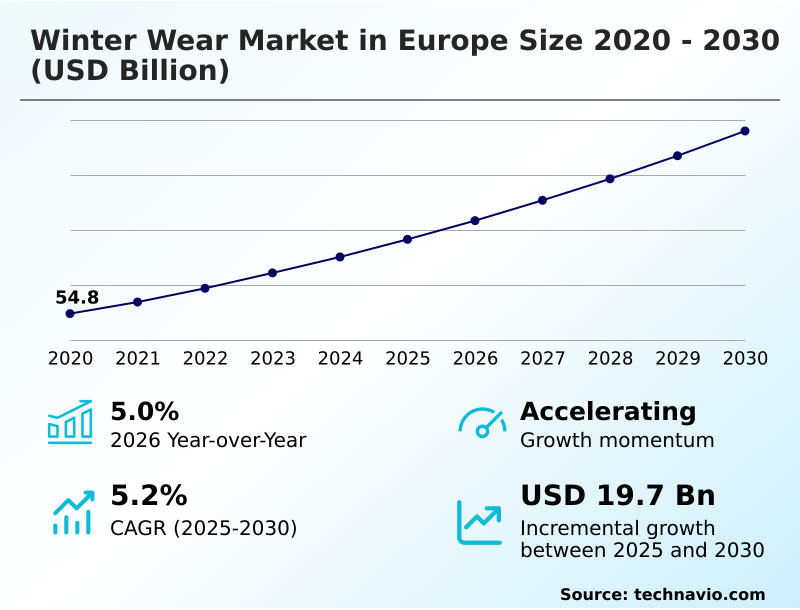
The europe winter wear market size is valued to increase by USD 19.7 billion, at a CAGR of 5.2% from 2025 to 2030. Institutionalization of circular economy and sustainable consumerism will drive the europe winter wear market.
Major Market Trends & Insights
- By End-user - Men segment was valued at USD 32 billion in 2024
- By Product - Coats and jackets segment accounted for the largest market revenue share in 2024
Market Size & Forecast
- Market Opportunities: USD 33.2 billion
- Market Future Opportunities: USD 19.7 billion
- CAGR from 2025 to 2030 : 5.2%
Market Summary
- The winter wear market in Europe is undergoing a significant transformation, driven by a convergence of sustainability mandates, material science innovation, and evolving consumer aesthetics. The industry is moving beyond traditional apparel to embrace circular economy models, where the lifecycle of a garment—from its a circular insulation material to end-of-life recycling—is a core value proposition.
- Key trends include the rise of intelligent thermal apparel with features like graphene-based heating elements and the gorpcore aesthetic, which merges high-performance functionality with urban style. At the same time, the market faces challenges from volatile climate patterns that disrupt seasonal sales cycles and stringent regulations phasing out materials like PFAS.
- A key business scenario involves leveraging sub-seasonal forecasting tools and agile supply chains to mitigate inventory risk. By producing smaller, more responsive collections using advanced bio-based materials and seamless knitting technologies, companies can better align with a 'buy now, wear now' consumer mindset, reducing waste and protecting margins against unpredictable weather shifts.
- This dynamic environment rewards brands that prioritize technical textile engineering, transparency, and adaptability.
What will be the Size of the Europe Winter Wear Market during the forecast period?
Get Key Insights on Market Forecast (PDF) Get Free Sample
How is the Europe Winter Wear Market Segmented?
The europe winter wear industry research report provides comprehensive data (region-wise segment analysis), with forecasts and estimates in "USD billion" for the period 2026-2030, as well as historical data from 2020-2024 for the following segments.
- End-user
- Men
- Women
- Children
- Product
- Coats and jackets
- Sweaters and cardigans
- Shawls and scarves
- Others
- Distribution channel
- Offline
- Online
- Geography
- Europe
- UK
- France
- Germany
- Europe
By End-user Insights
The men segment is estimated to witness significant growth during the forecast period.
The men's segment is defined by a move toward functional utilitarianism, where a garment’s technical outer shell is paramount. Consumers prioritize long-term value, favoring durable pieces featuring recycled cashmere and regenerative wool, a trend supported by regenerative cashmere farming initiatives.
The focus is on performance and longevity, with a rise in high-gauge knits and artisanal textures that combine style with comfort. The development of circular insulation material is key, aligning with ecodesign for sustainable products mandates.
This shift toward durability is extending average garment lifecycles, with some premium outerwear categories seeing a 20% reduction in replacement frequency as consumers invest in quality and repairability over disposable fashion.
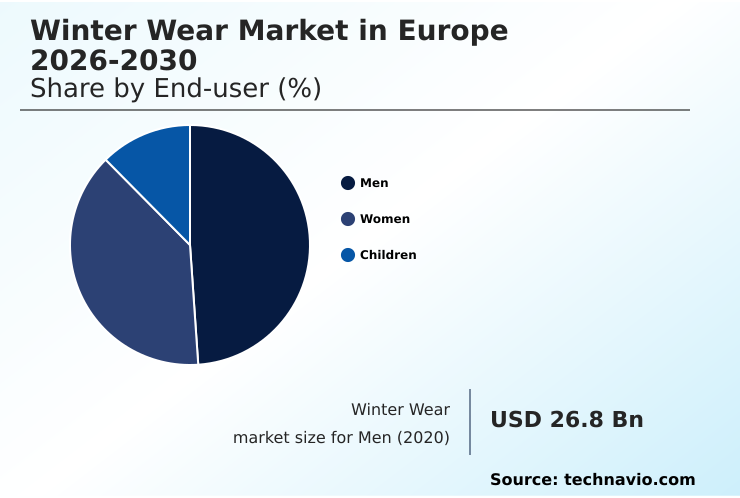
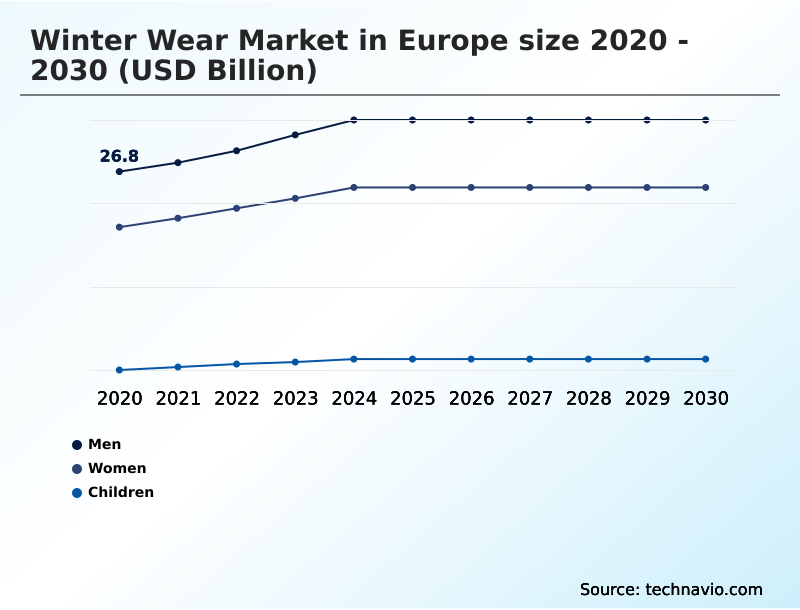
The Men segment was valued at USD 32 billion in 2024 and showed a gradual increase during the forecast period.
Market Dynamics
Our researchers analyzed the data with 2025 as the base year, along with the key drivers, trends, and challenges. A holistic analysis of drivers will help companies refine their marketing strategies to gain a competitive advantage.
- The future of the winter wear market in Europe 2026-2030 is being shaped by highly specific technical and circular initiatives. Key among these is the widespread adoption of pfas-free durable water repellent finishes, a direct response to stringent environmental regulations. This necessitates advancements in chemical-free water resistance treatment to maintain performance standards.
- On the materials front, regenerative cashmere farming practices are becoming a benchmark for luxury brands seeking supply chain transparency and ethical sourcing. Operationally, the establishment of a dedicated circularity hub for technical garments is enabling efficient repair and resale of authenticated outerwear.
- To manage inventory in the face of climate volatility, firms are integrating sub-seasonal forecasting for retail, which has improved inventory alignment by over 20% compared to traditional models. The use of cross-platform digital sizing tools is also critical for reducing e-commerce returns.
- Innovation is further seen in the development of biodegradable insulation from textile waste and the rollout of graphene-based integrated heating circuits.
- Standardized thermal insulation testing and high-performance circular fashion are no longer niche concepts but core strategic pillars, defining a market where verified vintage technical outerwear coexists with modular layering systems for adaptability and products featuring advanced outsole compounds for traction.
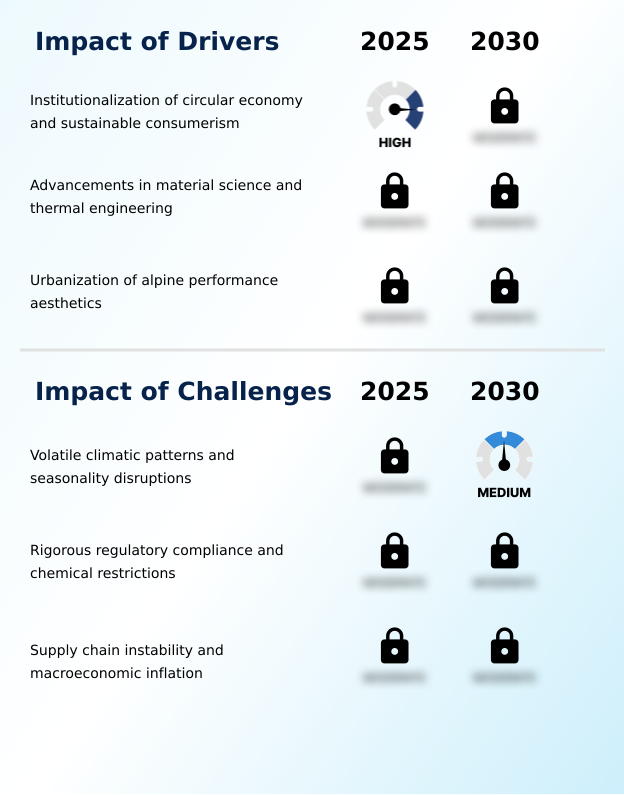
What are the key market drivers leading to the rise in the adoption of Europe Winter Wear Industry?
- The institutionalization of the circular economy, driven by regulatory mandates and a growing consumer demand for sustainable apparel, serves as a primary driver for the market.
- A primary driver is the institutionalization of sustainable consumerism, where the 'buy less but better' philosophy promotes durable, high-value products. This aligns with advanced technical textile engineering, which delivers superior thermal regulation in versatile all-season jackets.
- Innovations in bio-based materials and advanced synthetic insulation with heat-reflective linings are meeting demand for performance without environmental compromise.
- The gorpcore aesthetic, which blends alpine functionality with urban style, has expanded the consumer base by over 25% in key metropolitan areas.
- This cultural shift, supported by circular economy models, prioritizes longevity and multi-functionality, making engineering excellence a key competitive advantage.
What are the market trends shaping the Europe Winter Wear Industry?
- The convergence of traditional garment manufacturing with advanced digital technology is driving the emergence of intelligent thermal apparel, marking a significant market evolution.
- The evolution of the winter wear market is defined by the rise of intelligent thermal apparel, with some designs integrating graphene-based heating elements for active warmth. This trend is complemented by the formalization of high-performance luxury fusion, where materials like ripstop nylons are used in high-fashion silhouettes.
- The push for circularity is evident as chemical recycling technologies enable the creation of new biodegradable components from post-consumer waste, including recycled ocean plastics. Digital product passports are becoming standard, facilitating resale as a service models and giving consumers transparent data on garment lifecycle.
- This convergence of technology and sustainability is reshaping product utility, with seamless knitting technologies reducing waste by over 15% in certain premium lines.
What challenges does the Europe Winter Wear Industry face during its growth?
- Increasingly volatile climatic patterns and the resulting disruption to traditional seasonality present a primary challenge to inventory management and sales cycles across the industry.
- Navigating the market involves overcoming significant regulatory and environmental hurdles. The mandate for ecodesign for sustainable products and the anti-waste for a circular economy law are forcing a transition to pfas-free alternatives for water repellency, a process that can increase R&D costs by up to 20%.
- Manufacturers must ensure supply chain due diligence act compliance while engineering advanced multi-layered fabrics with effective breathable membranes. Unpredictable weather, managed partly by sub-seasonal forecasting tools, creates inventory risks.
- At the same time, the industry must source high-loft synthetic materials and components like waterproof zippers that adhere to new standards, all while managing logistics costs influenced by factors like the availability of sustainable marine fuels.
Exclusive Technavio Analysis on Customer Landscape
The europe winter wear market forecasting report includes the adoption lifecycle of the market, covering from the innovator’s stage to the laggard’s stage. It focuses on adoption rates in different regions based on penetration. Furthermore, the europe winter wear market report also includes key purchase criteria and drivers of price sensitivity to help companies evaluate and develop their market growth analysis strategies.
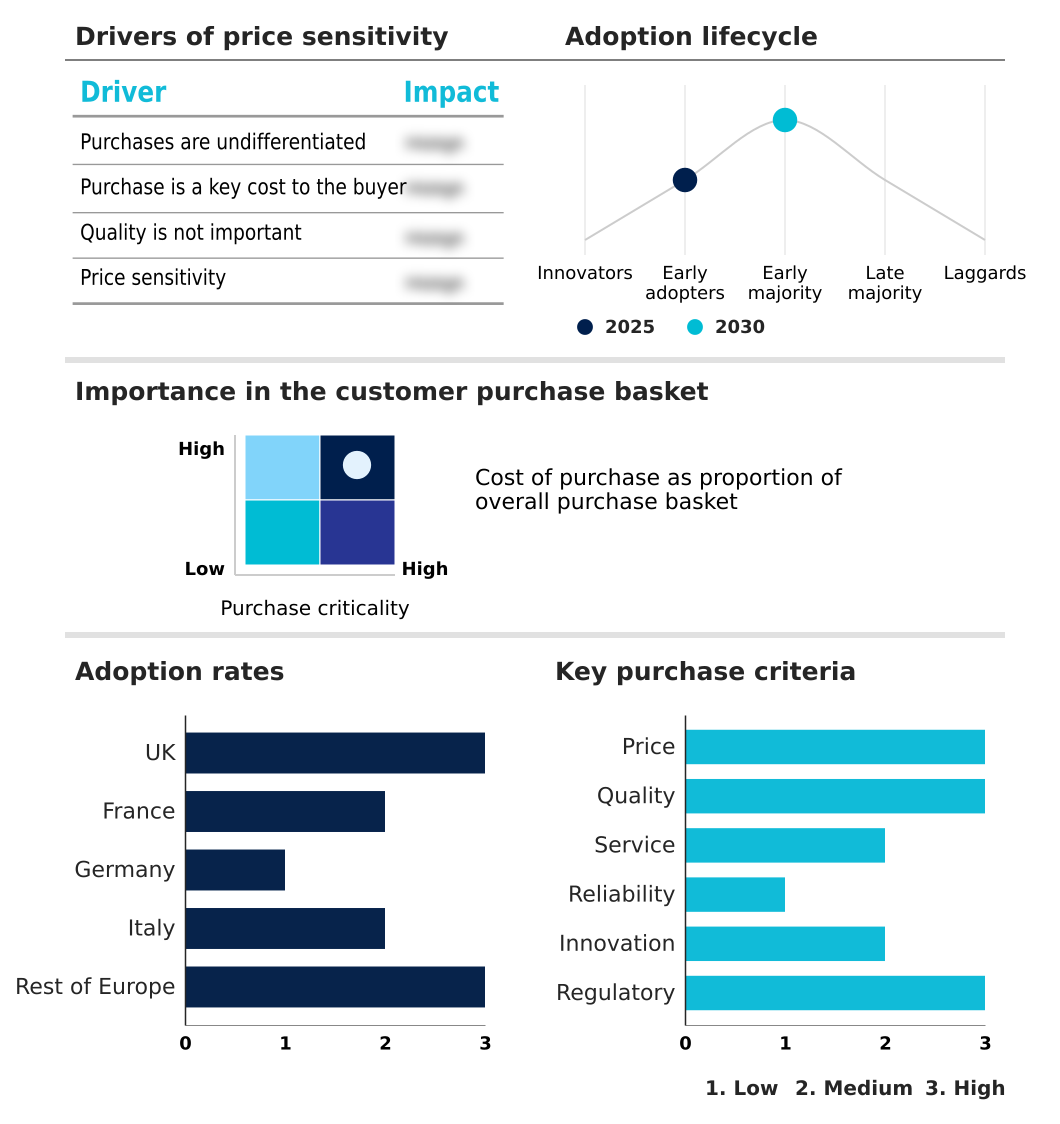
Customer Landscape of Europe Winter Wear Industry
Competitive Landscape
Companies are implementing various strategies, such as strategic alliances, europe winter wear market forecast, partnerships, mergers and acquisitions, geographical expansion, and product/service launches, to enhance their presence in the industry.
Adidas AG - Specialized winter wear integrates advanced insulation technologies, offering superior thermal regulation and protection for high-performance activities and professional use.
The industry research and growth report includes detailed analyses of the competitive landscape of the market and information about key companies, including:
- Adidas AG
- ALL SAINTS RETAIL LIMITED
- ARBO S.R.L.
- BARTS B.V.
- Columbia Sportswear Co.
- DIRECT ALPINE s.r.o.
- GMT Alanic Clothing
- Hennes and Mauritz AB
- Horsefeathers
- Kontoor Brands Inc.
- Levi Strauss and Co.
- Nike Inc.
- Patagonia Inc.
- UAB Audimas Supply
- Under Armour Inc.
- Zara
Qualitative and quantitative analysis of companies has been conducted to help clients understand the wider business environment as well as the strengths and weaknesses of key industry players. Data is qualitatively analyzed to categorize companies as pure play, category-focused, industry-focused, and diversified; it is quantitatively analyzed to categorize companies as dominant, leading, strong, tentative, and weak.
Recent Development and News in Europe winter wear market
- In October, 2024, Canada Goose inaugurated its first European Basecamp location in London, an experiential retail space designed to educate consumers on the technical capabilities of its outerwear.
- In January, 2025, the French government expanded its textile repair bonus scheme, providing financial incentives for consumers to repair complex winter garments like parkas and down jackets.
- In April, 2025, LVMH launched a collaborative initiative with Italian sheep farmers to secure a traceable and sustainable supply of high-quality, regenerative wool for its luxury winter collections.
- In May, 2025, Virtusize partnered with major European outerwear brands to deploy a cross-platform digital sizing tool, aiming to reduce online return rates by improving fit accuracy.
Dive into Technavio’s robust research methodology, blending expert interviews, extensive data synthesis, and validated models for unparalleled Europe Winter Wear Market insights. See full methodology.
| Market Scope | |
|---|---|
| Page number | 209 |
| Base year | 2025 |
| Historic period | 2020-2024 |
| Forecast period | 2026-2030 |
| Growth momentum & CAGR | Accelerate at a CAGR of 5.2% |
| Market growth 2026-2030 | USD 19.7 billion |
| Market structure | Fragmented |
| YoY growth 2025-2026(%) | 5.0% |
| Key countries | UK, France, Germany, Italy and Rest of Europe |
| Competitive landscape | Leading Companies, Market Positioning of Companies, Competitive Strategies, and Industry Risks |
Research Analyst Overview
- The winter wear market is evolving into a technically sophisticated and highly regulated ecosystem. Boardroom decisions are increasingly centered on compliance with new standards and investment in sustainable innovation. The development of graphene-based heating elements and advanced multi-layered fabrics reflects a pivot towards high-performance functionality.
- At the same time, the industry-wide transition to pfas-free alternatives and pfc-free alternatives, driven by environmental legislation, is a critical strategic consideration, compelling R&D in technical textile engineering to find viable replacements. This shift away from legacy chemicals has increased material development costs by an average of 15% for some manufacturers.
- The use of recycled materials like recycled cashmere, recycled ocean plastics, and circular insulation material is now standard. Brands are leveraging seamless knitting technologies, hybrid construction, and breathable membranes to create products that offer superior thermal regulation. This focus on engineering excellence, using materials from yak wool to ripstop nylons, is essential for maintaining a competitive edge.
What are the Key Data Covered in this Europe Winter Wear Market Research and Growth Report?
-
What is the expected growth of the Europe Winter Wear Market between 2026 and 2030?
-
USD 19.7 billion, at a CAGR of 5.2%
-
-
What segmentation does the market report cover?
-
The report is segmented by End-user (Men, Women, and Children), Product (Coats and jackets, Sweaters and cardigans, Shawls and scarves, and Others), Distribution Channel (Offline, and online) and Geography (Europe)
-
-
Which regions are analyzed in the report?
-
Europe
-
-
What are the key growth drivers and market challenges?
-
Institutionalization of circular economy and sustainable consumerism, Volatile climatic patterns and seasonality disruptions
-
-
Who are the major players in the Europe Winter Wear Market?
-
Adidas AG, ALL SAINTS RETAIL LIMITED, ARBO S.R.L., BARTS B.V., Columbia Sportswear Co., DIRECT ALPINE s.r.o., GMT Alanic Clothing, Hennes and Mauritz AB, Horsefeathers, Kontoor Brands Inc., Levi Strauss and Co., Nike Inc., Patagonia Inc., UAB Audimas Supply, Under Armour Inc. and Zara
-
Market Research Insights
- Market dynamics are shaped by a strong push toward sustainable consumerism and the institutionalization of circular economy models. The 'buy less but better' ethos is increasingly prevalent, supported by innovations that enhance garment longevity. For instance, the implementation of resale as a service platforms has increased the lifecycle of premium garments by an average of two years.
- Furthermore, the gorpcore aesthetic is merging urban performance aesthetics with extreme weather protection, expanding the market's reach. Digital product passports provide unprecedented transparency, leading to a 15% rise in consumer trust for brands that adopt them.
- This focus on durability and transparency, coupled with advancements in intelligent thermal apparel, creates a competitive landscape where value is defined by both performance and accountability.
We can help! Our analysts can customize this europe winter wear market research report to meet your requirements.
 RIA -
RIA - 
