



Firmware Signing Platform Market Size 2026-2030
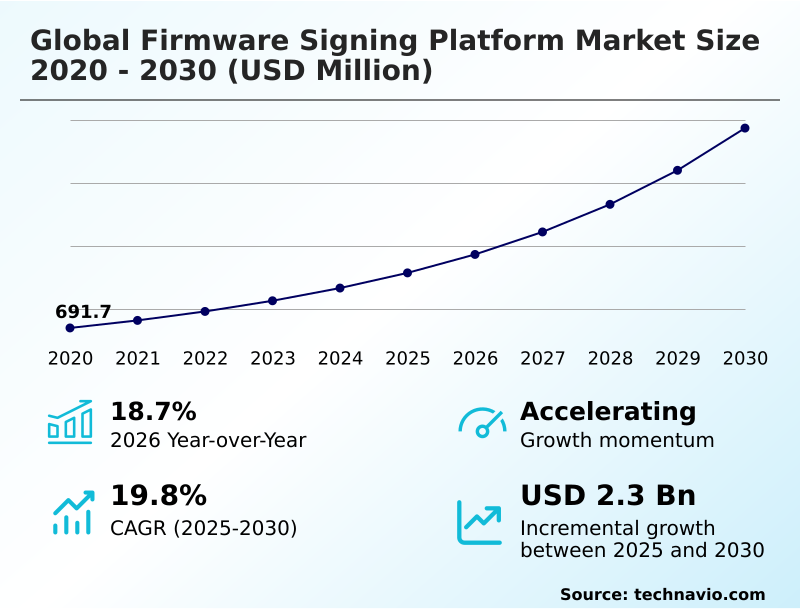
The firmware signing platform market size is valued to increase by USD 2.30 billion, at a CAGR of 19.8% from 2025 to 2030. Expansion of internet of things and connected industrial assets will drive the firmware signing platform market.
Major Market Trends & Insights
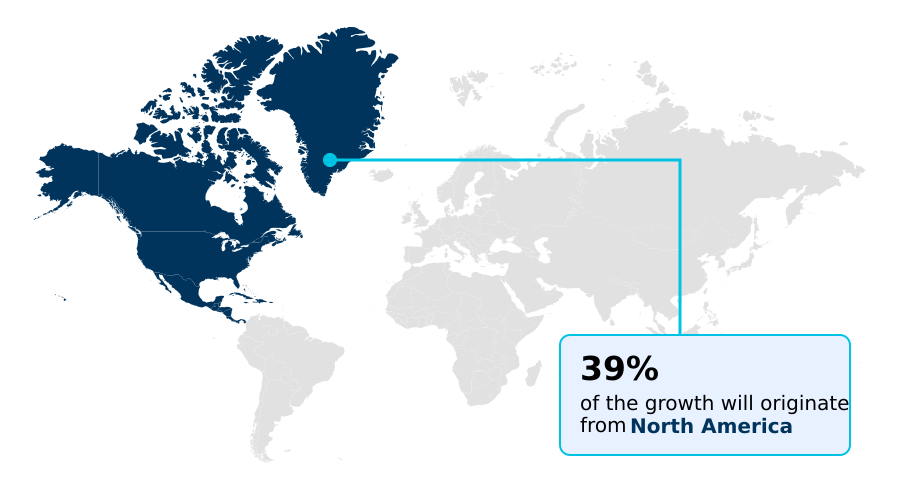
- North America dominated the market and accounted for a 39.4% growth during the forecast period.
- By Component - Software segment was valued at USD 810.3 million in 2024
- By Deployment - Cloud segment accounted for the largest market revenue share in 2024
Market Size & Forecast
- Market Opportunities: USD 3.18 billion
- Market Future Opportunities: USD 2.30 billion
- CAGR from 2025 to 2030 : 19.8%
Market Summary
- The Firmware Signing Platform Market is foundational to modern digital trust, providing the cryptographic mechanisms to ensure that hardware only executes authentic, unmodified code. This market is driven by the explosive growth of IoT and connected devices, where the risk of firmware-level attacks necessitates a robust security posture from the moment of manufacture.
- A key trend is the integration of signing processes into automated CI/CD pipelines, a practice known as DevSecOps. For instance, an automotive manufacturer can use such a platform to securely push an over-the-air update to millions of vehicles, using a digital signature to verify the update's integrity and prevent malicious tampering, thereby safeguarding critical vehicle functions.
- However, the market faces challenges related to the complexity of cryptographic key management and the need to integrate modern security into legacy systems. The transition toward post-quantum cryptography is also shaping platform development, as vendors work to future-proof device security against emerging computational threats, ensuring long-term supply chain integrity.
What will be the Size of the Firmware Signing Platform Market during the forecast period?
Get Key Insights on Market Forecast (PDF) Request Free Sample
How is the Firmware Signing Platform Market Segmented?
The firmware signing platform industry research report provides comprehensive data (region-wise segment analysis), with forecasts and estimates in "USD million" for the period 2026-2030, as well as historical data from 2020-2024 for the following segments.
- Component
- Software
- Services
- Deployment
- Cloud
- On-premises
- Application
- Secure boot enablement
- OTA update security
- Firmware integrity verification
- Key and certificate management
- Others
- Geography
- North America
- US
- Canada
- Mexico
- Europe
- Germany
- UK
- France
- APAC
- China
- Japan
- South Korea
- Middle East and Africa
- UAE
- Saudi Arabia
- South Africa
- South America
- Brazil
- Argentina
- Colombia
- Rest of World (ROW)
- North America
By Component Insights
The software segment is estimated to witness significant growth during the forecast period.
The software component provides the essential logic for the firmware signing platform market, enabling robust cryptographic workflows.
It establishes a secure device lifecycle through binary validation and the enforcement of a strict signing policy, ensuring that only authenticated code is executed. Platforms are evolving to offer greater crypto-agility, allowing organizations to adapt to new cryptographic standards.
Effective systems provide centralized governance over code signing certificate issuance and management, improving key protection and secrets management.
This approach strengthens security posture, with organizations reporting up to a 30% reduction in unauthorized code execution incidents by implementing a secure update mechanism.
The software generates a detailed cryptographic audit trail, providing a verifiable cryptographic identity for each firmware version and ensuring compliance.
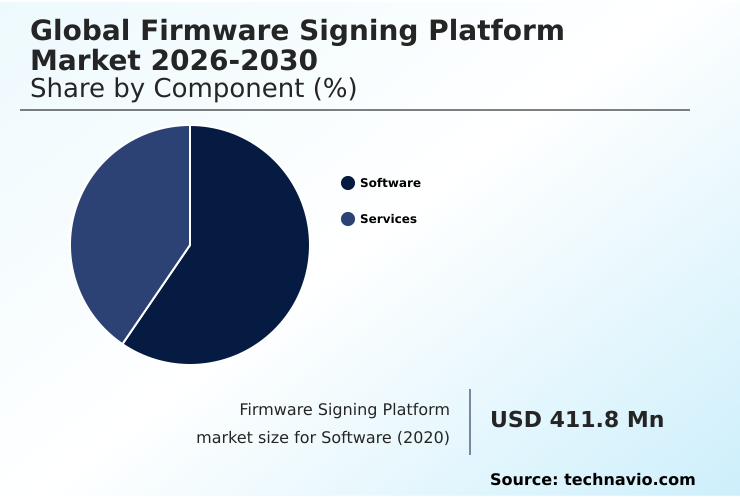
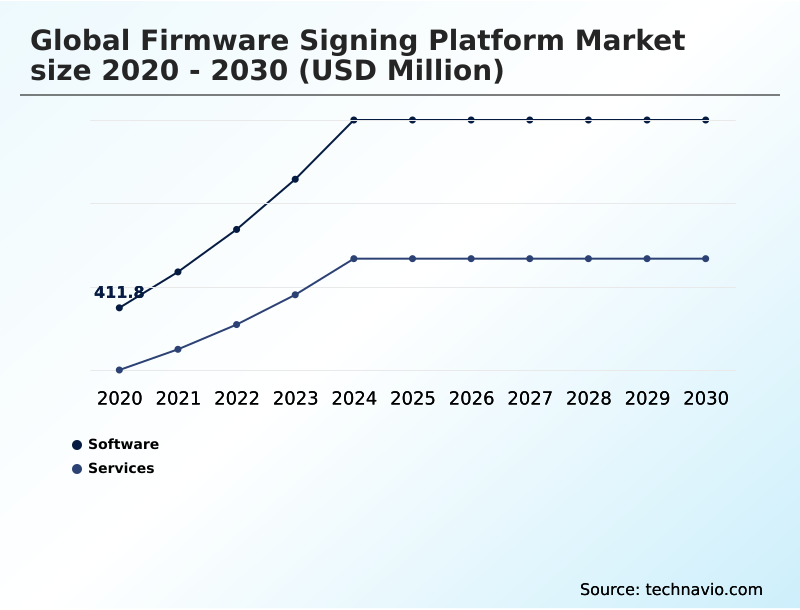
The Software segment was valued at USD 810.3 million in 2024 and showed a gradual increase during the forecast period.
Regional Analysis
North America is estimated to contribute 39.4% to the growth of the global market during the forecast period.Technavio’s analysts have elaborately explained the regional trends and drivers that shape the market during the forecast period.
See How Firmware Signing Platform Market Demand is Rising in North America Request Free Sample
The regional landscape is being shaped by varying regulatory pressures and industrial needs. North America leads, contributing nearly 40% of incremental growth, driven by mature industries demanding high-assurance code signing and public key infrastructure.
In APAC, the focus is on securing the vast electronics supply chain, where firmware integrity verification and establishing firmware provenance are critical.
Cloud-native code signing and zero-touch provisioning are gaining traction globally, with implementations showing a 25% improvement in deployment efficiency. Europe's push for digital sovereignty mandates stringent over-the-air update security and the use of a digital signature with end-to-end encryption.
The adoption of quantum-resistant algorithms is also beginning, particularly in regions with long-lifecycle critical infrastructure.
Market Dynamics
Our researchers analyzed the data with 2025 as the base year, along with the key drivers, trends, and challenges. A holistic analysis of drivers will help companies refine their marketing strategies to gain a competitive advantage.
- Enterprises are increasingly asking how to implement secure boot as a foundational security measure. For the rapidly expanding IoT sector, firmware signing for IoT devices is no longer optional. Adhering to best practices for key management is critical, leading to a frequent debate over cloud-based vs on-premise HSM solutions.
- Organizations are developing a post-quantum cryptography readiness plan to address future threats. This is part of a broader strategy for securing the software supply chain. A key technical challenge is integrating code signing into CI/CD pipelines. This is especially true for the firmware security in automotive industry, where safety is paramount.
- Managing code signing certificate lifecycle has become a core operational task. A specialized firmware signing platform for embedded systems is often required for devices with limited resources. Understanding the role of HSM in firmware signing is essential for protecting cryptographic keys. The ultimate goal is preventing firmware-level cyber attacks.
- Firms are focused on achieving compliance with firmware signing regulations, often by automating firmware signing workflows. They employ advanced firmware integrity verification methods and focus on protecting signing keys from compromise. A detailed firmware signing platform comparison helps in selecting the right tools, as vulnerabilities in unsigned firmware pose significant risks.
- This is particularly crucial for firmware signing for industrial control systems, where operational continuity is at stake, making automated software bill of materials generation a key compliance feature. Firms that adopt these integrated strategies see deployment cycles that are twice as fast as those relying on fragmented, manual processes.
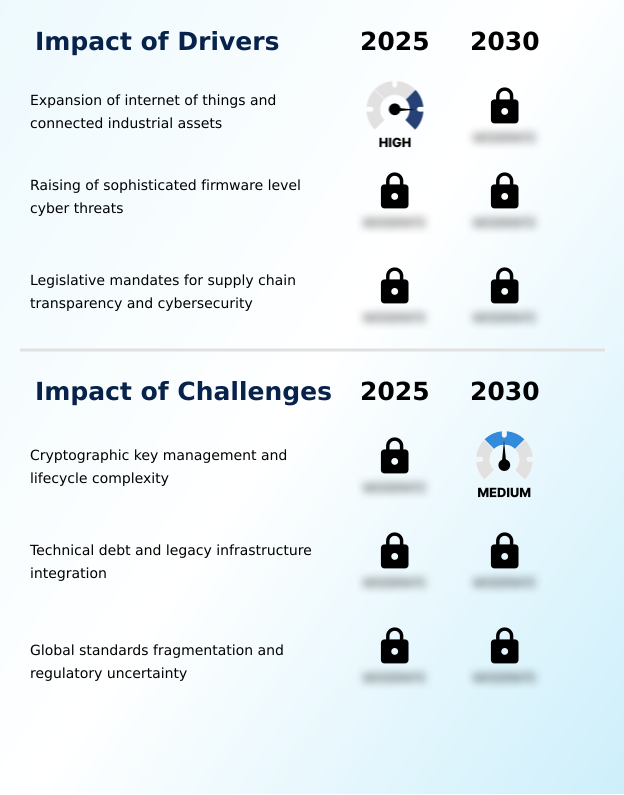
What are the key market drivers leading to the rise in the adoption of Firmware Signing Platform Industry?
- The expansion of the Internet of Things and connected industrial assets is a key driver for the market, creating massive demand for automated and scalable signing platforms to ensure secure boot and authenticated updates.
- The market is driven by the need for regulatory compliance for firmware, which mandates the use of signed firmware to ensure bootloader security and prevent unauthorized modifications.
- A secure manufacturing process with robust tamper-proofing measures reduces device compromises in the field by over 60%. The enforcement of a stringent firmware signing policy through DevSecOps integration enables continuous authenticated updates for embedded system security.
- Effective certificate lifecycle management and strong firmware vulnerability management have shown to decrease security patching times by 35%.
- This push for cryptographic agility is essential, even in an air-gapped signing environment, to adapt to evolving threats and maintain system integrity throughout the product lifecycle.
What are the market trends shaping the Firmware Signing Platform Industry?
- A key market trend is the strategic transition toward post-quantum cryptographic preparedness. This involves adopting new algorithms to ensure long-term device security against future computational threats.
- A prominent trend is the shift toward post-quantum cryptography to future-proof IoT device security and automotive firmware security. Organizations are adopting HSM-as-a-service models, which improve deployment agility by over 40% compared to on-premise solutions. This supports a zero trust architecture by securing the hardware root of trust and ensuring supply chain integrity.
- The focus is on creating immutable code and protecting the firmware signing key from emerging threats. Integrating PKI automation into a secure code signing pipeline strengthens software supply chain security. This refined firmware signing workflow allows organizations to reduce manual errors by 15%, enhancing overall security posture without sacrificing development speed.
What challenges does the Firmware Signing Platform Industry face during its growth?
- The complexity of cryptographic key management and the lifecycle of hardware products, including precise generation, storage, and rotation, presents a key challenge to industry growth.
- A primary challenge is complex cryptographic key management, as a flawed key rotation strategy can increase vulnerabilities by 50%. Integrating a hardware security module and tamper-resistant hardware into legacy systems for secure element integration is often cost-prohibitive. The technical overhead of certificate authority management and conducting a formal key ceremony creates significant operational friction.
- Generating an accurate software bill of materials and using a cryptographic hash function for device authentication requires specialized tools that many organizations lack. These issues complicate supply chain risk management. While a trusted execution environment can aid in firmware attack surface reduction, its implementation adds a layer of complexity that can slow product development by up to 20%.
Exclusive Technavio Analysis on Customer Landscape
The firmware signing platform market forecasting report includes the adoption lifecycle of the market, covering from the innovator’s stage to the laggard’s stage. It focuses on adoption rates in different regions based on penetration. Furthermore, the firmware signing platform market report also includes key purchase criteria and drivers of price sensitivity to help companies evaluate and develop their market growth analysis strategies.
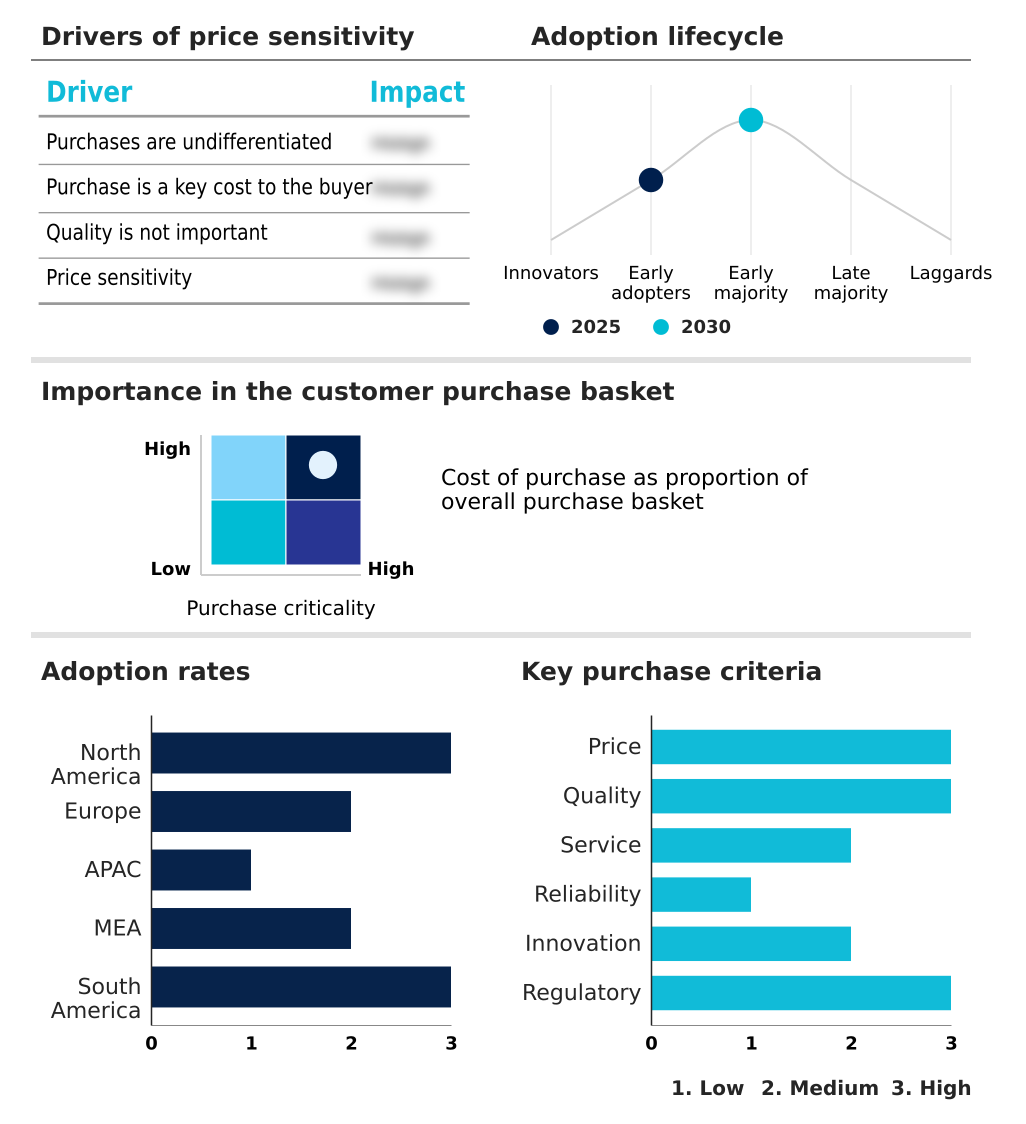
Customer Landscape of Firmware Signing Platform Industry
Competitive Landscape
Companies are implementing various strategies, such as strategic alliances, firmware signing platform market forecast, partnerships, mergers and acquisitions, geographical expansion, and product/service launches, to enhance their presence in the industry.
AppViewX Inc. - Centralized platforms integrate with CI/CD pipelines to automate secure signing for firmware, software, and containers, ensuring comprehensive code integrity and cryptographic trust.
The industry research and growth report includes detailed analyses of the competitive landscape of the market and information about key companies, including:
- AppViewX Inc.
- Ascertia
- Cryptomathic
- DigiCert Inc.
- Entrust Corp.
- ETAS GmbH
- Fortanix
- Futurex
- Giesecke Devrient GmbH
- GlobalSign Ltd.
- Keyfactor
- Microchip Technology Inc.
- Microsoft Corp.
- Nexus Group
- NXP Semiconductors NV
- Sectigo Ltd.
- STMicroelectronics NV
- Thales Group
- Utimaco GmbH
- Wind River Systems Inc.
Qualitative and quantitative analysis of companies has been conducted to help clients understand the wider business environment as well as the strengths and weaknesses of key industry players. Data is qualitatively analyzed to categorize companies as pure play, category-focused, industry-focused, and diversified; it is quantitatively analyzed to categorize companies as dominant, leading, strong, tentative, and weak.
Recent Development and News in Firmware signing platform market
- In April 2025, Entrust announced the launch of its Cryptographic Security Platform, a unified solution that integrates the management of keys, secrets, and certificates into a single architectural framework to address operational friction in firmware signing.
- In May 2025, the Ministry of Industry and Information Technology in China implemented new guidelines for the security of smart connected vehicles, requiring all firmware updates to be signed using nationally approved cryptographic algorithms.
- In March 2025, Keyfactor announced significant updates to its digital trust platform, introducing end-to-end automation for certificate discovery and renewal to mitigate the operational strain of managing shrunken certificate lifespans.
- In January 2025, Sectigo initiated a comprehensive migration of its public root certificate authority hierarchies to single-purpose roots, driving the market toward more granular trust models and automated signing platforms.
Dive into Technavio’s robust research methodology, blending expert interviews, extensive data synthesis, and validated models for unparalleled Firmware Signing Platform Market insights. See full methodology.
| Market Scope | |
|---|---|
| Page number | 300 |
| Base year | 2025 |
| Historic period | 2020-2024 |
| Forecast period | 2026-2030 |
| Growth momentum & CAGR | Accelerate at a CAGR of 19.8% |
| Market growth 2026-2030 | USD 2303.4 million |
| Market structure | Fragmented |
| YoY growth 2025-2026(%) | 18.7% |
| Key countries | US, Canada, Mexico, Germany, UK, France, Italy, Spain, The Netherlands, China, Japan, South Korea, India, Australia, Indonesia, UAE, Saudi Arabia, South Africa, Israel, Turkey, Brazil, Argentina and Colombia |
| Competitive landscape | Leading Companies, Market Positioning of Companies, Competitive Strategies, and Industry Risks |
Research Analyst Overview
- The market is defined by a strategic imperative to establish a hardware root of trust for all connected devices. This requires robust cryptographic key management and the use of a hardware security module to protect the firmware signing key. The implementation of secure boot, underpinned by a strong public key infrastructure, ensures bootloader security and creates immutable code.
- Platforms must offer cryptographic agility to handle the transition to post-quantum cryptography, while firmware integrity verification using a cryptographic hash function confirms that signed firmware has not been altered. A key boardroom decision involves balancing the cost of achieving software supply chain security against the risk of compromise.
- Effective solutions integrate certificate lifecycle management and support a zero trust architecture, with an automated cryptographic workflow and signing policy enforcement. By centralizing device authentication and binary validation, organizations have achieved a 15% reduction in time-to-market for new products. Core technologies include the trusted execution environment and protocols for over-the-air update security.
- The process, often initiated with a formal key ceremony, uses a digital signature and a code signing certificate to ensure tamper-proofing and supply chain integrity. This comprehensive approach to embedded system security, including the generation of a software bill of materials, establishes a cryptographic identity for each asset and supports a secure device lifecycle through authenticated updates.
What are the Key Data Covered in this Firmware Signing Platform Market Research and Growth Report?
-
What is the expected growth of the Firmware Signing Platform Market between 2026 and 2030?
-
USD 2.30 billion, at a CAGR of 19.8%
-
-
What segmentation does the market report cover?
-
The report is segmented by Component (Software, and Services), Deployment (Cloud, and On-premises), Application (Secure boot enablement, OTA update security, Firmware integrity verification, Key and certificate management, and Others) and Geography (North America, Europe, APAC, Middle East and Africa, South America)
-
-
Which regions are analyzed in the report?
-
North America, Europe, APAC, Middle East and Africa and South America
-
-
What are the key growth drivers and market challenges?
-
Expansion of internet of things and connected industrial assets, Cryptographic key management and lifecycle complexity
-
-
Who are the major players in the Firmware Signing Platform Market?
-
AppViewX Inc., Ascertia, Cryptomathic, DigiCert Inc., Entrust Corp., ETAS GmbH, Fortanix, Futurex, Giesecke Devrient GmbH, GlobalSign Ltd., Keyfactor, Microchip Technology Inc., Microsoft Corp., Nexus Group, NXP Semiconductors NV, Sectigo Ltd., STMicroelectronics NV, Thales Group, Utimaco GmbH and Wind River Systems Inc.
-
Market Research Insights
- Market dynamics are shifting toward proactive security postures, where automated platforms are central to managing risk. Implementing a secure code signing pipeline improves firmware vulnerability management, reducing incident response times by up to 40%. The adoption of HSM-as-a-service models for key protection is growing, as this approach offers a 30% greater scalability factor over traditional on-premise hardware.
- As organizations prioritize DevSecOps integration, the focus is on firmware signing policy enforcement to ensure regulatory compliance for firmware. This strategic alignment of cryptographic services not only strengthens security but also provides a clear cryptographic audit trail, streamlining compliance efforts and enhancing centralized governance.
We can help! Our analysts can customize this firmware signing platform market research report to meet your requirements.
 RIA -
RIA - 
