



Fitness Equipment Market Size 2025-2029
The fitness equipment market size is forecast to increase by USD 4.85 billion, at a CAGR of 6.7% between 2024 and 2029.
- The market is experiencing significant growth, driven primarily by the increased demand for home fitness solutions in response to health consciousness and the ongoing pandemic. This trend is further bolstered by collaborations between equipment manufacturers and technology providers, merging innovation and convenience for consumers. However, challenges persist in the form of high costs, which can deter potential buyers, and the availability of counterfeit products that undermine market integrity and consumer trust. Companies seeking to capitalize on market opportunities must focus on offering affordable, authentic solutions while maintaining a strong brand reputation.
- Navigating these challenges requires strategic planning and a deep understanding of consumer preferences and market trends. By staying agile and responsive to evolving consumer needs, fitness equipment providers can effectively compete and thrive in this dynamic market.
What will be the Size of the Fitness Equipment Market during the forecast period?
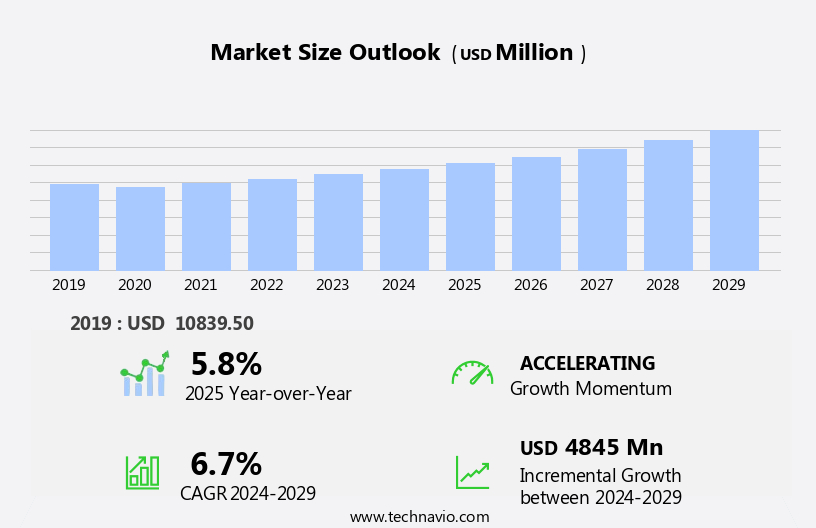
Explore in-depth regional segment analysis with market size data - historical 2019-2023 and forecasts 2025-2029 - in the full report.
Request Free Sample
The market continues to evolve, driven by advancements in technology, shifting consumer preferences, and the ongoing pursuit of optimal health and wellness. Stationary bikes, long a staple of home and commercial gyms, have seen innovations in motor power and cardiovascular exercise capabilities. Circuit training, a popular group fitness class format, integrates various equipment types for total body workouts. Injury prevention remains a key focus, with products ranging from foam rollers to resistance bands addressing different needs. Marketing strategies have adapted to meet consumers where they are, with online fitness programs and apps offering convenience and flexibility. Gym memberships remain a significant revenue source, but home gyms have gained traction as well.
Fitness classes, from HIIT to yoga, cater to diverse interests and goals. Elliptical trainers and rowing machines provide low-impact alternatives for cardio workouts. Weight loss and muscle growth remain primary motivators, driving demand for weight machines and free weights. Product innovation continues, with improvements in sensor accuracy, user interface, and material science enhancing the user experience. Balance training and functional fitness have emerged as essential components of holistic fitness programs. Retail sales remain strong, with distribution channels expanding to include e-commerce and specialty stores. Customer support and customer retention remain crucial, as does supply chain management and data privacy.
The fitness industry's ongoing dynamism reflects the market's commitment to helping individuals lead healthier, more active lives.
How is this Fitness Equipment Industry segmented?
The fitness equipment industry research report provides comprehensive data (region-wise segment analysis), with forecasts and estimates in "USD million" for the period 2025-2029, as well as historical data from 2019-2023 for the following segments.
- Product
- Cardiovascular training equipment
- Strength training equipment
- Other equipment
- End-user
- Individual users
- Health clubs and gyms
- Price
- Mass
- Premium
- Distribution Channel
- Online Retail
- Specialty Stores
- Direct Sales
- Technology
- Smart Equipment
- Conventional Equipment
- End-User
- Residential
- Commercial
- Geography
- North America
- US
- Canada
- Mexico
- Europe
- France
- Germany
- The Netherlands
- UK
- Middle East and Africa
- UAE
- APAC
- Australia
- China
- India
- Japan
- South Korea
- South America
- Brazil
- Rest of World (ROW)
- North America
By Product Insights
The cardiovascular training equipment segment is estimated to witness significant growth during the forecast period.
The market encompasses a range of products designed to promote health and wellness, including foam rollers, exercise balls, resistance bands, free weights, and more. Bluetooth connectivity and app integration have become essential features, enabling users to track workouts, monitor progress, and access nutrition plans and fitness classes. Customer support and supply chain management are crucial elements ensuring timely delivery and addressing customer queries. Cardiovascular training equipment, such as treadmills, cross-trainers, and elliptical trainers, focus on improved cardiovascular health and stress reduction. Their popularity stems from their ability to provide low-impact workouts, making them suitable for individuals with joint issues or those seeking injury prevention.
In contrast, strength training equipment like weight machines, bodyweight training, and resistance bands emphasize muscle growth and enhanced mood. Product innovation in material science and sensor accuracy has led to the development of advanced equipment, such as heart rate monitors and rowing machines. Commercial gyms and home gyms alike leverage these advancements to cater to diverse fitness needs. Functional fitness and circuit training have gained traction, with balance training and flexibility exercises complementing traditional weightlifting and cardio workouts. Marketing strategies, including gym memberships and online fitness programs, have expanded distribution channels, making fitness equipment accessible to a broader audience.
Cross training, weight loss, and increased energy levels are significant motivators for consumers, leading to increased sales. Injury prevention and improved sleep are additional benefits, making fitness equipment a valuable investment for overall health and well-being.
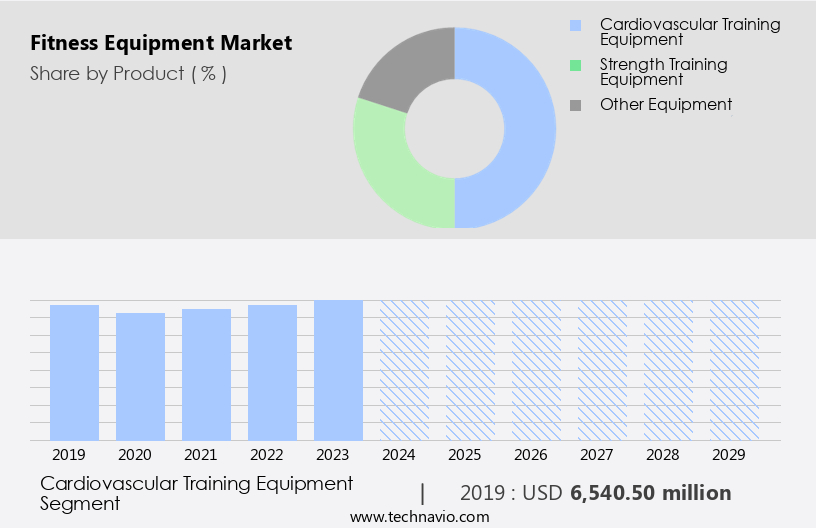
The Cardiovascular training equipment segment was valued at USD 6.54 billion in 2019 and showed a gradual increase during the forecast period.
Regional Analysis
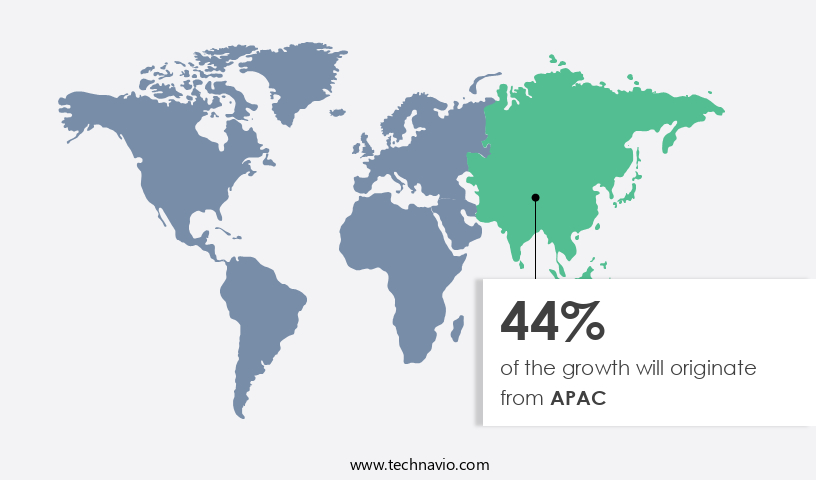
APAC is estimated to contribute 44% to the growth of the global market during the forecast period.Technavio’s analysts have elaborately explained the regional trends and drivers that shape the market during the forecast period.
The North American the market, spearheaded by the US and Canada, represents a significant share in the global industry. The region's dominance can be attributed to its large health-conscious population and economic capabilities. Daily exercise, essential for maintaining a healthy lifestyle, strengthens the immune system and reduces healthcare expenses. Consequently, the demand for fitness equipment is on the rise due to its time-saving and convenient benefits. Flexibility training, a crucial component of overall fitness, is gaining popularity, leading to an increase in demand for foam rollers and yoga mats. Bluetooth connectivity in fitness equipment enables seamless data tracking and app integration, enhancing user experience.
Customer support and distribution channels ensure seamless product delivery and after-sales services. Commercial gyms and fitness classes catering to various fitness regimens, such as strength training, bodyweight training, cross training, and functional fitness, are driving the market's growth. Product innovation, including heart rate monitors, resistance bands, and elliptical trainers, is a key trend, with a focus on improved cardiovascular health, muscle growth, and injury prevention. Supply chain management and display technology ensure efficient production and marketing of fitness equipment. Home gyms and online fitness programs offer convenience, while gym memberships provide access to a wide range of equipment and personal trainers.
Motor power and weight capacity are essential considerations for weight machines and rowing machines. Sensor accuracy, improved mood, increased energy levels, and stress reduction are additional benefits that attract customers. Marketing strategies, such as social media campaigns and influencer collaborations, are crucial for customer retention and brand awareness. The market continues to evolve, focusing on user interface, data privacy, and enhanced product offerings.
Market Dynamics
Our researchers analyzed the data with 2024 as the base year, along with the key drivers, trends, and challenges. A holistic analysis of drivers will help companies refine their marketing strategies to gain a competitive advantage.
The market caters to individuals seeking to enhance their physical well-being through dedicated workout routines. This dynamic industry encompasses a wide range of products, from treadmills and ellipticals to dumbbells and resistance bands. Smart technology integration is a significant trend, with fitness equipment featuring advanced metrics and connectivity options. Home gyms are gaining popularity, offering versatility and convenience for users. Cardio equipment, such as stationary bikes and rowing machines, help improve heart health and endurance. Strength training equipment, including adjustable benches and kettlebells, foster muscle growth and toning. Adjustable dumbbells, resistance bands, and bodyweight trainers provide portable and space-saving solutions for those with limited space. Fitness mats, yoga mats, and stability balls cater to various workout styles and preferences. Overall, the market offers a diverse range of products designed to accommodate different fitness goals and lifestyles.
What are the key market drivers leading to the rise in the adoption of Fitness Equipment Industry?
- The significant surge in consumer preference for home workouts is the primary factor fueling the growth of the home the market.
- Home the market has witnessed significant growth due to the increasing preference for convenient workout solutions among busy professionals. With time constraints being a major challenge, home fitness equipment allows individuals to exercise at their own pace and schedule. Advanced equipment, such as weight machines and functional fitness gear, can be utilized effectively with the help of online instructional videos and fitness apps. These tools eliminate the need for hiring personal trainers, thereby saving costs. Moreover, the rise in sedentary lifestyles and the subsequent health risks, including anxiety, obesity, type-2 diabetes, and osteoporosis, have fueled the demand for home fitness equipment.
- Balance training equipment, jump ropes, and user-friendly weight machines are popular choices for individuals seeking to improve their overall health and wellness. Enhanced mood and increased energy levels are additional benefits that attract consumers to invest in home fitness equipment. Fitness apps and online fitness programs offer customized workout plans and data tracking features, ensuring customer retention and long-term commitment to a healthier lifestyle. App integration and data privacy are essential considerations for consumers when choosing fitness equipment and related services. Fitness trackers provide real-time data on various health metrics, encouraging users to stay motivated and engaged in their fitness journey.
What are the market trends shaping the Fitness Equipment Industry?
- Collaboration between companies and technology providers is an emerging market trend. This partnership model enables businesses to leverage advanced technologies and expertise from technology providers to enhance their offerings and stay competitive.
- Fitness equipment manufacturers are collaborating with technology companies to develop app-connected equipment, catering to consumers' preference for smart devices. This trend is driven by the increasing adoption of technology in fitness and wellness. Companies are partnering with technology providers to integrate connectivity features into their fitness equipment, such as stationary bikes, elliptical trainers, and circuit training equipment. For instance, in recent years, there has been a surge in the demand for motorized cardiovascular exercise machines with digital displays and connectivity options. Product innovation in the market is focused on providing users with immersive and harmonious workout experiences. Home gyms and fitness classes are also integrating technology to offer virtual classes and personalized workout plans.
- Retail sales of fitness equipment with smart features have seen significant growth due to the convenience and injury prevention benefits they offer. Circuit training equipment with connected features can monitor workouts, track progress, and provide real-time feedback to help users achieve their fitness goals more effectively. Overall, marketing strategies in the fitness equipment industry are increasingly centered around technology integration to meet the evolving needs and preferences of consumers.
What challenges does the Fitness Equipment Industry face during its growth?
- The high cost of authentic fitness equipment and the prevalence of counterfeit products pose significant challenges to the industry's growth.
- Home the market: Data-driven Insights and Trends for US Businesses The home the market is witnessing significant growth due to increasing consumer preference for convenience and flexibility in workout routines. According to recent data analysis, the market size is projected to expand at a steady rate, driven by advancements in technology and changing consumer behavior. Foam rollers, exercise balls, and yoga mats are popular flexibility training tools that are gaining traction due to their affordability and ease of use. Bluetooth connectivity in fitness equipment enables users to track their progress and receive real-time feedback, enhancing their workout experience.
- Customer support and supply chain management are crucial factors for businesses in this market. Improved display technology in fitness equipment allows for immersive and harmonious workout sessions, while bodyweight training and improved cardiovascular health are key benefits that attract consumers. Weight capacity and improved sleep are additional factors that influence the purchase decision. Free weights, dumbbells, and resistance bands cater to consumers with varying fitness levels and preferences. Overall, the home the market offers significant opportunities for businesses that prioritize innovation, customer service, and data-driven insights.
Exclusive Customer Landscape
The fitness equipment market forecasting report includes the adoption lifecycle of the market, covering from the innovator’s stage to the laggard’s stage. It focuses on adoption rates in different regions based on penetration. Furthermore, the fitness equipment market report also includes key purchase criteria and drivers of price sensitivity to help companies evaluate and develop their market growth analysis strategies.
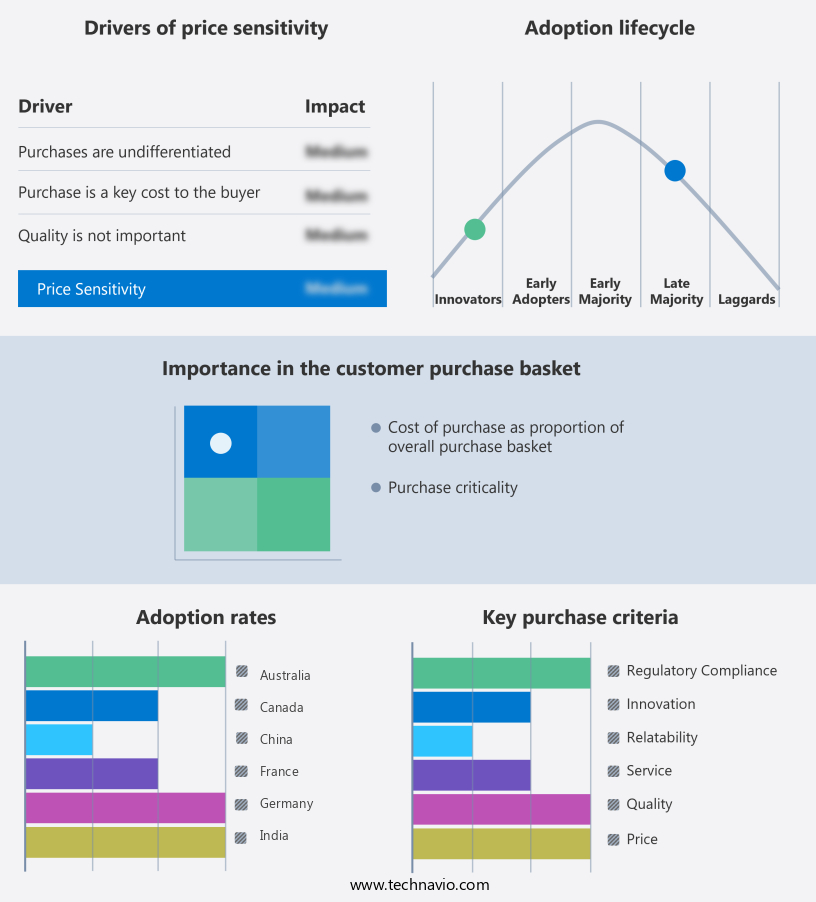
Customer Landscape
Key Companies & Market Insights
Companies are implementing various strategies, such as strategic alliances, fitness equipment market forecast, partnerships, mergers and acquisitions, geographical expansion, and product/service launches, to enhance their presence in the industry.
Body Solid Inc. - This company specializes in providing a range of fitness equipment to enhance home workouts. Among the offerings are a Body Solid leg extension bench attachment, an adjustable dumbbell set, and a smith machine. These tools cater to diverse fitness goals, enabling users to build strength, tone muscles, and improve overall fitness levels in the comfort of their homes. The Body Solid leg extension bench attachment targets lower body muscles, while the adjustable dumbbells offer versatility for various exercises. The smith machine, a popular resistance training equipment, allows users to perform a variety of exercises with added safety features. By incorporating these fitness essentials into a home gym setup, individuals can maintain an effective workout routine and achieve their fitness objectives.
The industry research and growth report includes detailed analyses of the competitive landscape of the market and information about key companies, including:
- Body Solid Inc.
- BowFlex
- Concept2 Inc.
- Cybex International Inc.
- Dyaco International Inc.
- Exercycle SL
- gym80 International GmbH
- Icon Health and Fitness Inc.
- Keiser Corp.
- Les Mills International Ltd.
- Matrix Fitness
- PCE Health & Fitness
- Peloton Interactive Inc
- Rogue Fitness
- Royal Play Equipments Pvt Ltd.
- TECHNOGYM S.p.A
- Titan Manufacturing and Distributing Inc.
- True Fitness Technology Inc.
- Tunturi New Fitness BV
- WOODWAY Inc.
Qualitative and quantitative analysis of companies has been conducted to help clients understand the wider business environment as well as the strengths and weaknesses of key industry players. Data is qualitatively analyzed to categorize companies as pure play, category-focused, industry-focused, and diversified; it is quantitatively analyzed to categorize companies as dominant, leading, strong, tentative, and weak.
Recent Development and News in Fitness Equipment Market
- In January 2024, Technogym, a leading global provider of wellness solutions, launched its new SKILLmill training system at the Consumer Electronics Show (CES). This innovative product combines cardio and strength training in one machine, marking a significant advancement in fitness equipment technology (Source: Technogym Press Release).
- In March 2024, Peloton Interactive, Inc. Announced a strategic partnership with Amazon to integrate Peloton's fitness classes into Amazon's Halo Fitness service. This collaboration expanded Peloton's reach to Amazon's vast customer base, positioning the company for potential growth (Source: Peloton Interactive Press Release).
- In April 2025, Life Fitness, a global leader in commercial fitness equipment, completed the acquisition of Matrix Fitness, a leading manufacturer of commercial and home fitness equipment. This acquisition strengthened Life Fitness's product portfolio and expanded its market presence (Source: Life Fitness Press Release).
- In May 2025, the European Union approved new regulations on the energy efficiency of fitness equipment. The new standards aim to reduce energy consumption by 20% by 2030. This initiative will drive the market towards more energy-efficient equipment and technologies (Source: European Commission Press Release).
Research Analyst Overview
- In the dynamic the market, marketing communications play a crucial role in engaging consumers and promoting product development. Companies prioritize safety standards and environmental impact, aligning with social responsibility trends. Ethical sourcing and regulatory compliance are essential aspects of brand positioning, ensuring transparency and trust. Sales promotion and public relations strategies are employed to boost sales and manage crises. Data analytics shapes product development, enabling personalized fitness programs and gamified fitness experiences. Commercial gym design integrates smart fitness mirrors and interactive equipment, while home gym design caters to the growing demand for convenience. Fitness facility management adopts AI-powered coaching and virtual reality fitness to enhance user experience.
- Fitness equipment leasing and subscription models offer flexible pricing strategies, catering to various budgets and preferences. Intellectual property protection is crucial in the competitive landscape. Supply chain sustainability is a growing concern, with companies focusing on reducing carbon footprints and improving efficiency. Wearable technology and pricing strategies continue to influence consumer behavior, shaping the future of the market.
Dive into Technavio’s robust research methodology, blending expert interviews, extensive data synthesis, and validated models for unparalleled Fitness Equipment Market insights. See full methodology.
|
Market Scope |
|
|
Report Coverage |
Details |
|
Page number |
224 |
|
Base year |
2024 |
|
Historic period |
2019-2023 |
|
Forecast period |
2025-2029 |
|
Growth momentum & CAGR |
Accelerate at a CAGR of 6.7% |
|
Market growth 2025-2029 |
USD 4845 million |
|
Market structure |
Fragmented |
|
YoY growth 2024-2025(%) |
5.8 |
|
Key countries |
US, China, Germany, Japan, UK, India, Canada, Brazil, UAE, Australia, Saudi Arabia, France, South Korea, Mexico, and The Netherlands |
|
Competitive landscape |
Leading Companies, Market Positioning of Companies, Competitive Strategies, and Industry Risks |
What are the Key Data Covered in this Fitness Equipment Market Research and Growth Report?
- CAGR of the Fitness Equipment industry during the forecast period
- Detailed information on factors that will drive the growth and forecasting between 2025 and 2029
- Precise estimation of the size of the market and its contribution of the industry in focus to the parent market
- Accurate predictions about upcoming growth and trends and changes in consumer behaviour
- Growth of the market across North America, APAC, Europe, Middle East and Africa, and South America
- Thorough analysis of the market’s competitive landscape and detailed information about companies
- Comprehensive analysis of factors that will challenge the fitness equipment market growth of industry companies
We can help! Our analysts can customize this fitness equipment market research report to meet your requirements.
 RIA -
RIA - 
