



Flare Blowers Market Size 2026-2030
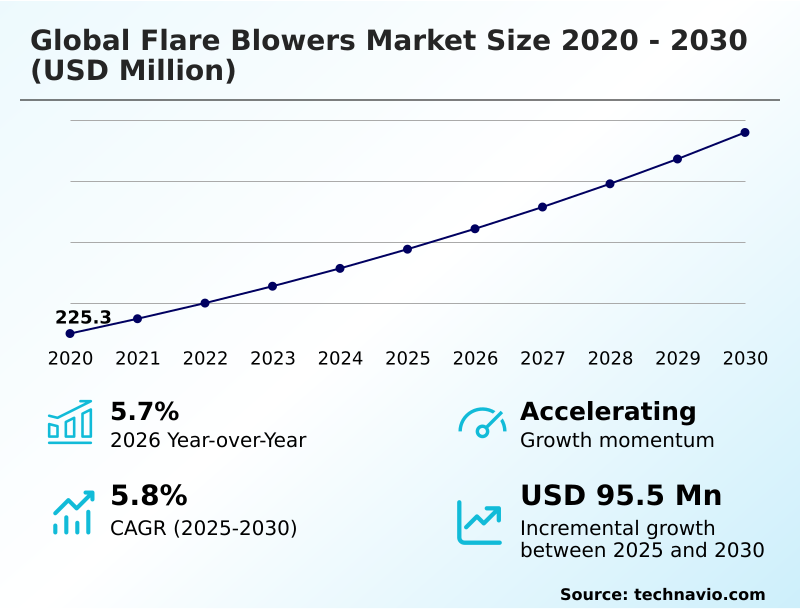
The flare blowers market size is valued to increase by USD 95.5 million, at a CAGR of 5.8% from 2025 to 2030. Stringency in environmental mandates and global emission standards will drive the flare blowers market.
Major Market Trends & Insights
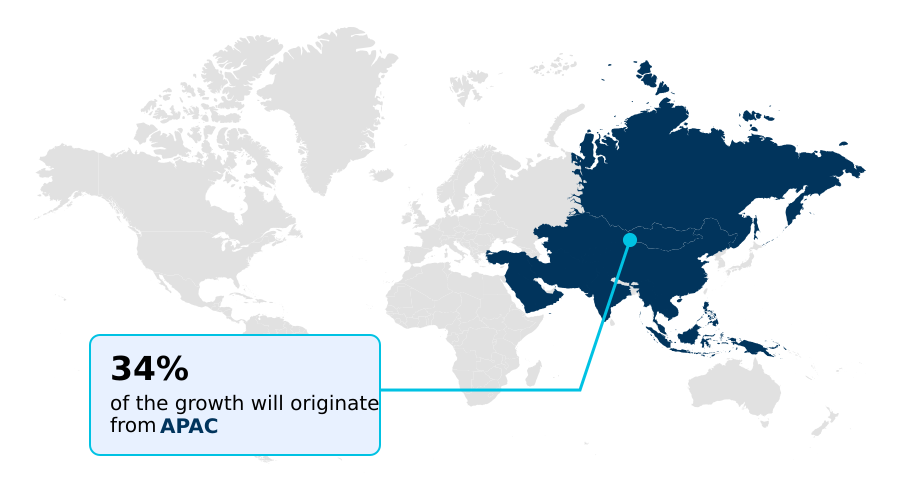
- APAC dominated the market and accounted for a 34.1% growth during the forecast period.
- By Type - Centrifugal blowers segment was valued at USD 94.7 million in 2024
- By Application - Flare gas recovery segment accounted for the largest market revenue share in 2024
Market Size & Forecast
- Market Opportunities: USD 164.5 million
- Market Future Opportunities: USD 95.5 million
- CAGR from 2025 to 2030 : 5.8%
Market Summary
- The Flare Blowers Market is driven by the critical need for smokeless combustion and high destruction removal efficiency in industrial settings. As environmental regulations tighten, operators are compelled to upgrade legacy systems to advanced air-assist smokeless flaring configurations that rely on high-performance blowers.
- These systems, incorporating technologies like variable frequency drives and predictive diagnostics, are essential for minimizing the release of volatile organic compounds and reducing an operation's carbon footprint. The expansion of liquefied natural gas infrastructure and upstream production further fuels demand, especially for modular blower assemblies that can be rapidly deployed.
- For example, an operator expanding a midstream processing facility must choose between different blower types—such as centrifugal blowers or positive displacement blowers—based on gas composition and flow rate to ensure compliance with emission standards from day one. However, the high capital expenditure for these engineered-to-order systems and the technical challenges of legacy infrastructure integration remain significant hurdles.
- The industry also faces a long-term strategic shift toward gas recovery technologies and zero-routine flaring, which could reshape future demand for combustion-centric solutions.
What will be the Size of the Flare Blowers Market during the forecast period?
Get Key Insights on Market Forecast (PDF) Get Free Sample
How is the Flare Blowers Market Segmented?
The flare blowers industry research report provides comprehensive data (region-wise segment analysis), with forecasts and estimates in "USD million" for the period 2026-2030, as well as historical data from 2020-2024 for the following segments.
- Type
- Centrifugal blowers
- Positive displacement blowers
- High-speed turbo blowers
- Others
- Application
- Flare gas recovery
- Air-assist smokeless flaring
- Gas boosting
- Others
- Capacity
- Medium
- Large
- Small
- Geography
- North America
- US
- Canada
- Mexico
- APAC
- China
- India
- Australia
- Europe
- Germany
- UK
- The Netherlands
- Middle East and Africa
- Saudi Arabia
- UAE
- South America
- Brazil
- Argentina
- Rest of World (ROW)
- North America
By Type Insights
The centrifugal blowers segment is estimated to witness significant growth during the forecast period.
Centrifugal blowers maintain a dominant role due to their ability to handle high-volume air displacement, essential for flare gas recovery and achieving smokeless combustion.
This segment is evolving with the integration of variable frequency drives, which can reduce energy use by up to 37% compared to older technologies. Innovations like radial blade design and air-foil bearings improve aerodynamic efficiency.
While positive displacement blowers serve constant volume needs, specialized units like liquid ring blowers are critical for wet gas streams, common in biogas flaring and anaerobic digestion processes, where managing moisture and ensuring thermal radiation reduction are key operational goals.
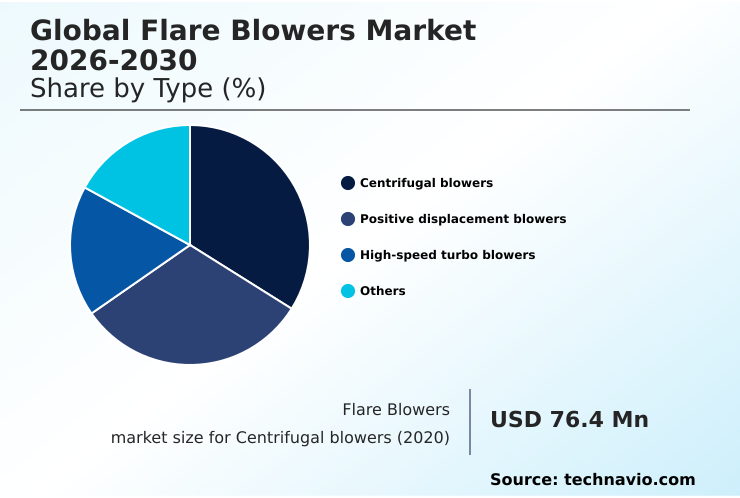
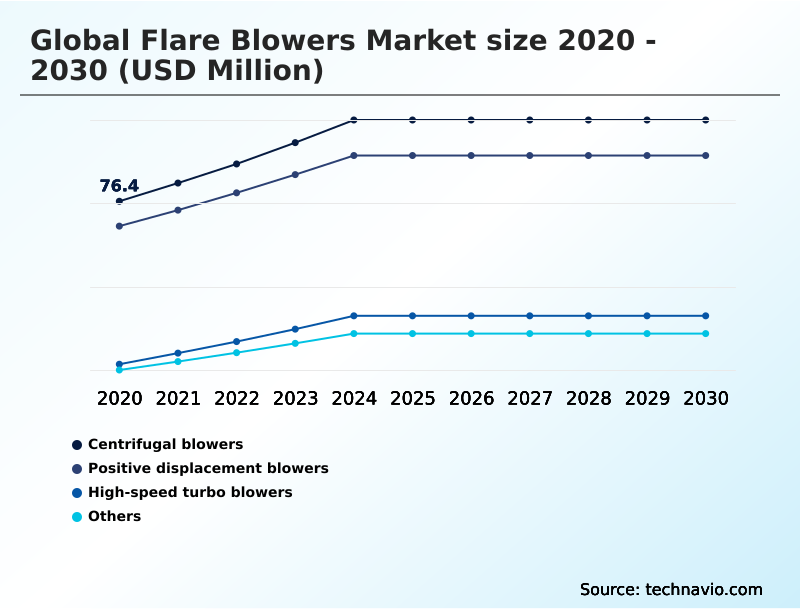
The Centrifugal blowers segment was valued at USD 94.7 million in 2024 and showed a gradual increase during the forecast period.
Regional Analysis
APAC is estimated to contribute 34.1% to the growth of the global market during the forecast period.Technavio’s analysts have elaborately explained the regional trends and drivers that shape the market during the forecast period.
See How Flare Blowers Market Demand is Rising in APAC Get Free Sample
The market's geographic landscape is varied, with North America representing a mature segment focused on retrofitting, while APAC is the fastest-growing region, contributing over 34% of incremental growth.
In North America and Europe, stringent regulations at petrochemical facilities drive demand for high-speed turbo blowers and multistage centrifugal blowers to manage volatile organic compounds. Offshore oil platforms globally require robust centrifugal blowers that meet strict industrial safety protocols.
In contrast, developing regions in APAC and the Middle East are focused on new infrastructure, prioritizing systems with high destruction removal efficiency for smokeless combustion.
Emerging applications for regenerative blowers in biogas are also gaining traction in regions with strong green energy policies.
Market Dynamics
Our researchers analyzed the data with 2025 as the base year, along with the key drivers, trends, and challenges. A holistic analysis of drivers will help companies refine their marketing strategies to gain a competitive advantage.
- Navigating the complexities of flare management requires a deep understanding of specific operational needs. The initial decision often centers on a comparison of centrifugal vs positive displacement blowers, where flow rate variability and pressure requirements are key determinants.
- For facilities handling aggressive gas streams, selecting the right flare blower for high-sulfur gas is critical to prevent corrosion and ensure long-term reliability. Beyond hardware selection, integrating blowers with legacy flare systems presents a significant engineering challenge, often demanding bespoke solutions that can increase project timelines.
- The benefits of modular flare blower skids, which can reduce on-site installation time by over 40% compared to traditional builds, are increasingly compelling for fast-track projects. However, the total cost of ownership must account for flare blower maintenance requirements and the need for specialized technicians.
- As regulations push the industry toward improving flare combustion efficiency, the adoption of variable frequency drive integration benefits becomes undeniable, offering both optimized performance and reduced energy consumption. This holistic approach, from initial design to long-term operation, is essential for balancing safety, compliance, and cost-effectiveness in modern industrial environments.
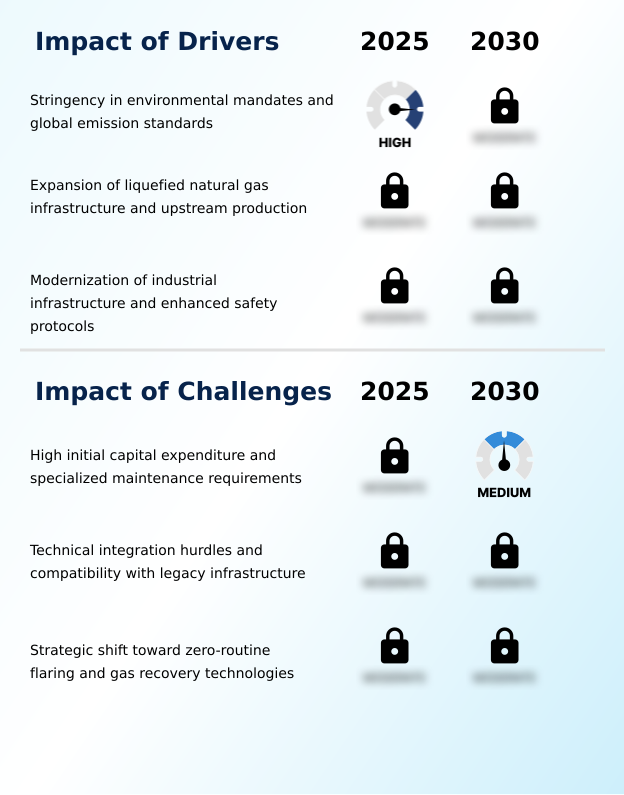
What are the key market drivers leading to the rise in the adoption of Flare Blowers Industry?
- The primary market driver is the increasing stringency of environmental mandates and global emission standards, compelling industrial operators to adopt more efficient combustion technologies.
- Strict environmental regulations and emission standards are the primary market drivers, mandating high combustion efficiency in midstream processing facilities.
- This regulatory pressure accelerates the adoption of air-assist smokeless flaring technologies, which rely on high-performance vaneaxial blowers and direct-drive blowers to meet compliance, often requiring a destruction efficiency of 99.5%.
- The expansion of liquefied natural gas infrastructure and upstream production activities further fuels demand, particularly for pre-tested, skid-mounted units that can be rapidly deployed in new facilities.
- This ensures that new energy projects are built with modern environmental controls from the outset, supporting global energy supply diversification.
What are the market trends shaping the Flare Blowers Industry?
- A key market trend involves integrating artificial intelligence and digital twin technology. This shift enables predictive diagnostics to optimize combustion system performance and minimize operational downtime.
- The market is rapidly adopting digital twin technology for predictive diagnostics, allowing operators to anticipate failures in industrial combustion systems and reduce downtime by over 30%. This digital shift is complemented by a move toward modular blower assemblies and systems with advanced acoustic mitigation.
- In parallel, the integration of variable frequency drives and magnetic levitation bearings has become standard for new installations, particularly in the hydrogen production sector, as they significantly contribute to carbon footprint reduction. This dual focus on intelligent monitoring and energy-efficient hardware helps companies move closer to their net-zero emissions targets while improving operational reliability.
What challenges does the Flare Blowers Industry face during its growth?
- High initial capital expenditure coupled with specialized maintenance requirements presents a key challenge affecting widespread market adoption and industry growth.
- A significant challenge is the high capital expenditure required for advanced blower systems, compounded by the complexities of legacy infrastructure integration. Retrofitting older plants in the downstream sector with modern blowers can lead to schedule overruns in over 40% of projects. Furthermore, the strategic industry shift toward zero-routine flaring and gas recovery technologies creates market friction.
- While technologies like vapor recovery units support methane emission reduction goals, they also reduce the total addressable market for flare-related equipment. This forces manufacturers of components like tri-lobe rotors and explosion-proof flare blower skids to navigate a landscape where demand for efficient combustion coexists with a long-term goal of flare eradication.
Exclusive Technavio Analysis on Customer Landscape
The flare blowers market forecasting report includes the adoption lifecycle of the market, covering from the innovator’s stage to the laggard’s stage. It focuses on adoption rates in different regions based on penetration. Furthermore, the flare blowers market report also includes key purchase criteria and drivers of price sensitivity to help companies evaluate and develop their market growth analysis strategies.
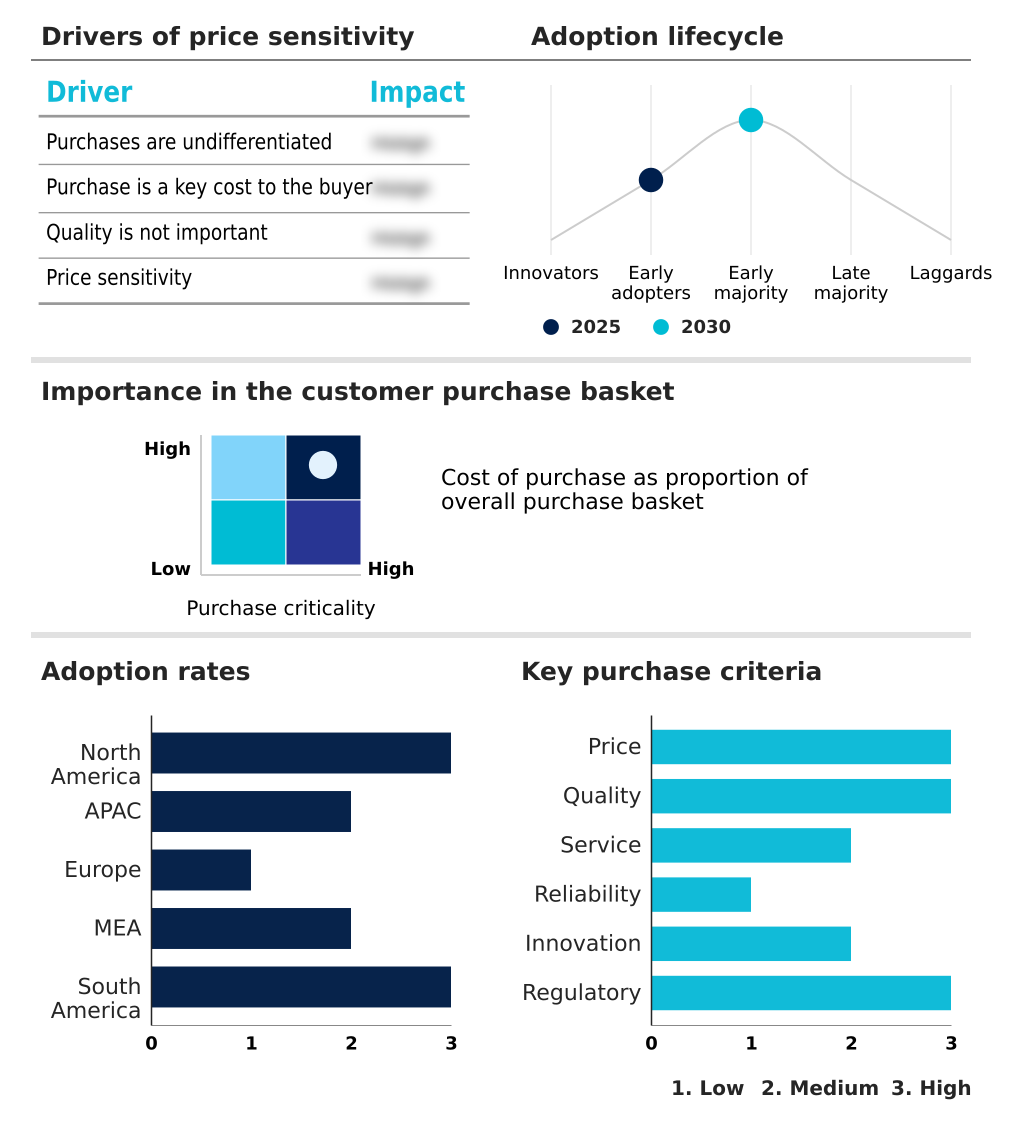
Customer Landscape of Flare Blowers Industry
Competitive Landscape
Companies are implementing various strategies, such as strategic alliances, flare blowers market forecast, partnerships, mergers and acquisitions, geographical expansion, and product/service launches, to enhance their presence in the industry.
Aerzener Maschinenfabrik GmbH - Key offerings include twin-shaft positive displacement machines and delta hybrid blowers engineered for demanding industrial gas handling and flare applications.
The industry research and growth report includes detailed analyses of the competitive landscape of the market and information about key companies, including:
- Aerzener Maschinenfabrik GmbH
- AMETEK Inc.
- Atlas Copco AB
- Chart Industries Inc.
- Cimarron Energy Inc.
- Continental Blower LLC
- Gardner Denver
- GBA Flare Systems
- Hibon
- Honeywell International Inc.
- KAESER Kompressoren SE
- Koch Inc.
- Lone Star Turbo
- Mapro International SpA
- MD Kinney
- NAO Inc.
- Piller Group GmbH
- PT. Kobar Combustindo
- Republic Manufacturing
- Zeeco Inc.
Qualitative and quantitative analysis of companies has been conducted to help clients understand the wider business environment as well as the strengths and weaknesses of key industry players. Data is qualitatively analyzed to categorize companies as pure play, category-focused, industry-focused, and diversified; it is quantitatively analyzed to categorize companies as dominant, leading, strong, tentative, and weak.
Recent Development and News in Flare blowers market
- In April 2025, the Environmental Protection Agency introduced the Clean Air Initiative for Volatile Organic Compounds, mandating the integration of advanced air-assist flare blower systems in all midstream processing facilities to ensure a minimum 99.5% combustion efficiency.
- In March 2025, Schneider Electric launched its EcoStruxure Flare Intelligence platform, a digital twin environment designed to monitor the mechanical health of high-capacity blowers in air-assisted flare systems.
- In February 2025, Ingersoll Rand finalized its acquisition of SSI Aeration, a move aimed at expanding its portfolio of positive displacement technologies for gas handling and advanced aeration applications.
- In October 2025, the World Bank Global Gas Flaring Reduction Partnership announced an agreement in which twenty-five additional nations committed to the Zero Routine Flaring by 2030 initiative, effectively banning the practice for all new oil field developments.
Dive into Technavio’s robust research methodology, blending expert interviews, extensive data synthesis, and validated models for unparalleled Flare Blowers Market insights. See full methodology.
| Market Scope | |
|---|---|
| Page number | 307 |
| Base year | 2025 |
| Historic period | 2020-2024 |
| Forecast period | 2026-2030 |
| Growth momentum & CAGR | Accelerate at a CAGR of 5.8% |
| Market growth 2026-2030 | USD 95.5 million |
| Market structure | Fragmented |
| YoY growth 2025-2026(%) | 5.7% |
| Key countries | US, Canada, Mexico, China, India, Australia, Japan, South Korea, Indonesia, Germany, UK, Norway, Russia, The Netherlands, France, Saudi Arabia, UAE, Qatar, Iraq, Algeria, Brazil, Argentina and Venezuela |
| Competitive landscape | Leading Companies, Market Positioning of Companies, Competitive Strategies, and Industry Risks |
Research Analyst Overview
- The market is fundamentally shaped by the need for advanced air-moving equipment designed for safe and efficient industrial combustion. Systems are engineered around specific technologies, including centrifugal blowers, positive displacement blowers, and high-speed turbo blowers, with specialized units like multistage centrifugal blowers, regenerative blowers, and liquid ring blowers serving niche applications.
- The primary operational goal is achieving high combustion efficiency and destruction removal efficiency, often through air-assist smokeless flaring or comprehensive flare gas recovery systems. Key technological trends driving innovation include the adoption of digital twin technology for predictive diagnostics, the use of variable frequency drives, and advanced acoustic mitigation.
- Hardware innovations such as direct-drive blowers, tri-lobe rotors, and specialized bearings—including magnetic levitation bearings and air-foil bearings—are enabling energy efficiency gains of up to 37%. Boardroom decisions are increasingly influenced by the long-term trend toward zero-routine flaring, which requires strategic capital allocation away from combustion toward vapor recovery units.
- This shift impacts investment in modular blower assemblies, skid-mounted units, and explosion-proof flare blower skids, which are crucial for both new projects and retrofits focused on gas boosting and safety compliance.
What are the Key Data Covered in this Flare Blowers Market Research and Growth Report?
-
What is the expected growth of the Flare Blowers Market between 2026 and 2030?
-
USD 95.5 million, at a CAGR of 5.8%
-
-
What segmentation does the market report cover?
-
The report is segmented by Type (Centrifugal blowers, Positive displacement blowers, High-speed turbo blowers, and Others), Application (Flare gas recovery, Air-assist smokeless flaring, Gas boosting, and Others), Capacity (Medium, Large, and Small) and Geography (North America, APAC, Europe, Middle East and Africa, South America)
-
-
Which regions are analyzed in the report?
-
North America, APAC, Europe, Middle East and Africa and South America
-
-
What are the key growth drivers and market challenges?
-
Stringency in environmental mandates and global emission standards, High initial capital expenditure and specialized maintenance requirements
-
-
Who are the major players in the Flare Blowers Market?
-
Aerzener Maschinenfabrik GmbH, AMETEK Inc., Atlas Copco AB, Chart Industries Inc., Cimarron Energy Inc., Continental Blower LLC, Gardner Denver, GBA Flare Systems, Hibon, Honeywell International Inc., KAESER Kompressoren SE, Koch Inc., Lone Star Turbo, Mapro International SpA, MD Kinney, NAO Inc., Piller Group GmbH, PT. Kobar Combustindo, Republic Manufacturing and Zeeco Inc.
-
Market Research Insights
- Market dynamics are shaped by stringent environmental regulations and the expansion of industrial infrastructure. The push for methane emission reduction and enhanced industrial safety protocols necessitates upgrades to industrial combustion systems. This drive for compliance has led to operational improvements, with modern systems achieving over 99.5% destruction efficiency for volatile organic compounds.
- The growth of liquefied natural gas infrastructure is also a significant factor, with new facilities requiring advanced blowers to manage pressure and ensure smokeless combustion.
- In the downstream sector, the modernization of aging petrochemical facilities and refineries is critical, where replacing legacy equipment can improve energy efficiency by up to 37%, directly impacting operational costs and contributing to carbon footprint reduction goals.
We can help! Our analysts can customize this flare blowers market research report to meet your requirements.
 RIA -
RIA - 
