
Fly Ash Market Size 2025-2029
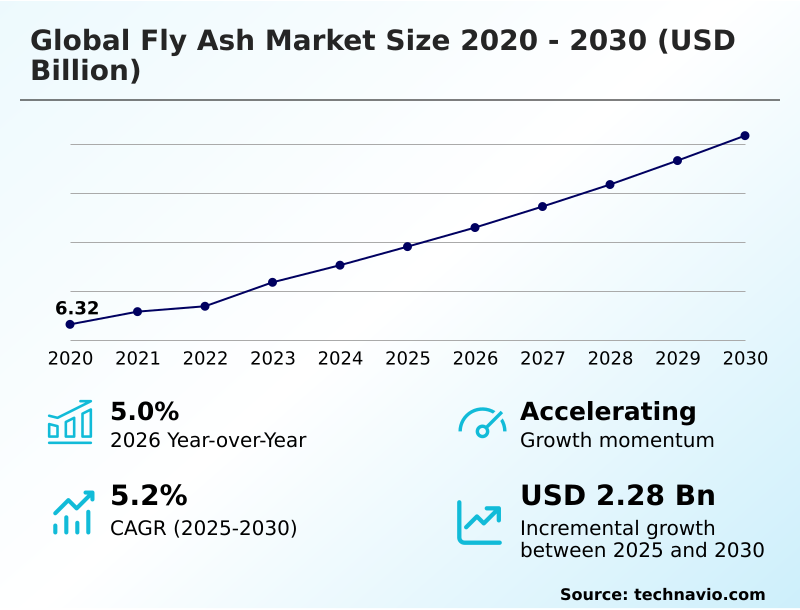
The fly ash market size is forecast to increase by USD 2.13 billion at a CAGR of 5.1% between 2024 and 2029.
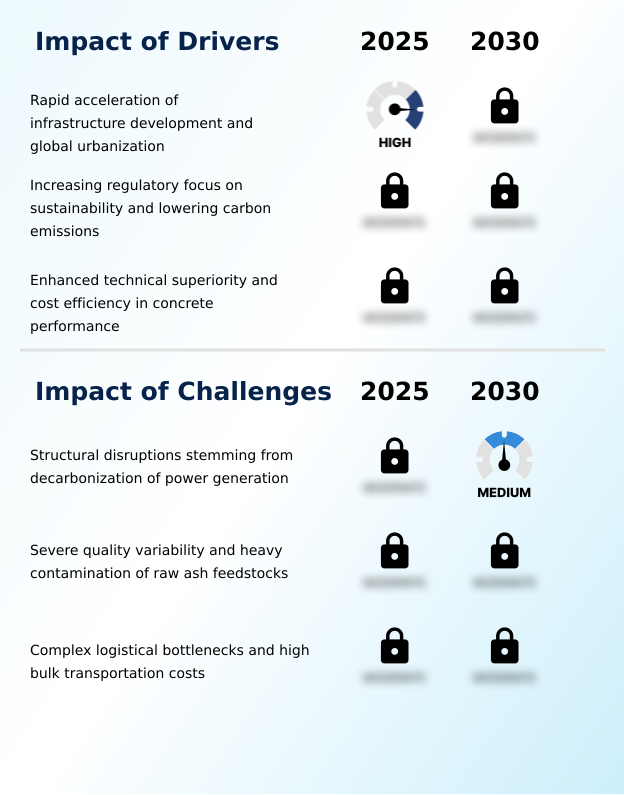
- The market experiences significant growth, driven primarily by the increasing construction activities worldwide. The adoption of eco-friendly cement technology, which incorporates fly ash as a key component, is a primary catalyst fueling market expansion. However, the limitations in the use of fly ash pose challenges to market growth. Regulatory hurdles impact adoption due to varying standards and guidelines for fly ash utilization across regions. Additionally, supply chain inconsistencies, including the availability and quality of fly ash, can temper growth potential. Fly ash, a byproduct of coal combustion in thermal power plants has gained significant attention in recent years due to its potential as a sustainable and cost-effective alternative in various industries.
- Despite these challenges, companies can capitalize on the market opportunities by focusing on addressing these issues through strategic partnerships, technological advancements, and regulatory compliance. Effective navigation of these challenges will enable businesses to seize the potential of this growing market and maintain a competitive edge. Agriculture soil restoration is another emerging area where fly ash is being used to improve soil quality.
What will be the Size of the Fly Ash Market during the forecast period?
Request Free Sample
- Fly ash, a byproduct of coal-fired power plants, has emerged as a valuable resource in the US construction sector. This industrial waste material offers numerous benefits, including durability improvement, carbon sequestration, and waste management. Fly ash testing and analysis play a crucial role in ensuring compliance with industry standards, enhancing fly ash properties for various applications. In the realm of commercial construction, fly ash is increasingly used in ready-mix and precast concrete, contributing to the reduction of greenhouse gas emissions and energy consumption. Fly ash-based geopolymers have gained traction as innovative alternatives to traditional cementitious materials, offering improved performance and sustainability. Furthermore, fly ash can be utilized in the production of glass-ceramics and glass materials, expanding its application scope.
- Additionally, fly ash slurry is used for soil stabilization, while fly ash price competitiveness drives its adoption in lightweight and insulating concrete. Regulations and certifications govern fly ash handling, transportation, and disposal, ensuring safety and environmental compliance. As the market evolves, research and development efforts continue to uncover new applications and opportunities for this versatile material. In the US construction industry, fly ash is poised to play a significant role in the future, with continued innovation and demand driven by its unique properties and sustainable benefits.
How is this Fly Ash Industry segmented?
The fly ash industry research report provides comprehensive data (region-wise segment analysis), with forecasts and estimates in "USD million" for the period 2025-2029, as well as historical data from 2019-2023 for the following segments.
- Application
- Portland cement
- Agriculture
- Road construction
- Fire bricks
- Others
- Type
- End-user
- Construction
- Mining
- Water treatment
- Agriculture
- Others
- Geography
- North America
- Europe
- APAC
- Australia
- China
- India
- Japan
- South Korea
- Rest of World (ROW)
By Application Insights
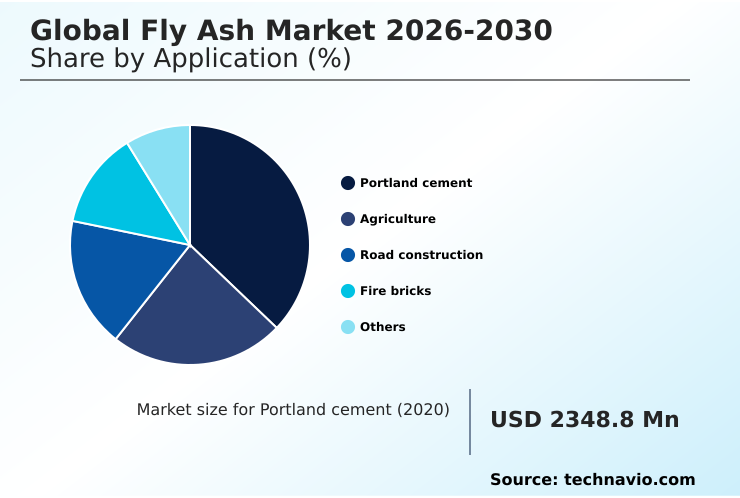
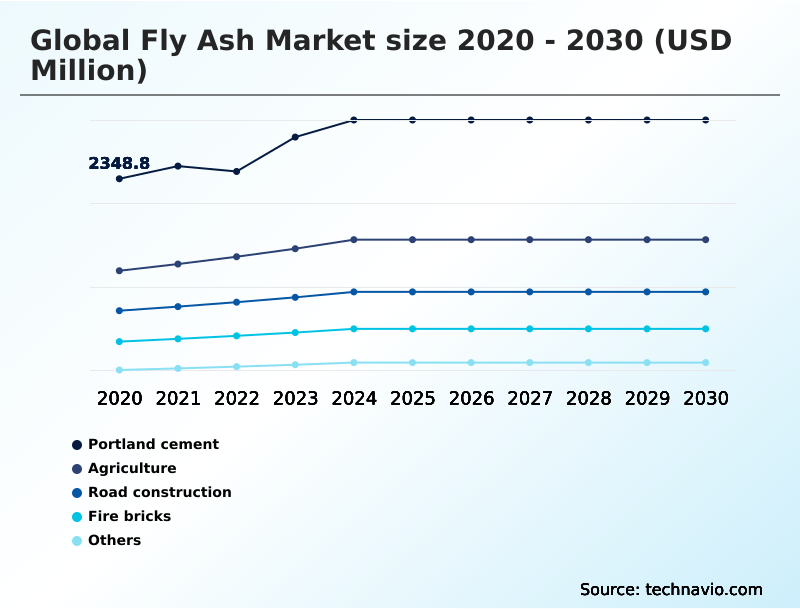
The portland cement segment is estimated to witness significant growth during the forecast period. Fly ash, a byproduct of coal-fired power plants, offers significant benefits when used as an additive in portland cement concrete. Its incorporation enhances concrete's properties in both fresh and hardened states. In the plastic stage, fly ash improves workability, enabling better flowability and reducing the need for water. Hardened concrete gains strength and durability, with fly ash acting as a pozzolanic material, reacting with available lime and alkali to produce additional cementitious compounds. Fly ash's chemical composition and particle size distribution contribute to these advantages. It allows for cement replacement, reducing the overall cost of concrete production.
Moreover, fly ash's utilization in infrastructure projects, such as highways and bridges, contributes to the circular economy by repurposing industrial byproducts. Fly ash's applications extend beyond concrete production. It is used in geotechnical engineering for soil stabilization and in geopolymer concrete for sustainable construction. In the realm of industrial construction and civil engineering, fly ash's use results in emission reduction and improved durability. Fly ash's properties align with various construction material requirements. It enhances the workability of ready-mix and precast concrete, contributing to their production efficiency. Additionally, fly ash-based geopolymers offer lightweight and insulating concrete solutions. Fly ash's incorporation into concrete adheres to ASTM standards and classification, ensuring consistent quality control. In the initial stages, fly ash improves the workability of plastic concrete, enabling easier handling and better compaction.
Its use in brick manufacturing and as fill material further expands its applications. Fly ash's environmental benefits extend to carbon sequestration and waste management. Its use in concrete production reduces the need for virgin raw materials and minimizes the environmental impact of industrial activities. Adherence to environmental regulations is crucial in ensuring sustainable practices within the construction industry. Furthermore, the primary reason for fly ash's effectiveness lies in its chemical reaction with the lime and alkali present in concrete, resulting in the formation of additional cementitious compounds.

Request Free Sample
The Portland cement segment was valued at USD 2.43 billion in 2019 and showed a gradual increase during the forecast period.
Regional Analysis
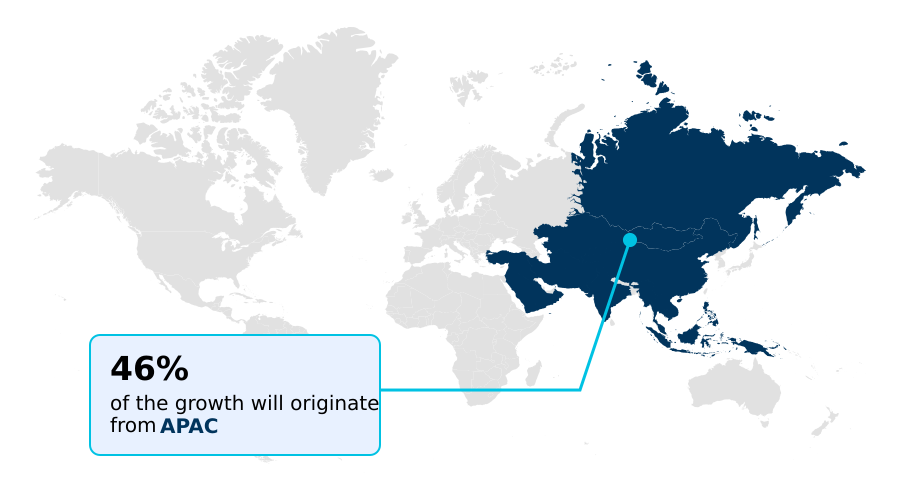
APAC is estimated to contribute 50% to the growth of the global market during the forecast period.Technavio's analysts have elaborately explained the regional trends and drivers that shape the market during the forecast period.
Download Free Sample Report
The market is experiencing significant growth, particularly in the Asia Pacific (APAC) region. The increasing demand for fly ash in developing economies, such as India, Malaysia, and China, is driving this trend. Industrialization and urbanization in these countries have led to a surge in construction expenditure, fueling the need for residential and non-residential buildings. As a result, the use of fly ash in Portland cement and concrete applications is on the rise. Fly ash's chemical composition makes it an ideal substitute for cement in concrete production. Its use not only enhances the strength and durability of concrete but also contributes to environmental benefits, such as emission reduction and waste management. Fly ash also plays a crucial role in various industries, including glass, ceramics, metal refining, and road construction.
In addition, fly ash is utilized in various industries, including geotechnical engineering, brick manufacturing, and soil stabilization. The market is subject to stringent quality control measures and adheres to ASTM standards and fly ash classification. The particle size distribution of fly ash is crucial in concrete mix design, ensuring optimal workability enhancement and strength enhancement. Furthermore, fly ash is used in the production of geopolymer concrete, a sustainable construction material, and in the manufacturing of lightweight and insulating concrete. The circular economy concept has gained traction in the construction industry, leading to increased utilization of industrial byproducts like fly ash.
Infrastructure projects, including highways and bridges, are significant consumers of fly ash. Industrial construction and civil engineering also rely heavily on fly ash as a cost-effective and eco-friendly alternative to cement. Fly ash utilization in thermal power plants is another significant application. The use of fly ash in concrete production and other applications contributes to carbon sequestration, making it an essential component of sustainable construction. Overall, the market is dynamic and evolving, with ongoing research and development efforts focused on improving its properties and expanding its applications.
Market Dynamics
Our researchers analyzed the data with 2024 as the base year, along with the key drivers, trends, and challenges. A holistic analysis of drivers will help companies refine their marketing strategies to gain a competitive advantage.
What are the Fly Ash market drivers leading to the rise in the adoption of Industry?
- The surge in construction activities serves as the primary driver for market growth. The global construction industry is projected to expand by USD 12 trillion during the forecast period, with Asia Pacific (APAC) being a significant contributor due to the emergence of major economies such as India, China, Indonesia, and the Philippines. In this region, countries like Vietnam and Malaysia hold considerable potential. Singapore stands out for its high-quality infrastructure. The cost of building materials, which typically accounts for almost half of a building's total cost, can reach 80% for lower-income housing projects, depending on the country. The use of fly ash as a cement substitute in the construction industry presents a promising growth opportunity in APAC.
- This industrial byproduct, generated from thermal power plants, can be beneficiated and utilized in various applications, including geopolymer concrete, brick manufacturing, and fill material. Its adoption not only reduces the demand for virgin raw materials but also enhances the workability and durability of construction materials. As the construction industry transitions towards more sustainable practices, the market for fly ash is poised for growth.
What are the Fly Ash market trends shaping the Industry?
- Eco-friendly cement technology is the growing trend in the construction industry. This innovative approach prioritizes sustainability and reduces the environmental impact of cement production. The global construction industry's growing demand for bricks and cement is putting pressure on these sectors to find eco-friendly and cost-effective alternatives. According to recent research, the global construction output is projected to expand by over USD 15 trillion by 2030, with China, the US, and India leading the market growth. These countries are expected to account for more than 55% of the total increase. Construction materials, particularly cement and bricks, are the largest resource consumers in building and infrastructure projects. Fly ash, a byproduct of coal-fired power plants, is gaining popularity as a sustainable alternative to traditional construction materials.
- Its use in ready-mix concrete and precast concrete improves durability and reduces the carbon footprint of these industries. Additionally, fly ash-based geopolymers are emerging as a viable option for waste management and soil stabilization. Furthermore, fly ash can be used to produce lightweight concrete and insulating concrete, offering additional benefits. Carbon sequestration is another advantage of using fly ash in construction. The use of fly ash in concrete can help reduce the carbon emissions associated with the production of cement. As the construction industry continues to expand, the demand for eco-friendly and cost-effective materials is becoming increasingly important.
- Fly ash is poised to play a significant role in addressing these demands while minimizing the environmental impact.
How does Fly Ash market faces challenges face during its growth?
- The fly ash utilization limitations pose a significant challenge to the expansion and growth of the industry. Fly ash, a byproduct of coal-fired power plants, is increasingly utilized in industrial construction and civil engineering projects due to its ability to decrease water content in concrete mixtures without affecting workability. This results in a significant increase in the use of fly ash from 15-25% to 40-60% by mass. However, the use of high volumes of fly ash may lead to challenges such as extended setting time and slower strength development, particularly in cold weather conditions. The quality of fly ash is crucial, as poor-quality fly ash can increase permeability and potentially damage buildings and structures.
- Furthermore, concerns regarding fly ash's tendency to effloresce and freezing or thaw performance have hindered its widespread adoption among traditional builders. Adherence to ASTM standards and proper fly ash classification are essential to ensure emission reduction, cost reduction, and environmental regulations compliance. Fly ash's unique characteristics make it a valuable resource in the construction industry, but careful consideration and proper handling are necessary to maximize its benefits.
Exclusive Customer Landscape
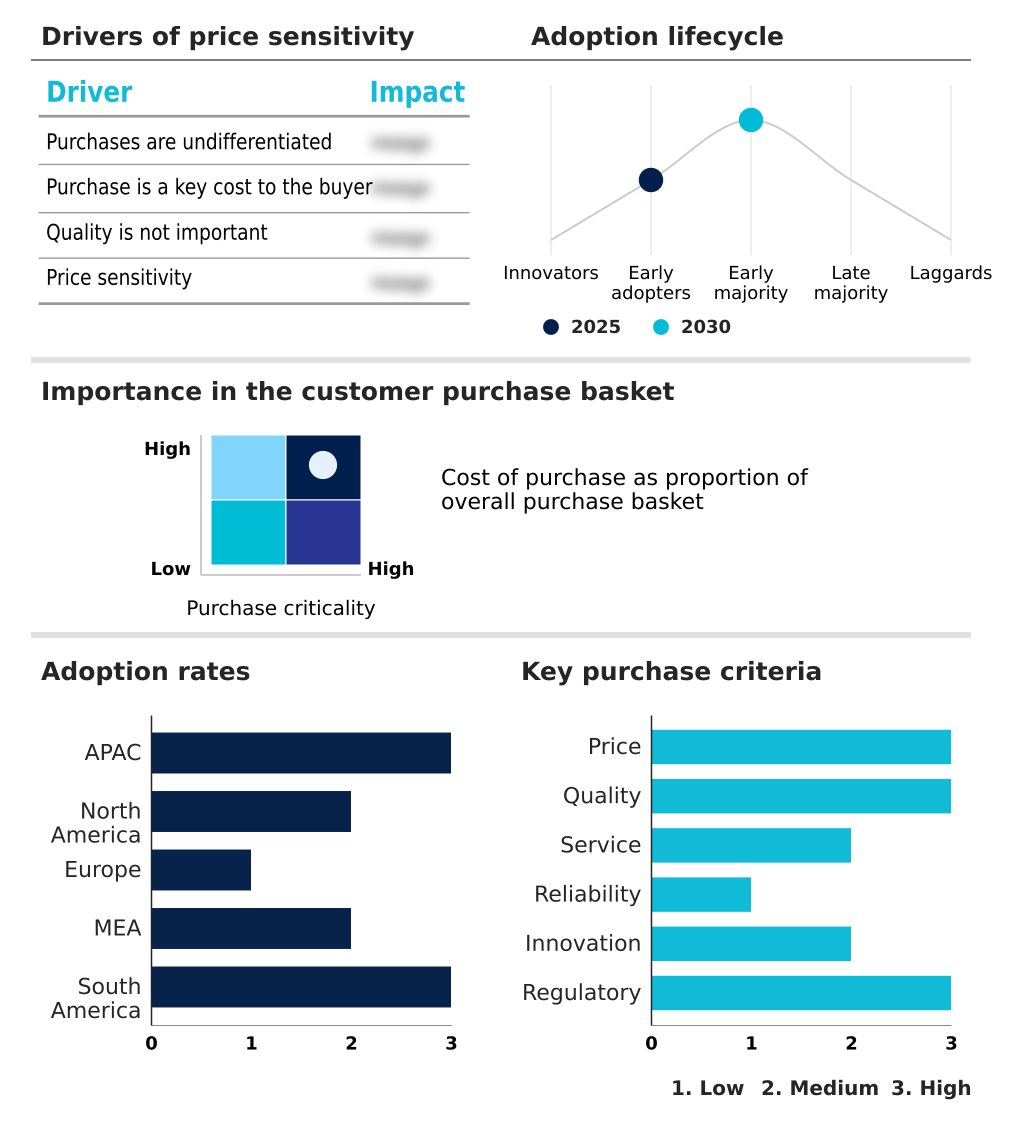
The fly ash market forecasting report includes the adoption lifecycle of the market, covering from the innovator's stage to the laggard's stage. It focuses on adoption rates in different regions based on penetration. Furthermore, the fly ash market report also includes key purchase criteria and drivers of price sensitivity to help companies evaluate and develop their market growth analysis strategies.
Customer Landscape
Key Companies & Market Insights
Companies are implementing various strategies, such as strategic alliances, fly ash market forecast, partnerships, mergers and acquisitions, geographical expansion, and product/service launches, to enhance their presence in the industry.
Ashtech India Pvt. Ltd. - The company specializes in supplying high-performance fly ash solutions, including Ashtech SUPERPOZZ and Ashtech DURACRETE.
The industry research and growth report includes detailed analyses of the competitive landscape of the market and information about key companies, including:
- Ashtech India Pvt. Ltd.
- Boral Ltd.
- CEMEX SAB de CV
- Charah Solutions Inc.
- CRH Plc
- Ecocem Ireland Ltd.
- HeidelbergCement AG
- Holcim Ltd.
- National Minerals Corp.
- NTPC Ltd.
- Salt River Materials Group
- Sephaku Holdings Ltd.
- Suyog Elements India Pvt. Ltd.
- The SEFA Group LLC
- Titan Cement Group
- Usb Chemicals
- Waste Management Inc.
Qualitative and quantitative analysis of companies has been conducted to help clients understand the wider business environment as well as the strengths and weaknesses of key industry players. Data is qualitatively analyzed to categorize companies as pure play, category-focused, industry-focused, and diversified; it is quantitatively analyzed to categorize companies as dominant, leading, strong, tentative, and weak.
Recent Development and News in Fly Ash Market
- In February 2024, Holcim, a leading global building solutions company, announced the commissioning of a new fly ash production line at its cement plant in Mexico. This expansion is expected to increase the company's fly ash production capacity by 20%, strengthening its position as a key player in the market (Holcim press release, 2024).
- In October 2025, LafargeHolcim, a leading building materials company, and Siemens Energy, a global technology powerhouse, signed a strategic partnership to develop and implement a carbon capture, utilization, and storage (CCUS) system at LafargeHolcim's fly ash production facilities. The collaboration aims to reduce the carbon footprint of the cement industry by utilizing fly ash as a substitute for limestone in cement production (LafargeHolcim press release, 2025).
- In January 2025, Cemex, a global cement company, secured a significant regulatory approval from the European Union for its new fly ash processing plant in Poland. The approval marks the completion of the permitting process and paves the way for the plant's construction, which is expected to commence in the second quarter of 2025 (Cemex press release, 2025).
- In March 2024, HeidelbergCement, a leading global building materials company, announced a â¬100 million investment in its fly ash recycling project in the Netherlands. The project aims to increase the company's fly ash recycling capacity by 50%, reducing the need for virgin raw materials and promoting sustainable construction practices (HeidelbergCement press release, 2024).
Research Analyst Overview
Fly ash, a byproduct of coal-fired power generation, has emerged as a valuable resource in various industries, particularly in construction. The ongoing dynamics and evolving patterns of the market reflect its growing significance in environmental sustainability and infrastructure development. Fly ash's chemical composition makes it an ideal substitute for traditional construction materials. Its environmental benefits include emission reduction and cost savings in cement replacement during concrete mix design. The particle size distribution of fly ash enables workability enhancement and strength enhancement in concrete production, making it a preferred choice for infrastructure projects. In the realm of highways and bridges, fly ash's use as a geotechnical engineering material has gained traction due to its durability improvement properties.
The Fly Ash Market is witnessing significant growth, driven by advancements in fly ash blending and fly ash stabilization techniques that enhance utility in construction and environmental applications. Efficient fly ash disposal and fly ash transportation systems ensure seamless operations and reduced environmental impact. Ongoing fly ash research and fly ash innovation are addressing industry challenges and propelling growth. The rising fly ash demand has spurred interest in fly ash substitutes and fly ash alternatives, complying with stringent fly ash regulations and adhering to fly ash standards. Obtaining fly ash certification through rigorous fly ash analysis underscores its quality and usability. Emphasis on fly ash sustainability supports eco-friendly practices, reinforcing its vital role in modern infrastructure development.
The material's properties also make it suitable for green building materials and sustainable construction projects, contributing to the circular economy. Fly ash beneficiation techniques have advanced significantly, ensuring consistent quality control in the production of fly ash for various applications. The material's use extends to industrial byproducts such as brick manufacturing and fill material, as well as commercial and residential construction. Geopolymer concrete, a relatively new development in the construction industry, is gaining popularity due to its environmental advantages and cost-effectiveness. Fly ash-based geopolymers offer superior strength and durability, making them a viable alternative to traditional concrete in industrial and civil engineering projects.
The use of fly ash in thermal power plants as a waste management solution has become increasingly important in light of environmental regulations. The material's potential applications in soil stabilization, carbon sequestration, lightweight concrete, and insulating concrete further expand its market reach. Fly ash's role in infrastructure projects is not limited to concrete production. Its use in precast concrete and ready-mix concrete has gained momentum due to its ability to enhance workability and improve durability. The material's properties also make it suitable for testing and analysis in various construction applications. ASTM standards and fly ash classification systems ensure consistent quality and uniformity in the production and use of fly ash.
The evolving patterns in the market reflect the ongoing efforts to optimize its use in various industries and applications, while adhering to environmental regulations and sustainability goals. In conclusion, the market is a dynamic and evolving industry, driven by the growing demand for sustainable construction materials and the need for waste management solutions. The material's versatility and environmental benefits make it a valuable resource in various industries, from infrastructure projects to commercial and residential construction. The ongoing research and development in fly ash utilization continue to expand its applications and contribute to the circular economy.
Dive into Technavio's robust research methodology, blending expert interviews, extensive data synthesis, and validated models for unparalleled Fly Ash Market insights. See full methodology.
|
Market Scope
|
|
Report Coverage
|
Details
|
|
Page number
|
228
|
|
Base year
|
2024
|
|
Historic period
|
2019-2023 |
|
Forecast period
|
2025-2029
|
|
Growth momentum & CAGR
|
Accelerate at a CAGR of 5.1%
|
|
Market growth 2025-2029
|
USD 2.13 billion
|
|
Market structure
|
Fragmented
|
|
YoY growth 2024-2025(%)
|
5.0
|
|
Key countries
|
US, China, Japan, India, South Korea, Germany, Canada, UK, Australia, and France
|
|
Competitive landscape
|
Leading Companies, Market Positioning of Companies, Competitive Strategies, and Industry Risks
|
Request Free Sample
What are the Key Data Covered in this Fly Ash Market Research and Growth Report?
- CAGR of the Fly Ash industry during the forecast period
- Detailed information on factors that will drive the growth and forecasting between 2025 and 2029
- Precise estimation of the size of the market and its contribution of the industry in focus to the parent market
- Accurate predictions about upcoming growth and trends and changes in consumer behaviour
- Growth of the market across APAC, North America, Europe, Middle East and Africa, and South America
- Thorough analysis of the market's competitive landscape and detailed information about companies
- Comprehensive analysis of factors that will challenge the fly ash market growth of industry companies
We can help! Our analysts can customize this fly ash market research report to meet your requirements.
Get in touch
1 Executive Summary
- 1.1 Market overview
- Executive Summary - Chart on Market Overview
- Executive Summary - Data Table on Market Overview
- Executive Summary - Chart on Global Market Characteristics
- Executive Summary - Chart on Market by Geography
- Executive Summary - Chart on Market Segmentation by Application
- Executive Summary - Chart on Market Segmentation by Type
- Executive Summary - Chart on Market Segmentation by End-user
- Executive Summary - Chart on Incremental Growth
- Executive Summary - Data Table on Incremental Growth
- Executive Summary - Chart on Company Market Positioning
2 Technavio Analysis
- 2.1 Analysis of price sensitivity, lifecycle, customer purchase basket, adoption rates, and purchase criteria
- Analysis of price sensitivity, lifecycle, customer purchase basket, adoption rates, and purchase criteria
- 2.2 Criticality of inputs and Factors of differentiation
- Overview on criticality of inputs and factors of differentiation
- 2.3 Factors of disruption
- Overview on factors of disruption
- 2.4 Impact of drivers and challenges
- Impact of drivers and challenges in 2024 and 2029
3 Market Landscape
- 3.1 Market ecosystem
- Parent Market
- Data Table on - Parent Market
- 3.2 Market characteristics
- Market characteristics analysis
4 Market Sizing
- 4.1 Market definition
- Offerings of companies included in the market definition
- 4.2 Market segment analysis
- 4.4 Market outlook: Forecast for 2024-2029
- Chart on Global - Market size and forecast 2024-2029 ($ million)
- Data Table on Global - Market size and forecast 2024-2029 ($ million)
- Chart on Global Market: Year-over-year growth 2024-2029 (%)
- Data Table on Global Market: Year-over-year growth 2024-2029 (%)
5 Historic Market Size
- 5.1 Global Fly Ash Market 2019 - 2023
- Historic Market Size - Data Table on Global Fly Ash Market 2019 - 2023 ($ million)
- 5.2 Application segment analysis 2019 - 2023
- Historic Market Size - Application Segment 2019 - 2023 ($ million)
- 5.3 Type segment analysis 2019 - 2023
- Historic Market Size - Type Segment 2019 - 2023 ($ million)
- 5.4 End-user segment analysis 2019 - 2023
- Historic Market Size - End-user Segment 2019 - 2023 ($ million)
- 5.5 Geography segment analysis 2019 - 2023
- Historic Market Size - Geography Segment 2019 - 2023 ($ million)
- 5.6 Country segment analysis 2019 - 2023
- Historic Market Size - Country Segment 2019 - 2023 ($ million)
6 Qualitative Analysis
- 6.1 Impact of AI in global fly ash market
7 Five Forces Analysis
- 7.1 Five forces summary
- Five forces analysis - Comparison between 2024 and 2029
- 7.2 Bargaining power of buyers
- Bargaining power of buyers - Impact of key factors 2024 and 2029
- 7.3 Bargaining power of suppliers
- Bargaining power of suppliers - Impact of key factors in 2024 and 2029
- 7.4 Threat of new entrants
- Threat of new entrants - Impact of key factors in 2024 and 2029
- 7.5 Threat of substitutes
- Threat of substitutes - Impact of key factors in 2024 and 2029
- 7.6 Threat of rivalry
- Threat of rivalry - Impact of key factors in 2024 and 2029
- 7.7 Market condition
- Chart on Market condition - Five forces 2024 and 2029
8 Market Segmentation by Application
- 8.1 Market segments
- Chart on Application - Market share 2024-2029 (%)
- Data Table on Application - Market share 2024-2029 (%)
- 8.2 Comparison by Application
- Chart on Comparison by Application
- Data Table on Comparison by Application
- 8.3 Portland cement - Market size and forecast 2024-2029
- Chart on Portland cement - Market size and forecast 2024-2029 ($ million)
- Data Table on Portland cement - Market size and forecast 2024-2029 ($ million)
- Chart on Portland cement - Year-over-year growth 2024-2029 (%)
- Data Table on Portland cement - Year-over-year growth 2024-2029 (%)
- 8.4 Agriculture - Market size and forecast 2024-2029
- Chart on Agriculture - Market size and forecast 2024-2029 ($ million)
- Data Table on Agriculture - Market size and forecast 2024-2029 ($ million)
- Chart on Agriculture - Year-over-year growth 2024-2029 (%)
- Data Table on Agriculture - Year-over-year growth 2024-2029 (%)
- 8.5 Road construction - Market size and forecast 2024-2029
- Chart on Road construction - Market size and forecast 2024-2029 ($ million)
- Data Table on Road construction - Market size and forecast 2024-2029 ($ million)
- Chart on Road construction - Year-over-year growth 2024-2029 (%)
- Data Table on Road construction - Year-over-year growth 2024-2029 (%)
- 8.6 Fire bricks - Market size and forecast 2024-2029
- Chart on Fire bricks - Market size and forecast 2024-2029 ($ million)
- Data Table on Fire bricks - Market size and forecast 2024-2029 ($ million)
- Chart on Fire bricks - Year-over-year growth 2024-2029 (%)
- Data Table on Fire bricks - Year-over-year growth 2024-2029 (%)
- 8.7 Others - Market size and forecast 2024-2029
- Chart on Others - Market size and forecast 2024-2029 ($ million)
- Data Table on Others - Market size and forecast 2024-2029 ($ million)
- Chart on Others - Year-over-year growth 2024-2029 (%)
- Data Table on Others - Year-over-year growth 2024-2029 (%)
- 8.8 Market opportunity by Application
- Market opportunity by Application ($ million)
- Data Table on Market opportunity by Application ($ million)
9 Market Segmentation by Type
- 9.1 Market segments
- Chart on Type - Market share 2024-2029 (%)
- Data Table on Type - Market share 2024-2029 (%)
- 9.2 Comparison by Type
- Chart on Comparison by Type
- Data Table on Comparison by Type
- 9.3 Class F - Market size and forecast 2024-2029
- Chart on Class F - Market size and forecast 2024-2029 ($ million)
- Data Table on Class F - Market size and forecast 2024-2029 ($ million)
- Chart on Class F - Year-over-year growth 2024-2029 (%)
- Data Table on Class F - Year-over-year growth 2024-2029 (%)
- 9.4 Class C - Market size and forecast 2024-2029
- Chart on Class C - Market size and forecast 2024-2029 ($ million)
- Data Table on Class C - Market size and forecast 2024-2029 ($ million)
- Chart on Class C - Year-over-year growth 2024-2029 (%)
- Data Table on Class C - Year-over-year growth 2024-2029 (%)
- 9.5 Market opportunity by Type
- Market opportunity by Type ($ million)
- Data Table on Market opportunity by Type ($ million)
10 Market Segmentation by End-user
- 10.1 Market segments
- Chart on End-user - Market share 2024-2029 (%)
- Data Table on End-user - Market share 2024-2029 (%)
- 10.2 Comparison by End-user
- Chart on Comparison by End-user
- Data Table on Comparison by End-user
- 10.3 Construction - Market size and forecast 2024-2029
- Chart on Construction - Market size and forecast 2024-2029 ($ million)
- Data Table on Construction - Market size and forecast 2024-2029 ($ million)
- Chart on Construction - Year-over-year growth 2024-2029 (%)
- Data Table on Construction - Year-over-year growth 2024-2029 (%)
- 10.4 Mining - Market size and forecast 2024-2029
- Chart on Mining - Market size and forecast 2024-2029 ($ million)
- Data Table on Mining - Market size and forecast 2024-2029 ($ million)
- Chart on Mining - Year-over-year growth 2024-2029 (%)
- Data Table on Mining - Year-over-year growth 2024-2029 (%)
- 10.5 Water treatment - Market size and forecast 2024-2029
- Chart on Water treatment - Market size and forecast 2024-2029 ($ million)
- Data Table on Water treatment - Market size and forecast 2024-2029 ($ million)
- Chart on Water treatment - Year-over-year growth 2024-2029 (%)
- Data Table on Water treatment - Year-over-year growth 2024-2029 (%)
- 10.6 Agriculture - Market size and forecast 2024-2029
- Chart on Agriculture - Market size and forecast 2024-2029 ($ million)
- Data Table on Agriculture - Market size and forecast 2024-2029 ($ million)
- Chart on Agriculture - Year-over-year growth 2024-2029 (%)
- Data Table on Agriculture - Year-over-year growth 2024-2029 (%)
- 10.7 Others - Market size and forecast 2024-2029
- Chart on Others - Market size and forecast 2024-2029 ($ million)
- Data Table on Others - Market size and forecast 2024-2029 ($ million)
- Chart on Others - Year-over-year growth 2024-2029 (%)
- Data Table on Others - Year-over-year growth 2024-2029 (%)
- 10.8 Market opportunity by End-user
- Market opportunity by End-user ($ million)
- Data Table on Market opportunity by End-user ($ million)
11 Customer Landscape
- 11.1 Customer landscape overview
- Analysis of price sensitivity, lifecycle, customer purchase basket, adoption rates, and purchase criteria
12 Geographic Landscape
- 12.1 Geographic segmentation
- Chart on Market share by geography 2024-2029 (%)
- Data Table on Market share by geography 2024-2029 (%)
- 12.2 Geographic comparison
- Chart on Geographic comparison
- Data Table on Geographic comparison
- 12.3 APAC - Market size and forecast 2024-2029
- Chart on APAC - Market size and forecast 2024-2029 ($ million)
- Data Table on APAC - Market size and forecast 2024-2029 ($ million)
- Chart on APAC - Year-over-year growth 2024-2029 (%)
- Data Table on APAC - Year-over-year growth 2024-2029 (%)
- 12.4 North America - Market size and forecast 2024-2029
- Chart on North America - Market size and forecast 2024-2029 ($ million)
- Data Table on North America - Market size and forecast 2024-2029 ($ million)
- Chart on North America - Year-over-year growth 2024-2029 (%)
- Data Table on North America - Year-over-year growth 2024-2029 (%)
- 12.5 Europe - Market size and forecast 2024-2029
- Chart on Europe - Market size and forecast 2024-2029 ($ million)
- Data Table on Europe - Market size and forecast 2024-2029 ($ million)
- Chart on Europe - Year-over-year growth 2024-2029 (%)
- Data Table on Europe - Year-over-year growth 2024-2029 (%)
- 12.6 Middle East and Africa - Market size and forecast 2024-2029
- Chart on Middle East and Africa - Market size and forecast 2024-2029 ($ million)
- Data Table on Middle East and Africa - Market size and forecast 2024-2029 ($ million)
- Chart on Middle East and Africa - Year-over-year growth 2024-2029 (%)
- Data Table on Middle East and Africa - Year-over-year growth 2024-2029 (%)
- 12.7 South America - Market size and forecast 2024-2029
- Chart on South America - Market size and forecast 2024-2029 ($ million)
- Data Table on South America - Market size and forecast 2024-2029 ($ million)
- Chart on South America - Year-over-year growth 2024-2029 (%)
- Data Table on South America - Year-over-year growth 2024-2029 (%)
- 12.8 US - Market size and forecast 2024-2029
- Chart on US - Market size and forecast 2024-2029 ($ million)
- Data Table on US - Market size and forecast 2024-2029 ($ million)
- Chart on US - Year-over-year growth 2024-2029 (%)
- Data Table on US - Year-over-year growth 2024-2029 (%)
- 12.9 China - Market size and forecast 2024-2029
- Chart on China - Market size and forecast 2024-2029 ($ million)
- Data Table on China - Market size and forecast 2024-2029 ($ million)
- Chart on China - Year-over-year growth 2024-2029 (%)
- Data Table on China - Year-over-year growth 2024-2029 (%)
- 12.10 Japan - Market size and forecast 2024-2029
- Chart on Japan - Market size and forecast 2024-2029 ($ million)
- Data Table on Japan - Market size and forecast 2024-2029 ($ million)
- Chart on Japan - Year-over-year growth 2024-2029 (%)
- Data Table on Japan - Year-over-year growth 2024-2029 (%)
- 12.11 India - Market size and forecast 2024-2029
- Chart on India - Market size and forecast 2024-2029 ($ million)
- Data Table on India - Market size and forecast 2024-2029 ($ million)
- Chart on India - Year-over-year growth 2024-2029 (%)
- Data Table on India - Year-over-year growth 2024-2029 (%)
- 12.12 South Korea - Market size and forecast 2024-2029
- Chart on South Korea - Market size and forecast 2024-2029 ($ million)
- Data Table on South Korea - Market size and forecast 2024-2029 ($ million)
- Chart on South Korea - Year-over-year growth 2024-2029 (%)
- Data Table on South Korea - Year-over-year growth 2024-2029 (%)
- 12.13 Germany - Market size and forecast 2024-2029
- Chart on Germany - Market size and forecast 2024-2029 ($ million)
- Data Table on Germany - Market size and forecast 2024-2029 ($ million)
- Chart on Germany - Year-over-year growth 2024-2029 (%)
- Data Table on Germany - Year-over-year growth 2024-2029 (%)
- 12.14 Canada - Market size and forecast 2024-2029
- Chart on Canada - Market size and forecast 2024-2029 ($ million)
- Data Table on Canada - Market size and forecast 2024-2029 ($ million)
- Chart on Canada - Year-over-year growth 2024-2029 (%)
- Data Table on Canada - Year-over-year growth 2024-2029 (%)
- 12.15 UK - Market size and forecast 2024-2029
- Chart on UK - Market size and forecast 2024-2029 ($ million)
- Data Table on UK - Market size and forecast 2024-2029 ($ million)
- Chart on UK - Year-over-year growth 2024-2029 (%)
- Data Table on UK - Year-over-year growth 2024-2029 (%)
- 12.16 Australia - Market size and forecast 2024-2029
- Chart on Australia - Market size and forecast 2024-2029 ($ million)
- Data Table on Australia - Market size and forecast 2024-2029 ($ million)
- Chart on Australia - Year-over-year growth 2024-2029 (%)
- Data Table on Australia - Year-over-year growth 2024-2029 (%)
- 12.17 France - Market size and forecast 2024-2029
- Chart on France - Market size and forecast 2024-2029 ($ million)
- Data Table on France - Market size and forecast 2024-2029 ($ million)
- Chart on France - Year-over-year growth 2024-2029 (%)
- Data Table on France - Year-over-year growth 2024-2029 (%)
- 12.18 Market opportunity by geography
- Market opportunity by geography ($ million)
- Data Tables on Market opportunity by geography ($ million)
13 Drivers, Challenges, and Opportunity/Restraints
- 13.3 Impact of drivers and challenges
- Impact of drivers and challenges in 2024 and 2029
- 13.4 Market opportunities/restraints
14 Competitive Landscape
- 14.2 Competitive Landscape
- Overview on criticality of inputs and factors of differentiation
- 14.3 Landscape disruption
- Overview on factors of disruption
- 14.4 Industry risks
- Impact of key risks on business
15 Competitive Analysis
- 15.2 Company ranking index
- 15.3 Market positioning of companies
- Matrix on companies position and classification
- 15.4 Ashtech India Pvt. Ltd.
- Ashtech India Pvt. Ltd. - Overview
- Ashtech India Pvt. Ltd. - Product / Service
- Ashtech India Pvt. Ltd. - Key offerings
- SWOT
- 15.5 Boral Ltd.
- Boral Ltd. - Overview
- Boral Ltd. - Business segments
- Boral Ltd. - Key offerings
- Boral Ltd. - Segment focus
- SWOT
- 15.6 CEMEX SAB de CV
- CEMEX SAB de CV - Overview
- CEMEX SAB de CV - Business segments
- CEMEX SAB de CV - Key news
- CEMEX SAB de CV - Key offerings
- CEMEX SAB de CV - Segment focus
- SWOT
- 15.7 Charah Solutions Inc.
- Charah Solutions Inc. - Overview
- Charah Solutions Inc. - Product / Service
- Charah Solutions Inc. - Key news
- Charah Solutions Inc. - Key offerings
- SWOT
- 15.8 CRH Plc
- CRH Plc - Overview
- CRH Plc - Business segments
- CRH Plc - Key news
- CRH Plc - Key offerings
- CRH Plc - Segment focus
- SWOT
- 15.9 Ecocem Ireland Ltd.
- Ecocem Ireland Ltd. - Overview
- Ecocem Ireland Ltd. - Product / Service
- Ecocem Ireland Ltd. - Key offerings
- SWOT
- 15.10 HeidelbergCement AG
- HeidelbergCement AG - Overview
- HeidelbergCement AG - Business segments
- HeidelbergCement AG - Key offerings
- HeidelbergCement AG - Segment focus
- SWOT
- 15.11 Holcim Ltd.
- Holcim Ltd. - Overview
- Holcim Ltd. - Business segments
- Holcim Ltd. - Key news
- Holcim Ltd. - Key offerings
- Holcim Ltd. - Segment focus
- SWOT
- 15.12 National Minerals Corp.
- National Minerals Corp. - Overview
- National Minerals Corp. - Product / Service
- National Minerals Corp. - Key offerings
- SWOT
- 15.13 Salt River Materials Group
- Salt River Materials Group - Overview
- Salt River Materials Group - Product / Service
- Salt River Materials Group - Key offerings
- SWOT
- 15.14 Sephaku Holdings Ltd.
- Sephaku Holdings Ltd. - Overview
- Sephaku Holdings Ltd. - Product / Service
- Sephaku Holdings Ltd. - Key offerings
- SWOT
- 15.15 Suyog Elements India Pvt. Ltd.
- Suyog Elements India Pvt. Ltd. - Overview
- Suyog Elements India Pvt. Ltd. - Product / Service
- Suyog Elements India Pvt. Ltd. - Key offerings
- SWOT
- 15.16 Titan Cement Group
- Titan Cement Group - Overview
- Titan Cement Group - Product / Service
- Titan Cement Group - Key offerings
- SWOT
- 15.17 Usb Chemicals
- Usb Chemicals - Overview
- Usb Chemicals - Product / Service
- Usb Chemicals - Key offerings
- SWOT
- 15.18 Waste Management Inc.
- Waste Management Inc. - Overview
- Waste Management Inc. - Business segments
- Waste Management Inc. - Key offerings
- Waste Management Inc. - Segment focus
- SWOT
16 Appendix
- 16.2 Inclusions and exclusions checklist
- Inclusions checklist
- Exclusions checklist
- 16.3 Currency conversion rates for US$
- Currency conversion rates for US$
- 16.4 Research methodology
- 16.7 Validation techniques employed for market sizing
- Validation techniques employed for market sizing
- 16.9 360 degree market analysis
- 360 degree market analysis
- 16.10 List of abbreviations