
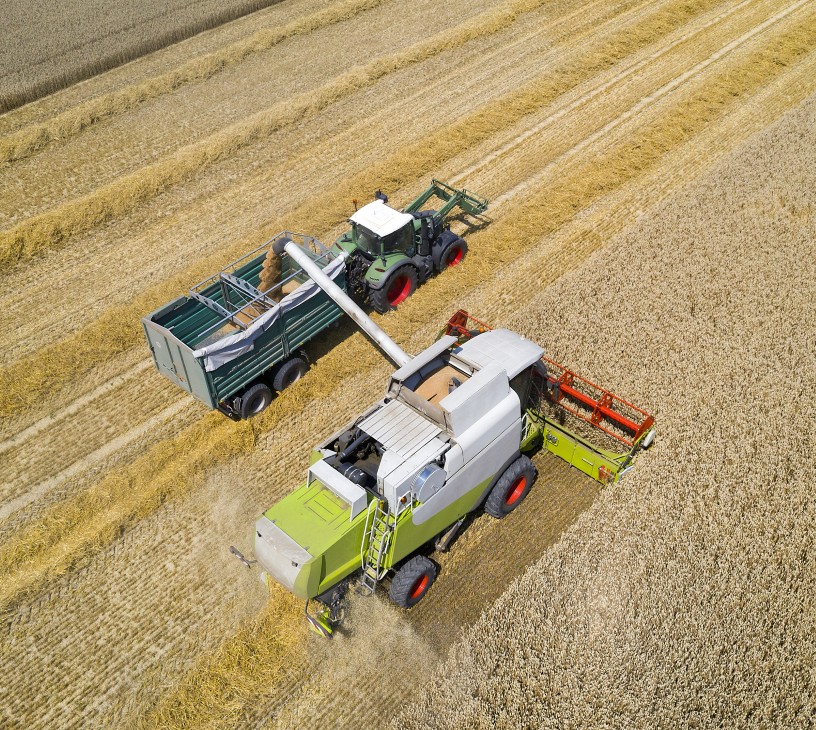


Grain Cart Market Size 2026-2030
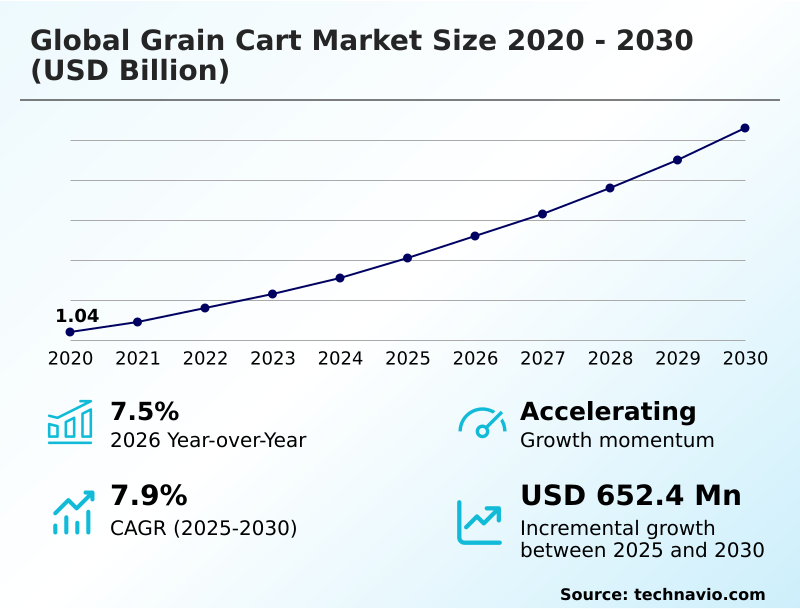
The grain cart market size is valued to increase by USD 652.4 million, at a CAGR of 7.9% from 2025 to 2030. Increasing farm consolidation and larger agricultural operations will drive the grain cart market.
Major Market Trends & Insights
- North America dominated the market and accounted for a 38.2% growth during the forecast period.
- By Distribution Channel - Direct sales segment was valued at USD 905.9 million in 2024
- By Type - Dual auger cart segment accounted for the largest market revenue share in 2024
Market Size & Forecast
- Market Opportunities: USD 1.03 billion
- Market Future Opportunities: USD 652.4 million
- CAGR from 2025 to 2030 : 7.9%
Market Summary
- The grain cart market is undergoing a significant transformation, evolving from its traditional role in grain handling solutions to becoming a pivotal component of smart farming equipment. This shift is primarily driven by farm consolidation trends, which necessitate larger, more efficient machinery to maximize harvest window efficiency.
- Key technologies such as autonomous operation, telematics, and onboard weighing systems are no longer niche features but are becoming standard for harvest logistics optimization. As modern combines achieve higher throughput, the seamless integration with a high-capacity single auger cart or dual auger cart is crucial for maintaining a continuous harvesting process.
- For instance, a large-scale farming operation must ensure equipment interoperability between a combine, tractor, and chaser bins to facilitate real-time farm data management for crop yield mapping. However, the high initial cost of advanced farming machinery and challenges in data integration present hurdles to widespread smart agriculture adoption.
- The industry's trajectory points towards more connected and automated systems that enhance farm productivity enhancement while addressing persistent labor shortages through labor-saving agricultural technology. The use of GPS guidance and remote monitoring is central to this evolution.
What will be the Size of the Grain Cart Market during the forecast period?
Get Key Insights on Market Forecast (PDF) Request Free Sample
How is the Grain Cart Market Segmented?
The grain cart industry research report provides comprehensive data (region-wise segment analysis), with forecasts and estimates in "USD million" for the period 2026-2030, as well as historical data from 2020-2024 for the following segments.
- Distribution channel
- Direct sales
- Indirect sales
- Type
- Dual auger cart
- Single auger cart
- Classic front fold cart
- Application
- Corn
- Wheat
- Rice
- Others
- Geography
- North America
- US
- Canada
- Mexico
- Europe
- Germany
- UK
- France
- APAC
- China
- Japan
- Australia
- South America
- Brazil
- Argentina
- Colombia
- Middle East and Africa
- South Africa
- Saudi Arabia
- UAE
- Rest of World (ROW)
- North America
By Distribution Channel Insights
The direct sales segment is estimated to witness significant growth during the forecast period.
The direct sales channel is gaining traction as manufacturers leverage digital platforms to manage the customer journey, enhancing brand control and enabling higher profit margins.
This model facilitates direct farmer feedback, which is invaluable for R&D in high-capacity grain handling and crop transport solutions.
By engaging directly, manufacturers of equipment featuring hydraulic drive systems and adjustable spouts can better tailor agricultural equipment financing and demonstrate how a front fold auger design contributes to operational cost reduction.
This direct engagement fosters innovation and strengthens relationships, bypassing traditional intermediaries.
This approach improves the feedback loop for grain handling solutions, with some manufacturers noting a direct-to-consumer sales model can enhance farm productivity enhancement by aligning product development more closely with end-user needs, reducing the sales cycle by over 15%.
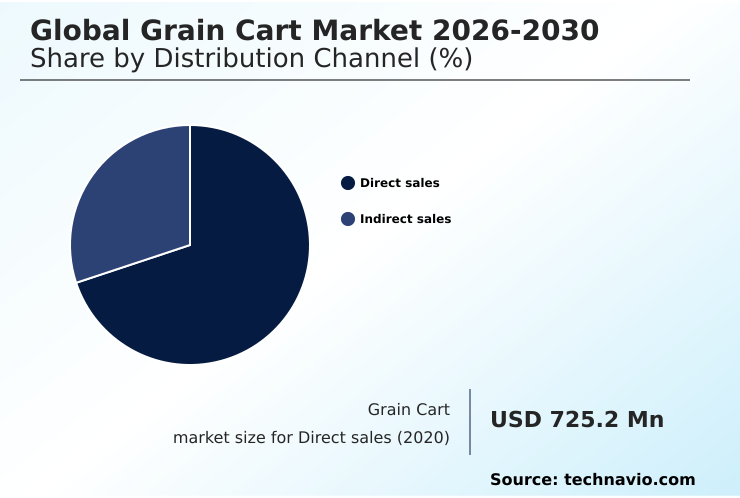
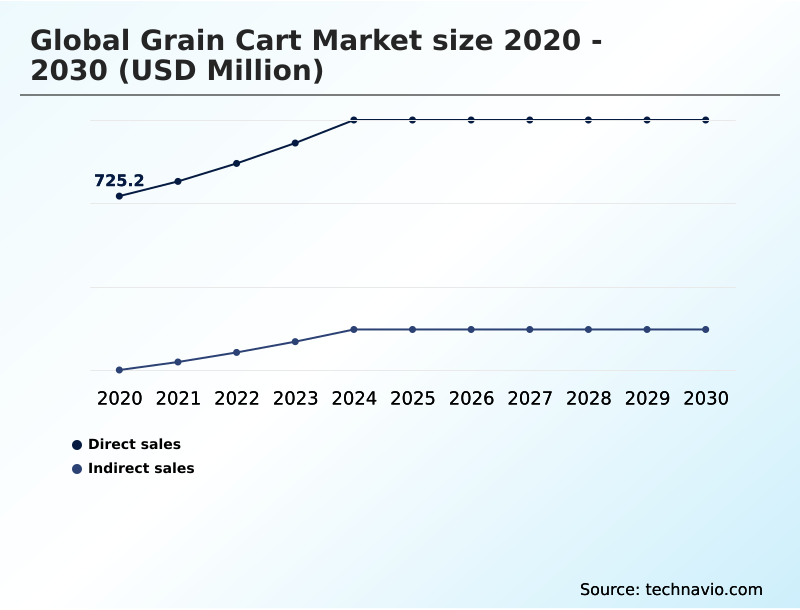
The Direct sales segment was valued at USD 905.9 million in 2024 and showed a gradual increase during the forecast period.
Regional Analysis
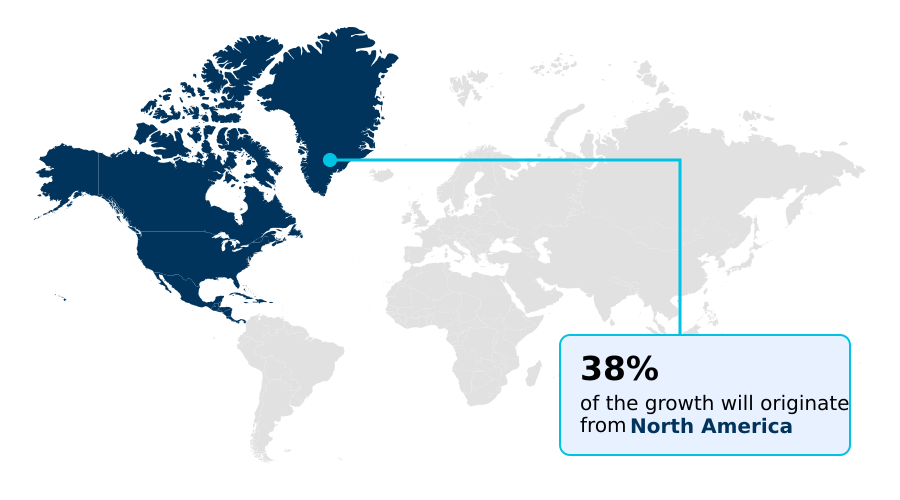
North America is estimated to contribute 38.2% to the growth of the global market during the forecast period.Technavio’s analysts have elaborately explained the regional trends and drivers that shape the market during the forecast period.
See How Grain Cart Market Demand is Rising in North America Request Free Sample
The geographic landscape of the grain cart market is led by North America, which is set to contribute 38% of the market's incremental growth, driven by large-scale farms and high technology adoption.
This region's focus on harvest logistics optimization and soil compaction management through the use of track systems is pronounced.
In contrast, the APAC region is projected to exhibit the fastest growth, with a CAGR of 8.9%, fueled by government-led mechanization initiatives. In this region, the adoption of yield monitoring sensors and GPS guidance for in-field grain transport is increasing.
Europe maintains a stable market, emphasizing sustainable farming practices and fleet management telematics.
South America, particularly Brazil and Argentina, shows strong demand for robust equipment for crop yield mapping, while the Middle East and Africa represent an emerging market with long-term potential.
Market Dynamics
Our researchers analyzed the data with 2025 as the base year, along with the key drivers, trends, and challenges. A holistic analysis of drivers will help companies refine their marketing strategies to gain a competitive advantage.
- Strategic decision-making for farm equipment now extends beyond simple capacity, focusing on the total cost-benefit analysis of autonomous grain carts and the specific benefits of dual auger vs single auger cart designs. Selecting flotation tires for high-capacity grain carts or investing in technology to reduce grain cart soil compaction are critical agronomic choices.
- The role of grain carts in precision agriculture is expanding, with farmers using grain cart data for yield mapping to inform subsequent planting strategies. To combat workforce issues, grain cart automation for labor shortages has become a key investment driver. The core operational goal is maximizing combine uptime with grain carts, which requires perfectly synchronizing grain cart speed with combines.
- Integrating GPS into grain cart operations and utilizing telematics for remote grain cart monitoring are now standard for improving harvest logistics with smart grain carts. However, challenges of grain cart technology integration persist. Success also hinges on practical considerations, from understanding front fold auger visibility and safety benefits to ensuring proper grain cart maintenance for harvest readiness.
- Given that government subsidies for agricultural mechanization are often available, the ROI of onboard weighing systems on grain carts becomes even more compelling, with some automated systems improving unloading speeds by over 20% compared to manual methods.
What are the key market drivers leading to the rise in the adoption of Grain Cart Industry?
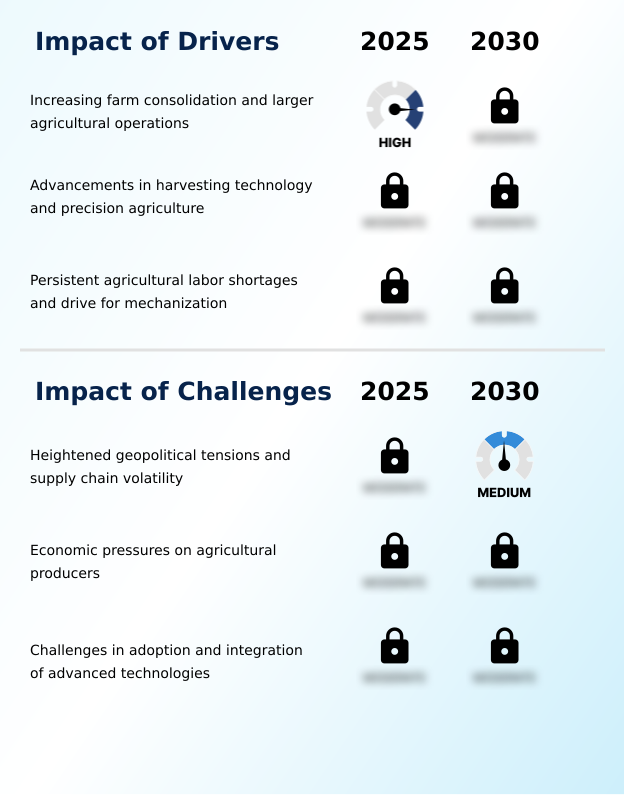
- The ongoing consolidation of farms into larger agricultural operations is a principal driver for the grain cart market, creating demand for higher-capacity equipment.
- The market's primary driver is the structural shift toward larger agricultural operations due to farm consolidation trends, which magnifies logistical challenges and demands equipment that maximizes harvest window efficiency.
- Modern, high-capacity combines require seamless combine harvester integration with grain carts to enable a continuous harvesting process, directly boosting combine uptime maximization.
- Agricultural mechanization, including the adoption of flotation tires to handle larger loads, is further propelled by persistent labor shortages, with 80% of farmers citing rising labor costs as a reason for investing in labor-saving agricultural technology.
- Advanced farm data management systems are becoming essential, creating a sustained global demand for efficient grain handling solutions that support the productivity of these expanding, data-driven operations.
What are the market trends shaping the Grain Cart Industry?
- The accelerating integration of precision agriculture technologies is a predominant trend. This development is fundamentally altering the role of the grain cart within the modern farming ecosystem.
- A transformative trend in the market is the rapid integration of precision agriculture technologies, shifting the grain cart's function from simple transport to a data-rich node in the agricultural ecosystem. The commercial rollout of autonomous operation systems, enabling the synchronization of cart and combine for unloading-on-the-go, exemplifies this push.
- This advanced farming machinery, supported by telematics and digital farming platforms, addresses labor shortages and boosts efficiency. With guidance system usage at 70% and yield maps at 68% on large farms, the demand for smart farming equipment with strong equipment interoperability is clear.
- This technological drive is creating autonomous harvesting systems that promise to revolutionize harvest logistics by enhancing precision and reducing operator-dependent tasks, reflecting a significant leap in agricultural automation.
What challenges does the Grain Cart Industry face during its growth?
- Heightened geopolitical tensions and resulting supply chain volatility present a significant challenge, impacting raw material costs and component availability across the industry.
- Economic pressures and supply chain volatility present significant challenges, as fluctuating commodity prices and high input costs squeeze farmer profit margins, leading to delayed machinery investments. This is evident in the UK, where new tractor registrations fell 15% in 2024.
- Consequently, the high initial cost of a technologically advanced dual auger cart or single auger cart remains a barrier to smart agriculture adoption for many. Even for those who invest, issues persist around data-driven agriculture, including ensuring seamless data transfer between chaser bins, onboard weighing systems, and farm management software.
- Effective post-harvest logistics and grain spillage reduction depend on operator skill and reliable remote monitoring, highlighting a need for better training and more robust, user-friendly systems.
Exclusive Technavio Analysis on Customer Landscape
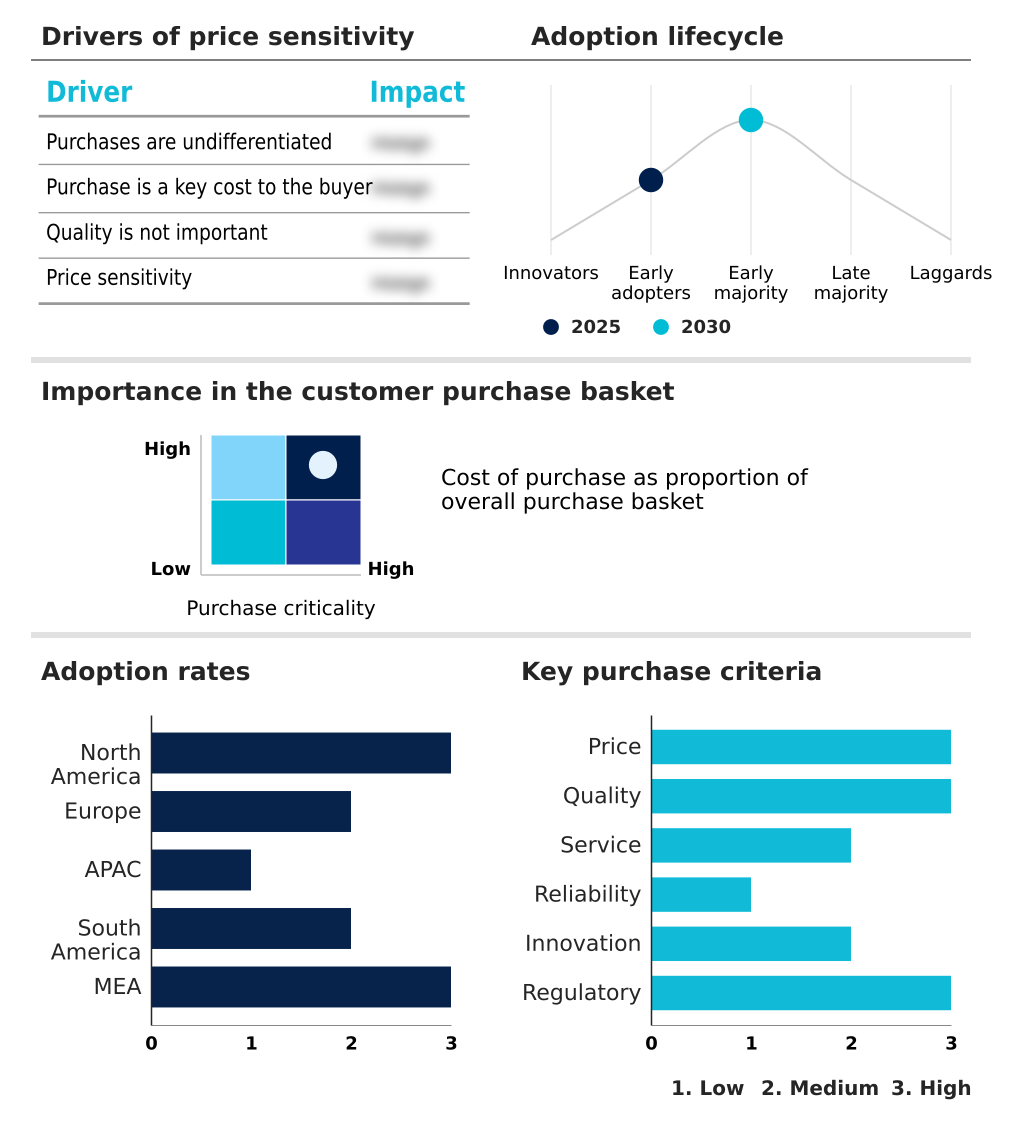
The grain cart market forecasting report includes the adoption lifecycle of the market, covering from the innovator’s stage to the laggard’s stage. It focuses on adoption rates in different regions based on penetration. Furthermore, the grain cart market report also includes key purchase criteria and drivers of price sensitivity to help companies evaluate and develop their market growth analysis strategies.
Customer Landscape of Grain Cart Industry
Competitive Landscape
Companies are implementing various strategies, such as strategic alliances, grain cart market forecast, partnerships, mergers and acquisitions, geographical expansion, and product/service launches, to enhance their presence in the industry.
Balzer Inc. - A specialized portfolio of large-capacity agricultural equipment, including grain carts and manure handling systems, addresses the needs of extensive farming operations.
The industry research and growth report includes detailed analyses of the competitive landscape of the market and information about key companies, including:
- Balzer Inc.
- Bourgault Industries Ltd.
- Brandt Group of Companies
- Brent Equipment
- CNH Industrial N.V.
- Deere and Co.
- Demco Products
- Elmers Manufacturing Inc.
- Grain Saver
- GRAINKING
- J and M Manufacturing Co. Inc.
- Kinze Manufacturing Inc.
- KUHN SAS
- MK Martin
- Stara SA Industria De
- Unverferth Manufacturing Co. Inc.
Qualitative and quantitative analysis of companies has been conducted to help clients understand the wider business environment as well as the strengths and weaknesses of key industry players. Data is qualitatively analyzed to categorize companies as pure play, category-focused, industry-focused, and diversified; it is quantitatively analyzed to categorize companies as dominant, leading, strong, tentative, and weak.
Recent Development and News in Grain cart market
- In August 2024, PTx Trimble introduced OutRun, the first commercially available autonomous retrofit grain cart solution designed for mixed fleets, enabling the combine operator to control the entire unloading process.
- In November 2024, Unverferth Manufacturing began accepting orders for its new model 2520 dual-auger grain cart, featuring a 2,500-bushel capacity and an advanced hydraulically tensioned track system for the 2025 season.
- In February 2025, Deere and Co. presented its model year 2025 innovations, including autonomy-ready high-horsepower tractors and C-Series air carts, reflecting an industry-wide push toward automation that impacts grain handling.
- In May 2025, Al Dahra, a prominent multinational agribusiness, partnered with Syngenta to deploy the Cropwise Operations digital farm management platform across its farms, showcasing a commitment to high-tech, large-scale agriculture.
Dive into Technavio’s robust research methodology, blending expert interviews, extensive data synthesis, and validated models for unparalleled Grain Cart Market insights. See full methodology.
| Market Scope | |
|---|---|
| Page number | 290 |
| Base year | 2025 |
| Historic period | 2020-2024 |
| Forecast period | 2026-2030 |
| Growth momentum & CAGR | Accelerate at a CAGR of 7.9% |
| Market growth 2026-2030 | USD 652.4 million |
| Market structure | Fragmented |
| YoY growth 2025-2026(%) | 7.5% |
| Key countries | US, Canada, Mexico, Germany, UK, France, Italy, Spain, The Netherlands, China, Japan, Australia, India, South Korea, Indonesia, Brazil, Argentina, Colombia, South Africa, Saudi Arabia, UAE, Turkey and Israel |
| Competitive landscape | Leading Companies, Market Positioning of Companies, Competitive Strategies, and Industry Risks |
Research Analyst Overview
- The grain cart market is defined by its evolution from a simple conveyance to a critical data-gathering asset in precision agriculture technologies. The integration of onboard weighing systems, yield monitoring sensors, and GPS guidance transforms these machines into mobile hubs for farm data management.
- This shift is not merely about convenience; it is about providing the granular data needed for harvest logistics optimization and strategic farm planning. A key boardroom consideration is how data from a smart grain cart, such as a dual auger cart or single auger cart, informs capital expenditure on other smart farming equipment.
- For example, with yield maps being used on 68% of large-scale crop farms, the data collected during the continuous harvesting process via unloading-on-the-go directly influences decisions on variable-rate application technology for the following season.
- This trend toward agricultural mechanization, including the use of track systems for soil compaction management and advanced combine harvester integration, underscores the cart's role as an indispensable tool for high-capacity grain handling and achieving tangible gains in operational efficiency.
What are the Key Data Covered in this Grain Cart Market Research and Growth Report?
-
What is the expected growth of the Grain Cart Market between 2026 and 2030?
-
USD 652.4 million, at a CAGR of 7.9%
-
-
What segmentation does the market report cover?
-
The report is segmented by Distribution Channel (Direct sales, and Indirect sales), Type (Dual auger cart, Single auger cart, and Classic front fold cart), Application (Corn, Wheat, Rice, and Others) and Geography (North America, Europe, APAC, South America, Middle East and Africa)
-
-
Which regions are analyzed in the report?
-
North America, Europe, APAC, South America and Middle East and Africa
-
-
What are the key growth drivers and market challenges?
-
Increasing farm consolidation and larger agricultural operations, Heightened geopolitical tensions and supply chain volatility
-
-
Who are the major players in the Grain Cart Market?
-
Balzer Inc., Bourgault Industries Ltd., Brandt Group of Companies, Brent Equipment, CNH Industrial N.V., Deere and Co., Demco Products, Elmers Manufacturing Inc., Grain Saver, GRAINKING, J and M Manufacturing Co. Inc., Kinze Manufacturing Inc., KUHN SAS, MK Martin, Stara SA Industria De and Unverferth Manufacturing Co. Inc.
-
Market Research Insights
- The grain cart market dynamics are shaped by the pursuit of operational efficiency, with advanced farming machinery becoming central to modern agriculture. The adoption of labor-saving agricultural technology is not merely a choice but a necessity, as evidenced by data showing 80% of farmers invested in such tech due to rising labor costs.
- Farm consolidation trends further accelerate this shift, as larger operations require solutions that maximize combine uptime. Digital farming platforms and autonomous harvesting systems are at the forefront of this evolution, offering enhanced farm productivity enhancement. For example, the use of guidance systems is prevalent on 70% of large-scale crop farms, demonstrating a high rate of smart agriculture adoption.
- This integration of technology is critical for improving post-harvest logistics and achieving significant operational cost reduction.
We can help! Our analysts can customize this grain cart market research report to meet your requirements.