



Ground Based Aircraft And Missile Defense Systems Market Size 2025-2029
The ground based aircraft and missile defense systems market size is forecast to increase by USD 6.46 billion at a CAGR of 7.1% between 2024 and 2029.
- The market is experiencing significant growth due to the increasing threats from unmanned aerial vehicles (UAVs) and advanced missile technologies. New-generation air and missile defense systems are being developed to counteract these lethal threats, offering lucrative opportunities for market participants. However, the market is not without challenges. Complexities in the supply chain, including geopolitical tensions and logistical issues, can impact the production and delivery of these critical defense systems.
- Companies seeking to capitalize on market opportunities must navigate these challenges effectively, ensuring a reliable and efficient supply chain while maintaining technological innovation. By focusing on strategic partnerships, advanced research and development, and operational efficiency, market players can position themselves for long-term success in the market.
What will be the Size of the Ground Based Aircraft And Missile Defense Systems Market during the forecast period?
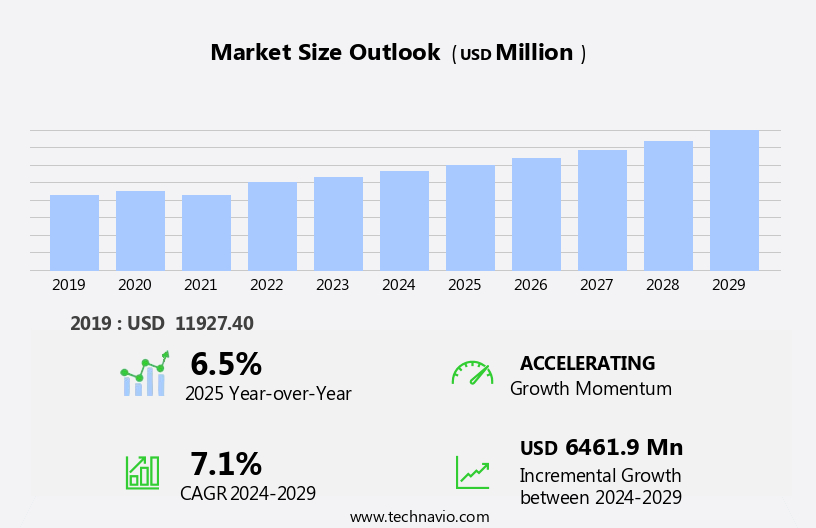
- The ground-based aircraft and missile defense systems market encompasses advanced technologies designed to safeguard military assets and civilian populations against various aerial threats, including ballistic missiles. This market is driven by military supremacy and procurement, with a focus on developing stealth technology, hypersonic capabilities, and surface-to-air missiles. Factors such as airspace violations, cross-border disputes, and terrorist activities necessitate the deployment of advanced defense systems, including air-to-surface missiles and defense equipment. Growth in military spending on new-generation defense systems, such as machine learning-enabled early warning systems and artificial intelligence-driven electronic warfare, is fueling market expansion. Additionally, the integration of advanced missile defense systems with fighter aircraft and early warning systems enhances tactical combat advantage.
- The market is further by the development of safeguard anti-ballistic missiles and surveillance data analysis capabilities. Overall, the ground-based aircraft and missile defense systems market is a dynamic and evolving sector, reflecting the ongoing need for advanced defense solutions in a complex geopolitical landscape.
How is this Ground Based Aircraft And Missile Defense Systems Industry segmented?
The ground based aircraft and missile defense systems industry research report provides comprehensive data (region-wise segment analysis), with forecasts and estimates in "USD million" for the period 2025-2029, as well as historical data from 2019-2023 for the following segments.
- Application
- Short and medium range
- Long range
- Geography
- North America
- US
- Canada
- APAC
- China
- India
- Japan
- Europe
- France
- Germany
- Russia
- Middle East and Africa
- South America
- Brazil
- North America
By Application Insights
The short and medium range segment is estimated to witness significant growth during the forecast period.
Ground-based aircraft and missile defense systems play a crucial role in safeguarding military applications against various air threats, including anti-ship missiles, surface-to-air missiles, air-to-air missiles, and ballistic missiles. These defense systems utilize advanced technologies such as surveillance data, early warning systems, stealth technology, hypersonic capabilities, and electronic warfare for effective threat detection and neutralization. The market for ground-based aircraft and missile defense systems is driven by military spending, cross-border disputes, terrorist activities, and the need for multi-domain integration. Defense equipment procurement, simulation exercises, and military procurement are significant factors fueling the demand for these systems. Advanced missile defense technologies, such as boost-phase intercept, countermeasures, and machine learning, offer tactical combat advantages and military supremacy.
Companies like Rafael Defense Systems are at the forefront of developing and deploying these advanced defense systems. Short-range ground-based systems can defend against low-altitude threats, while medium-range systems can protect against threats from 8 km to 40 km. Interceptor missiles and fighter aircraft are essential components of these defense systems. The integration of artificial intelligence and missile technology is expected to revolutionize the missile defense industry, offering enhanced capabilities and improved accuracy. Overall, ground-based aircraft and missile defense systems are vital for ensuring military readiness and maintaining peace and stability in the world.
Get a glance at the market report of share of various segments Request Free Sample
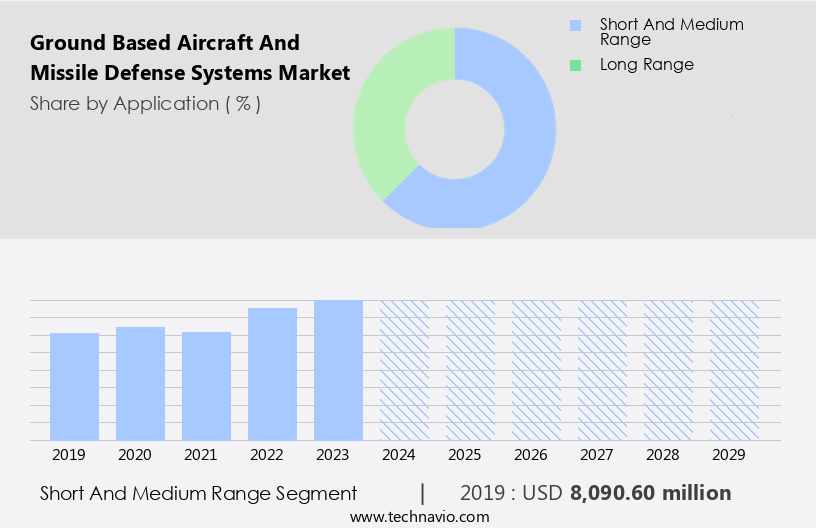
The Short and medium range segment was valued at USD 8.09 billion in 2019 and showed a gradual increase during the forecast period.
Regional Analysis
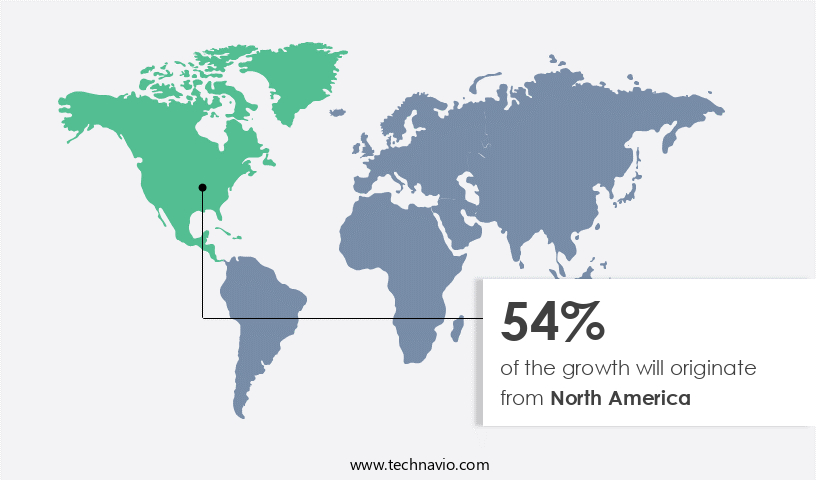
North America is estimated to contribute 54% to the growth of the global market during the forecast period.Technavio’s analysts have elaborately explained the regional trends and drivers that shape the market during the forecast period.
For more insights on the market size of various regions, Request Free Sample
The market encompasses various military applications, including Surveillance Data, Early Warning Systems, and Missile Technology. In the US, this market is significant due to the country's military supremacy and defense spending. With a 2022 estimated military spending of USD754 billion, more than 80% of which is allocated through the National Defense Authorization Act (NDAA), the US invests heavily in advanced defense systems. These systems include Ground-Based Aircraft, such as fighter aircraft, and various types of Missiles, like Anti-Ship Missiles, Surface-to-Air Missiles, Air-to-Air Missiles, and Air-to-Surface Missiles. The US also focuses on advanced weapon system technology, such as Stealth Technology, Hypersonic Capabilities, and Electronic Warfare, to ensure military readiness and counteract Cross-Border Disputes, Terrorist Activities, and Airspace Violations.
Moreover, the integration of Multi-Domain Integration and Machine Learning enhances the effectiveness of these defense systems. The US is also investing in advanced Missile Defense Systems, like the Safeguard ABM System, Interceptor Missiles, and Simulation Exercises, to counter Ballistic Missiles and Intermediate-Range Missiles. Additionally, the US collaborates with leading defense equipment companies, such as Rafael Defense Systems, to develop advanced defense technologies. In summary, the market in the US is driven by military spending, advanced technology, and geopolitical tensions. The market is expected to continue evolving with advancements in Artificial Intelligence, Boost-Phase Intercept, Countermeasures, and Hypersonic Missiles.
Market Dynamics
Our researchers analyzed the data with 2024 as the base year, along with the key drivers, trends, and challenges. A holistic analysis of drivers will help companies refine their marketing strategies to gain a competitive advantage.
What are the key market drivers leading to the rise in the adoption of Ground Based Aircraft And Missile Defense Systems Industry?
- Development of new-generation air and missile defense systems is the key driver of the market.
- Air and missile defense systems have become a critical component in safeguarding strategic locations and platforms against advanced threats. New-generation air and missile defense systems equipped with high-end technologies pose significant challenges to existing defense systems, including high-speed cruise missiles and nuclear-capable ballistic missiles. Several countries are investing in developing advanced weapons capable of defeating sophisticated air defense systems, such as the Patriot Advanced Capability-3, Medium Extended Air Defense System, and S-400. Nations like China, India, and Russia have made strides in hypersonic missile technology, which poses a major threat to current missile shields.
- The joint development of the BrahMos missile by Russia and India further underscores this trend, as it is challenging to intercept using older missile defense systems. The dynamic nature of air and missile defense technology necessitates continuous research and development to stay ahead of emerging threats.
What are the market trends shaping the Ground Based Aircraft And Missile Defense Systems Industry?
- Increasing lethal threats posed by unmanned aerial vehicles (UAVs) is the upcoming market trend.
- The global market for Ground Based Aircraft and Missile Defense Systems has witnessed significant growth due to the increasing demand for advanced security and surveillance capabilities. Unmanned Aerial Vehicles (UAVs), a key component of this market, have gained prominence in modern defense mechanisms. Since their inception in 1783, UAVs have been utilized for various applications, including reconnaissance and lethal s. The adoption of UAVs has increased substantially in recent years due to their ease of deployment and versatility. Countries worldwide have been investing heavily in the development and procurement of next-generation UAV platforms to bolster their defense capabilities.
- The rising number of territorial disputes and the subsequent focus on maritime warfare have necessitated the need for advanced target acquisition systems. Naval agencies have responded by acquiring and deploying sophisticated UAVs and associated payloads and subsystems to enhance their capabilities. The global defense sector's increasing reliance on UAV technology underscores the market's potential for continued growth. As technological advancements continue to drive innovation in this space, the market is expected to experience further expansion. Overall, the market is poised for significant growth in the coming years.
What challenges does the Ground Based Aircraft And Missile Defense Systems Industry face during its growth?
- Threats due to supply chain complexities is a key challenge affecting the industry growth.
- The defense logistics supply chain encounters intricate challenges, including security threats and complexities in sourcing, storing, and transporting defense-related materials and equipment. Unscheduled military movements during emergencies result in dynamic changes to the maintenance and transportation of stocks, further complicating the situation. The rise in terrorist activities poses significant security risks to the supply chain. The manufacturing process for ground-based aircraft and missile defense systems faces difficulties due to sourcing complexities and transportation challenges.
- Defense organizations struggle to forecast their requirements accurately, which in turn affects the forecasting of service requirements by logistics players, leading to visibility gaps across the entire defense logistics supply chain.
Exclusive Customer Landscape
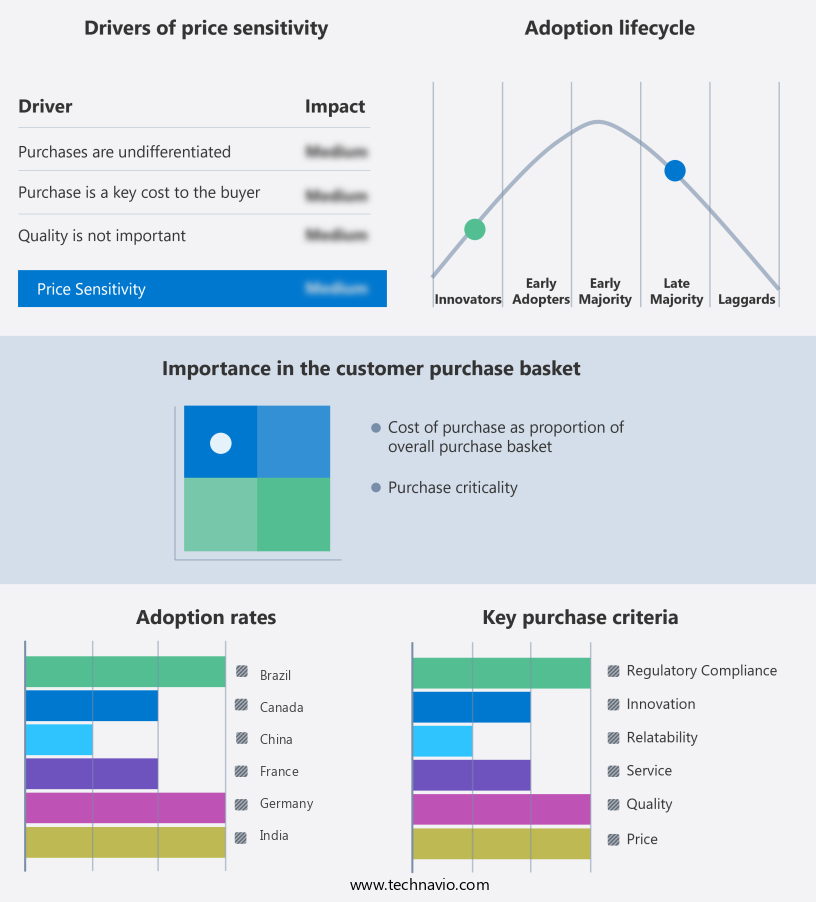
The ground based aircraft and missile defense systems market forecasting report includes the adoption lifecycle of the market, covering from the innovator’s stage to the laggard’s stage. It focuses on adoption rates in different regions based on penetration. Furthermore, the ground based aircraft and missile defense systems market report also includes key purchase criteria and drivers of price sensitivity to help companies evaluate and develop their market growth analysis strategies.
Customer Landscape
Key Companies & Market Insights
Companies are implementing various strategies, such as strategic alliances, ground based aircraft and missile defense systems market forecast, partnerships, mergers and acquisitions, geographical expansion, and product/service launches, to enhance their presence in the industry.
ASELSAN AS - The company specializes in designing and manufacturing advanced defense technologies. One of its offerings is the BGM-109G ground-launched cruise missile, a versatile and effective solution for military forces worldwide. This missile boasts precision targeting capabilities and long-range accuracy, making it an indispensable asset for various military applications. Its advanced guidance system ensures reliable delivery of payloads to designated targets, while its stealth technology minimizes detection risks. The BGM-109G's design and proven track record attest to its reliability and effectiveness in diverse operational environments.
The industry research and growth report includes detailed analyses of the competitive landscape of the market and information about key companies, including:
- ASELSAN AS
- Elbit Systems Ltd.
- General Dynamics Corp.
- Hanwha Corp.
- Israel Aerospace Industries Ltd.
- Kongsberg Gruppen ASA
- L3Harris Technologies Inc.
- Leonardo Spa
- Lockheed Martin Corp.
- MBDA
- Northrop Grumman Corp.
- Rafael Advanced Defense Systems Ltd.
- RTX Corp.
- Rheinmetall AG
- Saab AB
- Thales Group
- The Boeing Co.
Qualitative and quantitative analysis of companies has been conducted to help clients understand the wider business environment as well as the strengths and weaknesses of key industry players. Data is qualitatively analyzed to categorize companies as pure play, category-focused, industry-focused, and diversified; it is quantitatively analyzed to categorize companies as dominant, leading, strong, tentative, and weak.
Research Analyst Overview
Ground-based aircraft and missile defense systems have emerged as a critical component of modern-day military capabilities, safeguarding nations against various threats in the aerospace domain. These systems are designed to detect, track, and intercept incoming missiles, ensuring the protection of military assets and civilian populations. The market for ground-based aircraft and missile defense systems is driven by several factors. The increasing tensions between nations, cross-border disputes, and terrorist activities have heightened the need for defense systems. Furthermore, the advancement of missile technology, including hypersonic capabilities and stealth technology, has necessitated the development of advanced defense systems to counteract these threats.
Missile defense systems employ various technologies, including surface-to-air missiles, interceptor missiles, and early warning systems, among others. These systems are integral to multi-domain integration, enabling seamless communication and coordination between different military branches. Moreover, the integration of machine learning and artificial intelligence (AI) in missile defense systems has led to significant advancements in threat detection and response capabilities. These technologies enable systems to learn from past data and adapt to new threats, providing tactical combat advantage and military supremacy. Defense spending plays a crucial role in the development and deployment of ground-based aircraft and missile defense systems. Military procurement budgets continue to increase as nations prioritize the modernization of their defense equipment.
Despite these advancements, the threat landscape remains dynamic, necessitating continuous innovation and improvement in missile defense systems. Boost-phase intercept, electronic warfare, and countermeasures are some of the areas of ongoing research and development. Simulation exercises and training programs are essential in ensuring the readiness and effectiveness of ground-based aircraft and missile defense systems. These exercises enable military personnel to gain practical experience in operating and maintaining these complex systems. In , ground-based aircraft and missile defense systems are a critical component of modern-day military capabilities, safeguarding nations against various threats in the aerospace domain. The market for these systems is driven by several factors, including technological advancements, defense spending, and geopolitical tensions.
Continuous innovation and improvement are essential to keep pace with evolving threats and maintain military supremacy.
|
Market Scope |
|
|
Report Coverage |
Details |
|
Page number |
165 |
|
Base year |
2024 |
|
Historic period |
2019-2023 |
|
Forecast period |
2025-2029 |
|
Growth momentum & CAGR |
Accelerate at a CAGR of 7.1% |
|
Market growth 2025-2029 |
USD 6461.9 million |
|
Market structure |
Fragmented |
|
YoY growth 2024-2025(%) |
6.5 |
|
Key countries |
US, China, India, Russia, France, Germany, Canada, Saudi Arabia, Brazil, and Japan |
|
Competitive landscape |
Leading Companies, Market Positioning of Companies, Competitive Strategies, and Industry Risks |
What are the Key Data Covered in this Ground Based Aircraft And Missile Defense Systems Market Research and Growth Report?
- CAGR of the Ground Based Aircraft And Missile Defense Systems industry during the forecast period
- Detailed information on factors that will drive the growth and forecasting between 2025 and 2029
- Precise estimation of the size of the market and its contribution of the industry in focus to the parent market
- Accurate predictions about upcoming growth and trends and changes in consumer behaviour
- Growth of the market across North America, APAC, Europe, Middle East and Africa, and South America
- Thorough analysis of the market’s competitive landscape and detailed information about companies
- Comprehensive analysis of factors that will challenge the ground based aircraft and missile defense systems market growth of industry companies
We can help! Our analysts can customize this ground based aircraft and missile defense systems market research report to meet your requirements.
 RIA -
RIA - 
