



Hypersonic Missiles Market Size 2020-2024
The hypersonic missiles market share is expected to increase by USD 1.01 billion from 2019 to 2024, and the market’s growth momentum will accelerate at a CAGR of 3.72%. The market is driven by several key factors. Primarily, the requirement for advanced weaponry with increased speed and accuracy continues to fuel market growth. This need is particularly evident in the context of geopolitical tensions and territorial disputes, which have led to an arms race among top defense spenders. Furthermore, the development of missiles enables countries to bypass existing missile defense systems, thereby enhancing their strategic capabilities. Consequently, investments in hypersonic missile technology are expected to remain robust, underpinning the market's expansion.
What will the Market Size be During the Forecast Period?
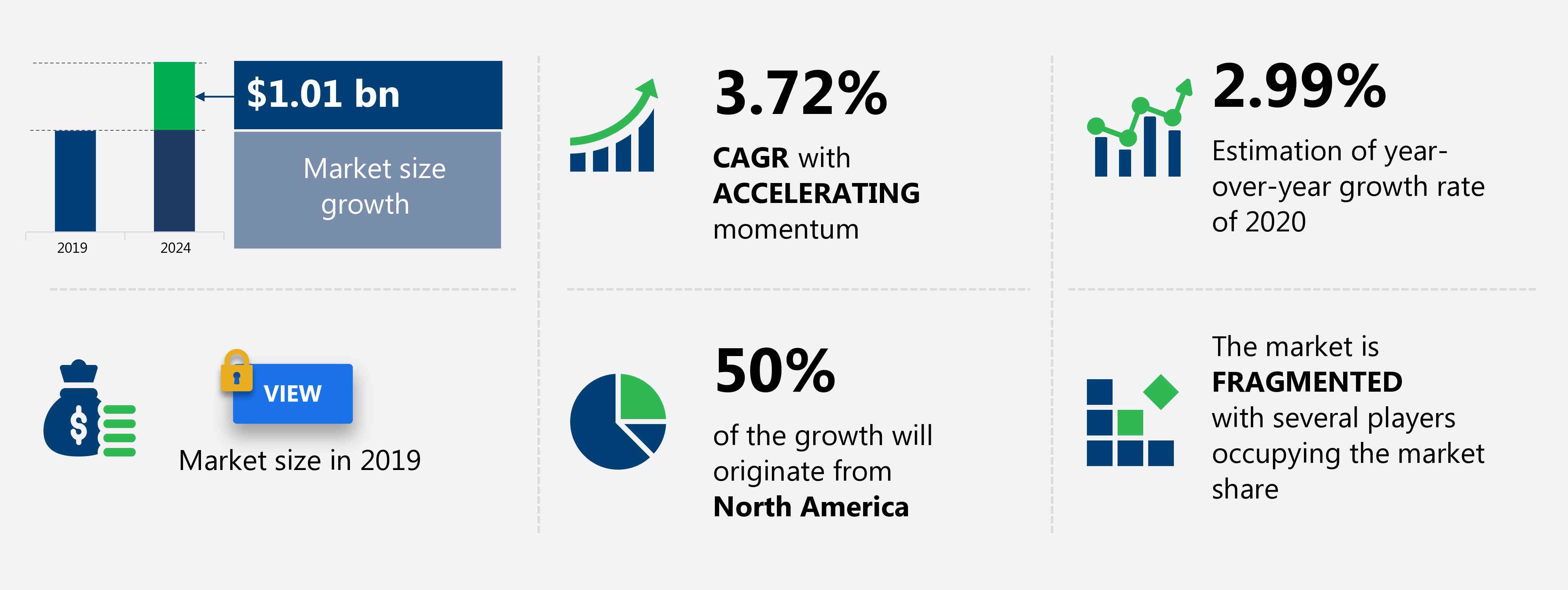
Download the Free Report Sample to Unlock the Market Size for the Forecast Period and Other Important Statistics
Market Dynamics
Hypersonic technology has sparked intense interest worldwide due to its potential to revolutionize military capabilities. Hypersonic systems represent a significant leap in defense capabilities, offering the promise of military superiority and enhanced offensive operations. Countries are investing heavily in military modernization programs to develop hypersonic weapons, viewing them as crucial for strategic deterrence and operational flexibility. However, the development of hypersonic weapons is still in the early stages, requiring substantial financial resources to overcome technological gaps and achieve a viable return on investment. Compact hypersonic weapons have diverse military applications and can be integrated into various platforms, including ships, ground-based launchers, and aircraft. Despite their promise, challenges such as high production costs, transportation and storage expenses, and issues like overheating and material degradation pose significant hurdles. Specialized materials like carbon composites and heat-resistant alloys are essential for overcoming these challenges. The market is driven by the increasing demand for precision-strike capabilities and the paradigm shift they represent in military capabilities. With rising cross-border conflicts and a surge in defense budgets globally, there is a growing focus on addressing technological challenges and advancing military modernization efforts. Companies like Leidos and RTX, along with organizations like DARPA, play pivotal roles in shaping the future of hypersonic technology.
Key Market Driver
One of the key factors driving the market is the need for improved missiles. The deployment of a particular type of missile or a weapon eventually leads to the development of its counteractants. For example, India has been developing variants of the supersonic missile, BrahMos, which is a short-range ramjet supersonic cruise missile. However, as a countermeasure, the US and Raytheon developed the Standard Missiles-6 (SM-6). These systems were deployed on the destroyers and cruisers of the US Navy to intercept any kind of supersonic missiles.
Moreover, the time taken by the missile to hit its target plays a very important role. For instance, in 1998, the US government tried to neutralize Osama bin Laden in his Al-Qaeda training camp in Eastern Afghanistan by launching the Tomahawk land-attack subsonic cruise missiles from the Arabian Sea. However, the missiles traveling at about 550 mph needed two hours to reach their target, which gave him enough time to escape from his hideout. Such failures have stimulated the need to develop faster systems capable of striking at greater speeds. Both the above-mentioned factors have indirectly contributed to the development of highly advanced systems. Hence, such factors are driving the market growth during the forecast period.
Significant Market Trend
The emergence of scramjet technology is another factor supporting the market growth in the forecast period. The major propulsion systems currently used in rockets and missiles are turbofans, turbojets, and ramjets. Furthermore, it plays a critical role in determining the range, payload, and speed of a missile. Moreover, supersonic systems, which travel at the speed of Mach 2-4, run on the ramjets technology. However, in recent years, there is an increasing need for rockets with higher speeds. This has led to the development of a new propulsion system called scramjet, or Supersonic Combustion Ramjet.
Furthermore, many nations are using scramjet technology for the development of missiles, mainly because it draws the external oxygen necessary for the engine combustion and passes it through the vehicle. This eliminates the need to have an onboard tank, thereby making the missiles and aircraft smaller, lighter, and faster. Furthermore, the Indian Space Research Organization (ISRO) has been working on the development of scramjet technology to eventually cut the space agency's launch costs by half for its upcoming Avatar program. Such ongoing developments are expected to invariably lead to knowledge transfer for the development of hypersonic missiles.
Major Market Challenge
Ambiguities with hypersonic missiles will be a major challenge for the market during the forecast period. The development of missiles is clouded with several concerns. Most of it refers to whether a conventional or nuclear warhead is being used. Hypersonic missiles, when fitted with nuclear warheads, can be fatal to the target enemy country. It can also cause nuclear winter that could last for a very long time after the initial attack and eventually leave the area inhabitable.
Another ambiguity lies with respect to the target. Nations like the US, Russia, and China are at the forefront of developing super-fast hypersonic missiles. This has made several other countries remain apprehensive that the nations developing these missiles might launch nuclear attacks. Furthermore, another major operational concern of hypersonic boost-glided missiles is related to their predictability. A boost-glide hypersonic missile is not predictable like a ballistic missile, which can project the entire flight path. As these missiles maneuver mid-course, their flight path prediction is not possible. This scenario creates destination ambiguity, where a non-target country may be misinterpreted as the destination of a fired missile. Such ambiguities will always exist, and the development of advanced systems will be an ongoing process.
Who are the Major Market Players?
The report analyzes the market’s competitive landscape and offers information on several market companies, including:
- Aerojet Rocketdyne Holdings Inc.
- The Boeing Co.
- Brahmos Aerospace Pvt. Ltd.
- Denel Dynamics
- General Dynamics Corp.
- Lockheed Martin Corp.
- Northrop Grumman Corp.
- Raytheon Co.
- Saab SA
- Thales Group
This statistical study of the hypersonic missile market encompasses successful business strategies deployed by the key companies. The hypersonic missile market is fragmented and the companies are deploying growth strategies such as price, product reliability, and ROI to compete in the market.
Product Insights and News
- Aerojet Rocketdyne Holdings Inc. - The company offers air to air and land-based hypersonic missile system.
- The Boeing Co. - The company offers multi-layered, multi-domain hypersonic missiles.
The market forecast report offers in-depth insights into key vendor profiles. The profiles include information on the production, sustainability, and prospects of the leading companies.
Market Value Chain Analysis
Our report provides extensive information on the value chain analysis for the market, which companies can leverage to gain a competitive advantage during the forecast period. The end-to-end understanding of the value chain is essential in profit margin optimization and evaluation of business strategies. The data available in our value chain analysis segment can help companies drive costs and enhance customer services during the forecast period.
The value chain of the global aerospace and defense market includes the following core components:
- Inputs
- Inbound logistics
- Operations
- Outbound logistics
- Marketing and sales
- Service
- Support activities
- Innovation
The report has further elucidated other innovative approaches being followed by manufacturer providers to ensure a sustainable market presence.
Which are the Key Regions for Market?
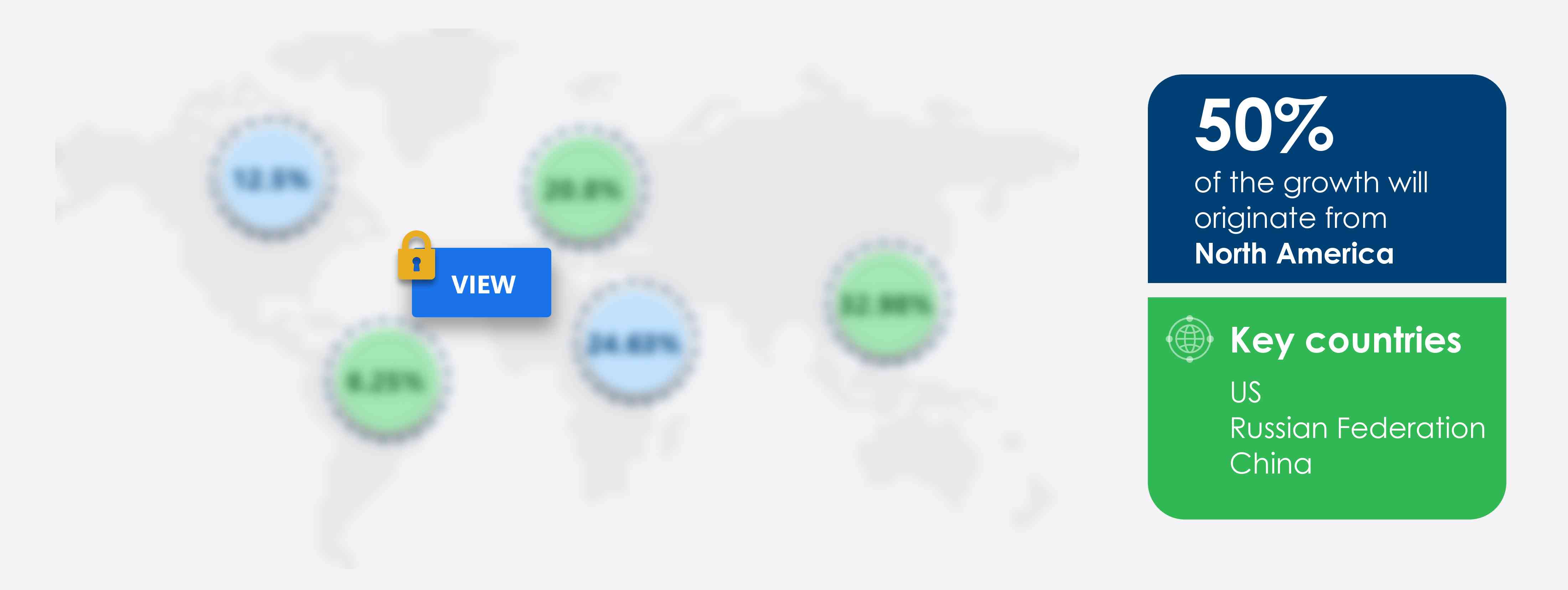
For more insights on the market share of various regions Request a FREE sample now!
50% of the market’s growth will originate from North America during the forecast period. The US is the key market for the market in North America. Market growth in this region will be faster than the growth of the market in other regions.
Increasing conflicts between neighboring countries and the growing need to suppress various militant groups in several parts of the globe will facilitate the hypersonic missile market growth in North America over the forecast period. This market research report entails detailed information on the competitive intelligence, marketing gaps, and regional opportunities in store for companies, which will assist in creating efficient business plans.
What are the Revenue-generating Product Segments in the Market?
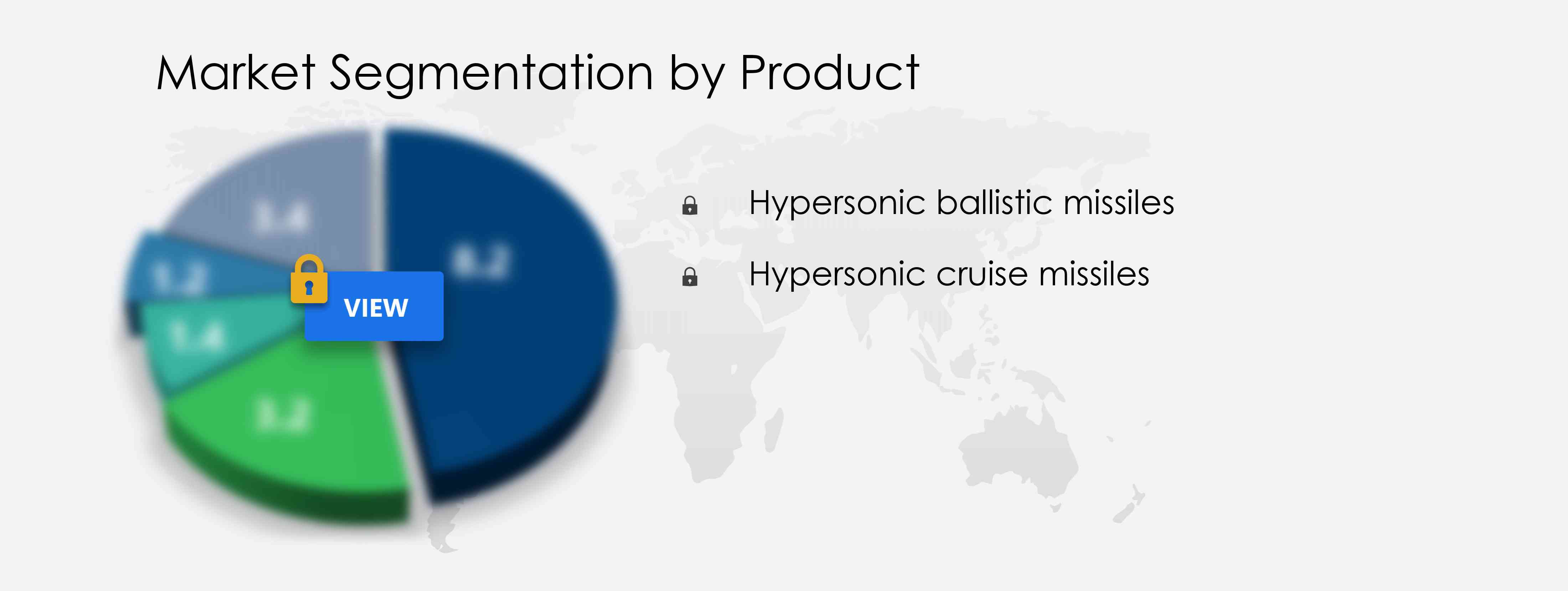
To gain further insights on the market contribution of various segments Request a FREE sample
The hypersonic missile market share grows by the segments. Hypersonic ballistics missiles segment will be significant during the forecast period. Hypersonic ballistic missiles travel at a speed of Mach five and above and take a ballistic trajectory flight path for most of their distance. Ballistic missiles are short-, medium-, and long-range rocket-propelled vehicles that deliver nuclear or conventional weapons.
You may also interested in below market reports:
- Missile Guidance System Market: Missile Guidance System Market Analysis APAC, North America, Europe, Middle East and Africa, South America - US, China, India, Germany, UK - Size and Forecast
- Fast Attack Craft (FAC) Market: Fast Attack Craft (FAC) Market by Application, Type, and Geography - Forecast and Analysis
- Ground Based Aircraft and Missile Defense Systems Market: Ground Based Aircraft and Missile Defense Systems Market by Application and Geography - Forecast and Analysis
Market Analyst Overview
The market is at the forefront of global military dynamics, fueled by arms races and the imperative of national security. Government bodies like the Department of Defense are making high investments to propel hypersonic technology, despite being in the early stages of development. Integration and mission adaptability are key priorities, alongside the need for advanced air defenses to counter potential threats. However, challenges abound, including transportation expenses, complex manufacturing processes, and the risk of structural failure. Extensive testing and evaluation, bolstered by advancements in materials science and testing facilities, are vital to ensuring success, especially in aerospace applications.
The market landscape depends on the offensive and defensive purposes, production of necessary components, Rapid target engagement, Short range, Air force, Air launch, Military technology. The rise of high-speed internet consumption, rapid digitalization, and increasing automation, along with IoT integration, underscores the significance of hypersonic missiles in enhancing defense capability amidst global insecurity. From offensive to defensive purposes, their adaptability across a range of missions underscores their critical role. Key components like hypersonic boost-glide vehicles and hypersonic cruise missiles are driving a paradigm shift in military capabilities, with Leidos securing significant contracts in this domain. Amidst a rise in cross-border conflicts and increases in defense budgets, high costs remain a challenge, but the market's agility and survivability in addressing short-range threats make it indispensable for modern air forces and military arsenals.
|
Market Scope |
|
|
Report Coverage |
Details |
|
Page number |
120 |
|
Base year |
2019 |
|
Forecast period |
2020-2024 |
|
Growth momentum & CAGR |
Accelerate at a CAGR of 3.72% |
|
Market growth 2020-2024 |
USD 1.01 billion |
|
Market structure |
Fragmented |
|
YoY growth (%) |
2.99 |
|
Regional analysis |
Europe, North America, APAC, South America, and MEA |
|
Performing market contribution |
North America at 50% |
|
Key consumer countries |
US, Russian Federation, China, and India |
|
Competitive landscape |
Leading companies, Competitive strategies, Consumer engagement scope |
|
Key companies profiled |
Aerojet Rocketdyne Holdings Inc., The Boeing Co., Brahmos Aerospace Pvt. Ltd. , Denel Dynamics, General Dynamics Corp., Lockheed Martin Corp., Northrop Grumman Corp., Raytheon Co., Saab SA, and Thales Group |
|
Market dynamics |
Parent market analysis, market trends, market growth analysis, market research and growth, Market forecasting, Market growth inducers and obstacles, Fast-growing and slow-growing segment analysis, COVID 19 impact and recovery analysis and future consumer dynamics, Market condition analysis for forecast period |
|
Customization purview |
If our report has not included the data that you are looking for, you can reach out to our analysts and get segments customized. |
What are the Key Data Covered in this Market Report?
- CAGR of the market during the forecast period 2020-2024
- Detailed information on factors that will drive market growth during the next five years
- Precise estimation of the market size and its contribution to the parent market
- Accurate predictions on upcoming trends and changes in consumer behavior
- The growth of the industry across Europe, North America, APAC, South America, and MEA
- A thorough market growth and forecasting analysis of the market’s competitive landscape and detailed information on companies
- Comprehensive details of factors that will challenge the growth of market companies
We can help! Our analysts can customize this report to meet your requirements. Get in touch
 RIA -
RIA - 
