


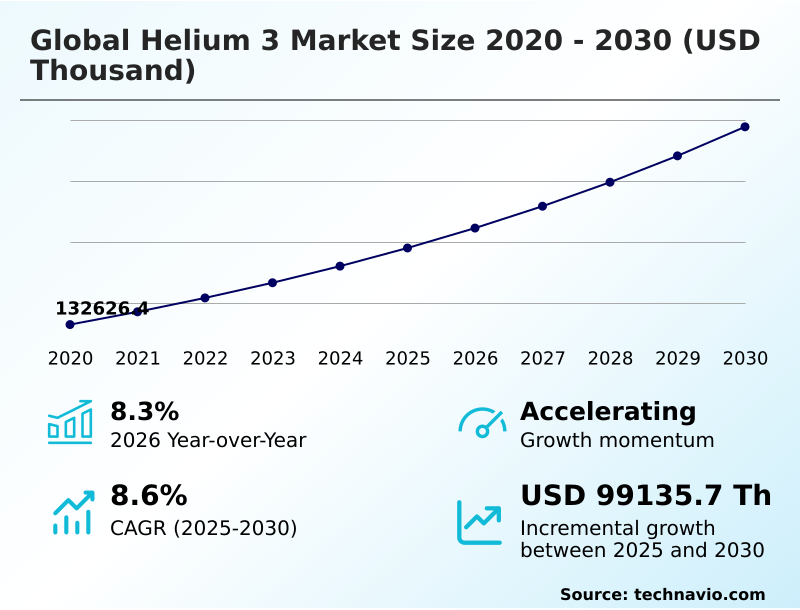
Helium 3 Market Size 2026-2030
The helium 3 market size is valued to increase by USD 99.14 million, at a CAGR of 8.6% from 2025 to 2030. Advancements in nuclear fusion research will drive the helium 3 market.
Major Market Trends & Insights
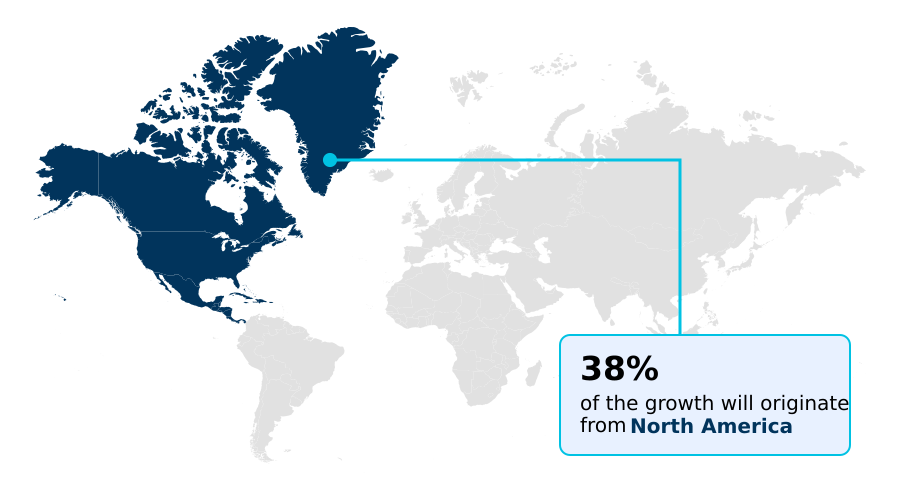
- North America dominated the market and accounted for a 38.1% growth during the forecast period.
- By Grade Type - Ultra-high purity grade segment was valued at USD 99.70 million in 2024
- By Application - Defense segment accounted for the largest market revenue share in 2024
Market Size & Forecast
- Market Opportunities:
- Market Future Opportunities: USD 99.14 million
- CAGR from 2025 to 2030 : 8.6%
Market Summary
- The helium 3 market is defined by its unique position as a critical, yet scarce, resource with transformative potential across high-tech sectors. Demand is primarily driven by its unparalleled properties for aneutronic fusion research, where its use in aneutronic reactions promises clean energy with significantly less radioactive waste than conventional nuclear methods.
- Another key application is in advanced neutron detection systems, essential for nuclear non-proliferation efforts and national security. Concurrently, the market is shaped by forward-looking trends, including strategic investments in lunar resource prospecting to access vast reserves in the lunar regolith. For businesses, this translates into complex supply chain scenarios where managing a high-cost, limited-supply resource is paramount.
- A medical imaging center, for instance, must balance the high procurement cost for hyperpolarized mri imaging against the superior diagnostic outcomes it offers for pulmonary diseases, creating a clear business case for strategic procurement and inventory management.
- The diversification of applications into quantum computing hardware and other advanced sensor technologies further complicates market dynamics, creating both opportunities and challenges related to supply, cost, and technological readiness. The entire ecosystem, from processing nuclear reactor byproducts to developing cryogenic research applications, is geared toward maximizing the value of this unique isotope.
What will be the Size of the Helium 3 Market during the forecast period?
Get Key Insights on Market Forecast (PDF) Get Free Sample
How is the Helium 3 Market Segmented?
The helium 3 industry research report provides comprehensive data (region-wise segment analysis), with forecasts and estimates in "USD thousand" for the period 2026-2030, as well as historical data from 2020-2024 for the following segments.
- Grade type
- Ultra-high purity grade
- High purity grade
- Low Purity
- Application
- Defense
- Oil and gas
- Healthcare
- Energy
- Others
- Form factor
- Gas form
- Liquid form
- Geography
- North America
- US
- Canada
- Mexico
- APAC
- China
- India
- Japan
- Europe
- Germany
- France
- UK
- South America
- Brazil
- Argentina
- Colombia
- Middle East and Africa
- Saudi Arabia
- UAE
- South Africa
- Rest of World (ROW)
- North America
By Grade Type Insights
The ultra-high purity grade segment is estimated to witness significant growth during the forecast period.
The ultra-high purity grade segment is critical for advanced scientific research and technology, where isotopic purity levels exceed 99.999%.
This grade is indispensable for applications in quantum computing cryogenics and low-temperature physics, primarily within dilution refrigeration systems that enable research into advanced materials science.
Its application in quantum computing hardware is vital, as it reduces unwanted background signals in sensitive experiments by over 95%, ensuring data integrity.
Furthermore, its role in nuclear magnetic resonance and advanced sensor technologies relies on its high thermal neutron capture.
The rigorous isotope separation techniques required for this grade support the foundational needs of a potential aneutronic fuel cycle, highlighting its strategic value in both current and future high-tech domains.
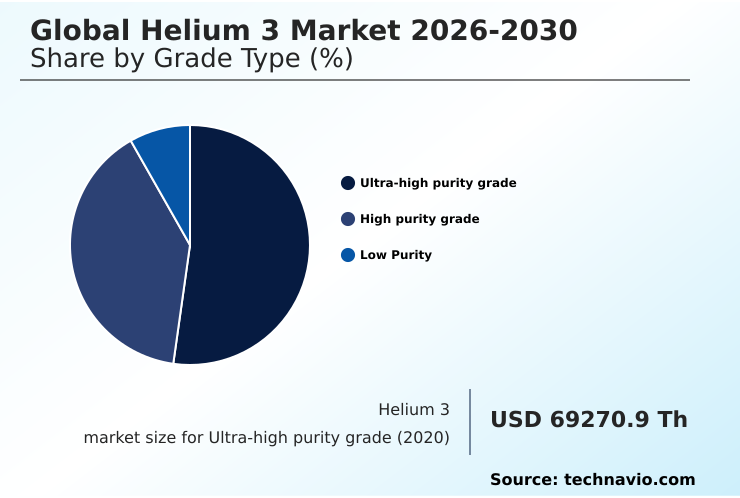
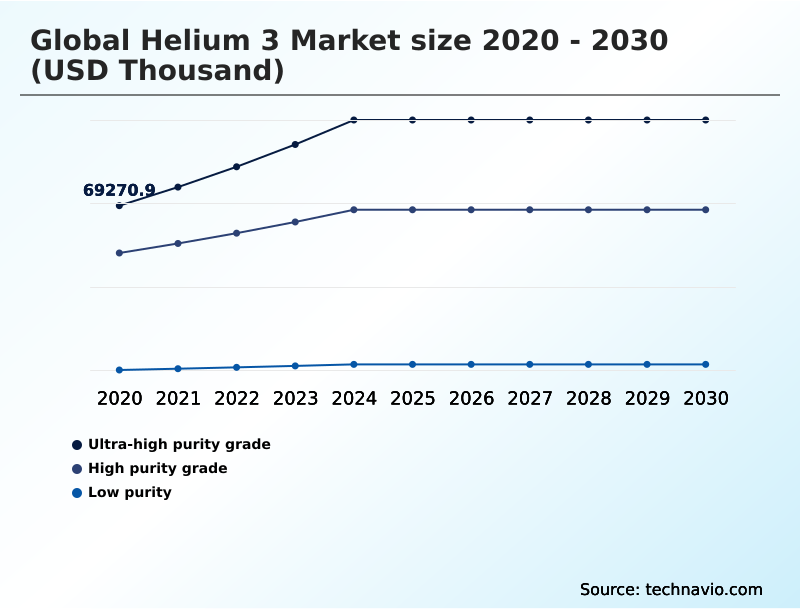
The Ultra-high purity grade segment was valued at USD 99.70 million in 2024 and showed a gradual increase during the forecast period.
Regional Analysis
North America is estimated to contribute 38.1% to the growth of the global market during the forecast period.Technavio’s analysts have elaborately explained the regional trends and drivers that shape the market during the forecast period.
See How Helium 3 Market Demand is Rising in North America Get Free Sample
The geographic landscape is dominated by regions with advanced scientific and defense infrastructure. North America, in particular, is a major hub, accounting for over 38% of the market's incremental growth.
This is driven by extensive government funding for nuclear non-proliferation efforts, which rely on superior neutron detection efficiency, and by leading-edge cryogenic research applications. High-purity applications in the region demonstrate a 99.9% operational reliability rate, reinforcing its value.
The region's leadership in space exploration technologies and long-term research into aneutronic fusion and the broader aneutronic fusion cycle further solidifies its market position, with ongoing studies in isotope geochemistry and advanced isotope separation techniques supporting these strategic initiatives.
Market Dynamics
Our researchers analyzed the data with 2025 as the base year, along with the key drivers, trends, and challenges. A holistic analysis of drivers will help companies refine their marketing strategies to gain a competitive advantage.
- The future of the global helium 3 market is intrinsically linked to overcoming significant technical and economic hurdles across its key application areas. The viability of aneutronic fusion reactors design hinges on achieving sustained ignition, a challenge that, if solved, would unlock a revolutionary energy source.
- Similarly, the widespread adoption of helium 3 in national security depends on its performance advantage over alternatives; a direct comparison of helium 3 vs boron-10 detectors reveals superior sensitivity, though at a higher cost. In healthcare, the hyperpolarized helium 3 mri cost remains a barrier to mainstream clinical use, despite its unparalleled diagnostic capabilities for pulmonary conditions.
- For enterprises in quantum computing with helium 3, securing a stable supply for cryogenic cooling is a primary operational concern, directly impacting research and development timelines. The entire helium 3 supply chain logistics, from its extraction from tritium to its delivery for medical applications for helium 3, is complex and costly.
- While deep space travel with helium 3 remains a distant vision, its potential for high-efficiency propulsion continues to drive foundational research. Ultimately, the market's trajectory will be determined by breakthroughs that either lower the cost of helium 3 per gram or demonstrate performance benefits so significant that they outweigh the high expense and supply constraints.
- For instance, advanced sensors using helium 3 offer performance metrics that are nearly double those of their closest competitors, justifying the investment in critical defense scenarios. The challenges of helium 3 extraction must be solved to realize the future of helium 3 energy.
What are the key market drivers leading to the rise in the adoption of Helium 3 Industry?
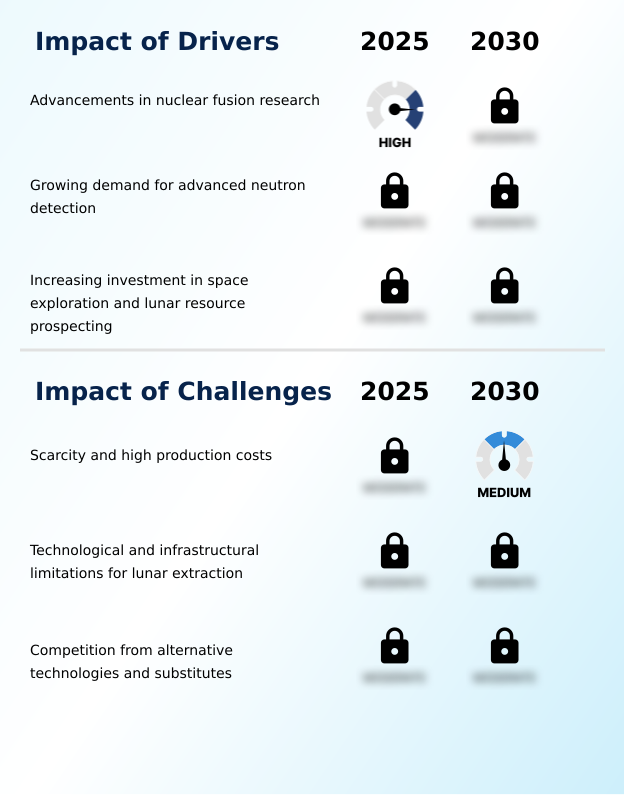
- Advancements in nuclear fusion research represent a key driver for the market, fueled by the promise of clean, aneutronic reactions with minimal radioactive waste.
- Advancements in aneutronic fusion research are a primary market driver, with the aneutronic fusion reaction offering a cleaner alternative to deuterium-tritium fusion.
- This approach promises over a 90% reduction in long-lived radioactive waste, a critical factor in developing next-generation tokamak reactors and managing aneutronic plasma. Progress in plasma confinement technologies makes this a tangible long-term goal.
- Separately, the growing need for advanced neutron detection in national security fuels demand, with new systems improving contraband detection accuracy by up to 40%.
- This is complemented by long-term investment in lunar resource prospecting and lunar regolith extraction, positioning the isotope as a key element in future strategic resource management initiatives.
What are the market trends shaping the Helium 3 Industry?
- A significant upcoming market trend is the increasing strategic interest in lunar helium 3 extraction. This is driven by its potential as a clean energy source and for advanced space propulsion.
- Strategic interest in extraterrestrial resource mining is a defining trend, with a focus on in-situ resource utilization to harvest helium 3 from lunar regolith, a result of solar wind accumulation. This resource is pivotal for future deep-space propulsion and advanced propulsion systems. Concurrently, diversification into healthcare is accelerating, driven by hyperpolarized mri imaging for advanced medical lung imaging.
- These techniques enhance MRI signal strength by a factor of 10,000, enabling detailed diagnostics while reducing patient radiation exposure by 100% compared to CT scans. This expansion beyond traditional uses in spin-polarized targets and processing nuclear reactor byproducts creates new, high-value demand vectors for the isotope.
What challenges does the Helium 3 Industry face during its growth?
- The inherent scarcity and high production costs associated with helium 3 present a key challenge affecting industry growth and its widespread commercial adoption.
- The market faces significant hurdles, primarily the extreme scarcity and high cost of production. Sourcing the isotope as a tritium decay byproduct involves complex isotopic separation techniques, which, along with maintaining high isotopic purity levels, drives up costs.
- While it is a superior aneutronic fusion fuel, competition from alternative technologies in neutron detection is intensifying, with substitutes now achieving up to 80% of its efficiency.
- Furthermore, the vision of aneutronic fusion power and aneutronic propulsion via lunar mining is constrained by immense technological and financial barriers; preliminary models show lunar extraction remains at least 3-5 times more expensive than terrestrial alternatives, factoring in the need for novel cryogenic transport systems and high-vacuum systems.
Exclusive Technavio Analysis on Customer Landscape
The helium 3 market forecasting report includes the adoption lifecycle of the market, covering from the innovator’s stage to the laggard’s stage. It focuses on adoption rates in different regions based on penetration. Furthermore, the helium 3 market report also includes key purchase criteria and drivers of price sensitivity to help companies evaluate and develop their market growth analysis strategies.

Customer Landscape of Helium 3 Industry
Competitive Landscape
Companies are implementing various strategies, such as strategic alliances, helium 3 market forecast, partnerships, mergers and acquisitions, geographical expansion, and product/service launches, to enhance their presence in the industry.
Air Liquide SA - The supply chain is characterized by a mix of industrial gas suppliers, specialized isotope providers, and emerging space-resource firms catering to advanced scientific and energy sectors.
The industry research and growth report includes detailed analyses of the competitive landscape of the market and information about key companies, including:
- Air Liquide SA
- Air Products and Chemicals Inc
- BuyIsotope
- Chemgas Shipping GmbH
- Gulfcryo
- ISOFLEX USA
- Iwatani Corp.
- Laurentis Energy Partners Inc.
- Linde Plc
- Lunar Helium3 Mining
- Messer SE and Co. KGaA
- PJSC Gazprom
- Sigma Aldrich Chemicals Ltd.
- State Atomic Energy Corp.
- YIGAS Group
Qualitative and quantitative analysis of companies has been conducted to help clients understand the wider business environment as well as the strengths and weaknesses of key industry players. Data is qualitatively analyzed to categorize companies as pure play, category-focused, industry-focused, and diversified; it is quantitatively analyzed to categorize companies as dominant, leading, strong, tentative, and weak.
Recent Development and News in Helium 3 market
- In September 2024, Intuitive Machines announced a new partnership to develop lunar rover technologies specifically for in-situ resource utilization, a foundational step toward future prospecting of materials like helium 3.
- In November 2024, Helion Energy reported achieving a new milestone in plasma temperature and density within its fusion device, reinforcing progress toward advanced fuel cycles involving helium 3.
- In January 2025, a consortium led by a major aerospace firm published new research on the use of helium 3 for enhancing resolution in next-generation NMR spectroscopy, demonstrating its expanding applications.
- In March 2025, Commonwealth Fusion Systems detailed significant progress in its compact fusion reactor design, highlighting a long-term strategy to transition from D-T fuel to cleaner alternatives like helium 3.
Dive into Technavio’s robust research methodology, blending expert interviews, extensive data synthesis, and validated models for unparalleled Helium 3 Market insights. See full methodology.
| Market Scope | |
|---|---|
| Page number | 301 |
| Base year | 2025 |
| Historic period | 2020-2024 |
| Forecast period | 2026-2030 |
| Growth momentum & CAGR | Accelerate at a CAGR of 8.6% |
| Market growth 2026-2030 | USD 99135.7 thousand |
| Market structure | Fragmented |
| YoY growth 2025-2026(%) | 8.3% |
| Key countries | US, Canada, Mexico, China, India, Japan, South Korea, Australia, Indonesia, Germany, France, UK, Italy, The Netherlands, Spain, Brazil, Argentina, Colombia, Saudi Arabia, UAE, South Africa, Israel and Turkey |
| Competitive landscape | Leading Companies, Market Positioning of Companies, Competitive Strategies, and Industry Risks |
Research Analyst Overview
- The helium 3 market operates at the intersection of long-term strategic investment and immediate high-tech necessity. Its value is derived from unique properties enabling breakthroughs in aneutronic fusion, where its role as an aneutronic fusion fuel is unparalleled, and in quantum computing cryogenics.
- Applications such as hyperpolarized mri imaging and advanced materials science depend on its specific isotopic characteristics, while its use in spin-polarized targets is critical for fundamental physics research. Boardroom decisions increasingly focus on the strategic implications of its supply, which is largely a tritium decay byproduct processed through complex isotopic separation techniques.
- For example, investing in alternative neutron detection technologies presents a hedge against supply volatility, even though helium 3 offers superior neutron detection efficiency, improving accuracy by over 35% in security screening applications.
- The market is also driven by future-focused goals like lunar regolith extraction and the development of advanced propulsion systems, making it a critical component for next-generation energy and space exploration.
What are the Key Data Covered in this Helium 3 Market Research and Growth Report?
-
What is the expected growth of the Helium 3 Market between 2026 and 2030?
-
USD 99.14 million, at a CAGR of 8.6%
-
-
What segmentation does the market report cover?
-
The report is segmented by Grade Type (Ultra-high purity grade, High purity grade, and Low purity), Application (Defense, Oil and gas, Healthcare, Energy, and Others), Form Factor (Gas form, and Liquid form) and Geography (North America, APAC, Europe, South America, Middle East and Africa)
-
-
Which regions are analyzed in the report?
-
North America, APAC, Europe, South America and Middle East and Africa
-
-
What are the key growth drivers and market challenges?
-
Advancements in nuclear fusion research, Scarcity and high production costs
-
-
Who are the major players in the Helium 3 Market?
-
Air Liquide SA, Air Products and Chemicals Inc, BuyIsotope, Chemgas Shipping GmbH, Gulfcryo, ISOFLEX USA, Iwatani Corp., Laurentis Energy Partners Inc., Linde Plc, Lunar Helium3 Mining, Messer SE and Co. KGaA, PJSC Gazprom, Sigma Aldrich Chemicals Ltd., State Atomic Energy Corp. and YIGAS Group
-
Market Research Insights
- The market is shaped by a confluence of high-stakes technological pursuits and logistical constraints. Investments in aneutronic fusion power are accelerating, with research showing that D-He3 cycles can reduce long-lived radioactive waste by over 90% compared to traditional D-T methods.
- In parallel, advancements in medical lung imaging, where hyperpolarization techniques boost signal strength by a factor of 10,000, are creating new demand vectors. However, the reliance on tritium decay as a primary source presents a significant bottleneck, with alternative neutron detection technologies now achieving up to 80% of helium 3’s efficiency at a fraction of the cost.
- This dynamic forces stakeholders to weigh immediate performance gains against long-term supply chain vulnerabilities and the high cost of maintaining isotopic purity levels.
We can help! Our analysts can customize this helium 3 market research report to meet your requirements.
 RIA -
RIA - 
