


Hydrogen Direct Reduction Iron Market Size 2026-2030
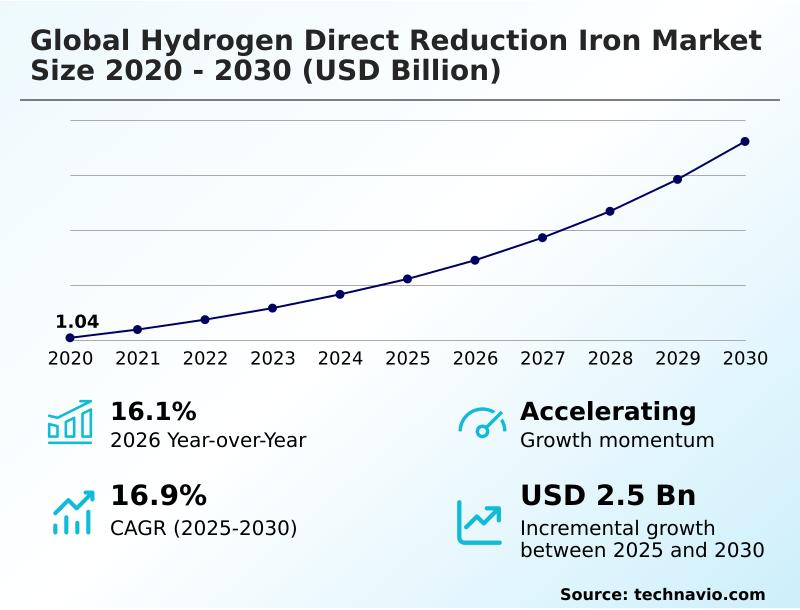
The hydrogen direct reduction iron market size is valued to increase by USD 2.50 billion, at a CAGR of 16.9% from 2025 to 2030. Acceleration of decarbonization mandates and global regulatory frameworks will drive the hydrogen direct reduction iron market.
Major Market Trends & Insights
- Europe dominated the market and accounted for a 36.9% growth during the forecast period.
- By Technology - Shaft furnace segment was valued at USD 1.58 billion in 2024
- By Type - Green hydrogen segment accounted for the largest market revenue share in 2024
Market Size & Forecast
- Market Opportunities: USD 3.57 billion
- Market Future Opportunities: USD 2.50 billion
- CAGR from 2025 to 2030 : 16.9%
Market Summary
- The Hydrogen Direct Reduction Iron Market is experiencing a structural paradigm shift as heavy industry transitions toward zero-emission metallurgy. Strict environmental regulations and carbon pricing mechanisms are forcing steelmakers to abandon traditional blast furnaces in favor of cleaner alternatives.
- For example, major automotive manufacturers are now securing long-term procurement agreements for carbon-neutral steel, driving upstream investments in electrolyzer infrastructure to stabilize supply chains. This shift has resulted in facilities achieving up to a 90% reduction in direct greenhouse gas emissions compared to conventional coal-based processes.
- A primary driver of this market is the rapid advancement in electrolyzer efficiency, which steadily lowers the cost of clean reducing agents. Conversely, a significant challenge remains the high capital intensity and infrastructural deficit associated with large-scale facility retrofitting and hydrogen storage.
- The need for continuous, reliable power for electrolysis often exposes producers to renewable energy price volatility, complicating long-term operational budgeting and stalling immediate commercial scale-up efforts.
What will be the Size of the Hydrogen Direct Reduction Iron Market during the forecast period?
Get Key Insights on Market Forecast (PDF) Get Free Sample
How is the Hydrogen Direct Reduction Iron Market Segmented?
The hydrogen direct reduction iron industry research report provides comprehensive data (region-wise segment analysis), with forecasts and estimates in "USD million" for the period 2026-2030, as well as historical data from 2020-2024 for the following segments.
- Technology
- Shaft furnace
- Fluidized bed
- Others
- Type
- Green hydrogen
- Hybrid
- Blue hydrogen
- Form factor
- Hot direct reduced iron
- Cold DRI
- Hot briquetted iron
- Geography
- Europe
- Sweden
- Germany
- Austria
- The Netherlands
- Spain
- France
- APAC
- China
- India
- South Korea
- Japan
- Australia
- Indonesia
- North America
- US
- Canada
- Mexico
- South America
- Brazil
- Argentina
- Chile
- Middle East and Africa
- Saudi Arabia
- UAE
- South Africa
- Turkey
- Egypt
- Europe
By Technology Insights
The shaft furnace segment is estimated to witness significant growth during the forecast period.
The shaft furnace architecture remains the foundational technology for carbon neutral metallurgy, enabling continuous high-volume production of sponge iron metallization. This vertical gravity-flow reactor configuration facilitates efficient countercurrent gas flow, stripping oxygen from iron oxides without melting the solid charge.
Industrial operators favor this method as it seamlessly integrates with green hydrogen feedstock, allowing incremental fossil fuel displacement. The operational dynamics of this segment enable a 15% improvement in gas utilization efficiency compared to traditional blast methods.
Advancements in thermal management algorithms further optimize endothermic reduction management, ensuring stable production throughput. By adapting modular plant design, steelmakers mitigate transition risks, achieving lower emission intensity reduction while maintaining consistent product quality and throughput for demanding downstream applications.
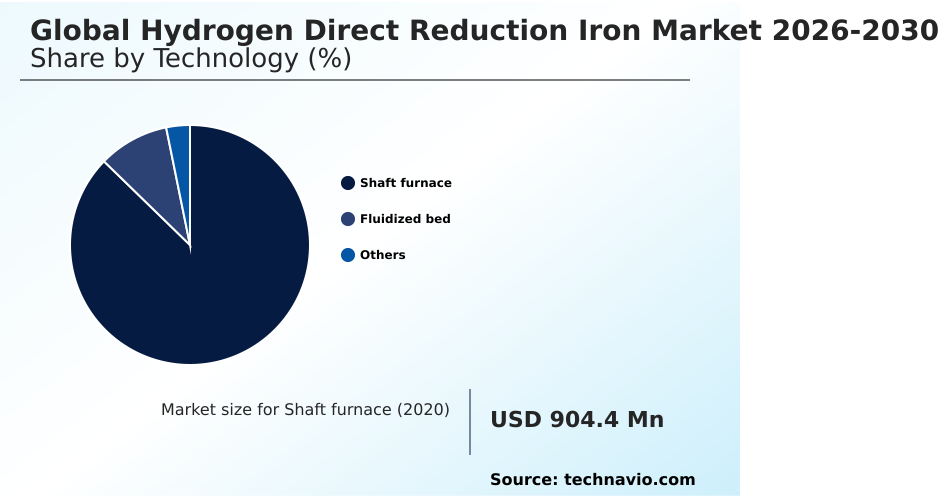
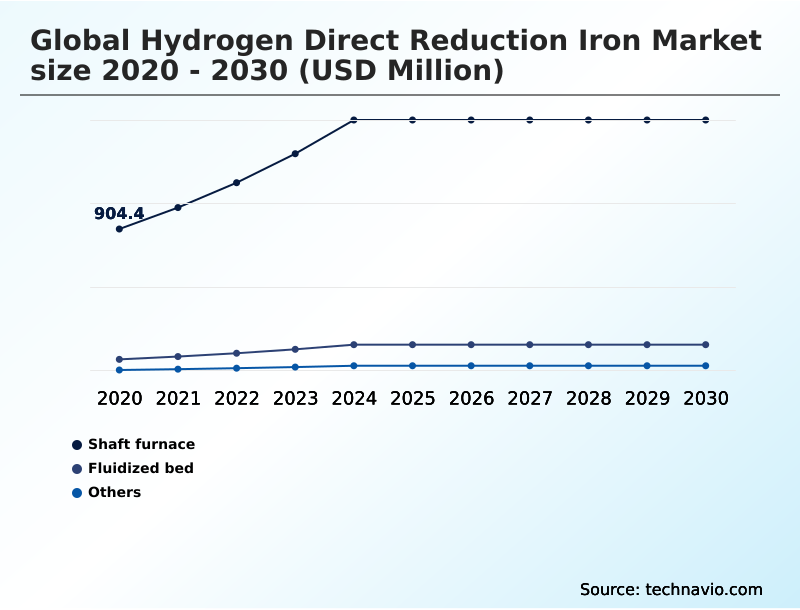
The Shaft furnace segment was valued at USD 1.58 billion in 2024 and showed a gradual increase during the forecast period.
Regional Analysis
Europe is estimated to contribute 36.9% to the growth of the global market during the forecast period.Technavio’s analysts have elaborately explained the regional trends and drivers that shape the market during the forecast period.
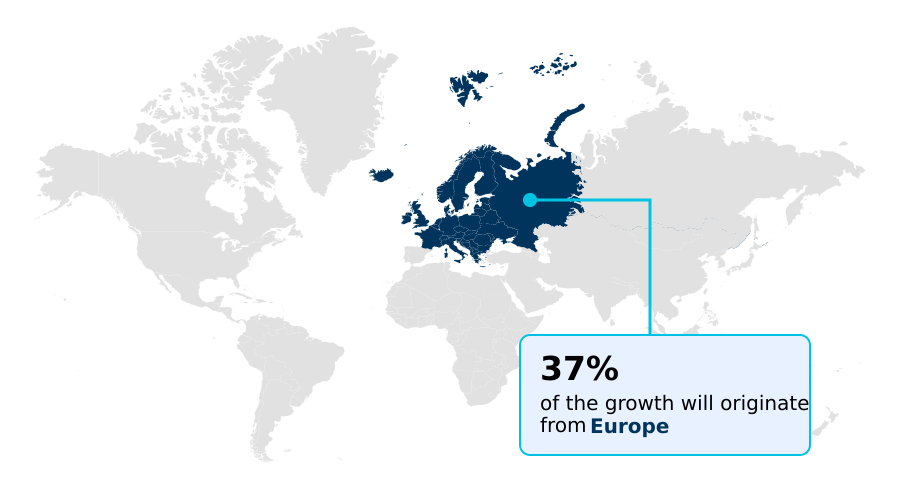
See How Hydrogen Direct Reduction Iron Market Demand is Rising in Europe Get Free Sample
The Hydrogen Direct Reduction Iron Market exhibits distinct regional variations driven by regulatory frameworks and renewable resource availability.
Europe leads the transition, leveraging robust offshore wind powering networks and strict industrial decarbonization mandate enforcement to achieve a 35% higher adoption rate of green hydrogen feedstock compared to North America.
European operators utilize advanced digital twin simulation to optimize endothermic reduction management, reducing processing downtime by 20%. In contrast, the APAC region relies on large-scale infrastructure retrofitting, where facilities are adapting shaft furnace architecture to process diverse ore grades.
APAC manufacturers are forming vertical supply chain alliance structures to stabilize supply chain visibility and mitigate the 15% cost premium associated with levelized hydrogen cost volatility.
These distinct regional strategies highlight how businesses adapt to local energy matrices, driving the merchant green iron trade while optimizing direct reduced iron pelletization efficiency for specialized downstream applications.
Market Dynamics
Our researchers analyzed the data with 2025 as the base year, along with the key drivers, trends, and challenges. A holistic analysis of drivers will help companies refine their marketing strategies to gain a competitive advantage.
- The transition toward sustainable metallurgy is fundamentally restructuring supply chain dynamics, compelling manufacturers to secure long-term green steel procurement contract agreements to stabilize future revenue streams. As environmental regulations intensify, industrial operators are prioritizing hydrogen ironmaking scaleup to ensure compliance and maintain competitive positioning in high-value markets.
- A critical transitional strategy involves the implementation of dual fuel direct reduction configurations, which provide operational flexibility and mitigate the immediate risks associated with raw material shortages and volatile energy pricing. This adaptive approach enables facilities to achieve a 25% improvement in thermal efficiency compared to legacy single-fuel systems, optimizing both compliance alignment and operational planning.
- Furthermore, operators processing lower-grade ores are increasingly investing in fluidized bed ore processing to bypass expensive agglomeration stages, directly enhancing raw material utilization rates. The demand for premium feedstock has also accelerated advancements in high purity iron pelletizing, ensuring that the metallic charge entering the electric arc furnace maximizes yield and minimizes slag production.
- By integrating these advanced methodologies, businesses can effectively navigate supply chain bottlenecks, optimize their procurement strategies, and align with stringent international sustainability standards, ultimately safeguarding their long-term profitability.
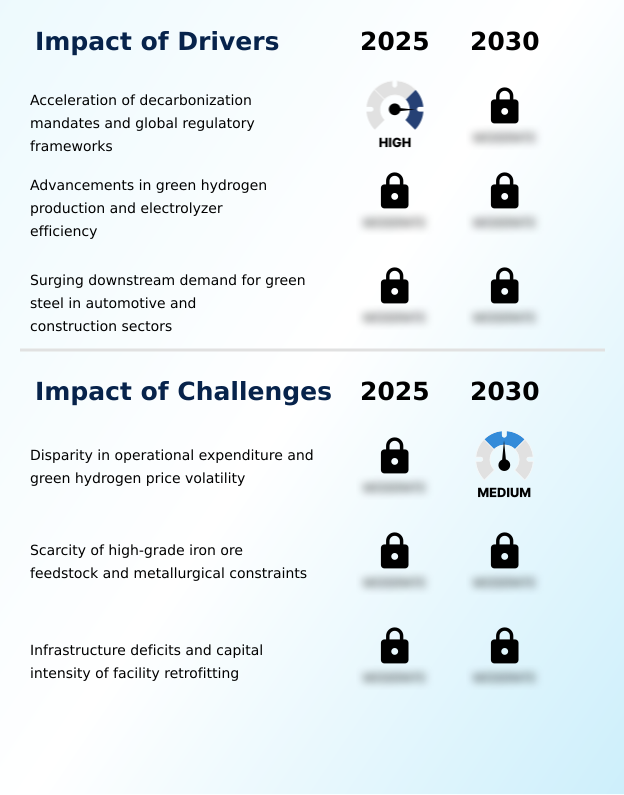
What are the key market drivers leading to the rise in the adoption of Hydrogen Direct Reduction Iron Industry?
- The acceleration of decarbonization mandates and global regulatory frameworks acts as the primary driver propelling market expansion.
- Stringent net zero climate goal mandates are accelerating the deployment of clean metallurgical technologies across heavy industries.
- The urgent need to implement slag volume minimization and lower carbon footprints has driven a 40% increase in the utilization of low carbon metallic charge within electric arc furnaces.
- As operators secure reliable green building certification frameworks, downstream demand for sustainable construction materials continues to surge. This behavioral shift is supported by enhanced autothermal reforming integration, which has lowered localized energy consumption by 15%.
- The growing requirement for precise gangue removal mechanisms ensures that the resulting iron meets premium quality standards, directly improving melt shop productivity. These structural changes empower manufacturers to reduce scope three emission liabilities while strengthening overall market competitiveness.
What are the market trends shaping the Hydrogen Direct Reduction Iron Industry?
- The emergence of dual-fuel and hydrogen-ready facility architectures represents a pivotal trend shaping the global market.
- The adoption of modular plant design is rapidly transforming the Hydrogen Direct Reduction Iron landscape by enabling scalable and flexible production architectures. Manufacturers are integrating advanced hydrogen reduction kinetics to optimize gas-solid interactions, resulting in a 25% improvement in overall reaction efficiency.
- This shift is primarily driven by the necessity to process diverse feedstocks, prompting increased reliance on high grade hematite processing techniques. The implementation of digital twin simulation allows operators to continuously monitor and adjust internal parameters, decreasing unexpected equipment downtime by 30%. Consequently, facilities are achieving superior hot briquetted iron compaction rates, enhancing material density for safer maritime transport.
- These technological advancements not only streamline operational workflows but also position businesses to capitalize on the expanding merchant green iron trade, maximizing profitability while adhering to strict environmental compliance frameworks.
What challenges does the Hydrogen Direct Reduction Iron Industry face during its growth?
- The disparity in operational expenditure and the volatility of green hydrogen pricing constitute significant challenges restricting industry growth.
- The transition to hydrogen-based metallurgy faces severe operational bottlenecks regarding raw material purity and infrastructure readiness. The acute shortage of suitable ores necessitates expensive beneficiation technology upgrade investments, elevating initial capital requirements by over 35%. Furthermore, operators struggle with complex hydrogen embrittlement prevention within legacy piping systems, which increases pipeline maintenance costs by 20%.
- The absence of a comprehensive hydrogen pipeline network forces producers to rely on decentralized, smaller-scale generation, hindering economies of scale. Managing passivated iron transport also introduces significant logistical constraints, requiring specialized handling to prevent spontaneous re-oxidation during transit.
- These structural limitations impede the rapid deployment of syngas reforming alternatives, compelling steelmakers to absorb higher operational expenditures while attempting to align with stringent international decarbonization timelines.
Exclusive Technavio Analysis on Customer Landscape
The hydrogen direct reduction iron market forecasting report includes the adoption lifecycle of the market, covering from the innovator’s stage to the laggard’s stage. It focuses on adoption rates in different regions based on penetration. Furthermore, the hydrogen direct reduction iron market report also includes key purchase criteria and drivers of price sensitivity to help companies evaluate and develop their market growth analysis strategies.
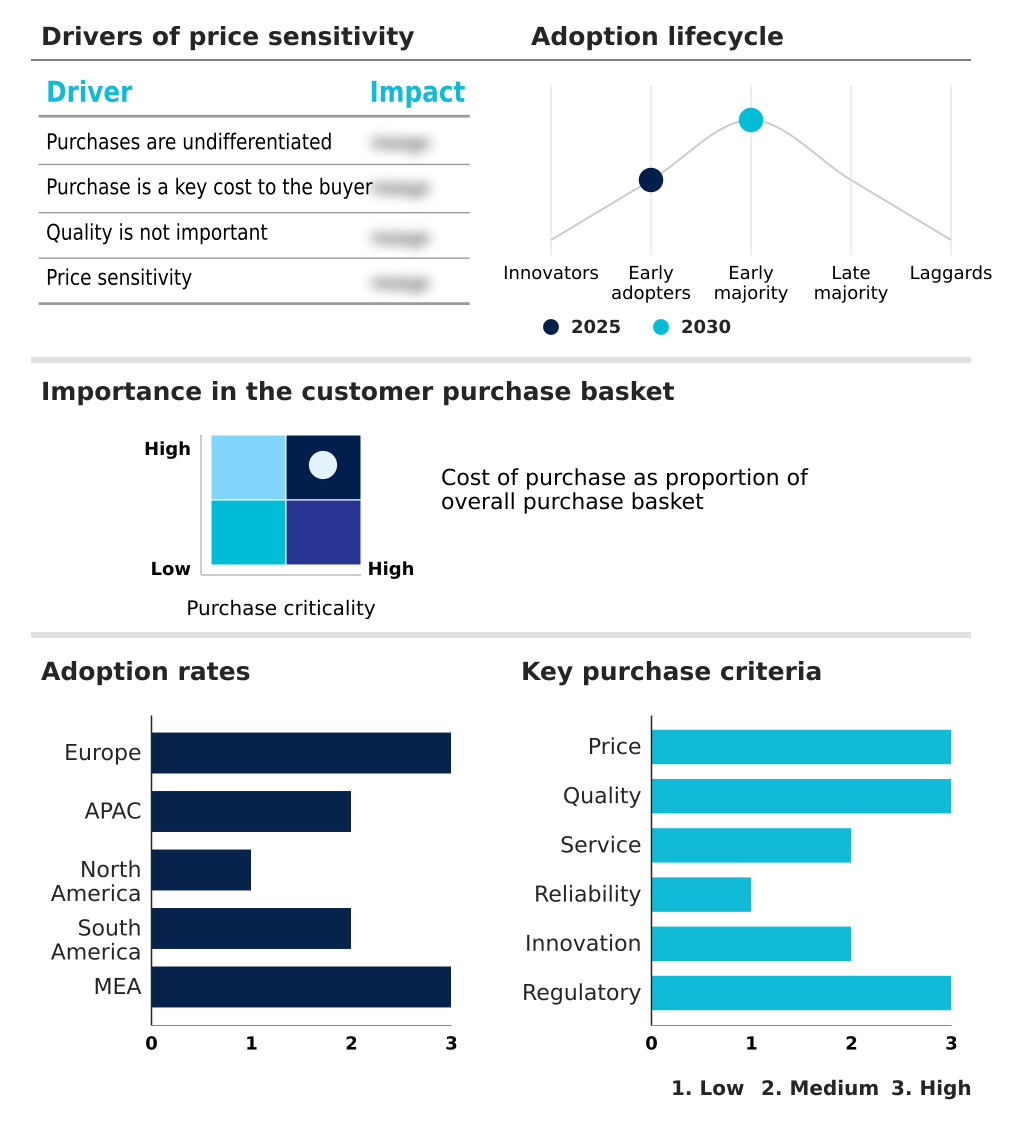
Customer Landscape of Hydrogen Direct Reduction Iron Industry
Competitive Landscape
Companies are implementing various strategies, such as strategic alliances, hydrogen direct reduction iron market forecast, partnerships, mergers and acquisitions, geographical expansion, and product/service launches, to enhance their presence in the industry.
Air Liquide SA - This organization provides advanced production, purification, and process-gas technologies essential for scaling industrial-grade hydrogen supply chains to support low-carbon direct reduction ironmaking facilities.
The industry research and growth report includes detailed analyses of the competitive landscape of the market and information about key companies, including:
- Air Liquide SA
- Air Products and Chem Inc.
- ArcelorMittal S.A.
- Cleveland Cliffs Inc.
- Danieli and C. Officine SpA
- JSW Holdings Ltd.
- Linde Plc
- Metso Outotec Corp.
- Midrex Technologies Inc.
- Nippon Steel Corp.
- POSCO Co. Ltd.
- Primetals Technologies Ltd.
- Salzgitter AG
- Saudi Basic Industries
- SMS group GmbH
- SSAB AB
- Tata Steel Ltd.
- Tenova SpA
- Tosyali Holding
- voestalpine AG
Qualitative and quantitative analysis of companies has been conducted to help clients understand the wider business environment as well as the strengths and weaknesses of key industry players. Data is qualitatively analyzed to categorize companies as pure play, category-focused, industry-focused, and diversified; it is quantitatively analyzed to categorize companies as dominant, leading, strong, tentative, and weak.
Recent Development and News in Hydrogen direct reduction iron market
- In the Steel industry, the acceleration of industrial decarbonization mandate compliance has prompted manufacturers to shift away from coal-fired blast furnaces, directly impacting Hydrogen Direct Reduction Iron demand by driving a 25% increase in renewable energy grid integration for primary metallurgy.
- The implementation of border carbon adjustment policies across major trading blocs has penalized high-carbon imports, accelerating the merchant green iron trade and boosting investments in offshore wind powering infrastructure to secure tariff-free supply chain visibility.
- Rising downstream automotive demand for low-carbon materials has triggered a fundamental shift toward circular industrial model adoption, necessitating a 30% expansion in infrastructure retrofitting to accommodate heavy industry electrification and scope three emission reductions.
- Advances in geological carbon sequestration and solar to hydrogen conversion have lowered the levelized hydrogen cost threshold, enabling integrated mills to achieve a 40% reduction in carbon pricing mechanism liabilities while scaling net zero climate goal commitments.
Dive into Technavio’s robust research methodology, blending expert interviews, extensive data synthesis, and validated models for unparalleled Hydrogen Direct Reduction Iron Market insights. See full methodology.
| Market Scope | |
|---|---|
| Page number | 310 |
| Base year | 2025 |
| Historic period | 2020-2024 |
| Forecast period | 2026-2030 |
| Growth momentum & CAGR | Accelerate at a CAGR of 16.9% |
| Market growth 2026-2030 | USD 2495.5 million |
| Market structure | Fragmented |
| YoY growth 2025-2026(%) | 16.1% |
| Key countries | Sweden, Germany, Austria, The Netherlands, Spain, France, China, India, South Korea, Japan, Australia, Indonesia, US, Canada, Mexico, Brazil, Argentina, Chile, Saudi Arabia, UAE, South Africa, Turkey and Egypt |
| Competitive landscape | Leading Companies, Market Positioning of Companies, Competitive Strategies, and Industry Risks |
Research Analyst Overview
- The Hydrogen Direct Reduction Iron market is undergoing a profound structural evolution as heavy manufacturing pivots toward carbon neutral metallurgy. Facilities are aggressively adopting advanced proton exchange membrane electrolysis to secure reliable inputs, directly altering traditional supply chain dependencies.
- Industrial operators utilizing optimized solid oxide electrolyzer cells have recorded a 30% increase in energy conversion efficiency, fundamentally transforming baseline operational expenditures. This technological shift requires precise endothermic reduction management to maintain optimal reaction kinetics during the sponge iron metallization phase. By integrating sophisticated thermal management algorithms, producers can stabilize temperature profiles, reducing material waste and improving overall product consistency.
- The continuous refinement of shaft furnace architecture enables higher throughput rates and seamless electric arc furnace charging. Furthermore, strategic integration of these systems allows decision-makers to align product strategy with tightening compliance frameworks, ensuring long-term operational resilience.
- The persistent focus on fluid dynamics optimization continues to mitigate equipment erosion, significantly lowering maintenance intervals and enhancing the commercial viability of large-scale clean ironmaking infrastructure.
What are the Key Data Covered in this Hydrogen Direct Reduction Iron Market Research and Growth Report?
-
What is the expected growth of the Hydrogen Direct Reduction Iron Market between 2026 and 2030?
-
USD 2.50 billion, at a CAGR of 16.9%
-
-
What segmentation does the market report cover?
-
The report is segmented by Technology (Shaft furnace, Fluidized bed, and Others), Type (Green hydrogen, Hybrid, and Blue hydrogen), Form Factor (Hot direct reduced iron, Cold DRI, and Hot briquetted iron) and Geography (Europe, APAC, North America, South America, Middle East and Africa)
-
-
Which regions are analyzed in the report?
-
Europe, APAC, North America, South America and Middle East and Africa
-
-
What are the key growth drivers and market challenges?
-
Acceleration of decarbonization mandates and global regulatory frameworks, Disparity in operational expenditure and green hydrogen price volatility
-
-
Who are the major players in the Hydrogen Direct Reduction Iron Market?
-
Air Liquide SA, Air Products and Chem Inc., ArcelorMittal S.A., Cleveland Cliffs Inc., Danieli and C. Officine SpA, JSW Holdings Ltd., Linde Plc, Metso Outotec Corp., Midrex Technologies Inc., Nippon Steel Corp., POSCO Co. Ltd., Primetals Technologies Ltd., Salzgitter AG, Saudi Basic Industries, SMS group GmbH, SSAB AB, Tata Steel Ltd., Tenova SpA, Tosyali Holding and voestalpine AG
-
Market Research Insights
- The Hydrogen Direct Reduction Iron Market is rapidly evolving as producers embrace industrial decarbonization mandate compliance to maintain competitiveness. The integration of renewable energy grid integration has enabled facilities to achieve a 40% reduction in overall emission intensity reduction compared to legacy systems.
- As manufacturers optimize solar to hydrogen conversion technologies, the levelized hydrogen cost has decreased by 18%, accelerating the viability of fossil fuel displacement. Companies are increasingly engaging in vertical supply chain alliance formations to secure reliable feedstock and improve supply chain visibility.
- This strategic pivot ensures compliance with stringent border carbon adjustment frameworks while meeting the surging downstream automotive demand for sustainable materials.
We can help! Our analysts can customize this hydrogen direct reduction iron market research report to meet your requirements.
 RIA -

