
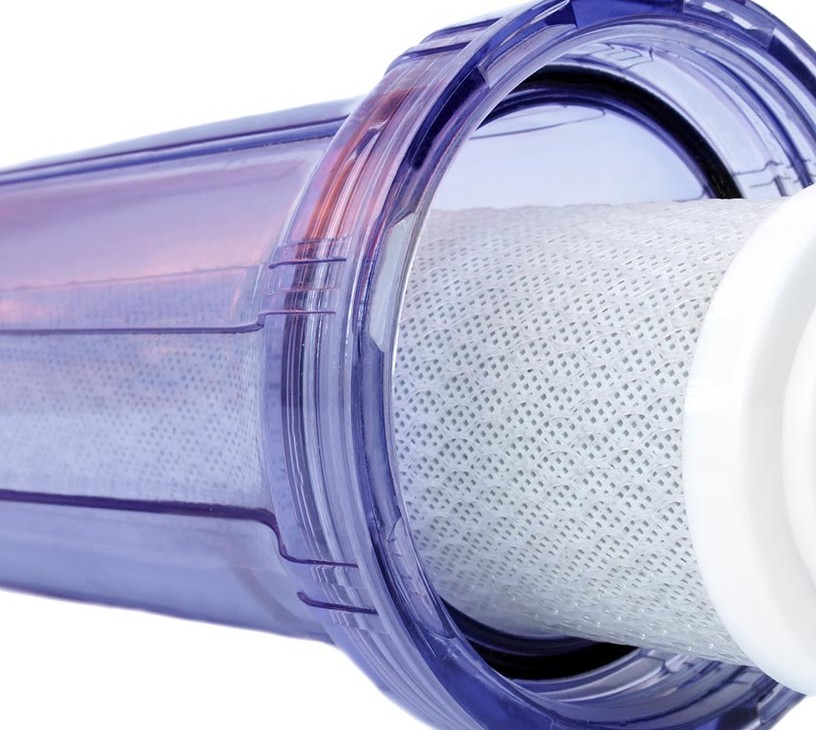


Membrane Market Size 2026-2030
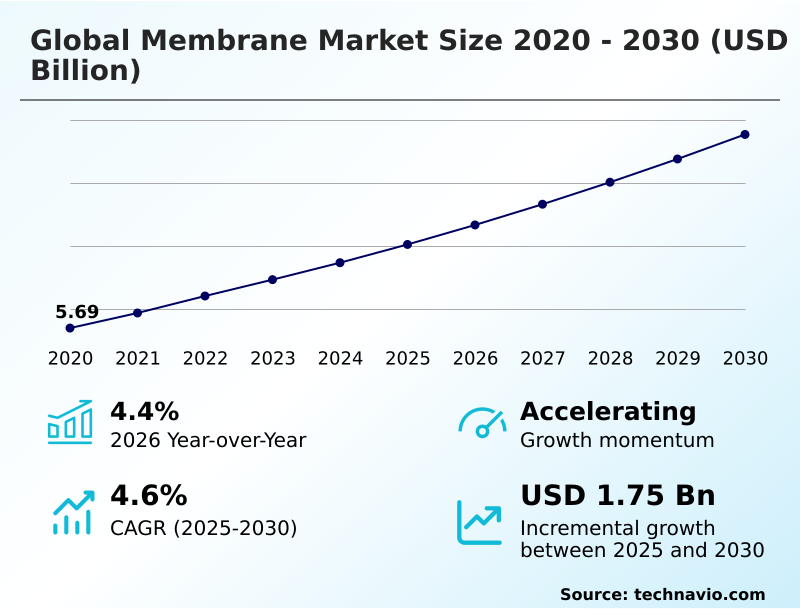
The membrane market size is valued to increase by USD 1.75 billion, at a CAGR of 4.6% from 2025 to 2030. Growing demand for freshwater and desalination solutions will drive the membrane market.
Major Market Trends & Insights
- APAC dominated the market and accounted for a 38.5% growth during the forecast period.
- By Application - Wastewater treatment segment was valued at USD 2.25 billion in 2024
- By Technology - RO segment accounted for the largest market revenue share in 2024
Market Size & Forecast
- Market Opportunities: USD 3.08 billion
- Market Future Opportunities: USD 1.75 billion
- CAGR from 2025 to 2030 : 4.6%
Market Summary
- The membrane market is defined by the critical need for advanced separation technologies to address global water scarcity and industrial purity requirements. Key drivers include stringent environmental regulations compelling industries to adopt high-efficiency filtration, and the rapid industrialization in emerging economies demanding precise process control.
- A primary trend is the integration of AI and IoT for smart water management, enabling predictive maintenance that mitigates issues like membrane fouling and reduces operational costs. For instance, a municipal desalination plant can leverage digital twin simulation to optimize transmembrane pressure and cleaning cycles, extending the lifespan of reverse osmosis modules and ensuring a consistent supply of potable water.
- However, the market grapples with challenges such as the high capital cost of durable materials like ceramic membranes and the environmental impact of disposing of spent polymeric modules. Innovations in bio-based polymers and recycling strategies are crucial for sustainable, long-term growth and ensuring a circular economy for these essential components.
What will be the Size of the Membrane Market during the forecast period?
Get Key Insights on Market Forecast (PDF) Get Free Sample
How is the Membrane Market Segmented?
The membrane industry research report provides comprehensive data (region-wise segment analysis), with forecasts and estimates in "USD million" for the period 2026-2030, as well as historical data from 2020-2024 for the following segments.
- Application
- Wastewater treatment
- Food and beverage
- Pharmaceutical and medical
- Chemical processing
- Others
- Technology
- RO
- Microfiltration
- Ultrafiltration
- Pervaporation
- Others
- Material
- Polymeric
- Ceramic
- Geography
- APAC
- China
- Japan
- India
- North America
- US
- Canada
- Mexico
- Europe
- Germany
- UK
- France
- Middle East and Africa
- Saudi Arabia
- UAE
- South Africa
- South America
- Brazil
- Argentina
- Rest of World (ROW)
- APAC
By Application Insights
The wastewater treatment segment is estimated to witness significant growth during the forecast period.
Wastewater treatment is the leading application, driven by strict environmental mandates and the need for water reclamation. This segment extensively uses membrane bioreactors and sterile filtration to meet effluent quality standards for municipal water supply and industrial wastewater treatment.
Advanced polymeric membranes are critical for achieving zero liquid discharge in sectors like chemical processing separation.
The adoption of smart water management, using predictive maintenance analytics, has improved operational uptime, with some facilities reporting a reduction in unplanned downtime by over 15%.
The focus on circular water management propels the use of reverse osmosis and ultrafiltration for producing high-purity water, reinforcing the importance of advanced materials science in developing high-flux membrane materials and supporting water security infrastructure.
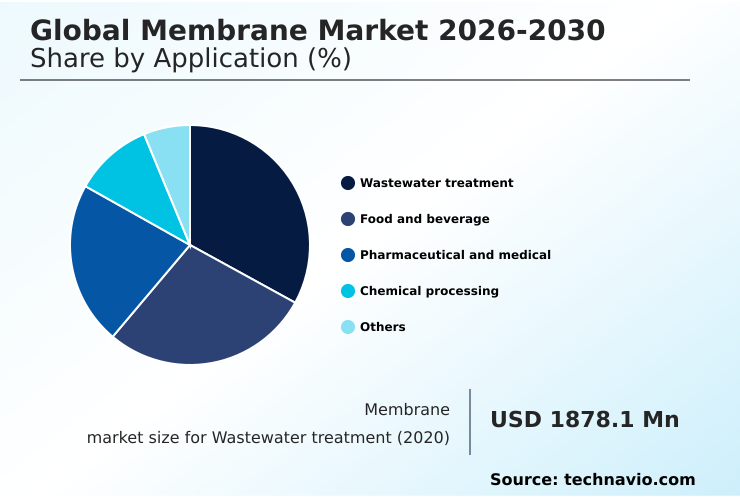
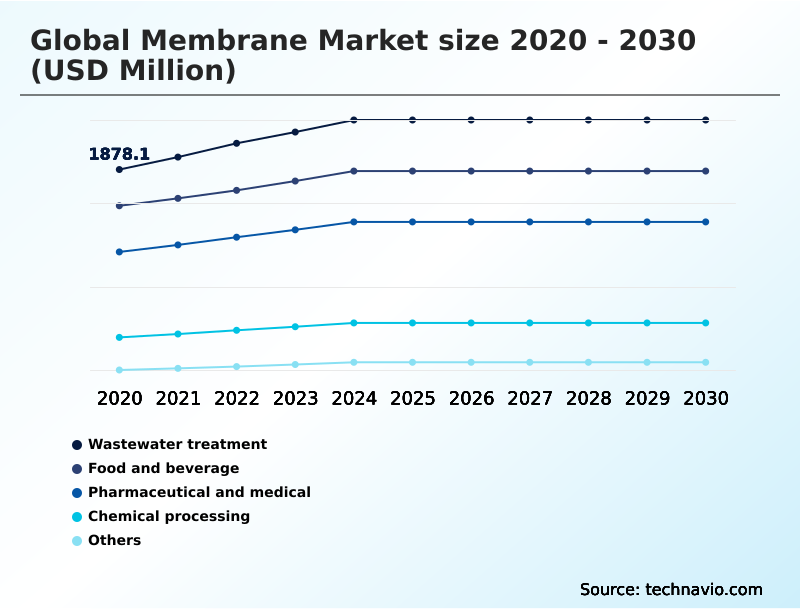
The Wastewater treatment segment was valued at USD 2.25 billion in 2024 and showed a gradual increase during the forecast period.
Regional Analysis
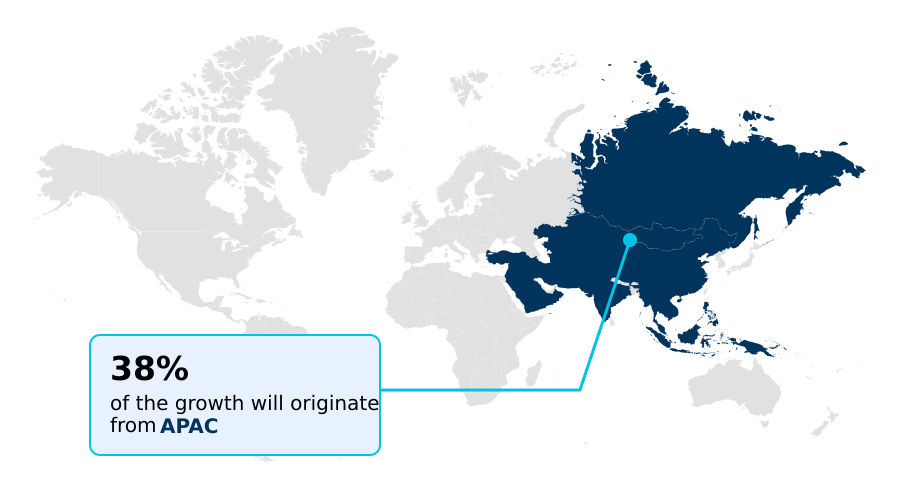
APAC is estimated to contribute 38.5% to the growth of the global market during the forecast period.Technavio’s analysts have elaborately explained the regional trends and drivers that shape the market during the forecast period.
See How Membrane Market Demand is Rising in APAC Get Free Sample
The geographic landscape is led by APAC, which accounts for 38.5% of the market opportunity, driven by industrial wastewater treatment and municipal water supply needs.
In contrast, North America holds a 24.9% share, focusing on produced water treatment and pharmaceutical manufacturing. Innovations in fouling-resistant coatings are critical in both regions, with some applications seeing a 20% longer operational life between cleaning cycles.
The adoption of decentralized water solutions and modular treatment units is accelerating globally to address localized water stress.
This strategic shift toward resource recovery from waste supports circular water management goals, with advancements in selective permeation and end-of-life membrane management becoming key differentiators for market players across diverse regional regulatory frameworks.
Market Dynamics
Our researchers analyzed the data with 2025 as the base year, along with the key drivers, trends, and challenges. A holistic analysis of drivers will help companies refine their marketing strategies to gain a competitive advantage.
- Strategic decision-making in the membrane market increasingly hinges on detailed technical evaluations. For instance, ceramic vs polymeric membrane performance is a critical consideration, with ceramic systems often providing a service life more than double that of polymeric counterparts in high-temperature industrial processes. Key initiatives focus on reverse osmosis energy consumption reduction and developing solvent-resistant nanofiltration for pharmaceuticals.
- The effectiveness of a membrane bioreactor for municipal sewage depends on fouling mitigation in spiral-wound membranes and the efficiency of the hollow fiber module for sterile filtration. In the food sector, ultrafiltration in dairy protein concentration is standard, while pervaporation for azeotropic mixture separation offers an energy-efficient alternative to distillation.
- The viability of a thin-film composite for seawater desalination is measured by its salt rejection and durability. Simultaneously, achieving zero liquid discharge in the chemical industry is a primary goal. The growth of the green hydrogen economy is driving demand for specific membrane systems for green hydrogen production. Nanofiltration for water softening applications remains a key municipal strategy.
- A comprehensive life-cycle assessment of membrane modules, including the use of bio-based polymers for sustainable membranes, is now integral to procurement.
- Other areas of development include smart sensors for predictive membrane maintenance, gas separation membranes for carbon capture, electrodeionization for ultrapure water polishing, membrane contactors for dissolved gas control, and high-rejection membranes for contaminant removal, all of which are factored into a cost analysis of decentralized water treatment.
What are the key market drivers leading to the rise in the adoption of Membrane Industry?
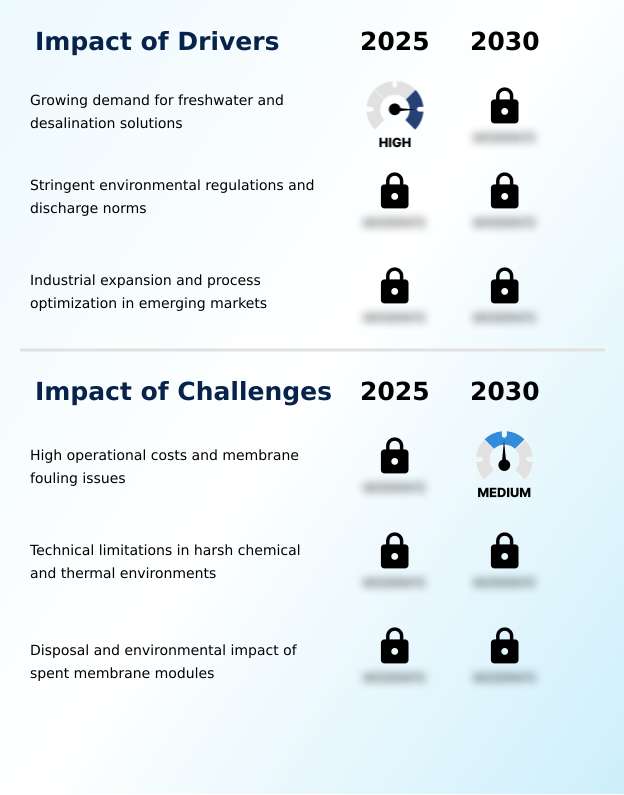
- The growing demand for freshwater and desalination solutions stands as a key driver for the market.
- Market growth is primarily driven by mounting pressure for regulatory compliance filtration and the global need for enhanced water security infrastructure.
- Stringent effluent quality standards are compelling industries to adopt technologies that ensure minimal liquid discharge, with advanced filtration systems enabling over 95% of companies in regulated sectors to meet new mandates.
- The expansion of high-tech industries, such as semiconductor manufacturing, fuels demand for high-purity water production, where filtration must remove impurities to parts-per-billion levels.
- Additionally, industrial process optimization relies on membranes for catalyst and solvent recovery, which can improve yield by 5% to 7%.
- The increasing adoption of these technologies underscores a broader shift toward resource efficiency and environmental stewardship across all major industrial sectors.
What are the market trends shaping the Membrane Industry?
- The integration of digitalization and artificial intelligence into membrane systems is emerging as a transformative market trend, enhancing operational efficiency and predictive maintenance.
- Key trends are reshaping the market, with a strong focus on sustainability and efficiency. The move toward a sustainable membrane life-cycle is compelling innovation in biocompatible materials and bio-based polymeric membranes, with pilot programs demonstrating that up to 30% of certain spent modules can be repurposed.
- Digitalization is another major trend, where predictive maintenance analytics and digital twin simulation enable operators to anticipate fouling events, reducing chemical usage by 15% and extending component life. Furthermore, the proliferation of modular treatment units and decentralized water solutions supports rapid deployment in remote or expanding industrial parks, enhancing agility.
- This shift toward smart water management and organophilic membrane technologies underpins the industry's evolution toward more resilient and cost-effective operations.
What challenges does the Membrane Industry face during its growth?
- High operational costs associated with membrane fouling present a key challenge affecting the industry's growth.
- Significant challenges constrain market potential, led by issues of membrane fouling and high operational expenditures. Persistent fouling can reduce permeate flux by up to 50%, necessitating energy-intensive cleaning cycles and increasing total cost of ownership. The technical limitations of standard polymeric membranes in harsh chemical and thermal environments restrict their use, creating a demand for more robust but costly alternatives.
- Furthermore, end-of-life membrane management presents a growing environmental concern, as less than 5% of spent modules are currently recycled, posing a conflict with circular economy goals. Addressing these hurdles through advanced materials science and developing cost-effective, fouling-resistant coatings are critical for future market expansion and sustainability.
Exclusive Technavio Analysis on Customer Landscape
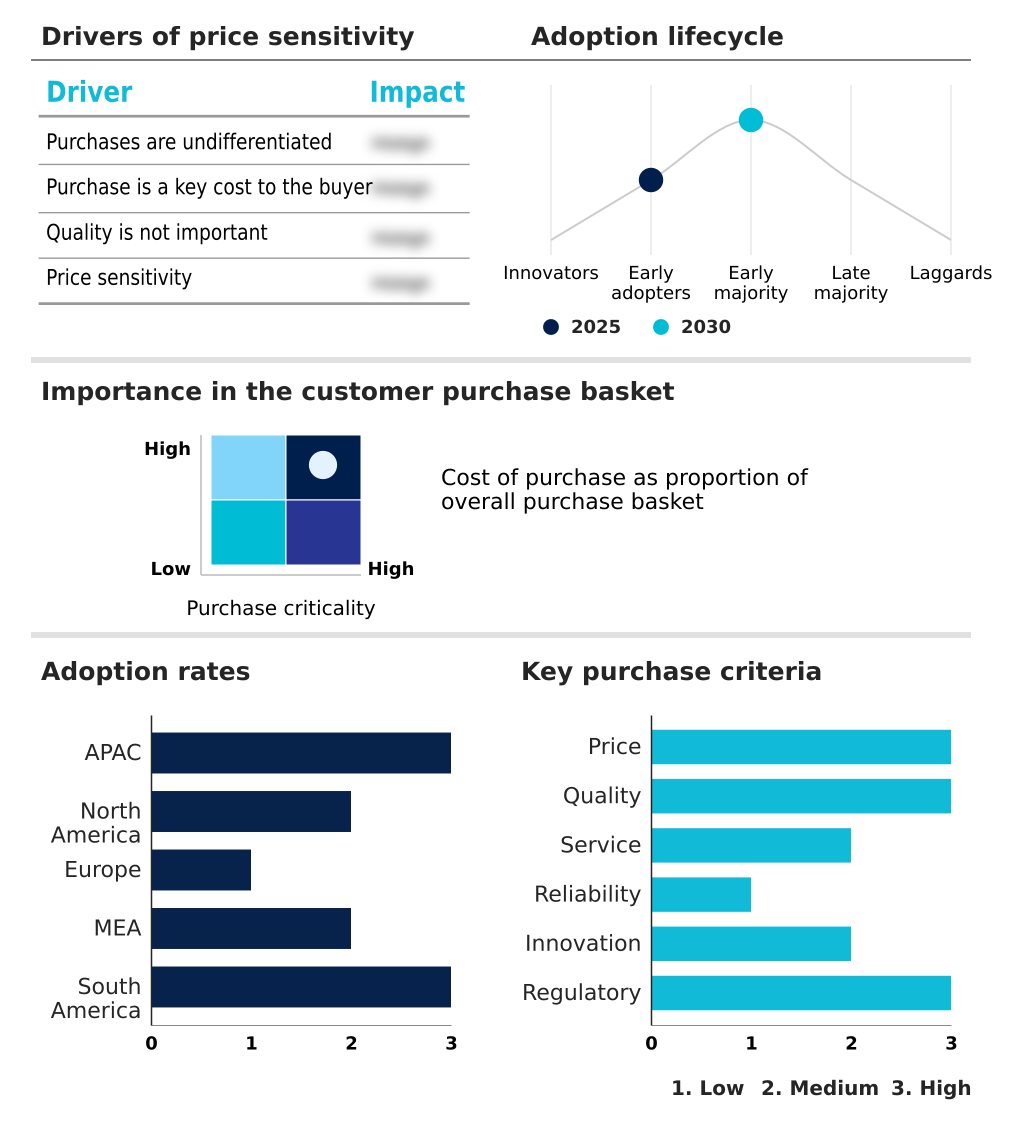
The membrane market forecasting report includes the adoption lifecycle of the market, covering from the innovator’s stage to the laggard’s stage. It focuses on adoption rates in different regions based on penetration. Furthermore, the membrane market report also includes key purchase criteria and drivers of price sensitivity to help companies evaluate and develop their market growth analysis strategies.
Customer Landscape of Membrane Industry
Competitive Landscape
Companies are implementing various strategies, such as strategic alliances, membrane market forecast, partnerships, mergers and acquisitions, geographical expansion, and product/service launches, to enhance their presence in the industry.
3M Co. - Key offerings include specialized membrane technologies crucial for wastewater reuse, desalination, and critical water treatment applications that meet stringent global purity standards.
The industry research and growth report includes detailed analyses of the competitive landscape of the market and information about key companies, including:
- 3M Co.
- Alfa Laval AB
- Asahi Kasei Corp.
- DuPont de Nemours Inc.
- GEA Group AG
- Kubota Corp.
- LG Chem Ltd.
- MANN HUMMEL International GmbH
- Nitto Denko Corp.
- OriginWater Membrane Technology
- Pall Corp.
- Parker Hannifin Corp.
- Pentair Plc
- Scinor Water America LLC
- Synder Filtration Inc.
- Thermo Fisher Scientific Inc.
- Toray Industries Inc.
- Toyobo Co. Ltd.
- Veolia Environment SA
- Xylem Inc.
Qualitative and quantitative analysis of companies has been conducted to help clients understand the wider business environment as well as the strengths and weaknesses of key industry players. Data is qualitatively analyzed to categorize companies as pure play, category-focused, industry-focused, and diversified; it is quantitatively analyzed to categorize companies as dominant, leading, strong, tentative, and weak.
Recent Development and News in Membrane market
- In September 2024, Pall Corp. introduced the Membralox GP-IC ceramic membrane system, incorporating a graduated permeability design to improve filtration efficiency and recovery rates in food and beverage processing.
- In November 2024, Parker Hannifin announced a definitive agreement to acquire Filtration Group Corp. for approximately $9.25 billion, significantly expanding its filtration capabilities and aftermarket business in key growth markets.
- In March 2025, Alfa Laval joined a three-year research initiative focused on membrane filtration for resource recovery from sewage sludge, contributing its expertise in separation technologies to advance sustainable water solutions.
- In May 2025, Veolia secured over $750 million in new contracts for water technologies, including a major agreement to design, build, and operate a state-of-the-art water treatment facility for a semiconductor manufacturing plant.
Dive into Technavio’s robust research methodology, blending expert interviews, extensive data synthesis, and validated models for unparalleled Membrane Market insights. See full methodology.
| Market Scope | |
|---|---|
| Page number | 323 |
| Base year | 2025 |
| Historic period | 2020-2024 |
| Forecast period | 2026-2030 |
| Growth momentum & CAGR | Accelerate at a CAGR of 4.6% |
| Market growth 2026-2030 | USD 1750.8 million |
| Market structure | Fragmented |
| YoY growth 2025-2026(%) | 4.4% |
| Key countries | China, Japan, India, South Korea, Australia, Indonesia, US, Canada, Mexico, Germany, UK, France, Italy, Spain, The Netherlands, Saudi Arabia, UAE, South Africa, Israel, Turkey, Brazil, Argentina and Chile |
| Competitive landscape | Leading Companies, Market Positioning of Companies, Competitive Strategies, and Industry Risks |
Research Analyst Overview
- The membrane market is sustained by the continuous need for high-purity separation across industries. Innovations in advanced materials like thin-film composites and ceramic membranes are central to enhancing performance metrics such as permeate flux and chemical resistance, which are crucial for demanding applications in desalination and wastewater treatment.
- The operational challenge of membrane fouling is being addressed through advancements in graduated permeability design and specialized polymeric membranes, including polyethersulfone and polyvinylidene fluoride. Boardroom decisions are increasingly influenced by the total cost of ownership, where technologies like electrodeionization and membrane contactors offer long-term value despite higher initial capital.
- For example, deploying advanced oxidation processes as a pretreatment can reduce chemical cleaning requirements by up to 30%, directly impacting operational budgets. The market is also expanding into niche areas with bio-based polymeric membranes, gas separation, proton exchange membrane for energy, and sanitary reverse osmosis for food-grade applications.
- Technologies like reverse osmosis, microfiltration, ultrafiltration, pervaporation, and nanofiltration, configured in hollow fiber membranes or spiral-wound membranes, are fundamental. The move toward zero liquid discharge and solvent recovery, coupled with the need for sterile filtration and hemodialysis membranes, underscores the technology's versatility and essential role in modern industry.
What are the Key Data Covered in this Membrane Market Research and Growth Report?
-
What is the expected growth of the Membrane Market between 2026 and 2030?
-
USD 1.75 billion, at a CAGR of 4.6%
-
-
What segmentation does the market report cover?
-
The report is segmented by Application (Wastewater treatment, Food and beverage, Pharmaceutical and medical, Chemical processing, and Others), Technology (RO, Microfiltration, Ultrafiltration, Pervaporation, and Others), Material (Polymeric, and Ceramic) and Geography (APAC, North America, Europe, Middle East and Africa, South America)
-
-
Which regions are analyzed in the report?
-
APAC, North America, Europe, Middle East and Africa and South America
-
-
What are the key growth drivers and market challenges?
-
Growing demand for freshwater and desalination solutions, High operational costs and membrane fouling issues
-
-
Who are the major players in the Membrane Market?
-
3M Co., Alfa Laval AB, Asahi Kasei Corp., DuPont de Nemours Inc., GEA Group AG, Kubota Corp., LG Chem Ltd., MANN HUMMEL International GmbH, Nitto Denko Corp., OriginWater Membrane Technology, Pall Corp., Parker Hannifin Corp., Pentair Plc, Scinor Water America LLC, Synder Filtration Inc., Thermo Fisher Scientific Inc., Toray Industries Inc., Toyobo Co. Ltd., Veolia Environment SA and Xylem Inc.
-
Market Research Insights
- Market dynamics are shaped by an intense focus on process optimization and regulatory compliance filtration. The adoption of energy-efficient separation techniques is critical, with facilities achieving up to a 10% reduction in energy use by upgrading to modern thin-film composites. Demand for brackish water purification is growing faster than that for traditional freshwater sources, especially in arid regions.
- The shift toward modular treatment units reflects a strategic move for operational flexibility, with deployment times for decentralized water solutions being 40% faster than for large-scale centralized plants.
- Sustainable membrane life-cycle management and catalyst and solvent recovery are becoming central to corporate strategy, driven by both cost savings and environmental stewardship, while the need for high-purity water production continues to expand in high-tech manufacturing sectors.
We can help! Our analysts can customize this membrane market research report to meet your requirements.
 RIA -
RIA - 
