



Industrial Process Mining Software Market Size and Growth Forecast 2026-2030
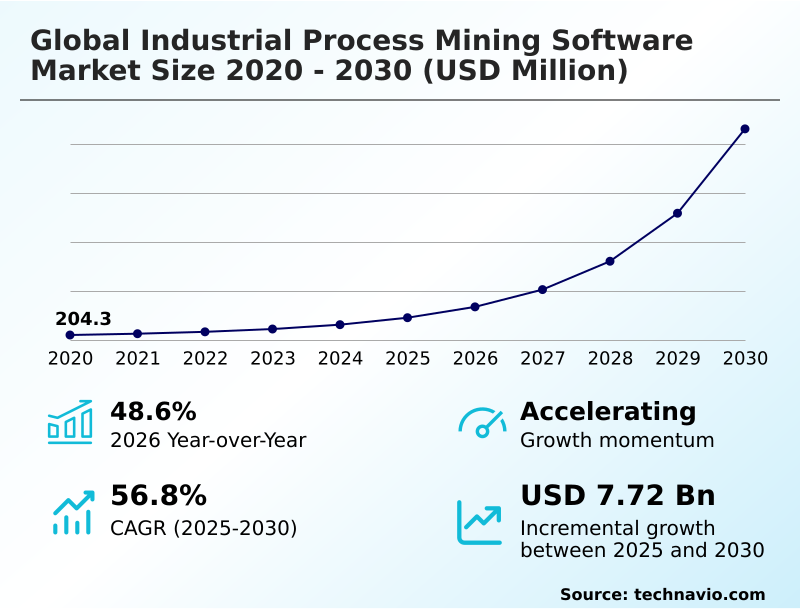
The Industrial Process Mining Software Market size was valued at USD 912.1 million in 2025 growing at a CAGR of 56.8% during the forecast period 2026-2030.
North America accounts for 31.8% of incremental growth during the forecast period. The Cloud based segment by Deployment was valued at USD 385.7 million in 2024, while the Process optimization and efficiency segment holds the largest revenue share by Application.
The market is projected to grow by USD 8.43 billion from 2020 to 2030, with USD 7.73 billion of the growth expected during the forecast period of 2025 to 2030.
Get Key Insights on Market Forecast (PDF) Request Free Sample
Industrial Process Mining Software Market Overview
The industrial process mining software market is defined by the strategic push to achieve operational transparency and efficiency within complex production environments. With year-over-year growth reaching 48.6%, organizations are accelerating the adoption of process intelligence platforms to manage the convergence of information and operational technology data. These tools enable deep event log analysis and process discovery, turning raw data from manufacturing execution systems into actionable insights for workflow automation. For instance, a high-volume automotive supplier implementing process simulation based on IATF 16949 standards can perform detailed variance analysis on its robotic welding lines. By using predictive process monitoring to analyze cycle times and resource allocation, the plant can identify root causes for micro-stoppages, typically reducing line downtime and improving first-pass yield. This data-driven decision making is crucial for optimizing asset utilization and achieving the rigorous process conformance demanded by modern supply chains.
Drivers, Trends, and Challenges in the Industrial Process Mining Software Market
The strategic role of process mining in digital transformation is expanding as organizations move beyond basic efficiency gains. Industrial process mining for supply chain optimization is a primary objective, where real-time process monitoring in manufacturing provides the data needed to enhance resilience. This requires deep process mining integration with ERP systems, allowing for a holistic view of operations.
A key technical decision involves comparing object-centric process mining vs case-centric mining; the former is superior for modeling the complex, many-to-many relationships in industrial settings, such as tracking components from multiple suppliers into a single production order.
For instance, an aerospace manufacturer adhering to AS9100 standards can use AI-driven process mining for predictive maintenance on critical machinery, measuring ROI from process mining initiatives through reduced unplanned downtime, which is significantly more effective than preventative schedules alone.
Concurrently, using process mining for ESG compliance reporting is becoming standard practice, helping firms meet the demands of the EU's Corporate Sustainability Reporting Directive. Task mining for analyzing manual user activities complements system data, offering a complete picture. However, securing sensitive data in industrial process mining remains paramount, especially when applying process mining to operational technology.
As a result, many firms are combining process mining with robotic process automation to create self-optimizing workflows, from improving production throughput to automating root cause analysis with process mining.
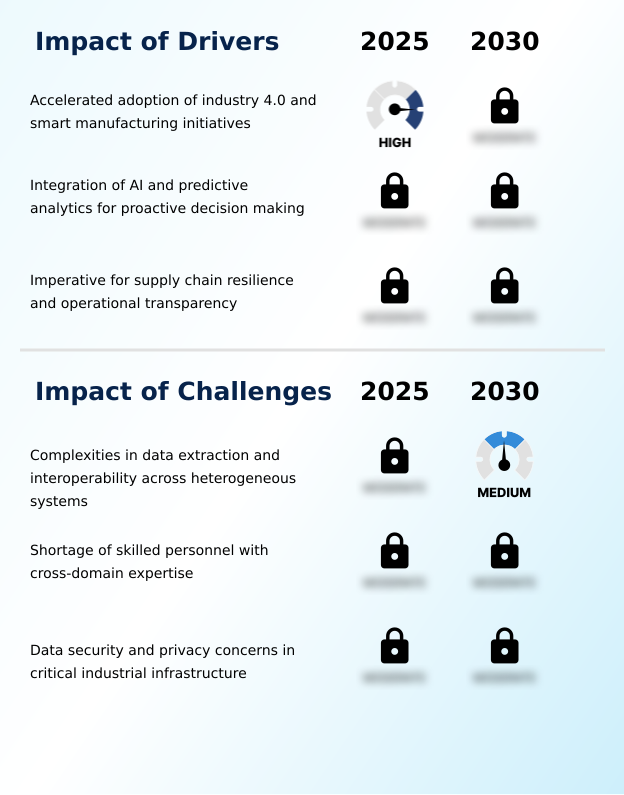
Primary Growth Driver: The accelerated adoption of Industry 4.0 and smart manufacturing initiatives is a key driver for the industrial process mining software market.
The primary driver for the market is the accelerated adoption of Industry 4.0, which necessitates advanced tools for operational technology data analysis from manufacturing execution systems and programmable logic controllers.
Contributing 31.8% of incremental growth, North American firms are aggressively leveraging these solutions to enhance supply chain resilience. The deep integration of AI, including prescriptive analytics and machine learning, into process mining platforms marks a second critical driver.
This shifts the focus from reactive analysis to proactive management, enabling predictive maintenance and intelligent automation.
Lastly, the urgent need for enhanced supply chain synchronization and operational transparency in response to global disruptions compels industrial leaders to seek tools that provide end-to-end process visibility, from procurement to logistics, ensuring compliance and agility.
Emerging Market Trend: The convergence of hyperautomation with process discovery is a defining market trend. This integration is shifting solutions from descriptive analytics toward prescriptive and autonomous process optimization.
The market's trajectory is increasingly shaped by the fusion of generative AI with process mining platforms, enabling natural language query capabilities and moving beyond simple process mapping. This evolution toward hyperautomation allows for the automatic execution of corrective actions, a critical capability in high-velocity manufacturing sectors found in the APAC region, which is seeing a 58.3% CAGR.
A significant trend is the shift from traditional case-centric analysis to object-centric process mining (OCPM), which provides a more accurate view of complex industrial value chains where multiple entities like materials and equipment interact. This approach is essential for identifying cross-functional inefficiencies.
Furthermore, the integration with digital twin technology for predictive process monitoring is enabling advanced predictive maintenance and sustainability reporting, meeting stringent ESG compliance demands.
Key Industry Challenge: Complexities in data extraction and ensuring interoperability across heterogeneous operational technology systems present a key challenge to industry growth.
A formidable challenge is the complexity of data extraction and achieving interoperability across heterogeneous industrial environments, where a mix of legacy systems and modern IoT devices creates fragmented data landscapes. The effort to cleanse and harmonize unstructured operational technology data from proprietary control systems often leads to cost-prohibitive implementations, especially for SMEs.
A second barrier is the acute shortage of skilled personnel with cross-domain expertise in both data science and industrial engineering, hindering the translation of analytical insights into practical shop-floor improvements. This is particularly pronounced in emerging APAC markets.
Finally, rigorous data security and privacy concerns, governed by regulations like GDPR, act as a significant deterrent, as moving sensitive operational data to cloud platforms for analysis introduces cybersecurity risks and compliance burdens that many manufacturers are hesitant to assume.
Explore Full Market Dynamics Analysis Request Free Sample
Industrial Process Mining Software Market Segmentation
The industrial process mining software industry research report provides comprehensive data including region-wise segment analysis, with forecasts and analysis for the period 2026-2030, as well as historical data from 2020-2024 for the following segments.
Deployment Segment Analysis
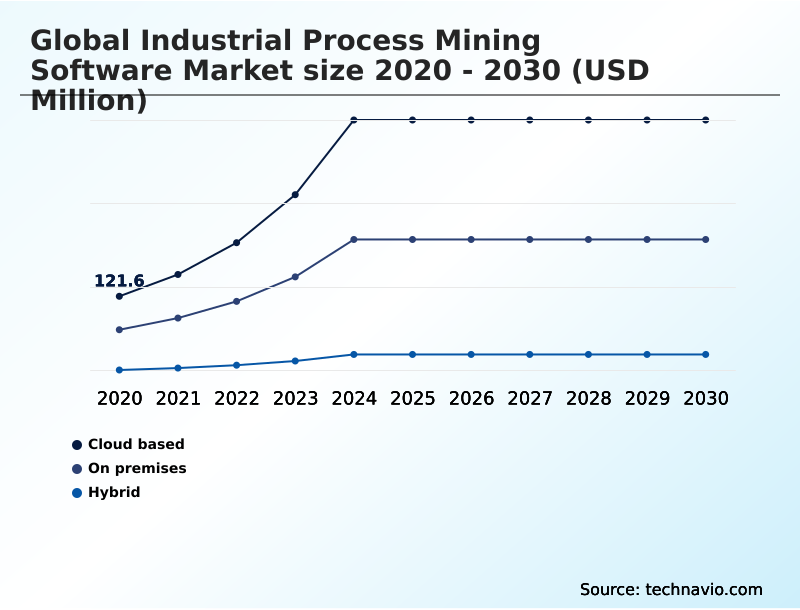
The cloud based segment is estimated to witness significant growth during the forecast period.
Cloud-based platforms are the dominant deployment methodology for industrial process mining, driven by inherent scalability, cost-efficiency, and seamless integration with Industrial Internet of Things ecosystems.
This model allows firms to leverage substantial computing power for process discovery and event log analysis without significant upfront hardware investment. The shift toward Software as a Service models facilitates continuous updates, enabling advanced process simulation and predictive process monitoring.
Cloud architectures are particularly effective in dismantling information silos across dispersed facilities, providing unified, end-to-end process visibility.
By utilizing the cloud, organizations can rapidly scale process mining initiatives from a single pilot to a global production network, ensuring data-driven decision making and process standardization are efficiently replicated across the entire enterprise for enhanced operational excellence.
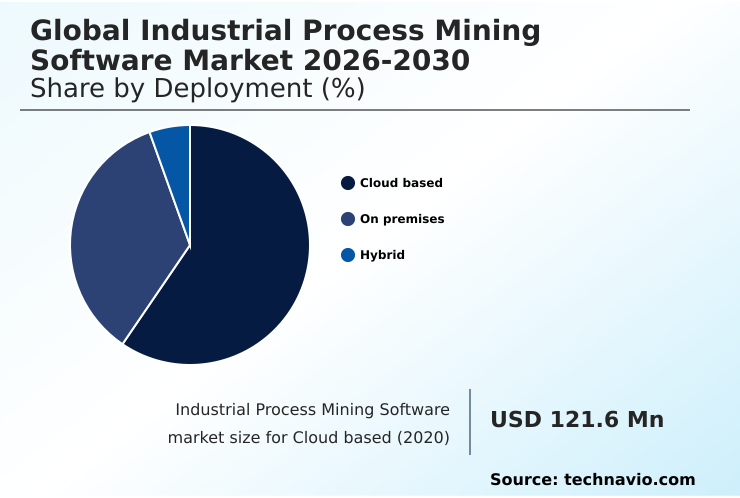
The Cloud based segment was valued at USD 385.7 million in 2024 and showed a gradual increase during the forecast period.
Industrial Process Mining Software Market by Region: North America Leads with 31.8% Growth Share
North America is estimated to contribute 31.8% to the growth of the global market during the forecast period.
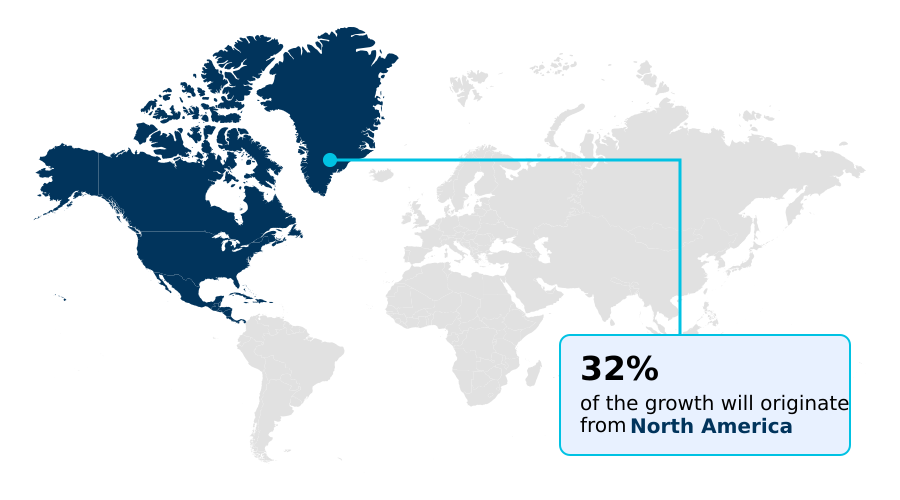
The geographic landscape of the industrial process mining software market is diverse, with North America representing the largest contributor to incremental growth at 31.8%, driven by a focus on supply chain resilience and hyperautomation.
Meanwhile, the APAC region is projected to have the highest growth, with a 58.3% CAGR, as manufacturing hubs in China and India prioritize process standardization and intelligent automation to manage immense scale and complexity.
In Europe, adoption is strongly influenced by regulatory pressures, with firms utilizing process mining for compliance verification under frameworks like GDPR and the EU Green Deal.
This region, home to many pioneering vendors, emphasizes object-centric process mining to analyze dense supply chain interdependencies and support complex ERP transformations, reinforcing the global need for enhanced operational transparency.
Customer Landscape Analysis for the Industrial Process Mining Software Market
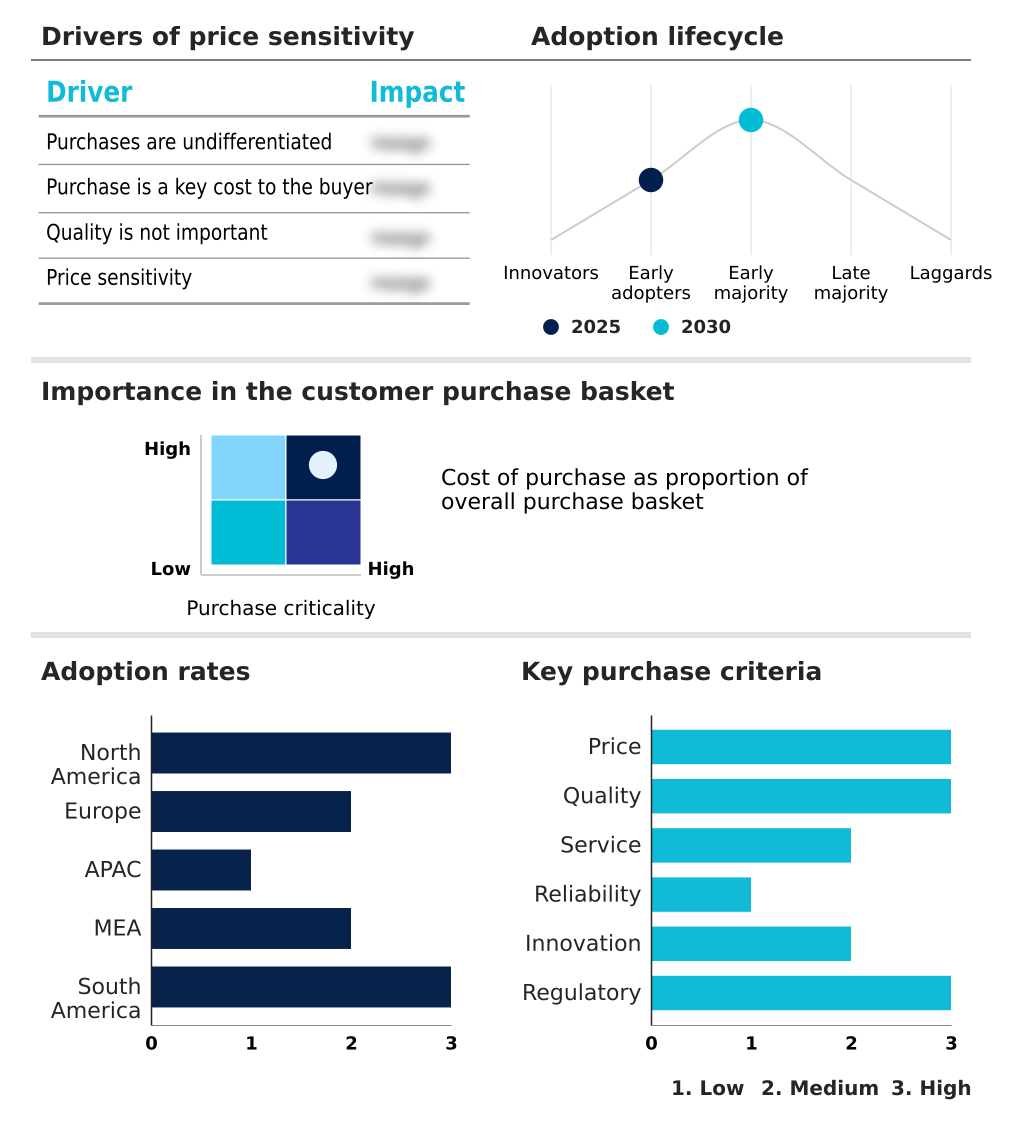
The industrial process mining software market forecasting report includes the adoption lifecycle of the market, covering from the innovator’s stage to the laggard’s stage. It focuses on adoption rates in different regions based on penetration. Furthermore, the industrial process mining software market report also includes key purchase criteria and drivers of price sensitivity to help companies evaluate and develop their market growth analysis strategies.
Competitive Landscape of the Industrial Process Mining Software Market
Companies are implementing various strategies, such as strategic alliances, partnerships, mergers and acquisitions, geographical expansion, and product/service launches, to enhance their presence in the industrial process mining software market industry.
ABBYY - Offers a process intelligence platform using timeline analysis to reconstruct workflows, identifying compliance issues and supply chain delays for data-driven operational improvements.
The industry research and growth report includes detailed analyses of the competitive landscape of the market and information about key companies, including:
- ABBYY
- BusinessOptix
- Celonis SE
- Datricks
- Fluxicon BV
- IBM Corp.
- iGrafx, LLC
- Infor Inc.
- Mavim BV
- Mehrwerk
- Microsoft Corp.
- mindzie
- Pegasystems Inc.
- Puzzle Data
- QPR Software Plc
- SAG Aris GmbH
- Salesforce Inc.
- SAP SE
- Stereologic
- UiPath Inc.
Qualitative and quantitative analysis of companies has been conducted to help clients understand the wider business environment as well as the strengths and weaknesses of key industry players. Data is qualitatively analyzed to categorize companies as pure play, category-focused, industry-focused, and diversified; it is quantitatively analyzed to categorize companies as dominant, leading, strong, tentative, and weak.
Recent Developments in the Industrial Process Mining Software Market
- In February, 2025, Siemens Digital Industries Software announced the expansion of its Xcelerator portfolio with a new industrial process intelligence module, designed to help manufacturers correlate energy consumption data with production throughput in real time.
- In February, 2025, Weir Group PLC entered into an agreement to acquire Micromine, a prominent mining software company, for approximately USD 1.31 billion, a move intended to strengthen Weir's digital capabilities across the mining value chain.
- In March, 2025, SAG Aris GmbH (as ARIS) introduced ARIS Task Mining by ProcessMaker as a new capability within the ARIS Suite, enabling end-to-end capture of both manual and system-based activities to provide a more comprehensive view of operational workflows.
- In May, 2025, Celonis SE announced the integration of a generative AI-powered co-pilot into its Execution Management System, designed to enable natural language queries and automate the generation of process improvement suggestions for industrial clients.
Research Analyst Overview: Industrial Process Mining Software Market
The industrial process mining market's evolution is driven by the imperative of IT/OT convergence, compelling a re-evaluation of operational KPIs beyond traditional metrics. Organizations are leveraging process intelligence to create a digital twin of an organization, providing a dynamic, data-driven view of all workflows.
This involves sophisticated event log analysis from sources like supervisory control and data acquisition (SCADA) systems to enable robust process discovery and conformance checking. The 'Process optimization and efficiency' application remains the dominant segment, reflecting the core value proposition.
Boardroom decisions on CapEx for robotic process automation are increasingly informed by insights from task mining, which quantifies the potential for workflow automation. However, these initiatives must navigate the complexities of data privacy regulations such as GDPR, which governs how employee interaction data is used for process enhancement.
Consequently, the focus is shifting toward embedding predictive process monitoring and prescriptive analytics directly into execution management systems to drive continuous improvement.
Dive into Technavio’s robust research methodology, blending expert interviews, extensive data synthesis, and validated models for unparalleled Industrial Process Mining Software Market insights. See full methodology.
| Market Scope | |
|---|---|
| Page number | 303 |
| Base year | 2025 |
| Historic period | 2020-2024 |
| Forecast period | 2026-2030 |
| Growth momentum & CAGR | Accelerate at a CAGR of 56.8% |
| Market growth 2026-2030 | USD 7725.0 million |
| Market structure | Fragmented |
| YoY growth 2025-2026(%) | 48.6% |
| Key countries | US, Canada, Mexico, Germany, UK, France, Italy, The Netherlands, Spain, China, Japan, India, South Korea, Australia, Indonesia, Saudi Arabia, UAE, South Africa, Israel, Turkey, Brazil, Argentina and Colombia |
| Competitive landscape | Leading Companies, Market Positioning of Companies, Competitive Strategies, and Industry Risks |
Industrial Process Mining Software Market: Key Questions Answered in This Report
-
What is the expected growth of the Industrial Process Mining Software Market between 2026 and 2030?
-
The Industrial Process Mining Software Market is expected to grow by USD 7.73 billion during 2026-2030, registering a CAGR of 56.8%. Year-over-year growth in 2026 is estimated at 48.6%%. This acceleration is shaped by accelerated adoption of industry 4.0 and smart manufacturing initiatives, which is intensifying demand across multiple end-use verticals covered in the report.
-
-
What segmentation does the market report cover?
-
The report is segmented by Deployment (Cloud based, On premises, and Hybrid), Application (Process optimization and efficiency, Compliance and audit management, and Operational intelligence and monitoring), End-user (Manufacturing, Energy and utilities, Chemicals and process industries, Oil and gas, and Healthcare) and Geography (North America, Europe, APAC, Middle East and Africa, South America). Among these, the Cloud based segment is estimated to witness significant growth during the forecast period, driven by rising adoption across key application areas. Each segment includes detailed qualitative and quantitative analysis, along with historical data from 2020-2024 and forecasts through 2030 with year-over-year growth rates.
-
-
Which regions are analyzed in the report?
-
The report covers North America, Europe, APAC, Middle East and Africa and South America. North America is estimated to contribute 31.8% to market growth during the forecast period. Country-level analysis includes US, Canada, Mexico, Germany, UK, France, Italy, The Netherlands, Spain, China, Japan, India, South Korea, Australia, Indonesia, Saudi Arabia, UAE, South Africa, Israel, Turkey, Brazil, Argentina and Colombia, with dedicated market size tables and year-over-year growth for each.
-
-
What are the key growth drivers and market challenges?
-
The primary driver is accelerated adoption of industry 4.0 and smart manufacturing initiatives, which is accelerating investment and industry demand. The main challenge is complexities in data extraction and interoperability across heterogeneous systems, creating operational barriers for key market participants. The report quantifies the impact of each driver and challenge across 2026 and 2030 with comparative analysis.
-
-
Who are the major players in the Industrial Process Mining Software Market?
-
Key vendors include ABBYY, BusinessOptix, Celonis SE, Datricks, Fluxicon BV, IBM Corp., iGrafx, LLC, Infor Inc., Mavim BV, Mehrwerk, Microsoft Corp., mindzie, Pegasystems Inc., Puzzle Data, QPR Software Plc, SAG Aris GmbH, Salesforce Inc., SAP SE, Stereologic and UiPath Inc.. The report provides qualitative and quantitative analysis categorizing companies as dominant, leading, strong, tentative, and weak based on their market positioning. Company profiles include business segment analysis, SWOT assessment, key offerings, and recent strategic developments.
-
Industrial Process Mining Software Market Research Insights
Market dynamics are shaped by a definitive shift from retrospective analysis to proactive, real-time monitoring and predictive maintenance. This evolution is driven by the integration of advanced process mining algorithms that enable deep performance diagnostics and bottleneck identification across the value chain.
Organizations are leveraging these capabilities to achieve end-to-end visibility, which is critical for building supply chain resilience and ensuring operational excellence. The pursuit of process optimization and efficiency remains the largest application segment.
This focus is amplified by regulatory frameworks such as the European Green Deal, which mandates stringent sustainability reporting and compels firms to use these tools for compliance verification and optimizing resource allocation.
We can help! Our analysts can customize this industrial process mining software market research report to meet your requirements.
 RIA -
RIA - 
