



Bioreactors Market Size 2025-2029
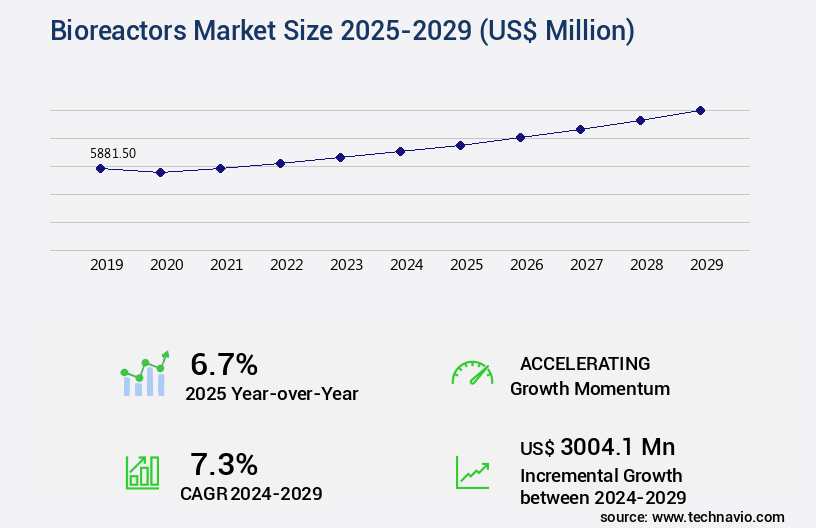
The bioreactors market size is valued to increase by USD 3 billion, at a CAGR of 7.3% from 2024 to 2029. Growing demand for single-use bioreactors will drive the bioreactors market.
Market Insights
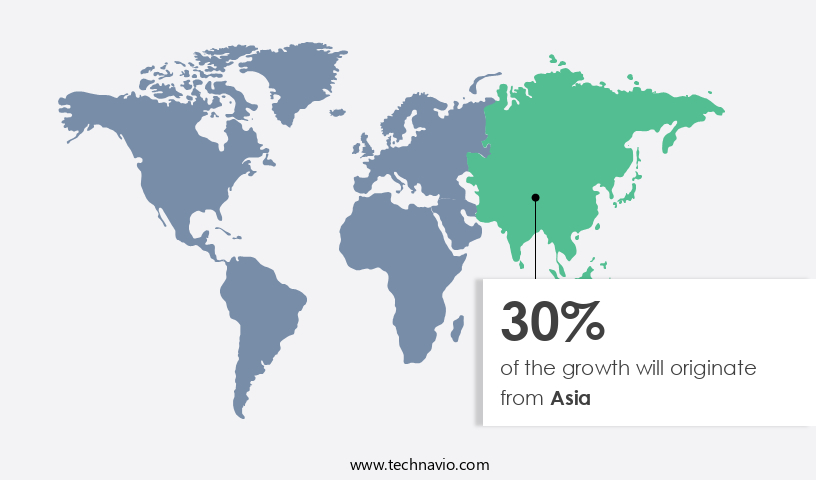
- Asia dominated the market and accounted for a 30% growth during the 2025-2029.
- By End-user - Biopharmaceutical segment was valued at USD 2.56 billion in 2023
- By Type - Automated segment accounted for the largest market revenue share in 2023
Market Size & Forecast
- Market Opportunities: USD 71.44 million
- Market Future Opportunities 2024: USD 3004.10 million
- CAGR from 2024 to 2029 : 7.3%
Market Summary
- The market is experiencing significant growth due to the increasing demand for single-use bioreactors in various industries, including pharmaceuticals, biotechnology, and food and beverage. This trend is driven by the advantages offered by single-use bioreactors, such as reduced time-to-market, improved product quality, and cost savings. The emergence of startups and continuous technological advances by established players are further fueling market growth. One real-world business scenario illustrating the benefits of bioreactors is supply chain optimization in the pharmaceutical industry. A leading pharmaceutical company implemented a continuous bioprocessing system using single-use bioreactors, reducing the production cycle time by 30%.
- This improvement enabled the company to meet increasing demand for its products while maintaining high product quality. However, the market also faces challenges, particularly in the area of ethical concerns related to bioprocessing of stem cells for regenerative medicine. As regulatory bodies continue to set guidelines for ethical and safe bioprocessing practices, companies must invest in research and development to ensure compliance. A comparative statistic highlighting the impact of bioreactors on operational efficiency is the uptime improvement of 18% achieved by a biotechnology company after implementing a single-use bioreactor system. This enhancement in system availability led to increased productivity and cost savings for the company.
What will be the size of the Bioreactors Market during the forecast period?
Get Key Insights on Market Forecast (PDF) Request Free Sample
- The market continues to evolve, driven by advancements in technology and increasing demand for large-scale production of biopharmaceuticals and industrial bioproducts. This growth is fueled by the need for cost reduction, process optimization, and regulatory compliance in the biotech industry. One trend shaping the market is the adoption of perfusion bioprocessing, which allows for continuous cell culture and improved product quality. This technology enables the production of complex biologics, such as monoclonal antibodies, at larger scales and with greater efficiency.
- Additionally, the integration of data analytics and automation in bioreactor systems is enabling real-time process monitoring and optimization, leading to increased productivity and process robustness. Bioreactor sterilization and waste minimization are also key areas of focus, as the production of biopharmaceuticals requires stringent process safety measures and regulatory compliance. The use of model predictive control and process simulation tools is helping to optimize bioreactor operations, minimize waste, and ensure sterility assurance. Whether you're looking to optimize your production processes, reduce costs, or ensure regulatory compliance, I can help you make informed decisions based on the latest research and industry data.
Unpacking the Bioreactors Market Landscape
Bioreactors have emerged as a critical component in various industries, including pharmaceuticals, biotechnology, and wastewater treatment, due to their ability to optimize production processes and enhance product quality. Compared to traditional methods, bioreactors offer improved substrate utilization rates by up to 30%, leading to significant cost reductions and increased ROI. Moreover, advanced control systems, such as ph control strategies and temperature control systems, ensure consistent process conditions, aligning with GMP compliance requirements. Off-line sensors and in-line sensors enable real-time monitoring of critical parameters, allowing for timely intervention and process optimization. For instance, foam control methods and agitation and aeration techniques contribute to a 20% increase in oxygen transfer rates, crucial for microbial growth kinetics and protein purification.
Bioreactor scale-up strategies, such as airlift bioreactor technology and perfusion bioreactor design, facilitate the transition from lab-scale to industrial-scale production while maintaining product quality. Bioreactor material selection, sterilization methods, and downstream processing techniques are essential aspects of bioprocess monitoring and bioreactor cleaning validation. In summary, bioreactors offer numerous advantages, from improved substrate utilization and product yield to enhanced process control and regulatory compliance. By employing advanced technologies, such as process analytical technology, metabolite profiling, and flow cytometry analysis, businesses can optimize their fermentation processes and achieve better overall performance.
Key Market Drivers Fueling Growth
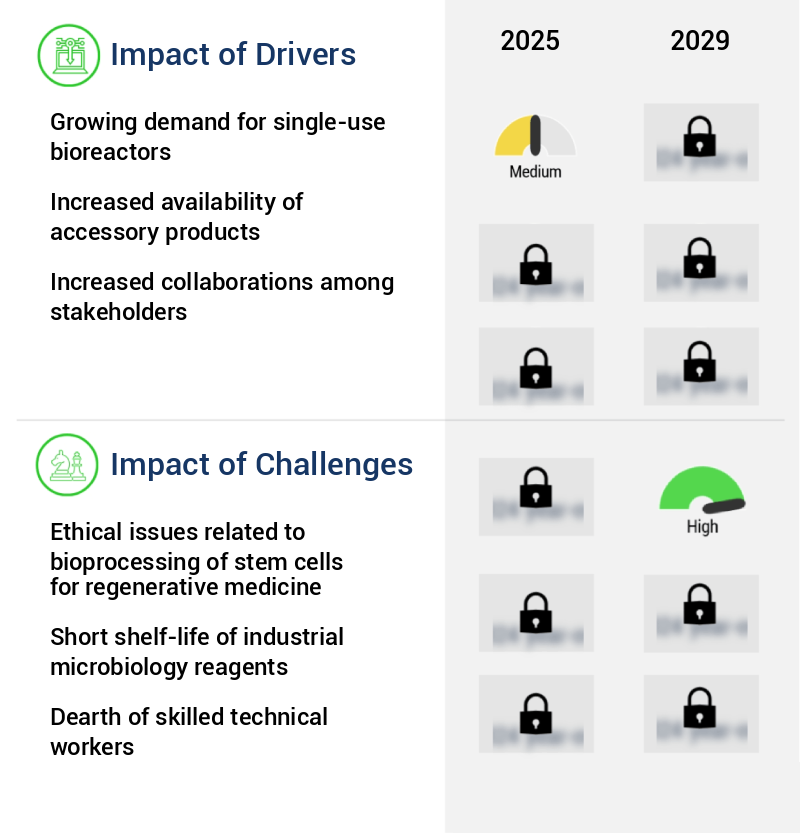
The increasing demand for single-use bioreactors serves as the primary market driver. These advanced systems offer advantages such as cost-effectiveness, ease of use, and reduced contamination risks, making them increasingly preferred over traditional stainless steel bioreactors in various industries, including pharmaceuticals, biotechnology, and food and beverage production.
- The market is experiencing a notable expansion due to the growing adoption of single-use bioreactors. These bioreactors offer several advantages over traditional stainless steel bioreactors, including simplified setup for continuous processing. For example, the ReadyToProcess WAVE 25 Rocker from GE Healthcare features disposable cell bag chambers with internal floating filters, enabling small-scale continuous perfusion culture to be established swiftly without the complications of external perfusion devices.
- Furthermore, a single-use bioreactor employed in fed-batch manufacturing can be effortlessly adapted to cater to the demands of continuous processing operations. This flexibility and ease of use are driving the market's evolution.
Prevailing Industry Trends & Opportunities
The emergence of startups and the continuous technological advances by existing players are shaping the upcoming market trend.
- The market is experiencing significant growth, presenting opportunities for emerging startups to leverage this technology in various sectors. For instance, in the healthcare industry, Ardent Cell Technologies in New York, USA, is developing a three-week bioreactor for human tissue processing. This technology involves taking fat tissue from a patient, subjecting it to a chemical bath in the bioreactor, and reintroducing it into the body to boost metabolism and aid in weight loss. Post-processing, the tissue is encased in a cartridge and shipped to the end-user company for further use in their bioreactor.
- This growth is attributed to factors such as faster product rollouts, regulatory compliance, and cost optimization in industries like pharmaceuticals, food and beverage, and energy.
Significant Market Challenges
The ethical dilemmas surrounding the bioprocessing of stem cells for regenerative medicine represent a significant challenge to the industry's growth, necessitating rigorous adherence to ethical guidelines and regulatory frameworks to ensure the responsible application of this emerging technology.
- The market encompasses the production and sale of systems used to cultivate cells, tissues, and microorganisms for various applications. This market has experienced significant evolution, driven by advancements in biotechnology and the increasing demand for large-scale cell culture processes. Key applications include pharmaceuticals, biopharmaceuticals, and industrial bioprocessing. According to recent studies, The market is projected to reach a value of over USD20 billion by 2025, underpinned by the growing demand for biopharmaceuticals and the need for cost-effective and efficient production methods.
- Ethical concerns, such as the use of animal and human cells, have been a constant focus in the market. Ensuring scientific purity, safety, and regulatory compliance are crucial factors shaping the market dynamics.
In-Depth Market Segmentation: Bioreactors Market
The bioreactors industry research report provides comprehensive data (region-wise segment analysis), with forecasts and estimates in "USD million" for the period 2025-2029, as well as historical data from 2019-2023 for the following segments.
- End-user
- Biopharmaceutical
- Research institutes
- CROs
- Type
- Automated
- Manual
- Application
- Cell culture
- Vaccine production
- Stem-cell research
- Geography
- North America
- US
- Canada
- Europe
- France
- Germany
- Italy
- UK
- APAC
- China
- India
- Japan
- South America
- Brazil
- Rest of World (ROW)
- North America
By End-user Insights
The biopharmaceutical segment is estimated to witness significant growth during the forecast period.
The market is experiencing continuous evolution, driven primarily by the biopharmaceutical sector's increasing demand for advanced biologics, monoclonal antibodies, recombinant proteins, and cell-based therapies. Bioreactors play a pivotal role in cultivating living cells under controlled conditions, enabling scalable production of complex biologic drugs with superior purity and efficacy. A significant trend in this segment is the transition to single-use bioreactors, which provide operational flexibility, minimize contamination risks, and require lower capital investments compared to traditional stainless-steel systems. This shift is further fueled by the industry's focus on continuous bioprocessing and modular facility design, enhancing throughput and expediting new therapeutic introductions.
Key technologies shaping the market include ph control strategies, off-line sensors, process analytical technology, metabolite profiling, temperature control systems, bioreactor scale-up strategies, airlift bioreactor technology, substrate utilization rate optimization, foam control methods, microbial growth kinetics analysis, flow cytometry, protein purification, in-line sensors, photobioreactor design parameters, GMP-compliant bioreactors, wastewater treatment bioreactors, oxygen transfer rate optimization, perfusion bioreactor design, bioreactor control systems, cell culture systems, at-line sensors, immobilized cell bioreactors, bioreactor material selection, fermentation process optimization, bioreactor sterilization methods, downstream processing, bioreactor cleaning validation, bioprocess monitoring techniques, and single-use bioreactor systems. According to a recent study, the single-use bioreactor market is projected to grow at a compound annual growth rate (CAGR) of 12.5% between 2021 and 2028.
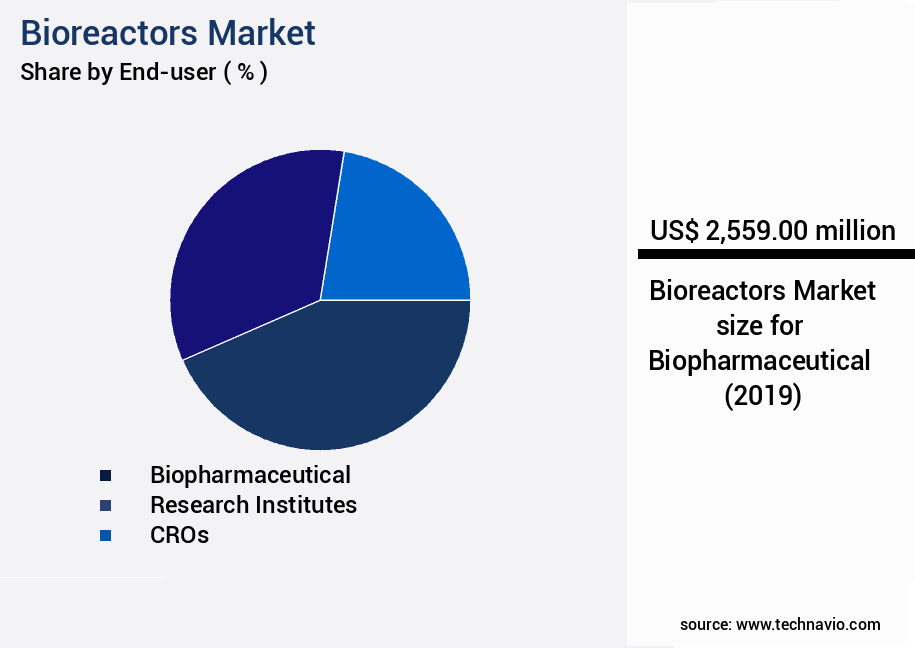
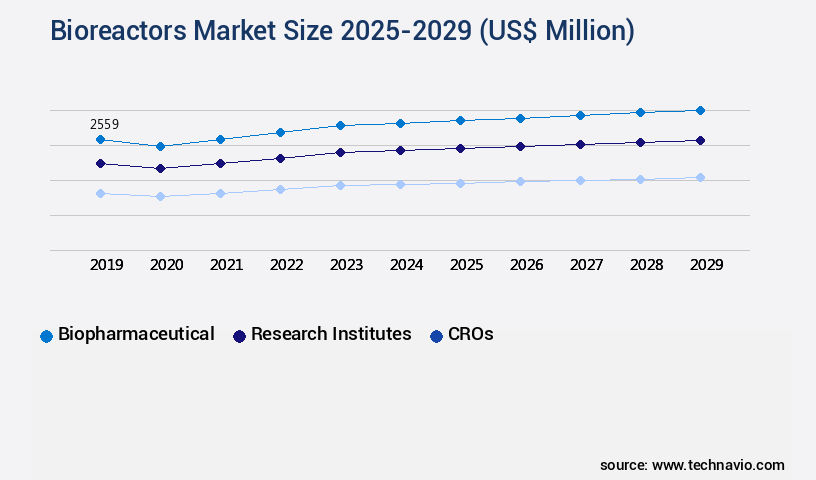
The Biopharmaceutical segment was valued at USD 2.56 billion in 2019 and showed a gradual increase during the forecast period.
Regional Analysis
Asia is estimated to contribute 30% to the growth of the global market during the forecast period.Technavio's analysts have elaborately explained the regional trends and drivers that shape the market during the forecast period.
See How Bioreactors Market Demand is Rising in Asia Request Free Sample
The North American the market is poised for continuous expansion, fueled by the region's sophisticated biopharmaceutical infrastructure, stringent regulatory frameworks, and escalating demand for biologics and cell-based therapies. With a wealth of established research institutions and an extensive clinical trials pipeline, innovation and the adoption of advanced bioreactor technologies are encouraged. Government initiatives focusing on domestic manufacturing capabilities and reducing import dependence will stimulate investment in bioprocessing equipment. The emphasis on precision medicine and personalized therapeutics necessitates scalable and adaptable bioreactor systems catering to diverse production needs. Integration of automation and digital monitoring solutions into bioreactor operations enhances process efficiency, minimizes operational risks, and ensures compliance with stringent quality standards.
According to industry reports, the market in North America is projected to grow by over 7% annually, with the US accounting for more than 80% of the regional market share. This growth is driven by the US's dominant position in biopharmaceutical R&D and manufacturing.
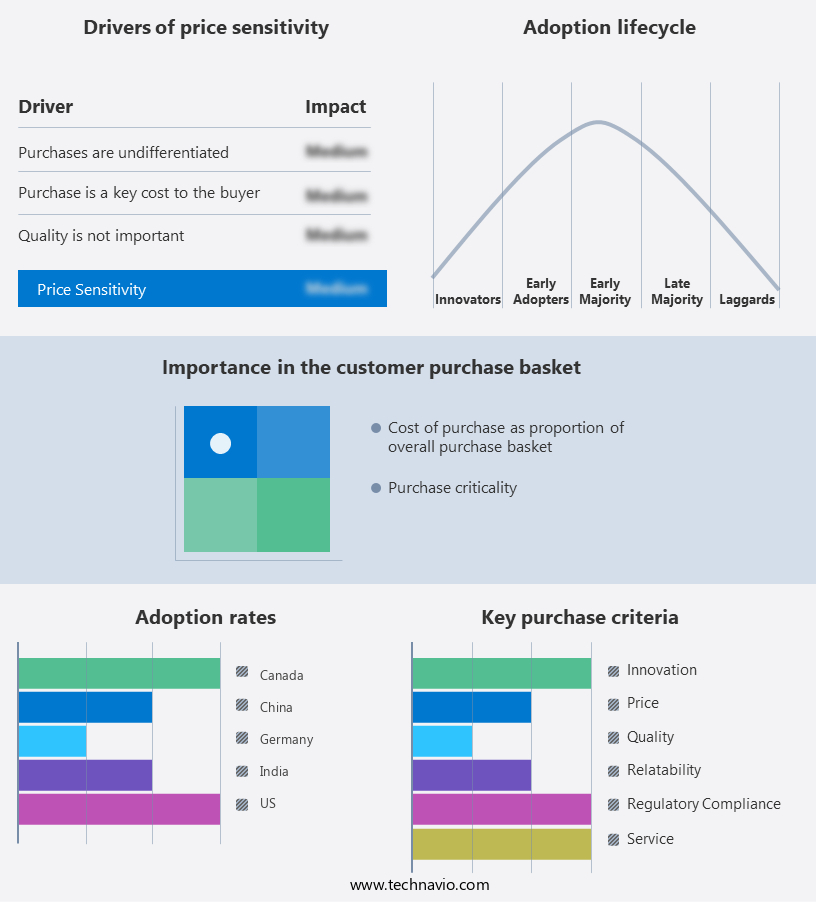
Customer Landscape of Bioreactors Industry
Competitive Intelligence by Technavio Analysis: Leading Players in the Bioreactors Market
Companies are implementing various strategies, such as strategic alliances, bioreactors market forecast, partnerships, mergers and acquisitions, geographical expansion, and product/service launches, to enhance their presence in the industry.
3D Biotek LLC - The company specializes in advanced bioreactor technology, featuring the 3D Perfusion Bioreactor. This innovative design comprises multiple, autoclavable polycarbonate chambers, enhancing research capabilities with independent culture environments.
The industry research and growth report includes detailed analyses of the competitive landscape of the market and information about key companies, including:
- 3D Biotek LLC
- Automated Engineering Services Inc.
- Bioengineering AG
- BPC Instruments AB
- Cell Culture Co. LLC
- Danaher Corp.
- Distek Inc.
- Donaldson Co. Inc.
- Eppendorf SE
- Getinge AB
- Infors AG
- LAMBDA CZ sro
- Merck KGaA
- PBS Biotech Inc.
- Pierre Guerin SA
- Sartorius AG
- Solida Biotech GmBH
- Thermo Fisher Scientific Inc.
- Zellwerk GmbH
- ZETA
Qualitative and quantitative analysis of companies has been conducted to help clients understand the wider business environment as well as the strengths and weaknesses of key industry players. Data is qualitatively analyzed to categorize companies as pure play, category-focused, industry-focused, and diversified; it is quantitatively analyzed to categorize companies as dominant, leading, strong, tentative, and weak.
Recent Development and News in Bioreactors Market
- In January 2025, Merck KGaA, a leading life science company, announced the launch of its new Mobius® UpFed 20 bioreactor system. This advanced single-use bioreactor is designed to enhance the production of microbial and mammalian cells, offering improved productivity and ease of use (Merck KGaA press release, 2025).
- In March 2025, Thermo Fisher Scientific and Lonza, two major players in the bioreactor market, entered into a strategic collaboration to integrate Thermo Fisher Scientific's single-use bioreactors with Lonza's contract development and manufacturing services. This partnership aims to provide customers with a comprehensive solution for bioprocessing and commercial manufacturing (Thermo Fisher Scientific press release, 2025).
- In May 2025, DSM, a global science-based company, completed the acquisition of Bio-Techne Corporation's Bioreactor Business. This acquisition significantly expanded DSM's presence in the bioreactor market, adding advanced technologies and a strong customer base to its portfolio (DSM press release, 2025).
- In August 2024, the European Commission approved the use of Genzyme's new bioreactor technology for the production of its enzyme replacement therapy, Cerezyme. This approval marked a significant milestone in the adoption of large-scale, continuous bioreactor systems for the production of biopharmaceuticals (European Commission press release, 2024).
Dive into Technavio's robust research methodology, blending expert interviews, extensive data synthesis, and validated models for unparalleled Bioreactors Market insights. See full methodology.
|
Market Scope |
|
|
Report Coverage |
Details |
|
Page number |
214 |
|
Base year |
2024 |
|
Historic period |
2019-2023 |
|
Forecast period |
2025-2029 |
|
Growth momentum & CAGR |
Accelerate at a CAGR of 7.3% |
|
Market growth 2025-2029 |
USD 3004.1 million |
|
Market structure |
Fragmented |
|
YoY growth 2024-2025(%) |
6.7 |
|
Key countries |
US, Germany, China, UK, Brazil, Canada, France, India, Italy, and Japan |
|
Competitive landscape |
Leading Companies, Market Positioning of Companies, Competitive Strategies, and Industry Risks |
Why Choose Technavio for Bioreactors Market Insights?
"Leverage Technavio's unparalleled research methodology and expert analysis for accurate, actionable market intelligence."
The market is experiencing significant growth due to the increasing demand for optimal impeller design stirred tanks that can improve oxygen transfer rates and reduce contamination risks in the production of biopharmaceuticals and industrial bioproducts. Single-use bioreactors are gaining popularity as they offer cost-effective validation and minimized risk of cross-contamination. Advanced process control strategies and high-density cell culture techniques are being employed to enhance product yield and improve process efficiency. Monitoring cell viability in real-time is crucial for ensuring regulatory compliance and maintaining optimal production conditions. Efficient downstream processing, which minimizes energy consumption and reduces waste generation, is also a key focus area for bioreactor manufacturers.
Cost-effective bioreactor operation is essential, and efforts are being made to minimize energy consumption and optimize resource utilization. Advanced bioreactor control systems and real-time process monitoring enable data-driven decision making, ensuring that production remains optimized and efficient. Improving bioreactor design continues to be a priority, with a focus on sustainable bioprocessing and microbial contamination control. The integration of automation and digitalization is also driving innovation in the market, enabling more precise and efficient production processes. As the market continues to evolve, it is important for manufacturers to stay abreast of the latest trends and technologies to remain competitive. This includes the development of advanced bioreactor designs, the integration of artificial intelligence and machine learning, and the adoption of closed systems to minimize contamination risks. By focusing on improving process efficiency, ensuring regulatory compliance, and reducing costs, the market is poised for continued growth and innovation.
What are the Key Data Covered in this Bioreactors Market Research and Growth Report?
-
What is the expected growth of the Bioreactors Market between 2025 and 2029?
-
USD 3 billion, at a CAGR of 7.3%
-
-
What segmentation does the market report cover?
-
The report is segmented by End-user (Biopharmaceutical, Research institutes, and CROs), Type (Automated and Manual), Application (Cell culture, Vaccine production, and Stem-cell research), and Geography (North America, Europe, Asia, and Rest of World (ROW))
-
-
Which regions are analyzed in the report?
-
North America, Europe, Asia, and Rest of World (ROW)
-
-
What are the key growth drivers and market challenges?
-
Growing demand for single-use bioreactors, Ethical issues related to bioprocessing of stem cells for regenerative medicine
-
-
Who are the major players in the Bioreactors Market?
-
3D Biotek LLC, Automated Engineering Services Inc., Bioengineering AG, BPC Instruments AB, Cell Culture Co. LLC, Danaher Corp., Distek Inc., Donaldson Co. Inc., Eppendorf SE, Getinge AB, Infors AG, LAMBDA CZ sro, Merck KGaA, PBS Biotech Inc., Pierre Guerin SA, Sartorius AG, Solida Biotech GmBH, Thermo Fisher Scientific Inc., Zellwerk GmbH, and ZETA
-
We can help! Our analysts can customize this bioreactors market research report to meet your requirements.
 RIA -
RIA - 
