
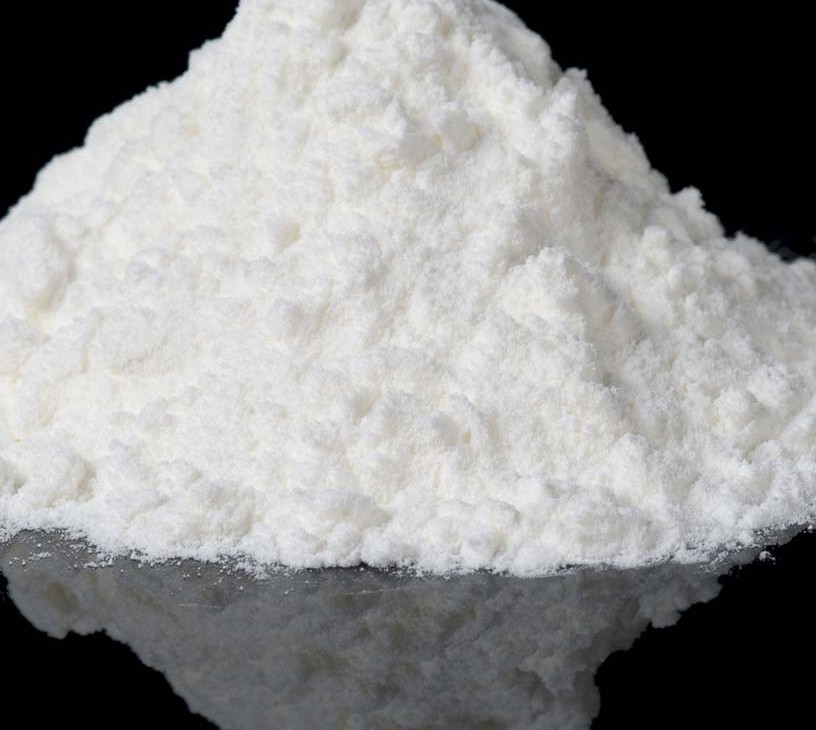


Metallic Stearate Market Size 2026-2030
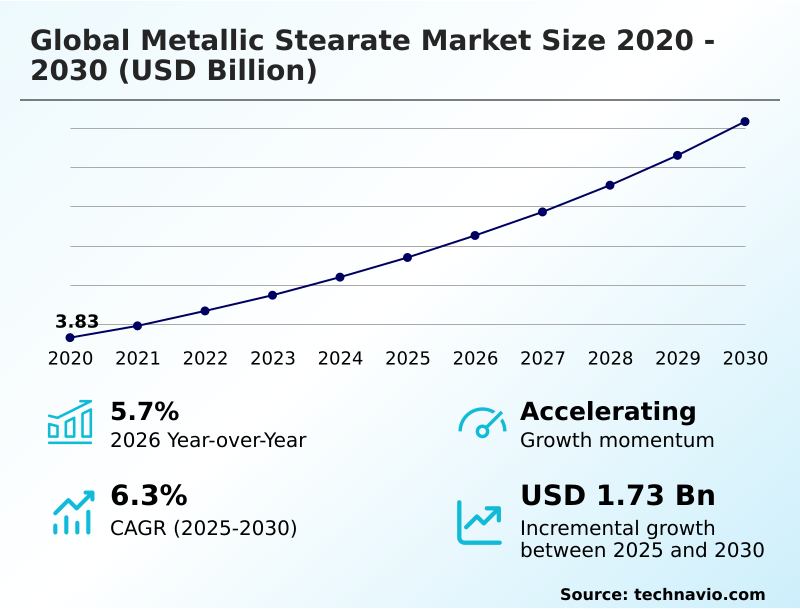
The metallic stearate market size is valued to increase by USD 1.73 billion, at a CAGR of 6.3% from 2025 to 2030. Increasing demand for metallic stearate from end-user industries will drive the metallic stearate market.
Major Market Trends & Insights
- APAC dominated the market and accounted for a 49.5% growth during the forecast period.
- By Form Factor - Powder segment was valued at USD 2.69 billion in 2024
- By Application - Plastics segment accounted for the largest market revenue share in 2024
Market Size & Forecast
- Market Opportunities: USD 2.75 billion
- Market Future Opportunities: USD 1.73 billion
- CAGR from 2025 to 2030 : 6.3%
Market Summary
- The metallic stearate market is characterized by its essential role as a high-performance additive across multiple industrial verticals. These compounds, which are oleochemical derivative products of a metal ion and stearic acid, provide critical functionalities as a lubricant, release agent, stabilizer, and water repellent.
- In polymer processing, calcium stearate and zinc stearate are indispensable as a PVC stabilizer and processing aid, ensuring thermal stability and efficient manufacturing. Similarly, the rubber industry relies on zinc stearate as a vulcanization activator and dispersing agent. The versatility extends to pharmaceuticals, where high-purity magnesium stearate is a standard excipient and flow promoter.
- For instance, a PVC pipe manufacturer must carefully balance its formulation, using a metallic stearate to achieve required hydrophobic properties and processing speeds without compromising the final product's integrity. This balancing act highlights the material's criticality.
- However, the industry faces challenges from volatile oleochemical supply chain costs and a growing demand for eco-friendly lubricant alternatives, pushing innovation towards vegetable-based stearate and heavy metal-free stearate options to meet evolving regulatory and consumer expectations for sustainable sourcing.
What will be the Size of the Metallic Stearate Market during the forecast period?
Get Key Insights on Market Forecast (PDF) Request Free Sample
How is the Metallic Stearate Market Segmented?
The metallic stearate industry research report provides comprehensive data (region-wise segment analysis), with forecasts and estimates in "USD million" for the period 2026-2030, as well as historical data from 2020-2024 for the following segments.
- Form factor
- Powder
- Granules
- Others
- Application
- Plastics
- Rubber
- Pharmaceuticals
- Cosmetics
- Others
- Type
- Zinc stearate
- Calcium stearate
- Magnesium stearate
- Others
- Geography
- APAC
- China
- Japan
- India
- North America
- US
- Canada
- Mexico
- Europe
- Germany
- UK
- France
- South America
- Brazil
- Argentina
- Middle East and Africa
- Saudi Arabia
- UAE
- South Africa
- Rest of World (ROW)
- APAC
By Form Factor Insights
The powder segment is estimated to witness significant growth during the forecast period.
The market is segmented by form factor, application, and geography. The powder form of metallic stearate is critical in polymer processing, where it serves as a lubricant, release agent, and stabilizer.
In plastics, powdered metallic stearate enhances mold flow, while in the rubber industry, zinc stearate and magnesium stearate powders act as anti-tacking agents.
This form also functions as an anti-caking agent in construction materials and a thickening agent in personal care products. In pharmaceuticals, it serves as a crucial processing aid and excipient in tablet manufacturing, improving drug dissolution.
The versatility of these thermoplastic additives underpins their widespread adoption, with a single region accounting for nearly 49.5% of the market's incremental growth, highlighting concentrated industrial demand.
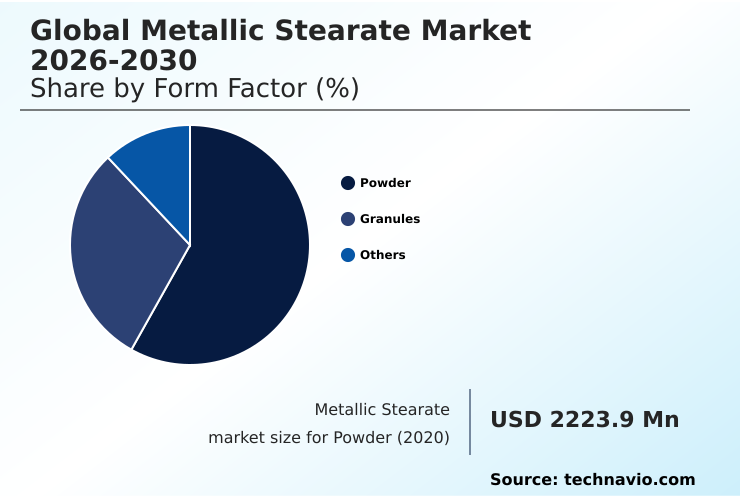
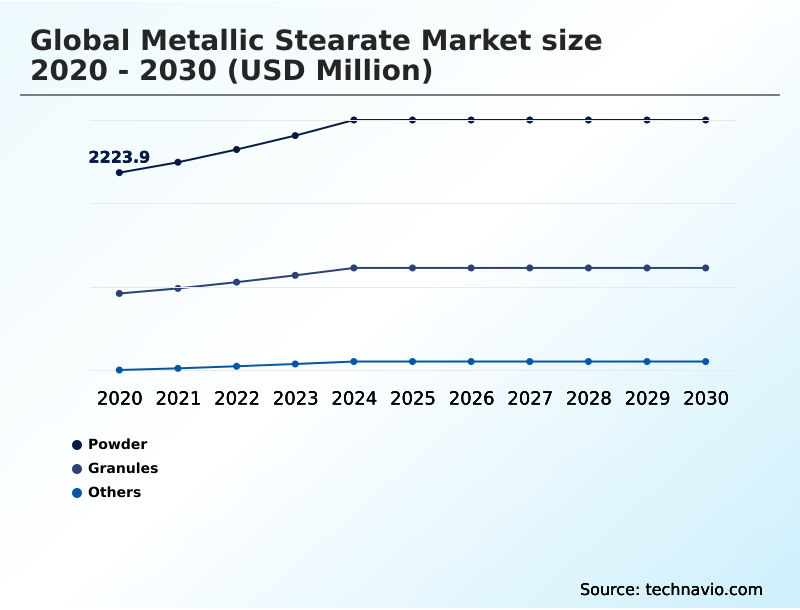
The Powder segment was valued at USD 2.69 billion in 2024 and showed a gradual increase during the forecast period.
Regional Analysis
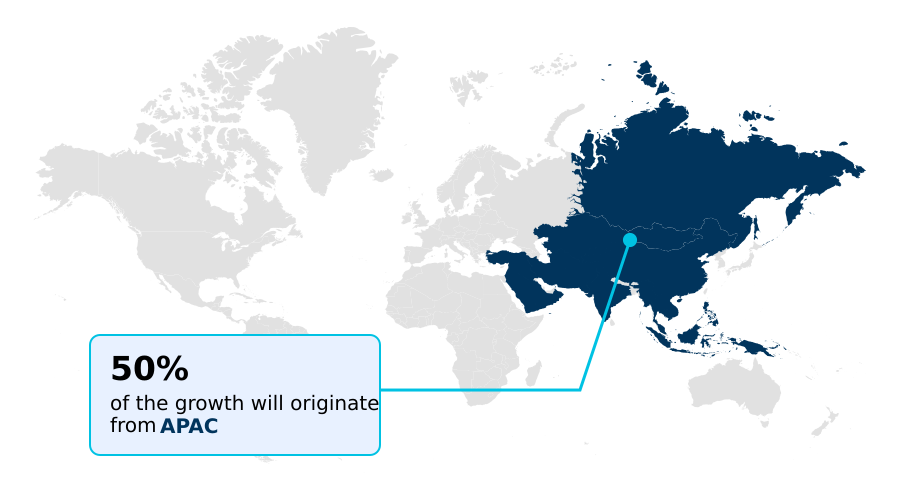
APAC is estimated to contribute 49.5% to the growth of the global market during the forecast period.Technavio’s analysts have elaborately explained the regional trends and drivers that shape the market during the forecast period.
See How Metallic Stearate Market Demand is Rising in APAC Request Free Sample
The geographic landscape of the market is dominated by the APAC region, which is expanding at a rate approximately 33% faster than Europe, driven by its massive plastics and construction sectors.
In this region, metallic stearate compounds are vital for PVC heat stabilization and as a construction material waterproofer. North America and Europe represent mature markets, focusing on high-purity grade products for pharmaceutical and food-contact applications.
Demand for paint and coating additive solutions, such as sanding sealer and flatting agent formulations, is steady. These regions are also pioneering the adoption of synthetic lubricant alternatives.
The market's overall health is tied to industrial output, with APAC alone projected to contribute nearly 50% of the incremental growth, solidifying its position as the central hub for both production and consumption.
Market Dynamics
Our researchers analyzed the data with 2025 as the base year, along with the key drivers, trends, and challenges. A holistic analysis of drivers will help companies refine their marketing strategies to gain a competitive advantage.
- The application-specific nature of the metallic stearate market drives continuous innovation and specialization. For instance, the use of metallic stearate for pvc extrusion is a highly refined science, focused on preventing plate-out and ensuring smooth surfaces. The effectiveness of calcium stearate as a lubricant is critical in this process.
- In a different vertical, the performance of zinc stearate in rubber compounds directly influences cure rates and final product durability, highlighting the metallic stearate role in vulcanization. The pharmaceutical industry presents another specialized area, where the functionality of magnesium stearate in pharmaceutical tableting as a lubricant is governed by stringent regulations, demanding high-purity metallic stearate excipients.
- This trend toward safety and purity is also seen in the push for food contact grade calcium stearate and non-toxic metallic stearate stabilizers for packaging. The development of biodegradable stearates for plastics addresses environmental concerns, a market segment experiencing growth more than double that of conventional additives.
- Manufacturers are now focused on improving mold release with zinc stearate for complex parts and using it in metallic stearate in powder metallurgy. The core of these innovations lies in fundamental chemistry, from the synthesis of metallic stearates to the oleochemical sourcing for stearic acid, including the growing use of vegetable-derived stearic acid for stearates.
- Formulators are also using metallic stearates in coatings as water repellents and formulating cosmetics with zinc stearate for texture. Optimizing metallic stearate dispersion in polymers is key for applications like metallic stearate for polyolefin films and water repellent cement with calcium stearate.
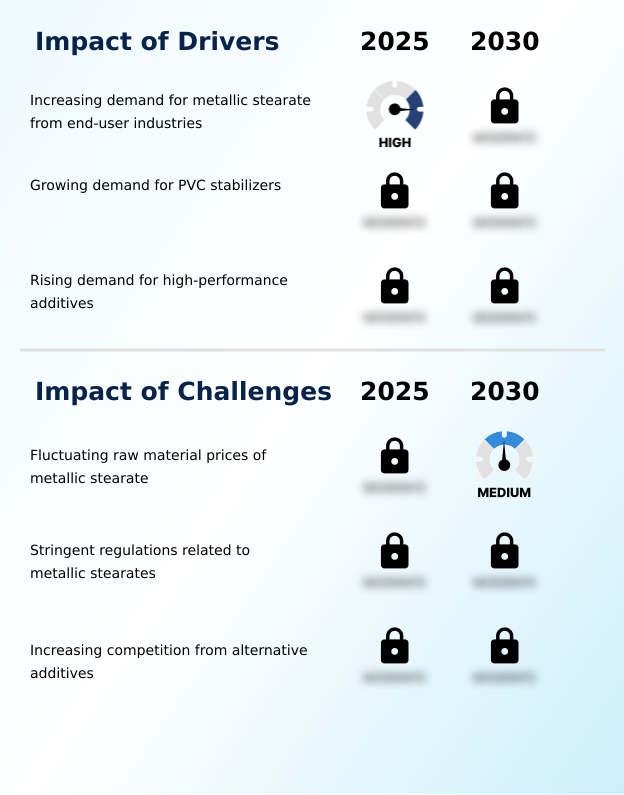
What are the key market drivers leading to the rise in the adoption of Metallic Stearate Industry?
- The primary market driver is the escalating demand for metallic stearates from key end-user industries, including plastics, rubber, pharmaceuticals, and construction.
- Robust demand from end-use industries is the core driver of the market. In plastics, the need for an effective PVC stabilizer and additives for polyolefin processing is constant. The adoption of these compounds improves extrusion speeds by up to 15%.
- In the rubber industry, metallic stearates are essential as a vulcanization activator and for synthetic rubber compounding.
- The pharmaceutical sector relies on high-purity grades as a critical excipient and flow promoter, where their use can reduce tablet press downtime by 10%.
- Furthermore, in construction, they act as a cement workability enhancer, and in coatings, they serve as an anti-settling agent. This widespread utility across diverse, high-volume manufacturing processes solidifies their market position.
What are the market trends shaping the Metallic Stearate Industry?
- A significant market trend is the rising demand for eco-friendly and sustainable products. This is driving the development of biodegradable metallic stearate formulations from renewable sources.
- A primary trend shaping the market is the shift toward sustainability and regulatory compliance. There is escalating demand for biodegradable metallic stearate and eco-friendly lubricant options, driven by corporate environmental goals. This has led to the development of vegetable-based stearate and heavy metal-free stearate solutions, with bio-based formulations demonstrating a 20% lower carbon footprint in some applications.
- In sectors like food packaging and cosmetics, the demand for food-grade metallic stearate and non-toxic stabilizer products is non-negotiable. For example, a cosmetic formulation texturizer must now meet stringent safety standards. These trends compel manufacturers to innovate, as switching to sustainable alternatives has improved brand perception by over 15% among environmentally conscious buyers.
What challenges does the Metallic Stearate Industry face during its growth?
- A key challenge impacting the market is the significant price volatility of essential raw materials, such as stearic acid and various metal oxides.
- A significant challenge confronting the market is the volatility within the oleochemical supply chain, which directly impacts the price of stearic acid and other fatty acid derivatives. This price instability can cause production costs to fluctuate by as much as 15% quarterly for manufacturers without long-term contracts.
- This uncertainty complicates budgeting and margin protection, especially for producers of commodity-grade aluminum stearate. Furthermore, the technical demands for consistent thermal stability improvement and mold release efficiency mean that quality cannot be compromised, making it difficult to substitute raw materials quickly. Ensuring stable metal soap chemistry while managing fluctuating input costs remains a primary operational hurdle for all market participants.
Exclusive Technavio Analysis on Customer Landscape
The metallic stearate market forecasting report includes the adoption lifecycle of the market, covering from the innovator’s stage to the laggard’s stage. It focuses on adoption rates in different regions based on penetration. Furthermore, the metallic stearate market report also includes key purchase criteria and drivers of price sensitivity to help companies evaluate and develop their market growth analysis strategies.
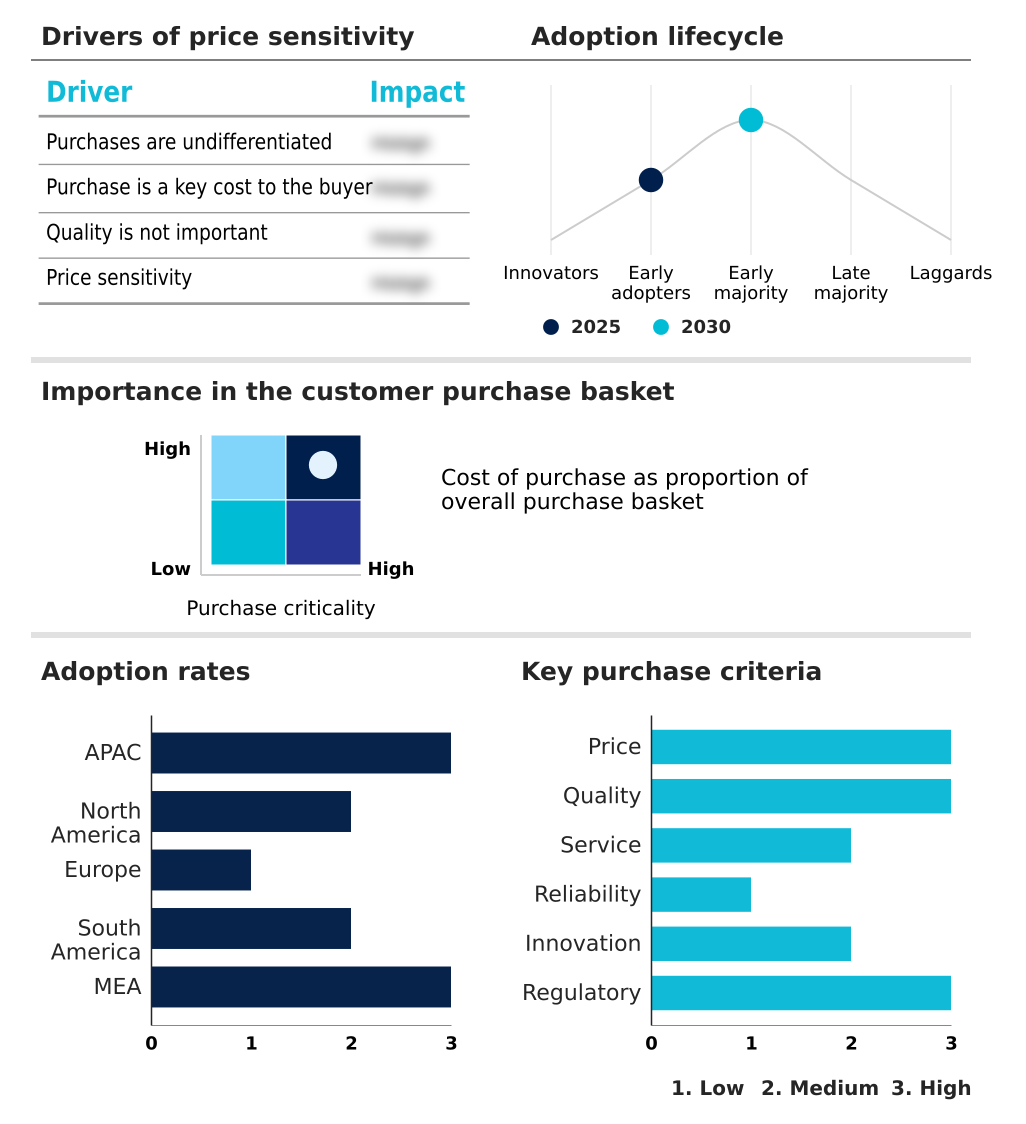
Customer Landscape of Metallic Stearate Industry
Competitive Landscape
Companies are implementing various strategies, such as strategic alliances, metallic stearate market forecast, partnerships, mergers and acquisitions, geographical expansion, and product/service launches, to enhance their presence in the industry.
Baerlocher GmbH - Key offerings include diverse physical forms of metallic stearates, such as powders and granules, catering to specialized industrial processing requirements.
The industry research and growth report includes detailed analyses of the competitive landscape of the market and information about key companies, including:
- Baerlocher GmbH
- Corporacion Sierra Madre SA
- Dainichi Chemical Industry Co
- Dover Chemical Corp.
- eChem Ltd.
- FACI Corporate S.p.A.
- Himstab LLC
- Hummel Croton Inc.
- James M. Brown Ltd.
- Mallinckrodt Plc
- Marathwada Chemicals
- Nimbasia Stabilizers
- Peter Greven GmbH and Co. KG.
- PMC Group Inc.
- Sun Ace Kakoh Pte Ltd.
- Univar Solutions Inc.
- Valtris Specialty Chemicals
- Vibrantz
Qualitative and quantitative analysis of companies has been conducted to help clients understand the wider business environment as well as the strengths and weaknesses of key industry players. Data is qualitatively analyzed to categorize companies as pure play, category-focused, industry-focused, and diversified; it is quantitatively analyzed to categorize companies as dominant, leading, strong, tentative, and weak.
Recent Development and News in Metallic stearate market
- In September 2024, PMC Group Inc. announced the acquisition of a European specialty chemicals firm to expand its portfolio of bio-based metallic stearates for the plastics industry.
- In November 2024, Peter Greven GmbH & Co. KG. launched a new line of vegetable-based, food-grade calcium stearates designed to meet stricter regulatory standards for food packaging applications.
- In February 2025, Valtris Specialty Chemicals entered into a strategic partnership with a leading polymer research institute to co-develop next-generation, heavy metal-free PVC stabilizers.
- In April 2025, Baerlocher GmbH completed the construction of a new manufacturing facility in India, doubling its production capacity of metallic stearates for the growing plastics and rubber markets in the APAC region.
Dive into Technavio’s robust research methodology, blending expert interviews, extensive data synthesis, and validated models for unparalleled Metallic Stearate Market insights. See full methodology.
| Market Scope | |
|---|---|
| Page number | 297 |
| Base year | 2025 |
| Historic period | 2020-2024 |
| Forecast period | 2026-2030 |
| Growth momentum & CAGR | Accelerate at a CAGR of 6.3% |
| Market growth 2026-2030 | USD 1725.9 million |
| Market structure | Fragmented |
| YoY growth 2025-2026(%) | 5.7% |
| Key countries | China, Japan, India, South Korea, Australia, Indonesia, US, Canada, Mexico, Germany, UK, France, Italy, Spain, The Netherlands, Brazil, Argentina, Chile, Saudi Arabia, UAE, South Africa, Israel and Turkey |
| Competitive landscape | Leading Companies, Market Positioning of Companies, Competitive Strategies, and Industry Risks |
Research Analyst Overview
- From a research analyst's perspective, the metallic stearate market is evolving beyond its traditional role as a simple processing aid. While fundamental applications like PVC stabilizer in polymer processing or vulcanization activator in rubber remain cornerstones, the strategic focus is shifting toward value-added properties and sustainability.
- The demand for vegetable-based stearate and high-purity grade excipient products reflects a broader industry movement toward greener and safer materials. This shift presents a critical boardroom decision: invest in R&D for innovative oleochemical derivative products or risk margin erosion on commoditized items like standard zinc stearate and calcium stearate.
- Strategic sourcing is paramount, as optimized procurement of stearic acid and the appropriate metal ion can impact material costs by up to 15%. Ultimately, future success hinges on a company's ability to innovate beyond basic lubricant, release agent, and stabilizer functions, creating specialized solutions like a superior sanding sealer, hydrophobing agent, or anti-caking agent.
What are the Key Data Covered in this Metallic Stearate Market Research and Growth Report?
-
What is the expected growth of the Metallic Stearate Market between 2026 and 2030?
-
USD 1.73 billion, at a CAGR of 6.3%
-
-
What segmentation does the market report cover?
-
The report is segmented by Form Factor (Powder, Granules, and Others), Application (Plastics, Rubber, Pharmaceuticals, Cosmetics, and Others), Type (Zinc stearate, Calcium stearate, Magnesium stearate, and Others) and Geography (APAC, North America, Europe, South America, Middle East and Africa)
-
-
Which regions are analyzed in the report?
-
APAC, North America, Europe, South America and Middle East and Africa
-
-
What are the key growth drivers and market challenges?
-
Increasing demand for metallic stearate from end-user industries, Fluctuating raw material prices of metallic stearate
-
-
Who are the major players in the Metallic Stearate Market?
-
Baerlocher GmbH, Corporacion Sierra Madre SA, Dainichi Chemical Industry Co, Dover Chemical Corp., eChem Ltd., FACI Corporate S.p.A., Himstab LLC, Hummel Croton Inc., James M. Brown Ltd., Mallinckrodt Plc, Marathwada Chemicals, Nimbasia Stabilizers, Peter Greven GmbH and Co. KG., PMC Group Inc., Sun Ace Kakoh Pte Ltd., Univar Solutions Inc., Valtris Specialty Chemicals and Vibrantz
-
Market Research Insights
- The market's dynamics are shaped by the drive for manufacturing efficiency and product quality. As an essential plastics processing aid, metallic stearates facilitate notable thermal stability improvement and enhanced mold release efficiency, with optimized formulations leading to a reduction in cycle times by up to 10%.
- Achieving polymer additive synergy is a key objective, where the right combination of additives can boost performance characteristics significantly. The focus on sustainable sourcing within the oleochemical supply chain is also critical, as companies sourcing certified materials report a 5% improvement in brand perception among B2B customers.
- These factors underscore the market's evolution from a commodity to a value-driven additive space.
We can help! Our analysts can customize this metallic stearate market research report to meet your requirements.