
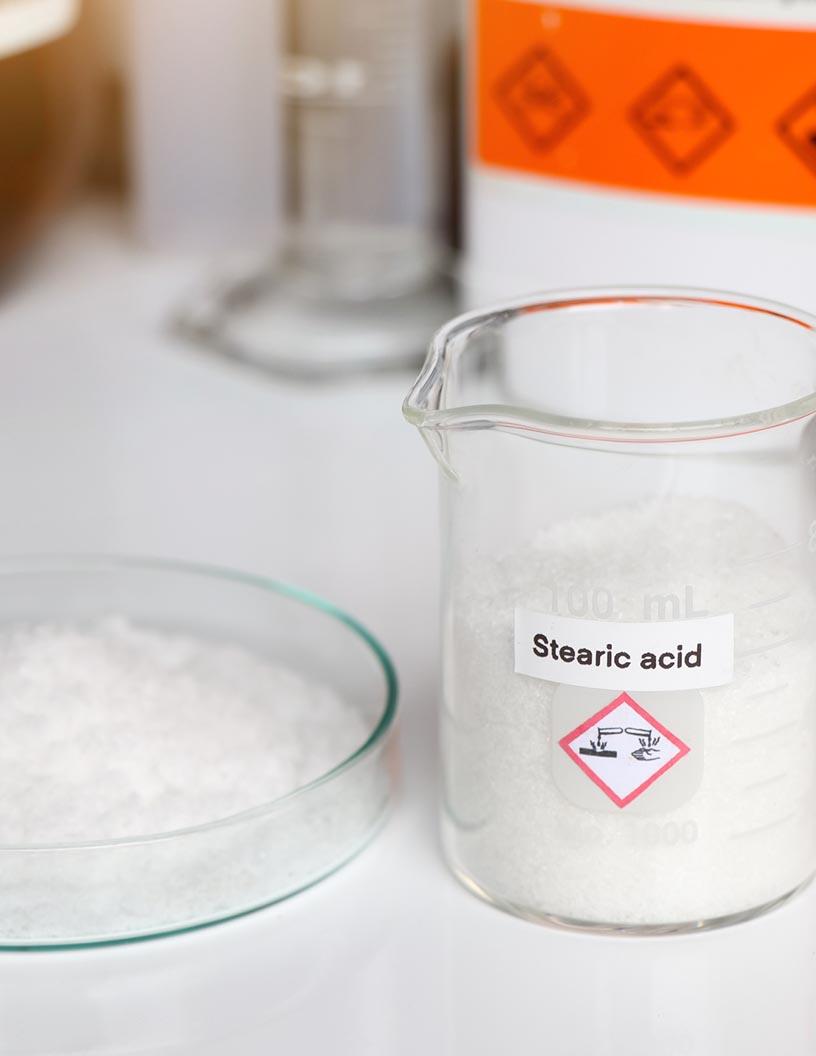


Stearic Acid Market Size 2025-2029
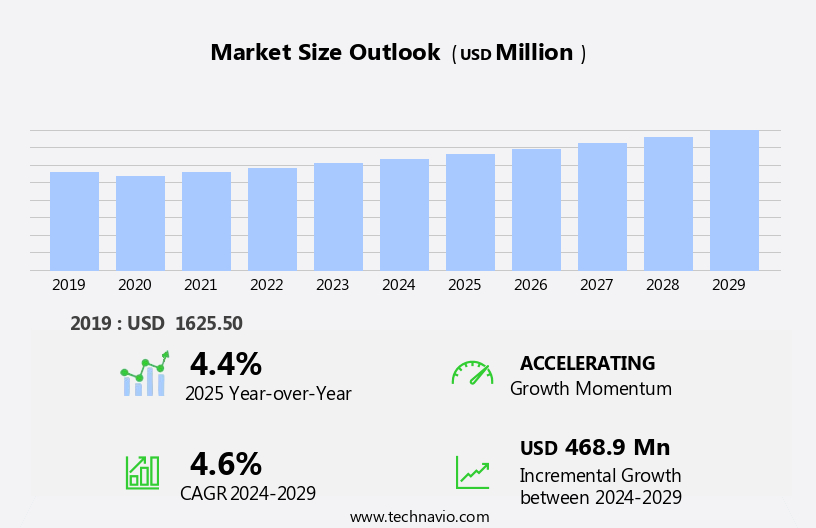
The stearic acid market size is forecast to increase by USD 468.9 million, at a CAGR of 4.6% between 2024 and 2029.
- The market is driven by the increasing demand from the personal care industry, where stearic acid is extensively used as a thickener and emollient. This application segment is expected to dominate the market due to the growing popularity of personal care products, particularly in emerging economies. Additionally, the use of stearic acid in metal processing and candle manufacturing further bolsters market growth. However, the market faces challenges due to the volatility in raw material prices, primarily palm oil and vegetable oils, which are major sources of stearic acid. This price instability can impact the profitability of manufacturers and may necessitate strategic sourcing and pricing strategies to mitigate risks.
- Companies seeking to capitalize on market opportunities should focus on innovation, such as developing alternative sources for stearic acid production, to reduce reliance on volatile raw materials. Effective supply chain management and price hedging strategies can also help mitigate the challenges posed by raw material price fluctuations.
What will be the Size of the Stearic Acid Market during the forecast period?
The market continues to evolve, driven by various factors shaping its dynamics. Biobased products are gaining traction as consumers and businesses prioritize sustainability, leading to increased research and development in this area. Organic certification and responsible sourcing are becoming essential considerations for stakeholders, influencing purchasing decisions. Food additives remain a significant application sector for stearic acid, with pricing strategies and supply chain management playing crucial roles in ensuring product quality and customer satisfaction. Carbon footprint reduction and the adoption of sustainable chemicals are key trends, as fair trade and sales and distribution channels expand. Palm oil and soybean sustainability are critical issues, with price volatility impacting the market.
Product differentiation through renewable resources, sustainable packaging, health and safety, and biodegradable plastics is essential for competitive advantage. Regulatory compliance, sustainable sourcing, and environmental sustainability are essential for industry growth. Steadfast commitment to safety standards, market forecasts, and product specifications is necessary for success. Biobased materials, raw material procurement, and product development are ongoing processes, with technical support and marketing strategies essential for staying ahead. The circular economy and the shift towards biobased polymers are shaping the future of the market. Animal fats and vegetable oils are alternative raw materials, while compostable products and release agents expand the end-use industries.
Polyhydroxyalkanoates (PHAs) and polylactic acid (PLA) are emerging sustainable alternatives, offering potential competitive advantages. The market analysis requires constant attention to changing trends and consumer demand. Sustainability standards and green chemistry are guiding principles for responsible businesses, ensuring a sustainable future for the market.
How is this Stearic Acid Industry segmented?
The stearic acid industry research report provides comprehensive data (region-wise segment analysis), with forecasts and estimates in "USD million" for the period 2025-2029, as well as historical data from 2019-2023 for the following segments.
- Application
- Personal care
- Food and beverages
- Healthcare
- Textile
- Others
- Form Factor
- Flakes
- Powder
- Liquid
- End-user
- Vegetable-based Raw Materials
- Animal-based Raw Materials
- Geography
- North America
- US
- Canada
- Europe
- Germany
- The Netherlands
- APAC
- Australia
- China
- India
- Japan
- South Korea
- South America
- Brazil
- Rest of World (ROW)
- North America
By Application Insights
The personal care segment is estimated to witness significant growth during the forecast period.
Stearic acid, a versatile fatty acid, plays a significant role as a food additive and in the production of various consumer products. In the food industry, it is used as a hardening agent in confectionery and bakery items, while in cosmetics and personal care, it functions as an emulsifier, stabilizer, and thickener. The increasing preference for organic and biobased products has led to the organic certification of stearic acid, ensuring responsible sourcing and adherence to sustainability standards. The market for stearic acid is driven by the growth in end-use industries, particularly in the cosmetics and food sectors.
Consumer demand for biodegradable plastics and sustainable packaging solutions has fueled the demand for biobased polymers and chemicals, including stearic acid. The use of renewable resources such as vegetable oils, soybean oil, and palm oil, in the production of stearic acid, aligns with the circular economy and environmental sustainability initiatives. Price volatility, a common challenge in the market, is mitigated through effective supply chain management and pricing strategies. Companies focus on sustainable sourcing, ensuring fair trade practices, and maintaining regulatory compliance to maintain a competitive advantage. The market forecast indicates steady growth, with product development and technical support playing crucial roles in catering to evolving consumer preferences and industry trends.
The industry analysis reveals that the market for stearic acid is diverse, with various distribution channels and sales and distribution networks. Product differentiation and innovation are key strategies employed by companies to cater to the varying needs of customers and end-use industries. The focus on health and safety, as well as the implementation of safety standards, ensures the production and use of high-quality stearic acid. In conclusion, the market is dynamic, with a diverse range of applications and end-use industries. The market is influenced by various factors, including consumer demand, sustainability initiatives, and regulatory compliance. Companies must focus on innovation, effective supply chain management, and adherence to safety standards to maintain a competitive edge and cater to the evolving needs of the market.
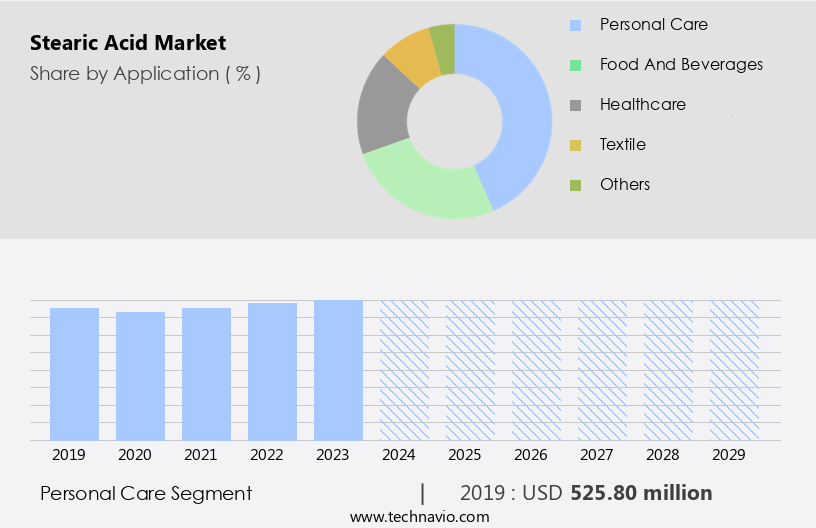
The Personal care segment was valued at USD 525.80 million in 2019 and showed a gradual increase during the forecast period.
Regional Analysis
APAC is estimated to contribute 37% to the growth of the global market during the forecast period.Technavio’s analysts have elaborately explained the regional trends and drivers that shape the market during the forecast period.
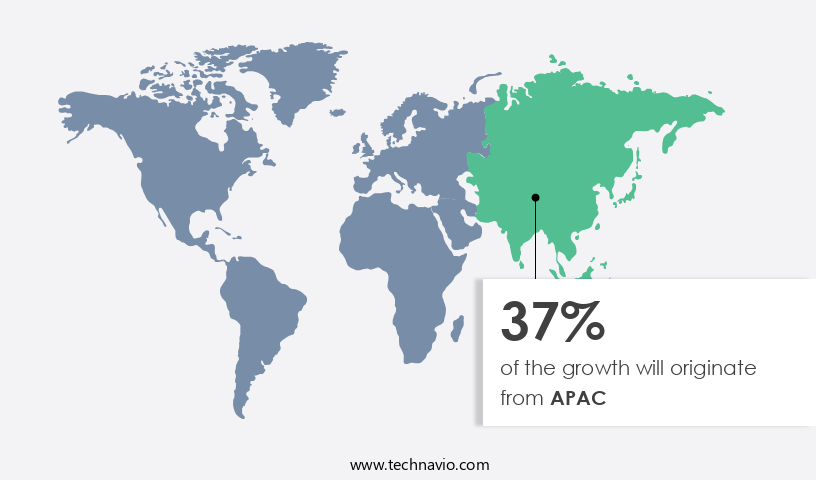
In the dynamic APAC market, the stearic acid industry is witnessing significant investments due to rising demand from various sectors, including manufacturing, consumer goods, and others. The soap and detergent, personal care, and cosmetics industries are major contributors to this growth, as stearic acid is an essential ingredient in these applications. Furthermore, pharmaceuticals, fireworks, rubber processing, textiles, lubricants, agriculture, animal feed, and plastics industries also utilize stearic acid in substantial quantities. Health consciousness in APAC is driving the adoption of organic stearic acid, which is cost-effective and offers superior performance. The market's growth is underpinned by product differentiation, renewable resources, and sustainable sourcing.
Biobased materials derived from sustainable agriculture, such as soybean oil and vegetable oils, are increasingly being used as raw materials for stearic acid production. Sustainable packaging, health and safety, and environmental sustainability are key priorities for consumers and end-users, leading to the demand for biodegradable plastics and other eco-friendly applications. Price volatility, driven by factors such as palm oil sustainability and soybean sustainability, is a significant challenge for market participants. To mitigate this risk, companies are adopting pricing strategies, supply chain management, and raw material procurement strategies. Product development, regulatory compliance, and technical support are also crucial factors in maintaining a competitive advantage in this market.
The circular economy is gaining traction in the stearic acid industry, with a focus on recycling and reusing waste products. This trend is expected to continue as consumers and businesses increasingly prioritize sustainability and reduce their carbon footprint. The market forecast for stearic acid is positive, with continued growth driven by consumer demand, end-use industries, and the development of sustainable chemicals, such as polylactic acid (PLA) and polyhydroxyalkanoates (PHA). Market participants are focusing on fair trade, responsible sourcing, and safety standards to ensure transparency and trust with customers. Sales and distribution channels are expanding, with a focus on providing excellent customer service and product specifications to meet the diverse needs of end-users.
Overall, the market is experiencing a period of innovation and growth, driven by the integration of sustainable practices, consumer demand, and technological advancements.
Market Dynamics
Our researchers analyzed the data with 2024 as the base year, along with the key drivers, trends, and challenges. A holistic analysis of drivers will help companies refine their marketing strategies to gain a competitive advantage.
What are the key market drivers leading to the rise in the adoption of Stearic Acid Industry?
- The personal care industry's increasing demand serves as the primary market driver.
- Stearic acid is an essential additive in the personal care industry, primarily used in the manufacture of cosmetics such as creams, cakes, soaps, and pastes. The global personal care ingredients market is projected to expand due to various factors, including demographic shifts, shorter product lifecycles, increasing urbanization, and rising demand from Asia Pacific, Latin America, and the Middle East. Stearic acid's unique properties make it indispensable in the cosmetic industry. It functions as a surfactant, enhancing cleaning effects. Additionally, it serves as a thickener, emulsifier, and stabilizer, contributing to the desired texture and consistency of personal care products.
- The circular economy trend is gaining momentum in the industry, with a focus on sustainable agriculture, biobased polymers, and compostable products. Stearic acid derived from renewable sources, such as soybean oil and vegetable oils, aligns with this trend. Sustainability and regulatory compliance are crucial for companies in the personal care industry. Thus, the use of sustainable raw materials, such as biobased stearic acid, offers a competitive advantage. Marketing strategies and technical support play a significant role in the success of companies in the personal care industry. Release agents, which contain stearic acid, are essential in various manufacturing processes.
- Palm oil sustainability is a critical concern, and companies are investing in sustainable sourcing and production practices. In conclusion, the growth of the personal care industry and the unique properties of stearic acid make it an essential ingredient for cosmetic applications. The adoption of sustainable practices and the circular economy trend further emphasizes the importance of stearic acid in the industry.
What are the market trends shaping the Stearic Acid Industry?
- The use of stearic acid is gaining popularity in both metal processing and candle manufacturing industries. This trend reflects its versatility as a crucial ingredient in various applications.
- Stearic acid, a fatty acid derived from natural sources such as animal and vegetable fats, is a crucial ingredient in various industries due to its unique properties. Major companies are investing in research and development to expand its applications. The presence of an OH-group in the stearic acid molecule and the formation of 12-hydroxy stearate enhance its solubility in polar solvents, making it an essential component in metal processing. In the candle manufacturing industry, stearic acid functions as a wax additive, lowering the melting point of paraffin and improving its performance by enhancing dye colors, candle whiteness, and hardening properties.
- The versatility of stearic acid is evident in its use as a mold release agent and an assistant in imparting opacity. These features make stearic acid an indispensable ingredient in numerous industries, ensuring its continued demand in the global market.
What challenges does the Stearic Acid Industry face during its growth?
- The volatility in raw material prices poses a significant challenge to the industry's growth trajectory. In order to maintain profitability and competitiveness, businesses must effectively manage price fluctuations and mitigate their impact on operations and financial planning.
- Stearic acid, a saturated fatty acid, is derived from both animal and vegetable sources, as well as synthesized from petrochemicals. Market research indicates that the price volatility of this chemical is influenced by various socioeconomic factors. The ongoing geopolitical tensions, such as the Russia-Ukraine conflict, have disrupted supply chains for critical minerals, leading to price surges. Moreover, recent tariffs imposed by the US on imports from China, Mexico, and Canada have affected commodity markets. Natural disasters, like the severe floods in Southeast Asia, have also caused fluctuations in agricultural commodity prices. To mitigate these risks, businesses are focusing on responsible sourcing, organic certification, and sustainable chemicals.
- Fair trade practices and carbon footprint reduction are also becoming essential considerations. Effective supply chain management and pricing strategies are crucial for sales and distribution in this market. Despite the challenges, the demand for biobased products continues to grow, driven by consumer preferences for eco-friendly and healthier alternatives.
Exclusive Customer Landscape
The stearic acid market forecasting report includes the adoption lifecycle of the market, covering from the innovator’s stage to the laggard’s stage. It focuses on adoption rates in different regions based on penetration. Furthermore, the stearic acid market report also includes key purchase criteria and drivers of price sensitivity to help companies evaluate and develop their market growth analysis strategies.
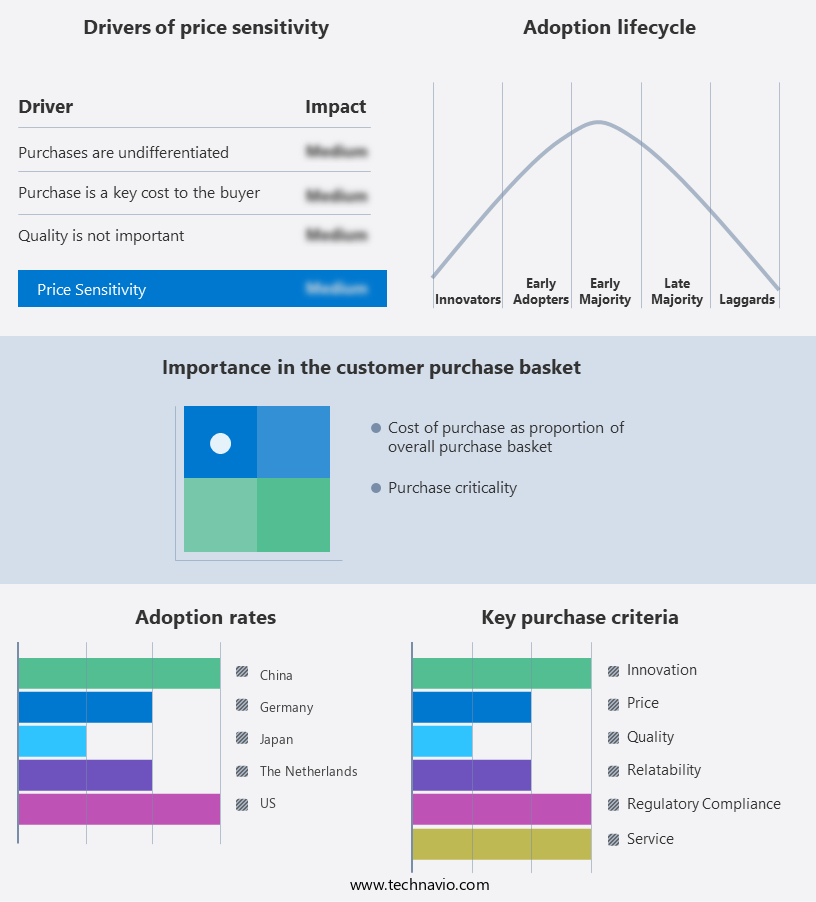
Customer Landscape
Key Companies & Market Insights
Companies are implementing various strategies, such as strategic alliances, stearic acid market forecast, partnerships, mergers and acquisitions, geographical expansion, and product/service launches, to enhance their presence in the industry.
3F Industries Ltd. - This company specializes in providing essential additives for various industries. Our product portfolio includes stearic acid for enhancing the performance of rubber tires, PVC stabilizers for improving plastic durability, and PVC pipes for infrastructure development. By supplying these high-quality additives, we contribute to the manufacturing processes of numerous sectors, ensuring optimal product functionality and longevity. Our commitment to innovation and research drives us to continually explore new applications and advancements in additive technology.
The industry research and growth report includes detailed analyses of the competitive landscape of the market and information about key companies, including:
- 3F Industries Ltd.
- BASF SE
- Cayman Chemical Co
- ChemCeed
- Croda International Plc
- Emery Oleochemicals Group
- Godrej and Boyce Manufacturing Co. Ltd.
- Kao Corp.
- KLK Oleo
- Oleon NV
- Pacific Oleochemicals Sdn Bhd
- Stepan Co.
- The Procter and Gamble Co.
- VVF Ltd.
- Wilmar International Ltd.
Qualitative and quantitative analysis of companies has been conducted to help clients understand the wider business environment as well as the strengths and weaknesses of key industry players. Data is qualitatively analyzed to categorize companies as pure play, category-focused, industry-focused, and diversified; it is quantitatively analyzed to categorize companies as dominant, leading, strong, tentative, and weak.
Recent Development and News in Stearic Acid Market
- In February 2023, BASF SE, a leading global chemical producer, announced the expansion of its production capacity for stearic acid at its European site in Ludwigshafen, Germany. This expansion aims to meet the growing demand for stearic acid in various industries, including cosmetics, food, and pharmaceuticals (BASF Press Release, 2023).
- In November 2022, Sasol Limited, a South African integrated energy and chemical company, completed the acquisition of LANXESS's global specialty chemicals business, which included its stearic acid production assets. This strategic move strengthened Sasol's position in The market, broadening its product portfolio and enhancing its market reach (Sasol Press Release, 2022).
- In July 2021, Croda International Plc, a UK-based specialty chemicals company, launched a new range of stearic acid derivatives, Stearic Acid Esters, for use in personal care applications. These new products cater to the increasing demand for sustainable and natural personal care products, offering improved performance and consumer appeal (Croda Press Release, 2021).
- In March 2020, the European Commission approved the renewal of the authorization of the use of stearic acid and its derivatives in food applications. This approval reaffirmed the safety and regulatory compliance of stearic acid and its derivatives, ensuring their continued use in various food industries (European Commission Press Release, 2020).
Research Analyst Overview
- The market exhibits dynamic trends, with the demand for stearic acid substitutes and blends gaining traction due to their unique properties and applications. The saponification value and fatty acid profiles of these alternatives are crucial factors in their adoption. However, the moisture content, heavy metals, and microbial contamination in stearic acid products can impact their quality and market acceptance. Innovations in stearic acid, such as bio-based production and the development of new derivatives like fatty acid esters, are shaping the market outlook. The acid value, iodine value, melting point, and fatty acid composition of stearic acid and related acids like palmitic, linoleic, oleic, myristic, and lauric acids influence their production and usage.
- Synthetic stearic acid and metal stearates continue to be significant players in the market, with their pricing and performance determining their competitiveness. The market for stearic acid and its derivatives is expected to remain robust, driven by diverse applications in industries such as cosmetics, food, pharmaceuticals, and plastics.
Dive into Technavio’s robust research methodology, blending expert interviews, extensive data synthesis, and validated models for unparalleled Stearic Acid Market insights. See full methodology.
|
Market Scope |
|
|
Report Coverage |
Details |
|
Page number |
227 |
|
Base year |
2024 |
|
Historic period |
2019-2023 |
|
Forecast period |
2025-2029 |
|
Growth momentum & CAGR |
Accelerate at a CAGR of 4.6% |
|
Market growth 2025-2029 |
USD 468.9 million |
|
Market structure |
Fragmented |
|
YoY growth 2024-2025(%) |
4.4 |
|
Key countries |
US, China, Japan, India, South Korea, Canada, Brazil, Germany, The Netherlands, and Australia |
|
Competitive landscape |
Leading Companies, Market Positioning of Companies, Competitive Strategies, and Industry Risks |
What are the Key Data Covered in this Stearic Acid Market Research and Growth Report?
- CAGR of the Stearic Acid industry during the forecast period
- Detailed information on factors that will drive the growth and forecasting between 2025 and 2029
- Precise estimation of the size of the market and its contribution of the industry in focus to the parent market
- Accurate predictions about upcoming growth and trends and changes in consumer behaviour
- Growth of the market across APAC, North America, Europe, South America, and Middle East and Africa
- Thorough analysis of the market’s competitive landscape and detailed information about companies
- Comprehensive analysis of factors that will challenge the stearic acid market growth of industry companies
We can help! Our analysts can customize this stearic acid market research report to meet your requirements.
 RIA -
RIA - 
