



Micro-segmentation Solutions Market Size 2024-2028
The micro-segmentation solutions market size is forecast to increase by USD 4.63 billion at a CAGR of 24.02% between 2023 and 2028.
- The market is experiencing significant growth due to the increasing number of cyberattacks on connected devices and systems, necessitating more and precise security measures. This trend is further fueled by the in fundraising through crowdfunding platforms, which is driving the adoption of micro-segmentation solutions among businesses and individuals alike. However, the market is not without challenges. Interoperability issues associated with micro-segmentation solutions pose a significant barrier to market growth, as organizations grapple with integrating various systems and ensuring seamless communication between them. To capitalize on the opportunities presented by this market, companies must focus on addressing interoperability challenges through collaborative efforts and innovative solutions.
- Additionally, investing in research and development to create user-friendly and cost-effective micro-segmentation solutions will be key to gaining a competitive edge. By staying abreast of the latest trends and addressing the challenges head-on, organizations can effectively leverage micro-segmentation solutions to enhance their security posture and protect against evolving cyber threats.
What will be the Size of the Micro-segmentation Solutions Market during the forecast period?
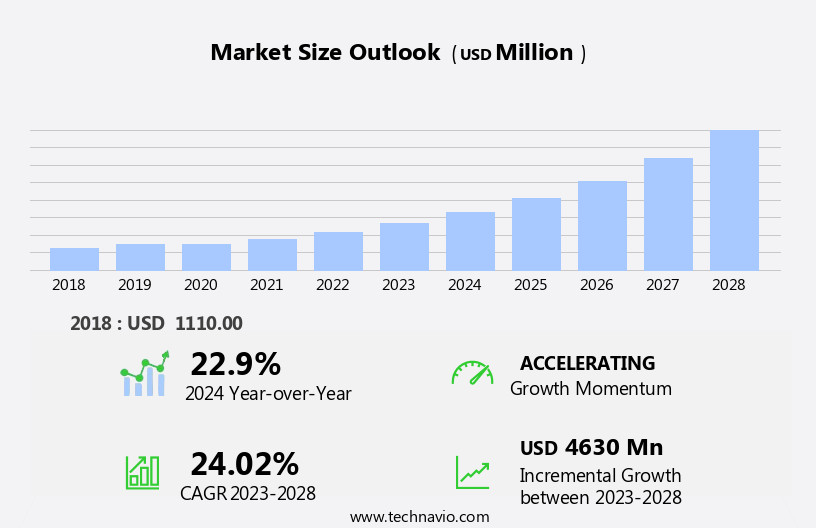
- The market is experiencing significant growth as enterprises seek to enhance their cybersecurity posture in the face of escalating threats. With the proliferation of big data, IoT devices, and network connectivity, the attack surface for cybercriminals has expanded exponentially. Hackers are increasingly employing sophisticated techniques, such as lateral movement and ransomware attacks, to bypass traditional security measures and gain unauthorized access to sensitive data. Microsegmentation, a cutting-edge technology that involves the virtualization of networks and the creation of small, isolated segments, has emerged as a critical solution to mitigate these risks. By implementing microsegmentation, security teams can limit the lateral movement of threats and reduce the attack surface, making it more difficult for cybercriminals to navigate enterprise networks undetected.
- Moreover, regulatory compliance requirements and the need for third-party access control have further fueled the adoption of microsegmentation solutions. Network virtualization techniques, such as virtual machines, are being leveraged to implement microsegmentation at scale, while managed services offerings provide an additional layer of security expertise and support. Despite these benefits, the microsegmentation market faces challenges, including the need for continuous security updates and the complexity of implementation. Cybersecurity issues, such as data theft and cyberattacks, continue to pose significant risks, underscoring the importance of microsegmentation solutions in today's digital landscape. Social media and other attack vectors also pose new challenges, requiring ongoing vigilance and innovation from the cybersecurity industry.
How is this Micro-segmentation Solutions Industry segmented?
The micro-segmentation solutions industry research report provides comprehensive data (region-wise segment analysis), with forecasts and estimates in "USD million" for the period 2024-2028, as well as historical data from 2018-2022 for the following segments.
- Product
- Services
- Software
- End-user
- Large enterprise
- SMEs
- Geography
- North America
- US
- Canada
- Europe
- Germany
- UK
- APAC
- China
- South America
- Middle East and Africa
- North America
By Product Insights
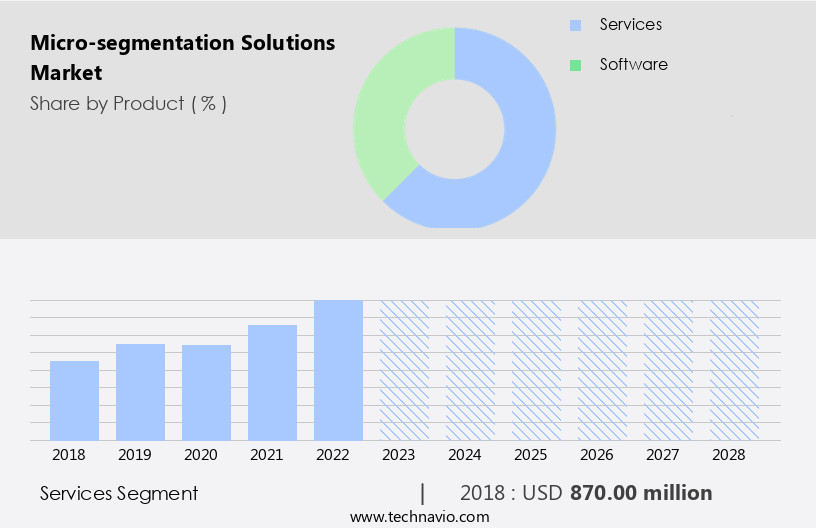
The services segment is estimated to witness significant growth during the forecast period.
In the dynamic business landscape of 2023, the market witnessed significant growth, with the services segment holding a substantial share. This segment encompasses managed and professional micro-segmentation services, along with offerings such as training, integration, consultation, advisory solutions, support, and managed security services. Major market players are responding to the increasing demand for maintaining and managing complex micro-segmentation solutions by providing these services. With a growing number of enterprises recognizing the importance of advanced security solutions in the face of escalating cyber threats, the need for expertise and resources is increasingly apparent. Consequently, the demand for consulting, advisory, training, and managed security services is on the rise.
Cybercrimes, such as ransomware attacks, data breaches, and insider threats, pose significant risks to sensitive information, particularly in digitized environments including data centers, virtual machines, IoT devices, and network infrastructure. As businesses continue to grapple with cybersecurity issues and regulatory compliance postures, the potential for innovation in micro-segmentation solutions is vast. Network virtualization techniques, application micro-segmentation, and lateral network migration are among the cutting-edge technologies driving market growth. Despite these advancements, the complexity of micro-segmentation solutions necessitates qualified personnel to ensure authorized traffic and secure network connectivity. Additionally, the increasing adoption of cloud computing, mobile services, and social media further complicate the security landscape.
In summary, the micro-segmentation market is poised for continued growth, with the services segment playing a pivotal role in addressing the evolving cybersecurity challenges faced by modern enterprises.
Get a glance at the market report of share of various segments Request Free Sample
The Services segment was valued at USD 870.00 billion in 2018 and showed a gradual increase during the forecast period.
Regional Analysis
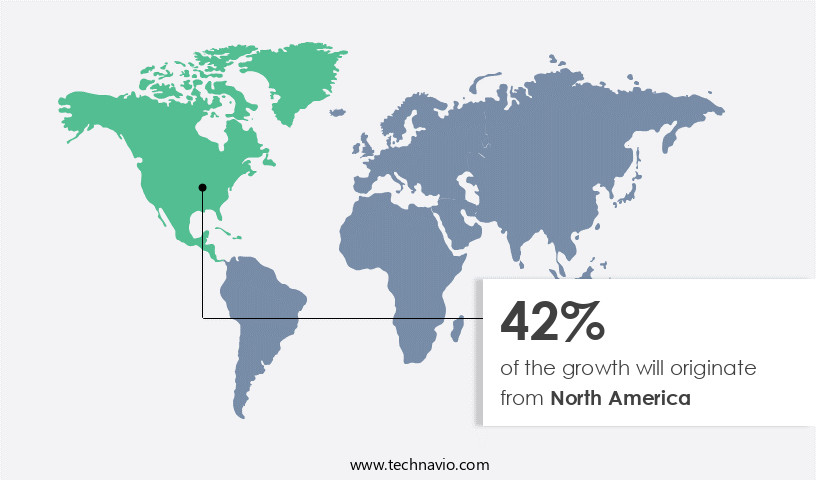
North America is estimated to contribute 42% to the growth of the global market during the forecast period.Technavio’s analysts have elaborately explained the regional trends and drivers that shape the market during the forecast period.
For more insights on the market size of various regions, Request Free Sample
The microsegmentation solutions market in North America is experiencing significant growth due to escalating cyber threats against enterprise networks. Security architects are increasingly recognizing the limitations of perimeter-based security approaches and turning to microsegmentation for enhanced security. Microsegmentation enables the implementation of access controls at the granular level, securing virtual machines, data centers, and IoT devices against lateral network migration and third-party access. The digitization of business operations and the adoption of big data analytics have led to an increase in the amount of sensitive information being processed and stored on enterprise networks. This, in turn, has heightened concerns regarding data protection and regulatory compliance posture.
Cybersecurity issues, such as ransomware attacks, cybercrimes, and insider threats, pose significant risks to enterprise networks. Microsegmentation market growth is fueled by the innovation potential of network virtualization techniques, advanced security solutions, and the need for lateral movement security. Complexity in network infrastructure, network virtualization, and the increasing use of mobile services and social media are also driving forces. Enterprise networks, especially those in the BFSI sector and state/local governments, are investing in microsegmentation solutions to protect sensitive data and ensure network connectivity for remote working environments. The cybersecurity industry is continually evolving, with managed service providers offering managed services to help enterprises manage their workload levels and deploy advanced security controls.
Cloud computing and online threats are also major factors influencing the market's growth. Despite the benefits, the adoption rate of microsegmentation solutions is still relatively low due to the need for qualified personnel and the complexity of deployment and management.
Market Dynamics
Our researchers analyzed the data with 2023 as the base year, along with the key drivers, trends, and challenges. A holistic analysis of drivers will help companies refine their marketing strategies to gain a competitive advantage.
What are the key market drivers leading to the rise in the adoption of Micro-segmentation Solutions Industry?
- Rising number of cyberattacks on connected devices or systems is the key driver of the market.
- Cyberattacks pose a significant threat to businesses by targeting network-connected devices and systems to destroy, alter, or steal valuable data. Three primary types of cyberattacks include distributed denial-of-service (DDoS) attacks, malware attacks, and password attacks. Malware attacks, such as ransomware, spyware, rootkits, riskware, trojans, worms, and viruses, can result in substantial financial and reputational damage to companies. According to , the number of cyberattacks increased from 2018 to 2020, causing significant losses. For instance, a ransomware attack in May 2023 targeted over 2,000 organizations globally, including the New York City Public School System, British Airways, and the BBC, as reported by Emisoft.
- Businesses must invest in cybersecurity solutions to mitigate these risks and protect their assets. Micro-segmentation is an effective approach to securing networks by dividing them into smaller segments, reducing the attack surface and limiting the spread of threats. This strategy enhances security by enabling granular access control and real-time threat detection. By implementing micro-segmentation, businesses can minimize the impact of cyberattacks and safeguard their critical data.
What are the market trends shaping the Micro-segmentation Solutions Industry?
- Increase in fund raising through crowdfunding platforms is the upcoming market trend.
- Micro-segmentation solutions have gained significant importance in the current digital landscape, with the increasing number of network-connected devices and systems requiring enhanced security. This trend is driving companies to expand their product offerings and invest in the development of advanced micro-segmentation solutions. In recent times, several funding rounds have been announced to support these efforts. For instance, in September 2020, Axis Security secured USD32 million in Series B funding, led by Canaan Partners, with participation from existing investors Ten Eleven Ventures and Cyber Starts.
- This funding will enable the company to expand its product offerings and develop high-performance micro-segmentation solutions. The growing adoption of cloud services and data centers is further fueling the demand for micro-segmentation solutions, making it an attractive market for investors.
What challenges does the Micro-segmentation Solutions Industry face during its growth?
- Interoperability issues associated with micro-segmentation solutions is a key challenge affecting the industry growth.
- Micro-segmentation solutions enable advanced network security by allowing interoperability between multiple IT platforms and devices. This interoperability is crucial for organizations with diverse IT environments, as it ensures the integration of physical networks and security devices. The ability of micro-segmentation solutions to work seamlessly with various systems enhances their performance and security capabilities. However, the absence of interoperability can leave a system vulnerable, potentially leading to security breaches.
- It is essential for organizations to prioritize interoperability when implementing micro-segmentation solutions to maintain a and secure IT infrastructure.
Exclusive Customer Landscape
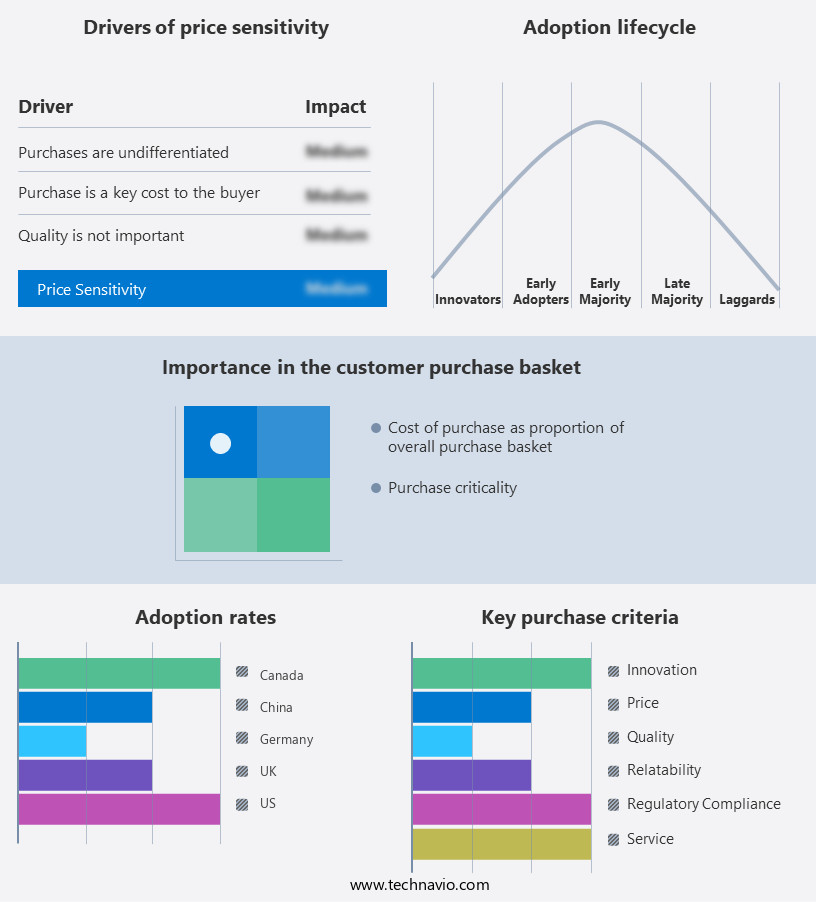
The micro-segmentation solutions market forecasting report includes the adoption lifecycle of the market, covering from the innovator’s stage to the laggard’s stage. It focuses on adoption rates in different regions based on penetration. Furthermore, the micro-segmentation solutions market report also includes key purchase criteria and drivers of price sensitivity to help companies evaluate and develop their market growth analysis strategies.
Customer Landscape
Key Companies & Market Insights
Companies are implementing various strategies, such as strategic alliances, micro-segmentation solutions market forecast, partnerships, mergers and acquisitions, geographical expansion, and product/service launches, to enhance their presence in the industry.
Akamai Technologies Inc. - Akamai Guardicore Segmentation delivers micro-segmentation solutions, implementing Zero Trust security. This approach minimizes attack surfaces, impedes lateral movement, and safeguards critical IT assets. By reducing the attack surface, potential threats are contained, preventing their spread throughout the network. Zero Trust segmentation ensures continuous security evaluation, granting access based on real-time risk assessment. This approach fortifies an organization's security posture, mitigating risks and safeguarding digital assets.
The industry research and growth report includes detailed analyses of the competitive landscape of the market and information about key companies, including:
- Akamai Technologies Inc.
- AlgoSec Inc.
- Arista Networks Inc.
- August Schell
- Cisco Systems Inc.
- ColorTokens Inc.
- Dell Technologies Inc.
- ExtraHop Networks Inc.
- Extreme Networks Inc.
- Fortinet Inc.
- Hewlett Packard Enterprise Co.
- Huawei Technologies Co. Ltd.
- Illumioa Inc.
- Juniper Networks Inc.
- Musarubra US LLC
- NightDragon Management Co. LLC
- Nutanix Inc.
- Orange SA
- Tufin
- Unisys Corp.
- VMware Inc.
- Axis Security.
Qualitative and quantitative analysis of companies has been conducted to help clients understand the wider business environment as well as the strengths and weaknesses of key industry players. Data is qualitatively analyzed to categorize companies as pure play, category-focused, industry-focused, and diversified; it is quantitatively analyzed to categorize companies as dominant, leading, strong, tentative, and weak.
Research Analyst Overview
Microsegmentation, a cutting-edge technology in the cybersecurity industry, is a network security strategy that involves dividing a network into smaller segments or micro-segments to minimize the attack surface and limit the spread of cyber threats. This approach contrasts with the traditional perimeter-based security approach, which focuses on securing the network's edges. The digitization of business operations and the increasing adoption of IoT devices, virtual machines, and cloud computing have heightened the importance of microsegmentation solutions. With the proliferation of big data and the increasing sophistication of cybercrimes, hackers are finding new ways to bypass traditional security measures and gain unauthorized access to sensitive information.
Microsegmentation offers several advantages over traditional security solutions. By implementing access controls at the micro-segment level, organizations can limit the lateral movement of threats within their network infrastructure. This approach also enhances data protection by isolating critical applications and sensitive data from the rest of the network. However, the implementation of microsegmentation solutions comes with its own set of challenges. The complexity of network virtualization techniques and the need for qualified personnel to deploy and manage these solutions can be a significant barrier to adoption. Additionally, the increasing number of online threats, including ransomware attacks and insider threats, necessitates a coherent market insight into the microsegmentation market.
The microsegmentation market is driven by several factors, including the need for regulatory compliance posture, the increasing number of cybersecurity issues, and the adoption of advanced security solutions. The complexity of network infrastructure and the need for network virtualization techniques to support modern technology, such as remote working environments and mobile services, are also key factors. Despite the benefits of microsegmentation, there are limitations to this approach. For instance, it can increase network connectivity requirements and add to the overall cost of network security. Moreover, it may not be effective against all types of cyberattacks, such as social media-based attacks or attacks that exploit third-party access.
In , microsegmentation solutions offer a promising approach to mitigating cyber threats in today's digitized business environment. However, the implementation of these solutions requires careful planning and execution to ensure their effectiveness and efficiency. As the cybersecurity industry continues to evolve, organizations must stay abreast of the latest trends and technologies to maintain a security posture.
|
Market Scope |
|
|
Report Coverage |
Details |
|
Page number |
168 |
|
Base year |
2023 |
|
Historic period |
2018-2022 |
|
Forecast period |
2024-2028 |
|
Growth momentum & CAGR |
Accelerate at a CAGR of 24.02% |
|
Market growth 2024-2028 |
USD 4630 million |
|
Market structure |
Fragmented |
|
YoY growth 2023-2024(%) |
22.9 |
|
Key countries |
US, Canada, China, UK, and Germany |
|
Competitive landscape |
Leading Companies, Market Positioning of Companies, Competitive Strategies, and Industry Risks |
What are the Key Data Covered in this Micro-segmentation Solutions Market Research and Growth Report?
- CAGR of the Micro-segmentation Solutions industry during the forecast period
- Detailed information on factors that will drive the growth and forecasting between 2024 and 2028
- Precise estimation of the size of the market and its contribution of the industry in focus to the parent market
- Accurate predictions about upcoming growth and trends and changes in consumer behaviour
- Growth of the market across North America, Europe, APAC, South America, and Middle East and Africa
- Thorough analysis of the market’s competitive landscape and detailed information about companies
- Comprehensive analysis of factors that will challenge the micro-segmentation solutions market growth of industry companies
We can help! Our analysts can customize this micro-segmentation solutions market research report to meet your requirements.