

Navigation Lighting Market Analysis APAC, Europe, North America, South America, Middle East and Africa - US, China, Japan, France, Germany - Size and Forecast 2024-2028

Navigation Lighting Market Analysis APAC, Europe, North America, South America, Middle East and Africa - US, China, Japan, France, Germany - Size and Forecast 2024-2028

Published: Oct 2023 164 Pages SKU: IRTNTR45478

Market Overview at a Glance

$6.74 Mn
Market Opportunity
5.22%
CAGR
5.0
YoY growth 2023-2024(%)

Navigation Lighting Market Size 2024-2028

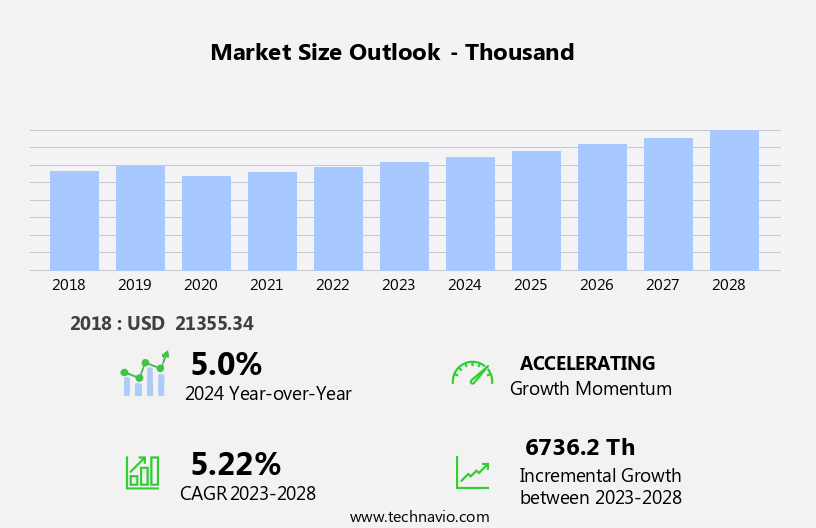
The navigation lighting market size is forecast to increase by USD 6736.2 thousand at a CAGR of 5.22% between 2023 and 2028.

  • Navigation lighting is a crucial component In the aviation industry, ensuring safe and efficient aircraft operations. The market for navigation lighting is experiencing significant growth, driven by key trends such as the introduction of energy-efficient lighting technologies and the declining manufacturing cost of LEDs. These advancements offer several benefits, including reduced energy consumption, longer lifespan, and improved visibility. However, challenges persist, including delays in aircraft delivery due to complex certification processes for new lighting systems. Adopting these innovative technologies not only enhances safety but also contributes to environmental sustainability, making it an attractive proposition for the aviation sector. The market analysis report provides a comprehensive overview of these trends and challenges, enabling stakeholders to make informed decisions and capitalize on the opportunities presented In the market.
  • What will be the Size of the Navigation Lighting Market During the Forecast Period?
    Navigation Lighting Market Size

     Request Free Sample

  • The market encompasses illuminating devices used in various modes of transportation, including marine vessels, aircraft, and spacecraft. These lights serve essential visual signaling functions, ensuring safe navigation for harbormasters, yard crews, bridge engineers, and other industry professionals. In the marine sector, traditional incandescent filaments are gradually being replaced by energy-efficient alternatives, such as light-emitting diodes (LEDs) and high intensity discharge (HID) lamps. Similarly, In the aviation industry, red, green, and white lights continue to play a crucial role in guiding aircraft during takeoff, landing, and taxiing. Seaports and airports also rely on these lighting systems for effective communication and safety.
  • Ships, boats, passenger aircraft, and land-based structures all benefit from the advancements in navigation lighting technology, enhancing overall safety and efficiency in marine transportation and aviation industries.
  • How is this Navigation Lighting Industry segmented and which is the largest segment?

    The navigation lighting industry research report provides comprehensive data (region-wise segment analysis), with forecasts and estimates in "USD thousand" for the period 2024-2028, as well as historical data from 2018-2022 for the following segments.

    • End-user
      • Marine industry
      • Aerospace industry
    • Type
      • High light intensity
      • Medium light intensity
      • Low light intensity
    • Geography
      • APAC
        • China
        • Japan
      • Europe
        • Germany
        • France
      • North America
        • US
      • South America
        • Middle East and Africa

        By End-user Insights

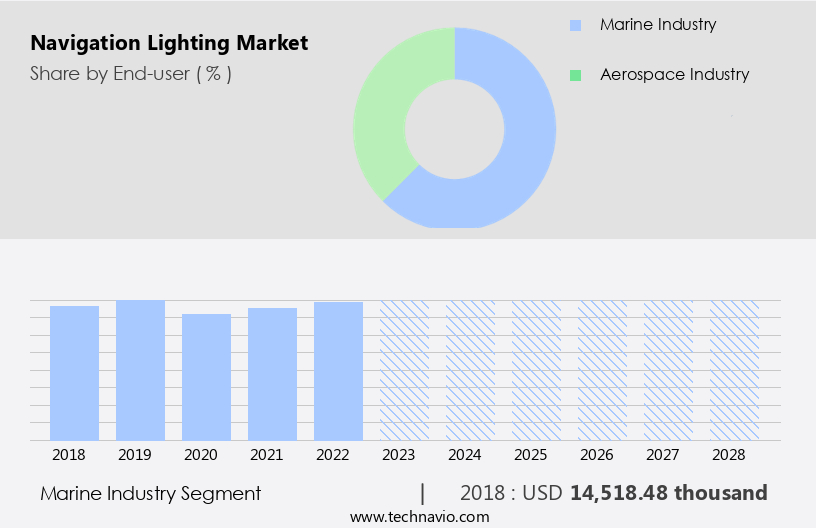
        • The marine industry segment is estimated to witness significant growth during the forecast period.

        Navigation lighting plays a crucial role in ensuring safety and efficiency In the maritime industry. This market segment focuses on the installation of navigational lights on various watercraft, including ships and boats, as well as marine structures. These lights serve as visual aids, enabling vessels to navigate through waterways, ports, and channels. They are typically positioned at the bow, stern, and sides of the vessel for identification and communication with nearby watercraft. Navigation lights are essential for preventing collisions and accidents, particularly during nighttime or low visibility conditions. In the aerospace industry, similar lighting systems are used on aircraft for takeoff and landing, as well as for air traffic control.

        Navigation lights are available in various intensities - low, medium, and high - to cater to different operational requirements. Technologies such as incandescent filaments, light-emitting diodes (LED), halogens, flashes, and strobes are used In the production of these lights. Key players in this market include aircraft manufacturing and shipping industries, airline companies, aerospace transportation, marine tourism, and harbormasters, among others.
        Navigation Lighting Market Size

        Get a glance at the  Navigation Lighting Industry report of share of various segments Request Free Sample

        The Marine industry segment was valued at USD 14518.48 thousand in 2018 and showed a gradual increase during the forecast period.

        Regional Analysis

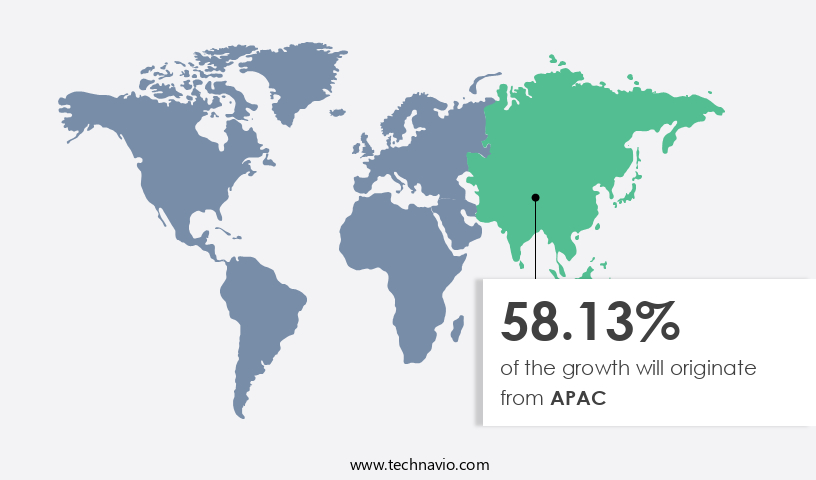
        • APAC is estimated to contribute 58.13% to the growth of the global market during the forecast period.

        Technavio’s analysts have elaborately explained the regional trends and drivers that shape the market during the forecast period.
        Navigation Lighting Market Share by Geography

        For more insights on the market share of various regions, Request Free Sample

        The Asia Pacific (APAC) region is experiencing significant growth In the market due to the expanding aerospace industry and increased air passenger traffic. In 2022, APAC accounted for over 44% of the global GDP and witnessed a surge in air travel, particularly in emerging economies like India and China, driven by increased spending from the middle-income population. The number of air passengers is projected to continue increasing due to the untapped populations In the region. Navigation lighting is essential for aircraft, watercraft, and spacecraft for safe nighttime operation. The market encompasses various lighting technologies, including incandescent filaments, light-emitting diodes (LED), and halogens.

        These lighting systems provide low, medium, and high light intensity for visual signaling on vessels, boats, land-based structures, and offshore structures. The market caters to various industries, including aircraft manufacturing, shipping vessels, and aerospace transportation, as well as airline companies and cruise ship tourism. Key players In the market include manufacturers of illuminating devices, control panels, flashers, marine lights, running lights, and lenses. The market is expected to continue growing due to the increasing demand for safe navigation In the maritime and aerospace industries.

        Market Dynamics

        Our  researchers analyzed the data with 2023 as the base year, along with the key drivers, trends, and challenges. A holistic analysis of drivers will help companies refine their marketing strategies to gain a competitive advantage.

        What are the key market drivers leading to the rise In the adoption of Navigation Lighting Industry?

        Introduction of energy-efficient lighting technologies is the key driver of the market.

      • Navigation lighting plays a crucial role in ensuring safety and efficiency in various sectors, including marine, aerospace, and spacecraft industries. In the marine sector, navigation lights are essential for nighttime vehicle operation and visual signaling between watercraft, harbor master, yard crew, and bridge engineers. The use of incandescent filaments, halogens, flashes, and strobes has been common in marine lighting. However, the shift towards energy-efficient lighting technologies, such as light-emitting diodes (LED), high intensity discharge (HID), and halogen lighting, is gaining momentum. The aerospace industry also relies heavily on navigation lights for aircraft manufacturing, air passenger traffic, and airline companies.
      • Aircraft navigation lights include red, green, and white lights, which provide essential visual cues for takeoff, landing, and taxiing. Similarly, In the spacecraft industry, navigation lighting is used for offshore structures, collisions avoidance, and hazard identification. LED technology has emerged as a preferred choice due to its energy efficiency, long lifespan, and low maintenance requirements. The adoption of LED technology in marine lighting, such as marine docks, waterways routes, vessels, and boats, is increasing rapidly. LED technology is also being used in aircraft navigation lights, including passenger aircraft, cargo planes, fighter jets, helicopters, and military aircraft. The market is expected to grow significantly during the forecast period due to the increasing demand for energy-efficient lighting technologies in various industries.
      • The use of LED technology in marine tourism, cruise ships, low-cost carriers, and shipping vessels is also on the rise. Furthermore, the adoption of LED technology in airports and seaports is increasing due to its energy efficiency and cost savings. In conclusion, The market is witnessing significant growth due to the increasing demand for energy-efficient lighting technologies in various industries, including marine, aerospace, and spacecraft. The adoption of LED technology, in particular, is driving the growth of the market due to its energy efficiency, long lifespan, and low maintenance requirements.
      • What are the market trends shaping the Navigation Lighting Industry?

        Declining manufacturing cost of LEDs is the upcoming market trend.

      • The market is experiencing significant growth, particularly In the marine, aerospace, and aircraft manufacturing sectors. The increasing demand for illuminating devices for nighttime vehicle operation on watercraft, including ships and boats, as well as on Aircraft and Spacecraft, is driving market expansion. Navigation lights, such as flashes, strobes, and running lights, are essential for visual signaling and ensuring safety in marine docks, waterways routes, and seaports. The penetration of LED technology in navigation lighting is on the rise due to its numerous advantages, including low power consumption, long lifespan, and reduced manufacturing costs. The decline In the production cost of LED lighting products, attributed to the falling ASP of chips and components, as well as mass production, is further fueling market growth.
      • The demand for LED lighting In the marine industry is increasing due to its low light intensity, making it ideal for use on passenger ships, cargo vessels, and military vessels. In the aerospace industry, LED technology is being adopted for aircraft navigation lights, including those on passenger aircraft, cargo planes, fighter jets, helicopters, and offshore structures. The integration of LED lighting In the shipping vessels, cruise ships, and marine docks is also gaining popularity due to its medium to high light intensity, which is essential for enhancing safety and reducing the risk of collisions. The increasing air passenger traffic and cruise ship tourism are also contributing to the growth of the market.
      • The market is expected to continue its upward trend during the forecast period, with companies focusing on innovation and product development to cater to the evolving needs of the marine, aerospace, and aircraft manufacturing industries. The use of high-intensity discharge and halogen lighting, as well as xenon and halogen navigation lights, is also expected to continue, although LED technology is becoming increasingly dominant. Control panels, lenses, and flashers are some of the key components of navigation lighting systems, and companies are investing in research and development to improve their performance and functionality. The market is highly competitive, with various players offering a range of products to cater to the diverse needs of customers.
      • In conclusion, The market is experiencing significant growth due to the increasing demand for illuminating devices In the marine, aerospace, and aircraft manufacturing sectors. The adoption of LED technology, coupled with the declining production cost, is driving market expansion. The market is expected to continue its upward trend during the forecast period, with companies focusing on innovation and product development to cater to the evolving needs of customers.
      • What challenges does the Navigation Lighting Industry face during its growth?

        Delays in aircraft delivery is a key challenge affecting the industry growth.

      • In the marine sector, navigation lighting plays a crucial role in ensuring safety during nighttime vehicle operation for various watercraft, including ships and boats. Navigation lights come in various intensities - low, medium, and high - to cater to different marine applications. These lights include incandescent filaments, light-emitting diodes (LEDs), halogens, flashes, and strobes. Aircraft, spacecraft, and watercraft all utilize navigation lights for visual signaling. Harbormasters, yard crews, and bridge engineers are responsible for the installation and maintenance of these lights on marine docks and waterways routes. The marine industry, including shipping vessels and cruise ships, heavily relies on navigation lights to ensure safe passage and prevent collisions.
      • Airline companies and aerospace transportation also use navigation lights on passenger aircraft, cargo planes, military aircraft, fighter jets, helicopters, and other aircraft types. The aviation sector's navigation lights follow specific regulations to ensure air traffic safety. LED technology has gained popularity due to its energy efficiency and long lifespan. High-intensity discharge (HID) and halogen lighting are also commonly used for navigation purposes. Lenses, control panels, and flashers are essential components of navigation lighting systems. Marine tourism, offshore structures, and seaports also utilize navigation lights to enhance safety and visibility. The market for navigation lighting is growing, driven by increasing air passenger traffic, cruise ship tourism, and the need for safer and more efficient transportation systems.
      • In the aerospace industry, aircraft manufacturing and ship building are significant contributors to the market. Companies specializing in illuminating devices, such as Xenon navigation lights and halogen navigation lights, cater to the demands of both the marine and aerospace sectors. In conclusion, navigation lighting plays a vital role in ensuring safety and efficiency In the marine and aerospace sectors. The market for navigation lighting is growing, driven by increasing demand for safer transportation systems and regulatory requirements. LED technology, HID, and halogen lighting are the primary types of lighting used, with various components, such as lenses, control panels, and flashers, essential to their functionality.
      • Exclusive Customer Landscape

        The navigation lighting market forecasting report includes the adoption lifecycle of the market, covering from the innovator’s stage to the laggard’s stage. It focuses on adoption rates in different regions based on penetration. Furthermore, the navigation lighting market report also includes key purchase criteria and drivers of price sensitivity to help companies evaluate and develop their market growth analysis strategies.
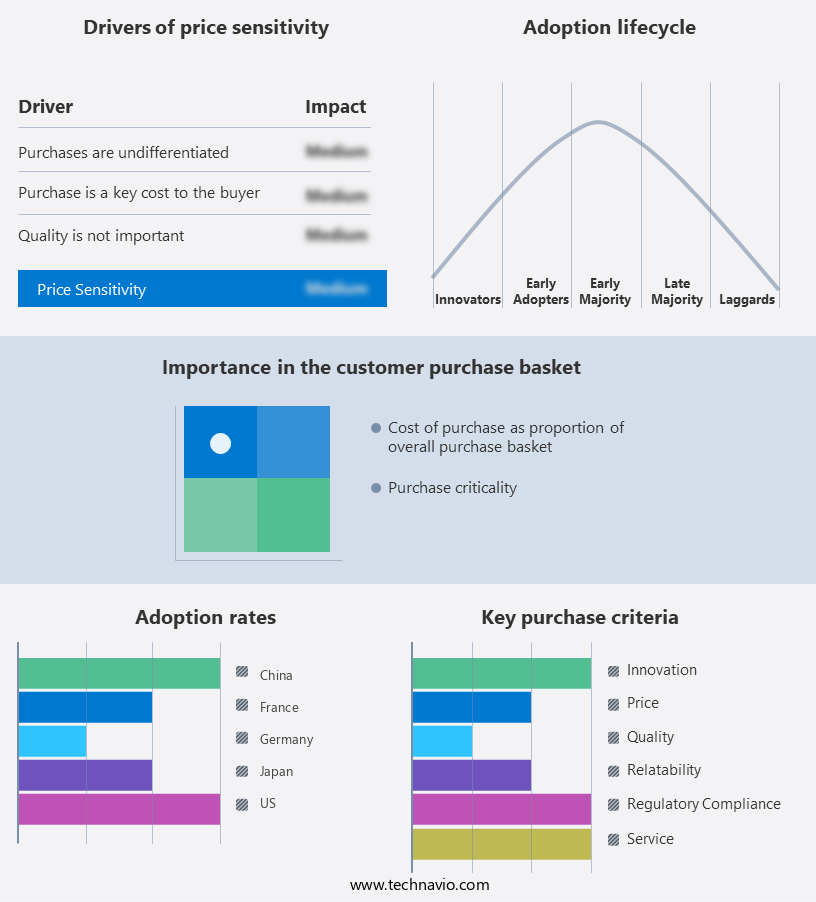
        Navigation Lighting Market Share by Geography

         Customer Landscape

        Key Companies & Market Insights

        Companies are implementing various strategies, such as strategic alliances, navigation lighting market forecast, partnerships, mergers and acquisitions, geographical expansion, and product/service launches, to enhance their presence In the industry.

        Aveo Engineering Group s.r.o - The market encompasses a range of products designed to enhance aviation safety during low-visibility conditions. These include offerings such as the Cessna 177 Cardinal, Crystal Conforma, and Wingtip with Ultra Galactica lights. These lighting systems provide essential visual cues for pilots, enabling them to identify other aircraft, obstacles, and runway approaches. By adhering to international standards for aviation lighting, manufacturers ensure that these products contribute to a safer and more efficient flying experience.

        The industry research and growth report includes detailed analyses of the competitive landscape of the market and information about key companies, including:

        • Aveo Engineering Group s.r.o
        • Beghelli S.p.A.
        • Brunswick Corp.
        • Canepa and Campi Srl
        • Carmanah Technologies Corp.
        • Clarience Technologies
        • DAEYANG ELECTRIC Co. Ltd.
        • Den Haan Rotterdam
        • FAMOR S.A.
        • Glamox Group
        • Lopolight Aps
        • ORGA BV
        • Osculati Srl
        • Oxley Group
        • Perko Inc.
        • Phoenix Products LLC
        • R Stahl AG
        • Raytheon Technologies Corp.
        • SPX Corp.

        Qualitative and quantitative analysis of companies has been conducted to help clients understand the wider business environment as well as the strengths and weaknesses of key industry players. Data is qualitatively analyzed to categorize companies as pure play, category-focused, industry-focused, and diversified; it is quantitatively analyzed to categorize companies as dominant, leading, strong, tentative, and weak.

        Research Analyst Overview

        Navigation lighting plays a crucial role in ensuring safe and efficient operation in various industries, including marine, aerospace, and land-based structures. The use of illuminating devices for visual signaling during nighttime vehicle operation and in low light conditions is essential for the safety of passengers, crew members, and other users of waterways and airspace. In the marine sector, navigation lights are utilized on various types of vessels and boats, from small recreational craft to large cargo ships and cruise liners. These lights serve multiple functions, including identifying the type and size of the vessel, indicating its direction, and warning of potential hazards.

        Marine navigation lights typically consist of red, green, and white lights, which are displayed in specific arrangements to comply with international regulations. Similarly, In the aerospace industry, aircraft navigation lights are used to ensure safe takeoff, landing, and flight operations. These lights are essential for air traffic control and for providing visual cues to pilots during nighttime and low-visibility conditions. Aircraft navigation lights are typically installed on the wings, tail, and leading edges of the wings, and they may consist of flashing or steady lights, depending on their function. The use of navigation lighting is not limited to marine and aerospace applications.

        In land-based structures, such as seaports and airports, navigation lights are used to guide vessels and aircraft during their approach and departure. These lights are also used to mark runways, taxiways, and other critical infrastructure. The market for navigation lighting is driven by several factors, including increasing air passenger traffic, cruise ship tourism, and the growing demand for safety and efficiency in transportation. The development of advanced lighting technologies, such as light-emitting diodes (LED) and high intensity discharge (HID), has led to the production of more energy-efficient and durable navigation lights. The marine industry has seen significant growth In the adoption of LED technology for navigation lighting.

        LED lights offer several advantages over traditional incandescent filaments and halogens, including longer lifespan, lower power consumption, and improved durability. LED technology also allows for greater flexibility In the design of navigation lights, enabling the creation of more compact and versatile lighting solutions. Similarly, In the aerospace industry, the adoption of advanced lighting technologies is driving the development of more efficient and effective navigation systems. For example, xenon navigation lights offer improved brightness and durability compared to traditional halogen navigation lights. These lights are also more energy-efficient, reducing the overall weight and fuel consumption of aircraft. In conclusion, the market is a dynamic and growing industry, driven by the need for safety, efficiency, and innovation in transportation.

        The adoption of advanced lighting technologies, such as LED and HID, is transforming the market, offering new opportunities for manufacturers and users alike. Whether In the marine, aerospace, or land-based sectors, navigation lighting remains an essential component of safe and efficient transportation systems.

        Market Scope

        Report Coverage

        Details

        Page number

        164

        Base year

        2023

        Historic period

        2018-2022

        Forecast period

        2024-2028

        Growth momentum & CAGR

        Accelerate at a CAGR of 5.22%

        Market growth 2024-2028

        USD 6736.2 thousand

        Market structure

        Fragmented

        YoY growth 2023-2024(%)

        5.0

        Key countries

        US, China, Japan, France, and Germany

        Competitive landscape

        Leading Companies, Market Positioning of Companies, Competitive Strategies, and Industry Risks

        Request Free Sample

        What are the Key Data Covered in this Navigation Lighting Market Research and Growth Report?

        • CAGR of the Navigation Lighting industry during the forecast period
        • Detailed information on factors that will drive the growth and forecasting between 2024 and 2028
        • Precise estimation of the size of the market and its contribution of the industry in focus to the parent market
        • Accurate predictions about upcoming growth and trends and changes in consumer behaviour
        • Growth of the market across APAC, Europe, North America, South America, and Middle East and Africa
        • Thorough analysis of the market’s competitive landscape and detailed information about companies
        • Comprehensive analysis of factors that will challenge the navigation lighting market growth of industry companies

        We can help! Our analysts can customize this navigation lighting market research report to meet your requirements.

        Get in touch


        1 Executive Summary

        • 1.1 Market overview
          • Exhibit 01: Executive Summary – Chart on Market Overview
          • Exhibit 02: Executive Summary – Data Table on Market Overview
          • Exhibit 03: Executive Summary – Chart on Global Market Characteristics
          • Exhibit 04: Executive Summary – Chart on Market by Geography
          • Exhibit 05: Executive Summary – Chart on Market Segmentation by End-user
          • Exhibit 06: Executive Summary – Chart on Market Segmentation by Type
          • Exhibit 07: Executive Summary – Chart on Incremental Growth
          • Exhibit 08: Executive Summary – Data Table on Incremental Growth
          • Exhibit 09: Executive Summary – Chart on Vendor Market Positioning

        2 Market Landscape

        • 2.1 Market ecosystem
          • Exhibit 10: Parent market
          • Exhibit 11: Market Characteristics

        3 Market Sizing

        • 3.1 Market definition
          • Exhibit 12: Offerings of vendors included in the market definition
        • 3.2 Market segment analysis
          • Exhibit 13: Market segments
        • 3.3 Market size 2023
          • 3.4 Market outlook: Forecast for 2023-2028
            • Exhibit 14: Chart on Global - Market size and forecast 2023-2028 ($ thousand)
            • Exhibit 15: Data Table on Global - Market size and forecast 2023-2028 ($ thousand)
            • Exhibit 16: Chart on Global Market: Year-over-year growth 2023-2028 (%)
            • Exhibit 17: Data Table on Global Market: Year-over-year growth 2023-2028 (%)

          4 Historic Market Size

          • 4.1 Global navigation lighting market 2018 - 2022
            • Exhibit 18: Historic Market Size – Data Table on global navigation lighting market 2018 - 2022 ($ thousand)
          • 4.2 End-user Segment Analysis 2018 - 2022
            • Exhibit 19: Historic Market Size – End-user Segment 2018 - 2022 ($ thousand)
          • 4.3 Type Segment Analysis 2018 - 2022
            • Exhibit 20: Historic Market Size – Type Segment 2018 - 2022 ($ thousand)
          • 4.4 Geography Segment Analysis 2018 - 2022
            • Exhibit 21: Historic Market Size – Geography Segment 2018 - 2022 ($ thousand)
          • 4.5 Country Segment Analysis 2018 - 2022
            • Exhibit 22: Historic Market Size – Country Segment 2018 - 2022 ($ thousand)

          5 Five Forces Analysis

          • 5.1 Five forces summary
            • Exhibit 23: Five forces analysis - Comparison between 2023 and 2028
          • 5.2 Bargaining power of buyers
            • Exhibit 24: Chart on Bargaining power of buyers – Impact of key factors 2023 and 2028
          • 5.3 Bargaining power of suppliers
            • Exhibit 25: Bargaining power of suppliers – Impact of key factors in 2023 and 2028
          • 5.4 Threat of new entrants
            • Exhibit 26: Threat of new entrants – Impact of key factors in 2023 and 2028
          • 5.5 Threat of substitutes
            • Exhibit 27: Threat of substitutes – Impact of key factors in 2023 and 2028
          • 5.6 Threat of rivalry
            • Exhibit 28: Threat of rivalry – Impact of key factors in 2023 and 2028
          • 5.7 Market condition
            • Exhibit 29: Chart on Market condition - Five forces 2023 and 2028

          6 Market Segmentation by End-user

          • 6.1 Market segments
            • Exhibit 30: Chart on End-user - Market share 2023-2028 (%)
            • Exhibit 31: Data Table on End-user - Market share 2023-2028 (%)
          • 6.2 Comparison by End-user
            • Exhibit 32: Chart on Comparison by End-user
            • Exhibit 33: Data Table on Comparison by End-user
          • 6.3 Marine industry - Market size and forecast 2023-2028
            • Exhibit 34: Chart on Marine industry - Market size and forecast 2023-2028 ($ thousand)
            • Exhibit 35: Data Table on Marine industry - Market size and forecast 2023-2028 ($ thousand)
            • Exhibit 36: Chart on Marine industry - Year-over-year growth 2023-2028 (%)
            • Exhibit 37: Data Table on Marine industry - Year-over-year growth 2023-2028 (%)
          • 6.4 Aerospace industry - Market size and forecast 2023-2028
            • Exhibit 38: Chart on Aerospace industry - Market size and forecast 2023-2028 ($ thousand)
            • Exhibit 39: Data Table on Aerospace industry - Market size and forecast 2023-2028 ($ thousand)
            • Exhibit 40: Chart on Aerospace industry - Year-over-year growth 2023-2028 (%)
            • Exhibit 41: Data Table on Aerospace industry - Year-over-year growth 2023-2028 (%)
          • 6.5 Market opportunity by End-user
            • Exhibit 42: Market opportunity by End-user ($ thousand)
            • Exhibit 43: Data Table on Market opportunity by End-user ($ thousand)

          7 Market Segmentation by Type

          • 7.1 Market segments
            • Exhibit 44: Chart on Type - Market share 2023-2028 (%)
            • Exhibit 45: Data Table on Type - Market share 2023-2028 (%)
          • 7.2 Comparison by Type
            • Exhibit 46: Chart on Comparison by Type
            • Exhibit 47: Data Table on Comparison by Type
          • 7.3 High light intensity - Market size and forecast 2023-2028
            • Exhibit 48: Chart on High light intensity - Market size and forecast 2023-2028 ($ thousand)
            • Exhibit 49: Data Table on High light intensity - Market size and forecast 2023-2028 ($ thousand)
            • Exhibit 50: Chart on High light intensity - Year-over-year growth 2023-2028 (%)
            • Exhibit 51: Data Table on High light intensity - Year-over-year growth 2023-2028 (%)
          • 7.4 Medium light intensity - Market size and forecast 2023-2028
            • Exhibit 52: Chart on Medium light intensity - Market size and forecast 2023-2028 ($ thousand)
            • Exhibit 53: Data Table on Medium light intensity - Market size and forecast 2023-2028 ($ thousand)
            • Exhibit 54: Chart on Medium light intensity - Year-over-year growth 2023-2028 (%)
            • Exhibit 55: Data Table on Medium light intensity - Year-over-year growth 2023-2028 (%)
          • 7.5 Low light intensity - Market size and forecast 2023-2028
            • Exhibit 56: Chart on Low light intensity - Market size and forecast 2023-2028 ($ thousand)
            • Exhibit 57: Data Table on Low light intensity - Market size and forecast 2023-2028 ($ thousand)
            • Exhibit 58: Chart on Low light intensity - Year-over-year growth 2023-2028 (%)
            • Exhibit 59: Data Table on Low light intensity - Year-over-year growth 2023-2028 (%)
          • 7.6 Market opportunity by Type
            • Exhibit 60: Market opportunity by Type ($ thousand)
            • Exhibit 61: Data Table on Market opportunity by Type ($ thousand)

          8 Customer Landscape

          • 8.1 Customer landscape overview
            • Exhibit 62: Analysis of price sensitivity, lifecycle, customer purchase basket, adoption rates, and purchase criteria

          9 Geographic Landscape

          • 9.1 Geographic segmentation
            • Exhibit 63: Chart on Market share by geography 2023-2028 (%)
            • Exhibit 64: Data Table on Market share by geography 2023-2028 (%)
          • 9.2 Geographic comparison
            • Exhibit 65: Chart on Geographic comparison
            • Exhibit 66: Data Table on Geographic comparison
          • 9.3 APAC - Market size and forecast 2023-2028
            • Exhibit 67: Chart on APAC - Market size and forecast 2023-2028 ($ thousand)
            • Exhibit 68: Data Table on APAC - Market size and forecast 2023-2028 ($ thousand)
            • Exhibit 69: Chart on APAC - Year-over-year growth 2023-2028 (%)
            • Exhibit 70: Data Table on APAC - Year-over-year growth 2023-2028 (%)
          • 9.4 Europe - Market size and forecast 2023-2028
            • Exhibit 71: Chart on Europe - Market size and forecast 2023-2028 ($ thousand)
            • Exhibit 72: Data Table on Europe - Market size and forecast 2023-2028 ($ thousand)
            • Exhibit 73: Chart on Europe - Year-over-year growth 2023-2028 (%)
            • Exhibit 74: Data Table on Europe - Year-over-year growth 2023-2028 (%)
          • 9.5 North America - Market size and forecast 2023-2028
            • Exhibit 75: Chart on North America - Market size and forecast 2023-2028 ($ thousand)
            • Exhibit 76: Data Table on North America - Market size and forecast 2023-2028 ($ thousand)
            • Exhibit 77: Chart on North America - Year-over-year growth 2023-2028 (%)
            • Exhibit 78: Data Table on North America - Year-over-year growth 2023-2028 (%)
          • 9.6 South America - Market size and forecast 2023-2028
            • Exhibit 79: Chart on South America - Market size and forecast 2023-2028 ($ thousand)
            • Exhibit 80: Data Table on South America - Market size and forecast 2023-2028 ($ thousand)
            • Exhibit 81: Chart on South America - Year-over-year growth 2023-2028 (%)
            • Exhibit 82: Data Table on South America - Year-over-year growth 2023-2028 (%)
          • 9.7 Middle East and Africa - Market size and forecast 2023-2028
            • Exhibit 83: Chart on Middle East and Africa - Market size and forecast 2023-2028 ($ thousand)
            • Exhibit 84: Data Table on Middle East and Africa - Market size and forecast 2023-2028 ($ thousand)
            • Exhibit 85: Chart on Middle East and Africa - Year-over-year growth 2023-2028 (%)
            • Exhibit 86: Data Table on Middle East and Africa - Year-over-year growth 2023-2028 (%)
          • 9.8 China - Market size and forecast 2023-2028
            • Exhibit 87: Chart on China - Market size and forecast 2023-2028 ($ thousand)
            • Exhibit 88: Data Table on China - Market size and forecast 2023-2028 ($ thousand)
            • Exhibit 89: Chart on China - Year-over-year growth 2023-2028 (%)
            • Exhibit 90: Data Table on China - Year-over-year growth 2023-2028 (%)
          • 9.9 US - Market size and forecast 2023-2028
            • Exhibit 91: Chart on US - Market size and forecast 2023-2028 ($ thousand)
            • Exhibit 92: Data Table on US - Market size and forecast 2023-2028 ($ thousand)
            • Exhibit 93: Chart on US - Year-over-year growth 2023-2028 (%)
            • Exhibit 94: Data Table on US - Year-over-year growth 2023-2028 (%)
          • 9.10 Japan - Market size and forecast 2023-2028
            • Exhibit 95: Chart on Japan - Market size and forecast 2023-2028 ($ thousand)
            • Exhibit 96: Data Table on Japan - Market size and forecast 2023-2028 ($ thousand)
            • Exhibit 97: Chart on Japan - Year-over-year growth 2023-2028 (%)
            • Exhibit 98: Data Table on Japan - Year-over-year growth 2023-2028 (%)
          • 9.11 France - Market size and forecast 2023-2028
            • Exhibit 99: Chart on France - Market size and forecast 2023-2028 ($ thousand)
            • Exhibit 100: Data Table on France - Market size and forecast 2023-2028 ($ thousand)
            • Exhibit 101: Chart on France - Year-over-year growth 2023-2028 (%)
            • Exhibit 102: Data Table on France - Year-over-year growth 2023-2028 (%)
          • 9.12 Germany - Market size and forecast 2023-2028
            • Exhibit 103: Chart on Germany - Market size and forecast 2023-2028 ($ thousand)
            • Exhibit 104: Data Table on Germany - Market size and forecast 2023-2028 ($ thousand)
            • Exhibit 105: Chart on Germany - Year-over-year growth 2023-2028 (%)
            • Exhibit 106: Data Table on Germany - Year-over-year growth 2023-2028 (%)
          • 9.13 Market opportunity by geography
            • Exhibit 107: Market opportunity by geography ($ thousand)
            • Exhibit 108: Data Tables on Market opportunity by geography ($ thousand)

          10 Drivers, Challenges, and Trends

          • 10.1 Market drivers
            • 10.2 Market challenges
              • 10.3 Impact of drivers and challenges
                • Exhibit 109: Impact of drivers and challenges in 2023 and 2028
              • 10.4 Market trends

                11 Vendor Landscape

                • 11.1 Overview
                  • 11.2 Vendor landscape
                    • Exhibit 110: Overview on Criticality of inputs and Factors of differentiation
                  • 11.3 Landscape disruption
                    • Exhibit 111: Overview on factors of disruption
                  • 11.4 Industry risks
                    • Exhibit 112: Impact of key risks on business

                  12 Vendor Analysis

                  • 12.1 Vendors covered
                    • Exhibit 113: Vendors covered
                  • 12.2 Market positioning of vendors
                    • Exhibit 114: Matrix on vendor position and classification
                  • 12.3 Aveo Engineering Group s.r.o
                    • Exhibit 115: Aveo Engineering Group s.r.o - Overview
                    • Exhibit 116: Aveo Engineering Group s.r.o - Product / Service
                    • Exhibit 117: Aveo Engineering Group s.r.o - Key offerings
                  • 12.4 Brunswick Corp.
                    • Exhibit 118: Brunswick Corp. - Overview
                    • Exhibit 119: Brunswick Corp. - Business segments
                    • Exhibit 120: Brunswick Corp. - Key offerings
                    • Exhibit 121: Brunswick Corp. - Segment focus
                  • 12.5 Carmanah Technologies Corp.
                    • Exhibit 122: Carmanah Technologies Corp. - Overview
                    • Exhibit 123: Carmanah Technologies Corp. - Product / Service
                    • Exhibit 124: Carmanah Technologies Corp. - Key offerings
                  • 12.6 Clarience Technologies
                    • Exhibit 125: Clarience Technologies - Overview
                    • Exhibit 126: Clarience Technologies - Product / Service
                    • Exhibit 127: Clarience Technologies - Key offerings
                  • 12.7 DAEYANG ELECTRIC Co. Ltd.
                    • Exhibit 128: DAEYANG ELECTRIC Co. Ltd. - Overview
                    • Exhibit 129: DAEYANG ELECTRIC Co. Ltd. - Product / Service
                    • Exhibit 130: DAEYANG ELECTRIC Co. Ltd. - Key offerings
                  • 12.8 Den Haan Rotterdam
                    • Exhibit 131: Den Haan Rotterdam - Overview
                    • Exhibit 132: Den Haan Rotterdam - Product / Service
                    • Exhibit 133: Den Haan Rotterdam - Key offerings
                  • 12.9 FAMOR S.A.
                    • Exhibit 134: FAMOR S.A. - Overview
                    • Exhibit 135: FAMOR S.A. - Product / Service
                    • Exhibit 136: FAMOR S.A. - Key offerings
                  • 12.10 Glamox Group
                    • Exhibit 137: Glamox Group - Overview
                    • Exhibit 138: Glamox Group - Business segments
                    • Exhibit 139: Glamox Group - Key offerings
                    • Exhibit 140: Glamox Group - Segment focus
                  • 12.11 Lopolight Aps
                    • Exhibit 141: Lopolight Aps - Overview
                    • Exhibit 142: Lopolight Aps - Product / Service
                    • Exhibit 143: Lopolight Aps - Key offerings
                  • 12.12 ORGA BV
                    • Exhibit 144: ORGA BV - Overview
                    • Exhibit 145: ORGA BV - Product / Service
                    • Exhibit 146: ORGA BV - Key offerings
                  • 12.13 Osculati Srl
                    • Exhibit 147: Osculati Srl - Overview
                    • Exhibit 148: Osculati Srl - Product / Service
                    • Exhibit 149: Osculati Srl - Key offerings
                  • 12.14 Oxley Group
                    • Exhibit 150: Oxley Group - Overview
                    • Exhibit 151: Oxley Group - Product / Service
                    • Exhibit 152: Oxley Group - Key offerings
                  • 12.15 Perko Inc.
                    • Exhibit 153: Perko Inc. - Overview
                    • Exhibit 154: Perko Inc. - Product / Service
                    • Exhibit 155: Perko Inc. - Key offerings
                  • 12.16 Raytheon Technologies Corp.
                    • Exhibit 156: Raytheon Technologies Corp. - Overview
                    • Exhibit 157: Raytheon Technologies Corp. - Business segments
                    • Exhibit 158: Raytheon Technologies Corp. - Key news
                    • Exhibit 159: Raytheon Technologies Corp. - Key offerings
                    • Exhibit 160: Raytheon Technologies Corp. - Segment focus
                  • 12.17 SPX Corp.
                    • Exhibit 161: SPX Corp. - Overview
                    • Exhibit 162: SPX Corp. - Business segments
                    • Exhibit 163: SPX Corp. - Key offerings
                    • Exhibit 164: SPX Corp. - Segment focus

                  13 Appendix

                  • 13.1 Scope of the report
                    • 13.2 Inclusions and exclusions checklist
                      • Exhibit 165: Inclusions checklist
                      • Exhibit 166: Exclusions checklist
                    • 13.3 Currency conversion rates for US$
                      • Exhibit 167: Currency conversion rates for US$
                    • 13.4 Research methodology
                      • Exhibit 168: Research methodology
                      • Exhibit 169: Validation techniques employed for market sizing
                      • Exhibit 170: Information sources
                    • 13.5 List of abbreviations
                      • Exhibit 171: List of abbreviations

                    Research Methodology

                    Technavio presents a detailed picture of the market by way of study, synthesis, and summation of data from multiple sources. The analysts have presented the various facets of the market with a particular focus on identifying the key industry influencers. The data thus presented is comprehensive, reliable, and the result of extensive research, both primary and secondary.

                    INFORMATION SOURCES

                    Primary sources

                    • Manufacturers and suppliers
                    • Channel partners
                    • Industry experts
                    • Strategic decision makers

                    Secondary sources

                    • Industry journals and periodicals
                    • Government data
                    • Financial reports of key industry players
                    • Historical data
                    • Press releases

                    DATA ANALYSIS

                    Data Synthesis

                    • Collation of data
                    • Estimation of key figures
                    • Analysis of derived insights

                    Data Validation

                    • Triangulation with data models
                    • Reference against proprietary databases
                    • Corroboration with industry experts

                    REPORT WRITING

                    Qualitative

                    • Market drivers
                    • Market challenges
                    • Market trends
                    • Five forces analysis

                    Quantitative

                    • Market size and forecast
                    • Market segmentation
                    • Geographical insights
                    • Competitive landscape

                    Interested in this report?

                    Get your sample now to see our research methodology and insights!

                    Download Now

                    Frequently Asked Questions

                    Navigation Lighting market growth will increase by $ 6736.2 th during 2024-2028 .

                    The Navigation Lighting market is expected to grow at a CAGR of 5.22% during 2024-2028 .

                    Navigation Lighting market is segmented by End-user( Marine industry, Aerospace industry) Type( High light intensity, Medium light intensity, Low light intensity, South America, MEA)

                    Aveo Engineering Group s.r.o, Beghelli S.p.A., Brunswick Corp., Canepa and Campi Srl, Carmanah Technologies Corp., Clarience Technologies, DAEYANG ELECTRIC Co. Ltd., Den Haan Rotterdam, FAMOR S.A., Glamox Group, Lopolight Aps, ORGA BV, Osculati Srl, Oxley Group, Perko Inc., Phoenix Products LLC, R Stahl AG, Raytheon Technologies Corp., SPX Corp. are a few of the key vendors in the Navigation Lighting market.

                    APAC will register the highest growth rate of 58.13% among the other regions. Therefore, the Navigation Lighting market in APAC is expected to garner significant business opportunities for the vendors during the forecast period.

                    US, China, Japan, France, Germany

                    • Introduction of energy-efficient lighting technologiesAs lighting consumes 20% of the global electricity production is the driving factor this market.
                    • the governments of many countries are focusing on promoting energy-efficient lighting technologies. In some countries is the driving factor this market.
                    • governments have banned the use of incandescent bulbs as a means to promote energy-efficient lighting technologies. These will is the driving factor this market.
                    • in turn is the driving factor this market.
                    • result in the higher adoption of other lighting technologies is the driving factor this market.
                    • such as halogen is the driving factor this market.
                    • compact fluorescent lamps (CFL) is the driving factor this market.
                    • linear fluorescent lamps (LFL) is the driving factor this market.
                    • and LED lighting technologies. In addition is the driving factor this market.
                    • spreading awareness about saving power and energy has triggered the adoption of these energy-efficient lighting technologies. Thus is the driving factor this market.
                    • the introduction of energy-efficient lighting sources will have a positive impact on the growth of the global navigation lighting market during the forecast period. LED is an energy-efficient lighting solution that uses at least 75% less energy and lasts 25 times longer than incandescent bulbs. With growing awareness of green technology is the driving factor this market.
                    • manufacturers have started focusing on energy-efficient and environmentally friendly lights. Incandescent lamps use high energy compared with LED lights. LEDs contain solid mercury content is the driving factor this market.
                    • which is less likely to pollute the environment compared with liquid mercury in incandescent bulbs. Owing to the properties of LED bulbs is the driving factor this market.
                    • boats off-late sport LED lighting for navigation lights. However is the driving factor this market.
                    • there are certain factors that should be considered while replacing incandescent bulbs with LED bulbs. The LED bulbs that adhere to the marine grade resist corrosion when in contact with the saltwater The bulbs also are sealed to prevent water intrusion. The LED bulbs must have the highest waterproof ratings of IP67 and IP6K9K. The LED bulbs used as navigation lights must be Coast Guard compliant. The guidelines are set by the American Boat and Yacht Council. The Port and Starboard light must illuminate a sector spanning 112.5 degrees from dead ahead to aft on each side. In addition is the driving factor this market.
                    • the navigation lights must meet the regulations for visibility range. The regulations are in accordance with the size of the vessel. The lens of the bulbs serves an important function of illumination. For courtesy and spreader lights is the driving factor this market.
                    • for instance is the driving factor this market.
                    • a wide beam of approximately 50 degrees is used to adequately illuminate a cockpit or walkway. A wide beam also helps minimize dark shadows that might impair visibility. On replacing an incandescent bulb is the driving factor this market.
                    • the LED light must fit the same cut-out of the bracket as used for the previous bulb. However is the driving factor this market.
                    • finding the right replacement may not always be available is the driving factor this market.
                    • although matchups exist. For instance is the driving factor this market.
                    • Hella Slimline LED courtesy lights fit the same hole as the old Perko round incandescent courtesy lights. The LED microcircuit that contains a regulator continually switches the voltage to the diode off and on. If not shielded properly is the driving factor this market.
                    • the wire connecting the LED emits certain radio frequencies is the driving factor this market.
                    • which interfere with the onboard electronics. This electromagnetic interference (EMI) can manifest in peculiarities such as very high frequency (VHF) radio interference is the driving factor this market.
                    • static on a stereo is the driving factor this market.
                    • and hash on a fish-finder screen. To avoid electromagnetic interference (EMI) is the driving factor this market.
                    • the LED fixture should be CE-designated. This indicates that the manufacturer has complied with Conformite Europeenne (European conformity) in shielding the LED. LED lights have the ability to deliver a rainbow of bright colors. As per the Coast Guard regulations is the driving factor this market.
                    • the haphazard placement and use of decorative LED lights may violate the navigational light provisions. These factors will drive the growth of the global navigation lighting market during the forecast period. is the driving factor this market.

                    The Navigation Lighting market vendors should focus on grabbing business opportunities from the Marine industry segment as it accounted for the largest market share in the base year.
