
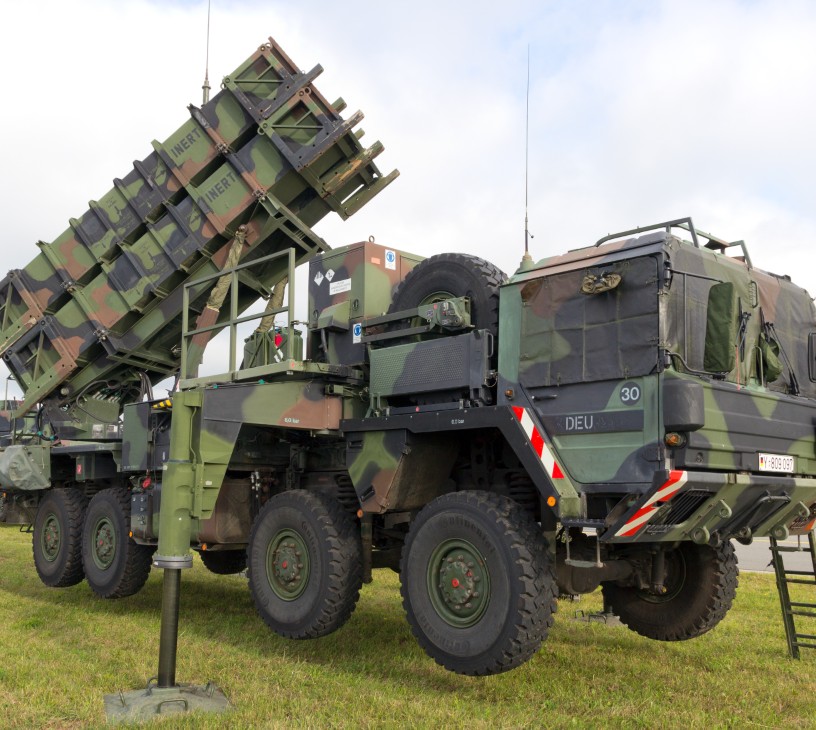

Next Generation Air Defense System Market Analysis, Size, and Forecast 2026-2030: North America (US, Canada, and Mexico), APAC (China, India, and Japan), Europe (Germany, UK, and France), Middle East and Africa (Saudi Arabia, UAE, and South Africa), South America (Brazil, Argentina, and Colombia), and Rest of World (ROW)

Next Generation Air Defense System Market Analysis, Size, and Forecast 2026-2030:
North America (US, Canada, and Mexico), APAC (China, India, and Japan), Europe (Germany, UK, and France), Middle East and Africa (Saudi Arabia, UAE, and South Africa), South America (Brazil, Argentina, and Colombia), and Rest of World (ROW)

Published: Dec 2025 309 Pages SKU: IRTNTR81195

Market Overview at a Glance

$10.62 B
Market Opportunity
5.4%
CAGR 2025 - 2030
37.1%
North America Growth
$19.38 B
Weapon systems segment 2024

Next Generation Air Defense System Market Size 2026-2030

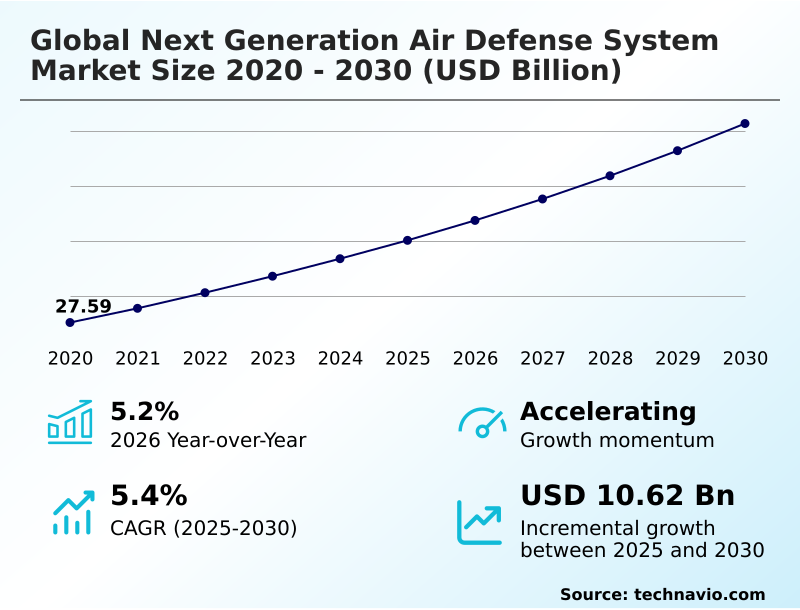
The next generation air defense system market size is valued to increase by USD 10.62 billion, at a CAGR of 5.4% from 2025 to 2030. Escalating geopolitical tensions will drive the next generation air defense system market.

Major Market Trends & Insights

  • North America dominated the market and accounted for a 37.1% growth during the forecast period.
  • By Component - Weapon systems segment was valued at USD 19.38 billion in 2024
  • By Platform - Land based segment accounted for the largest market revenue share in 2024

Market Size & Forecast

  • Market Opportunities: USD 18.09 billion
  • Market Future Opportunities: USD 10.62 billion
  • CAGR from 2025 to 2030 : 5.4%

Market Summary

  • The next generation air defense system market is driven by the imperative to protect sovereign airspace against a rapidly diversifying array of aerial threats. Escalating geopolitical tensions and the proliferation of advanced platforms, including unmanned aerial vehicles and hypersonic weapons, have compelled nations to abandon legacy systems in favor of dynamic, integrated solutions.
  • This modernization focuses on creating a layered defense architecture that combines long-range ballistic missile defense with agile short-range air defense for comprehensive critical infrastructure protection. A core technological shift involves the adoption of AESA radars and advanced sensor fusion, enabling superior situational awareness and multi-target engagement.
  • For instance, a defense agency managing procurement cycles for urban air defense must now balance the high life cycle cost of advanced kinetic interceptors against the cost-effectiveness of directed energy weapons for counter-UAS roles. This requires a sophisticated systems engineering methodology to ensure system interoperability across a resilient defense ecosystem.
  • The integration of artificial intelligence into command and control systems is no longer a niche capability but a fundamental requirement for reducing reaction times and managing the complexities of network-centric warfare and multi-domain operations.

What will be the Size of the Next Generation Air Defense System Market during the forecast period?
Get Key Insights on Market Forecast (PDF) Request Free Sample

How is the Next Generation Air Defense System Market Segmented?

The next generation air defense system industry research report provides comprehensive data (region-wise segment analysis), with forecasts and estimates in "USD million" for the period 2026-2030, as well as historical data from 2020-2024 for the following segments.

  • Component
    • Weapon systems
    • Radars and sensors
    • Fire control systems
    • Others
  • Platform
    • Land based
    • Naval
    • Airborne
  • Type
    • Long range
    • Medium range
    • Short range
  • Geography
    • North America
      • US
      • Canada
      • Mexico
    • APAC
      • China
      • India
      • Japan
    • Europe
      • Germany
      • UK
      • France
    • Middle East and Africa
      • Saudi Arabia
      • UAE
      • South Africa
    • South America
      • Brazil
      • Argentina
      • Colombia
    • Rest of World (ROW)

By Component Insights

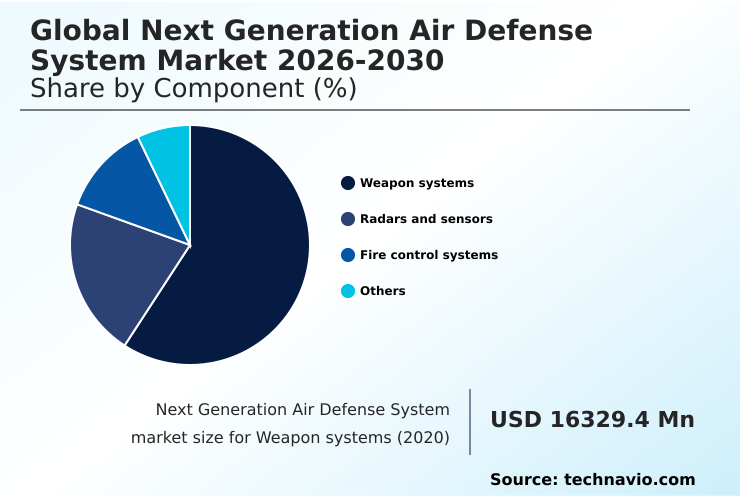
The weapon systems segment is estimated to witness significant growth during the forecast period.

The weapon systems segment is evolving through a dual-focus on advanced kinetic interceptors and maturing directed energy weapons. Development is centered on countering hypersonic weapons and loitering munitions, driving innovation in hit-to-kill technology and non-kinetic intercept solutions.

This technological arms race, fueled by geopolitical tensions, necessitates a focus on kill chain effectiveness and managing life cycle cost.

For instance, laser-based counter-UAS platforms are gaining traction as they offer a cost-per-shot reduction exceeding 95% compared to traditional surface-to-air missiles, transforming the economics of asset protection and force protection.

This shift reflects a broader emphasis on achieving strategic autonomy through a diverse and adaptable arsenal, including advanced air-to-air missile capabilities for comprehensive sovereign airspace security.
Request Free Sample

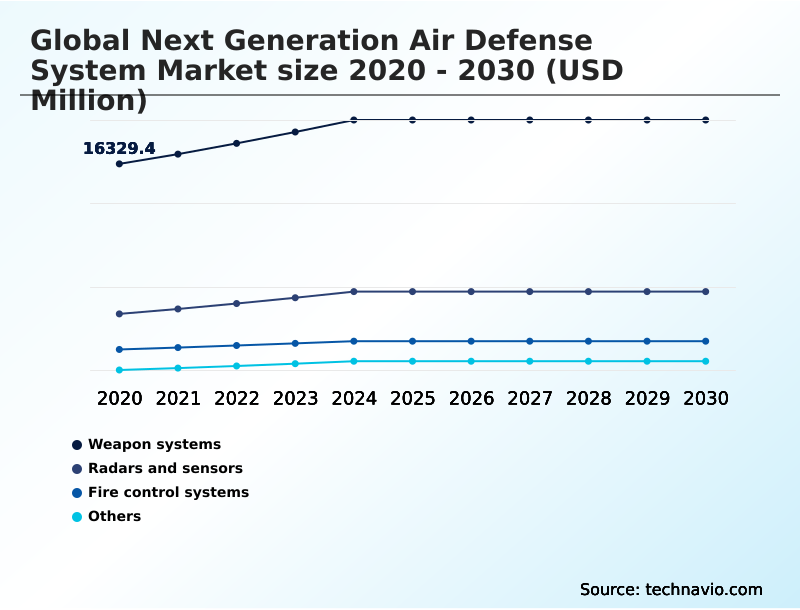
The Weapon systems segment was valued at USD 19.38 billion in 2024 and showed a gradual increase during the forecast period.
Request Free Sample

Regional Analysis

North America is estimated to contribute 37.1% to the growth of the global market during the forecast period.Technavio’s analysts have elaborately explained the regional trends and drivers that shape the market during the forecast period.
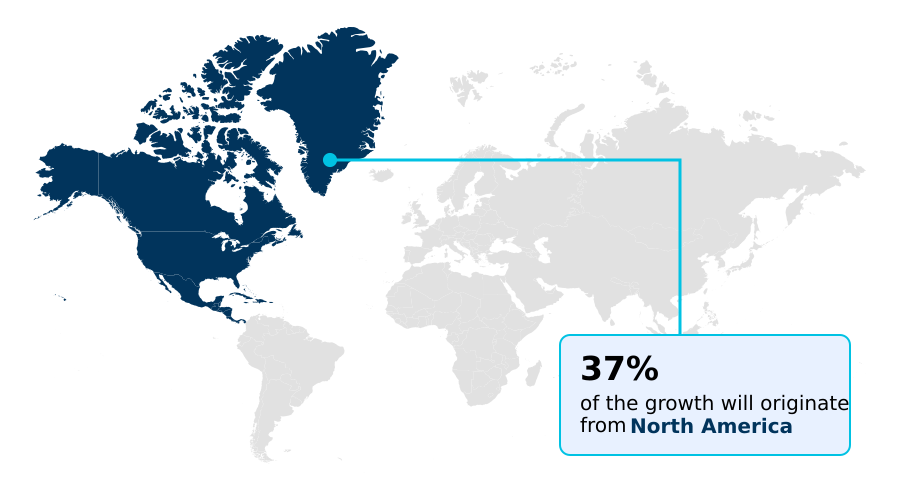
See How Next Generation Air Defense System Market Demand is Rising in North America Request Free Sample

The market's geographic landscape is shaped by distinct regional security dynamics. North America, contributing over 37% of incremental growth, focuses on technological superiority and continental defense, driving investments in joint all-domain command and control and advanced electronic warfare suites.

In contrast, APAC is the fastest-growing region, with nations bolstering anti-access/area denial capabilities and maritime domain awareness in response to regional pressures; spending on these systems is up nearly 20% in some areas.

Europe is prioritizing strategic autonomy and system interoperability through collaborative programs. The Middle East remains a key market focused on asset protection against asymmetric threats like drones and missiles, necessitating advanced short-range air defense and vertical launching systems.

South America emphasizes border protection and airspace surveillance against illicit activities, reflecting a different set of operational readiness requirements.

Market Dynamics

Our researchers analyzed the data with 2025 as the base year, along with the key drivers, trends, and challenges. A holistic analysis of drivers will help companies refine their marketing strategies to gain a competitive advantage.

  • Strategic planning in the next generation air defense system market increasingly revolves around the integration of AI in air defense to automate and accelerate the kill chain. A primary focus is countering hypersonic missile threats, which requires revolutionary advances in space-based tracking and interceptor technology.
  • Equally important is detecting low observable aerial targets, a challenge driving innovation in multi-spectrum sensors and quantum radar research. The principle of a layered defense for critical infrastructure has become standard doctrine, combining different systems for robust protection. Decision-makers are closely analyzing the cost-effectiveness of directed energy weapons, especially for countering low-cost threats.
  • Furthermore, ensuring interoperability in multinational defense operations is a key challenge, demanding common data links and architectures. Specialized solutions for c-uas for urban environment protection are now a distinct market segment, addressing the unique kinematics of drone threats. The foundational role of GaN in AESA radars cannot be overstated, as it enables the required power and sensitivity.
  • This supports a network-centric approach for IAMD, linking sensors and shooters seamlessly. However, the challenges of integrating diverse systems remain a significant hurdle. Development of next generation fire control systems is crucial for managing this complexity, especially considering the impact of drone swarms on shorad. The growing reliance on space-based sensors for missile defense is changing strategic calculations.
  • Planners are also focused on enhancing naval air defense capabilities against anti-ship missiles. Key R&D areas include advancements in kinetic interceptor technology and ensuring JADC2 and air defense integration. Finally, the effectiveness of EW suites for fighter self-protection and robust cybersecurity for air defense networks is paramount.
  • Modern systems achieve a reducing reaction time with machine learning, with platforms leveraging AI showing nearly double the engagement speed of their manually operated predecessors, thereby optimizing the delicate act of balancing cost and capability in procurement.
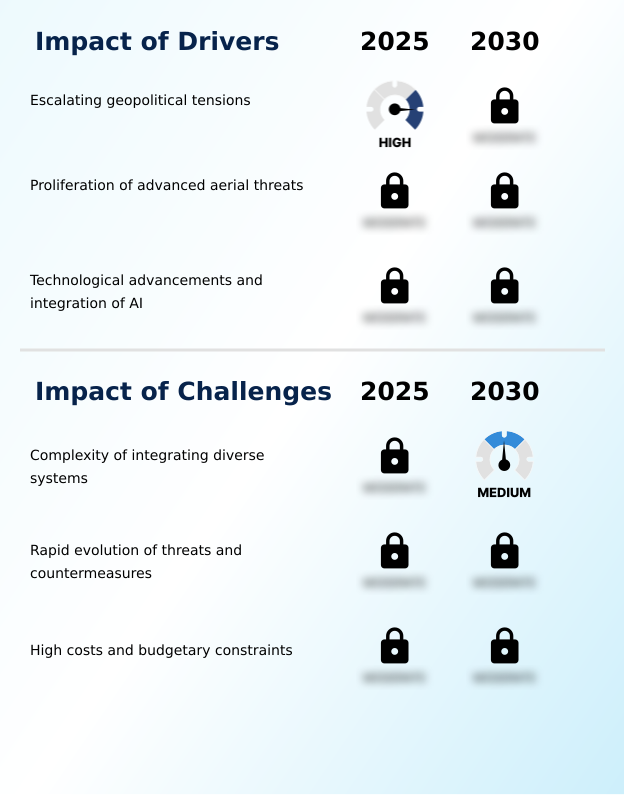
What are the key market drivers leading to the rise in the adoption of Next Generation Air Defense System Industry?

  • Escalating geopolitical tensions and the increasing frequency of regional instabilities serve as a primary catalyst for the expansion of the global next-generation air defense system market.

  • Escalating geopolitical tensions and a rapidly evolving threat landscape evolution are compelling nations to modernize their defense capabilities.
  • Increased defense budget allocation, with some countries boosting spending by over 15%, is accelerating the acquisition of integrated air and missile defense systems.
  • The proliferation of unmanned aerial vehicles and hypersonic weapons drives demand for advanced AESA radars and sophisticated sensor fusion techniques to ensure sovereign airspace security.
  • Technological advancements are pivotal; AI-enabled C4ISR systems process data up to 50% faster, enabling rapid decision-making.
  • This push is creating a highly competitive defense industrial base focused on delivering solutions for continental defense and border protection that can adapt to new challenges and support multi-domain operations.

What are the market trends shaping the Next Generation Air Defense System Industry?

  • A prominent market trend is the significantly increased focus on developing robust counter-UAS capabilities. This is driven by the need to address the transformed aerial threat landscape posed by unmanned platforms.

  • The market is increasingly shaped by the integration of machine learning to enhance threat detection algorithms and engagement optimization. This allows for a reaction time reduction of up to 40% in complex scenarios involving asymmetric threats. A key trend is the development of robust counter-UAS capabilities, where layered defense architecture combines electro-optical/infrared sensors and other systems to improve situational awareness.
  • Such integrated systems, which are crucial for urban air defense and critical infrastructure protection, have shown an 85% success rate against drone swarms. The emphasis on network-centric warfare and creating a resilient defense ecosystem through a common operating picture ensures that data from multi-function radars and other assets are used effectively, supporting multi-target engagement and enhancing overall operational readiness.

What challenges does the Next Generation Air Defense System Industry face during its growth?

  • The immense complexity of integrating diverse, multi-vendor air defense systems represents a significant challenge to achieving seamless interoperability and full operational effectiveness.

  • A primary challenge is ensuring system interoperability among diverse platforms, a complex task where the lack of open architecture standards can increase integration costs by over 40%. The rapid threat landscape evolution means that even new systems face obsolescence, demanding continuous R&D and straining defense budget allocation.
  • The high life cycle cost of ballistic missile defense and other advanced systems, with lengthy procurement cycles often exceeding a decade, creates significant financial barriers. Furthermore, protecting cyber-hardened systems from sophisticated attacks is a growing concern.
  • These factors challenge the defense industrial base to innovate within a framework of systems engineering methodology that balances capability with affordability, especially for countering low-observable targets and other advanced threats that require state-of-the-art target recognition systems and trajectory prediction software.

Exclusive Technavio Analysis on Customer Landscape

The next generation air defense system market forecasting report includes the adoption lifecycle of the market, covering from the innovator’s stage to the laggard’s stage. It focuses on adoption rates in different regions based on penetration. Furthermore, the next generation air defense system market report also includes key purchase criteria and drivers of price sensitivity to help companies evaluate and develop their market growth analysis strategies.
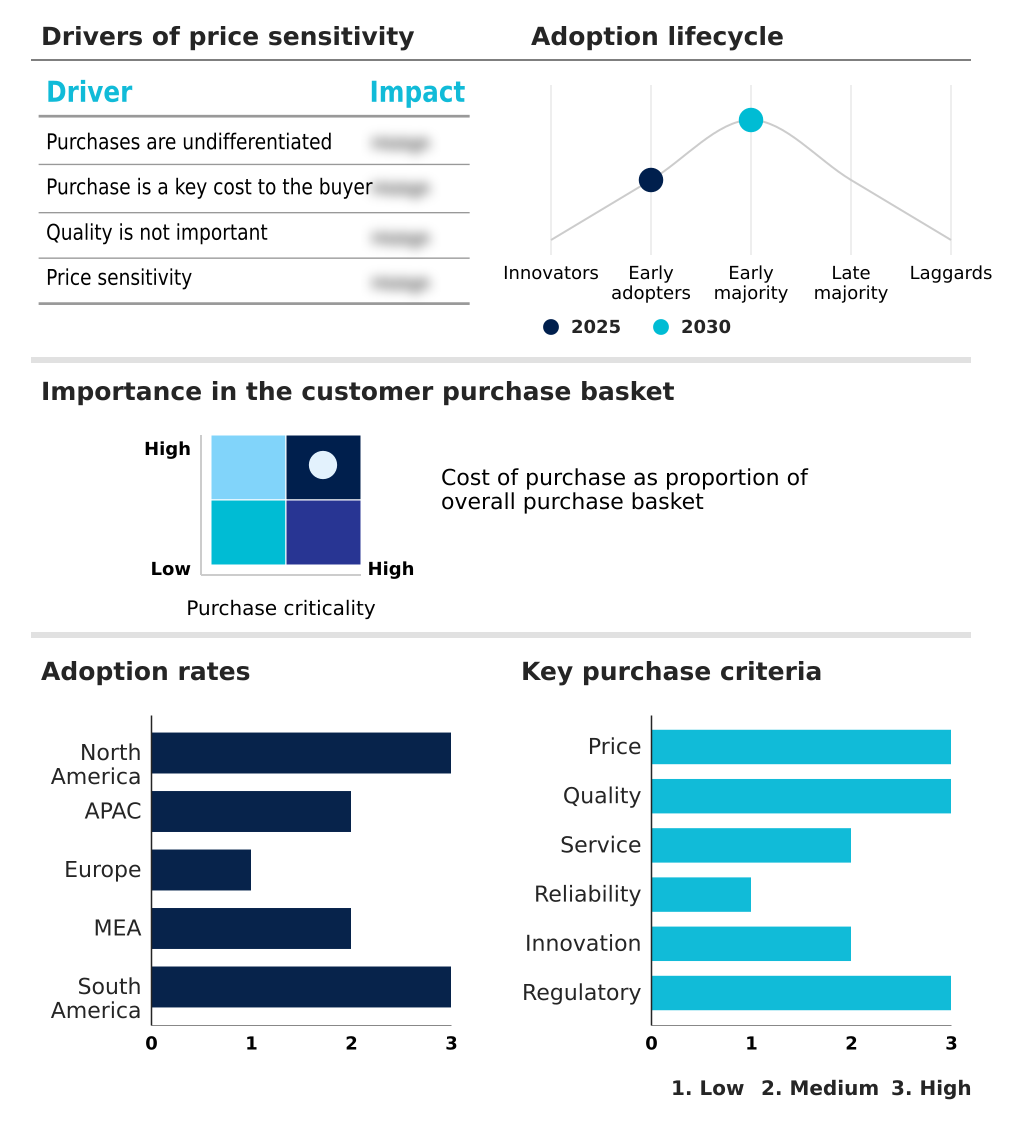
Customer Landscape of Next Generation Air Defense System Industry

Competitive Landscape

Companies are implementing various strategies, such as strategic alliances, next generation air defense system market forecast, partnerships, mergers and acquisitions, geographical expansion, and product/service launches, to enhance their presence in the industry.

ASELSAN AS - Provider of integrated electronic systems, combat platforms, and cyber intelligence solutions, delivering advanced defense and security capabilities for complex operational environments.

The industry research and growth report includes detailed analyses of the competitive landscape of the market and information about key companies, including:

  • ASELSAN AS
  • BAE Systems Plc
  • Diehl Stiftung and Co. KG
  • Elbit Systems Ltd.
  • Hanwha Group
  • HENSOLDT AG
  • Israel Aerospace Ltd.
  • Kongsberg Gruppen ASA
  • L3Harris Technologies Inc.
  • Leonardo S.p.A.
  • Lockheed Martin Corp.
  • MBDA
  • Mitsubishi Heavy Ltd.
  • Northrop Grumman Corp.
  • Rafael Advanced Defense Ltd.
  • Rheinmetall AG
  • RTX Corp.
  • Saab AB
  • Thales Group
  • The Boeing Co.

Qualitative and quantitative analysis of companies has been conducted to help clients understand the wider business environment as well as the strengths and weaknesses of key industry players. Data is qualitatively analyzed to categorize companies as pure play, category-focused, industry-focused, and diversified; it is quantitatively analyzed to categorize companies as dominant, leading, strong, tentative, and weak.

Recent Development and News in Next generation air defense system market

  • In February 2025, Lockheed Martin received a contract from the Missile Defense Agency for the development of THAAD 6.0, aimed at enhancing interceptor capabilities against new threats.
  • In March 2025, the Missile Defense Agency and the US Navy conducted a simulated interception of a hypersonic threat utilizing an upgraded Standard Missile 6 (SM-6), marking progress in counter-hypersonic defense.
  • In March 2025, Anduril and Zone 5 Technologies were awarded contracts to advance the development of palletized munitions platforms for integration into advanced fire control networks.
  • In May 2025, Raytheon delivered the inaugural AN/TPY-2 radar featuring a GaN array to the Missile Defense Agency, a system specifically engineered for tracking hypersonic weapons.

Dive into Technavio’s robust research methodology, blending expert interviews, extensive data synthesis, and validated models for unparalleled Next Generation Air Defense System Market insights. See full methodology.

Market Scope
Page number 309
Base year 2025
Historic period 2020-2024
Forecast period 2026-2030
Growth momentum & CAGR Accelerate at a CAGR of 5.4%
Market growth 2026-2030 USD 10618.4 million
Market structure Fragmented
YoY growth 2025-2026(%) 5.2%
Key countries US, Canada, Mexico, China, India, Japan, South Korea, Australia, Indonesia, Germany, UK, Russia, France, Italy, Spain, Saudi Arabia, UAE, South Africa, Israel, Turkey, Brazil, Argentina and Colombia
Competitive landscape Leading Companies, Market Positioning of Companies, Competitive Strategies, and Industry Risks

Request Free Sample

Research Analyst Overview

  • The next generation air defense system market is defined by a race to counter increasingly sophisticated threats, from stealthy low-observable targets and loitering munitions to hypersonic weapons. To address this, development has pivoted toward integrated solutions featuring advanced AESA radars powered by gallium nitride technology for superior airspace surveillance.
  • These systems utilize complex threat detection algorithms and trajectory prediction for precise engagement optimization. The arsenal combines advanced kinetic interceptors using hit-to-kill technology with emerging directed energy weapons for non-kinetic intercept roles. These are deployed via vertical launching systems and include sophisticated surface-to-air missiles and air-to-air missile platforms.
  • Central to this paradigm is a layered defense architecture that integrates everything from short-range air defense to ballistic missile defense. This network-centric warfare model relies on open architecture standards and robust C4ISR systems for effective sensor fusion. The goal is to achieve comprehensive integrated air and missile defense through joint all-domain command and control frameworks, enabling autonomous multi-domain operations.
  • The integration of command and control systems with electro-optical/infrared sensors and electronic warfare suites is critical for target recognition systems and delivering soft-kill options. AI-powered systems have shown a 30% reduction in threat classification time, a critical metric influencing boardroom budgeting for these cyber-hardened systems that are essential for countering unmanned aerial vehicles and enabling autonomous engagement.

What are the Key Data Covered in this Next Generation Air Defense System Market Research and Growth Report?

  • What is the expected growth of the Next Generation Air Defense System Market between 2026 and 2030?

    • USD 10.62 billion, at a CAGR of 5.4%

  • What segmentation does the market report cover?

    • The report is segmented by Component (Weapon systems, Radars and sensors, Fire control systems, and Others), Platform (Land based, Naval, and Airborne), Type (Long range, Medium range, and Short range) and Geography (North America, APAC, Europe, Middle East and Africa, South America)

  • Which regions are analyzed in the report?

    • North America, APAC, Europe, Middle East and Africa and South America

  • What are the key growth drivers and market challenges?

    • Escalating geopolitical tensions, Complexity of integrating diverse systems

  • Who are the major players in the Next Generation Air Defense System Market?

    • ASELSAN AS, BAE Systems Plc, Diehl Stiftung and Co. KG, Elbit Systems Ltd., Hanwha Group, HENSOLDT AG, Israel Aerospace Ltd., Kongsberg Gruppen ASA, L3Harris Technologies Inc., Leonardo S.p.A., Lockheed Martin Corp., MBDA, Mitsubishi Heavy Ltd., Northrop Grumman Corp., Rafael Advanced Defense Ltd., Rheinmetall AG, RTX Corp., Saab AB, Thales Group and The Boeing Co.

Market Research Insights

  • Market dynamics are increasingly shaped by the need for a resilient defense ecosystem capable of adapting to a rapidly evolving threat landscape evolution. The focus on system interoperability and achieving a common operating picture has driven the adoption of open architectures, which has been shown to reduce system upgrade costs by over 25%.
  • Escalating geopolitical tensions are accelerating procurement cycles and prompting higher defense budget allocation toward technologies that enhance situational awareness and sovereign airspace security. AI-driven platforms are demonstrating a significant impact on operational readiness, with some systems achieving a 40% reaction time reduction in threat engagement scenarios.
  • This technological arms race pressures the defense industrial base to deliver solutions for critical infrastructure protection that are both highly capable and sustainable over their life cycle cost.

We can help! Our analysts can customize this next generation air defense system market research report to meet your requirements.

Get in touch

1. Executive Summary

1.1 Market overview

Executive Summary - Chart on Market Overview
Executive Summary - Data Table on Market Overview
Executive Summary - Chart on Global Market Characteristics
Executive Summary - Chart on Market by Geography
Executive Summary - Chart on Market Segmentation by Component
Executive Summary - Chart on Market Segmentation by Platform
Executive Summary - Chart on Market Segmentation by Type
Executive Summary - Chart on Incremental Growth
Executive Summary - Data Table on Incremental Growth
Executive Summary - Chart on Company Market Positioning

2. Technavio Analysis

2.1 Analysis of price sensitivity, lifecycle, customer purchase basket, adoption rates, and purchase criteria

2.2 Criticality of inputs and Factors of differentiation

Chart on Overview on criticality of inputs and factors of differentiation

2.3 Factors of disruption

Chart on Overview on factors of disruption

2.4 Impact of drivers and challenges

Chart on Impact of drivers and challenges in 2025 and 2030

3. Market Landscape

3.1 Market ecosystem

Chart on Parent Market
Data Table on - Parent Market

3.2 Market characteristics

Chart on Market characteristics analysis

3.3 Value chain analysis

Chart on Value chain analysis

4. Market Sizing

4.1 Market definition

Data Table on Offerings of companies included in the market definition

4.2 Market segment analysis

Market segments

4.3 Market size 2025

4.4 Market outlook: Forecast for 2025-2030

Chart on Global - Market size and forecast 2025-2030 ($ million)
Data Table on Global - Market size and forecast 2025-2030 ($ million)
Chart on Global Market: Year-over-year growth 2025-2030 (%)
Data Table on Global Market: Year-over-year growth 2025-2030 (%)

5. Historic Market Size

5.1 Global Next Generation Air Defense System Market 2020 - 2024

Historic Market Size - Data Table on Global Next Generation Air Defense System Market 2020 - 2024 ($ million)

5.2 Component segment analysis 2020 - 2024

Historic Market Size - Component Segment 2020 - 2024 ($ million)

5.3 Platform segment analysis 2020 - 2024

Historic Market Size - Platform Segment 2020 - 2024 ($ million)

5.4 Type segment analysis 2020 - 2024

Historic Market Size - Type Segment 2020 - 2024 ($ million)

5.5 Geography segment analysis 2020 - 2024

Historic Market Size - Geography Segment 2020 - 2024 ($ million)

5.6 Country segment analysis 2020 - 2024

Historic Market Size - Country Segment 2020 - 2024 ($ million)

6. Qualitative Analysis

6.1 The AI impact on global next generation air defense system market

7. Five Forces Analysis

7.1 Five forces summary

Five forces analysis - Comparison between 2025 and 2030

7.2 Bargaining power of buyers

Bargaining power of buyers - Impact of key factors 2025 and 2030

7.3 Bargaining power of suppliers

Bargaining power of suppliers - Impact of key factors in 2025 and 2030

7.4 Threat of new entrants

Threat of new entrants - Impact of key factors in 2025 and 2030

7.5 Threat of substitutes

Threat of substitutes - Impact of key factors in 2025 and 2030

7.6 Threat of rivalry

Threat of rivalry - Impact of key factors in 2025 and 2030

7.7 Market condition

Chart on Market condition - Five forces 2025 and 2030

8. Market Segmentation by Component

8.1 Market segments

Chart on Component - Market share 2025-2030 (%)
Data Table on Component - Market share 2025-2030 (%)

8.2 Comparison by Component

Chart on Comparison by Component
Data Table on Comparison by Component

8.3 Weapon systems - Market size and forecast 2025-2030

Chart on Weapon systems - Market size and forecast 2025-2030 ($ million)
Data Table on Weapon systems - Market size and forecast 2025-2030 ($ million)
Chart on Weapon systems - Year-over-year growth 2025-2030 (%)
Data Table on Weapon systems - Year-over-year growth 2025-2030 (%)

8.4 Radars and sensors - Market size and forecast 2025-2030

Chart on Radars and sensors - Market size and forecast 2025-2030 ($ million)
Data Table on Radars and sensors - Market size and forecast 2025-2030 ($ million)
Chart on Radars and sensors - Year-over-year growth 2025-2030 (%)
Data Table on Radars and sensors - Year-over-year growth 2025-2030 (%)

8.5 Fire control systems - Market size and forecast 2025-2030

Chart on Fire control systems - Market size and forecast 2025-2030 ($ million)
Data Table on Fire control systems - Market size and forecast 2025-2030 ($ million)
Chart on Fire control systems - Year-over-year growth 2025-2030 (%)
Data Table on Fire control systems - Year-over-year growth 2025-2030 (%)

8.6 Others - Market size and forecast 2025-2030

Chart on Others - Market size and forecast 2025-2030 ($ million)
Data Table on Others - Market size and forecast 2025-2030 ($ million)
Chart on Others - Year-over-year growth 2025-2030 (%)
Data Table on Others - Year-over-year growth 2025-2030 (%)

8.7 Market opportunity by Component

Market opportunity by Component ($ million)
Data Table on Market opportunity by Component ($ million)

9. Market Segmentation by Platform

9.1 Market segments

Chart on Platform - Market share 2025-2030 (%)
Data Table on Platform - Market share 2025-2030 (%)

9.2 Comparison by Platform

Chart on Comparison by Platform
Data Table on Comparison by Platform

9.3 Land based - Market size and forecast 2025-2030

Chart on Land based - Market size and forecast 2025-2030 ($ million)
Data Table on Land based - Market size and forecast 2025-2030 ($ million)
Chart on Land based - Year-over-year growth 2025-2030 (%)
Data Table on Land based - Year-over-year growth 2025-2030 (%)

9.4 Naval - Market size and forecast 2025-2030

Chart on Naval - Market size and forecast 2025-2030 ($ million)
Data Table on Naval - Market size and forecast 2025-2030 ($ million)
Chart on Naval - Year-over-year growth 2025-2030 (%)
Data Table on Naval - Year-over-year growth 2025-2030 (%)

9.5 Airborne - Market size and forecast 2025-2030

Chart on Airborne - Market size and forecast 2025-2030 ($ million)
Data Table on Airborne - Market size and forecast 2025-2030 ($ million)
Chart on Airborne - Year-over-year growth 2025-2030 (%)
Data Table on Airborne - Year-over-year growth 2025-2030 (%)

9.6 Market opportunity by Platform

Market opportunity by Platform ($ million)
Data Table on Market opportunity by Platform ($ million)

10. Market Segmentation by Type

10.1 Market segments

Chart on Type - Market share 2025-2030 (%)
Data Table on Type - Market share 2025-2030 (%)

10.2 Comparison by Type

Chart on Comparison by Type
Data Table on Comparison by Type

10.3 Long range - Market size and forecast 2025-2030

Chart on Long range - Market size and forecast 2025-2030 ($ million)
Data Table on Long range - Market size and forecast 2025-2030 ($ million)
Chart on Long range - Year-over-year growth 2025-2030 (%)
Data Table on Long range - Year-over-year growth 2025-2030 (%)

10.4 Medium range - Market size and forecast 2025-2030

Chart on Medium range - Market size and forecast 2025-2030 ($ million)
Data Table on Medium range - Market size and forecast 2025-2030 ($ million)
Chart on Medium range - Year-over-year growth 2025-2030 (%)
Data Table on Medium range - Year-over-year growth 2025-2030 (%)

10.5 Short range - Market size and forecast 2025-2030

Chart on Short range - Market size and forecast 2025-2030 ($ million)
Data Table on Short range - Market size and forecast 2025-2030 ($ million)
Chart on Short range - Year-over-year growth 2025-2030 (%)
Data Table on Short range - Year-over-year growth 2025-2030 (%)

10.6 Market opportunity by Type

Market opportunity by Type ($ million)
Data Table on Market opportunity by Type ($ million)

11. Customer Landscape

11.1 Customer landscape overview

Analysis of price sensitivity, lifecycle, customer purchase basket, adoption rates, and purchase criteria

12. Geographic Landscape

12.1 Geographic segmentation

Chart on Market share by geography 2025-2030 (%)
Data Table on Market share by geography 2025-2030 (%)

12.2 Geographic comparison

Chart on Geographic comparison
Data Table on Geographic comparison

12.3 North America - Market size and forecast 2025-2030

Chart on North America - Market size and forecast 2025-2030 ($ million)
Data Table on North America - Market size and forecast 2025-2030 ($ million)
Chart on North America - Year-over-year growth 2025-2030 (%)
Data Table on North America - Year-over-year growth 2025-2030 (%)
Chart on Regional Comparison - North America
Data Table on Regional Comparison - North America

12.3.1 US - Market size and forecast 2025-2030

Chart on US - Market size and forecast 2025-2030 ($ million)
Data Table on US - Market size and forecast 2025-2030 ($ million)
Chart on US - Year-over-year growth 2025-2030 (%)
Data Table on US - Year-over-year growth 2025-2030 (%)

12.3.2 Canada - Market size and forecast 2025-2030

Chart on Canada - Market size and forecast 2025-2030 ($ million)
Data Table on Canada - Market size and forecast 2025-2030 ($ million)
Chart on Canada - Year-over-year growth 2025-2030 (%)
Data Table on Canada - Year-over-year growth 2025-2030 (%)

12.3.3 Mexico - Market size and forecast 2025-2030

Chart on Mexico - Market size and forecast 2025-2030 ($ million)
Data Table on Mexico - Market size and forecast 2025-2030 ($ million)
Chart on Mexico - Year-over-year growth 2025-2030 (%)
Data Table on Mexico - Year-over-year growth 2025-2030 (%)

12.4 APAC - Market size and forecast 2025-2030

Chart on APAC - Market size and forecast 2025-2030 ($ million)
Data Table on APAC - Market size and forecast 2025-2030 ($ million)
Chart on APAC - Year-over-year growth 2025-2030 (%)
Data Table on APAC - Year-over-year growth 2025-2030 (%)
Chart on Regional Comparison - APAC
Data Table on Regional Comparison - APAC

12.4.1 China - Market size and forecast 2025-2030

Chart on China - Market size and forecast 2025-2030 ($ million)
Data Table on China - Market size and forecast 2025-2030 ($ million)
Chart on China - Year-over-year growth 2025-2030 (%)
Data Table on China - Year-over-year growth 2025-2030 (%)

12.4.2 India - Market size and forecast 2025-2030

Chart on India - Market size and forecast 2025-2030 ($ million)
Data Table on India - Market size and forecast 2025-2030 ($ million)
Chart on India - Year-over-year growth 2025-2030 (%)
Data Table on India - Year-over-year growth 2025-2030 (%)

12.4.3 Japan - Market size and forecast 2025-2030

Chart on Japan - Market size and forecast 2025-2030 ($ million)
Data Table on Japan - Market size and forecast 2025-2030 ($ million)
Chart on Japan - Year-over-year growth 2025-2030 (%)
Data Table on Japan - Year-over-year growth 2025-2030 (%)

12.4.4 South Korea - Market size and forecast 2025-2030

Chart on South Korea - Market size and forecast 2025-2030 ($ million)
Data Table on South Korea - Market size and forecast 2025-2030 ($ million)
Chart on South Korea - Year-over-year growth 2025-2030 (%)
Data Table on South Korea - Year-over-year growth 2025-2030 (%)

12.4.5 Australia - Market size and forecast 2025-2030

Chart on Australia - Market size and forecast 2025-2030 ($ million)
Data Table on Australia - Market size and forecast 2025-2030 ($ million)
Chart on Australia - Year-over-year growth 2025-2030 (%)
Data Table on Australia - Year-over-year growth 2025-2030 (%)

12.4.6 Indonesia - Market size and forecast 2025-2030

Chart on Indonesia - Market size and forecast 2025-2030 ($ million)
Data Table on Indonesia - Market size and forecast 2025-2030 ($ million)
Chart on Indonesia - Year-over-year growth 2025-2030 (%)
Data Table on Indonesia - Year-over-year growth 2025-2030 (%)

12.5 Europe - Market size and forecast 2025-2030

Chart on Europe - Market size and forecast 2025-2030 ($ million)
Data Table on Europe - Market size and forecast 2025-2030 ($ million)
Chart on Europe - Year-over-year growth 2025-2030 (%)
Data Table on Europe - Year-over-year growth 2025-2030 (%)
Chart on Regional Comparison - Europe
Data Table on Regional Comparison - Europe

12.5.1 Germany - Market size and forecast 2025-2030

Chart on Germany - Market size and forecast 2025-2030 ($ million)
Data Table on Germany - Market size and forecast 2025-2030 ($ million)
Chart on Germany - Year-over-year growth 2025-2030 (%)
Data Table on Germany - Year-over-year growth 2025-2030 (%)

12.5.2 UK - Market size and forecast 2025-2030

Chart on UK - Market size and forecast 2025-2030 ($ million)
Data Table on UK - Market size and forecast 2025-2030 ($ million)
Chart on UK - Year-over-year growth 2025-2030 (%)
Data Table on UK - Year-over-year growth 2025-2030 (%)

12.5.3 Russia - Market size and forecast 2025-2030

Chart on Russia - Market size and forecast 2025-2030 ($ million)
Data Table on Russia - Market size and forecast 2025-2030 ($ million)
Chart on Russia - Year-over-year growth 2025-2030 (%)
Data Table on Russia - Year-over-year growth 2025-2030 (%)

12.5.4 France - Market size and forecast 2025-2030

Chart on France - Market size and forecast 2025-2030 ($ million)
Data Table on France - Market size and forecast 2025-2030 ($ million)
Chart on France - Year-over-year growth 2025-2030 (%)
Data Table on France - Year-over-year growth 2025-2030 (%)

12.5.5 Italy - Market size and forecast 2025-2030

Chart on Italy - Market size and forecast 2025-2030 ($ million)
Data Table on Italy - Market size and forecast 2025-2030 ($ million)
Chart on Italy - Year-over-year growth 2025-2030 (%)
Data Table on Italy - Year-over-year growth 2025-2030 (%)

12.5.6 Spain - Market size and forecast 2025-2030

Chart on Spain - Market size and forecast 2025-2030 ($ million)
Data Table on Spain - Market size and forecast 2025-2030 ($ million)
Chart on Spain - Year-over-year growth 2025-2030 (%)
Data Table on Spain - Year-over-year growth 2025-2030 (%)

12.6 Middle East and Africa - Market size and forecast 2025-2030

Chart on Middle East and Africa - Market size and forecast 2025-2030 ($ million)
Data Table on Middle East and Africa - Market size and forecast 2025-2030 ($ million)
Chart on Middle East and Africa - Year-over-year growth 2025-2030 (%)
Data Table on Middle East and Africa - Year-over-year growth 2025-2030 (%)
Chart on Regional Comparison - Middle East and Africa
Data Table on Regional Comparison - Middle East and Africa

12.6.1 Saudi Arabia - Market size and forecast 2025-2030

Chart on Saudi Arabia - Market size and forecast 2025-2030 ($ million)
Data Table on Saudi Arabia - Market size and forecast 2025-2030 ($ million)
Chart on Saudi Arabia - Year-over-year growth 2025-2030 (%)
Data Table on Saudi Arabia - Year-over-year growth 2025-2030 (%)

12.6.2 UAE - Market size and forecast 2025-2030

Chart on UAE - Market size and forecast 2025-2030 ($ million)
Data Table on UAE - Market size and forecast 2025-2030 ($ million)
Chart on UAE - Year-over-year growth 2025-2030 (%)
Data Table on UAE - Year-over-year growth 2025-2030 (%)

12.6.3 South Africa - Market size and forecast 2025-2030

Chart on South Africa - Market size and forecast 2025-2030 ($ million)
Data Table on South Africa - Market size and forecast 2025-2030 ($ million)
Chart on South Africa - Year-over-year growth 2025-2030 (%)
Data Table on South Africa - Year-over-year growth 2025-2030 (%)

12.6.4 Israel - Market size and forecast 2025-2030

Chart on Israel - Market size and forecast 2025-2030 ($ million)
Data Table on Israel - Market size and forecast 2025-2030 ($ million)
Chart on Israel - Year-over-year growth 2025-2030 (%)
Data Table on Israel - Year-over-year growth 2025-2030 (%)

12.6.5 Turkey - Market size and forecast 2025-2030

Chart on Turkey - Market size and forecast 2025-2030 ($ million)
Data Table on Turkey - Market size and forecast 2025-2030 ($ million)
Chart on Turkey - Year-over-year growth 2025-2030 (%)
Data Table on Turkey - Year-over-year growth 2025-2030 (%)

12.7 South America - Market size and forecast 2025-2030

Chart on South America - Market size and forecast 2025-2030 ($ million)
Data Table on South America - Market size and forecast 2025-2030 ($ million)
Chart on South America - Year-over-year growth 2025-2030 (%)
Data Table on South America - Year-over-year growth 2025-2030 (%)
Chart on Regional Comparison - South America
Data Table on Regional Comparison - South America

12.7.1 Brazil - Market size and forecast 2025-2030

Chart on Brazil - Market size and forecast 2025-2030 ($ million)
Data Table on Brazil - Market size and forecast 2025-2030 ($ million)
Chart on Brazil - Year-over-year growth 2025-2030 (%)
Data Table on Brazil - Year-over-year growth 2025-2030 (%)

12.7.2 Argentina - Market size and forecast 2025-2030

Chart on Argentina - Market size and forecast 2025-2030 ($ million)
Data Table on Argentina - Market size and forecast 2025-2030 ($ million)
Chart on Argentina - Year-over-year growth 2025-2030 (%)
Data Table on Argentina - Year-over-year growth 2025-2030 (%)

12.7.3 Colombia - Market size and forecast 2025-2030

Chart on Colombia - Market size and forecast 2025-2030 ($ million)
Data Table on Colombia - Market size and forecast 2025-2030 ($ million)
Chart on Colombia - Year-over-year growth 2025-2030 (%)
Data Table on Colombia - Year-over-year growth 2025-2030 (%)

12.8 Market opportunity by geography

Market opportunity by geography ($ million)
Data Tables on Market opportunity by geography ($ million)

13. Drivers, Challenges, and Opportunity

13.1 Market drivers

Escalating geopolitical tensions
Proliferation of advanced aerial threats
Technological advancements and integration of AI

13.2 Market challenges

Complexity of integrating diverse systems
Rapid evolution of threats and countermeasures
High costs and budgetary constraints

13.3 Impact of drivers and challenges

Impact of drivers and challenges in 2025 and 2030

13.4 Market opportunities

Increased focus on counter UAS capabilities
Integration of machine learning in air defense
Development of layered and networked defense architectures

14. Competitive Landscape

14.1 Overview

14.2

Overview on criticality of inputs and factors of differentiation

14.3 Landscape disruption

Overview on factors of disruption

14.4 Industry risks

Impact of key risks on business

15. Competitive Analysis

15.1 Companies profiled

Companies covered

15.2 Company ranking index

15.3 Market positioning of companies

Matrix on companies position and classification

15.4 BAE Systems Plc

BAE Systems Plc - Overview
BAE Systems Plc - Business segments
BAE Systems Plc - Key news
BAE Systems Plc - Key offerings
BAE Systems Plc - Segment focus
SWOT

15.5 Elbit Systems Ltd.

Elbit Systems Ltd. - Overview
Elbit Systems Ltd. - Product / Service
Elbit Systems Ltd. - Key news
Elbit Systems Ltd. - Key offerings
SWOT

15.6 Hanwha Group

Hanwha Group - Overview
Hanwha Group - Product / Service
Hanwha Group - Key news
Hanwha Group - Key offerings
SWOT

15.7 Israel Aerospace Ltd.

Israel Aerospace Ltd. - Overview
Israel Aerospace Ltd. - Product / Service
Israel Aerospace Ltd. - Key news
Israel Aerospace Ltd. - Key offerings
SWOT

15.8 Kongsberg Gruppen ASA

Kongsberg Gruppen ASA - Overview
Kongsberg Gruppen ASA - Business segments
Kongsberg Gruppen ASA - Key news
Kongsberg Gruppen ASA - Key offerings
Kongsberg Gruppen ASA - Segment focus
SWOT

15.9 L3Harris Technologies Inc.

L3Harris Technologies Inc. - Overview
L3Harris Technologies Inc. - Business segments
L3Harris Technologies Inc. - Key news
L3Harris Technologies Inc. - Key offerings
L3Harris Technologies Inc. - Segment focus
SWOT

15.10 Leonardo S.p.A.

Leonardo S.p.A. - Overview
Leonardo S.p.A. - Business segments
Leonardo S.p.A. - Key offerings
Leonardo S.p.A. - Segment focus
SWOT

15.11 Lockheed Martin Corp.

Lockheed Martin Corp. - Overview
Lockheed Martin Corp. - Business segments
Lockheed Martin Corp. - Key news
Lockheed Martin Corp. - Key offerings
Lockheed Martin Corp. - Segment focus
SWOT

15.12 MBDA

MBDA - Overview
MBDA - Product / Service
MBDA - Key offerings
SWOT

15.13 Northrop Grumman Corp.

Northrop Grumman Corp. - Overview
Northrop Grumman Corp. - Business segments
Northrop Grumman Corp. - Key news
Northrop Grumman Corp. - Key offerings
Northrop Grumman Corp. - Segment focus
SWOT

15.14 Rheinmetall AG

Rheinmetall AG - Overview
Rheinmetall AG - Business segments
Rheinmetall AG - Key offerings
Rheinmetall AG - Segment focus
SWOT

15.15 RTX Corp.

RTX Corp. - Overview
RTX Corp. - Business segments
RTX Corp. - Key news
RTX Corp. - Key offerings
RTX Corp. - Segment focus
SWOT

15.16 Saab AB

Saab AB - Overview
Saab AB - Business segments
Saab AB - Key news
Saab AB - Key offerings
Saab AB - Segment focus
SWOT

15.17 Thales Group

Thales Group - Overview
Thales Group - Business segments
Thales Group - Key news
Thales Group - Key offerings
Thales Group - Segment focus
SWOT

15.18 The Boeing Co.

The Boeing Co. - Overview
The Boeing Co. - Business segments
The Boeing Co. - Key news
The Boeing Co. - Key offerings
The Boeing Co. - Segment focus
SWOT

16. Appendix

16.1 Scope of the report

Market definition
Objectives
Notes and caveats

16.2 Inclusions and exclusions checklist

Inclusions checklist
Exclusions checklist

16.3 Currency conversion rates for US$

16.4 Research methodology

16.5 Data procurement

Information sources

16.6 Data validation

16.7 Validation techniques employed for market sizing

16.8 Data synthesis

16.9 360 degree market analysis

16.10 List of abbreviations

Research Methodology

Technavio presents a detailed picture of the market by way of study, synthesis, and summation of data from multiple sources. The analysts have presented the various facets of the market with a particular focus on identifying the key industry influencers. The data thus presented is comprehensive, reliable, and the result of extensive research, both primary and secondary.

INFORMATION SOURCES

Primary sources

  • Manufacturers and suppliers
  • Channel partners
  • Industry experts
  • Strategic decision makers

Secondary sources

  • Industry journals and periodicals
  • Government data
  • Financial reports of key industry players
  • Historical data
  • Press releases

DATA ANALYSIS

Data Synthesis

  • Collation of data
  • Estimation of key figures
  • Analysis of derived insights

Data Validation

  • Triangulation with data models
  • Reference against proprietary databases
  • Corroboration with industry experts

REPORT WRITING

Qualitative

  • Market drivers
  • Market challenges
  • Market trends
  • Five forces analysis

Quantitative

  • Market size and forecast
  • Market segmentation
  • Geographical insights
  • Competitive landscape

Interested in this report?

Get your sample now to see our research methodology and insights!

Download Now

Frequently Asked Questions

Next Generation Air Defense System market growth will increase by USD 10618.4 million during 2026-2030 .

The Next Generation Air Defense System market is expected to grow at a CAGR of 5.4% during 2026-2030 .

Next Generation Air Defense System market is segmented by Component (Weapon systems, Radars and sensors, Fire control systems, Others) Platform (Land based, Naval, Airborne) Type (Long range, Medium range, Short range)

ASELSAN AS, BAE Systems Plc, Diehl Stiftung and Co. KG, Elbit Systems Ltd., Hanwha Group, HENSOLDT AG, Israel Aerospace Ltd., Kongsberg Gruppen ASA, L3Harris Technologies Inc., Leonardo S.p.A., Lockheed Martin Corp., MBDA, Mitsubishi Heavy Ltd., Northrop Grumman Corp., Rafael Advanced Defense Ltd., Rheinmetall AG, RTX Corp., Saab AB, Thales Group, The Boeing Co. are a few of the key vendors in the Next Generation Air Defense System market.

North America will register the highest growth rate of 37.1% among the other regions. Therefore, the Next Generation Air Defense System market in North America is expected to garner significant business opportunities for the vendors during the forecast period.

US, Canada, Mexico, China, India, Japan, South Korea, Australia, Indonesia, Germany, UK, Russia, France, Italy, Spain, Saudi Arabia, UAE, South Africa, Israel, Turkey, Brazil, Argentina, Colombia

  • Escalating geopolitical tensions is the driving factor this market.

The Next Generation Air Defense System market vendors should focus on grabbing business opportunities from the Component segment as it accounted for the largest market share in the base year.
