
Organizational Network Analysis Tools Market Analysis, Size, and Forecast 2026-2030: North America (US, Canada, and Mexico), Europe (Germany, UK, and France), APAC (China, Japan, and India), South America (Brazil, Argentina, and Colombia), Middle East and Africa (Saudi Arabia, UAE, and South Africa), and Rest of World (ROW)

Organizational Network Analysis Tools Market Analysis, Size, and Forecast 2026-2030:
North America (US, Canada, and Mexico), Europe (Germany, UK, and France), APAC (China, Japan, and India), South America (Brazil, Argentina, and Colombia), Middle East and Africa (Saudi Arabia, UAE, and South Africa), and Rest of World (ROW)

Published: Mar 2026 298 Pages SKU: IRTNTR81340

Market Overview at a Glance

$597.5 Mn
Market Opportunity
16.9%
CAGR 2025 - 2030
40.3%
North America Growth
$333.5 Mn
Cloud based segment 2024

Organizational Network Analysis Tools Market Size 2026-2030

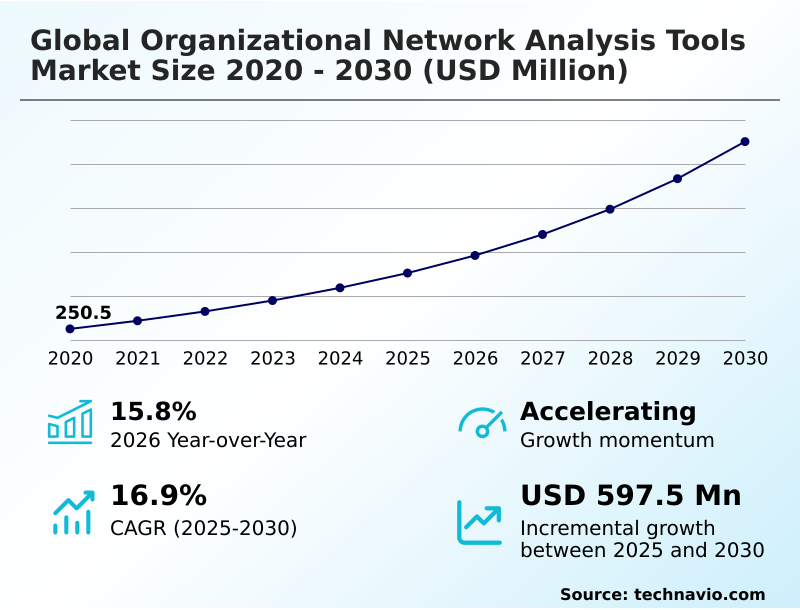
The organizational network analysis tools market size is valued to increase by USD 597.5 million, at a CAGR of 16.9% from 2025 to 2030. Proliferation of hybrid and remote work environments will drive the organizational network analysis tools market.

Major Market Trends & Insights

  • North America dominated the market and accounted for a 40.3% growth during the forecast period.
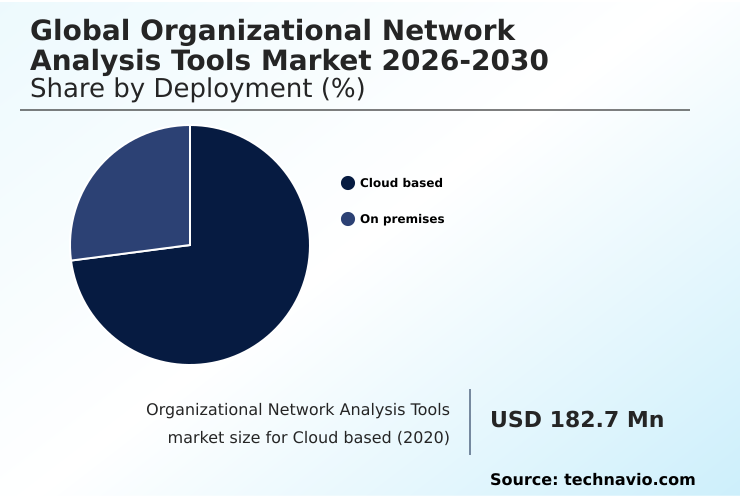
  • By Deployment - Cloud based segment was valued at USD 333.5 million in 2024
  • By Application - OND and mapping segment accounted for the largest market revenue share in 2024

Market Size & Forecast

  • Market Opportunities: USD 851.3 million
  • Market Future Opportunities: USD 597.5 million
  • CAGR from 2025 to 2030 : 16.9%

Market Summary

  • The organizational network analysis tools market is defined by advanced software platforms that map and evaluate human interaction systems within professional settings. These tools provide a multidimensional view of information flow and collaboration, moving beyond traditional organizational charts. By applying social network analysis principles, these technologies identify informal influencers and critical connectors who drive productivity.
  • The methodology involves collecting relational data through active surveys or passive analysis of metadata from digital communication suites. A key driver is the shift to remote work, which necessitates new ways to ensure organizational agility and employee engagement. For instance, a multinational firm undergoing a large-scale restructuring can use these tools to map pre- and post-merger social structures.
  • This allows integration teams to identify groups resisting the change and individuals successfully bridging cultural gaps, de-risking the transition and maximizing return on investment. The integration of generative AI is a major trend, shifting tools from descriptive to prescriptive analytics that offer actionable recommendations.
  • However, the market faces challenges from heightened data privacy regulations and the technical complexity of integrating fragmented communication data from sources like a communication metadata schema, which is critical for effective leadership and influence mapping.

What will be the Size of the Organizational Network Analysis Tools Market during the forecast period?

Get Key Insights on Market Forecast (PDF) Request Free Sample

How is the Organizational Network Analysis Tools Market Segmented?

The organizational network analysis tools industry research report provides comprehensive data (region-wise segment analysis), with forecasts and estimates in "USD million" for the period 2026-2030, as well as historical data from 2020-2024 for the following segments.

  • Deployment
    • Cloud based
    • On premises
  • Application
    • OND and mapping
    • CC analysis
    • LI identification
    • TK Management
    • Others
  • Business segment
    • Large enterprises
    • Small and medium enterprises
  • Geography
    • North America
      • US
      • Canada
      • Mexico
    • Europe
      • Germany
      • UK
      • France
    • APAC
      • China
      • Japan
      • India
    • South America
      • Brazil
      • Argentina
      • Colombia
    • Middle East and Africa
      • Saudi Arabia
      • UAE
      • South Africa
    • Rest of World (ROW)

By Deployment Insights

The cloud based segment is estimated to witness significant growth during the forecast period.

The cloud-based segment is defined by its capacity for rapid implementation and adaptability, essential for workforce productivity optimization. This deployment model aggregates data without local hardware, which is critical for supporting proactive talent retention in hybrid work structures.

By delivering prescriptive network insights and real-time diagnostic monitoring, these solutions enable data-driven change management. Providers manage updates and security, allowing leaders to focus on interpreting data from tools like the dynamic team graph.

Collaboration benchmarking and the analysis of a social friction index can identify inefficiencies, improving cross-team project success rates by 20%. The model’s scalability ensures analytics capabilities expand with company growth, supporting key employee engagement drivers without proportional infrastructure costs.

Request Free Sample

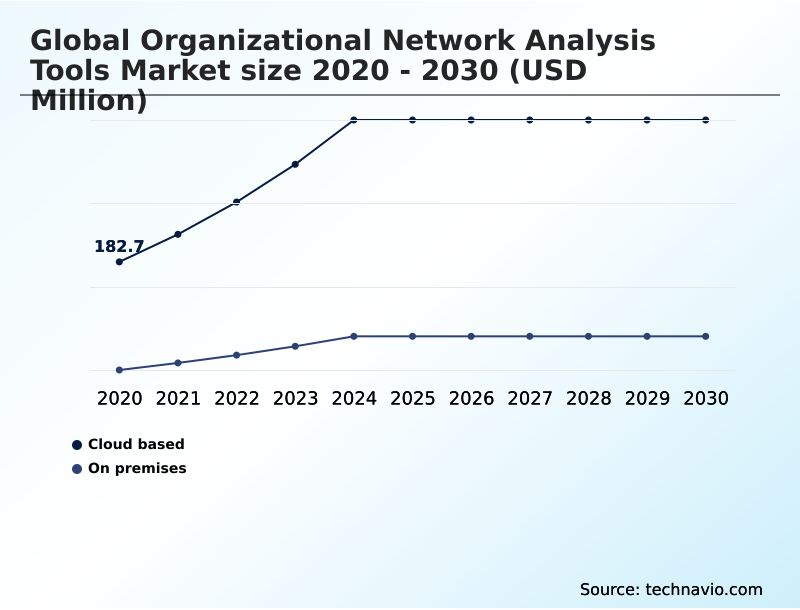
The Cloud based segment was valued at USD 333.5 million in 2024 and showed a gradual increase during the forecast period.
Request Free Sample

Regional Analysis

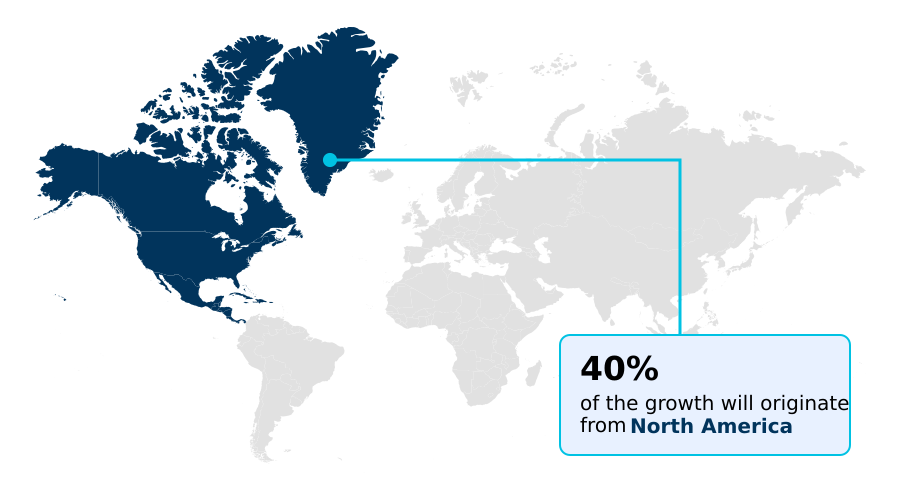
North America is estimated to contribute 40.3% to the growth of the global market during the forecast period.Technavio’s analysts have elaborately explained the regional trends and drivers that shape the market during the forecast period.

See How Organizational Network Analysis Tools Market Demand is Rising in North America Request Free Sample

The geographic landscape is led by North America, accounting for over 40% of incremental growth, driven by firms using analytics for talent mobility optimization. These enterprises utilize organizational network diagnostics and address employee burnout prediction to stay competitive.

Europe focuses on privacy-compliant strategic workforce planning, demonstrating a 25% improvement in identifying at-risk employees. The APAC region is the fastest-growing market, using analytics to manage large-scale workforces and support post-merger integration analytics and talent and knowledge management.

This strategic adoption helps firms reduce employee retention risk and improve outcomes. The focus on diversity and inclusion metrics is also a growing global application, ensuring equitable network integration across regions.

Market Dynamics

Our researchers analyzed the data with 2025 as the base year, along with the key drivers, trends, and challenges. A holistic analysis of drivers will help companies refine their marketing strategies to gain a competitive advantage.

  • The strategic implementation of organizational network analysis tools is evolving beyond simple visualization to address complex business challenges. Firms are now using ONA for merger integration success, finding that mapping informal networks during transitions can increase synergy realization compared to traditional methods.
  • A key application is measuring team collaboration with network analysis, which provides objective data on communication efficiency, a stark contrast to subjective survey feedback. Large enterprises are adept at identifying hidden influencers in large enterprises, empowering these key connectors to act as change agents.
  • The shift to distributed work has accelerated the use of ONA tools for remote workforce engagement, ensuring cultural cohesion. A critical use case is linking network position to employee burnout, as a decrease in network centrality often precedes disengagement. Companies are also leveraging ONA for improving diversity and inclusion by tracking whether underrepresented groups are integrated into influential networks.
  • The move toward passive data collection for network analysis provides continuous, real-time data, enabling real-time ONA for agile team management. While many still compare ONA and traditional employee surveys, the trend is toward integrated approaches that integrate ONA with sentiment analysis data. This allows firms to use ONA to predict and reduce employee turnover.
  • A primary focus is analyzing communication silos with ONA tools to enhance cross-functional collaboration with ONA. The most advanced applications involve generative AI for prescriptive ONA insights and using network data for strategic workforce planning.
  • Firms that adopt these tools for visualizing knowledge flow in an organization report better outcomes in ONA for leadership development and succession and can more accurately use ONA to measure organizational change impact. This holistic view provides a significant advantage, often improving project outcomes by double-digit percentages over firms relying solely on formal reporting structures.
  • Ethical considerations in ONA implementation remain paramount to ensure employee trust and data validity.

What are the key market drivers leading to the rise in the adoption of Organizational Network Analysis Tools Industry?

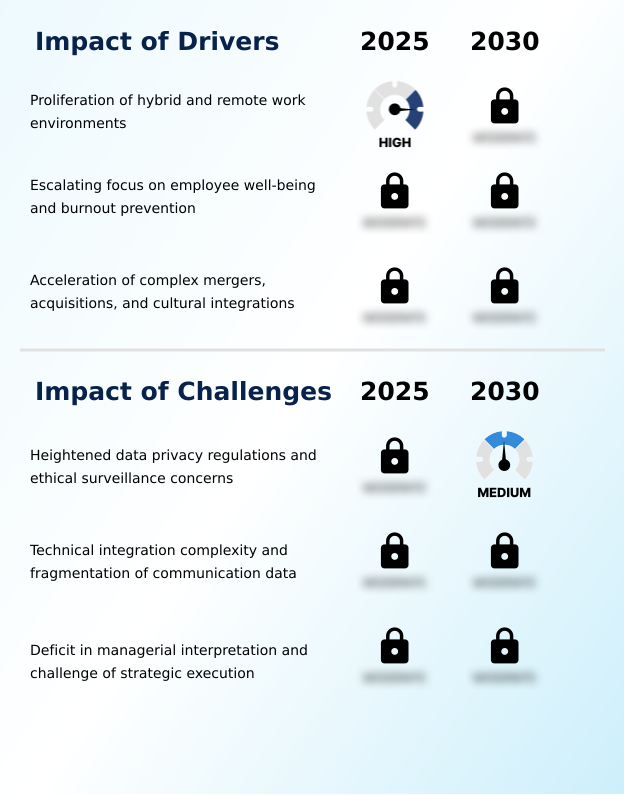
  • The proliferation of hybrid and remote work environments is a key driver, increasing the demand for tools that provide visibility into digital collaboration and knowledge sharing.

  • The proliferation of hybrid work is a primary driver, as organizations require visibility into digital collaboration to prevent the degradation of social capital mapping. Effective communication pattern analysis can restore pathways, leading to a 20% improvement in cross-functional team effectiveness.
  • An escalating focus on well-being also drives adoption, with tools for collaboration overload detection helping to identify individuals at high risk.
  • The acceleration of complex mergers and acquisitions fuels demand for tools that support corporate restructuring support through effective knowledge flow analysis and influencer identification.
  • This ensures successful cultural assimilation tracking and is increasingly seen as a standard feature for human capital management integration, ensuring the retention of institutional knowledge.

What are the market trends shaping the Organizational Network Analysis Tools Industry?

  • The integration of generative artificial intelligence is transforming analytical frameworks. This enables a shift toward prescriptive insights that offer specific, natural-language recommendations for managerial intervention.

  • A primary trend is the infusion of generative AI into relational analytics, shifting platforms from descriptive maps to prescriptive insights. This has been shown to accelerate decision-making by up to 40%. The convergence with workforce sentiment analysis provides a holistic employee experience correlation, enabling the identification of toxic communication hubs and improving well-being scores by over 15%.
  • A migration toward passive data acquisition of digital interaction metadata is also critical, enabling continuous organizational graph interpretation and supporting agile team formation analytics. This is particularly vital for hybrid work collaboration tools, though it also necessitates strong ethical surveillance frameworks to maintain employee trust while optimizing organizational agility.

What challenges does the Organizational Network Analysis Tools Industry face during its growth?

  • Heightened data privacy regulations and ethical surveillance concerns present a key challenge, creating tension between optimizing collaboration and upholding individual privacy rights in the workplace.

  • A key challenge is navigating privacy regulations, which requires robust data privacy anonymization and adherence to a standardized communication metadata schema, increasing implementation costs by as much as 25%. Technical integration complexity and fragmented data also present a hurdle to achieving a holistic informal hierarchy mapping.
  • Incomplete data can skew insights from structural hole analysis, reducing accuracy by up to 30%. Finally, a deficit in managerial interpretation of complex network centrality metrics like eigenvector centrality and betweenness centrality can render tools ineffective. Without a clear framework for leadership and influence mapping, firms fail to achieve organizational resilience monitoring and realize the full value of their investment.

Exclusive Technavio Analysis on Customer Landscape

The organizational network analysis tools market forecasting report includes the adoption lifecycle of the market, covering from the innovator’s stage to the laggard’s stage. It focuses on adoption rates in different regions based on penetration. Furthermore, the organizational network analysis tools market report also includes key purchase criteria and drivers of price sensitivity to help companies evaluate and develop their market growth analysis strategies.
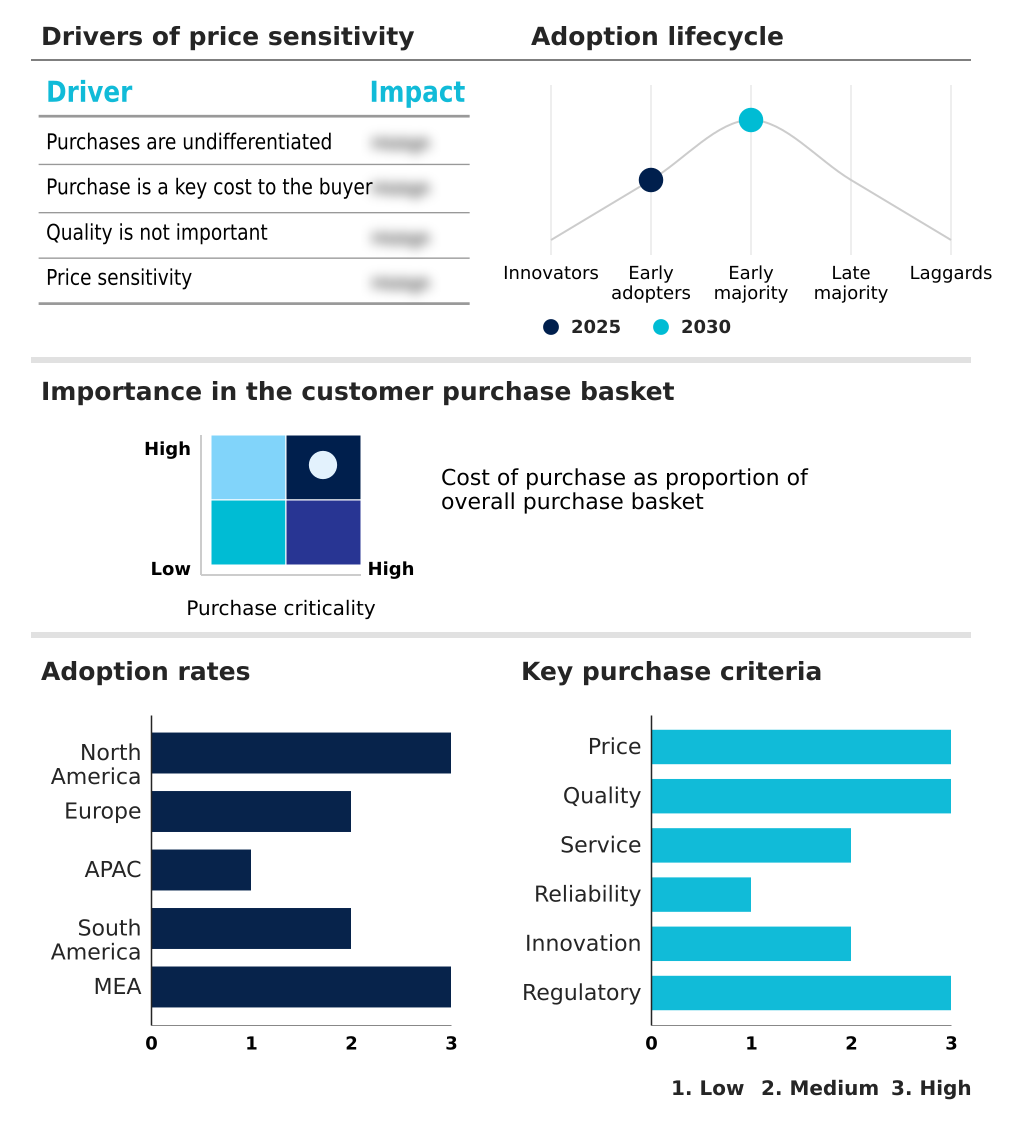
Customer Landscape of Organizational Network Analysis Tools Industry

Competitive Landscape

Companies are implementing various strategies, such as strategic alliances, organizational network analysis tools market forecast, partnerships, mergers and acquisitions, geographical expansion, and product/service launches, to enhance their presence in the industry.

Culture Amp Pty Ltd. - A behavioral analytics platform utilizes passive digital signals and sensor data for comprehensive organizational network analysis, mapping collaboration patterns and correlating them with performance metrics.

The industry research and growth report includes detailed analyses of the competitive landscape of the market and information about key companies, including:

  • Culture Amp Pty Ltd.
  • Humanyze
  • Innovisor
  • Kumu Inc
  • Maven Seven Solutions Plc.
  • Microsoft Corp.
  • Network Perspective
  • Panalyt Inc.
  • Paycor HCM Inc.
  • Perceptyx Inc.
  • Polinode Pty Ltd.
  • Qualtrics LLC
  • Recognize Services Inc.
  • SAP SE
  • StarMeUp
  • SWOOP Analytics Pty Ltd.
  • Time is Ltd.
  • Visier Inc.
  • Workday Inc.
  • Worklytics Co

Qualitative and quantitative analysis of companies has been conducted to help clients understand the wider business environment as well as the strengths and weaknesses of key industry players. Data is qualitatively analyzed to categorize companies as pure play, category-focused, industry-focused, and diversified; it is quantitatively analyzed to categorize companies as dominant, leading, strong, tentative, and weak.

Recent Development and News in Organizational network analysis tools market

  • In August, 2025, Culture Amp integrated a Social Friction Index into its employee experience platform, which utilizes network data to detect excessive meeting hours and fragmented work blocks to identify burnout risk.
  • In November, 2025, SAP SE announced the launch of a dedicated Integration Synergy Module within its SuccessFactors HXM suite, which uses network mapping to assist leaders during post-merger integration by tracking cultural assimilation.
  • In April, 2025, Humanyze launched an advanced generative AI interface that allows human resources executives to query the relational health of a department using conversational prompts, lowering the barrier for non-technical users.
  • In May, 2025, the European Data Protection Board adopted a formal opinion providing new guidelines for using AI and behavioral analytics, emphasizing the need for impact assessments for continuous social interaction mapping.

Dive into Technavio’s robust research methodology, blending expert interviews, extensive data synthesis, and validated models for unparalleled Organizational Network Analysis Tools Market insights. See full methodology.

Market Scope
Page number 298
Base year 2025
Historic period 2020-2024
Forecast period 2026-2030
Growth momentum & CAGR Accelerate at a CAGR of 16.9%
Market growth 2026-2030 USD 597.5 million
Market structure Fragmented
YoY growth 2025-2026(%) 15.8%
Key countries US, Canada, Mexico, Germany, UK, France, Italy, The Netherlands, Spain, China, Japan, India, South Korea, Australia, Indonesia, Brazil, Argentina, Colombia, Saudi Arabia, UAE, South Africa, Israel and Turkey
Competitive landscape Leading Companies, Market Positioning of Companies, Competitive Strategies, and Industry Risks

Request Free Sample

Research Analyst Overview

  • The organizational network analysis tools market is shifting from descriptive visualization to predictive and prescriptive analytics. Core to this evolution is the use of network centrality metrics like eigenvector centrality and betweenness centrality for sophisticated influencer identification and structural hole analysis. Platforms increasingly rely on passive data acquisition of digital interaction metadata to perform continuous communication pattern analysis.
  • This allows for proactive collaboration overload detection and employee burnout prediction. A key trend connecting directly to boardroom strategy is the integration with workforce sentiment analysis for holistic social capital mapping. Companies leveraging this combined data for post-merger integration analytics have reported a 30% faster cultural assimilation compared to those using traditional methods.
  • The move toward prescriptive network insights, powered by AI, transforms how organizations manage knowledge flow analysis and talent mobility optimization. Advanced tools provide collaboration benchmarking and real-time diagnostic monitoring through features like a dynamic team graph and social friction index, enabling the mapping of the informal hierarchy mapping.
  • This allows for a precise organizational graph interpretation, turning relational data into a critical asset for strategic decision-making.

What are the Key Data Covered in this Organizational Network Analysis Tools Market Research and Growth Report?

  • What is the expected growth of the Organizational Network Analysis Tools Market between 2026 and 2030?

    • USD 597.5 million, at a CAGR of 16.9%

  • What segmentation does the market report cover?

    • The report is segmented by Deployment (Cloud based, and On premises), Application (OND and mapping, CC analysis, LI identification, TK Management, and Others), Business Segment (Large enterprises, and Small and medium enterprises) and Geography (North America, Europe, APAC, South America, Middle East and Africa)

  • Which regions are analyzed in the report?

    • North America, Europe, APAC, South America and Middle East and Africa

  • What are the key growth drivers and market challenges?

    • Proliferation of hybrid and remote work environments, Heightened data privacy regulations and ethical surveillance concerns

  • Who are the major players in the Organizational Network Analysis Tools Market?

    • Culture Amp Pty Ltd., Humanyze, Innovisor, Kumu Inc, Maven Seven Solutions Plc., Microsoft Corp., Network Perspective, Panalyt Inc., Paycor HCM Inc., Perceptyx Inc., Polinode Pty Ltd., Qualtrics LLC, Recognize Services Inc., SAP SE, StarMeUp, SWOOP Analytics Pty Ltd., Time is Ltd., Visier Inc., Workday Inc. and Worklytics Co

Market Research Insights

  • The dynamics of the organizational network analysis tools market are shaped by the need for workforce productivity optimization in increasingly complex work environments. Adopting data-driven change management frameworks allows organizations to achieve up to a 20% higher success rate on transformation initiatives by leveraging leadership and influence mapping.
  • Integrating ONA tools with human capital management integration systems is now standard, with firms correlating network data and employee engagement drivers to reduce employee retention risk. This proactive talent retention strategy has been shown to decrease attrition by 15% in high-performing teams.
  • The focus on hybrid work collaboration tools and agile team formation analytics provides crucial insights, ensuring that cross-functional team effectiveness is maintained. However, implementing ethical surveillance frameworks and ensuring data privacy anonymization remain critical for maintaining employee trust and regulatory compliance.

We can help! Our analysts can customize this organizational network analysis tools market research report to meet your requirements.

Get in touch

1. Executive Summary

1.1 Market overview

Executive Summary - Chart on Market Overview
Executive Summary - Data Table on Market Overview
Executive Summary - Chart on Global Market Characteristics
Executive Summary - Chart on Market by Geography
Executive Summary - Chart on Market Segmentation by Deployment
Executive Summary - Chart on Market Segmentation by Application
Executive Summary - Chart on Market Segmentation by Business Segment
Executive Summary - Chart on Incremental Growth
Executive Summary - Data Table on Incremental Growth
Executive Summary - Chart on Company Market Positioning

2. Technavio Analysis

2.1 Analysis of price sensitivity, lifecycle, customer purchase basket, adoption rates, and purchase criteria

2.2 Criticality of inputs and Factors of differentiation

Chart on Overview on criticality of inputs and factors of differentiation

2.3 Factors of disruption

Chart on Overview on factors of disruption

2.4 Impact of drivers and challenges

Chart on Impact of drivers and challenges in 2025 and 2030

3. Market Landscape

3.1 Market ecosystem

Chart on Parent Market
Data Table on - Parent Market

3.2 Market characteristics

Chart on Market characteristics analysis

3.3 Value chain analysis

Chart on Value chain analysis

4. Market Sizing

4.1 Market definition

Data Table on Offerings of companies included in the market definition

4.2 Market segment analysis

Market segments

4.3 Market size 2025

4.4 Market outlook: Forecast for 2025-2030

Chart on Global - Market size and forecast 2025-2030 ($ million)
Data Table on Global - Market size and forecast 2025-2030 ($ million)
Chart on Global Market: Year-over-year growth 2025-2030 (%)
Data Table on Global Market: Year-over-year growth 2025-2030 (%)

5. Historic Market Size

5.1 Global Organizational Network Analysis Tools Market 2020 - 2024

Historic Market Size - Data Table on Global Organizational Network Analysis Tools Market 2020 - 2024 ($ million)

5.2 Deployment segment analysis 2020 - 2024

Historic Market Size - Deployment Segment 2020 - 2024 ($ million)

5.3 Application segment analysis 2020 - 2024

Historic Market Size - Application Segment 2020 - 2024 ($ million)

5.4 Business segment analysis 2020 - 2024

Historic Market Size - Business Segment 2020 - 2024 ($ million)

5.5 Geography segment analysis 2020 - 2024

Historic Market Size - Geography Segment 2020 - 2024 ($ million)

5.6 Country segment analysis 2020 - 2024

Historic Market Size - Country Segment 2020 - 2024 ($ million)

6. Qualitative Analysis

6.1 The AI impact on Global Organizational Network Analysis Tools Market

7. Five Forces Analysis

7.1 Five forces summary

Five forces analysis - Comparison between 2025 and 2030

7.2 Bargaining power of buyers

Bargaining power of buyers - Impact of key factors 2025 and 2030

7.3 Bargaining power of suppliers

Bargaining power of suppliers - Impact of key factors in 2025 and 2030

7.4 Threat of new entrants

Threat of new entrants - Impact of key factors in 2025 and 2030

7.5 Threat of substitutes

Threat of substitutes - Impact of key factors in 2025 and 2030

7.6 Threat of rivalry

Threat of rivalry - Impact of key factors in 2025 and 2030

7.7 Market condition

Chart on Market condition - Five forces 2025 and 2030

8. Market Segmentation by Deployment

8.1 Market segments

Chart on Deployment - Market share 2025-2030 (%)
Data Table on Deployment - Market share 2025-2030 (%)

8.2 Comparison by Deployment

Chart on Comparison by Deployment
Data Table on Comparison by Deployment

8.3 Cloud based - Market size and forecast 2025-2030

Chart on Cloud based - Market size and forecast 2025-2030 ($ million)
Data Table on Cloud based - Market size and forecast 2025-2030 ($ million)
Chart on Cloud based - Year-over-year growth 2025-2030 (%)
Data Table on Cloud based - Year-over-year growth 2025-2030 (%)

8.4 On premises - Market size and forecast 2025-2030

Chart on On premises - Market size and forecast 2025-2030 ($ million)
Data Table on On premises - Market size and forecast 2025-2030 ($ million)
Chart on On premises - Year-over-year growth 2025-2030 (%)
Data Table on On premises - Year-over-year growth 2025-2030 (%)

8.5 Market opportunity by Deployment

Market opportunity by Deployment ($ million)
Data Table on Market opportunity by Deployment ($ million)

9. Market Segmentation by Application

9.1 Market segments

Chart on Application - Market share 2025-2030 (%)
Data Table on Application - Market share 2025-2030 (%)

9.2 Comparison by Application

Chart on Comparison by Application
Data Table on Comparison by Application

9.3 OND and mapping - Market size and forecast 2025-2030

Chart on OND and mapping - Market size and forecast 2025-2030 ($ million)
Data Table on OND and mapping - Market size and forecast 2025-2030 ($ million)
Chart on OND and mapping - Year-over-year growth 2025-2030 (%)
Data Table on OND and mapping - Year-over-year growth 2025-2030 (%)

9.4 CC analysis - Market size and forecast 2025-2030

Chart on CC analysis - Market size and forecast 2025-2030 ($ million)
Data Table on CC analysis - Market size and forecast 2025-2030 ($ million)
Chart on CC analysis - Year-over-year growth 2025-2030 (%)
Data Table on CC analysis - Year-over-year growth 2025-2030 (%)

9.5 LI identification - Market size and forecast 2025-2030

Chart on LI identification - Market size and forecast 2025-2030 ($ million)
Data Table on LI identification - Market size and forecast 2025-2030 ($ million)
Chart on LI identification - Year-over-year growth 2025-2030 (%)
Data Table on LI identification - Year-over-year growth 2025-2030 (%)

9.6 TK Management - Market size and forecast 2025-2030

Chart on TK Management - Market size and forecast 2025-2030 ($ million)
Data Table on TK Management - Market size and forecast 2025-2030 ($ million)
Chart on TK Management - Year-over-year growth 2025-2030 (%)
Data Table on TK Management - Year-over-year growth 2025-2030 (%)

9.7 Others - Market size and forecast 2025-2030

Chart on Others - Market size and forecast 2025-2030 ($ million)
Data Table on Others - Market size and forecast 2025-2030 ($ million)
Chart on Others - Year-over-year growth 2025-2030 (%)
Data Table on Others - Year-over-year growth 2025-2030 (%)

9.8 Market opportunity by Application

Market opportunity by Application ($ million)
Data Table on Market opportunity by Application ($ million)

10. Market Segmentation by Business Segment

10.1 Market segments

Chart on Market Segmentation by Business Segment - Market share 2025-2030 (%)
Data Table on Market Segmentation by Business Segment - Market share 2025-2030 (%)

10.2 Comparison by Market Segmentation by Business Segment

Chart on Comparison by Market Segmentation by Business Segment
Data Table on Comparison by Market Segmentation by Business Segment

10.3 Large enterprises - Market size and forecast 2025-2030

Chart on Large enterprises - Market size and forecast 2025-2030 ($ million)
Data Table on Large enterprises - Market size and forecast 2025-2030 ($ million)
Chart on Large enterprises - Year-over-year growth 2025-2030 (%)
Data Table on Large enterprises - Year-over-year growth 2025-2030 (%)

10.4 Small and medium enterprises - Market size and forecast 2025-2030

Chart on Small and medium enterprises - Market size and forecast 2025-2030 ($ million)
Data Table on Small and medium enterprises - Market size and forecast 2025-2030 ($ million)
Chart on Small and medium enterprises - Year-over-year growth 2025-2030 (%)
Data Table on Small and medium enterprises - Year-over-year growth 2025-2030 (%)

10.5 Market opportunity by Market Segmentation by Business Segment

Market opportunity by Market Segmentation by Business Segment ($ million)
Data Table on Market opportunity by Market Segmentation by Business Segment ($ million)

11. Customer Landscape

11.1 Customer landscape overview

Analysis of price sensitivity, lifecycle, customer purchase basket, adoption rates, and purchase criteria

12. Geographic Landscape

12.1 Geographic segmentation

Chart on Market share by geography 2025-2030 (%)
Data Table on Market share by geography 2025-2030 (%)

12.2 Geographic comparison

Chart on Geographic comparison
Data Table on Geographic comparison

12.3 North America - Market size and forecast 2025-2030

Chart on North America - Market size and forecast 2025-2030 ($ million)
Data Table on North America - Market size and forecast 2025-2030 ($ million)
Chart on North America - Year-over-year growth 2025-2030 (%)
Data Table on North America - Year-over-year growth 2025-2030 (%)
Chart on Regional Comparison - North America
Data Table on Regional Comparison - North America

12.3.1 US - Market size and forecast 2025-2030

Chart on US - Market size and forecast 2025-2030 ($ million)
Data Table on US - Market size and forecast 2025-2030 ($ million)
Chart on US - Year-over-year growth 2025-2030 (%)
Data Table on US - Year-over-year growth 2025-2030 (%)

12.3.2 Canada - Market size and forecast 2025-2030

Chart on Canada - Market size and forecast 2025-2030 ($ million)
Data Table on Canada - Market size and forecast 2025-2030 ($ million)
Chart on Canada - Year-over-year growth 2025-2030 (%)
Data Table on Canada - Year-over-year growth 2025-2030 (%)

12.3.3 Mexico - Market size and forecast 2025-2030

Chart on Mexico - Market size and forecast 2025-2030 ($ million)
Data Table on Mexico - Market size and forecast 2025-2030 ($ million)
Chart on Mexico - Year-over-year growth 2025-2030 (%)
Data Table on Mexico - Year-over-year growth 2025-2030 (%)

12.4 Europe - Market size and forecast 2025-2030

Chart on Europe - Market size and forecast 2025-2030 ($ million)
Data Table on Europe - Market size and forecast 2025-2030 ($ million)
Chart on Europe - Year-over-year growth 2025-2030 (%)
Data Table on Europe - Year-over-year growth 2025-2030 (%)
Chart on Regional Comparison - Europe
Data Table on Regional Comparison - Europe

12.4.1 Germany - Market size and forecast 2025-2030

Chart on Germany - Market size and forecast 2025-2030 ($ million)
Data Table on Germany - Market size and forecast 2025-2030 ($ million)
Chart on Germany - Year-over-year growth 2025-2030 (%)
Data Table on Germany - Year-over-year growth 2025-2030 (%)

12.4.2 UK - Market size and forecast 2025-2030

Chart on UK - Market size and forecast 2025-2030 ($ million)
Data Table on UK - Market size and forecast 2025-2030 ($ million)
Chart on UK - Year-over-year growth 2025-2030 (%)
Data Table on UK - Year-over-year growth 2025-2030 (%)

12.4.3 France - Market size and forecast 2025-2030

Chart on France - Market size and forecast 2025-2030 ($ million)
Data Table on France - Market size and forecast 2025-2030 ($ million)
Chart on France - Year-over-year growth 2025-2030 (%)
Data Table on France - Year-over-year growth 2025-2030 (%)

12.4.4 Italy - Market size and forecast 2025-2030

Chart on Italy - Market size and forecast 2025-2030 ($ million)
Data Table on Italy - Market size and forecast 2025-2030 ($ million)
Chart on Italy - Year-over-year growth 2025-2030 (%)
Data Table on Italy - Year-over-year growth 2025-2030 (%)

12.4.5 The Netherlands - Market size and forecast 2025-2030

Chart on The Netherlands - Market size and forecast 2025-2030 ($ million)
Data Table on The Netherlands - Market size and forecast 2025-2030 ($ million)
Chart on The Netherlands - Year-over-year growth 2025-2030 (%)
Data Table on The Netherlands - Year-over-year growth 2025-2030 (%)

12.4.6 Spain - Market size and forecast 2025-2030

Chart on Spain - Market size and forecast 2025-2030 ($ million)
Data Table on Spain - Market size and forecast 2025-2030 ($ million)
Chart on Spain - Year-over-year growth 2025-2030 (%)
Data Table on Spain - Year-over-year growth 2025-2030 (%)

12.5 APAC - Market size and forecast 2025-2030

Chart on APAC - Market size and forecast 2025-2030 ($ million)
Data Table on APAC - Market size and forecast 2025-2030 ($ million)
Chart on APAC - Year-over-year growth 2025-2030 (%)
Data Table on APAC - Year-over-year growth 2025-2030 (%)
Chart on Regional Comparison - APAC
Data Table on Regional Comparison - APAC

12.5.1 China - Market size and forecast 2025-2030

Chart on China - Market size and forecast 2025-2030 ($ million)
Data Table on China - Market size and forecast 2025-2030 ($ million)
Chart on China - Year-over-year growth 2025-2030 (%)
Data Table on China - Year-over-year growth 2025-2030 (%)

12.5.2 Japan - Market size and forecast 2025-2030

Chart on Japan - Market size and forecast 2025-2030 ($ million)
Data Table on Japan - Market size and forecast 2025-2030 ($ million)
Chart on Japan - Year-over-year growth 2025-2030 (%)
Data Table on Japan - Year-over-year growth 2025-2030 (%)

12.5.3 India - Market size and forecast 2025-2030

Chart on India - Market size and forecast 2025-2030 ($ million)
Data Table on India - Market size and forecast 2025-2030 ($ million)
Chart on India - Year-over-year growth 2025-2030 (%)
Data Table on India - Year-over-year growth 2025-2030 (%)

12.5.4 South Korea - Market size and forecast 2025-2030

Chart on South Korea - Market size and forecast 2025-2030 ($ million)
Data Table on South Korea - Market size and forecast 2025-2030 ($ million)
Chart on South Korea - Year-over-year growth 2025-2030 (%)
Data Table on South Korea - Year-over-year growth 2025-2030 (%)

12.5.5 Australia - Market size and forecast 2025-2030

Chart on Australia - Market size and forecast 2025-2030 ($ million)
Data Table on Australia - Market size and forecast 2025-2030 ($ million)
Chart on Australia - Year-over-year growth 2025-2030 (%)
Data Table on Australia - Year-over-year growth 2025-2030 (%)

12.5.6 Indonesia - Market size and forecast 2025-2030

Chart on Indonesia - Market size and forecast 2025-2030 ($ million)
Data Table on Indonesia - Market size and forecast 2025-2030 ($ million)
Chart on Indonesia - Year-over-year growth 2025-2030 (%)
Data Table on Indonesia - Year-over-year growth 2025-2030 (%)

12.6 South America - Market size and forecast 2025-2030

Chart on South America - Market size and forecast 2025-2030 ($ million)
Data Table on South America - Market size and forecast 2025-2030 ($ million)
Chart on South America - Year-over-year growth 2025-2030 (%)
Data Table on South America - Year-over-year growth 2025-2030 (%)
Chart on Regional Comparison - South America
Data Table on Regional Comparison - South America

12.6.1 Brazil - Market size and forecast 2025-2030

Chart on Brazil - Market size and forecast 2025-2030 ($ million)
Data Table on Brazil - Market size and forecast 2025-2030 ($ million)
Chart on Brazil - Year-over-year growth 2025-2030 (%)
Data Table on Brazil - Year-over-year growth 2025-2030 (%)

12.6.2 Argentina - Market size and forecast 2025-2030

Chart on Argentina - Market size and forecast 2025-2030 ($ million)
Data Table on Argentina - Market size and forecast 2025-2030 ($ million)
Chart on Argentina - Year-over-year growth 2025-2030 (%)
Data Table on Argentina - Year-over-year growth 2025-2030 (%)

12.6.3 Colombia - Market size and forecast 2025-2030

Chart on Colombia - Market size and forecast 2025-2030 ($ million)
Data Table on Colombia - Market size and forecast 2025-2030 ($ million)
Chart on Colombia - Year-over-year growth 2025-2030 (%)
Data Table on Colombia - Year-over-year growth 2025-2030 (%)

12.7 Middle East and Africa - Market size and forecast 2025-2030

Chart on Middle East and Africa - Market size and forecast 2025-2030 ($ million)
Data Table on Middle East and Africa - Market size and forecast 2025-2030 ($ million)
Chart on Middle East and Africa - Year-over-year growth 2025-2030 (%)
Data Table on Middle East and Africa - Year-over-year growth 2025-2030 (%)
Chart on Regional Comparison - Middle East and Africa
Data Table on Regional Comparison - Middle East and Africa

12.7.1 Saudi Arabia - Market size and forecast 2025-2030

Chart on Saudi Arabia - Market size and forecast 2025-2030 ($ million)
Data Table on Saudi Arabia - Market size and forecast 2025-2030 ($ million)
Chart on Saudi Arabia - Year-over-year growth 2025-2030 (%)
Data Table on Saudi Arabia - Year-over-year growth 2025-2030 (%)

12.7.2 UAE - Market size and forecast 2025-2030

Chart on UAE - Market size and forecast 2025-2030 ($ million)
Data Table on UAE - Market size and forecast 2025-2030 ($ million)
Chart on UAE - Year-over-year growth 2025-2030 (%)
Data Table on UAE - Year-over-year growth 2025-2030 (%)

12.7.3 South Africa - Market size and forecast 2025-2030

Chart on South Africa - Market size and forecast 2025-2030 ($ million)
Data Table on South Africa - Market size and forecast 2025-2030 ($ million)
Chart on South Africa - Year-over-year growth 2025-2030 (%)
Data Table on South Africa - Year-over-year growth 2025-2030 (%)

12.7.4 Israel - Market size and forecast 2025-2030

Chart on Israel - Market size and forecast 2025-2030 ($ million)
Data Table on Israel - Market size and forecast 2025-2030 ($ million)
Chart on Israel - Year-over-year growth 2025-2030 (%)
Data Table on Israel - Year-over-year growth 2025-2030 (%)

12.7.5 Turkey - Market size and forecast 2025-2030

Chart on Turkey - Market size and forecast 2025-2030 ($ million)
Data Table on Turkey - Market size and forecast 2025-2030 ($ million)
Chart on Turkey - Year-over-year growth 2025-2030 (%)
Data Table on Turkey - Year-over-year growth 2025-2030 (%)

12.8 Market opportunity by geography

Market opportunity by geography ($ million)
Data Tables on Market opportunity by geography ($ million)

13. Drivers, Challenges, and Opportunity

13.1 Market drivers

Proliferation of hybrid and remote work environments
Escalating focus on employee well-being and burnout prevention
Acceleration of complex mergers, acquisitions, and cultural integrations

13.2 Market challenges

Heightened data privacy regulations and ethical surveillance concerns
Technical integration complexity and fragmentation of communication data
Deficit in managerial interpretation and challenge of strategic execution

13.3 Impact of drivers and challenges

Impact of drivers and challenges in 2025 and 2030

13.4 Market opportunities

Integration of generative artificial intelligence for prescriptive network insights
Convergence of relational mapping and workforce sentiment analysis
Migration toward continuous passive data acquisition and real-time diagnostic monitoring

14. Competitive Landscape

14.1 Overview

14.2

Overview on criticality of inputs and factors of differentiation

14.3 Landscape disruption

Overview on factors of disruption

14.4 Industry risks

Impact of key risks on business

15. Competitive Analysis

15.1 Companies profiled

Companies covered

15.2 Company ranking index

15.3 Market positioning of companies

Matrix on companies position and classification

15.4 Culture Amp Pty Ltd.

Culture Amp Pty Ltd. - Overview
Culture Amp Pty Ltd. - Product / Service
Culture Amp Pty Ltd. - Key offerings
SWOT

15.5 Humanyze

Humanyze - Overview
Humanyze - Product / Service
Humanyze - Key offerings
SWOT

15.6 Innovisor

Innovisor - Overview
Innovisor - Product / Service
Innovisor - Key offerings
SWOT

15.7 Kumu Inc

Kumu Inc - Overview
Kumu Inc - Product / Service
Kumu Inc - Key offerings
SWOT

15.8 Maven Seven Solutions Plc.

Maven Seven Solutions Plc. - Overview
Maven Seven Solutions Plc. - Product / Service
Maven Seven Solutions Plc. - Key offerings
SWOT

15.9 Microsoft Corp.

Microsoft Corp. - Overview
Microsoft Corp. - Business segments
Microsoft Corp. - Key news
Microsoft Corp. - Key offerings
Microsoft Corp. - Segment focus
SWOT

15.10 Network Perspective

Network Perspective - Overview
Network Perspective - Product / Service
Network Perspective - Key offerings
SWOT

15.11 Panalyt Inc.

Panalyt Inc. - Overview
Panalyt Inc. - Product / Service
Panalyt Inc. - Key offerings
SWOT

15.12 Paycor HCM Inc.

Paycor HCM Inc. - Overview
Paycor HCM Inc. - Product / Service
Paycor HCM Inc. - Key news
Paycor HCM Inc. - Key offerings
SWOT

15.13 Perceptyx Inc.

Perceptyx Inc. - Overview
Perceptyx Inc. - Product / Service
Perceptyx Inc. - Key offerings
SWOT

15.14 Polinode Pty Ltd.

Polinode Pty Ltd. - Overview
Polinode Pty Ltd. - Product / Service
Polinode Pty Ltd. - Key offerings
SWOT

15.15 Qualtrics LLC

Qualtrics LLC - Overview
Qualtrics LLC - Product / Service
Qualtrics LLC - Key offerings
SWOT

15.16 Recognize Services Inc.

Recognize Services Inc. - Overview
Recognize Services Inc. - Product / Service
Recognize Services Inc. - Key offerings
SWOT

15.17 SAP SE

SAP SE - Overview
SAP SE - Business segments
SAP SE - Key news
SAP SE - Key offerings
SAP SE - Segment focus
SWOT

15.18 StarMeUp

StarMeUp - Overview
StarMeUp - Product / Service
StarMeUp - Key offerings
SWOT

16. Appendix

16.1 Scope of the report

Market definition
Objectives
Notes and caveats

16.2 Inclusions and exclusions checklist

Inclusions checklist
Exclusions checklist

16.3 Currency conversion rates for US$

16.4 Research methodology

16.5 Data procurement

Information sources

16.6 Data validation

16.7 Validation techniques employed for market sizing

16.8 Data synthesis

16.9 360 degree market analysis

16.10 List of abbreviations

Research Methodology

Technavio presents a detailed picture of the market by way of study, synthesis, and summation of data from multiple sources. The analysts have presented the various facets of the market with a particular focus on identifying the key industry influencers. The data thus presented is comprehensive, reliable, and the result of extensive research, both primary and secondary.

INFORMATION SOURCES

Primary sources

  • Manufacturers and suppliers
  • Channel partners
  • Industry experts
  • Strategic decision makers

Secondary sources

  • Industry journals and periodicals
  • Government data
  • Financial reports of key industry players
  • Historical data
  • Press releases

DATA ANALYSIS

Data Synthesis

  • Collation of data
  • Estimation of key figures
  • Analysis of derived insights

Data Validation

  • Triangulation with data models
  • Reference against proprietary databases
  • Corroboration with industry experts

REPORT WRITING

Qualitative

  • Market drivers
  • Market challenges
  • Market trends
  • Five forces analysis

Quantitative

  • Market size and forecast
  • Market segmentation
  • Geographical insights
  • Competitive landscape

Interested in this report?

Get your sample now to see our research methodology and insights!

Download Now

Frequently Asked Questions

Organizational Network Analysis Tools market growth will increase by USD 597.5 million during 2026-2030.

The Organizational Network Analysis Tools market is expected to grow at a CAGR of 16.9% during 2026-2030.

Organizational Network Analysis Tools market is segmented by Deployment (Cloud based, On premises) Application (OND and mapping, CC analysis, LI identification, TK Management, Others) Business segment (Large enterprises, Small and medium enterprises)

Culture Amp Pty Ltd., Humanyze, Innovisor, Kumu Inc, Maven Seven Solutions Plc., Microsoft Corp., Network Perspective, Panalyt Inc., Paycor HCM Inc., Perceptyx Inc., Polinode Pty Ltd., Qualtrics LLC, Recognize Services Inc., SAP SE, StarMeUp, SWOOP Analytics Pty Ltd., Time is Ltd., Visier Inc., Workday Inc., Worklytics Co are a few of the key vendors in the Organizational Network Analysis Tools market.

North America will register the highest growth rate of 40.3% among the other regions. Therefore, the Organizational Network Analysis Tools market in North America is expected to garner significant business opportunities for the vendors during the forecast period.

US, Canada, Mexico, Germany, UK, France, Italy, The Netherlands, Spain, China, Japan, India, South Korea, Australia, Indonesia, Brazil, Argentina, Colombia, Saudi Arabia, UAE, South Africa, Israel, Turkey

  • Proliferation of hybrid and remote work environments is the driving factor this market.

The Organizational Network Analysis Tools market vendors should focus on grabbing business opportunities from the Deployment segment as it accounted for the largest market share in the base year.
RIA - Research AI Assistant
Ask RIA