
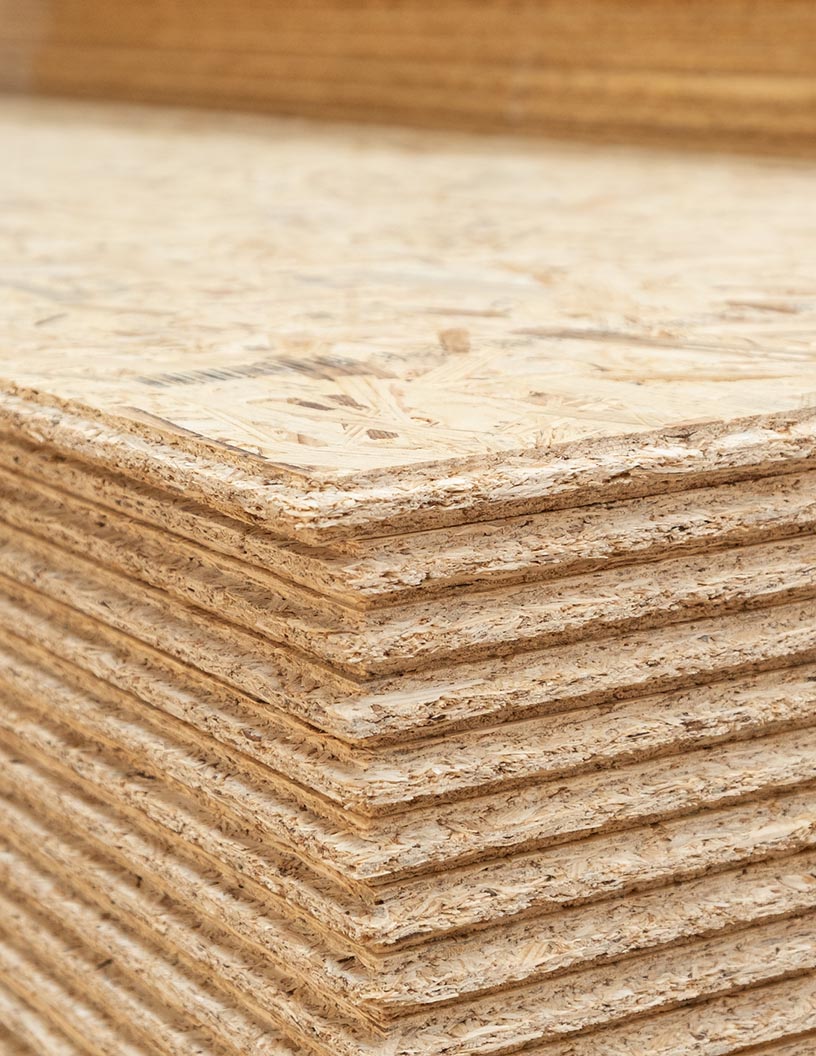

Oriented Strand Board Market Analysis North America, Europe, APAC, South America, Middle East and Africa - US, Germany, China, UK, Japan - Size and Forecast 2024-2028

Oriented Strand Board Market Analysis North America, Europe, APAC, South America, Middle East and Africa - US, Germany, China, UK, Japan - Size and Forecast 2024-2028

Published: Jul 2024 139 Pages SKU: IRTNTR73680

Market Overview at a Glance

$33.64 B
Market Opportunity
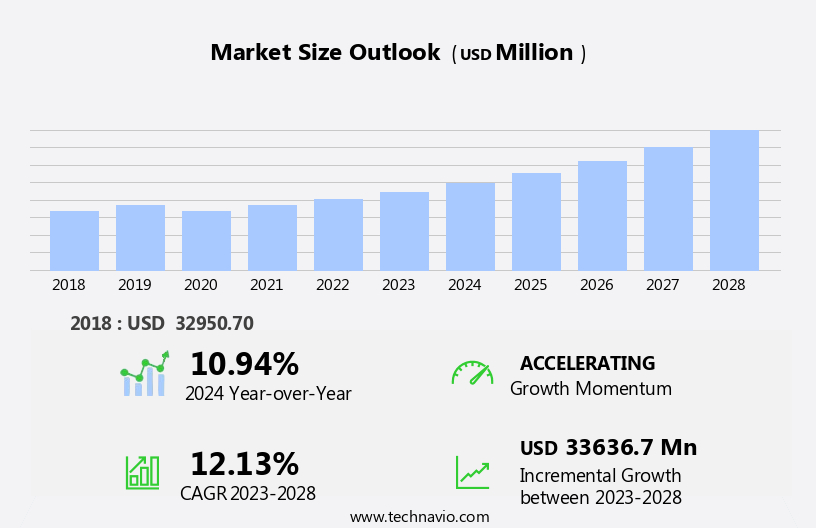
12.13%
CAGR
10.94
YoY growth 2023-2024(%)

Oriented Strand Board Market Size 2024-2028

The oriented strand board market size is forecast to increase by USD 33.64 billion at a CAGR of 12.13% between 2023 and 2028.

  • The Oriented Strand Board (OSB) market is experiencing significant growth due to increasing residential and commercial construction activities worldwide. This trend is particularly prominent in Europe, where OSB is gaining popularity as a cost-effective and durable alternative to traditional wood products. However, uncertainties in construction projects, such as delays and cancellations, pose challenges to market growth. The market analysis report provides an in-depth examination of these trends and growth factors, offering valuable insights for stakeholders. OSB's versatility and strength make it an attractive option for various applications, including roofing, flooring, and wall sheathing. As the construction industry continues to expand, the demand for OSB is expected to increase, presenting opportunities for manufacturers and suppliers.
  • What will be the Size of the Oriented Strand Board Market During the Forecast Period?
    Oriented Strand Board Market Size

     Request Free Sample

  • The oriented strand board (OSB) market encompasses the production and distribution of this engineered wood product, which is widely used in various construction applications and DIY projects. OSB is manufactured by compressing small wood strands with an adhesive, resulting in a strong, flat sheet. This construction material offers advantages such as fire resistance, durability, and resistance to extreme temperatures, making it a popular choice for roofing, wall sheathing, and framing. OSB is also eco-friendly, as it can be made from small-diameter trees and recycled wood chips, reducing the need for virgin timber. Budget-conscious homeowners and professionals alike value OSB for its affordability compared to traditional materials like plywood, chipboard, and particleboard.
  • Its versatility extends to furniture, wood panelling, and even roofing shingles. Installation is generally straightforward, requiring common tools like a saw. OSB can be painted, stained, or finished with veneers or laminates, offering design flexibility. Despite its advantages, OSB may contain formaldehyde, which can be a concern for those seeking environmentally friendly options. Overall, the OSB market continues to grow, driven by increasing demand for cost-effective, durable, and versatile construction materials.
  • How is this Oriented Strand Board Industry segmented and which is the largest segment?

    The oriented strand board industry research report provides comprehensive data (region-wise segment analysis), with forecasts and estimates in "USD million" for the period 2024-2028, as well as historical data from 2018-2022 for the following segments.

    • Application
      • Construction
      • Furniture
      • Packaging
      • Others
    • Geography
      • North America
        • US
      • Europe
        • Germany
        • UK
      • APAC
        • China
        • Japan
      • South America
        • Middle East and Africa

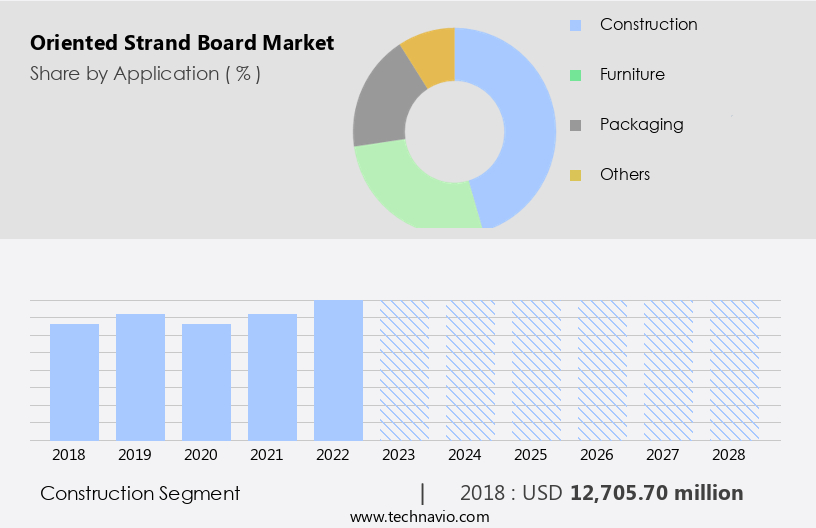
        By Application Insights

        • The construction segment is estimated to witness significant growth during the forecast period.

        Oriented Strand Boards (OSB) serve as a cost-effective and versatile alternative to traditional construction materials, including lumber, plywood, concrete, and steel. Manufactured using wood strands and adhesive, OSBs offer moisture resistance, sustainability, and eco-friendliness, making them suitable for various applications in home improvement projects. These include roofing, wall sheathing, furniture, wood panelling, flooring, shelving, and framing. OSBs are known for their strength, durability, and versatility, which is attributed to advancements in manufacturing technologies, such as terahertz technology. The rising popularity of OSBs in applications like single-layer flooring, subflooring, and wall, roof, and panel sheathing is expected to fuel market growth.

        For budget-conscious homeowners, OSBs offer a cost-effective solution compared to plywood, while also providing excellent installation properties. OSBs can be easily cut using a saw and can be painted or stained for aesthetic appeal. Additionally, they offer soundproofing properties, making them an ideal choice for homes and buildings in damp environments or extreme temperatures. Despite their benefits, it is essential to prepare OSBs properly before installation, including treating them with wax and resin to enhance their moisture resistance and durability. OSBs are also an eco-friendly choice, as they can be made from small-diameter trees and recycled wood chips, reducing the environmental impact of construction projects.
        Oriented Strand Board Market Size

        Get a glance at the  Oriented Strand Board Industry report of share of various segments Request Free Sample

        The Construction segment was valued at USD 12.71 billion in 2018 and showed a gradual increase during the forecast period.

        Regional Analysis

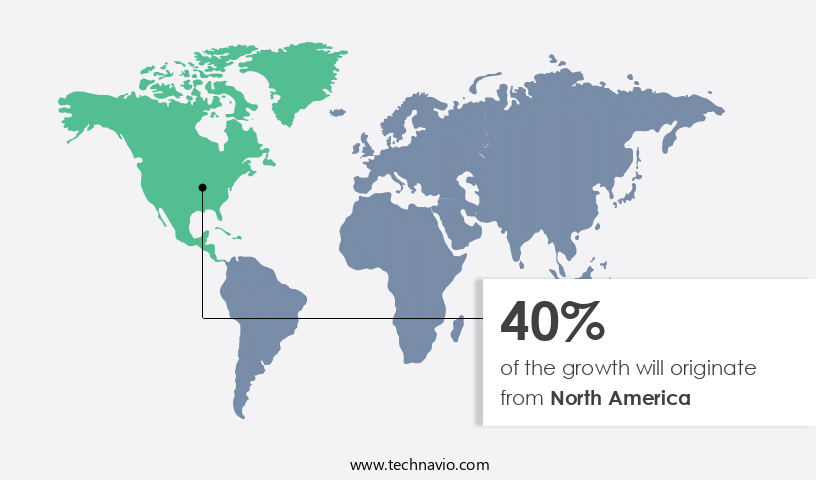
        • North America is estimated to contribute 40% to the growth of the global market during the forecast period.

        Technavio’s analysts have elaborately explained the regional trends and drivers that shape the market during the forecast period.
        Oriented Strand Board Market Share by Geography

        For more insights on the market share of various regions, Request Free Sample

        The North American oriented strand board (OSB) market is projected to expand due to the rising demand from the building and construction sector. The preference for OSBs over alternatives like plywood is increasing, as OSBs offer improved environmental sustainability. Green building materials are gaining popularity in North America, and OSBs are a preferred choice due to their eco-friendliness. For instance, the US Green Building Council promotes the use of sustainable materials in construction. OSBs are suitable for various applications, including roofing, wall sheathing, furniture, wood panelling, flooring, shelving, and more. They offer moisture resistance, versatility, and ease of installation. OSBs are also budget-friendly and can be used in damp environments.

        Despite their advantages, it is essential to consider their potential environmental impact, especially regarding formaldehyde emissions and recycling. Proper preparation, including sawing and painting or staining, is necessary to maintaIn their aesthetics and durability. OSBs are engineered wood products made from wood strands and adhesive. They offer fire resistance and can withstand extreme temperatures, making them suitable for framing and sheathing applications. Budget-conscious homeowners and builders value OSBs for their cost-effectiveness and versatility.

        Market Dynamics

        Our  researchers analyzed the data with 2023 as the base year, along with the key drivers, trends, and challenges. A holistic analysis of drivers will help companies refine their marketing strategies to gain a competitive advantage.

        What are the key market drivers leading to the rise In the adoption of Oriented Strand Board Industry?

        Increasing residential and commercial construction activities is the key driver of the market.

      • The Oriented Strand Board (OSB) market In the US is witnessing significant growth due to the rising demand for cost-effective and sustainable construction materials. DIY projects and home improvement initiatives are driving the market, with OSBs being used extensively as wall sheathing, roofing, and flooring. The versatility of OSBs, which are made from wood strands bonded together with adhesive and wax and resin, makes them an ideal choice for various applications. OSBs offer moisture resistance, sustainability, and eco-friendly features, making them a preferred choice for budget-conscious homeowners. They are also engineered to have excellent fire resistance and can withstand extreme temperatures, making them suitable for various construction applications.
      • In addition, OSBs are recyclable, making them an environmentally friendly option. OSBs are also used in furniture, wood panelling, shelving, and other applications due to their strength and durability. The market for OSBs is expected to grow further due to their soundproofing properties, which help reduce noise transmission in homes and buildings. Despite their benefits, it is essential to prepare and install OSBs correctly to ensure their longevity. Proper installation involves using the right adhesives and saws, and following the manufacturer's instructions. It is also crucial to consider the environmental impact of OSBs, as some products may contain formaldehyde and volatile organic compounds, which can cause respiratory problems and health issues when inhaled in large quantities.
      • In conclusion, the market is poised for growth due to the increasing demand for cost-effective, sustainable, and versatile construction materials. The market offers various applications, including roofing, wall sheathing, flooring, furniture, and shelving, among others. However, it is essential to ensure proper preparation, installation, and consideration of the environmental impact when using OSBs.
      • What are the market trends shaping the Oriented Strand Board Industry?

        Growing adoption in Europe is the upcoming market trend.

      • The Oriented Strand Board (OSB) market in Europe is experiencing growth due to the expanding home improvement and construction sectors, as well as the rising adoption of eco-friendly and sustainably sourced building materials. OSBs, made from wood strands bonded together with adhesive, are increasingly used for roofing, wall sheathing, furniture, wood panelling, flooring, and shelving. Their moisture resistance, sustainability, and versatility make them an attractive alternative to traditional materials like chipboard, plywood, and particleboard. European authorities are promoting the use of OSBs and other engineered wood products through initiatives like the Build-in-Wood project, which began in 2019 and aims to optimize wood construction methods and make them more cost-effective.
      • This project is funded by the European Union's Horizon 2020 research and innovation program, reflecting a broader trend towards green building constructions. Budget-conscious homeowners appreciate the affordability of OSBs, which are often less expensive than other construction materials. OSBs can be easily installed using common tools like a saw, and they offer good fire resistance and durability, even in extreme temperatures. They can also be painted or stained for improved aesthetics. Despite their benefits, OSBs are not without environmental concerns. They are made from small-diameter trees and recycled wood chips, and the manufacturing process involves the use of adhesives containing wax and resin, which may release volatile organic compounds (VOCs) and formaldehyde, contributing to respiratory problems and health issues.
      • However, advances in technology are reducing the environmental impact of OSB production, and many manufacturers are taking steps to improve the indoor environment by using low-emitting adhesives and increasing recycling efforts. In conclusion, the market in Europe is expected to continue growing due to the increasing demand for sustainable and cost-effective construction materials. While there are environmental concerns associated with OSB production, ongoing research and development efforts are addressing these issues, making OSBs a viable and attractive option for home improvement and construction projects.
      • What challenges does the Oriented Strand Board Industry face during its growth?

        Uncertainties in construction projects is a key challenge affecting the industry growth.

      • The Oriented Strand Board (OSB) market In the US has seen steady growth in recent years due to its versatility as a construction material. OSB is made from wood strands that are oriented in specific directions and held together with adhesive. This engineered wood product is used extensively in home improvement projects, including roofing, wall sheathing, DIY furniture, and wood panelling. OSB's moisture resistance and sustainability make it an eco-friendly alternative to traditional materials like plywood, chipboard, and particleboard. OSB's durability and resistance to extreme temperatures make it an ideal choice for framing and sheathing in various building types.
      • Budget-conscious homeowners appreciate its affordability, especially when compared to solid wood. However, proper preparation and installation are crucial to ensure the longevity of OSB products. Proper painting or staining can enhance the aesthetics of OSB, making it a popular choice for both residential and commercial projects. OSB is also an excellent choice for soundproofing and noise transmission reduction. It is often used in flooring, shelving, and other applications where noise reduction is a priority. Additionally, OSB's moisture resistance makes it a suitable choice for damp environments, reducing the environmental impact of construction projects. Despite the challenges posed by the COVID-19 pandemic to the global construction industry, the demand for OSB remains strong.
      • Its versatility and cost-effectiveness make it a preferred choice for builders and homeowners alike. As the industry recovers, the future of the OSB market looks promising.
      • Exclusive Customer Landscape

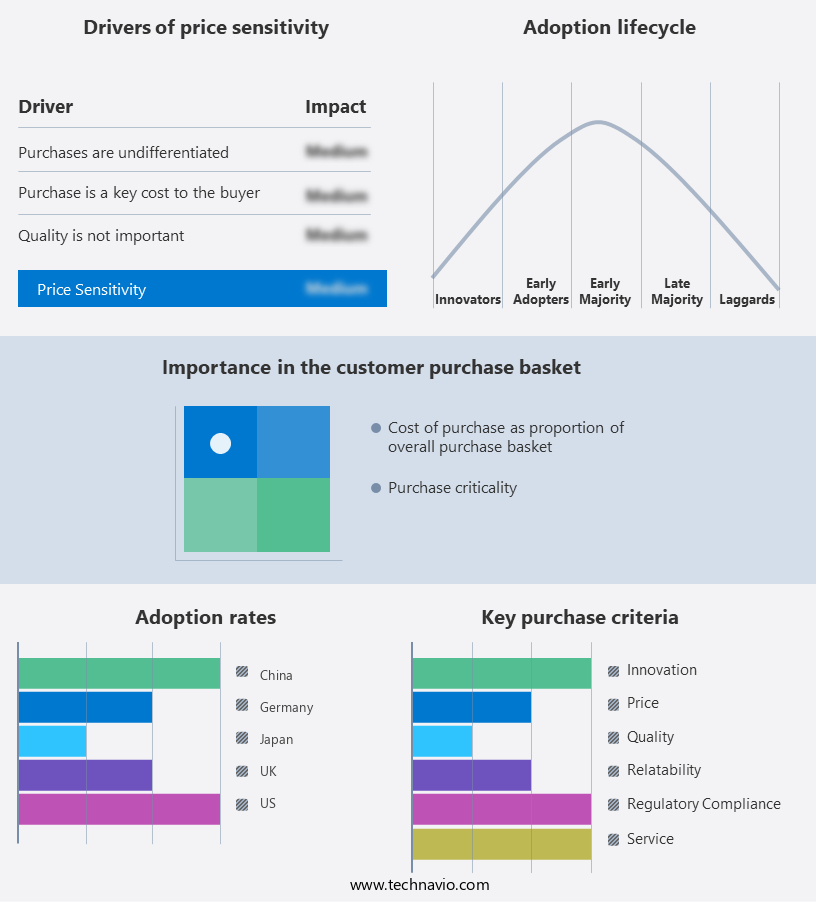
        The oriented strand board market forecasting report includes the adoption lifecycle of the market, covering from the innovator’s stage to the laggard’s stage. It focuses on adoption rates in different regions based on penetration. Furthermore, the oriented strand board market report also includes key purchase criteria and drivers of price sensitivity to help companies evaluate and develop their market growth analysis strategies.
        Oriented Strand Board Market Share by Geography

         Customer Landscape

        Key Companies & Market Insights

        Companies are implementing various strategies, such as strategic alliances, oriented strand board market forecast, partnerships, mergers and acquisitions, geographical expansion, and product/service launches, to enhance their presence In the industry.

        Coillte Cuideachta Ghniomhaiochta Ainmnithe - Oriented strand boards are manufactured by the company using fresh conifer wood, diverse glue systems, and paraffin wax, available in multiple technical classes. These boards are produced through a modern process, ensuring high-quality and consistency. The use of conifer wood, a renewable resource, contributes to the sustainability of the manufacturing process. The various glue systems employed provide strength and durability to the boards, while paraffin wax coating enhances their resistance to moisture and improves their overall performance. The company's commitment to innovation and quality is reflected in its production of oriented strand boards that cater to diverse applications and industries.

        The industry research and growth report includes detailed analyses of the competitive landscape of the market and information about key companies, including:

        • Coillte Cuideachta Ghniomhaiochta Ainmnithe
        • Dieffenbacher GmbH
        • DOK Kalevala LLC
        • Fritz Egger GmbH and Co. OG
        • J M Huber Corp.
        • Koch Industries Inc.
        • Kronospan Ltd.
        • Louisiana Pacific Corp.
        • Luli Group Co. Ltd.
        • Produits Forestiers Arbec Inc.
        • RoyOMartin
        • Sonae SGPS SA
        • SWISS KRONO Tec AG
        • Tolko Industries Ltd.
        • West Fraser Timber Co. Ltd.
        • Weyerhaeuser Co.

        Qualitative and quantitative analysis of companies has been conducted to help clients understand the wider business environment as well as the strengths and weaknesses of key industry players. Data is qualitatively analyzed to categorize companies as pure play, category-focused, industry-focused, and diversified; it is quantitatively analyzed to categorize companies as dominant, leading, strong, tentative, and weak.

        Research Analyst Overview

        The oriented strand board (OSB) market encompasses a robust and dynamic industry, characterized by the production and application of engineered wood panels. These panels, crafted from wood strands bonded together with adhesives, offer various benefits that cater to diverse construction needs. OSB has emerged as a popular alternative to traditional building materials, such as plywood and particleboard, due to its versatility and cost-effectiveness. Its applications span from roofing and wall sheathing to DIY projects like furniture, wood panelling, and flooring. Manufactured using small-diameter trees and recycled wood chips, OSB is an eco-friendly and sustainable choice for budget-conscious homeowners and builders.

        Its moisture resistance and durability make it an ideal solution for damp environments and extreme temperatures. OSB's sustainability is further enhanced by its production process, which minimizes waste and reduces the environmental impact. The use of formaldehyde-free adhesives and recycled materials in its manufacturing contributes to its eco-friendly reputation. The versatility of OSB extends beyond its environmental benefits. Its soundproofing properties make it an excellent choice for noise transmission reduction in homes and buildings. Additionally, its compatibility with various finishing options, such as painting, staining, and veneers, allows for customization in terms of aesthetics. OSB's fire resistance is another significant advantage, ensuring safety in various applications.

        Its resistance to extreme temperatures makes it suitable for use in various climates and regions. The installation process of OSB is relatively straightforward, requiring minimal preparation. Its compatibility with a wide range of tools, including saws, simplifies the construction process. Despite its numerous advantages, it is essential to note that proper knowledge and preparation are crucial when working with OSB. Proper handling and installation techniques are necessary to ensure optimal performance and longevity. In conclusion, the market represents a dynamic and evolving industry, driven by the production and application of a versatile, cost-effective, and eco-friendly engineered wood panel.

        Its benefits, including moisture resistance, durability, sustainability, and versatility, make it an attractive choice for various construction applications. Proper handling, preparation, and installation are essential to maximize its potential and ensure optimal performance.

        Market Scope

        Report Coverage

        Details

        Page number

        139

        Base year

        2023

        Historic period

        2018-2022

        Forecast period

        2024-2028

        Growth momentum & CAGR

        Accelerate at a CAGR of 12.13%

        Market growth 2024-2028

        USD 33636.7 million

        Market structure

        Fragmented

        YoY growth 2023-2024(%)

        10.94

        Key countries

        US, Germany, China, UK, and Japan

        Competitive landscape

        Leading Companies, Market Positioning of Companies, Competitive Strategies, and Industry Risks

        Request Free Sample

        What are the Key Data Covered in this Oriented Strand Board Market Research and Growth Report?

        • CAGR of the Oriented Strand Board industry during the forecast period
        • Detailed information on factors that will drive the growth and forecasting between 2024 and 2028
        • Precise estimation of the size of the market and its contribution of the industry in focus to the parent market
        • Accurate predictions about upcoming growth and trends and changes in consumer behaviour
        • Growth of the market across North America, Europe, APAC, South America, and Middle East and Africa
        • Thorough analysis of the market’s competitive landscape and detailed information about companies
        • Comprehensive analysis of factors that will challenge the oriented strand board market growth of industry companies

        We can help! Our analysts can customize this oriented strand board market research report to meet your requirements.

        Get in touch


        1 Executive Summary

        • 1.1 Market overview
          • Executive Summary - Chart on Market Overview
          • Executive Summary - Data Table on Market Overview
          • Executive Summary - Chart on Global Market Characteristics
          • Executive Summary - Chart on Market by Geography
          • Executive Summary - Chart on Market Segmentation by Application
          • Executive Summary - Chart on Incremental Growth
          • Executive Summary - Data Table on Incremental Growth
          • Executive Summary - Chart on Company Market Positioning

        2 Market Landscape

        • 2.1 Market ecosystem
          • Parent Market
          • Data Table on - Parent Market
        • 2.2 Market characteristics
          • Market characteristics analysis
        • 2.3 Value chain analysis
          • Value Chain Analysis

        3 Market Sizing

        • 3.1 Market definition
          • Offerings of companies included in the market definition
        • 3.2 Market segment analysis
          • Market segments
        • 3.3 Market size 2023
          • 3.4 Market outlook: Forecast for 2023-2028
            • Chart on Global - Market size and forecast 2023-2028 ($ million)
            • Data Table on Global - Market size and forecast 2023-2028 ($ million)
            • Chart on Global Market: Year-over-year growth 2023-2028 (%)
            • Data Table on Global Market: Year-over-year growth 2023-2028 (%)

          4 Historic Market Size

          • 4.1 Global Oriented Strand Board Market 2018 - 2022
            • Historic Market Size - Data Table on Global Oriented Strand Board Market 2018 - 2022 ($ million)
          • 4.2 Application segment analysis 2018 - 2022
            • Historic Market Size - Application Segment 2018 - 2022 ($ million)
          • 4.3 Geography segment analysis 2018 - 2022
            • Historic Market Size - Geography Segment 2018 - 2022 ($ million)
          • 4.4 Country segment analysis 2018 - 2022
            • Historic Market Size - Country Segment 2018 - 2022 ($ million)

          5 Five Forces Analysis

          • 5.1 Five forces summary
            • Five forces analysis - Comparison between 2023 and 2028
          • 5.2 Bargaining power of buyers
            • Bargaining power of buyers - Impact of key factors 2023 and 2028
          • 5.3 Bargaining power of suppliers
            • Bargaining power of suppliers - Impact of key factors in 2023 and 2028
          • 5.4 Threat of new entrants
            • Threat of new entrants - Impact of key factors in 2023 and 2028
          • 5.5 Threat of substitutes
            • Threat of substitutes - Impact of key factors in 2023 and 2028
          • 5.6 Threat of rivalry
            • Threat of rivalry - Impact of key factors in 2023 and 2028
          • 5.7 Market condition
            • Chart on Market condition - Five forces 2023 and 2028

          6 Market Segmentation by Application

          • 6.1 Market segments
            • Chart on Application - Market share 2023-2028 (%)
            • Data Table on Application - Market share 2023-2028 (%)
          • 6.2 Comparison by Application
            • Chart on Comparison by Application
            • Data Table on Comparison by Application
          • 6.3 Construction - Market size and forecast 2023-2028
            • Chart on Construction - Market size and forecast 2023-2028 ($ million)
            • Data Table on Construction - Market size and forecast 2023-2028 ($ million)
            • Chart on Construction - Year-over-year growth 2023-2028 (%)
            • Data Table on Construction - Year-over-year growth 2023-2028 (%)
          • 6.4 Furniture - Market size and forecast 2023-2028
            • Chart on Furniture - Market size and forecast 2023-2028 ($ million)
            • Data Table on Furniture - Market size and forecast 2023-2028 ($ million)
            • Chart on Furniture - Year-over-year growth 2023-2028 (%)
            • Data Table on Furniture - Year-over-year growth 2023-2028 (%)
          • 6.5 Packaging - Market size and forecast 2023-2028
            • Chart on Packaging - Market size and forecast 2023-2028 ($ million)
            • Data Table on Packaging - Market size and forecast 2023-2028 ($ million)
            • Chart on Packaging - Year-over-year growth 2023-2028 (%)
            • Data Table on Packaging - Year-over-year growth 2023-2028 (%)
          • 6.6 Others - Market size and forecast 2023-2028
            • Chart on Others - Market size and forecast 2023-2028 ($ million)
            • Data Table on Others - Market size and forecast 2023-2028 ($ million)
            • Chart on Others - Year-over-year growth 2023-2028 (%)
            • Data Table on Others - Year-over-year growth 2023-2028 (%)
          • 6.7 Market opportunity by Application
            • Market opportunity by Application ($ million)
            • Data Table on Market opportunity by Application ($ million)

          7 Customer Landscape

          • 7.1 Customer landscape overview
            • Analysis of price sensitivity, lifecycle, customer purchase basket, adoption rates, and purchase criteria

          8 Geographic Landscape

          • 8.1 Geographic segmentation
            • Chart on Market share by geography 2023-2028 (%)
            • Data Table on Market share by geography 2023-2028 (%)
          • 8.2 Geographic comparison
            • Chart on Geographic comparison
            • Data Table on Geographic comparison
          • 8.3 North America - Market size and forecast 2023-2028
            • Chart on North America - Market size and forecast 2023-2028 ($ million)
            • Data Table on North America - Market size and forecast 2023-2028 ($ million)
            • Chart on North America - Year-over-year growth 2023-2028 (%)
            • Data Table on North America - Year-over-year growth 2023-2028 (%)
          • 8.4 Europe - Market size and forecast 2023-2028
            • Chart on Europe - Market size and forecast 2023-2028 ($ million)
            • Data Table on Europe - Market size and forecast 2023-2028 ($ million)
            • Chart on Europe - Year-over-year growth 2023-2028 (%)
            • Data Table on Europe - Year-over-year growth 2023-2028 (%)
          • 8.5 APAC - Market size and forecast 2023-2028
            • Chart on APAC - Market size and forecast 2023-2028 ($ million)
            • Data Table on APAC - Market size and forecast 2023-2028 ($ million)
            • Chart on APAC - Year-over-year growth 2023-2028 (%)
            • Data Table on APAC - Year-over-year growth 2023-2028 (%)
          • 8.6 South America - Market size and forecast 2023-2028
            • Chart on South America - Market size and forecast 2023-2028 ($ million)
            • Data Table on South America - Market size and forecast 2023-2028 ($ million)
            • Chart on South America - Year-over-year growth 2023-2028 (%)
            • Data Table on South America - Year-over-year growth 2023-2028 (%)
          • 8.7 Middle East and Africa - Market size and forecast 2023-2028
            • Chart on Middle East and Africa - Market size and forecast 2023-2028 ($ million)
            • Data Table on Middle East and Africa - Market size and forecast 2023-2028 ($ million)
            • Chart on Middle East and Africa - Year-over-year growth 2023-2028 (%)
            • Data Table on Middle East and Africa - Year-over-year growth 2023-2028 (%)
          • 8.8 US - Market size and forecast 2023-2028
            • Chart on US - Market size and forecast 2023-2028 ($ million)
            • Data Table on US - Market size and forecast 2023-2028 ($ million)
            • Chart on US - Year-over-year growth 2023-2028 (%)
            • Data Table on US - Year-over-year growth 2023-2028 (%)
          • 8.9 Germany - Market size and forecast 2023-2028
            • Chart on Germany - Market size and forecast 2023-2028 ($ million)
            • Data Table on Germany - Market size and forecast 2023-2028 ($ million)
            • Chart on Germany - Year-over-year growth 2023-2028 (%)
            • Data Table on Germany - Year-over-year growth 2023-2028 (%)
          • 8.10 China - Market size and forecast 2023-2028
            • Chart on China - Market size and forecast 2023-2028 ($ million)
            • Data Table on China - Market size and forecast 2023-2028 ($ million)
            • Chart on China - Year-over-year growth 2023-2028 (%)
            • Data Table on China - Year-over-year growth 2023-2028 (%)
          • 8.11 UK - Market size and forecast 2023-2028
            • Chart on UK - Market size and forecast 2023-2028 ($ million)
            • Data Table on UK - Market size and forecast 2023-2028 ($ million)
            • Chart on UK - Year-over-year growth 2023-2028 (%)
            • Data Table on UK - Year-over-year growth 2023-2028 (%)
          • 8.12 Japan - Market size and forecast 2023-2028
            • Chart on Japan - Market size and forecast 2023-2028 ($ million)
            • Data Table on Japan - Market size and forecast 2023-2028 ($ million)
            • Chart on Japan - Year-over-year growth 2023-2028 (%)
            • Data Table on Japan - Year-over-year growth 2023-2028 (%)
          • 8.13 Market opportunity by geography
            • Market opportunity by geography ($ million)
            • Data Tables on Market opportunity by geography ($ million)

          9 Drivers, Challenges, and Opportunity/Restraints

          • 9.1 Market drivers
            • 9.2 Market challenges
              • 9.3 Impact of drivers and challenges
                • Impact of drivers and challenges in 2023 and 2028
              • 9.4 Market opportunities/restraints

                10 Competitive Landscape

                • 10.1 Overview
                  • 10.2 Competitive Landscape
                    • Overview on criticality of inputs and factors of differentiation
                  • 10.3 Landscape disruption
                    • Overview on factors of disruption
                  • 10.4 Industry risks
                    • Impact of key risks on business

                  11 Competitive Analysis

                  • 11.1 Companies profiled
                    • Companies covered
                  • 11.2 Market positioning of companies
                    • Matrix on companies position and classification
                  • 11.3 Fritz Egger GmbH and Co. OG
                    • Fritz Egger GmbH and Co. OG - Overview
                    • Fritz Egger GmbH and Co. OG - Product / Service
                    • Fritz Egger GmbH and Co. OG - Key offerings
                  • 11.4 J M Huber Corp.
                    • J M Huber Corp. - Overview
                    • J M Huber Corp. - Product / Service
                    • J M Huber Corp. - Key news
                    • J M Huber Corp. - Key offerings
                  • 11.5 Koch Industries Inc.
                    • Koch Industries Inc. - Overview
                    • Koch Industries Inc. - Product / Service
                    • Koch Industries Inc. - Key offerings
                  • 11.6 Kronospan Ltd.
                    • Kronospan Ltd. - Overview
                    • Kronospan Ltd. - Product / Service
                    • Kronospan Ltd. - Key offerings
                  • 11.7 Louisiana Pacific Corp.
                    • Louisiana Pacific Corp. - Overview
                    • Louisiana Pacific Corp. - Business segments
                    • Louisiana Pacific Corp. - Key offerings
                    • Louisiana Pacific Corp. - Segment focus
                  • 11.8 RoyOMartin
                    • RoyOMartin - Overview
                    • RoyOMartin - Product / Service
                    • RoyOMartin - Key offerings
                  • 11.9 SWISS KRONO Tec AG
                    • SWISS KRONO Tec AG - Overview
                    • SWISS KRONO Tec AG - Product / Service
                    • SWISS KRONO Tec AG - Key offerings
                  • 11.10 Tolko Industries Ltd.
                    • Tolko Industries Ltd. - Overview
                    • Tolko Industries Ltd. - Product / Service
                    • Tolko Industries Ltd. - Key offerings
                  • 11.11 West Fraser Timber Co. Ltd.
                    • West Fraser Timber Co. Ltd. - Overview
                    • West Fraser Timber Co. Ltd. - Business segments
                    • West Fraser Timber Co. Ltd. - Key offerings
                    • West Fraser Timber Co. Ltd. - Segment focus
                  • 11.12 Weyerhaeuser Co.
                    • Weyerhaeuser Co. - Overview
                    • Weyerhaeuser Co. - Business segments
                    • Weyerhaeuser Co. - Key news
                    • Weyerhaeuser Co. - Key offerings
                    • Weyerhaeuser Co. - Segment focus

                  12 Appendix

                  • 12.1 Scope of the report
                    • 12.2 Inclusions and exclusions checklist
                      • Inclusions checklist
                      • Exclusions checklist
                    • 12.3 Currency conversion rates for US$
                      • Currency conversion rates for US$
                    • 12.4 Research methodology
                      • Research methodology
                    • 12.5 Data procurement
                      • Information sources
                    • 12.6 Data validation
                      • Data validation
                    • 12.7 Validation techniques employed for market sizing
                      • Validation techniques employed for market sizing
                    • 12.8 Data synthesis
                      • Data synthesis
                    • 12.9 360 degree market analysis
                      • 360 degree market analysis
                    • 12.10 List of abbreviations
                      • List of abbreviations

                    Research Methodology

                    Technavio presents a detailed picture of the market by way of study, synthesis, and summation of data from multiple sources. The analysts have presented the various facets of the market with a particular focus on identifying the key industry influencers. The data thus presented is comprehensive, reliable, and the result of extensive research, both primary and secondary.

                    INFORMATION SOURCES

                    Primary sources

                    • Manufacturers and suppliers
                    • Channel partners
                    • Industry experts
                    • Strategic decision makers

                    Secondary sources

                    • Industry journals and periodicals
                    • Government data
                    • Financial reports of key industry players
                    • Historical data
                    • Press releases

                    DATA ANALYSIS

                    Data Synthesis

                    • Collation of data
                    • Estimation of key figures
                    • Analysis of derived insights

                    Data Validation

                    • Triangulation with data models
                    • Reference against proprietary databases
                    • Corroboration with industry experts

                    REPORT WRITING

                    Qualitative

                    • Market drivers
                    • Market challenges
                    • Market trends
                    • Five forces analysis

                    Quantitative

                    • Market size and forecast
                    • Market segmentation
                    • Geographical insights
                    • Competitive landscape

                    Interested in this report?

                    Get your sample now to see our research methodology and insights!

                    Download Now

                    Frequently Asked Questions

                    Oriented Strand Board market growth will increase by $ 33636.7 mn during 2024-2028 .

                    The Oriented Strand Board market is expected to grow at a CAGR of 12.13% during 2024-2028 .

                    Oriented Strand Board market is segmented by Application( Construction, Furniture, Packaging, Others)

                    Coillte Cuideachta Ghniomhaiochta Ainmnithe, Dieffenbacher GmbH, DOK Kalevala LLC, Fritz Egger GmbH and Co. OG, J M Huber Corp., Koch Industries Inc., Kronospan Ltd., Louisiana Pacific Corp., Luli Group Co. Ltd., Produits Forestiers Arbec Inc., RoyOMartin, Sonae SGPS SA, SWISS KRONO Tec AG, Tolko Industries Ltd., West Fraser Timber Co. Ltd., Weyerhaeuser Co. are a few of the key vendors in the Oriented Strand Board market.

                    North America will register the highest growth rate of 40% among the other regions. Therefore, the Oriented Strand Board market in North America is expected to garner significant business opportunities for the vendors during the forecast period.

                    US, Germany, China, UK, Japan

                    • Increasing residential and commercial construction activitiesResidential and commercial construction activities have rapidly increased across countries worldwide in recent years. This growth can be attributed to the increased investments from the government in the construction of new developmental projects. These activities will lead to high demand for OSBs during the forecast period. In developing countries is the driving factor this market.
                    • such as India is the driving factor this market.
                    • there is growing urbanization and new developmental projects is the driving factor this market.
                    • including new residential projects. The rising economy in India has led to the development of smart cities. Investments of $31 is the driving factor this market.
                    • 650 billion have been proposed by 100 cities in India under their smart cities plan. Hundred smart cities and 500 cities are likely to invite investments worth $27.31 billion during the forecast period. As a result is the driving factor this market.
                    • the country will witness new residential projects and is the driving factor this market.
                    • as a result is the driving factor this market.
                    • increased demand for OSBs during the forecast period. Various countries are investing in the development of skyscrapers. Almost 144 buildings were built measuring 200 meters (656 feet) or taller in 2020 globally is the driving factor this market.
                    • and China accounted for more than 50% of the skyscrapers constructed globally in the same year. Some of the examples of increasing residential and commercial construction activities are the following: Merdeka PNB118 is the driving factor this market.
                    • a 118-story is the driving factor this market.
                    • 644-meter (2 is the driving factor this market.
                    • 113 feet) high skyscraper is the driving factor this market.
                    • is under construction in Malaysia. It is expected to be completed by 2024 and will be the tallest building in Malaysia. GIFT Diamond Tower is a high-rise project approved for Gujarat International Finance Tec-City (GIFT City). In Ahmedabad is the driving factor this market.
                    • India is the driving factor this market.
                    • the project has a planned height of 400 meters and will comprise 87 floors. The construction of the tower will be completed by year-end 2022. In Japan is the driving factor this market.
                    • Aman Residences in Tokyo is a skyscraper under construction and will be declared the tallest building in Japan by 2023 as the project gets completed. The property will have 91 residential units is the driving factor this market.
                    • and they will be located on floors 54 to 64 at heights of 260 to 330 meters. In the UAE is the driving factor this market.
                    • Dubai Creek Tower is the driving factor this market.
                    • a hyper-tall tower under development in Dubai is the driving factor this market.
                    • is expected to be completed by Q4 2022. The tower is being developed by Emaar Properties is the driving factor this market.
                    • a UAE-based multinational real estate development company. The tower is a part of the proposed Dubai Creek Harbor. Upon completion is the driving factor this market.
                    • the tower will be the tallest in the world is the driving factor this market.
                    • at a height of 1 is the driving factor this market.
                    • 300 meters.In Saudi Arabia is the driving factor this market.
                    • the ongoing construction Makkah development project of the developer Jabal Omar Development Company will be completed by year-end 2022. The project is worth $4.4 billion and comprises towering hotels and residential buildings. The project will be completed in eight phases is the driving factor this market.
                    • which involve the construction of a twin-tower hotel is the driving factor this market.
                    • dedicated prayer areas is the driving factor this market.
                    • a seven-star facility is the driving factor this market.
                    • and other multiple towering hotels. The project involves the construction of 40 towers built across an area of approximately two million square meters. The growing disposable income of consumers and the rising development of affordable residential projects is the driving factor this market.
                    • especially in urban regions is the driving factor this market.
                    • will support the growth of construction activities is the driving factor this market.
                    • especially in developing economies. Such factors will drive the growth of the global oriented strand board market during the forecast period. is the driving factor this market.

                    The Oriented Strand Board market vendors should focus on grabbing business opportunities from the Construction segment as it accounted for the largest market share in the base year.
