


Penicillin Market Analysis North America, Europe, Asia, Rest of World (ROW) - US, Canada, UK, Germany, China - Size and Forecast 2024-2028

Penicillin Market Analysis North America, Europe, Asia, Rest of World (ROW) - US, Canada, UK, Germany, China - Size and Forecast 2024-2028

Published: Mar 2024 165 Pages SKU: IRTNTR40093

Market Overview at a Glance

$2.82 B
Market Opportunity
5.4%
CAGR
4.72
YoY growth 2023-2024(%)

Penicillin Market Size 2024-2028

The penicillin market size is forecast to increase by USD 2.82 billion at a CAGR of 5.4% between 2023 and 2028.

  • The market is experiencing significant growth driven by the rising prevalence of infectious diseases worldwide. According to the World Health Organization, infectious diseases account for approximately 15 million deaths annually, making it a major public health concern. Penicillin, as the world's first antibiotic, remains a cornerstone in infectious disease treatment. However, market growth is not without challenges. Strategic alliances and mergers and acquisitions among penicillin companies are transforming the competitive landscape. These collaborations aim to expand market reach, enhance product portfolios, and improve operational efficiencies. Furthermore, the increasing use of alternative therapies, such as biologics and antimicrobial peptides, is resulting in decreased purchase of penicillin.
  • Companies must navigate this shift by investing in research and development to innovate and differentiate their offerings. In summary, the market presents both opportunities and challenges for stakeholders. Companies seeking to capitalize on market opportunities must stay abreast of emerging trends, collaborate effectively, and invest in research and development to maintain a competitive edge.

What will be the Size of the Penicillin Market during the forecast period?
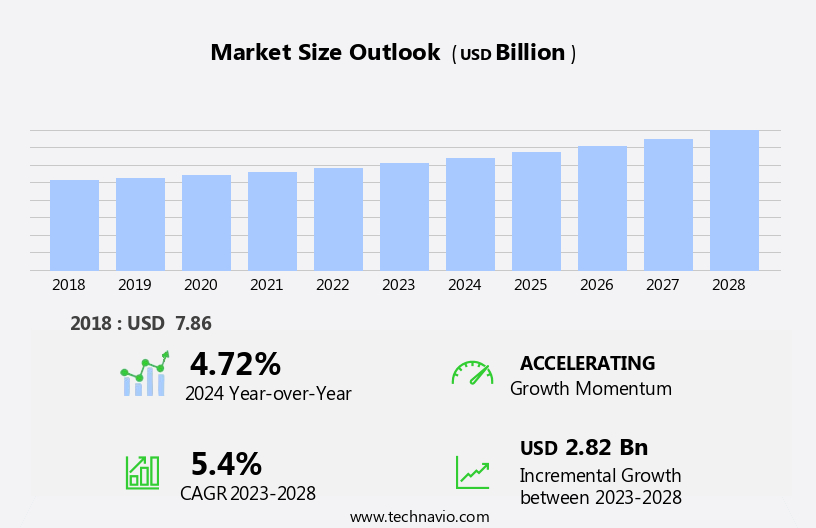
Penicillin Market Size

 Request Free Sample

  • The market is experiencing significant shifts due to the impact of generic medications and disruptions in supply chains caused by lockdowns. The demand for narrow spectrum penicillin, such as generic penicillin medication, remains strong for treating bacterial infections caused by Neisseria meningitidis and respiratory tract infections. The source of penicillin includes finished products derived from natural penicillin and R&D efforts for semisynthetic penicillin like aminopenicillin and ampicillin. The spectrum of activity for penicillin extends to various bacterial infections, including those caused by Streptococcus pyogenes, pneumonia, and penicillinase-resistant penicillin for combating Streptococcus pneumoniae. Travel restrictions have influenced the market dynamics, leading to increased demand for brand-name counterparts of broad spectrum penicillin.
  • Raw materials and production processes are undergoing continuous improvements to address antimicrobial resistance (AMR). The market is seeing a shift towards capsules and injections for better patient compliance and treatment efficacy. Key players are investing in R&D to develop penicillinase-resistant penicillin and broad spectrum penicillin to cater to the evolving needs of the healthcare industry. In summary, the market is adapting to the challenges posed by the global health crisis and the increasing prevalence of bacterial infections. Players are focusing on innovation and improving production processes to cater to the growing demand for effective penicillin-based treatments.

How is this Penicillin Industry segmented?

The penicillin industry research report provides comprehensive data (region-wise segment analysis), with forecasts and estimates in "USD billion" for the period 2024-2028, as well as historical data from 2018-2022 for the following segments.

  • Source
    • Semisynthetic
    • Natural
  • Type
    • Oral
    • Parenteral
  • Geography
    • North America
      • US
      • Canada
    • Europe
      • Germany
      • UK
    • Middle East and Africa
      • APAC
        • China
      • South America
        • Rest of World (ROW)

        By Source Insights

        The semisynthetic segment is estimated to witness significant growth during the forecast period.

        Semisynthetic penicillin, derived from naturally occurring antibiotics through hydrolysis and further synthesis, offers expanded coverage against a broad spectrum of organisms, including streptococci, staphylococci, aerobic Gram-negative bacteria, and anaerobes. This class of antibiotics can be administered orally and parenterally, making it a cost-effective alternative to other antibiotics. In most instances, semisynthetic penicillin can be used alone for treating various bacterial infections, such as ear infections, respiratory tract infections, and urinary tract infections. However, for highly resistant organisms, like Pseudomonas aeruginosa, combination therapy with aminoglycosides may be required. The development of penicillinase-resistant penicillin and semisynthetic penicillin has significantly impacted the treatment landscape for various bacterial infections, including meningococcal meningitis, pneumonia, and gonorrhea.

        These advancements have been crucial in addressing the growing concern of antimicrobial resistance (AMR) and the need for novel antibacterials. Semisynthetic penicillin is produced using raw materials sourced globally, with significant manufacturing capacity in Europe. The market for semisynthetic penicillin is diverse, with various players, including brand-name counterparts, generic medications, and online providers, catering to the needs of various stakeholders, such as hospitals, retail pharmacies, and individual consumers. The aging demographic and the increasing prevalence of bacterial infections are key drivers for the growth of the semisynthetic the market.
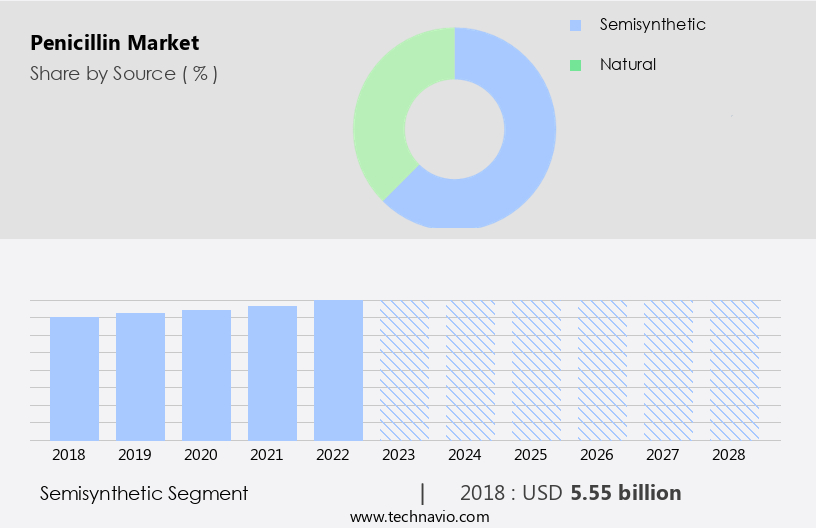
        Penicillin Market Size

        Get a glance at the market report of share of various segments Request Free Sample

        The Semisynthetic segment was valued at USD 5.55 billion in 2018 and showed a gradual increase during the forecast period.

        Regional Analysis

        North America is estimated to contribute 31% to the growth of the global market during the forecast period.Technavio’s analysts have elaborately explained the regional trends and drivers that shape the market during the forecast period.
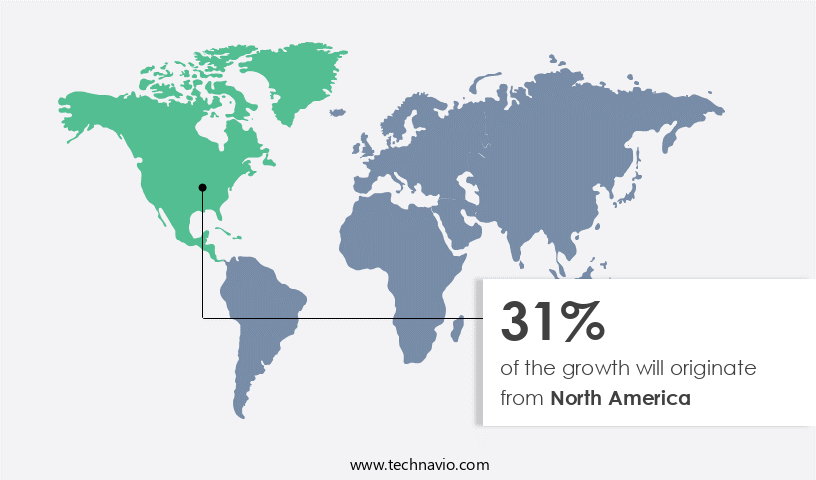
        Penicillin Market Share by Geography

        For more insights on the market size of various regions, Request Free Sample

        The Penicillin drug market experiences a complex landscape shaped by various factors. Reimbursement policies and co-pay assistance programs in developed regions enable individuals to access medical treatment, yet the increasing availability of generic drugs partially offsets growth. Cost containment strategies have led some manufacturers to explore new markets such as Brazil, China, and India for better business opportunities. Favorable regulatory initiatives for antibiotic approvals encourage drug developers to innovate, despite a decreasing consumption trend in the US due to heightened awareness and the growing adoption of generics. Infectious diseases continue to pose a significant challenge, with respiratory tract infections, scarlet fever, and meningococcal meningitis among the most common.

        Penicillin and its derivatives, including broad and narrow spectrum penicillins, remain crucial in treating various bacterial infections, including those caused by Streptococcus pneumoniae, Streptococcus pyogenes, and Neisseria meningitidis. However, the emergence of antimicrobial resistance (AMR) and the need for novel antibacterials is a pressing concern. Semisynthetic penicillins and beta-lactamase inhibitors, such as xeruborbactam, are essential tools in combating AMR. These advanced treatments, along with combination medications and brand-name counterparts, are increasingly being used to address the threat of antibiotic resistance. Ampicillin, amoxicillin, and other antibiotics continue to be popular choices for treating various bacterial infections, including urinary tract infections, ear infections, pneumonia, and gonorrhea.

        The market for antibiotics is influenced by various factors, including the spectrum of activity, route of administration, and the presence of gram-positive and gram-negative bacteria. Injections, capsules, and oral medications are the primary delivery systems, with finished products and drug formulations playing a significant role in the market's dynamics. The aging demographic and the rising prevalence of bacterial infections, particularly in developing regions, further contribute to the market's growth. Despite the challenges, the market for antibiotics remains a critical component of global healthcare systems. The ongoing R&D efforts to develop new antibiotics and delivery systems, as well as the increasing focus on AMR, ensure that the market remains dynamic and evolving.

        Market Dynamics

        Our researchers analyzed the data with 2023 as the base year, along with the key drivers, trends, and challenges. A holistic analysis of drivers will help companies refine their marketing strategies to gain a competitive advantage.

        What are the key market drivers leading to the rise in the adoption of Penicillin Industry?

        • Rising prevalence of infectious diseases is the key driver of the market. 

        • The global health landscape has been significantly impacted by the rise in infectious diseases, with the World Health Organization reporting over 14.9 million deaths associated with such diseases in 2020 and 2021. Infectious diseases are caused by pathogens and can be transmitted through direct or indirect contact. Demographic changes, particularly urbanization, have emerged as major contributors to the global proliferation of these diseases. Urbanization has led to overcrowding, increasing the likelihood of disease transmission. As globalization continues to expand, international travel and trade facilitate the spread of pathogens across borders. These factors underscore the importance of effective treatments and preventative measures in mitigating the impact of infectious diseases.
        • Penicillin, a widely-used antibiotic, plays a crucial role in treating various bacterial infections. Its antimicrobial properties make it an essential tool in the fight against infectious diseases. The market for penicillin is driven by the growing prevalence of infectious diseases and the increasing demand for effective treatments. The market is expected to grow steadily in the coming years, as the global population continues to grapple with the challenges posed by these diseases.

        What are the market trends shaping the Penicillin Industry?

        • Strategic alliances and M and A among penicillin vendors is the upcoming market trend. 

        • Strategic alliances and collaborations play a significant role in the pharmaceutical industry, particularly in the development and commercialization of drugs across various regions. Co-development agreements between pharmaceutical companies enable the sharing of technical expertise, regulatory experience, and development costs, reducing liability risks and attracting venture investments. Mergers and acquisitions (M&A) are another common strategy, aimed at increasing market penetration or enhancing the product portfolio of the parent company. These activities foster innovation and competition in the industry, ultimately benefiting consumers and driving market growth.
        • As a professional assistant, I am committed to providing you with accurate and up-to-date information on market dynamics in the pharmaceutical sector. If you require further insights or have specific questions, please do not hesitate to ask.

        What challenges does the Penicillin Industry face during its growth?

        • Increasing use of alternative therapies resulting in decreased purchase of penicillin is a key challenge affecting the industry growth. 

        • The market faces challenges due to the increasing preference for alternative medical interventions for treating various infections. For instance, in the case of sinusitis, the choice of antibiotic depends on the severity of the condition. However, the availability of alternative therapies, such as antimicrobial therapy, has led to a decrease in the demand for penicillin and its derivatives. According to the US Department of Health and Human Services, approximately 10% of the US population reported allergies to penicillin in 2022, which is higher among hospital inpatients and residents in healthcare-related facilities. This prevalence of allergies further increases the usage of alternative therapies, thereby impeding the growth of the market.
        • Despite these challenges, ongoing research and development efforts in the antibiotics industry are expected to provide opportunities for market growth. The market dynamics are influenced by various factors, including the prevalence of infections, the efficacy of alternative therapies, and the incidence of antibiotic resistance.

        Exclusive Customer Landscape

        The penicillin market forecasting report includes the adoption lifecycle of the market, covering from the innovator’s stage to the laggard’s stage. It focuses on adoption rates in different regions based on penetration. Furthermore, the penicillin market report also includes key purchase criteria and drivers of price sensitivity to help companies evaluate and develop their market growth analysis strategies.
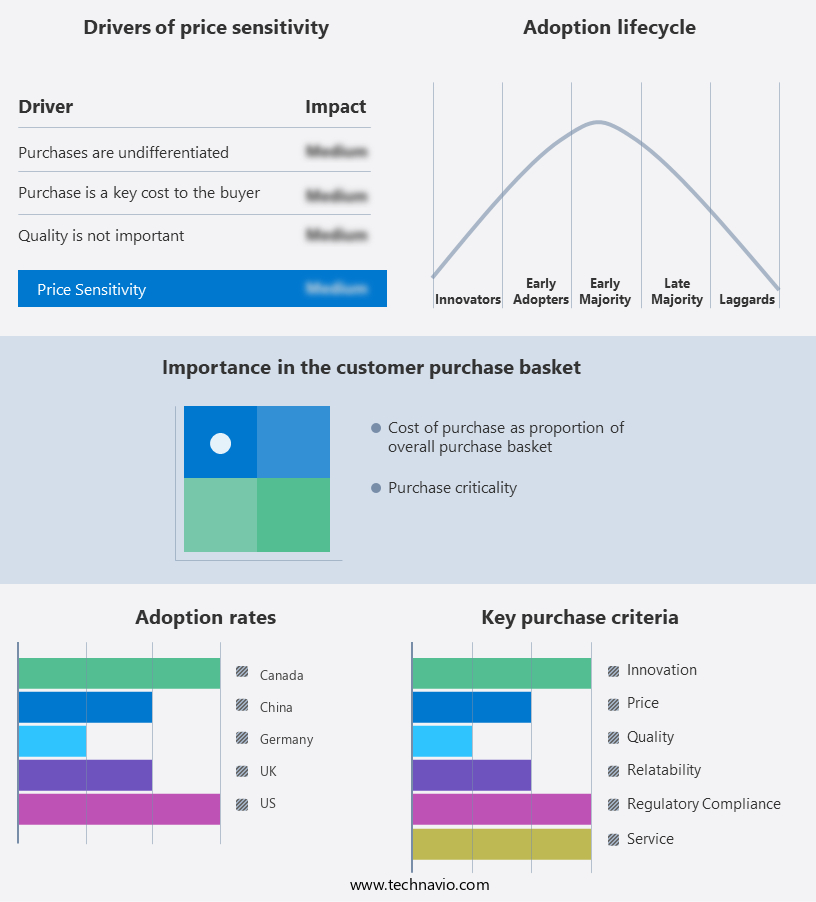
        Penicillin Market Share by Geography

         Customer Landscape

        Key Companies & Market Insights

        Companies are implementing various strategies, such as strategic alliances, penicillin market forecast, partnerships, mergers and acquisitions, geographical expansion, and product/service launches, to enhance their presence in the industry.

        Abbott Laboratories - The company supplies a diverse array of penicillin products, including Abbott Penicillin G Potassium tablets, addressing a broad spectrum of bacterial infections. These effective solutions contribute significantly to the global healthcare landscape, enhancing treatment options for various bacterial afflictions.

        The industry research and growth report includes detailed analyses of the competitive landscape of the market and information about key companies, including:

        • Abbott Laboratories
        • AdvaCare Pharma
        • Aenova Holding GmbH
        • Astellas Pharma Inc.
        • Canvax Biotech SL
        • Cipla Ltd.
        • F. Hoffmann La Roche Ltd.
        • Fermenta Biotech Ltd.
        • Focus Technology Co. Ltd.
        • FUJIFILM Corp.
        • GlaxoSmithKline Plc
        • Glenmark Pharmaceuticals Ltd.
        • Lupin Ltd.
        • Merck KGaA
        • Novartis AG
        • Pfizer Inc.
        • Recipharm AB
        • Sanofi SA
        • Viatris Inc.
        • Wellona Pharma

        Qualitative and quantitative analysis of companies has been conducted to help clients understand the wider business environment as well as the strengths and weaknesses of key industry players. Data is qualitatively analyzed to categorize companies as pure play, category-focused, industry-focused, and diversified; it is quantitatively analyzed to categorize companies as dominant, leading, strong, tentative, and weak.

        Research Analyst Overview

        The Penicillin Drug Market encompasses a broad spectrum of antibacterial agents, with Penicillin being a prominent antibiotic in the arsenal against various bacterial infections. This market is characterized by a complex global supply chain, with numerous players involved in the production of raw materials, manufacturing, and distribution of finished products. Sandoz, a leading global company, plays a significant role in the Penicillin Drug Market by providing a wide range of Penicillin-based products. Online providers have emerged as a key distribution channel, offering convenience and accessibility to consumers. Respiratory tract infections, including scarlet fever, are among the common indications for Penicillin use.

        R&D efforts are ongoing to develop Penicillinase-resistant Penicillin and other beta-lactam antimicrobials to combat the growing threat of Antimicrobial Resistance (AMR). Raw materials, such as penicillin G and V, are sourced from various suppliers and undergo extensive purification processes before being used in the manufacturing of Penicillin-based drugs. Lockdowns and travel restrictions have impacted the Penicillin Drug Market, disrupting global supply chains and leading to increased demand for local manufacturing in developing regions. Ear infections, pneumonia, and urinary tract infections are among the most common indications for Penicillin use. Manufacturing investments have been made to increase European manufacturing capacity, with a focus on producing broad-spectrum Penicillin and Semisynthetic Penicillin.

        Infectious diseases, including meningitis, syphilis, and gonorrhea, continue to be major indications for Penicillin use. The Penicillin Drug Market is segmented into various forms, including tablets, capsules, and injectables. Brand-name counterparts and generic medications are available for most Penicillin-based drugs, with the latter offering cost advantages. Beta-lactamase inhibitors, such as Xeruborbactam, are used to enhance the activity of Penicillin against gram-negative bacteria. The market for Penicillin and other antibiotics is influenced by various factors, including the spectrum of activity, route of administration, and patient demographics. Aging demographics and the increasing prevalence of bacterial infections are expected to drive demand for Penicillin and other antibiotics.

        Qpex Biopharma Inc. And Microbiology Insights are among the companies focused on developing novel antibacterials to address the growing threat of AMR. Combination medications and delivery systems are also being explored to improve the efficacy and safety of Penicillin-based drugs. In conclusion, the Penicillin Drug Market is a dynamic and evolving industry, with ongoing efforts to address the challenges posed by AMR and meet the growing demand for effective antibacterial agents. The market is characterized by a complex global supply chain, with numerous players involved in various stages of production and distribution. Penicillin remains a cornerstone of antibacterial therapy, with ongoing R&D efforts focused on developing new formulations and addressing the growing threat of AMR.

        Market Scope

        Report Coverage

        Details

        Page number

        165

        Base year

        2023

        Historic period

        2018-2022

        Forecast period

        2024-2028

        Growth momentum & CAGR

        Accelerate at a CAGR of 5.4%

        Market growth 2024-2028

        USD 2.82 billion

        Market structure

        Fragmented

        YoY growth 2023-2024(%)

        4.72

        Key countries

        US, Canada, UK, Germany, and China

        Competitive landscape

        Leading Companies, Market Positioning of Companies, Competitive Strategies, and Industry Risks

        Request Free Sample

        What are the Key Data Covered in this Penicillin Market Research and Growth Report?

        • CAGR of the Penicillin industry during the forecast period
        • Detailed information on factors that will drive the growth and forecasting between 2024 and 2028
        • Precise estimation of the size of the market and its contribution of the industry in focus to the parent market
        • Accurate predictions about upcoming growth and trends and changes in consumer behaviour
        • Growth of the market across North America, Europe, Asia, and Rest of World (ROW)
        • Thorough analysis of the market’s competitive landscape and detailed information about companies
        • Comprehensive analysis of factors that will challenge the penicillin market growth of industry companies

        We can help! Our analysts can customize this penicillin market research report to meet your requirements.

        Get in touch


        1 Executive Summary

        • 1.1 Market overview
          • Exhibit 01: Executive Summary – Chart on Market Overview
          • Exhibit 02: Executive Summary – Data Table on Market Overview
          • Exhibit 03: Executive Summary – Chart on Global Market Characteristics
          • Exhibit 04: Executive Summary – Chart on Market by Geography
          • Exhibit 05: Executive Summary – Chart on Market Segmentation by Source
          • Exhibit 06: Executive Summary – Chart on Market Segmentation by Type
          • Exhibit 07: Executive Summary – Chart on Incremental Growth
          • Exhibit 08: Executive Summary – Data Table on Incremental Growth
          • Exhibit 09: Executive Summary – Chart on Vendor Market Positioning

        2 Market Landscape

        • 2.1 Market ecosystem
          • Exhibit 10: Parent market
          • Exhibit 11: Market Characteristics

        3 Market Sizing

        • 3.1 Market definition
          • Exhibit 12: Offerings of vendors included in the market definition
        • 3.2 Market segment analysis
          • Exhibit 13: Market segments
        • 3.3 Market size 2023
          • 3.4 Market outlook: Forecast for 2023-2028
            • Exhibit 14: Chart on Global - Market size and forecast 2023-2028 ($ billion)
            • Exhibit 15: Data Table on Global - Market size and forecast 2023-2028 ($ billion)
            • Exhibit 16: Chart on Global Market: Year-over-year growth 2023-2028 (%)
            • Exhibit 17: Data Table on Global Market: Year-over-year growth 2023-2028 (%)

          4 Historic Market Size

          • 4.1 Global penicillin market 2018 - 2022
            • Exhibit 18: Historic Market Size – Data Table on global penicillin market 2018 - 2022 ($ billion)
          • 4.2 Source Segment Analysis 2018 - 2022
            • Exhibit 19: Historic Market Size – Source Segment 2018 - 2022 ($ billion)
          • 4.3 Type Segment Analysis 2018 - 2022
            • Exhibit 20: Historic Market Size – Type Segment 2018 - 2022 ($ billion)
          • 4.4 Geography Segment Analysis 2018 - 2022
            • Exhibit 21: Historic Market Size – Geography Segment 2018 - 2022 ($ billion)
          • 4.5 Country Segment Analysis 2018 - 2022
            • Exhibit 22: Historic Market Size – Country Segment 2018 - 2022 ($ billion)

          5 Five Forces Analysis

          • 5.1 Five forces summary
            • Exhibit 23: Five forces analysis - Comparison between 2023 and 2028
          • 5.2 Bargaining power of buyers
            • Exhibit 24: Chart on Bargaining power of buyers – Impact of key factors 2023 and 2028
          • 5.3 Bargaining power of suppliers
            • Exhibit 25: Bargaining power of suppliers – Impact of key factors in 2023 and 2028
          • 5.4 Threat of new entrants
            • Exhibit 26: Threat of new entrants – Impact of key factors in 2023 and 2028
          • 5.5 Threat of substitutes
            • Exhibit 27: Threat of substitutes – Impact of key factors in 2023 and 2028
          • 5.6 Threat of rivalry
            • Exhibit 28: Threat of rivalry – Impact of key factors in 2023 and 2028
          • 5.7 Market condition
            • Exhibit 29: Chart on Market condition - Five forces 2023 and 2028

          6 Market Segmentation by Source

          • 6.1 Market segments
            • Exhibit 30: Chart on Source - Market share 2023-2028 (%)
            • Exhibit 31: Data Table on Source - Market share 2023-2028 (%)
          • 6.2 Comparison by Source
            • Exhibit 32: Chart on Comparison by Source
            • Exhibit 33: Data Table on Comparison by Source
          • 6.3 Semisynthetic - Market size and forecast 2023-2028
            • Exhibit 34: Chart on Semisynthetic - Market size and forecast 2023-2028 ($ billion)
            • Exhibit 35: Data Table on Semisynthetic - Market size and forecast 2023-2028 ($ billion)
            • Exhibit 36: Chart on Semisynthetic - Year-over-year growth 2023-2028 (%)
            • Exhibit 37: Data Table on Semisynthetic - Year-over-year growth 2023-2028 (%)
          • 6.4 Natural - Market size and forecast 2023-2028
            • Exhibit 38: Chart on Natural - Market size and forecast 2023-2028 ($ billion)
            • Exhibit 39: Data Table on Natural - Market size and forecast 2023-2028 ($ billion)
            • Exhibit 40: Chart on Natural - Year-over-year growth 2023-2028 (%)
            • Exhibit 41: Data Table on Natural - Year-over-year growth 2023-2028 (%)
          • 6.5 Market opportunity by Source
            • Exhibit 42: Market opportunity by Source ($ billion)
            • Exhibit 43: Data Table on Market opportunity by Source ($ billion)

          7 Market Segmentation by Type

          • 7.1 Market segments
            • Exhibit 44: Chart on Type - Market share 2023-2028 (%)
            • Exhibit 45: Data Table on Type - Market share 2023-2028 (%)
          • 7.2 Comparison by Type
            • Exhibit 46: Chart on Comparison by Type
            • Exhibit 47: Data Table on Comparison by Type
          • 7.3 Oral - Market size and forecast 2023-2028
            • Exhibit 48: Chart on Oral - Market size and forecast 2023-2028 ($ billion)
            • Exhibit 49: Data Table on Oral - Market size and forecast 2023-2028 ($ billion)
            • Exhibit 50: Chart on Oral - Year-over-year growth 2023-2028 (%)
            • Exhibit 51: Data Table on Oral - Year-over-year growth 2023-2028 (%)
          • 7.4 Parenteral - Market size and forecast 2023-2028
            • Exhibit 52: Chart on Parenteral - Market size and forecast 2023-2028 ($ billion)
            • Exhibit 53: Data Table on Parenteral - Market size and forecast 2023-2028 ($ billion)
            • Exhibit 54: Chart on Parenteral - Year-over-year growth 2023-2028 (%)
            • Exhibit 55: Data Table on Parenteral - Year-over-year growth 2023-2028 (%)
          • 7.5 Market opportunity by Type
            • Exhibit 56: Market opportunity by Type ($ billion)
            • Exhibit 57: Data Table on Market opportunity by Type ($ billion)

          8 Customer Landscape

          • 8.1 Customer landscape overview
            • Exhibit 58: Analysis of price sensitivity, lifecycle, customer purchase basket, adoption rates, and purchase criteria

          9 Geographic Landscape

          • 9.1 Geographic segmentation
            • Exhibit 59: Chart on Market share by geography 2023-2028 (%)
            • Exhibit 60: Data Table on Market share by geography 2023-2028 (%)
          • 9.2 Geographic comparison
            • Exhibit 61: Chart on Geographic comparison
            • Exhibit 62: Data Table on Geographic comparison
          • 9.3 North America - Market size and forecast 2023-2028
            • Exhibit 63: Chart on North America - Market size and forecast 2023-2028 ($ billion)
            • Exhibit 64: Data Table on North America - Market size and forecast 2023-2028 ($ billion)
            • Exhibit 65: Chart on North America - Year-over-year growth 2023-2028 (%)
            • Exhibit 66: Data Table on North America - Year-over-year growth 2023-2028 (%)
          • 9.4 Europe - Market size and forecast 2023-2028
            • Exhibit 67: Chart on Europe - Market size and forecast 2023-2028 ($ billion)
            • Exhibit 68: Data Table on Europe - Market size and forecast 2023-2028 ($ billion)
            • Exhibit 69: Chart on Europe - Year-over-year growth 2023-2028 (%)
            • Exhibit 70: Data Table on Europe - Year-over-year growth 2023-2028 (%)
          • 9.5 Asia - Market size and forecast 2023-2028
            • Exhibit 71: Chart on Asia - Market size and forecast 2023-2028 ($ billion)
            • Exhibit 72: Data Table on Asia - Market size and forecast 2023-2028 ($ billion)
            • Exhibit 73: Chart on Asia - Year-over-year growth 2023-2028 (%)
            • Exhibit 74: Data Table on Asia - Year-over-year growth 2023-2028 (%)
          • 9.6 Rest of World (ROW) - Market size and forecast 2023-2028
            • Exhibit 75: Chart on Rest of World (ROW) - Market size and forecast 2023-2028 ($ billion)
            • Exhibit 76: Data Table on Rest of World (ROW) - Market size and forecast 2023-2028 ($ billion)
            • Exhibit 77: Chart on Rest of World (ROW) - Year-over-year growth 2023-2028 (%)
            • Exhibit 78: Data Table on Rest of World (ROW) - Year-over-year growth 2023-2028 (%)
          • 9.7 US - Market size and forecast 2023-2028
            • Exhibit 79: Chart on US - Market size and forecast 2023-2028 ($ billion)
            • Exhibit 80: Data Table on US - Market size and forecast 2023-2028 ($ billion)
            • Exhibit 81: Chart on US - Year-over-year growth 2023-2028 (%)
            • Exhibit 82: Data Table on US - Year-over-year growth 2023-2028 (%)
          • 9.8 UK - Market size and forecast 2023-2028
            • Exhibit 83: Chart on UK - Market size and forecast 2023-2028 ($ billion)
            • Exhibit 84: Data Table on UK - Market size and forecast 2023-2028 ($ billion)
            • Exhibit 85: Chart on UK - Year-over-year growth 2023-2028 (%)
            • Exhibit 86: Data Table on UK - Year-over-year growth 2023-2028 (%)
          • 9.9 China - Market size and forecast 2023-2028
            • Exhibit 87: Chart on China - Market size and forecast 2023-2028 ($ billion)
            • Exhibit 88: Data Table on China - Market size and forecast 2023-2028 ($ billion)
            • Exhibit 89: Chart on China - Year-over-year growth 2023-2028 (%)
            • Exhibit 90: Data Table on China - Year-over-year growth 2023-2028 (%)
          • 9.10 Germany - Market size and forecast 2023-2028
            • Exhibit 91: Chart on Germany - Market size and forecast 2023-2028 ($ billion)
            • Exhibit 92: Data Table on Germany - Market size and forecast 2023-2028 ($ billion)
            • Exhibit 93: Chart on Germany - Year-over-year growth 2023-2028 (%)
            • Exhibit 94: Data Table on Germany - Year-over-year growth 2023-2028 (%)
          • 9.11 Canada - Market size and forecast 2023-2028
            • Exhibit 95: Chart on Canada - Market size and forecast 2023-2028 ($ billion)
            • Exhibit 96: Data Table on Canada - Market size and forecast 2023-2028 ($ billion)
            • Exhibit 97: Chart on Canada - Year-over-year growth 2023-2028 (%)
            • Exhibit 98: Data Table on Canada - Year-over-year growth 2023-2028 (%)
          • 9.12 Market opportunity by geography
            • Exhibit 99: Market opportunity by geography ($ billion)
            • Exhibit 100: Data Tables on Market opportunity by geography ($ billion)

          10 Drivers, Challenges, and Trends

          • 10.1 Market drivers
            • 10.2 Market challenges
              • 10.3 Impact of drivers and challenges
                • Exhibit 101: Impact of drivers and challenges in 2023 and 2028
              • 10.4 Market trends

                11 Vendor Landscape

                • 11.1 Overview
                  • 11.2 Vendor landscape
                    • Exhibit 102: Overview on Criticality of inputs and Factors of differentiation
                  • 11.3 Landscape disruption
                    • Exhibit 103: Overview on factors of disruption
                  • 11.4 Industry risks
                    • Exhibit 104: Impact of key risks on business

                  12 Vendor Analysis

                  • 12.1 Vendors covered
                    • Exhibit 105: Vendors covered
                  • 12.2 Market positioning of vendors
                    • Exhibit 106: Matrix on vendor position and classification
                  • 12.3 Abbott Laboratories
                    • Exhibit 107: Abbott Laboratories - Overview
                    • Exhibit 108: Abbott Laboratories - Business segments
                    • Exhibit 109: Abbott Laboratories - Key news
                    • Exhibit 110: Abbott Laboratories - Key offerings
                    • Exhibit 111: Abbott Laboratories - Segment focus
                  • 12.4 AdvaCare Pharma
                    • Exhibit 112: AdvaCare Pharma - Overview
                    • Exhibit 113: AdvaCare Pharma - Product / Service
                    • Exhibit 114: AdvaCare Pharma - Key offerings
                  • 12.5 Aenova Holding GmbH
                    • Exhibit 115: Aenova Holding GmbH - Overview
                    • Exhibit 116: Aenova Holding GmbH - Product / Service
                    • Exhibit 117: Aenova Holding GmbH - Key offerings
                  • 12.6 Canvax Biotech SL
                    • Exhibit 118: Canvax Biotech SL - Overview
                    • Exhibit 119: Canvax Biotech SL - Product / Service
                    • Exhibit 120: Canvax Biotech SL - Key offerings
                  • 12.7 Cipla Ltd.
                    • Exhibit 121: Cipla Ltd. - Overview
                    • Exhibit 122: Cipla Ltd. - Business segments
                    • Exhibit 123: Cipla Ltd. - Key news
                    • Exhibit 124: Cipla Ltd. - Key offerings
                    • Exhibit 125: Cipla Ltd. - Segment focus
                  • 12.8 F. Hoffmann La Roche Ltd.
                    • Exhibit 126: F. Hoffmann La Roche Ltd. - Overview
                    • Exhibit 127: F. Hoffmann La Roche Ltd. - Business segments
                    • Exhibit 128: F. Hoffmann La Roche Ltd. - Key news
                    • Exhibit 129: F. Hoffmann La Roche Ltd. - Key offerings
                    • Exhibit 130: F. Hoffmann La Roche Ltd. - Segment focus
                  • 12.9 GlaxoSmithKline Plc
                    • Exhibit 131: GlaxoSmithKline Plc - Overview
                    • Exhibit 132: GlaxoSmithKline Plc - Business segments
                    • Exhibit 133: GlaxoSmithKline Plc - Key news
                    • Exhibit 134: GlaxoSmithKline Plc - Key offerings
                    • Exhibit 135: GlaxoSmithKline Plc - Segment focus
                  • 12.10 Glenmark Pharmaceuticals Ltd.
                    • Exhibit 136: Glenmark Pharmaceuticals Ltd. - Overview
                    • Exhibit 137: Glenmark Pharmaceuticals Ltd. - Product / Service
                    • Exhibit 138: Glenmark Pharmaceuticals Ltd. - Key offerings
                  • 12.11 Lupin Ltd.
                    • Exhibit 139: Lupin Ltd. - Overview
                    • Exhibit 140: Lupin Ltd. - Product / Service
                    • Exhibit 141: Lupin Ltd. - Key news
                    • Exhibit 142: Lupin Ltd. - Key offerings
                  • 12.12 Merck KGaA
                    • Exhibit 143: Merck KGaA - Overview
                    • Exhibit 144: Merck KGaA - Business segments
                    • Exhibit 145: Merck KGaA - Key news
                    • Exhibit 146: Merck KGaA - Key offerings
                    • Exhibit 147: Merck KGaA - Segment focus
                  • 12.13 Novartis AG
                    • Exhibit 148: Novartis AG - Overview
                    • Exhibit 149: Novartis AG - Business segments
                    • Exhibit 150: Novartis AG - Key offerings
                    • Exhibit 151: Novartis AG - Segment focus
                  • 12.14 Pfizer Inc.
                    • Exhibit 152: Pfizer Inc. - Overview
                    • Exhibit 153: Pfizer Inc. - Product / Service
                    • Exhibit 154: Pfizer Inc. - Key news
                    • Exhibit 155: Pfizer Inc. - Key offerings
                  • 12.15 Recipharm AB
                    • Exhibit 156: Recipharm AB - Overview
                    • Exhibit 157: Recipharm AB - Business segments
                    • Exhibit 158: Recipharm AB - Key offerings
                    • Exhibit 159: Recipharm AB - Segment focus
                  • 12.16 Sanofi SA
                    • Exhibit 160: Sanofi SA - Overview
                    • Exhibit 161: Sanofi SA - Business segments
                    • Exhibit 162: Sanofi SA - Key news
                    • Exhibit 163: Sanofi SA - Key offerings
                    • Exhibit 164: Sanofi SA - Segment focus
                  • 12.17 Viatris Inc.
                    • Exhibit 165: Viatris Inc. - Overview
                    • Exhibit 166: Viatris Inc. - Business segments
                    • Exhibit 167: Viatris Inc. - Key news
                    • Exhibit 168: Viatris Inc. - Key offerings
                    • Exhibit 169: Viatris Inc. - Segment focus

                  13 Appendix

                  • 13.1 Scope of the report
                    • 13.2 Inclusions and exclusions checklist
                      • Exhibit 170: Inclusions checklist
                      • Exhibit 171: Exclusions checklist
                    • 13.3 Currency conversion rates for US$
                      • Exhibit 172: Currency conversion rates for US$
                    • 13.4 Research methodology
                      • Exhibit 173: Research methodology
                      • Exhibit 174: Validation techniques employed for market sizing
                      • Exhibit 175: Information sources
                    • 13.5 List of abbreviations
                      • Exhibit 176: List of abbreviations

                    Research Methodology

                    Technavio presents a detailed picture of the market by way of study, synthesis, and summation of data from multiple sources. The analysts have presented the various facets of the market with a particular focus on identifying the key industry influencers. The data thus presented is comprehensive, reliable, and the result of extensive research, both primary and secondary.

                    INFORMATION SOURCES

                    Primary sources

                    • Manufacturers and suppliers
                    • Channel partners
                    • Industry experts
                    • Strategic decision makers

                    Secondary sources

                    • Industry journals and periodicals
                    • Government data
                    • Financial reports of key industry players
                    • Historical data
                    • Press releases

                    DATA ANALYSIS

                    Data Synthesis

                    • Collation of data
                    • Estimation of key figures
                    • Analysis of derived insights

                    Data Validation

                    • Triangulation with data models
                    • Reference against proprietary databases
                    • Corroboration with industry experts

                    REPORT WRITING

                    Qualitative

                    • Market drivers
                    • Market challenges
                    • Market trends
                    • Five forces analysis

                    Quantitative

                    • Market size and forecast
                    • Market segmentation
                    • Geographical insights
                    • Competitive landscape

                    Interested in this report?

                    Get your sample now to see our research methodology and insights!

                    Download Now

                    Frequently Asked Questions

                    Penicillin market growth will increase by $ 2.82 bn during 2024-2028.

                    The Penicillin market is expected to grow at a CAGR of 5.4% during 2024-2028.

                    Penicillin market is segmented by Source( Semisynthetic, Natural) Type( Oral, Parenteral)

                    Abbott Laboratories, AdvaCare Pharma, Aenova Holding GmbH, Astellas Pharma Inc., Canvax Biotech SL, Cipla Ltd., F. Hoffmann La Roche Ltd., Fermenta Biotech Ltd., Focus Technology Co. Ltd., FUJIFILM Corp., GlaxoSmithKline Plc, Glenmark Pharmaceuticals Ltd., Lupin Ltd., Merck KGaA, Novartis AG, Pfizer Inc., Recipharm AB, Sanofi SA, Viatris Inc., Wellona Pharma are a few of the key vendors in the Penicillin market.

                    North America will register the highest growth rate of 31% among the other regions. Therefore, the Penicillin market in North America is expected to garner significant business opportunities for the vendors during the forecast period.

                    US, Canada, UK, Germany, China

                    • Rising prevalence of infectious diseasesGlobally is the driving factor this market.
                    • there has been an increase in the number of individuals affected by infectious diseases such as COVID-19. In May 2022 is the driving factor this market.
                    • the World Health Organization (WHO) stated over 14.9 million deaths associated with infectious diseases such as COVID-19 in 2020 and 2021. Infectious diseases are caused by pathogens and can be transmitted from one person to another through direct or indirect contact. Thus is the driving factor this market.
                    • factors that favor the growth and transmission of these pathogens increase the spread of infectious diseases. Demographic changes caused by increased globalization and urbanization are major factors leading to the global emergence of infectious diseases. Urbanization has led to the overcrowding of human inhabitants. High population densities in urbanized cities in countries such as China is the driving factor this market.
                    • the US is the driving factor this market.
                    • and Canada favor the colonization of disease pathogens and their persistence in human populations. The expansion of human cities has negatively affected the ecosystems and natural landscapes. For instance is the driving factor this market.
                    • deforestation destroys the natural habitats of animals is the driving factor this market.
                    • which are starting to reside in the urbanized areas near human habitats. Often is the driving factor this market.
                    • these animals are vectors for pathogen transmission is the driving factor this market.
                    • and thus is the driving factor this market.
                    • their movement near human habitats also poses a risk of transmission of infections to humans. The growing number of dams is the driving factor this market.
                    • poor living conditions is the driving factor this market.
                    • lack of sanitation is the driving factor this market.
                    • and inadequate waste management systems are some other factors that have increased the incidence and prevalence of diseases. In addition is the driving factor this market.
                    • the changes in environmental conditions and the growing trade and travel are contributing to the increase in the occurrence of infectious diseases among people. Thus is the driving factor this market.
                    • the increase in infectious diseases among humans is expected to increase the usage and consumption of antibiotics such as penicillin; hence is the driving factor this market.
                    • the global penicillin market is expected to grow during the forecast period. is the driving factor this market.

                    The Penicillin market vendors should focus on grabbing business opportunities from the Semisynthetic segment as it accounted for the largest market share in the base year.
