


Pompe Disease Drugs Market Analysis North America, Europe, Asia, Rest of World (ROW) - US, Germany, UK, China, Japan - Size and Forecast 2024-2028

Pompe Disease Drugs Market Analysis North America, Europe, Asia, Rest of World (ROW) - US, Germany, UK, China, Japan - Size and Forecast 2024-2028

Published: Jan 2024 161 Pages SKU: IRTNTR77254

Market Overview at a Glance

$294.7 Mn
Market Opportunity
4.16%
CAGR
3.69
YoY growth 2023-2024(%)

Pompe Disease Drugs Market Size 2024-2028 

The pompe disease drugs market size is forecast to increase by USD 294.7 million at a CAGR of 4.16% between 2023 and 2028.

  • Pompe disease, a genetic disorder marked by progressive muscle weakness and respiratory complications, is gaining attention due to the rising prevalence of its associated genetic mutation. The market is witnessing substantial growth, driven by advancements in treatment options, including the approval of Enzyme Replacement Therapy (ERT) with Acid Alpha-Glucosidase.
  • However, the high treatment costs remain challenging for patients and healthcare systems. To address this, initiatives are underway to raise awareness about Pompe disease and its available treatments, aiming to improve patient access and outcomes. Healthcare analytical testing services and healthcare analytics are playing a crucial role in diagnosing and monitoring the disease more effectively. Despite these advancements, the high treatment costs associated with Pompe disease remain a significant challenge, necessitating ongoing efforts to improve patient access and affordability.

What will the Pompe Disease Drugs Market Size be during the forecast period?
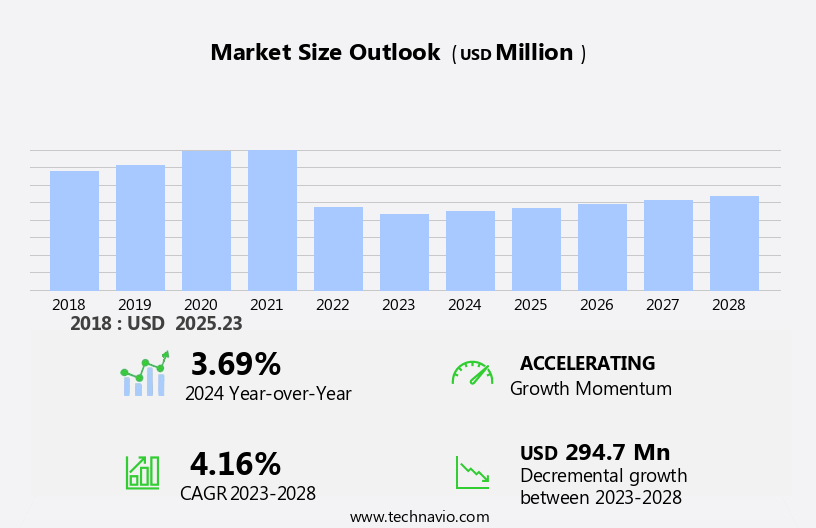
Pompe Disease Drugs Market Size

 Request Free Sample

  • The incidence of Pompe disease, a rare genetic disorder caused by the deficiency of the lysosomal enzyme acid alpha-glucosidase, continues to impact the lives of numerous infants and individuals worldwide. This condition, characterized by the progressive deterioration of organs and tissues, primarily affects the heart and skeletal muscle. Medical advancements have been instrumental in the discovery of various treatment options for Pompe disease. Drug discovery efforts for treating Pompe disease focus on addressing genetic defects in the acid alpha glucosidase gene, which leads to the buildup of sugar in cells, contributing to cardiac abnormalities; with rising Pompe disease prevalence, treatments like Nexviazyme offer hope for managing this autosomal recessive inherited disorder. Two prominent approaches include enzyme replacement therapy (ERT) and gene therapy. ERT aims to replace the missing or deficient enzyme in the body, while gene therapy focuses on introducing a functional copy of the gene into the patient's cells.
  • Hospitals and specialized clinics provide the necessary facilities for diagnosis, treatment, and long-term management of Pompe disease. In late onset Pompe disease, an enzyme deficit leads to the accumulation of sugar (glycogen) in muscles, resulting in a gradual loss of muscle strength. Gene therapy, another promising approach, is still under investigation for the treatment of Pompe disease. This innovative technology holds the potential to address the root cause of the condition by introducing a functional copy of the missing gene into the patient's cells. In conclusion, the market is witnessing significant advancements in the form of ERTs and gene therapy. These treatments, while not without challenges, offer hope for those affected by this debilitating condition. The regulatory framework, coupled with strong healthcare infrastructure, plays a crucial role in ensuring the successful implementation of these treatments.

How is this market segmented and which is the largest segment?

The market research report provides comprehensive data (region-wise segment analysis), with forecasts and estimates in "USD million" for the period 2024-2028, as well as historical data from 2018-2022 for the following segments.

  • Distribution Channel
    • Hospital pharmacies
    • Retail pharmacies
    • Online pharmacies
  • Therapy
    • Enzyme replacement therapy
    • Substrate reduction therapy
    • Others
  • Geography
    • North America
      • US
    • Europe
      • Germany
      • UK
    • Asia
      • China
      • Japan
    • Rest of World (ROW)

By Distribution Channel Insights

  • The hospital pharmacies segment is estimated to witness significant growth during the forecast period.

The hospital pharmacies hold a vital position in the healthcare system, facilitating the distribution and administration of medications for Pompe disease patients. These pharmacies are an essential component of hospitals, catering to inpatients and individuals receiving specialized care. Hospital pharmacies provide prompt access to medications during the acute stages of the disease or when close medical supervision is necessary. The collaboration between healthcare professionals and pharmacists in hospital settings is advantageous, ensuring effective communication and coordination for customized treatment plans. This partnership is crucial for monitoring patient progress, addressing any medication-related concerns, and managing immediate medication requirements during hospitalization. The integration of hospital pharmacies within the healthcare system enables efficient and timely medication management for Pompe disease patients.
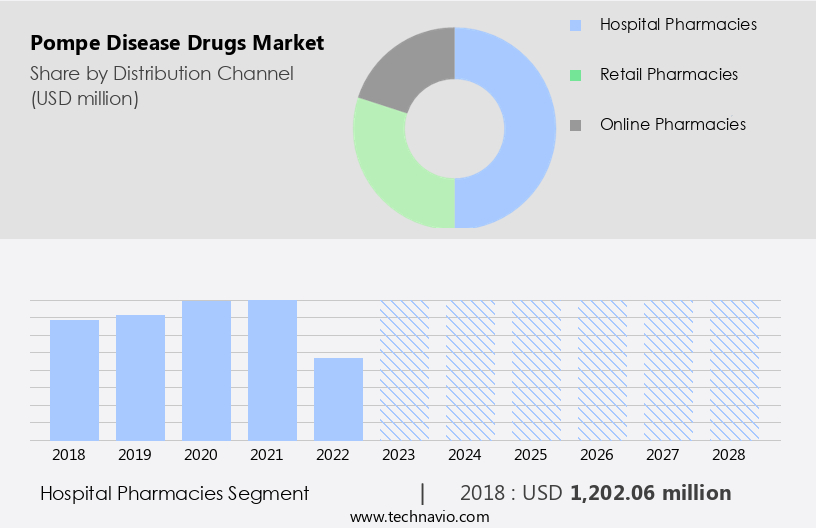
Pompe Disease Drugs Market Size

Get a glance at the market report of share of various segments Request Free Sample

The hospital pharmacies segment was valued at USD 1.20 billion in 2018 and showed a gradual increase during the forecast period.

Regional Analysis

  • North America is estimated to contribute 41% to the growth of the global market during the forecast period.

Technavio's analysts have elaborately explained the regional trends and drivers that shape the market during the forecast period.
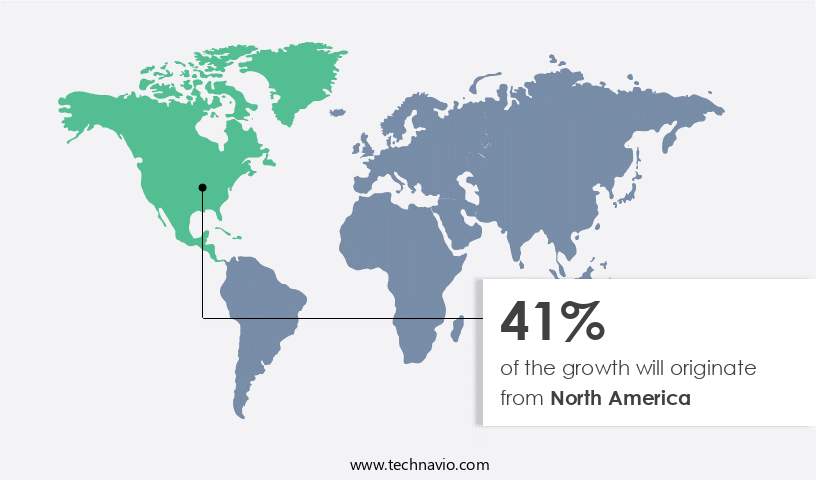
Pompe Disease Drugs Market Share by Geography

For more insights on the market share of various regions, Request Free Sample

Pompe Disease, a genetic disorder causing lysosomal storage, primarily affects the heart and muscles. Hypertrophic cardiomyopathy, a common complication, can lead to heart failure. These treatments aim to restore the body's ability to break down glycogen. The US healthcare infrastructure plays a crucial role in ensuring access to these innovative therapies.

Market Dynamics

Our researchers analyzed the data with 2023 as the base year, along with the key drivers, trends, and challenges. A holistic analysis of drivers will help companies refine their marketing strategies to gain a competitive advantage.

What are the key market drivers leading to the rise in the adoption of the Pompe Disease Drugs Market?

Increasing efforts to raise awareness regarding Pompe disease is the key driver of the market.

  • Pompe disease, a seldom-encountered genetic condition characterized by the absence of acid alpha-glucosidase, frequently escapes diagnosis due to its rarity and the diverse manifestation of symptoms. The significance of increasing awareness among healthcare specialists, such as physicians, genetic counselors, and pediatricians, cannot be overstated in facilitating early detection of this disease.
  • Various educational initiatives, including workshops and medical conferences, are instrumental in expanding the expertise and diagnostic skills of healthcare providers regarding Pompe disease. Moreover, public awareness campaigns play a crucial role in enlightening the general populace about this condition. By raising awareness, individuals are empowered to identify potential symptoms and subsequently seek professional medical advice for an accurate diagnosis.

What are the market trends shaping the Pompe Disease Drugs Market?

Approval for new drugs for Pompe treatment is the upcoming trend in the market.

  • The pharmaceutical sector in the United States has experienced an increase in research efforts toward the development of new medications for Pompe disease. This condition, characterized by a deficiency of the enzyme acid GAA, results in muscle weakness and weariness. One recent advancement came on September 28, 2023, with the FDA's approval of Amicus Therapeutics' dual-component therapy, Pombiliti (cipaglucosidase alfa-atga) + Opfolda (miglustat) 65mg capsules.
  • This therapy, intended for adults with late-onset Pompe disease (LOPD) weighing over 40 kg, is particularly beneficial for those who have not experienced improvement with their existing enzyme replacement therapy (ERT). Late-onset Pompe disease is a severe lysosomal disorder that can significantly impact an individual's quality of life. The approval of this innovative treatment marks a significant step forward in managing this rare condition.

What challenges does the Pompe Disease Drugs Market face during its growth?

High treatment costs associated with Pompe disease is a key challenge affecting the market growth.

  • Pompe disease, a genetic disorder causing breathing issues and muscle weakness, affects an estimated 1 in 40,000 people in the US. The disease is caused by a genetic mutation that impacts the production of acid alpha-glucosidase, an essential enzyme. This deficiency leads to a buildup of glycogen in the body's cells, causing various health complications. Enzyme replacement therapies (ERTs), such as alglucosidase alfa (Myozyme and Lumizyme), are the primary treatment option for Pompe disease.
  • The financial burden of Pompe disease treatment is significant for healthcare systems and insurers, leading to complex decisions regarding drug reimbursement and coverage. The genetic prevalence of Pompe disease is relatively low, making it a challenge for pharmaceutical companies to justify the high investment required for research and development. The complex science behind developing therapeutic interventions for Pompe disease adds to the costs and complexity. However, ongoing research and advancements in biotechnology may lead to more cost-effective and accessible treatment options in the future. In conclusion, Pompe disease is a rare genetic disorder that requires expensive enzyme replacement therapies for treatment.

Exclusive Customer Landscape

The market forecasting report includes the adoption lifecycle of the market, covering from the innovator's stage to the laggard's stage. It focuses on adoption rates in different regions based on penetration. Furthermore, the market report also includes key purchase criteria and drivers of price sensitivity to help companies evaluate and develop their market growth analysis strategies.
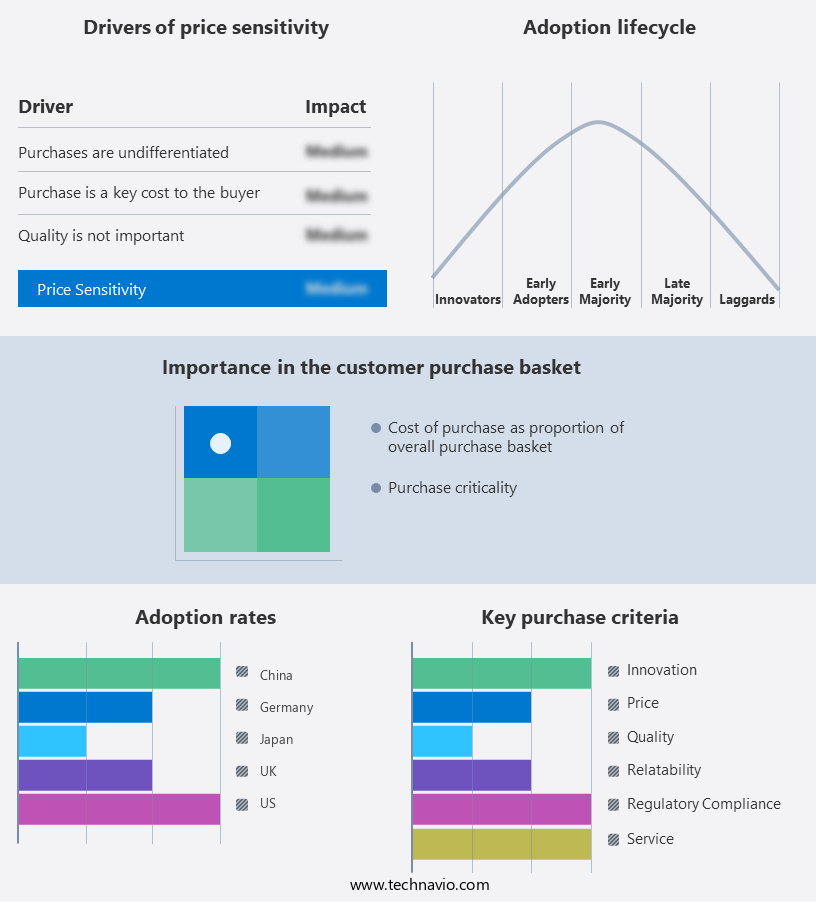
Pompe Disease Drugs Market Share by Geography

 Customer Landscape

Key Companies & Market Insights

Companies are implementing various strategies, such as strategic alliances, market forecast, partnerships, mergers and acquisitions, geographical expansion, and product/service launches, to enhance their presence in the market. The market research and growth report includes detailed analyses of the competitive landscape of the market and information about key companies, including:

  • Amicus Therapeutics Inc.
  • Astellas Pharma Inc.
  • AVROBIO Inc.
  • Bayer AG
  • EpiVax Inc.
  • F. Hoffmann La Roche Ltd.
  • JCR Pharmaceticals Co. Ltd.
  • Johnson and Johnson
  • Maze Therapeutics Inc.
  • Sanofi SA

Qualitative and quantitative analysis of companies has been conducted to help clients understand the wider business environment as well as the strengths and weaknesses of key market players. Data is qualitatively analyzed to categorize companies as pure play, category-focused, industry-focused, and diversified; it is quantitatively analyzed to categorize companies as dominant, leading, strong, tentative, and weak.

Research Analyst Overview

Pompe disease, a rare genetic disorder caused by a deficiency of the enzyme acid alpha-glucosidase, affects the ability of the body to break down glycogen in organs and tissues, leading to the accumulation of glycogen in cells. The classic infantile form of Pompe disease is characterized by symptoms such as muscle weakness, hypotonia, respiratory insufficiency, and hypertrophic cardiomyopathy in infants. Medical advancements have led to significant progress in the discovery of drugs for Pompe disease. The regulatory framework for these drugs is stringently enforced to ensure safety and efficacy. Gene therapy and enzyme replacement medicines are two primary approaches used to treat Pompe disease.

Furthermore, the genetic defect responsible for Pompe disease is a mutation in the gene that codes for acid alpha-glucosidase. The carrier frequency and genetic prevalence of Pompe disease vary across populations. The pharmaceutical sector has experienced an increase in research efforts toward the development of new medications for Pompe disease, with growing reliance on pharmaceutical contract packaging and pharmaceutical contract research and manufacturing services to streamline production and enhance the efficiency of bringing these treatments to market  The disease can affect various organs and tissues, including the heart, skeletal muscles, and respiratory tract. Symptoms of Pompe disease include muscle weakness, weariness, activity intolerance, and breathing issues. Treatment options include enzyme replacement therapy and new medications under development. The healthcare infrastructure plays a crucial role in the diagnosis and management of Pompe disease, with hospitals and specialized clinics providing essential services for patients.

Market Scope

Report Coverage

Details

Page number

161

Base year

2023

Historic period

2018-2022

Forecast period

2024-2028

Growth momentum & CAGR

Accelerate at a CAGR of 4.16%

Market Growth 2024-2028

USD 294.7 million

Market structure

Concentrated

YoY growth 2023-2024(%)

3.69

Key countries

US, Germany, UK, China, and Japan

Competitive landscape

Leading Companies, Market Positioning of Companies, Competitive Strategies, and Industry Risks

Request Free Sample

What are the Key Data Covered in this Market Research and Growth Report?

  • CAGR of the market during the forecast period
  • Detailed information on factors that will drive the market growth and forecasting between 2024 and 2028
  • Precise estimation of the size of the market  and its contribution of the market in focus to the parent market
  • Accurate predictions about upcoming market growth and trends and changes in consumer behaviour
  • Growth of the market across North America, Europe, Asia, and Rest of World (ROW)
  • Thorough analysis of the market's competitive landscape and detailed information about companies
  • Comprehensive analysis of factors that will challenge the growth of market companies

We can help! Our analysts can customize this market research report to meet your requirements. Get in touch

1 Executive Summary

  • 1.1 Market overview
    • Exhibit 01: Executive Summary – Chart on Market Overview
    • Exhibit 02: Executive Summary – Data Table on Market Overview
    • Exhibit 03: Executive Summary – Chart on Global Market Characteristics
    • Exhibit 04: Executive Summary – Chart on Market by Geography
    • Exhibit 05: Executive Summary – Chart on Market Segmentation by Distribution Channel
    • Exhibit 06: Executive Summary – Chart on Market Segmentation by Therapy
    • Exhibit 07: Executive Summary – Chart on Incremental Growth
    • Exhibit 08: Executive Summary – Data Table on Incremental Growth
    • Exhibit 09: Executive Summary – Chart on Vendor Market Positioning

2 Market Landscape

  • 2.1 Market ecosystem
    • Exhibit 10: Parent market
    • Exhibit 11: Market Characteristics

3 Market Sizing

  • 3.1 Market definition
    • Exhibit 12: Offerings of vendors included in the market definition
  • 3.2 Market segment analysis
    • Exhibit 13: Market segments
  • 3.3 Market size 2023
    • 3.4 Market outlook: Forecast for 2023-2028
      • Exhibit 14: Chart on Global - Market size and forecast 2023-2028 ($ million)
      • Exhibit 15: Data Table on Global - Market size and forecast 2023-2028 ($ million)
      • Exhibit 16: Chart on Global Market: Year-over-year growth 2023-2028 (%)
      • Exhibit 17: Data Table on Global Market: Year-over-year growth 2023-2028 (%)

    4 Historic Market Size

    • 4.1 Global Pompe disease drugs market 2018 - 2022
      • Exhibit 18: Historic Market Size – Data Table on global pompe disease drugs market 2018 - 2022 ($ million)
    • 4.2 Distribution Channel Segment Analysis 2018 - 2022
      • Exhibit 19: Historic Market Size – Distribution Channel Segment 2018 - 2022 ($ million)
    • 4.3 Therapy Segment Analysis 2018 - 2022
      • Exhibit 20: Historic Market Size – Therapy Segment 2018 - 2022 ($ million)
    • 4.4 Geography Segment Analysis 2018 - 2022
      • Exhibit 21: Historic Market Size – Geography Segment 2018 - 2022 ($ million)
    • 4.5 Country Segment Analysis 2018 - 2022
      • Exhibit 22: Historic Market Size – Country Segment 2018 - 2022 ($ million)

    5 Five Forces Analysis

    • 5.1 Five forces summary
      • Exhibit 23: Five forces analysis - Comparison between 2023 and 2028
    • 5.2 Bargaining power of buyers
      • Exhibit 24: Chart on Bargaining power of buyers – Impact of key factors 2023 and 2028
    • 5.3 Bargaining power of suppliers
      • Exhibit 25: Bargaining power of suppliers – Impact of key factors in 2023 and 2028
    • 5.4 Threat of new entrants
      • Exhibit 26: Threat of new entrants – Impact of key factors in 2023 and 2028
    • 5.5 Threat of substitutes
      • Exhibit 27: Threat of substitutes – Impact of key factors in 2023 and 2028
    • 5.6 Threat of rivalry
      • Exhibit 28: Threat of rivalry – Impact of key factors in 2023 and 2028
    • 5.7 Market condition
      • Exhibit 29: Chart on Market condition - Five forces 2023 and 2028

    6 Market Segmentation by Distribution Channel

    • 6.1 Market segments
      • Exhibit 30: Chart on Distribution Channel - Market share 2023-2028 (%)
      • Exhibit 31: Data Table on Distribution Channel - Market share 2023-2028 (%)
    • 6.2 Comparison by Distribution Channel
      • Exhibit 32: Chart on Comparison by Distribution Channel
      • Exhibit 33: Data Table on Comparison by Distribution Channel
    • 6.3 Hospital pharmacies - Market size and forecast 2023-2028
      • Exhibit 34: Chart on Hospital pharmacies - Market size and forecast 2023-2028 ($ million)
      • Exhibit 35: Data Table on Hospital pharmacies - Market size and forecast 2023-2028 ($ million)
      • Exhibit 36: Chart on Hospital pharmacies - Year-over-year growth 2023-2028 (%)
      • Exhibit 37: Data Table on Hospital pharmacies - Year-over-year growth 2023-2028 (%)
    • 6.4 Retail pharmacies - Market size and forecast 2023-2028
      • Exhibit 38: Chart on Retail pharmacies - Market size and forecast 2023-2028 ($ million)
      • Exhibit 39: Data Table on Retail pharmacies - Market size and forecast 2023-2028 ($ million)
      • Exhibit 40: Chart on Retail pharmacies - Year-over-year growth 2023-2028 (%)
      • Exhibit 41: Data Table on Retail pharmacies - Year-over-year growth 2023-2028 (%)
    • 6.5 Online pharmacies - Market size and forecast 2023-2028
      • Exhibit 42: Chart on Online pharmacies - Market size and forecast 2023-2028 ($ million)
      • Exhibit 43: Data Table on Online pharmacies - Market size and forecast 2023-2028 ($ million)
      • Exhibit 44: Chart on Online pharmacies - Year-over-year growth 2023-2028 (%)
      • Exhibit 45: Data Table on Online pharmacies - Year-over-year growth 2023-2028 (%)
    • 6.6 Market opportunity by Distribution Channel
      • Exhibit 46: Market opportunity by Distribution Channel ($ million)
      • Exhibit 47: Data Table on Market opportunity by Distribution Channel ($ million)

    7 Market Segmentation by Therapy

    • 7.1 Market segments
      • Exhibit 48: Chart on Therapy - Market share 2023-2028 (%)
      • Exhibit 49: Data Table on Therapy - Market share 2023-2028 (%)
    • 7.2 Comparison by Therapy
      • Exhibit 50: Chart on Comparison by Therapy
      • Exhibit 51: Data Table on Comparison by Therapy
    • 7.3 Enzyme replacement therapy - Market size and forecast 2023-2028
      • Exhibit 52: Chart on Enzyme replacement therapy - Market size and forecast 2023-2028 ($ million)
      • Exhibit 53: Data Table on Enzyme replacement therapy - Market size and forecast 2023-2028 ($ million)
      • Exhibit 54: Chart on Enzyme replacement therapy - Year-over-year growth 2023-2028 (%)
      • Exhibit 55: Data Table on Enzyme replacement therapy - Year-over-year growth 2023-2028 (%)
    • 7.4 Substrate reduction therapy - Market size and forecast 2023-2028
      • Exhibit 56: Chart on Substrate reduction therapy - Market size and forecast 2023-2028 ($ million)
      • Exhibit 57: Data Table on Substrate reduction therapy - Market size and forecast 2023-2028 ($ million)
      • Exhibit 58: Chart on Substrate reduction therapy - Year-over-year growth 2023-2028 (%)
      • Exhibit 59: Data Table on Substrate reduction therapy - Year-over-year growth 2023-2028 (%)
    • 7.5 Others - Market size and forecast 2023-2028
      • Exhibit 60: Chart on Others - Market size and forecast 2023-2028 ($ million)
      • Exhibit 61: Data Table on Others - Market size and forecast 2023-2028 ($ million)
      • Exhibit 62: Chart on Others - Year-over-year growth 2023-2028 (%)
      • Exhibit 63: Data Table on Others - Year-over-year growth 2023-2028 (%)
    • 7.6 Market opportunity by Therapy
      • Exhibit 64: Market opportunity by Therapy ($ million)
      • Exhibit 65: Data Table on Market opportunity by Therapy ($ million)

    8 Customer Landscape

    • 8.1 Customer landscape overview
      • Exhibit 66: Analysis of price sensitivity, lifecycle, customer purchase basket, adoption rates, and purchase criteria

    9 Geographic Landscape

    • 9.1 Geographic segmentation
      • Exhibit 67: Chart on Market share by geography 2023-2028 (%)
      • Exhibit 68: Data Table on Market share by geography 2023-2028 (%)
    • 9.2 Geographic comparison
      • Exhibit 69: Chart on Geographic comparison
      • Exhibit 70: Data Table on Geographic comparison
    • 9.3 North America - Market size and forecast 2023-2028
      • Exhibit 71: Chart on North America - Market size and forecast 2023-2028 ($ million)
      • Exhibit 72: Data Table on North America - Market size and forecast 2023-2028 ($ million)
      • Exhibit 73: Chart on North America - Year-over-year growth 2023-2028 (%)
      • Exhibit 74: Data Table on North America - Year-over-year growth 2023-2028 (%)
    • 9.4 Europe - Market size and forecast 2023-2028
      • Exhibit 75: Chart on Europe - Market size and forecast 2023-2028 ($ million)
      • Exhibit 76: Data Table on Europe - Market size and forecast 2023-2028 ($ million)
      • Exhibit 77: Chart on Europe - Year-over-year growth 2023-2028 (%)
      • Exhibit 78: Data Table on Europe - Year-over-year growth 2023-2028 (%)
    • 9.5 Asia - Market size and forecast 2023-2028
      • Exhibit 79: Chart on Asia - Market size and forecast 2023-2028 ($ million)
      • Exhibit 80: Data Table on Asia - Market size and forecast 2023-2028 ($ million)
      • Exhibit 81: Chart on Asia - Year-over-year growth 2023-2028 (%)
      • Exhibit 82: Data Table on Asia - Year-over-year growth 2023-2028 (%)
    • 9.6 Rest of World (ROW) - Market size and forecast 2023-2028
      • Exhibit 83: Chart on Rest of World (ROW) - Market size and forecast 2023-2028 ($ million)
      • Exhibit 84: Data Table on Rest of World (ROW) - Market size and forecast 2023-2028 ($ million)
      • Exhibit 85: Chart on Rest of World (ROW) - Year-over-year growth 2023-2028 (%)
      • Exhibit 86: Data Table on Rest of World (ROW) - Year-over-year growth 2023-2028 (%)
    • 9.7 US - Market size and forecast 2023-2028
      • Exhibit 87: Chart on US - Market size and forecast 2023-2028 ($ million)
      • Exhibit 88: Data Table on US - Market size and forecast 2023-2028 ($ million)
      • Exhibit 89: Chart on US - Year-over-year growth 2023-2028 (%)
      • Exhibit 90: Data Table on US - Year-over-year growth 2023-2028 (%)
    • 9.8 Germany - Market size and forecast 2023-2028
      • Exhibit 91: Chart on Germany - Market size and forecast 2023-2028 ($ million)
      • Exhibit 92: Data Table on Germany - Market size and forecast 2023-2028 ($ million)
      • Exhibit 93: Chart on Germany - Year-over-year growth 2023-2028 (%)
      • Exhibit 94: Data Table on Germany - Year-over-year growth 2023-2028 (%)
    • 9.9 China - Market size and forecast 2023-2028
      • Exhibit 95: Chart on China - Market size and forecast 2023-2028 ($ million)
      • Exhibit 96: Data Table on China - Market size and forecast 2023-2028 ($ million)
      • Exhibit 97: Chart on China - Year-over-year growth 2023-2028 (%)
      • Exhibit 98: Data Table on China - Year-over-year growth 2023-2028 (%)
    • 9.10 UK - Market size and forecast 2023-2028
      • Exhibit 99: Chart on UK - Market size and forecast 2023-2028 ($ million)
      • Exhibit 100: Data Table on UK - Market size and forecast 2023-2028 ($ million)
      • Exhibit 101: Chart on UK - Year-over-year growth 2023-2028 (%)
      • Exhibit 102: Data Table on UK - Year-over-year growth 2023-2028 (%)
    • 9.11 Japan - Market size and forecast 2023-2028
      • Exhibit 103: Chart on Japan - Market size and forecast 2023-2028 ($ million)
      • Exhibit 104: Data Table on Japan - Market size and forecast 2023-2028 ($ million)
      • Exhibit 105: Chart on Japan - Year-over-year growth 2023-2028 (%)
      • Exhibit 106: Data Table on Japan - Year-over-year growth 2023-2028 (%)
    • 9.12 Market opportunity by geography
      • Exhibit 107: Market opportunity by geography ($ million)
      • Exhibit 108: Data Tables on Market opportunity by geography ($ million)

    10 Drivers, Challenges, and Trends

    • 10.1 Market drivers
      • 10.2 Market challenges
        • 10.3 Impact of drivers and challenges
          • Exhibit 109: Impact of drivers and challenges in 2023 and 2028
        • 10.4 Market trends

          11 Vendor Landscape

          • 11.1 Overview
            • 11.2 Vendor landscape
              • Exhibit 110: Overview on Criticality of inputs and Factors of differentiation
            • 11.3 Landscape disruption
              • Exhibit 111: Overview on factors of disruption
            • 11.4 Industry risks
              • Exhibit 112: Impact of key risks on business

            12 Vendor Analysis

            • 12.1 Vendors covered
              • Exhibit 113: Vendors covered
            • 12.2 Market positioning of vendors
              • Exhibit 114: Matrix on vendor position and classification
            • 12.3 Amicus Therapeutics Inc.
              • Exhibit 115: Amicus Therapeutics Inc. - Overview
              • Exhibit 116: Amicus Therapeutics Inc. - Product / Service
              • Exhibit 117: Amicus Therapeutics Inc. - Key offerings
            • 12.4 Astellas Pharma Inc.
              • Exhibit 118: Astellas Pharma Inc. - Overview
              • Exhibit 119: Astellas Pharma Inc. - Product / Service
              • Exhibit 120: Astellas Pharma Inc. - Key news
              • Exhibit 121: Astellas Pharma Inc. - Key offerings
            • 12.5 AVROBIO Inc.
              • Exhibit 122: AVROBIO Inc. - Overview
              • Exhibit 123: AVROBIO Inc. - Product / Service
              • Exhibit 124: AVROBIO Inc. - Key offerings
            • 12.6 Bayer AG
              • Exhibit 125: Bayer AG - Overview
              • Exhibit 126: Bayer AG - Business segments
              • Exhibit 127: Bayer AG - Key news
              • Exhibit 128: Bayer AG - Key offerings
              • Exhibit 129: Bayer AG - Segment focus
            • 12.7 EpiVax Inc.
              • Exhibit 130: EpiVax Inc. - Overview
              • Exhibit 131: EpiVax Inc. - Product / Service
              • Exhibit 132: EpiVax Inc. - Key offerings
            • 12.8 F. Hoffmann La Roche Ltd.
              • Exhibit 133: F. Hoffmann La Roche Ltd. - Overview
              • Exhibit 134: F. Hoffmann La Roche Ltd. - Business segments
              • Exhibit 135: F. Hoffmann La Roche Ltd. - Key news
              • Exhibit 136: F. Hoffmann La Roche Ltd. - Key offerings
              • Exhibit 137: F. Hoffmann La Roche Ltd. - Segment focus
            • 12.9 JCR Pharmaceticals Co. Ltd.
              • Exhibit 138: JCR Pharmaceticals Co. Ltd. - Overview
              • Exhibit 139: JCR Pharmaceticals Co. Ltd. - Product / Service
              • Exhibit 140: JCR Pharmaceticals Co. Ltd. - Key offerings
            • 12.10 Johnson and Johnson
              • Exhibit 141: Johnson and Johnson - Overview
              • Exhibit 142: Johnson and Johnson - Business segments
              • Exhibit 143: Johnson and Johnson - Key news
              • Exhibit 144: Johnson and Johnson - Key offerings
              • Exhibit 145: Johnson and Johnson - Segment focus
            • 12.11 Maze Therapeutics Inc.
              • Exhibit 146: Maze Therapeutics Inc. - Overview
              • Exhibit 147: Maze Therapeutics Inc. - Product / Service
              • Exhibit 148: Maze Therapeutics Inc. - Key offerings
            • 12.12 Sanofi SA
              • Exhibit 149: Sanofi SA - Overview
              • Exhibit 150: Sanofi SA - Business segments
              • Exhibit 151: Sanofi SA - Key news
              • Exhibit 152: Sanofi SA - Key offerings
              • Exhibit 153: Sanofi SA - Segment focus

            13 Appendix

            • 13.1 Scope of the report
              • 13.2 Inclusions and exclusions checklist
                • Exhibit 154: Inclusions checklist
                • Exhibit 155: Exclusions checklist
              • 13.3 Currency conversion rates for US$
                • Exhibit 156: Currency conversion rates for US$
              • 13.4 Research methodology
                • Exhibit 157: Research methodology
                • Exhibit 158: Validation techniques employed for market sizing
                • Exhibit 159: Information sources
              • 13.5 List of abbreviations
                • Exhibit 160: List of abbreviations

              Research Methodology

              Technavio presents a detailed picture of the market by way of study, synthesis, and summation of data from multiple sources. The analysts have presented the various facets of the market with a particular focus on identifying the key industry influencers. The data thus presented is comprehensive, reliable, and the result of extensive research, both primary and secondary.

              INFORMATION SOURCES

              Primary sources

              • Manufacturers and suppliers
              • Channel partners
              • Industry experts
              • Strategic decision makers

              Secondary sources

              • Industry journals and periodicals
              • Government data
              • Financial reports of key industry players
              • Historical data
              • Press releases

              DATA ANALYSIS

              Data Synthesis

              • Collation of data
              • Estimation of key figures
              • Analysis of derived insights

              Data Validation

              • Triangulation with data models
              • Reference against proprietary databases
              • Corroboration with industry experts

              REPORT WRITING

              Qualitative

              • Market drivers
              • Market challenges
              • Market trends
              • Five forces analysis

              Quantitative

              • Market size and forecast
              • Market segmentation
              • Geographical insights
              • Competitive landscape

              Interested in this report?

              Get your sample now to see our research methodology and insights!

              Download Now

              Frequently Asked Questions

              Pompe Disease Drugs market growth will increase by $ 294.7 mn during 2024-2028.

              The Pompe Disease Drugs market is expected to grow at a CAGR of 4.16% during 2024-2028.

              Pompe Disease Drugs market is segmented by Distribution Channel( Hospital pharmacies, Retail pharmacies, Online pharmacies) Therapy( Enzyme replacement therapy, Substrate reduction therapy, Others)

              Amicus Therapeutics Inc., Astellas Pharma Inc., AVROBIO Inc., Bayer AG, EpiVax Inc., F. Hoffmann La Roche Ltd., JCR Pharmaceticals Co. Ltd., Johnson and Johnson, Maze Therapeutics Inc., Sanofi SA are a few of the key vendors in the Pompe Disease Drugs market.

              North America will register the highest growth rate of 41% among the other regions. Therefore, the Pompe Disease Drugs market in North America is expected to garner significant business opportunities for the vendors during the forecast period.

              US, Germany, UK, China, Japan

              • Increasing efforts to raise awareness regarding Pompe diseasePompe disease is the driving factor this market.
              • a rare genetic disorder characterized by the deficiency of acid alpha-glucosidase is the driving factor this market.
              • often goes undiagnosed due to its rarity and the variability of symptoms. Efforts to raise awareness among healthcare professionals is the driving factor this market.
              • including physicians is the driving factor this market.
              • genetic counselors is the driving factor this market.
              • and pediatricians is the driving factor this market.
              • play a pivotal role in facilitating early recognition of the disease. Educational initiatives is the driving factor this market.
              • workshops is the driving factor this market.
              • and medical conferences focusing on Pompe disease contribute to enhancing the knowledge and diagnostic capabilities of healthcare providers. In addition to healthcare professionals is the driving factor this market.
              • there is a growing emphasis on public awareness campaigns to inform the general population about Pompe disease. Public awareness helps individuals recognize potential symptoms is the driving factor this market.
              • prompting them to seek medical attention for a proper diagnosis. Moreover is the driving factor this market.
              • patient advocacy groups are instrumental in raising awareness at both the community and policy levels. Organizations such as the National Organization for Rare Disorders (NORD) and the International Pompe Association often conduct awareness campaigns to educate the public is the driving factor this market.
              • healthcare professionals is the driving factor this market.
              • and policymakers about Pompe disease. These initiatives may include informational materials is the driving factor this market.
              • community events is the driving factor this market.
              • and social media campaigns to reach a wider audience. For instance is the driving factor this market.
              • the International Pompe Association (IPA) emphasized the significance of raising awareness about Pompe disease is the driving factor this market.
              • selecting "International Pompe Voices" as the theme for 2022. On April 15 is the driving factor this market.
              • 2022 is the driving factor this market.
              • for International Pompe Day is the driving factor this market.
              • the global Pompe community was invited to contribute videos demonstrating the acquisition of strength. These recordings is the driving factor this market.
              • featuring 12 insightful videos and conversations is the driving factor this market.
              • are accessible on the IPA YouTube channel is the driving factor this market.
              • the International Pompe Day blog is the driving factor this market.
              • and the IPA website. The diverse content highlights the sources of strength for patients is the driving factor this market.
              • including perspectives from experts who express their inspiration from the Patient Community. The IPA Board urges everyone to invest a few minutes in watching and sharing these videos with friends and family to reinforce the message that #TogetherWeAreStrong! Thus is the driving factor this market.
              • the increasing efforts to raise awareness regarding Pompe disease are expected to drive the growth of the market in focus during the forecast period. is the driving factor this market.

              The Pompe Disease Drugs market vendors should focus on grabbing business opportunities from the Hospital pharmacies segment as it accounted for the largest market share in the base year.
