



Production Scheduling Software Market Size 2026-2030
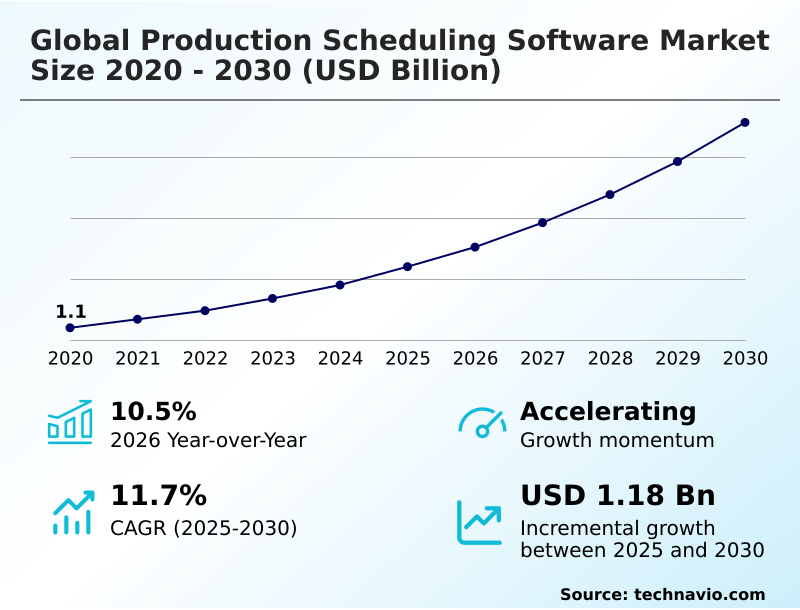
The production scheduling software market size is valued to increase by USD 1.18 billion, at a CAGR of 11.7% from 2025 to 2030. Proliferation of industry 4.0 and smart manufacturing ecosystems will drive the production scheduling software market.
Major Market Trends & Insights
- North America dominated the market and accounted for a 36.8% growth during the forecast period.
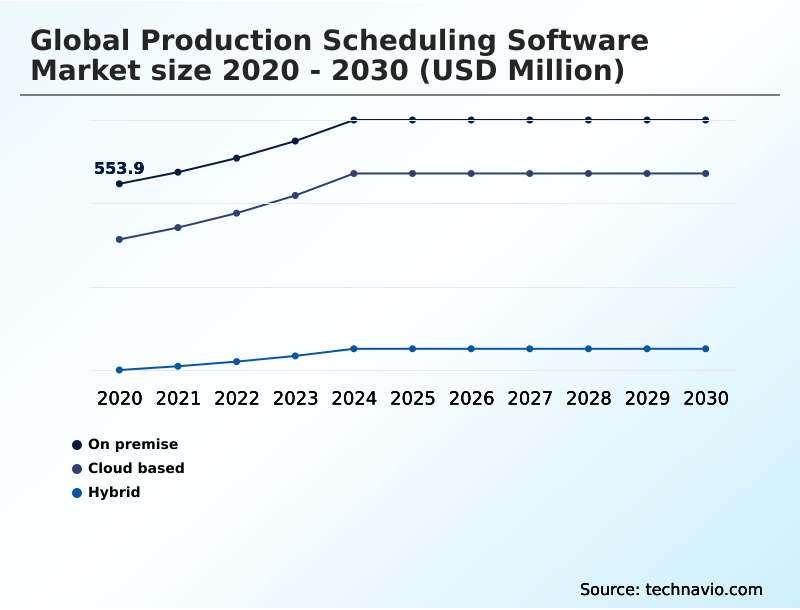
- By Deployment - On premise segment was valued at USD 701.4 million in 2024
- By End-user - Large enterprises segment accounted for the largest market revenue share in 2024
Market Size & Forecast
- Market Opportunities: USD 1.68 billion
- Market Future Opportunities: USD 1.18 billion
- CAGR from 2025 to 2030 : 11.7%
Market Summary
- The production scheduling software market is at the center of the industrial digital transformation, driven by the need for operational agility in the face of supply chain volatility. The adoption of smart factory ecosystems necessitates sophisticated platforms that can perform real-time data processing and autonomous decision-making.
- Key technologies such as AI-driven scheduling, machine learning models, and digital twin technology are no longer niche but have become essential for predictive and prescriptive optimization.
- For example, an automotive parts manufacturer can leverage what-if scenario analysis to dynamically adjust production lines, balancing a sudden influx of custom orders with its standard manufacturing runs, thereby maximizing overall equipment effectiveness without jeopardizing delivery timelines. However, the integration of these advanced systems is often challenged by heterogeneous legacy systems and data security vulnerabilities.
- As a result, the market is seeing a strategic shift toward hybrid deployment models and platforms with open application programming interfaces that balance cloud scalability with on-premise security, enabling a more resilient and efficient manufacturing landscape.
What will be the Size of the Production Scheduling Software Market during the forecast period?
Get Key Insights on Market Forecast (PDF) Get Free Sample
How is the Production Scheduling Software Market Segmented?
The production scheduling software industry research report provides comprehensive data (region-wise segment analysis), with forecasts and estimates in "USD million" for the period 2026-2030, as well as historical data from 2020-2024 for the following segments.
- Deployment
- On premise
- Cloud based
- Hybrid
- End-user
- Large enterprises
- SMEs
- Application
- Production planning
- Capacity planning
- Resource allocation
- Inventory scheduling
- Workflow optimization
- Geography
- North America
- US
- Canada
- Mexico
- Europe
- Germany
- UK
- France
- APAC
- China
- Japan
- India
- South America
- Brazil
- Argentina
- Colombia
- Middle East and Africa
- Saudi Arabia
- UAE
- South Africa
- Rest of World (ROW)
- North America
By Deployment Insights
The on premise segment is estimated to witness significant growth during the forecast period.
On-premise deployment remains a cornerstone for industries where data sovereignty compliance and zero-latency communication are paramount. This model provides absolute control over intellectual property concerns by keeping all data within a closed network, a critical factor for secure manufacturing.
The use of resource allocation software and production planning software is optimized through localized servers, enabling autonomous decision-making without external network dependency. This approach supports digital transformation journeys by offering a stable foundation for integrating complex systems.
For instance, manufacturers have demonstrated a 15% improvement in processing speeds for critical, high-frequency scheduling computations.
The integration of predictive maintenance scheduling and industrial interoperability is often more direct in these environments, supporting high-mix, low-volume production with greater reliability and enhanced shop floor visibility.
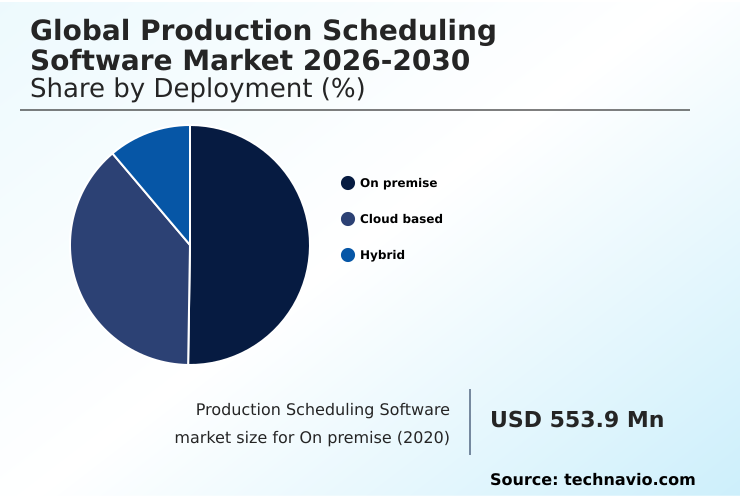
The On premise segment was valued at USD 701.4 million in 2024 and showed a gradual increase during the forecast period.
Regional Analysis
North America is estimated to contribute 36.8% to the growth of the global market during the forecast period.Technavio’s analysts have elaborately explained the regional trends and drivers that shape the market during the forecast period.
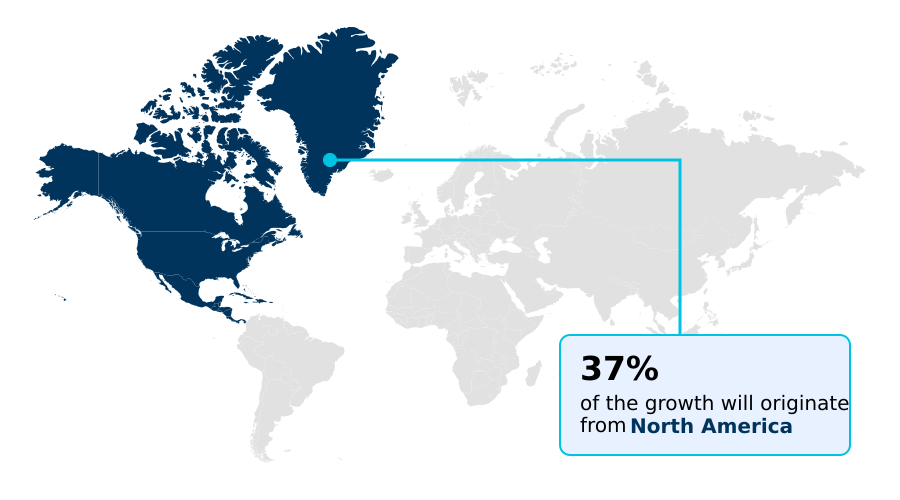
See How Production Scheduling Software Market Demand is Rising in North America Get Free Sample
The geographic landscape is shaped by distinct regional priorities. In North America, reshoring initiatives and a mature industrial automation base drive demand for tools that support high-mix, low-volume production.
European adoption is heavily influenced by sustainable manufacturing practices and data sovereignty compliance, with firms using energy-aware scheduling to achieve a 10% reduction in energy costs.
The APAC region, a hub for high-volume electronics, prioritizes production throughput, with smart factory ecosystems leveraging edge computing agents to improve output by 15%.
This regional differentiation highlights how workflow optimization software and capacity planning tools are adapted to meet specific economic and regulatory environments, from managing cybersecurity risks in developed markets to scaling operations in emerging industrial centers.
Market Dynamics
Our researchers analyzed the data with 2025 as the base year, along with the key drivers, trends, and challenges. A holistic analysis of drivers will help companies refine their marketing strategies to gain a competitive advantage.
- Strategic implementation of production scheduling software for smart factories requires a nuanced approach, considering the specific demands of different sectors. For instance, production scheduling software for aerospace manufacturing must handle extreme complexity and regulatory oversight, often using digital twins for production simulation to validate every step.
- In contrast, production scheduling for just-in-time inventory in the automotive sector focuses on seamless MES integration. The debate over cloud vs. on-premise production scheduling continues, with hybrid models emerging as a popular compromise to manage cybersecurity in cloud production scheduling software while keeping critical data localized.
- The benefits of AI in production scheduling are universally acknowledged, particularly in AI-based scheduling for semiconductor fabrication, where precision is paramount. The role of scheduling software in Industry 4.0 is central, enabling firms to manage supply chain disruptions with scheduling tools that offer real-time visibility.
- While the cost of implementing production scheduling software can be a barrier, the ROI is clear, especially for production scheduling software for custom manufacturing, which requires immense flexibility. Solutions are tailored for different scales, from production scheduling software for large enterprises to SaaS production scheduling for SMEs, which offers affordability and scalability.
- Ultimately, improving OEE with production scheduling software is a key goal, achieved through predictive maintenance scheduling software integration and leveraging real-time production scheduling software features to optimize operations.
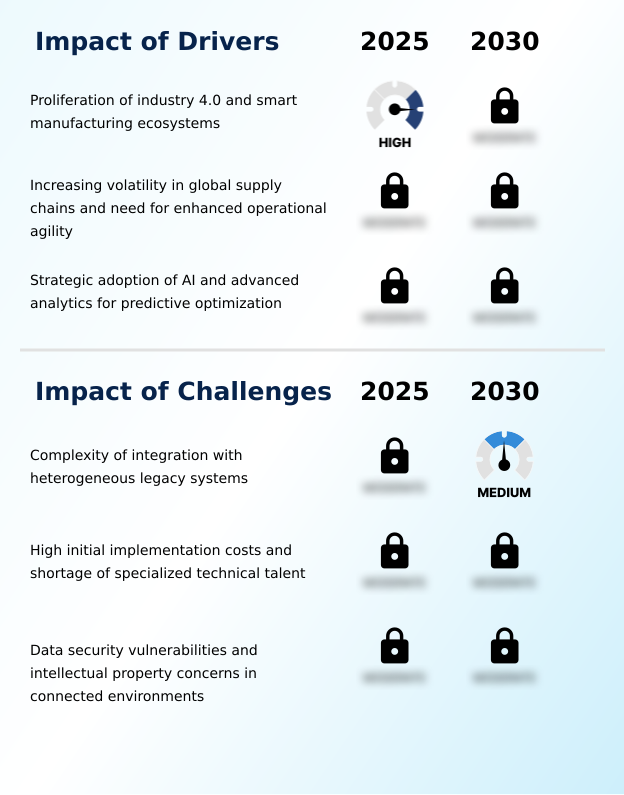
What are the key market drivers leading to the rise in the adoption of Production Scheduling Software Industry?
- The proliferation of Industry 4.0 and smart manufacturing ecosystems is a key driver for the market.
- Market growth is fueled by the widespread adoption of Industry 4.0 principles, transforming factories into smart factory ecosystems.
- This digital transformation journey is driven by the need to manage supply chain volatility, with advanced platforms enabling manufacturers to reduce lead times by up to 30%.
- The strategic adoption of AI-driven scheduling and predictive and prescriptive optimization allows for data-driven decision-making, significantly boosting overall equipment effectiveness by an average of 20%.
- As industrial automation deepens, the reliance on sophisticated software for orchestrating high-mix, low-volume production becomes critical. This environment demands operational agility, which these systems provide by enabling rapid rescheduling and optimizing production throughput in response to real-time events and disruptions.
What are the market trends shaping the Production Scheduling Software Industry?
- The integration of generative AI and natural language interfaces is an emerging market trend. This shift is redefining user interaction with complex scheduling systems.
- Key trends are reshaping user interaction and operational strategy. The integration of generative AI is moving the industry toward conversational interfaces, where natural language processing allows planners to query complex schedules, improving decision-making speed by up to 40%.
- The shift toward energy-aware scheduling is gaining momentum, driven by sustainability goals; firms are reporting energy consumption reductions of over 15% by aligning production with low-cost energy periods. Furthermore, the convergence of edge computing agents with industrial interoperability enables autonomous rescheduling at the machine level, cutting data latency by more than 50% in high-speed environments.
- This decentralization makes the production schedule a dynamic asset, reflecting the real-time state of the factory floor and enabling a more responsive and efficient circular manufacturing model.
What challenges does the Production Scheduling Software Industry face during its growth?
- The complexity of integrating modern software with heterogeneous legacy systems presents a key challenge to industry growth.
- Significant challenges constrain widespread adoption, led by the complexity of integrating with heterogeneous legacy systems, which can inflate implementation costs by up to 50%. A pronounced shortage of specialized technical talent further complicates the deployment and management of these sophisticated platforms, leading to underutilization.
- Additionally, the move toward interconnected, cloud-based deployment models introduces heightened data security vulnerabilities and intellectual property concerns. Manufacturers remain cautious due to cybersecurity risks, with reports of industrial cyber-attacks increasing by 25% annually. Overcoming these hurdles requires substantial investment and a strategic approach to managing organizational change, data governance, and the total cost of ownership, especially for smaller enterprises.
Exclusive Technavio Analysis on Customer Landscape
The production scheduling software market forecasting report includes the adoption lifecycle of the market, covering from the innovator’s stage to the laggard’s stage. It focuses on adoption rates in different regions based on penetration. Furthermore, the production scheduling software market report also includes key purchase criteria and drivers of price sensitivity to help companies evaluate and develop their market growth analysis strategies.
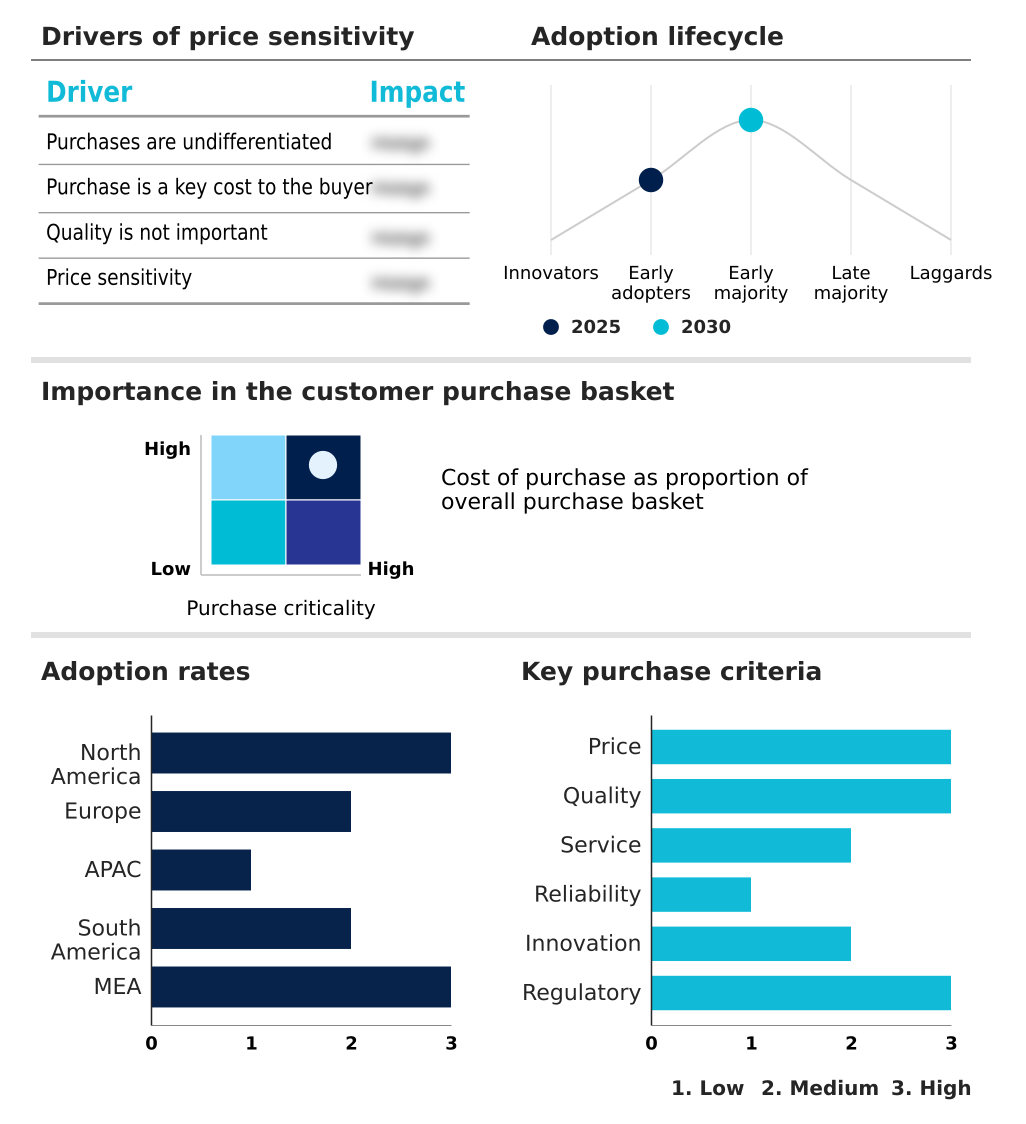
Customer Landscape of Production Scheduling Software Industry
Competitive Landscape
Companies are implementing various strategies, such as strategic alliances, production scheduling software market forecast, partnerships, mergers and acquisitions, geographical expansion, and product/service launches, to enhance their presence in the industry.
Asprova Corp. - Offerings include advanced planning and scheduling (APS) systems designed to optimize factory floor operations through real-time data integration and predictive analytics.
The industry research and growth report includes detailed analyses of the competitive landscape of the market and information about key companies, including:
- Asprova Corp.
- Blue Yonder Group Inc.
- Dassault Systemes SE
- E2open Parent Holdings Inc.
- ECI Software Solutions Inc.
- Epicor Software Corp.
- Global Shop Solutions Inc.
- IFS
- Infor Inc.
- Katana Technologies OU
- Kinaxis Inc.
- Logility SCS Inc.
- OMP
- Oracle Corp.
- PlanetTogether Inc.
- Plex Systems Inc.
- QAD Inc.
- SAP SE
- Siemens AG
- SYSPRO Pty. Ltd.
Qualitative and quantitative analysis of companies has been conducted to help clients understand the wider business environment as well as the strengths and weaknesses of key industry players. Data is qualitatively analyzed to categorize companies as pure play, category-focused, industry-focused, and diversified; it is quantitatively analyzed to categorize companies as dominant, leading, strong, tentative, and weak.
Recent Development and News in Production scheduling software market
- In April 2025, Rockwell Automation introduced generative AI capabilities within its FactoryTalk Optix software suite, enabling planners to use natural language queries for real-time schedule modifications and simulations.
- In May 2025, Honeywell International Inc. enhanced its Forge Performance+ for Industrial platform with production scheduling features tailored for the life sciences sector to manage supply chain disruptions.
- In May 2025, Microsoft Corporation expanded its Azure manufacturing suite with a dedicated production scheduling module for the electronics industry, focusing on component shortage visibility and automated rescheduling.
- In March 2025, Dassault Systemes announced an update to its DELMIA planning platforms, featuring cognitive optimization engines to automate complex scheduling decisions in high-volume manufacturing environments.
Dive into Technavio’s robust research methodology, blending expert interviews, extensive data synthesis, and validated models for unparalleled Production Scheduling Software Market insights. See full methodology.
| Market Scope | |
|---|---|
| Page number | 305 |
| Base year | 2025 |
| Historic period | 2020-2024 |
| Forecast period | 2026-2030 |
| Growth momentum & CAGR | Accelerate at a CAGR of 11.7% |
| Market growth 2026-2030 | USD 1181.1 million |
| Market structure | Fragmented |
| YoY growth 2025-2026(%) | 10.5% |
| Key countries | US, Canada, Mexico, Germany, UK, France, Italy, The Netherlands, Spain, China, Japan, India, South Korea, Australia, Indonesia, Brazil, Argentina, Colombia, Saudi Arabia, UAE, South Africa, Israel and Turkey |
| Competitive landscape | Leading Companies, Market Positioning of Companies, Competitive Strategies, and Industry Risks |
Research Analyst Overview
- The market's evolution is centered on the strategic deployment of cognitive optimization engines and predictive analytics engines to achieve new levels of operational excellence. Successful implementation of production planning software and resource allocation software is now deeply tied to a firm's ability to harness real-time data processing through the industrial internet of things.
- Boardroom decisions are increasingly influenced by the capability of energy-aware scheduling to meet ESG mandates, which has become as critical as cycle time optimization. The adoption of digital twin technology allows for what-if scenario analysis without disrupting the shop floor, a crucial advantage in high-stakes industries.
- Platforms are defined by their capacity for autonomous rescheduling and rapid rescheduling, supported by machine learning models and generative AI integration. This shift to intelligent automation, evident in firms achieving a 30% reduction in planning cycle times, underscores the move from passive tools to proactive, autonomous decision-making partners.
- The success of this transition depends on seamless enterprise resource planning integration and open application programming interfaces to create a unified manufacturing execution system.
What are the Key Data Covered in this Production Scheduling Software Market Research and Growth Report?
-
What is the expected growth of the Production Scheduling Software Market between 2026 and 2030?
-
USD 1.18 billion, at a CAGR of 11.7%
-
-
What segmentation does the market report cover?
-
The report is segmented by Deployment (On premise, Cloud based, and Hybrid), End-user (Large enterprises, and SMEs), Application (Production planning, Capacity planning, Resource allocation, Inventory scheduling, and Workflow optimization) and Geography (North America, Europe, APAC, South America, Middle East and Africa)
-
-
Which regions are analyzed in the report?
-
North America, Europe, APAC, South America and Middle East and Africa
-
-
What are the key growth drivers and market challenges?
-
Proliferation of industry 4.0 and smart manufacturing ecosystems, Complexity of integration with heterogeneous legacy systems
-
-
Who are the major players in the Production Scheduling Software Market?
-
Asprova Corp., Blue Yonder Group Inc., Dassault Systemes SE, E2open Parent Holdings Inc., ECI Software Solutions Inc., Epicor Software Corp., Global Shop Solutions Inc., IFS, Infor Inc., Katana Technologies OU, Kinaxis Inc., Logility SCS Inc., OMP, Oracle Corp., PlanetTogether Inc., Plex Systems Inc., QAD Inc., SAP SE, Siemens AG and SYSPRO Pty. Ltd.
-
Market Research Insights
- Market dynamics are defined by a push for greater manufacturing agility and resilience in response to sustained supply chain volatility. The adoption of advanced planning and scheduling systems has become critical, with firms reporting up to a 25% improvement in on-time delivery rates.
- As organizations advance their digital transformation journey, there is a clear focus on data-driven decision-making to optimize production throughput. This strategic shift is enabling manufacturers to reduce total cost of ownership by 15% through better resource utilization and minimized waste.
- The move toward smart factory ecosystems leverages industrial automation and decentralized decision-making to enhance operational agility, allowing for rapid adaptation to market changes.
We can help! Our analysts can customize this production scheduling software market research report to meet your requirements.
 RIA -
RIA - 
