
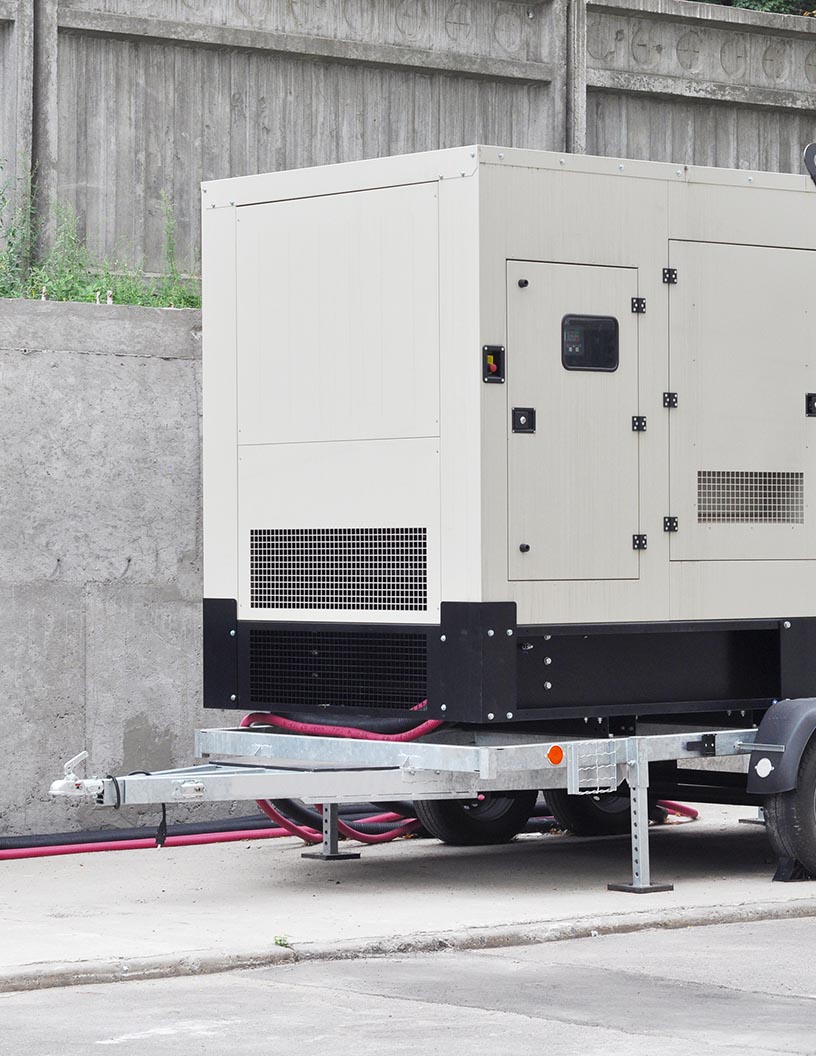


Residential Backup Power Market Size 2024-2028
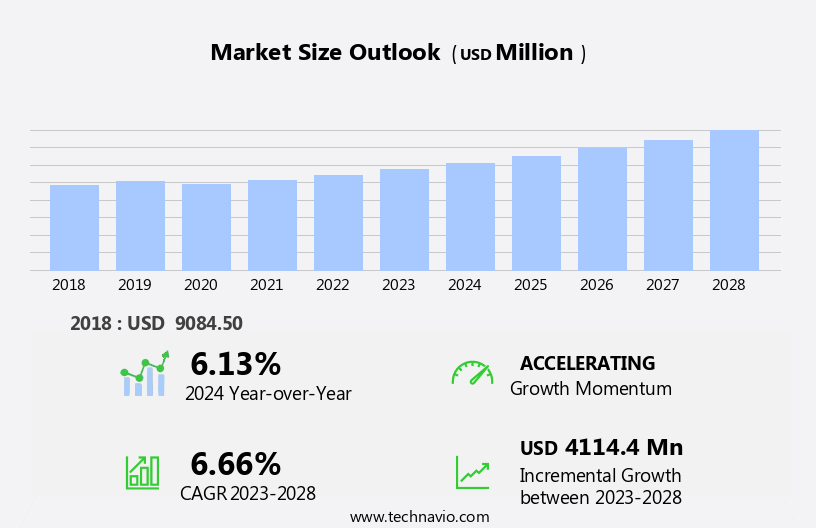
The residential backup power market size is forecast to increase by USD 4.11 billion at a CAGR of 6.66% between 2023 and 2028.
- The market is experiencing significant growth due to the increasing demand for uninterrupted power supply, particularly in emerging economies. This trend is driven by the expanding middle class population and the rising standard of living, leading to an increased focus on home comfort and safety. A key trend influencing the market is the adoption of fuel cells for power backup. Fuel cells offer several advantages over traditional diesel generators, including higher efficiency, lower emissions, and longer runtime. However, the market is not without challenges. Stringent environmental regulations against diesel generators are limiting their use, leading companies to explore alternative technologies.
- Additionally, the high upfront cost of fuel cell systems and the lack of standardization in the market pose significant challenges. To capitalize on the opportunities presented by this market, companies must focus on reducing the cost of fuel cell systems, improving their efficiency, and addressing the standardization issue through collaborations and partnerships. By doing so, they can effectively navigate the challenges and establish a strong presence in the market.
What will be the Size of the Residential Backup Power Market during the forecast period?
- The market in the US is experiencing significant growth, driven by increasing demand for continuous power availability and the integration of renewable energy sources. This transformative phase is influenced by the shift towards sustainable solutions, such as solar and wind power, and the adoption of smart technologies. Decentralized generation, including solar panels and generators, is becoming more prevalent, enabling homeowners to reduce their reliance on traditional power grids. Regulation and standardization are crucial factors shaping the market, ensuring cybersecurity and grid compatibility. The transportation fleet is also evolving, with a focus on technological integration and a proven track record of dependable power.
- The environmental impact of traditional power sources is driving the adoption of renewable energy, with silicon cell wafers and the photovoltaic effect at the forefront of innovation. The market is expected to expand in regions like the East Midlands and Yorkshire, as homeowners prioritize emergency services and uninterrupted power. Expertise in this field is essential, as the market continues to evolve and provide sustainable, reliable power solutions for households.
How is this Residential Backup Power Industry segmented?
The residential backup power industry research report provides comprehensive data (region-wise segment analysis), with forecasts and estimates in "USD million" for the period 2024-2028, as well as historical data from 2018-2022 for the following segments.
- Technology
- Generators
- Batteries
- Fuel cells
- Geography
- APAC
- China
- Japan
- North America
- US
- Europe
- Germany
- UK
- Middle East and Africa
- South America
- APAC
By Technology Insights
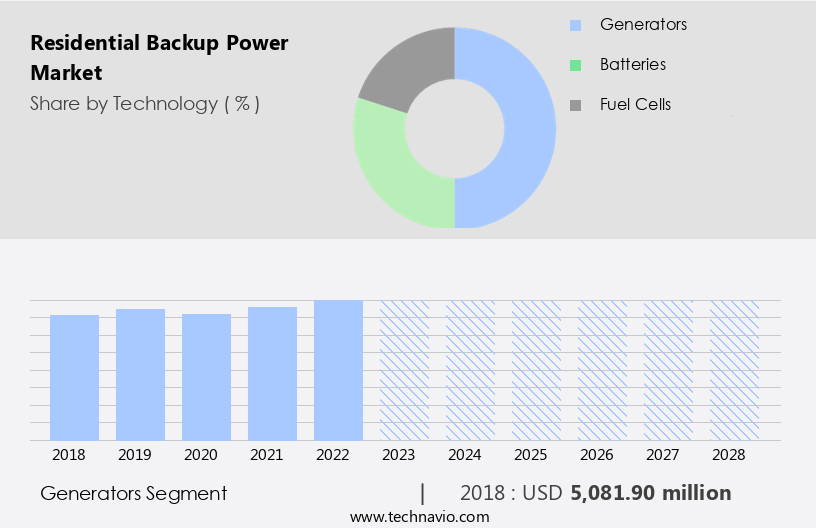
The generators segment is estimated to witness significant growth during the forecast period.
In the power market, generators serve as essential backup solutions during utility power disruptions. Primarily fueled by diesel, propane, and gasoline, diesel and natural gas are the most common fuel sources for these units. However, the environmental concerns and regulatory barriers surrounding diesel generators, such as high greenhouse gas emissions, are driving a shift towards natural gas generators. This transformative phase in the power industry is also influenced by the integration of advanced technological solutions, including hybrid units that combine generators with solar battery storage and solar panels. The increasing demand for dependable power and sustainable energy practices is further fueling the adoption of modern generators, lithium-ion batteries, and smart energy products.
The industry is also witnessing the development of infrastructure, including depot networks and IoT integration, to ensure continuous availability and reliable electricity supply. As the energy ecosystem evolves, the focus on sustainable energy sources and decentralized generation is becoming increasingly important in modern energy ecosystems. The competitive dynamics of the market are influenced by various factors, including the economic structure, supply reliability, and consumer behaviors. The visionary solutions offered by industry pioneers are addressing the multifaceted demands of the market, providing top-tier products with high energy density and low-emission zones. The integration of renewable energy sources, such as wind and solar, is also a critical aspect of the modern energy landscape, with solar PV systems and solar rooftops becoming increasingly popular.
The future of the power industry lies in the development of efficient solutions that cater to the diverse selection of sustainable practices and provide uninterrupted power supply, even in the face of power interruptions or power interruptions caused by grid independence.
Get a glance at the market report of share of various segments Request Free Sample
The Generators segment was valued at USD 5.08 billion in 2018 and showed a gradual increase during the forecast period.
Regional Analysis
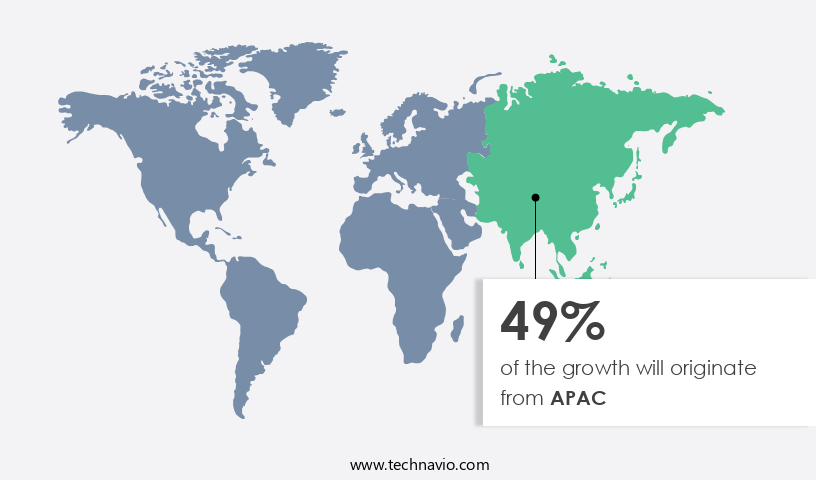
APAC is estimated to contribute 49% to the growth of the global market during the forecast period.Technavio’s analysts have elaborately explained the regional trends and drivers that shape the market during the forecast period.
For more insights on the market size of various regions, Request Free Sample
The market is experiencing a transformative phase due to the increasing demand for dependable power and the integration of renewable energy sources. Regulatory barriers related to grid compatibility are being addressed through the development of hybrid units, which combine generators and Solar battery storage. Lithium-ion batteries and Solar panels are gaining popularity due to their high energy density and environmental benefits. Advanced manufacturing and technological integration are enabling the production of modern generators with smart technologies, inverters, and cybersecurity features. The market is witnessing competitive dynamics, with major companies offering diverse selection of sustainable solutions. The use of Solar rooftops and Solar PV Battery systems for continuous availability is becoming increasingly common.
However, concerns regarding environmental impact, including the emission of oxides of nitrogen and particulate matter, are driving the need for sustainable practices and efficient solutions. The modern energy ecosystem is shifting towards decentralized generation and interconnected infrastructures. Backup Power solutions are essential for emergency services and reliable electricity during power interruptions. The use of IoT integration and advanced manufacturing is enabling the development of top-tier products with a proven track record and long generator runtime. The declining costs of Solar PV systems and battery advancements are making renewable energy sources more accessible to Residential consumers. The need for maintenance and the economic structure of the industry are influencing the market dynamics.
Companies are offering tailored solutions to meet the multifaceted demands of consumers. Despite the challenges, the future of the market is promising, with a resilient energy future on the horizon. The market is expected to continue growing, driven by the visionary solutions of industry pioneers and the increasing awareness and perception of the importance of uninterrupted power.
Market Dynamics
Our researchers analyzed the data with 2023 as the base year, along with the key drivers, trends, and challenges. A holistic analysis of drivers will help companies refine their marketing strategies to gain a competitive advantage.
What are the key market drivers leading to the rise in the adoption of Residential Backup Power Industry?
- Increasing demand for backup power from emerging economies is the key driver of the market.
- The market is experiencing substantial growth due to increasing demand from emerging economies, including China, India, Vietnam, and Indonesia. Factors such as rising disposable income, socioeconomic progress, and accessible financing options are driving the adoption of backup power systems, such as generators and UPS (Uninterruptible Power Supply) systems, in the residential sector. In particular, developing countries like India and China exhibit significant growth potential due to their expanding per capita income.
- For instance, according to The World Bank Group, China's per capita income grew from 2% in 2020 to 3% in 2022. This economic growth is leading to an increased focus on energy security and reliability, further fueling the demand for residential backup power solutions.
What are the market trends shaping the Residential Backup Power Industry?
- Rising adoption of fuel cells for power backup is the upcoming market trend.
- Fuel cells convert chemical energy from hydrogen into electricity, producing only heat and water as byproducts. These systems have gained commercial popularity for backup power applications, particularly for low-power uses such as residential applications. Compared to batteries, fuel cells provide longer continuous runtime and perform effectively in harsh environments across various temperature ranges. They necessitate less maintenance than batteries and generators, and remote monitoring capabilities reduce actual maintenance time.
- Fuel cells are more eco-friendly than generators as they operate quietly and emit zero emissions. These advantages make fuel cells an attractive alternative for backup power solutions.
What challenges does the Residential Backup Power Industry face during its growth?
- Stringent environmental regulations against diesel generators is a key challenge affecting the industry growth.
- The market has seen growing concern regarding the environmental impact of traditional solutions, particularly diesel generators. These generators have long been a popular choice for powering homes in areas prone to power outages. However, their use raises environmental issues due to the emissions of nitrogen oxides (NOx) and particulate matter (PM). These emissions contribute to environmental problems such as smog and acid rain, which can lead to health issues including asthma, heart attacks, respiratory failure, and even premature deaths. In response, governments worldwide are enacting regulations to limit the use of diesel generators and promote cleaner backup power alternatives.
- This shift in regulations is expected to drive the market towards more sustainable solutions, ensuring a healthier environment and improved public health.
Exclusive Customer Landscape
The residential backup power market forecasting report includes the adoption lifecycle of the market, covering from the innovator’s stage to the laggard’s stage. It focuses on adoption rates in different regions based on penetration. Furthermore, the residential backup power market report also includes key purchase criteria and drivers of price sensitivity to help companies evaluate and develop their market growth analysis strategies.
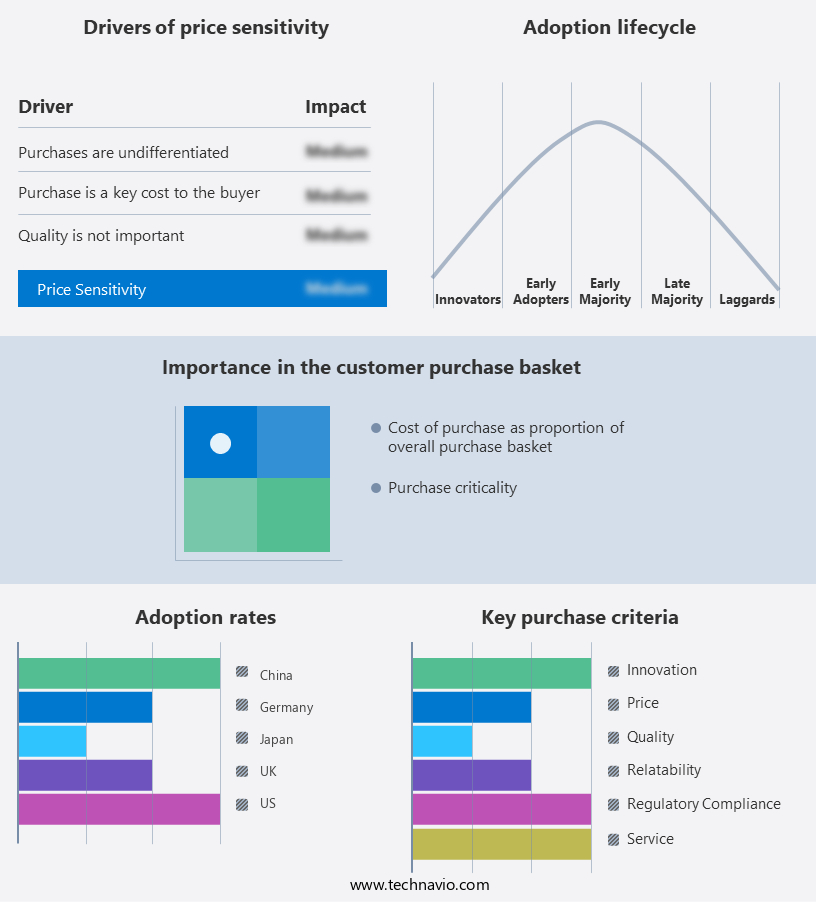
Customer Landscape
Key Companies & Market Insights
Companies are implementing various strategies, such as strategic alliances, residential backup power market forecast, partnerships, mergers and acquisitions, geographical expansion, and product/service launches, to enhance their presence in the industry.
ABB Ltd. - The company specializes in the development and distribution of innovative sports products, catering to diverse consumer needs and preferences. Our offerings span various categories, including equipment, apparel, and nutrition, all designed to enhance athletic performance and promote an active lifestyle. Through rigorous research and development, we continually push the boundaries of sports technology to deliver cutting-edge solutions that meet the evolving demands of modern athletes. Our commitment to quality and customer satisfaction sets us apart in the industry.
The industry research and growth report includes detailed analyses of the competitive landscape of the market and information about key companies, including:
- ABB Ltd.
- Briggs and Stratton LLC
- C and D Technologies Inc.
- Caterpillar Inc.
- Champion Power Equipment Inc.
- Cummins Inc.
- Eaton Corp. Plc
- Emerson Electric Co.
- EnerSys
- Exide Industries Ltd.
- Generac Holdings Inc.
- Honda Motor Co. Ltd.
- Huawei Technologies Co. Ltd.
- Kohler Co.
- NeoVolta Inc.
- Panasonic Holdings Corp.
- Schneider Electric SE
- SMA Solar Technology AG
- Tesla Inc.
- Toshiba Corp.
Qualitative and quantitative analysis of companies has been conducted to help clients understand the wider business environment as well as the strengths and weaknesses of key industry players. Data is qualitatively analyzed to categorize companies as pure play, category-focused, industry-focused, and diversified; it is quantitatively analyzed to categorize companies as dominant, leading, strong, tentative, and weak.
Research Analyst Overview
The market is currently undergoing a transformative phase, driven by the increasing demand for dependable power sources and the integration of renewable energy sources into modern energy ecosystems. This shift is being fueled by several factors, including regulatory barriers and grid compatibility concerns. One of the key trends in this market is the adoption of hybrid units, which combine generators with solar battery storage. These systems provide continuous availability and enable residential consumers to reduce their reliance on traditional energy sources, particularly during power interruptions or grid instability. The use of lithium-ion batteries in these systems is becoming increasingly popular due to their high energy density and long runtime.
However, the market is also seeing the emergence of advanced manufacturing techniques and technological integration, leading to the development of more efficient and cost-effective solutions. The environmental impact of backup power solutions is another major consideration. As consumers become more aware of the need for sustainable practices, there is a growing demand for solutions that minimize fuel consumption and reduce emissions, such as those based on solar panels and wind energy. Emergency services and reliable electricity are critical considerations for residential consumers, particularly in regions with high population density and urbanization. The use of smart technologies, such as inverters and IoT integration, is becoming increasingly important to ensure the reliability and efficiency of backup power systems.
Competitive dynamics in the market are also evolving, with major companies offering visionary solutions and tailored offerings to meet the multifaceted demands of consumers. The market is also seeing the emergence of industry pioneers, who are leveraging their expertise and proven track record to provide uninterrupted power solutions. Despite the many advances in backup power technology, there are still challenges to overcome. Regulatory standardization and grid independence remain key issues, as do concerns around cybersecurity and maintenance needs. However, with ongoing innovation and investment in the sector, the future of backup power looks bright, with a focus on sustainable energy solutions and a resilient energy future.
In , the market is undergoing a significant transformation, driven by the need for dependable power sources and the integration of renewable energy sources into modern energy ecosystems. The market is seeing the adoption of hybrid units, the use of lithium-ion batteries, and the emergence of smart technologies, among other trends. However, challenges remain, including regulatory barriers, grid compatibility, and cybersecurity concerns. Despite these challenges, the future of backup power looks promising, with a focus on sustainable solutions and a resilient energy future.
|
Market Scope |
|
|
Report Coverage |
Details |
|
Page number |
167 |
|
Base year |
2023 |
|
Historic period |
2018-2022 |
|
Forecast period |
2024-2028 |
|
Growth momentum & CAGR |
Accelerate at a CAGR of 6.66% |
|
Market growth 2024-2028 |
USD 4114.4 million |
|
Market structure |
Fragmented |
|
YoY growth 2023-2024(%) |
6.13 |
|
Key countries |
China, US, Japan, Germany, and UK |
|
Competitive landscape |
Leading Companies, Market Positioning of Companies, Competitive Strategies, and Industry Risks |
What are the Key Data Covered in this Residential Backup Power Market Research and Growth Report?
- CAGR of the Residential Backup Power industry during the forecast period
- Detailed information on factors that will drive the growth and forecasting between 2024 and 2028
- Precise estimation of the size of the market and its contribution of the industry in focus to the parent market
- Accurate predictions about upcoming growth and trends and changes in consumer behaviour
- Growth of the market across APAC, North America, Europe, Middle East and Africa, and South America
- Thorough analysis of the market’s competitive landscape and detailed information about companies
- Comprehensive analysis of factors that will challenge the residential backup power market growth of industry companies
We can help! Our analysts can customize this residential backup power market research report to meet your requirements.
 RIA -
RIA - 
