



Revenue-Based Financing Platforms Market Size and Growth Forecast 2026-2030
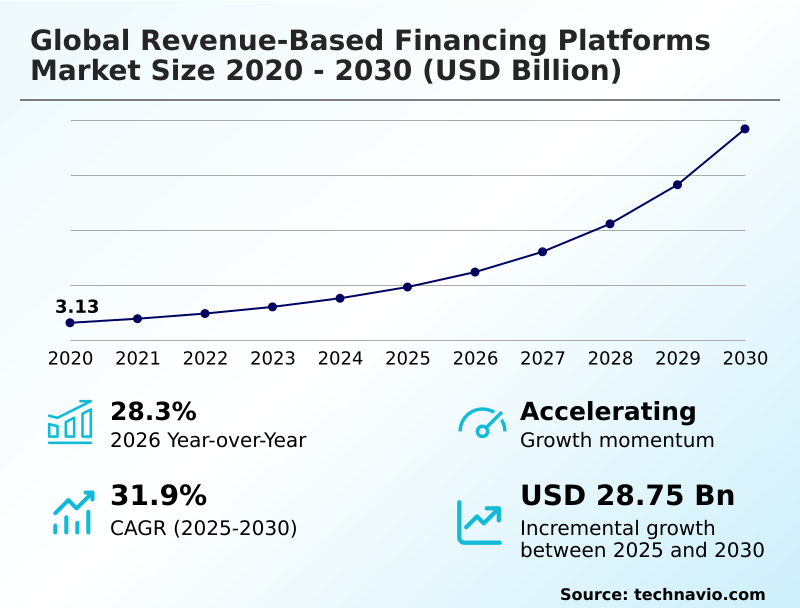
The Revenue-Based Financing Platforms Market size was valued at USD 9.63 billion in 2025 growing at a CAGR of 31.9% during the forecast period 2026-2030.
North America accounts for 43.4% of incremental growth during the forecast period. The Recurring subscription revenue segment by Revenue Stream was valued at USD 3.42 billion in 2024, while the Information technology segment holds the largest revenue share by End-user.
The market is projected to grow by USD 35.25 billion from 2020 to 2030, with USD 28.75 billion of the growth expected during the forecast period of 2025 to 2030.
Get Key Insights on Market Forecast (PDF) Request Free Sample
Revenue-Based Financing Platforms Market Overview
The revenue-based financing platforms market facilitates non-dilutive growth capital for asset-light business models, with the market showing a year-over-year growth of 28.3%. This alternative finance industry is central to modern corporate finance strategy, particularly in North America, which accounts for 43.4% of incremental growth. Platforms perform real-time due diligence by integrating with payment gateways, enabling automated capital deployment and cash flow underwriting. For instance, a B2B SaaS financing provider can analyze a company's monthly recurring revenue monetization and churn metrics, governed by frameworks like the Uniform Commercial Code for secured transactions, to approve performance-tied repayments within hours. This capital allocation framework allows the SaaS company to fund user acquisition campaigns or product development without equity dilution, aligning the cost of capital directly with revenue performance through a flexible financial instrument.
Drivers, Trends, and Challenges in the Revenue-Based Financing Platforms Market
The debate over revenue-based financing vs traditional loans is increasingly influenced by the speed and flexibility offered by non-dilutive financing for startups. Platforms specializing in growth capital for DTC brands and revenue-based financing for SaaS companies are leveraging AI-driven underwriting for fintech to provide capital for scaling marketing spend in hours, a process that takes weeks with conventional lenders.
An e-commerce business, for example, can secure GMV-based funding for online retailers to manage inventory for a seasonal sales spike without undergoing a lengthy credit review. This efficiency is enabled by open banking integration for lending, compliant with regulations like Europe's Second Payment Services Directive (PSD2), which mandates secure data access.
This allows for real-time risk assessment in lending based on live payment gateway data. As a result, recurring revenue is becoming a tradable asset, giving companies a powerful alternative to venture capital funding and a method for managing cash flow with flexible financing, particularly for digital subscription models where preserving equity is paramount.
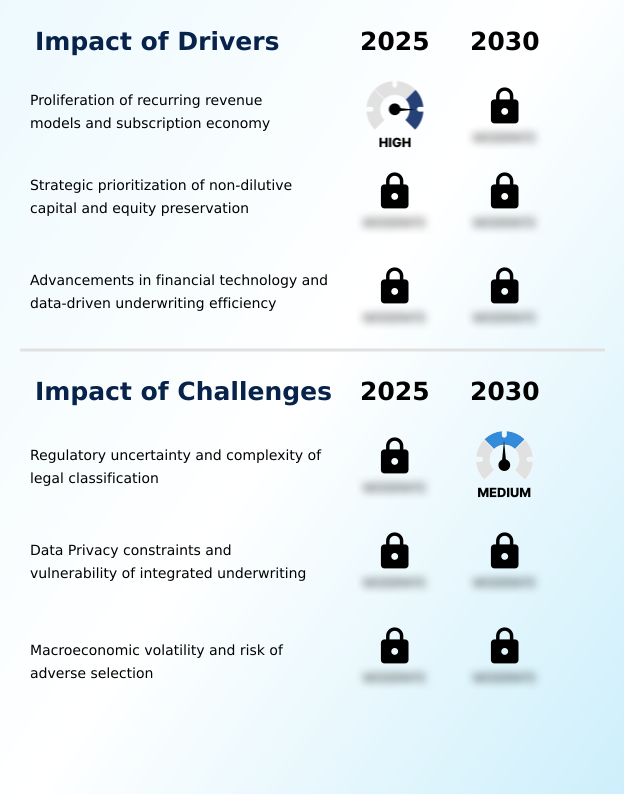
Primary Growth Driver: The proliferation of recurring revenue models and the expansion of the global subscription economy are primary drivers for the market's growth.
Market expansion, reflected in the 28.3% year-over-year growth, is primarily propelled by the proliferation of recurring revenue models within the subscription economy funding landscape.
The strategic prioritization of equity preservation financing makes non-dilutive growth capital a preferred choice for founders, offering a lower long-term cost of capital compared to venture funding.
This demand is met by rapid financial technology innovation, particularly through the use of open banking APIs, which facilitate the automated capital deployment process.
This technological leap enables platforms to access and analyze financial data in real-time, reducing underwriting times from weeks to hours and democratizing access to capital for businesses with strong digital revenue streams but limited physical collateral.
Emerging Market Trend: The integration of artificial intelligence and predictive analytics into underwriting processes is an emerging market trend. This development enables more dynamic, data-driven risk assessments and highly customized financing terms for businesses.
Key market trends are driven by technological and strategic evolution, with predictive analytics integration transforming underwriting into a high-velocity, data-centric process. Platforms are increasingly offering embedded finance solutions through business ecosystem partnerships, making non-dilutive capital a native feature within e-commerce and payment systems.
This integration, often governed by open finance regulations like Europe's PSD2, provides a seamless financial instrument for users. Concurrently, the use of a subscription analytics suite is becoming standard for assessing the health of recurring revenue businesses.
A notable shift is the expansion into vertical-specific sustainable finance initiatives, where platforms offer favorable terms to companies in the green technology sector, diversifying beyond the traditional SaaS and e-commerce verticals and expanding capital markets access.
Key Industry Challenge: Regulatory uncertainty across different jurisdictions and the legal complexity of classifying these financial products present a key challenge affecting industry growth.
A primary market challenge stems from the lack of a harmonized legal framework, creating complexity in financial regulatory compliance for platforms operating across multiple jurisdictions. The classification of these transactions—whether as loans or as a receivables purchase agreement—remains ambiguous, impacting everything from usury law applicability to bankruptcy proceedings.
Furthermore, the data-centric risk models that underpin this industry are vulnerable to data privacy regulations such as the GDPR, which can restrict access to the granular transactional data needed for accurate credit risk modeling.
This creates tension between the need for efficient, automated underwriting and the imperative to protect sensitive corporate information, forcing providers to continuously evolve their proprietary risk models to remain compliant.
Explore Full Market Dynamics Analysis Request Free Sample
Revenue-Based Financing Platforms Market Segmentation
The revenue-based financing platforms industry research report provides comprehensive data including region-wise segment analysis, with forecasts and analysis for the period 2026-2030, as well as historical data from 2020-2024 for the following segments.
Revenue Stream Segment Analysis
The recurring subscription revenue segment is estimated to witness significant growth during the forecast period.
The global revenue-based financing platforms market is segmented by revenue stream, with recurring subscription revenue representing the most predictable and largest portion, accounting for over 60% of the market in 2025.
This segment, critical for software-as-a-service financing and other subscription-based businesses, leverages the stability of future earnings for underwriting.
The valuation of these predictable income streams, governed by accounting standards like ASC 606, enables direct-to-consumer brand funding and other forms of e-commerce capital advance.
Unlike transactional sales financing or gross merchandise volume financing, which are tied to discrete sales, the monetization of monthly recurring revenue and annual recurring revenue advances provides a stable basis for capital deployment, supporting a significant portion of the alternative finance industry.
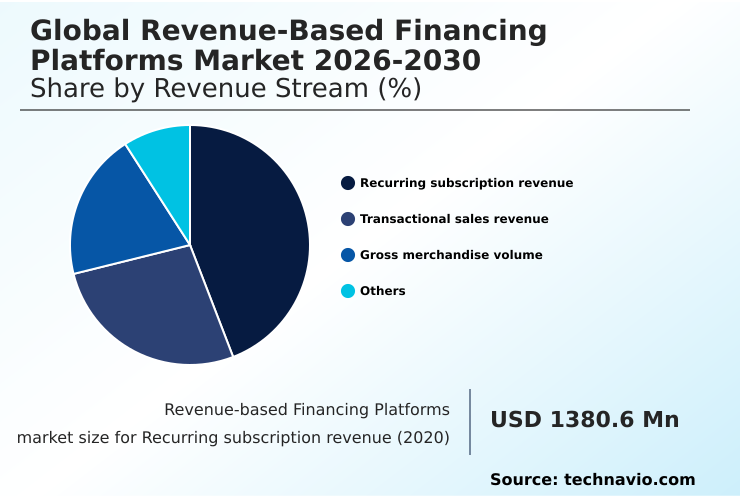
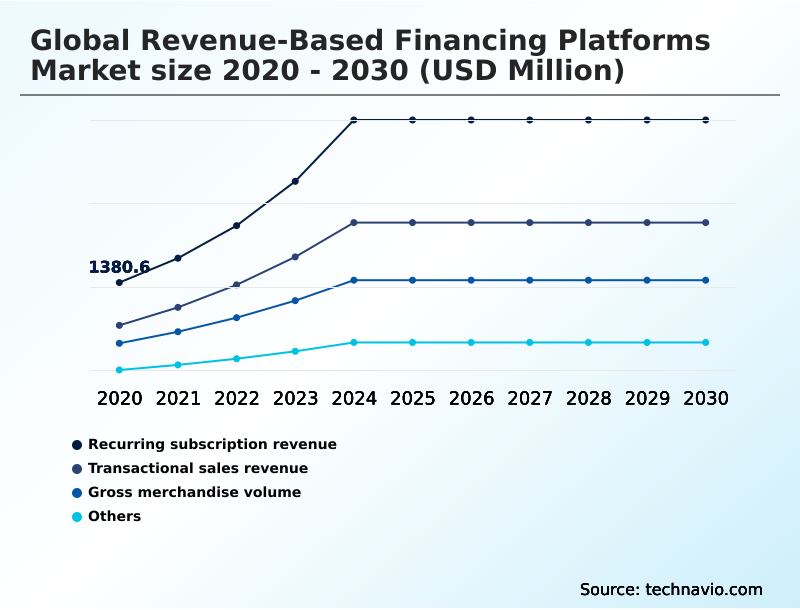
The Recurring subscription revenue segment was valued at USD 3.42 billion in 2024 and showed a gradual increase during the forecast period.
Revenue-Based Financing Platforms Market by Region: North America Leads with 43.4% Growth Share
North America is estimated to contribute 43.4% to the growth of the global market during the forecast period.
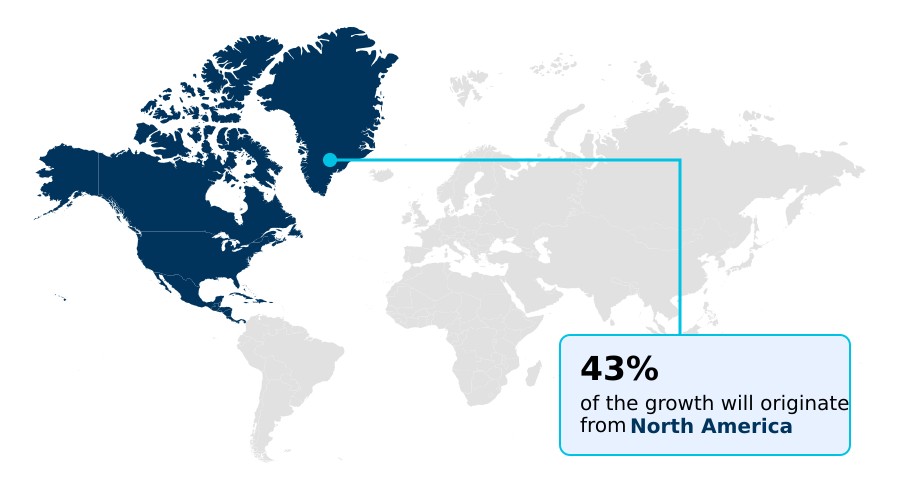
The geographic landscape of the market is characterized by a mature digital financial ecosystem in North America, which commands 43.4% of the market's incremental growth, and a rapidly expanding APAC region, which exhibits the highest CAGR at 33.7%.
North American growth is supported by significant institutional investment and advanced capital markets access for venture growth capital. In contrast, APAC's momentum is driven by the explosive growth of cross-border e-commerce financing, particularly in Southeast Asia.
For platforms, this divergence necessitates distinct strategies for legal classification and compliance, as navigating the regulatory frameworks for a receivables purchase agreement differs significantly between regions.
The ongoing development of a global digital lending platform infrastructure is critical for harmonizing these regional dynamics.
Customer Landscape Analysis for the Revenue-Based Financing Platforms Market
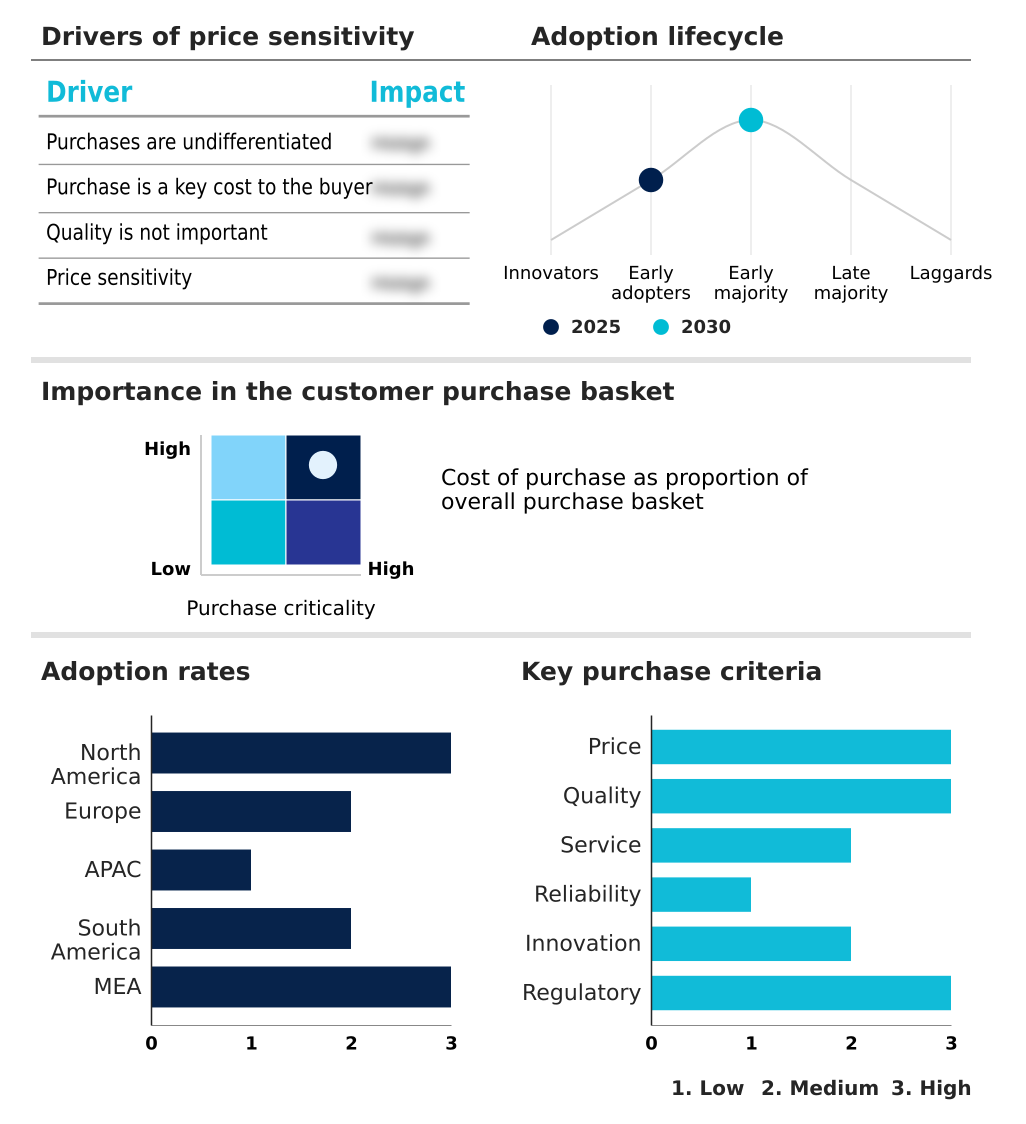
The revenue-based financing platforms market forecasting report includes the adoption lifecycle of the market, covering from the innovator’s stage to the laggard’s stage. It focuses on adoption rates in different regions based on penetration. Furthermore, the revenue-based financing platforms market report also includes key purchase criteria and drivers of price sensitivity to help companies evaluate and develop their market growth analysis strategies.
Competitive Landscape of the Revenue-Based Financing Platforms Market
Companies are implementing various strategies, such as strategic alliances, partnerships, mergers and acquisitions, geographical expansion, and product/service launches, to enhance their presence in the revenue-based financing platforms market industry.
Braavo Capital Inc. - Platforms offer non-dilutive capital by monetizing future recurring revenue, providing businesses with flexible growth funding without sacrificing equity or control.
The industry research and growth report includes detailed analyses of the competitive landscape of the market and information about key companies, including:
- Braavo Capital Inc.
- Capchase Inc.
- Choco Up
- Clear Finance Technology Corp
- Flow Capital Corp.
- Founderpath Inc.
- Funding Circle Holdings Plc
- GetVantage Tech Pvt. Ltd.
- Karmen SAS
- Levenue B.V.
- Liberis Ltd.
- Lighter Capital Inc.
- Novel Capital Inc.
- PayPal Holdings Inc.
- Pipe Technologies Inc.
- Pollen VC
- Shopify Inc.
- Stripe Inc.
- Uncapped Ltd.
- Wayflyer Ltd.
Qualitative and quantitative analysis of companies has been conducted to help clients understand the wider business environment as well as the strengths and weaknesses of key industry players. Data is qualitatively analyzed to categorize companies as pure play, category-focused, industry-focused, and diversified; it is quantitatively analyzed to categorize companies as dominant, leading, strong, tentative, and weak.
Recent Developments in the Revenue-Based Financing Platforms Market
- In May 2025, Clear.co launched a sophisticated merchant dashboard using advanced AI to analyze real-time subscription data and provide instantaneous capital offers to businesses demonstrating high customer lifetime value.
- In April 2025, Lighter Capital introduced a specialized capital allocation framework that utilizes advanced machine learning to provide automated funding decisions for technology firms in the North America region.
- In March 2025, a major European financial oversight body introduced new comprehensive reporting standards for alternative financing entities to ensure clear communication of the terms of future receivable purchases to small business owners.
- In February 2025, Capchase introduced a sophisticated predictive analytics enhancement to its core platform engine, utilizing historical transactional data to provide more granular revenue forecasts for software-as-a-service enterprises.
Research Analyst Overview: Revenue-Based Financing Platforms Market
From a CFO's perspective, the decision to use revenue-based financing platforms is a crucial part of strategic capital management, balancing the cost of capital against the imperative for equity preservation financing. The market's largest segment, recurring subscription revenue, accounts for over 60% of activity, a direct reflection of how these platforms perform data-driven underwriting.
By leveraging machine learning risk assessment on revenue data compliant with standards like ASC 606, platforms offer performance-tied repayments that align with a company's cash flow.
For a firm with strong recurring revenue models, this non-dilutive growth capital provides a way to fund working capital finance needs, such as marketing spend or inventory financing, without the governance changes associated with venture debt or equity rounds.
The evolution of cash flow underwriting transforms future receivables into a liquid asset, fundamentally changing the capital allocation framework for growth-stage companies.
Dive into Technavio’s robust research methodology, blending expert interviews, extensive data synthesis, and validated models for unparalleled Revenue-Based Financing Platforms Market insights. See full methodology.
| Market Scope | |
|---|---|
| Page number | 305 |
| Base year | 2025 |
| Historic period | 2020-2024 |
| Forecast period | 2026-2030 |
| Growth momentum & CAGR | Accelerate at a CAGR of 31.9% |
| Market growth 2026-2030 | USD 28747.3 million |
| Market structure | Fragmented |
| YoY growth 2025-2026(%) | 28.3% |
| Key countries | US, Canada, Mexico, Germany, UK, France, Italy, The Netherlands, Spain, China, India, Japan, South Korea, Australia, Indonesia, Brazil, Argentina, Colombia, Saudi Arabia, UAE, South Africa, Israel and Turkey |
| Competitive landscape | Leading Companies, Market Positioning of Companies, Competitive Strategies, and Industry Risks |
Revenue-Based Financing Platforms Market: Key Questions Answered in This Report
-
What is the expected growth of the Revenue-Based Financing Platforms Market between 2026 and 2030?
-
The Revenue-Based Financing Platforms Market is expected to grow by USD 28.75 billion during 2026-2030, registering a CAGR of 31.9%. Year-over-year growth in 2026 is estimated at 28.3%%. This acceleration is shaped by proliferation of recurring revenue models and subscription economy, which is intensifying demand across multiple end-use verticals covered in the report.
-
-
What segmentation does the market report cover?
-
The report is segmented by Revenue Stream (Recurring subscription revenue, Transactional sales revenue, Gross merchandise volume, and Others), End-user (Information technology, Retail and e-commerce, Media and entertainment, Healthcare, and Others), Business Segment (Small and medium enterprises, and Large enterprises) and Geography (North America, Europe, APAC, South America, Middle East and Africa). Among these, the Recurring subscription revenue segment is estimated to witness significant growth during the forecast period, driven by rising adoption across key application areas. Each segment includes detailed qualitative and quantitative analysis, along with historical data from 2020-2024 and forecasts through 2030 with year-over-year growth rates.
-
-
Which regions are analyzed in the report?
-
The report covers North America, Europe, APAC, South America and Middle East and Africa. North America is estimated to contribute 43.4% to market growth during the forecast period. Country-level analysis includes US, Canada, Mexico, Germany, UK, France, Italy, The Netherlands, Spain, China, India, Japan, South Korea, Australia, Indonesia, Brazil, Argentina, Colombia, Saudi Arabia, UAE, South Africa, Israel and Turkey, with dedicated market size tables and year-over-year growth for each.
-
-
What are the key growth drivers and market challenges?
-
The primary driver is proliferation of recurring revenue models and subscription economy, which is accelerating investment and industry demand. The main challenge is regulatory uncertainty and complexity of legal classification, creating operational barriers for key market participants. The report quantifies the impact of each driver and challenge across 2026 and 2030 with comparative analysis.
-
-
Who are the major players in the Revenue-Based Financing Platforms Market?
-
Key vendors include Braavo Capital Inc., Capchase Inc., Choco Up, Clear Finance Technology Corp, Flow Capital Corp., Founderpath Inc., Funding Circle Holdings Plc, GetVantage Tech Pvt. Ltd., Karmen SAS, Levenue B.V., Liberis Ltd., Lighter Capital Inc., Novel Capital Inc., PayPal Holdings Inc., Pipe Technologies Inc., Pollen VC, Shopify Inc., Stripe Inc., Uncapped Ltd. and Wayflyer Ltd.. The report provides qualitative and quantitative analysis categorizing companies as dominant, leading, strong, tentative, and weak based on their market positioning. Company profiles include business segment analysis, SWOT assessment, key offerings, and recent strategic developments.
-
Revenue-Based Financing Platforms Market Research Insights
The market's dynamics are shaped by financial technology innovation, where underwriting algorithms and data-centric risk models are central to strategic capital management. Unlike traditional banking, which relies on frameworks like the Basel Accords, these platforms utilize fintech innovation for credit risk modeling based on live operational data.
The information technology sector is the dominant end-user, projected to be nearly three times larger than the retail and e-commerce segment in 2025. This reflects the suitability of the model for businesses with predictable subscriptions.
These alternative finance platforms represent a core part of a modern corporate finance strategy, offering a flexible financial instrument that aligns with the growth trajectory of digital-first companies.
We can help! Our analysts can customize this revenue-based financing platforms market research report to meet your requirements.
 RIA -
RIA - 
