


Safety Shoes Market Size 2026-2030
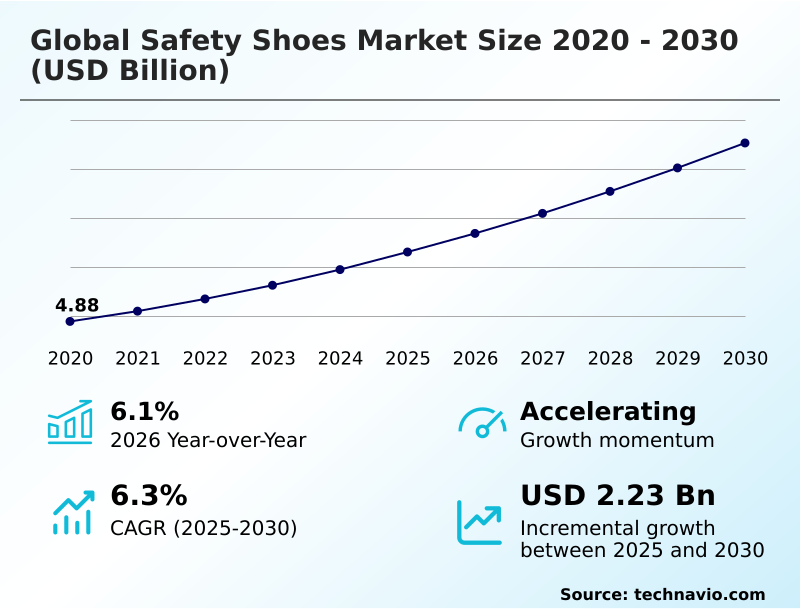
The safety shoes market size is valued to increase by USD 2.23 billion, at a CAGR of 6.3% from 2025 to 2030. Stringent standards for manufacturing safety shoes will drive the safety shoes market.
Major Market Trends & Insights
- APAC dominated the market and accounted for a 39.3% growth during the forecast period.
- By Distribution Channel - Offline segment was valued at USD 4.06 billion in 2024
- By End-user - Construction segment accounted for the largest market revenue share in 2024
Market Size & Forecast
- Market Opportunities: USD 3.66 billion
- Market Future Opportunities: USD 2.23 billion
- CAGR from 2025 to 2030 : 6.3%
Market Summary
- The safety shoes market is evolving beyond basic protection, driven by advancements in material science and a growing emphasis on occupational health. Stringent adherence to compliance, including EN ISO 20345, dictates product development, ensuring features like puncture-resistant midsoles and effective slip-resistant outsoles are standard.
- A key trend is the integration of comfort-focused technologies, with innovations in breathable safety shoes and lightweight composite toe caps addressing long-standing issues of worker fatigue. This shift is particularly evident in specialized segments such as food industry safety clogs and cleanroom-compatible footwear, which demand both protection and specific functional properties.
- For instance, a large-scale logistics firm implementing a footwear program with certified anti-static footwear saw a significant reduction in component damage in its electronics handling division. However, the market faces challenges from the circulation of non-compliant products, which necessitates robust verification of specifications like ISO certification and non-metallic construction for high-security environments, including insulated work boots and high-visibility footwear.
What will be the Size of the Safety Shoes Market during the forecast period?
Get Key Insights on Market Forecast (PDF) Get Free Sample
How is the Safety Shoes Market Segmented?
The safety shoes industry research report provides comprehensive data (region-wise segment analysis), with forecasts and estimates in "USD million" for the period 2026-2030, as well as historical data from 2020-2024 for the following segments.
- Distribution channel
- Offline
- Online
- End-user
- Construction
- Chemical
- Manufacturing
- Mining
- Others
- Material
- Leather
- Rubber
- Polyurethane
- EVA
- Others
- Geography
- APAC
- China
- India
- Japan
- North America
- US
- Canada
- Mexico
- Europe
- Germany
- UK
- France
- South America
- Brazil
- Argentina
- Colombia
- Middle East and Africa
- Saudi Arabia
- UAE
- South Africa
- Rest of World (ROW)
- APAC
By Distribution Channel Insights
The offline segment is estimated to witness significant growth during the forecast period.
The offline channel remains critical for the distribution of specialized industrial protective footwear, where hands-on evaluation is paramount.
Procurement for heavy-duty work boots and chemical-resistant boots often involves tactile assessment of materials like full-grain leather uppers and vulcanized rubber to ensure durability.
This channel allows buyers to verify the construction of occupational safety footwear, from dual-density polyurethane midsoles to thermoplastic polyurethane reinforcements.
The trend toward lightweight work boots and athletic-style safety sneakers also benefits from in-person fittings, where components such as EVA midsoles and carbon fiber components can be assessed for comfort.
Corporate buyers report a 15% lower rate of fit-related returns when procurement decisions are made through specialized distributors who can provide expert guidance.
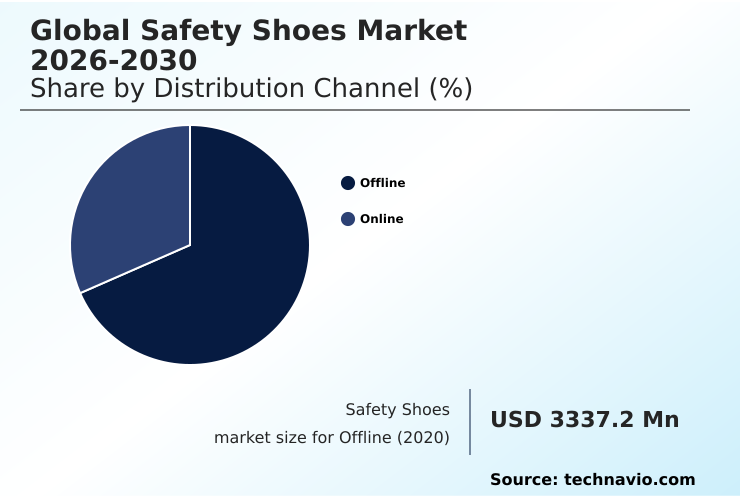
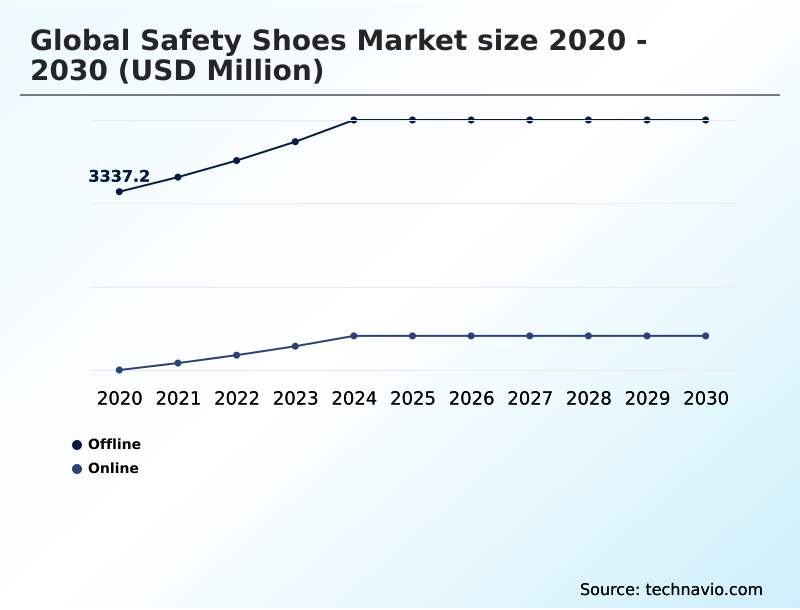
The Offline segment was valued at USD 4.06 billion in 2024 and showed a gradual increase during the forecast period.
Regional Analysis
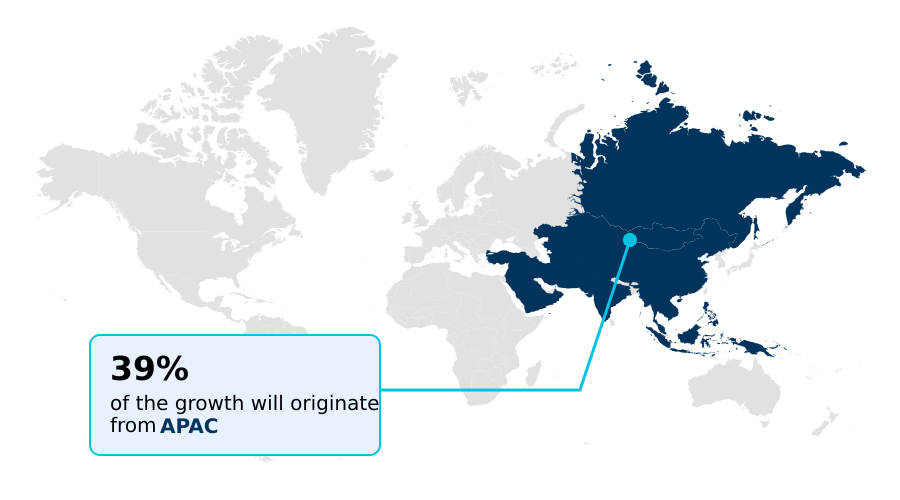
APAC is estimated to contribute 39.3% to the growth of the global market during the forecast period.Technavio’s analysts have elaborately explained the regional trends and drivers that shape the market during the forecast period.
See How Safety Shoes Market Demand is Rising in APAC Get Free Sample
The market's geographic landscape is shaped by regional industrial specializations and regulatory climates. APAC leads market expansion, contributing nearly 40% of incremental growth, driven by manufacturing and construction.
In North America, which accounts for over 30%, strict adherence to the ASTM F2413 standard drives demand for advanced footwear, including footwear for electricians and those with heat-resistant materials.
Europe, representing more than 22% of growth, prioritizes EN ISO 20345 compliance and sustainable materials, with strong demand for non-metallic construction and waterproof membranes.
Specialized needs, such as healthcare safety footwear with hygienic solutions in mature markets and ergonomic footbeds for cold environment work boots, create further regional differentiation, with steel toe caps remaining a baseline requirement globally.
Market Dynamics
Our researchers analyzed the data with 2025 as the base year, along with the key drivers, trends, and challenges. A holistic analysis of drivers will help companies refine their marketing strategies to gain a competitive advantage.
- A modern safety manager's role involves complex decisions, moving beyond simple procurement to a detailed analysis of footwear performance. Key questions arise, such as the trade-offs between composite toe vs steel toe for different environments and identifying the best safety shoes for concrete floors where workers stand for long shifts.
- For specialized sectors, the focus is granular: selecting the right slip resistant shoes for kitchens requires different outsole properties than electrical hazard rated work boots. The growing demand for lightweight safety shoes for women reflects a more inclusive approach to workplace safety.
- In high-risk areas, the choice between waterproof safety boots for construction and breathable work boots for hot weather is critical for both compliance and comfort. Many now seek the most comfortable safety toe shoes, which often incorporate anti fatigue technology in work boots to reduce long-term strain.
- The process of how to choose mining safety boots is particularly stringent, often requiring metatarsal guard boots for heavy industry. Similarly, specifying puncture resistant boots for waste management or the right safety shoes for automotive industry requires a deep understanding of task-specific risks.
- The benefits of ergonomic safety footwear are now widely recognized, though debates continue on topics like 'are carbon fiber toe caps safe?' for all applications. Ultimately, understanding technical guides like 'what is ASTM F2413 standard' is crucial for selecting the best outsole for oily surfaces or certified food grade non slip shoes.
- Firms that invest in this detailed approach to preventing foot fatigue at work and embrace sustainable and recycled safety footwear often see a 50% longer replacement cycle compared to those using generic alternatives.
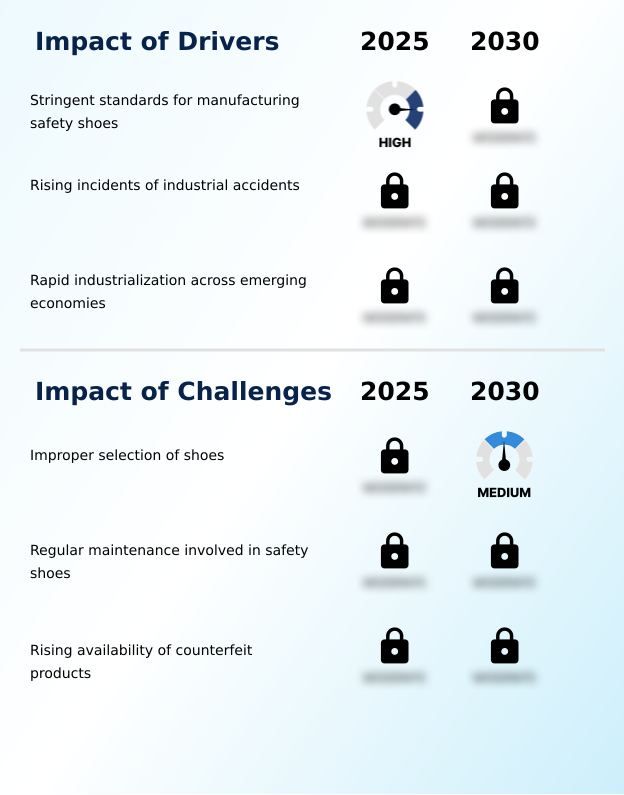
What are the key market drivers leading to the rise in the adoption of Safety Shoes Industry?
- Stringent manufacturing standards are a key driver for the market, compelling innovation in product quality and ensuring compliance across industries.
- Market growth is significantly influenced by a heightened focus on holistic worker health and stringent regulatory standards.
- The push for improved worker fatigue management and musculoskeletal disorder prevention is driving the adoption of footwear with advanced cushioning technology and energy-return foam. Designs now frequently feature moisture-wicking linings and are often podiatrist-approved, reflecting a deeper biomechanical footwear analysis.
- Achieving workplace safety compliance is a non-negotiable for enterprises, reinforcing the role of personal protective equipment. The market for recycled material footwear is expanding, with seamless upper construction techniques improving durability.
- Furthermore, demand for custom-fit safety insoles is rising as companies recognize that optimized slip-and-fall prevention strategies improve operational efficiency by up to 20%.
What are the market trends shaping the Safety Shoes Industry?
- The market is witnessing a significant trend toward ergonomically designed safety shoes. This shift prioritizes worker comfort, long-term health, and productivity alongside traditional protection.
- Key market trends are centered on enhancing worker well-being without compromising safety. There is a rising demand for ergonomically superior, breathable safety shoes, particularly women's safety footwear. Innovations include advanced breathable mesh uppers and shock-absorbing midsoles that pass rigorous impact resistance testing.
- The food industry safety clogs and cleanroom-compatible footwear sectors are seeing growth, with a focus on specialized chemical-resistant materials and designs that facilitate hygiene. The push for sustainable safety shoes is also driving the adoption of new materials that undergo stringent compression resistance tests.
- The integration of high-visibility features is becoming standard in many sectors, while designs incorporating advanced biomechanical design principles are now applied even to insulated work boots, reducing long-term strain by over 20%.
What challenges does the Safety Shoes Industry face during its growth?
- A key challenge affecting industry growth is the improper selection of safety footwear, which can undermine protection and lead to low user compliance.
- Market integrity is tested by the prevalence of counterfeit products and improper footwear selection, which undermine safety protocols. In sectors requiring specialized oil and gas footwear or agricultural work boots, using a shoe without the correct oil-resistant soles or puncture-resistant midsoles poses significant risk. Similarly, in logistics and construction, the effectiveness of slip-resistant outsoles is critical.
- Misapplication of manufacturing plant shoes or construction site footwear, such as selecting footwear without proper electrical hazard protection or anti-static footwear features where needed, can lead to severe incidents. The failure to specify features like composite toe caps or adequate metatarsal guards for mining industry boots increases liability, with improper selection contributing to over 50% of preventable foot injuries.
Exclusive Technavio Analysis on Customer Landscape
The safety shoes market forecasting report includes the adoption lifecycle of the market, covering from the innovator’s stage to the laggard’s stage. It focuses on adoption rates in different regions based on penetration. Furthermore, the safety shoes market report also includes key purchase criteria and drivers of price sensitivity to help companies evaluate and develop their market growth analysis strategies.
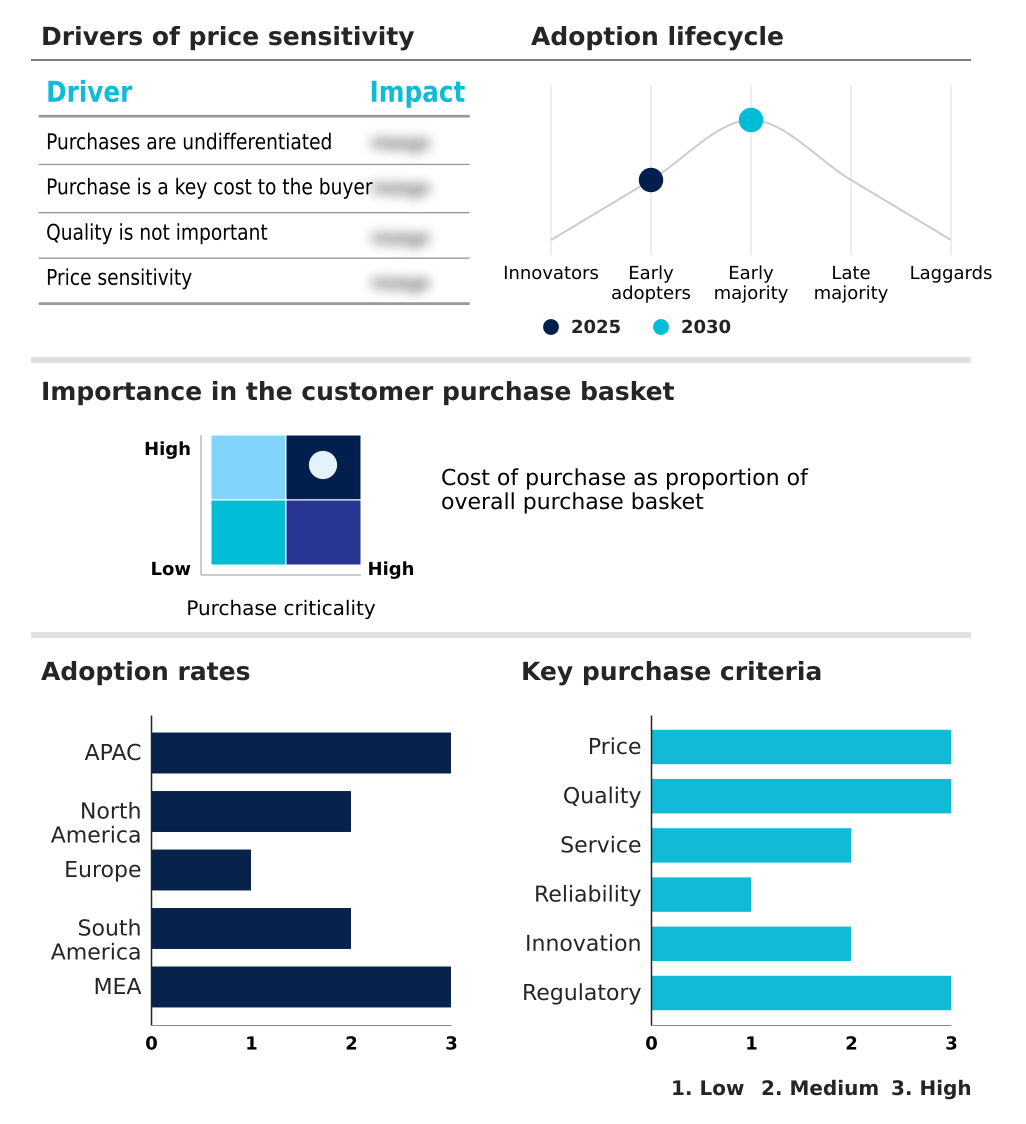
Customer Landscape of Safety Shoes Industry
Competitive Landscape
Companies are implementing various strategies, such as strategic alliances, safety shoes market forecast, partnerships, mergers and acquisitions, geographical expansion, and product/service launches, to enhance their presence in the industry.
Bata Corp. - Key offerings comprise specialized safety footwear with features like steel toes and slip resistance, engineered for worker protection in demanding industrial and construction environments.
The industry research and growth report includes detailed analyses of the competitive landscape of the market and information about key companies, including:
- Bata Corp.
- Carhartt Inc.
- Caterpillar Inc.
- Cofra Srl
- Dunlop Protective Footwear
- ELTEN GmbH
- Gabri Shoes
- Honeywell International Inc.
- KARAM Safety Pvt. Ltd.
- KEEN Inc.
- Pezzol Industries Srl
- Rahman Group
- Red Wing Brands of America
- Safetyking Industrial Footwear
- Steel Blue
- U Power Group SpA
- Uvex Group
- VF Corp.
- W L Gore and Associates Inc.
Qualitative and quantitative analysis of companies has been conducted to help clients understand the wider business environment as well as the strengths and weaknesses of key industry players. Data is qualitatively analyzed to categorize companies as pure play, category-focused, industry-focused, and diversified; it is quantitatively analyzed to categorize companies as dominant, leading, strong, tentative, and weak.
Recent Development and News in Safety shoes market
- In February, 2025, Honeywell International Inc. launched a new series of protective footwear equipped with integrated sensors that provide real-time data regarding worker posture and fatigue, reflecting a broader movement toward digitizing personal protective equipment.
- In February, 2025, the Bureau of Indian Standards (BIS) conducted a workplace labor safety awareness program, engaging over 80 stakeholders to discuss updated safety standards on respiratory protection, fall prevention, fire safety, and occupational health.
- In December, 2024, Wolverine Worldwide launched a 'Made in America' work boot program for its Wolverine brand, partnering with a Texas-based manufacturing facility to strengthen domestic production and mitigate tariff impacts.
- In October, 2024, Adidas announced its entry into the safety shoes market through a partnership with GLO Brands B.V., unveiling the Adidas Pro Work range that combines industrial-grade protection with its signature comfort and performance design.
Dive into Technavio’s robust research methodology, blending expert interviews, extensive data synthesis, and validated models for unparalleled Safety Shoes Market insights. See full methodology.
| Market Scope | |
|---|---|
| Page number | 304 |
| Base year | 2025 |
| Historic period | 2020-2024 |
| Forecast period | 2026-2030 |
| Growth momentum & CAGR | Accelerate at a CAGR of 6.3% |
| Market growth 2026-2030 | USD 2233.9 million |
| Market structure | Fragmented |
| YoY growth 2025-2026(%) | 6.1% |
| Key countries | China, India, Japan, South Korea, Australia, Indonesia, US, Canada, Mexico, Germany, UK, France, Italy, The Netherlands, Spain, Brazil, Argentina, Colombia, Saudi Arabia, UAE, South Africa, Israel and Turkey |
| Competitive landscape | Leading Companies, Market Positioning of Companies, Competitive Strategies, and Industry Risks |
Research Analyst Overview
- The safety shoes market is strategically evolving from compliance-driven sales to performance-based solutions that enhance worker well-being. Boardroom decisions now weigh the ROI of advanced personal protective equipment, with ergonomic footbeds and podiatrist-approved design features reducing worker fatigue management costs.
- This is driving innovation in materials, including lightweight composite toe caps and non-metallic construction using carbon fiber components as alternatives to traditional steel toe caps. Core to this trend is advanced cushioning technology, with shock-absorbing midsoles made from dual-density polyurethane or EVA midsoles, and energy-return foam for enhanced comfort.
- Durability remains paramount, ensured through rigorous impact resistance testing and compression resistance checks on materials like full-grain leather uppers and outsoles of vulcanized rubber or nitrile rubber compounds. Specialized protection is non-negotiable, requiring features like puncture-resistant midsoles, metatarsal guards, electrical hazard protection, and anti-static footwear with oil-resistant soles and heat-resistant or chemical-resistant materials.
- Environmental adaptability is addressed with waterproof membranes, breathable mesh uppers with moisture-wicking linings, and high-visibility features. This holistic approach, guided by standards like ASTM F2413 standard and EN ISO 20345, demonstrates how biomechanical design and slip-and-fall prevention are integral to modern occupational safety.
What are the Key Data Covered in this Safety Shoes Market Research and Growth Report?
-
What is the expected growth of the Safety Shoes Market between 2026 and 2030?
-
USD 2.23 billion, at a CAGR of 6.3%
-
-
What segmentation does the market report cover?
-
The report is segmented by Distribution Channel (Offline, and Online), End-user (Construction, Chemical, Manufacturing, Mining, and Others), Material (Leather, Rubber, Polyurethane, EVA, and Others) and Geography (APAC, North America, Europe, South America, Middle East and Africa)
-
-
Which regions are analyzed in the report?
-
APAC, North America, Europe, South America and Middle East and Africa
-
-
What are the key growth drivers and market challenges?
-
Stringent standards for manufacturing safety shoes, Improper selection of shoes
-
-
Who are the major players in the Safety Shoes Market?
-
Bata Corp., Carhartt Inc., Caterpillar Inc., Cofra Srl, Dunlop Protective Footwear, ELTEN GmbH, Gabri Shoes, Honeywell International Inc., KARAM Safety Pvt. Ltd., KEEN Inc., Pezzol Industries Srl, Rahman Group, Red Wing Brands of America, Safetyking Industrial Footwear, Steel Blue, U Power Group SpA, Uvex Group, VF Corp. and W L Gore and Associates Inc.
-
Market Research Insights
- The market is undergoing a dynamic shift as enterprises prioritize comprehensive worker well-being and operational efficiency. A core focus is on worker fatigue management and musculoskeletal disorder prevention, with advanced ergonomic designs reducing reported discomfort by up to 30%.
- The adoption of specialized footwear, such as lightweight work boots and athletic-style safety sneakers, is growing, driven by a younger workforce that values comfort and modern aesthetics. Achieving workplace safety compliance remains a top priority, with companies using certified personal protective equipment reporting a 25% reduction in injury-related downtime.
- This evolution reflects a strategic move toward viewing high-quality occupational safety footwear not as a cost but as an investment in productivity and risk mitigation.
We can help! Our analysts can customize this safety shoes market research report to meet your requirements.
 RIA -
RIA - 
