


Sanitary Napkins Market Size 2026-2030
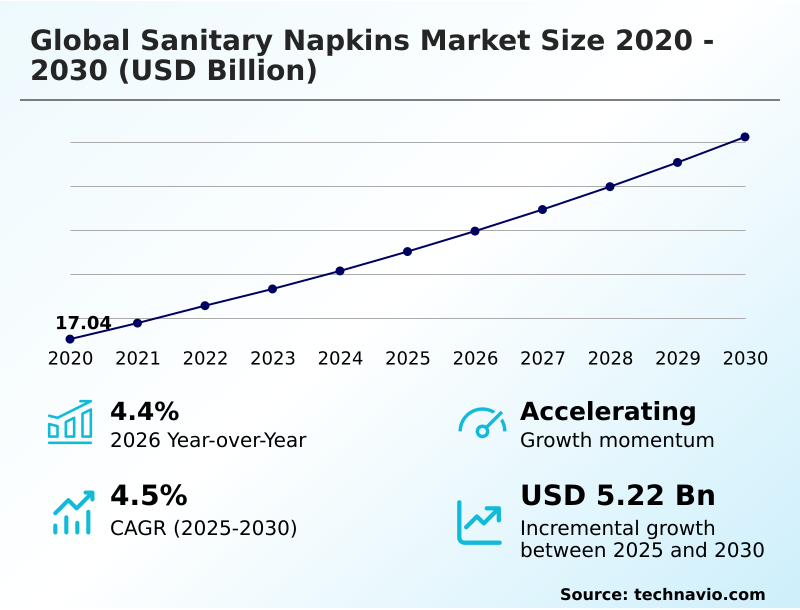
The Sanitary Napkins Market size was valued at USD 21.02 billion in 2025, growing at a CAGR of 4.5% during the forecast period 2026-2030.
Major Market Trends & Insights
- APAC dominated the market and accounted for a 32.3% growth during the forecast period.
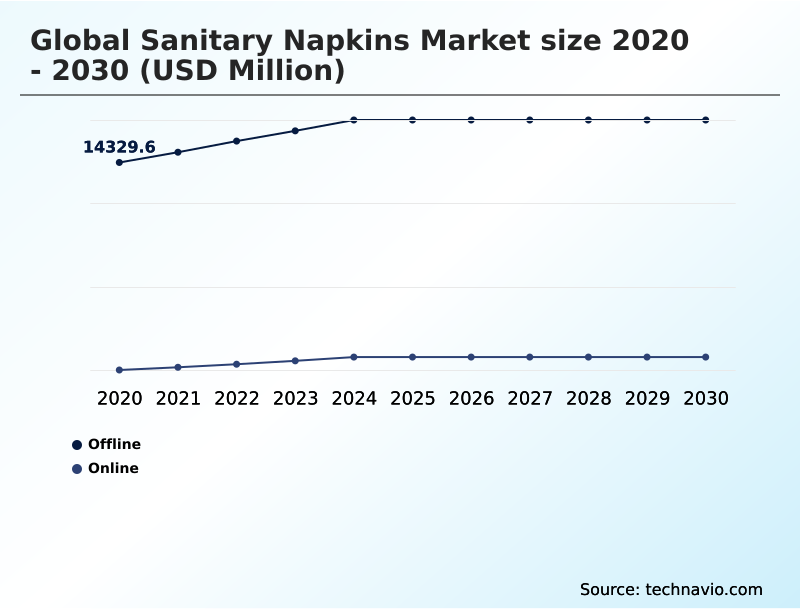
- By Distribution Channel - Offline segment was valued at USD 16.71 billion in 2024
- By Product - Menstrual pads segment accounted for the largest market revenue share in 2024
Market Size & Forecast
- Historic Market Opportunities 2020-2024: USD 9.19 billion
- Market Future Opportunities 2025-2030: USD 5.22 billion
- CAGR from 2025 to 2030 : 4.5%
Market Summary
- The sanitary napkins market is defined by a deep divergence in regional maturity, with penetration rates in some developing areas remaining below 30% compared to over 90% in developed nations. This disparity requires manufacturers to employ dual strategies: developing low-cost, accessible products for emerging economies while simultaneously driving premium, value-added innovations for saturated markets.
- The most significant market driver is the global rise in menstrual health literacy, which is steadily expanding the consumer base by normalizing the use of modern hygiene solutions and breaking down long-standing cultural barriers. Conversely, the industry faces the persistent challenge of supply chain volatility, where unpredictable price fluctuations for essential raw materials like super-absorbent polymers can compress profit margins.
- This is particularly acute for economy-tier products, where a 10% increase in input costs cannot be easily passed on to price-sensitive consumers, thereby threatening the accessibility that drives growth in developing regions.
What will be the Size of the Sanitary Napkins Market during the forecast period?
Get Key Insights on Market Forecast (PDF) Request Free Sample
How is the Sanitary Napkins Market Segmented?
The sanitary napkins industry research report provides comprehensive data (region-wise segment analysis), with forecasts and analysis for the period 2026-2030, as well as historical data from 2020-2024 for the following segments.
- Distribution channel
- Offline
- Online
- Product
- Menstrual pads
- Panty liners
- Type
- Disposable
- Reusable
- Geography
- North America
- US
- Canada
- Mexico
- Europe
- Germany
- UK
- Italy
- APAC
- China
- India
- Japan
- South America
- Brazil
- Argentina
- Colombia
- Middle East and Africa
- South Africa
- Saudi Arabia
- UAE
- Rest of World (ROW)
- North America
How is the Sanitary Napkins Market Segmented by Distribution Channel?
The offline segment is estimated to witness significant growth during the forecast period.
The offline distribution segment, which includes supermarkets, hypermarkets, and pharmacies, remains the primary revenue channel, accounting for over 82% of total sales.
This dominance is sustained by consumer habits favoring immediate product availability and the ability to physically inspect products for features like material softness or the quality of hypoallergenic layers.
While the online segment is growing faster, the offline channel's sales volume is approximately five times larger, underscoring its foundational role in the market.
Retail pharmacies, in particular, capitalize on consumer trust, often locating sanitary napkins near health products to reinforce their status as essential goods rather than discretionary consumer items, mitigating the social discomfort some consumers feel during purchase.
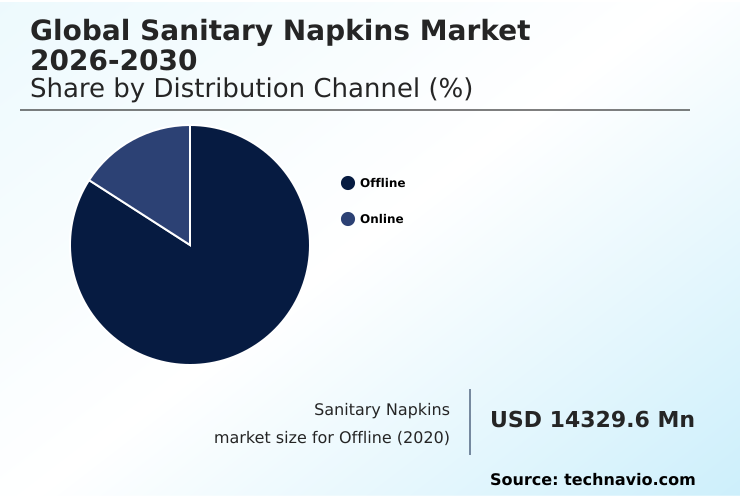
The Offline segment was valued at USD 16.71 billion in 2024 and showed a gradual increase during the forecast period.
How demand for the Sanitary Napkins market is rising in the leading region?
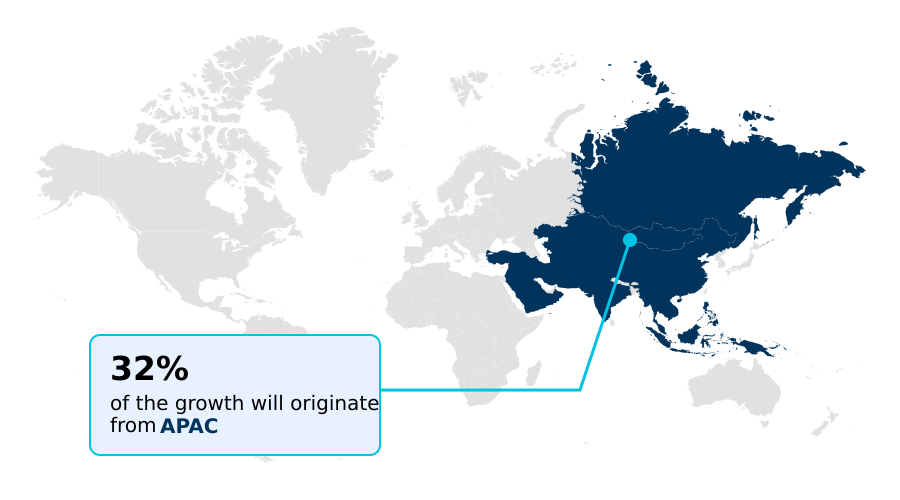
APAC is estimated to contribute 32.3% to the growth of the global market during the forecast period.Technavio’s analysts have elaborately explained the regional trends and drivers that shape the market during the forecast period.
See How Sanitary Napkins Market demand is rising in APAC Request Free Sample
The global geographic landscape reveals a tale of two markets, with APAC set to contribute 32.3% of the total incremental growth, significantly outpacing North America.
This growth differential is rooted in market maturity; APAC's expansion, led by China and India, is propelled by rising menstrual health literacy and first-time adoption, whereas the North American market, growing at a CAGR of 3.6%, centers on premiumization trends and value-added innovations like organic cotton pads.
Consequently, supply chain strategies diverge, with APAC prioritizing cost-effective, wide-reaching distribution to capture a massive and growing user base.
In North America, operations are increasingly optimized for direct-to-consumer and subscription-based models, catering to consumer demand for convenience and products free from endocrine-disrupting chemicals. This strategic variance highlights how regional consumer behavior and economic conditions dictate operational priorities.
What are the key Drivers, Trends, and Challenges in the Sanitary Napkins Market?
Our researchers analyzed the data with 2025 as the base year, along with the key drivers, trends, and challenges. A holistic analysis of drivers will help companies refine their marketing strategies to gain a competitive advantage.
- As consumer knowledge deepens, purchasing decisions in the sanitary napkins market have become increasingly specific, shifting from generic choices to nuanced, research-driven selections. End-users are no longer just buying pads; they are actively seeking answers to questions like what are the best ultra-thin pads for heavy flow, indicating a demand for high-performance super-absorbent polymers in discreet, comfortable formats.
- A significant and growing consumer segment, now influencing over 20% of new product development, is deeply concerned about the environmental impact of disposable menstrual products, actively searching for the best biodegradable sanitary pads for sensitive skin. This trend compels manufacturers to invest in R&D for hypoallergenic layers and plastic-free alternatives.
- The operational shift is substantial, as sourcing certified organic cotton or banana fiber can increase raw material costs by up to 15% compared to conventional synthetics. Furthermore, the increasing consideration of the cost-effectiveness of reusable sanitary napkins versus single-use options is reshaping long-term market dynamics.
- Finally, the rise of queries around subscription services for organic tampons and pads signifies a move toward convenience and curated wellness, transforming the distribution model from simple retail transactions to ongoing service relationships.
What are the key market drivers leading to the rise in the adoption of Sanitary Napkins Industry?
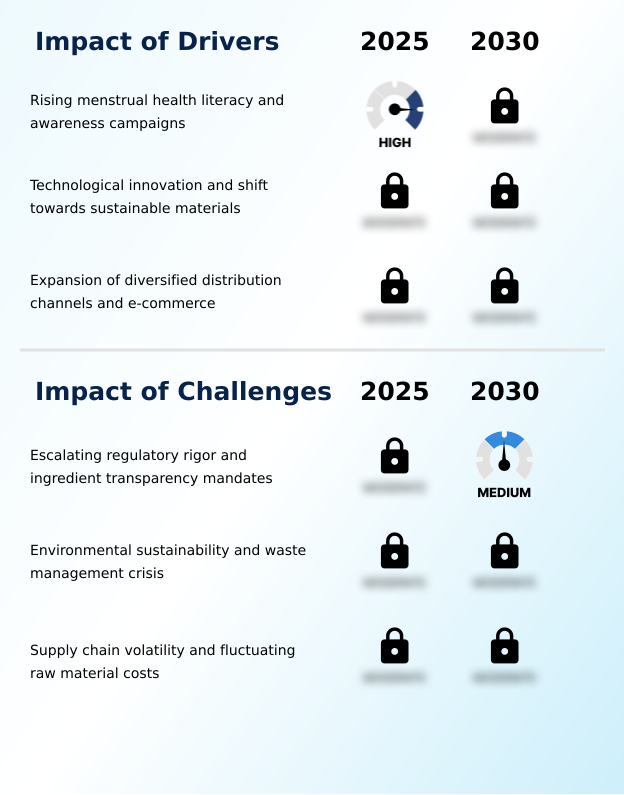
- The primary market driver is the global increase in menstrual health literacy and awareness campaigns, which successfully dismantle cultural taboos and promote the adoption of modern hygiene products.
- The most significant driver propelling the market forward is the global expansion of menstrual health literacy, particularly in emerging economies where product penetration is climbing from below 30% toward the 70-80% rates seen in mature markets.
- Coordinated awareness campaigns by governments and NGOs are effectively dismantling long-standing social stigmas, creating a direct causal link between education and the adoption of modern hygiene products. This educational push is amplified by the digital transformation of retail.
- The rapid growth of e-commerce and direct-to-consumer channels has revolutionized access, enabling brands to discreetly reach previously underserved populations and fueling a significant portion of new market growth, especially in the APAC region.
What are the market trends shaping the Sanitary Napkins Industry?
- A significant market trend is the rise of product innovation focused on sustainable and biodegradable materials, a shift that addresses growing consumer and regulatory pressure to reduce the environmental impact of disposable hygiene products.
- The primary market trend is the industry's pivot to sustainable materials, with products featuring organic cotton or bamboo fiber projected to grow at a rate nearly twice that of conventional pads. This shift is a direct response to rising consumer awareness that traditional sanitary napkins can be composed of up to 90% plastic, fueling demand for eco-friendly alternatives.
- To meet this demand without sacrificing performance, manufacturers are investing heavily in bio-based super-absorbent polymers and hypoallergenic layers. This evolution is also reshaping the competitive landscape, as agile direct-to-consumer brands that lead with a sustainability-first message are capturing market share by building loyal communities around shared environmental values and ingredient transparency.
What challenges does the Sanitary Napkins Industry face during its growth?
- A key challenge affecting industry growth is the escalating regulatory rigor and mandates for ingredient transparency, which increase compliance costs and operational complexity for manufacturers.
- A critical market challenge stems from intensifying regulatory pressures, with new mandates for ingredient transparency increasing compliance and reformulation costs by up to 15% in developed regions. Manufacturers now face the operational burden of rigorously testing for and disclosing substances like phthalates and other endocrine-disrupting chemicals.
- This is compounded by the challenge of supply chain volatility associated with the shift toward sustainability. While consumer demand for biodegradable materials is strong, sourcing certified organic cotton or banana fiber introduces cost and stability risks, as these supply chains are less mature than those for conventional synthetic polymers, creating a difficult balance between environmental responsibility and profitability.
Exclusive Technavio Analysis on Customer Landscape
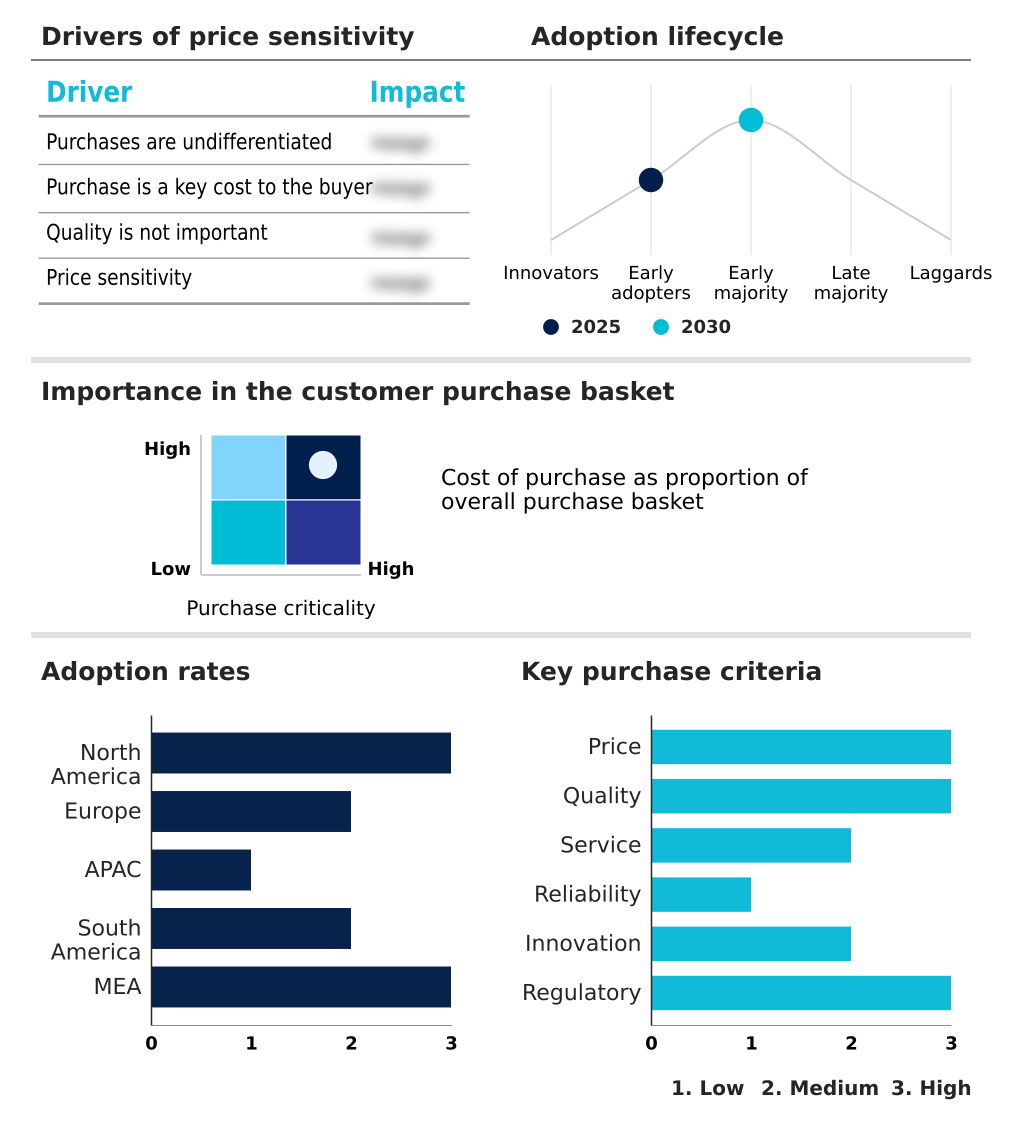
The sanitary napkins market forecasting report includes the adoption lifecycle of the market, covering from the innovator’s stage to the laggard’s stage. It focuses on adoption rates in different regions based on penetration. Furthermore, the sanitary napkins market report also includes key purchase criteria and drivers of price sensitivity to help companies evaluate and develop their market growth analysis strategies.
Customer Landscape of Sanitary Napkins Industry
Competitive Landscape
Companies are implementing various strategies, such as strategic alliances, sanitary napkins market forecast, partnerships, mergers and acquisitions, geographical expansion, and product/service launches, to enhance their presence in the industry.
Azah Personal Care Pvt. Ltd. - Key offerings focus on ultra-thin sanitary napkins, including organic and biodegradable options, engineered to provide enhanced comfort, hygiene, and sustainable menstrual care solutions.
The industry research and growth report includes detailed analyses of the competitive landscape of the market and information about key companies, including:
- Azah Personal Care Pvt. Ltd.
- Bodywise Ltd.
- Corman S.p.A.
- Essity AB
- Hengan International Group Co.
- Kao Corp.
- Kimberly Clark Corp.
- Lagom Labs Pvt. Ltd.
- Lil lets Ltd.
- Manash E Commerce Pvt. Ltd.
- Niine Pvt. Ltd.
- Nobel Hygiene Pvt. Ltd.
- Ontex BV
- Procter and Gamble Co.
- Rael Inc.
- Saathi Eco Innovations Ltd.
- The Honest Co. Inc.
- TZMO SA
- Unicharm Corp.
- Wemy Industries Ltd.
Qualitative and quantitative analysis of companies has been conducted to help clients understand the wider business environment as well as the strengths and weaknesses of key industry players. Data is qualitatively analyzed to categorize companies as pure play, category-focused, industry-focused, and diversified; it is quantitatively analyzed to categorize companies as dominant, leading, strong, tentative, and weak.
Market Intelligence Radar: High-Impact Developments & Growth Signals
- In the Personal Care Products industry, a significant push toward ingredient transparency and stringent safety regulations is forcing manufacturers to reformulate products and enhance labeling. This directly impacts the sanitary napkins market by increasing R&D and compliance costs, as companies must now disclose and often eliminate substances like phthalates and fragrances to meet consumer and regulatory demands for safer menstrual health products.
- The widespread adoption of direct-to-consumer (DTC) e-commerce and subscription-based models has fundamentally altered distribution strategies. For the sanitary napkins market, this shift provides a discreet and convenient purchasing channel, particularly valued in regions with persistent social stigmas, while allowing niche brands focusing on organic or sustainable products to bypass traditional retail gatekeepers and reach a global audience.
- A heightened focus on sustainability and the circular economy is driving innovation in biodegradable and plant-based materials. This trend affects the sanitary napkins market by creating demand for alternatives to petroleum-based plastics and super-absorbent polymers, leading to the use of materials like organic cotton, bamboo, and banana fibers to reduce the environmental footprint of disposable hygiene products.
- Persistent supply chain volatility and fluctuating costs of raw materials, such as fluff pulp and non-woven fabrics, are creating significant operational challenges. In the sanitary napkins market, this translates to margin pressure and has prompted manufacturers to localize production and diversify their material sourcing to mitigate risks associated with geopolitical tensions and logistical disruptions, ensuring a stable supply of affordable hygiene products.
Dive into Technavio’s robust research methodology, blending expert interviews, extensive data synthesis, and validated models for unparalleled Sanitary Napkins Market insights. See full methodology.
| Market Scope | |
|---|---|
| Page number | 288 |
| Base year | 2025 |
| Historic period | 2020-2024 |
| Forecast period | 2026-2030 |
| Growth momentum & CAGR | Accelerate at a CAGR of 4.5% |
| Market growth 2026-2030 | USD 5215.3 million |
| Market structure | Fragmented |
| YoY growth 2025-2026(%) | 4.4% |
| Key countries | US, Canada, Mexico, Germany, UK, Russia, Italy, Spain, The Netherlands, China, India, Japan, Indonesia, South Korea, Australia, Brazil, Argentina, Colombia, South Africa, Saudi Arabia, Nigeria, Egypt and UAE |
| Competitive landscape | Leading Companies, Market Positioning of Companies, Competitive Strategies, and Industry Risks |
Research Analyst Overview
- The sanitary napkins market ecosystem operates through a multi-stage value chain, beginning with suppliers of raw materials like fluff pulp and super-absorbent polymers, which can account for up to 60% of total production costs. Manufacturers, including both multinational corporations and niche startups, transform these inputs into finished goods while navigating an increasingly stringent regulatory environment that mandates ingredient transparency.
- Distribution is dominated by offline channels such as supermarkets and pharmacies, which still represent over 80% of sales volume. However, direct-to-consumer and online subscription models are the fastest-growing channels, driven by consumer demand for convenience and privacy.
- End-user purchasing decisions are heavily influenced by rising menstrual health literacy and a growing preference for sustainable products, creating opportunities for brands specializing in organic and biodegradable options.
What are the Key Data Covered in this Sanitary Napkins Market Research and Growth Report?
-
What is the expected growth of the Sanitary Napkins Market between 2026 and 2030?
-
The Sanitary Napkins Market is expected to grow by USD 5.22 billion during 2026-2030, registering a CAGR of 4.5%. Year-over-year growth in 2026 is estimated at 4.4%%. This acceleration is shaped by rising menstrual health literacy and awareness campaigns, which is intensifying demand across multiple end-use verticals covered in the report.
-
-
What segmentation does the market report cover?
-
The report is segmented by Distribution Channel (Offline, and Online), Product (Menstrual pads, and Panty liners), Type (Disposable, and Reusable) and Geography (North America, Europe, APAC, South America, Middle East and Africa). Among these, the Offline segment is estimated to witness significant growth during the forecast period, driven by rising adoption across key application areas. Each segment includes detailed qualitative and quantitative analysis, along with historical data from 2020-2024 and forecasts through 2030 with year-over-year growth rates.
-
-
Which regions are analyzed in the report?
-
The report covers North America, Europe, APAC, South America and Middle East and Africa. APAC is estimated to contribute 32.3% to market growth during the forecast period. Country-level analysis includes US, Canada, Mexico, Germany, UK, Russia, Italy, Spain, The Netherlands, China, India, Japan, Indonesia, South Korea, Australia, Brazil, Argentina, Colombia, South Africa, Saudi Arabia, Nigeria, Egypt and UAE, with dedicated market size tables and year-over-year growth for each.
-
-
What are the key growth drivers and market challenges?
-
The primary driver is rising menstrual health literacy and awareness campaigns, which is accelerating investment and industry demand. The main challenge is escalating regulatory rigor and ingredient transparency mandates, creating operational barriers for key market participants. The report quantifies the impact of each driver and challenge across 2026 and 2030 with comparative analysis.
-
-
Who are the major players in the Sanitary Napkins Market?
-
Key vendors include Azah Personal Care Pvt. Ltd., Bodywise Ltd., Corman S.p.A., Essity AB, Hengan International Group Co., Kao Corp., Kimberly Clark Corp., Lagom Labs Pvt. Ltd., Lil lets Ltd., Manash E Commerce Pvt. Ltd., Niine Pvt. Ltd., Nobel Hygiene Pvt. Ltd., Ontex BV, Procter and Gamble Co., Rael Inc., Saathi Eco Innovations Ltd., The Honest Co. Inc., TZMO SA, Unicharm Corp. and Wemy Industries Ltd.. The report provides qualitative and quantitative analysis categorizing companies as dominant, leading, strong, tentative, and weak based on their market positioning. Company profiles include business segment analysis, SWOT assessment, key offerings, and recent strategic developments.
-
Market Research Insights
- The competitive landscape is characterized by strategic consolidation, with the top five vendors commanding over 60% of the market share. Recent vendor developments underscore a dual focus on portfolio enhancement in mature markets and localized penetration in growth regions.
- For example, Essity’s acquisition of brands like Carefree and Stayfree solidified its position in North America, which accounts for nearly 27% of global demand. In contrast, Unicharm’s launch of its SOFY AntiBacteria napkin in Bangladesh, accompanied by a social initiative targeting one million students, illustrates a tailored strategy for emerging markets.
- These actions address the industry driver of rising hygiene awareness. However, all players contend with the challenge of volatile raw material costs, forcing them to either absorb costs or innovate in sourcing to protect margins.
We can help! Our analysts can customize this sanitary napkins market research report to meet your requirements.
 RIA -
RIA - 
