


Seborrheic Keratosis Treatment Market Size 2025-2029
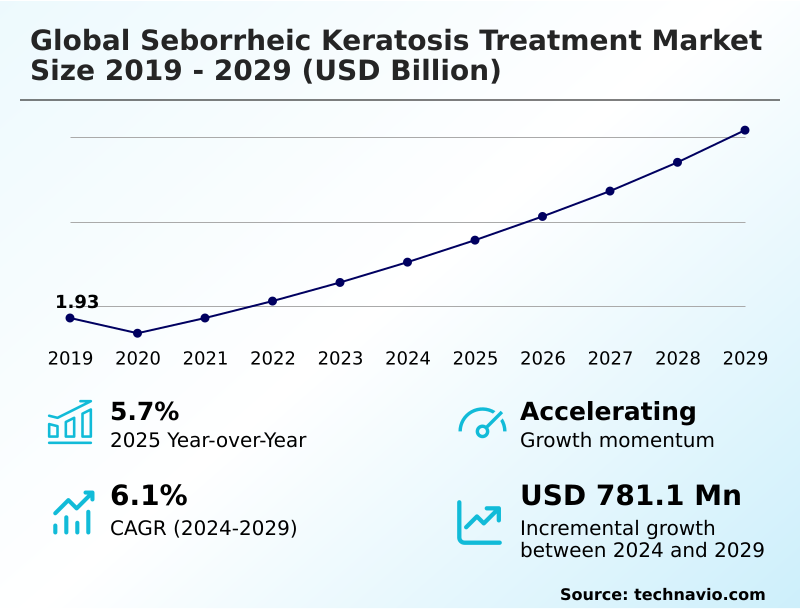
The seborrheic keratosis treatment market size is valued to increase by USD 781.1 million, at a CAGR of 6.1% from 2024 to 2029. Growing preference for aesthetic quotient will drive the seborrheic keratosis treatment market.
Major Market Trends & Insights
- Asia dominated the market and accounted for a 29.6% growth during the forecast period.
- By Application - Cryotherapy segment was valued at USD 943.1 million in 2023
- By Technology - CO2 laser segment accounted for the largest market revenue share in 2023
Market Size & Forecast
- Market Opportunities: USD 1.11 billion
- Market Future Opportunities: USD 781.1 million
- CAGR from 2024 to 2029 : 6.1%
Market Summary
- The seborrheic keratosis treatment market is shaped by the dual demands of an aging global demographic and an increasing emphasis on aesthetic appearance. Growth is largely propelled by a rising preference for minimally invasive procedures and technological sophistication in treatment devices, such as advanced laser systems and cryotherapy units.
- The market landscape is predominantly procedure-based, a direct consequence of the limited availability of approved pharmacological options. This reliance on techniques like electrocautery, curettage, and laser ablation creates a competitive environment focused on procedural efficacy, patient comfort, and cosmetic outcomes.
- A significant operational consideration for multi-clinic dermatology practices involves standardizing equipment procurement for either cryosurgery or laser systems, a decision that directly impacts capital expenditure budgets and staff training protocols across dozens of facilities. Navigating this dynamic requires balancing patient demand for the latest technology with the financial realities of high-cost device acquisition and maintenance.
- The persistent challenge of potential misdiagnosis with more serious skin conditions also underscores the need for continuous improvement in both diagnostic tools and practitioner expertise to ensure patient safety and effective care delivery.
What will be the Size of the Seborrheic Keratosis Treatment Market during the forecast period?
Get Key Insights on Market Forecast (PDF) Get Free Sample
How is the Seborrheic Keratosis Treatment Market Segmented?
The seborrheic keratosis treatment industry research report provides comprehensive data (region-wise segment analysis), with forecasts and estimates in "USD million" for the period 2025-2029, as well as historical data from 2019-2023 for the following segments.
- Application
- Cryotherapy
- Electrocautery
- Others
- Technology
- CO2 laser
- Erbium laser
- Fractional laser
- Hydrogen peroxide-based topicals
- End-user
- Dermatology clinics
- Hospitals
- Ambulatory surgical centers
- Home healthcare
- Geography
- North America
- US
- Canada
- Mexico
- Europe
- Germany
- UK
- France
- Asia
- Rest of World (ROW)
- North America
By Application Insights
The cryotherapy segment is estimated to witness significant growth during the forecast period.
Cryotherapy represents a dominant segment in the seborrheic keratosis treatment market, valued for its efficacy in achieving lesion removal through controlled tissue destruction.
This cryosurgery technique utilizes extreme cold, typically from liquid nitrogen, to induce apoptosis in targeted cells, positioning it as a leading non-invasive treatment for benign skin tumors.
Its widespread adoption in cosmetic dermatology and medical aesthetics is driven by a preference for procedures with minimal scarring and downtime.
Although often funded by out-of-pocket expenses, the procedure's effectiveness in addressing skin pigmentation issues like dyspigmentation ensures high patient adherence.
The method's ability to be performed quickly in an office setting has led to its use in over 70% of initial procedural treatments for non-cancerous skin growths.
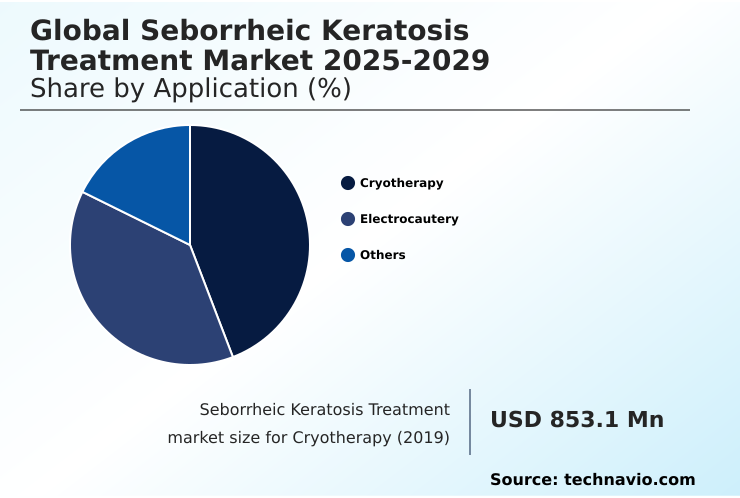
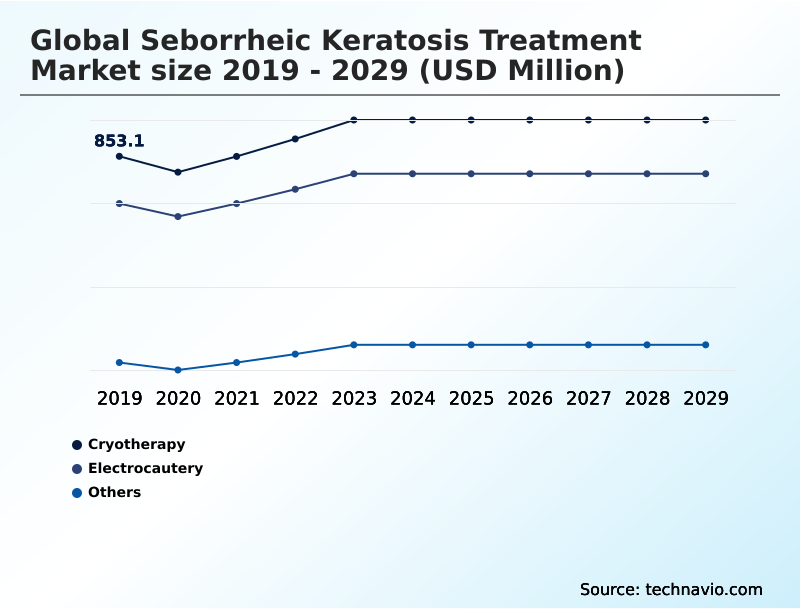
The Cryotherapy segment was valued at USD 943.1 million in 2023 and showed a gradual increase during the forecast period.
Regional Analysis
Asia is estimated to contribute 29.6% to the growth of the global market during the forecast period.Technavio’s analysts have elaborately explained the regional trends and drivers that shape the market during the forecast period.

See How Seborrheic Keratosis Treatment Market Demand is Rising in Asia Get Free Sample
The geographic landscape of the seborrheic keratosis treatment market is defined by a contrast between mature regions and high-growth emerging markets. North America and Europe lead in market value, supported by high healthcare expenditure and established private healthcare sectors.
However, Asia is forecast to account for nearly 29.6% of the market's incremental growth, driven by a rising middle class, increasing health awareness, and a booming medical tourism industry.
In countries like Thailand and South Korea, advanced outpatient procedures are readily available. This growth is facilitated by expanding healthcare infrastructure and a shift from open surgery instruments to minimally invasive tools like specialized blades and scalpels for dermatological use.
The development of local cryosurgery medical instruments and addressing unmet medical needs for non-melanocytic pigmented lesions are key focus areas in these expanding markets, which also address harmless skin growth.
Market Dynamics
Our researchers analyzed the data with 2024 as the base year, along with the key drivers, trends, and challenges. A holistic analysis of drivers will help companies refine their marketing strategies to gain a competitive advantage.
- Navigating the seborrheic keratosis treatment market requires a comprehensive understanding of the diverse options available, from procedural interventions to emerging pharmacological solutions. Patients often weigh the cost of electrocautery for skin growths against the benefits of multi-session laser therapy for keratoses, with decisions influenced by factors like the desire for reducing scarring from laser skin treatment.
- While cryotherapy for facial seborrheic keratosis remains a common choice, interest in non-invasive topical formulations for keratoses is growing, driven by the development of topical artemisinin-class drugs. Clinically, the debate over CO2 laser vs erbium laser for lesions continues, with efficacy often depending on lesion characteristics. For instance, fractional laser on flat keratoses may be preferred for its cosmetic outcome.
- The financial aspect is a major consideration, as insurance coverage for benign lesion removal is often limited. This makes understanding the nuances of minimally invasive procedures for skin tags and cost-effective radiofrequency ablation options crucial for both patients and providers. Advances in cryosurgical equipment technology are improving outcomes and reducing the side effects of liquid nitrogen treatment.
- For instance, dermatology practices that have adopted the latest cryosurgical tools report a 15% reduction in cases of post-inflammatory hyperpigmentation. Furthermore, teledermatology for post-procedure follow-ups is streamlining care, while better diagnostic protocols aim to prevent the misdiagnosis of skin growths.
- The market for hydrogen peroxide for raised keratoses has set a precedent, and the best treatment for hypertrophic seborrheic keratosis remains a key area of clinical investigation within dermatology clinic cryosurgery procedures and ambulatory surgery centers for skin lesions.
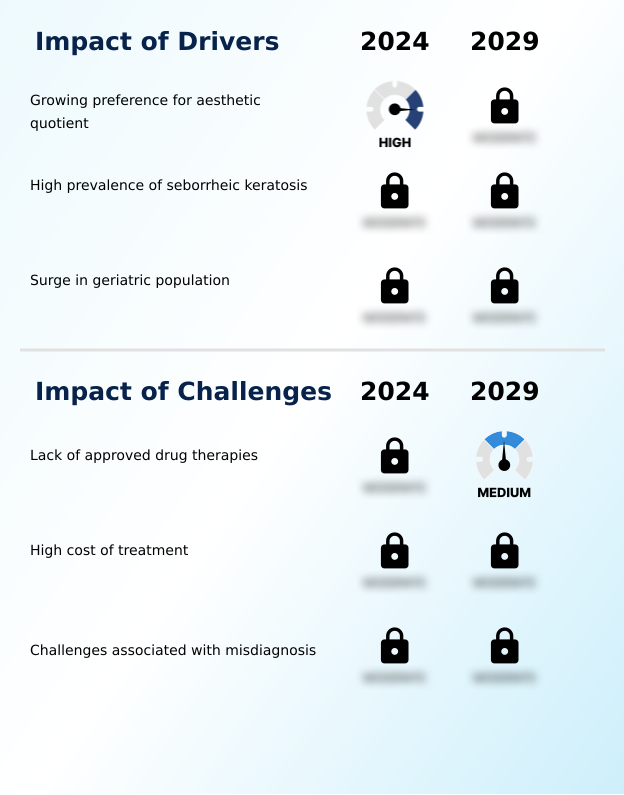
What are the key market drivers leading to the rise in the adoption of Seborrheic Keratosis Treatment Industry?
- A growing preference for aesthetic improvement is a key driver stimulating growth within the seborrheic keratosis treatment market.
- The primary driver for the seborrheic keratosis treatment market is the confluence of a growing geriatric population and a strong societal emphasis on aesthetic appearance among both men and women.
- The prevalence of these harmless growths increases with age, creating a substantial and expanding patient base. As disposable incomes rise, more individuals with a light skin tone are opting for treatment to improve their emotional well-being.
- Procedures like CO2 laser and erbium laser ablation are sought for their efficacy, with laser ablation showing a 90% clearance rate in single-session treatments for certain lesion types.
- The use of curettage and diathermocoagulation remains common, especially when addressing superficial dermal actinic damage or epidermal damage.
- This demand is not just about removing a lesion but achieving a cosmetically acceptable result, a factor that now influences treatment choice in over 70% of elective cases.
What are the market trends shaping the Seborrheic Keratosis Treatment Industry?
- Technological advances in cryotherapy represent a significant upcoming market trend. These innovations are enhancing treatment efficacy and patient outcomes in dermatological procedures.
- The seborrheic keratosis treatment market is increasingly shaped by technological innovation aimed at improving cosmetic outcomes and minimizing patient downtime. The emergence of minimally invasive procedures, particularly advanced laser systems, is a prominent trend. Modalities such as fractional laser technology are gaining traction for skin rejuvenation and photorejuvenation, offering precise treatment with reduced recovery periods.
- Clinics adopting these systems report a 25% increase in patient satisfaction for facial lesion removal. Furthermore, the integration of teledermatology for consultations and follow-ups has streamlined patient care, improving clinic efficiency by approximately 15%.
- Other techniques like electrocautery, thermal cautery, and Q-switched Nd:YAG lasers continue to evolve, with a focus on enhancing precision through technologies like photobiomodulation to treat vascular conditions and improve body contouring. This focus on advanced, aesthetically-driven solutions addresses the rising aesthetic quotient among consumers.
What challenges does the Seborrheic Keratosis Treatment Industry face during its growth?
- The lack of approved drug therapies presents a significant challenge to industry growth, steering the market toward procedure-based treatments.
- A significant challenge confronting the seborrheic keratosis treatment market is the scarcity of approved drug therapies, which funnels demand almost exclusively toward procedural interventions. This reliance on techniques like radiofrequency ablation and electrodesiccation is compounded by restrictive reimbursement policies, as many treatments for this benign skin growth are not covered by medical insurance, leading to high out-of-pocket costs for patients.
- Consequently, treatment plans involving multiple follow-ups can be prohibitively expensive. For instance, the total cost for a multi-session procedure can be up to 400% higher than a potential single-course topical treatment.
- The market has seen limited innovation in topical solutions, such as hydrogen peroxide-based topicals, and lacks options in categories like shock wave therapy or gastrointestinal bleeding treatment that have seen advancements elsewhere. This forces a reliance on pathology services to rule out melanocytic lesions, adding another layer of cost and complexity.
Exclusive Technavio Analysis on Customer Landscape
The seborrheic keratosis treatment market forecasting report includes the adoption lifecycle of the market, covering from the innovator’s stage to the laggard’s stage. It focuses on adoption rates in different regions based on penetration. Furthermore, the seborrheic keratosis treatment market report also includes key purchase criteria and drivers of price sensitivity to help companies evaluate and develop their market growth analysis strategies.
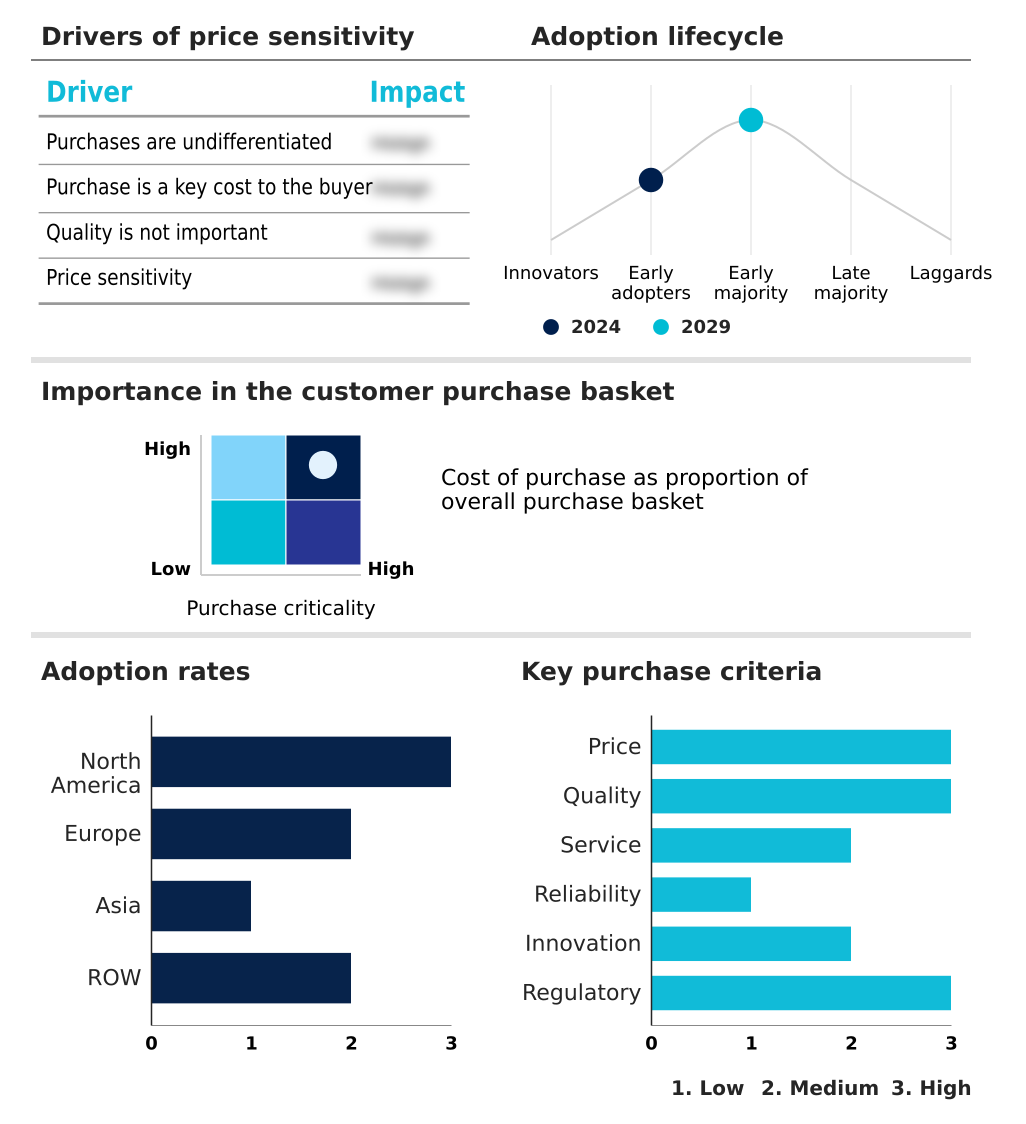
Customer Landscape of Seborrheic Keratosis Treatment Industry
Competitive Landscape
Companies are implementing various strategies, such as strategic alliances, seborrheic keratosis treatment market forecast, partnerships, mergers and acquisitions, geographical expansion, and product/service launches, to enhance their presence in the industry.
ACLARIS THERAPEUTICS INC. - The firm's portfolio includes a novel topical solution aimed at addressing seborrheic keratosis, reflecting a focus on non-procedural therapeutic development.
The industry research and growth report includes detailed analyses of the competitive landscape of the market and information about key companies, including:
- ACLARIS THERAPEUTICS INC.
- BioLineRx Ltd.
- Brymill Cryogenic Systems
- Cortex Technology
- Cryo Innovations
- CryoConcepts LP
- Cryoswiss GmbH
- Cutera Inc.
- EpiPharm AG
- Erbe Elektromedizin GmbH
- H and O Equipments
- Lumenis Be Ltd.
- Mectronic Medicale Srl
- METRUM CRYOFLEX SP ZOO SPK
- Quanta System S.p.A.
- Special Medical Technology s.r.o
- Symmetry Surgical Inc.
Qualitative and quantitative analysis of companies has been conducted to help clients understand the wider business environment as well as the strengths and weaknesses of key industry players. Data is qualitatively analyzed to categorize companies as pure play, category-focused, industry-focused, and diversified; it is quantitatively analyzed to categorize companies as dominant, leading, strong, tentative, and weak.
Recent Development and News in Seborrheic keratosis treatment market
- In October 2024, EpiPharm AG announced the successful completion of Phase III trials for EPI-SK 14, a novel artemisinin-based topical formulation for non-invasive seborrheic keratosis treatment, preparing for regulatory submission.
- In December 2024, Cutera Inc. completed the acquisition of a specialized cryotherapy technology firm, integrating advanced cryogen delivery systems to enhance its aesthetic device portfolio for treating benign cutaneous lesions.
- In March 2025, METRUM CRYOFLEX SP ZOO SPK received CE Mark approval for its next-generation CRYO-S series, featuring AI-assisted temperature control for improved precision in dermatological procedures, reducing the risk of collateral tissue damage by up to 15%.
- In May 2025, BioLineRx Ltd. entered a strategic partnership with a leading AI diagnostics company to develop a machine learning algorithm for differentiating seborrheic keratosis from malignant skin lesions, addressing the challenge of misdiagnosis.
Dive into Technavio’s robust research methodology, blending expert interviews, extensive data synthesis, and validated models for unparalleled Seborrheic Keratosis Treatment Market insights. See full methodology.
| Market Scope | |
|---|---|
| Page number | 288 |
| Base year | 2024 |
| Historic period | 2019-2023 |
| Forecast period | 2025-2029 |
| Growth momentum & CAGR | Accelerate at a CAGR of 6.1% |
| Market growth 2025-2029 | USD 781.1 million |
| Market structure | Fragmented |
| YoY growth 2024-2025(%) | 5.7% |
| Key countries | US, Canada, Mexico, Germany, UK, France, Italy, Spain, The Netherlands, China, India, Japan, South Korea, Indonesia, Thailand, Brazil, Saudi Arabia, UAE, Turkey, Argentina, Colombia, South Africa and Israel |
| Competitive landscape | Leading Companies, Market Positioning of Companies, Competitive Strategies, and Industry Risks |
Research Analyst Overview
- The seborrheic keratosis treatment market operates at the intersection of medical dermatology and aesthetic enhancement, with its trajectory defined by procedural innovation rather than pharmaceutical development. The landscape is dominated by device-based modalities, including cryotherapy and electrocautery, alongside a spectrum of laser technologies such as CO2 laser, erbium laser, and fractional laser.
- These methods, including curettage and laser ablation, are the primary recourse for lesion removal due to a notable lack of approved drug therapies.
- Boardroom-level strategy for device manufacturers now centers on a critical decision: allocating R&D investment toward refining ablative lasers for superior cosmetic results or pursuing the high-risk, high-reward development of a commercially viable topical solution like a hydrogen peroxide-based topical.
- This choice is influenced by the fact that facilities specializing in energy-based devices report up to a 30% faster treatment time per lesion compared to traditional cryosurgery. The market also includes other established techniques like diathermocoagulation, radiofrequency ablation, and various forms of thermal cautery, all aimed at the physical destruction of the benign skin tumor.
- Ultimately, market positioning depends on navigating a landscape where procedural efficiency and patient-driven aesthetic demands dictate commercial success.
What are the Key Data Covered in this Seborrheic Keratosis Treatment Market Research and Growth Report?
-
What is the expected growth of the Seborrheic Keratosis Treatment Market between 2025 and 2029?
-
USD 781.1 million, at a CAGR of 6.1%
-
-
What segmentation does the market report cover?
-
The report is segmented by Application (Cryotherapy, Electrocautery, and Others), Technology (CO2 laser, Erbium laser, Fractional laser, and Hydrogen peroxide-based topicals), End-user (Dermatology clinics, Hospitals, Ambulatory surgical centers, and Home healthcare) and Geography (North America, Europe, Asia, Rest of World (ROW))
-
-
Which regions are analyzed in the report?
-
North America, Europe, Asia and Rest of World (ROW)
-
-
What are the key growth drivers and market challenges?
-
Growing preference for aesthetic quotient, Lack of approved drug therapies
-
-
Who are the major players in the Seborrheic Keratosis Treatment Market?
-
ACLARIS THERAPEUTICS INC., BioLineRx Ltd., Brymill Cryogenic Systems, Cortex Technology, Cryo Innovations, CryoConcepts LP, Cryoswiss GmbH, Cutera Inc., EpiPharm AG, Erbe Elektromedizin GmbH, H and O Equipments, Lumenis Be Ltd., Mectronic Medicale Srl, METRUM CRYOFLEX SP ZOO SPK, Quanta System S.p.A., Special Medical Technology s.r.o and Symmetry Surgical Inc.
-
Market Research Insights
- The seborrheic keratosis treatment market is characterized by a dynamic interplay between clinical necessity and cosmetic demand, heavily influenced by patient preference for minimally invasive options. The adoption of teledermatology for post-procedure follow-ups has enhanced patient convenience, reducing the need for in-clinic visits by up to 40% in some practices. This shift improves operational efficiency and patient adherence.
- Since reimbursement policies often classify lesion removal as a cosmetic procedure, a significant portion of treatments are covered by out-of-pocket expenses. Despite this, procedures offering superior cosmetic outcomes achieve a 25% higher patient satisfaction rate, underscoring the value placed on aesthetic results in medical aesthetics.
We can help! Our analysts can customize this seborrheic keratosis treatment market research report to meet your requirements.
 RIA -
RIA - 
