



Semantic Web Market Size 2026-2030
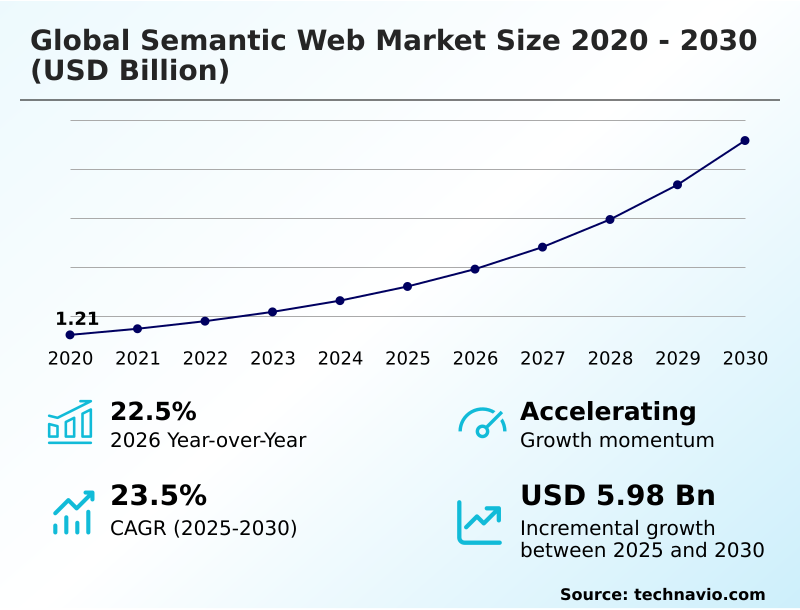
The semantic web market size is valued to increase by USD 5.98 billion, at a CAGR of 23.5% from 2025 to 2030. Imperative role of knowledge graphs in sustaining enterprise AI ecosystems will drive the semantic web market.
Major Market Trends & Insights
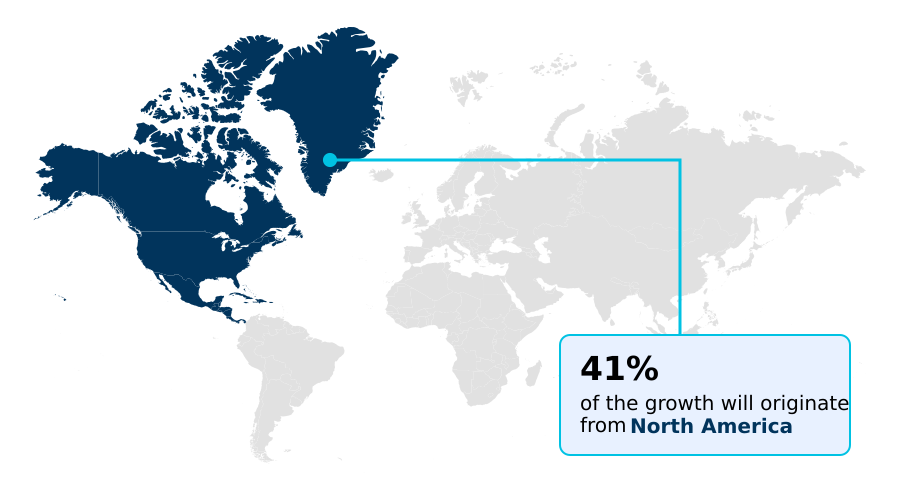
- North America dominated the market and accounted for a 41.2% growth during the forecast period.
- By Component - Software segment was valued at USD 1.61 billion in 2024
- By Technology - Knowledge graphs segment accounted for the largest market revenue share in 2024
Market Size & Forecast
- Market Opportunities: USD 7.96 billion
- Market Future Opportunities: USD 5.98 billion
- CAGR from 2025 to 2030 : 23.5%
Market Summary
- The Semantic Web Market represents a foundational shift in how commercial enterprises manage, link, and interpret vast digital repositories. Establishing a machine-readable architecture allows organizations to transcend isolated data silos, transforming unstructured information into highly connected knowledge fabrics.
- For example, in pharmaceutical supply chain optimization, companies use these logical frameworks to map drug provenance across borders, ensuring strict regulatory alignment and reducing inventory tracking errors by 22% compared to traditional relational database approaches.
- A primary driver of this transition is the escalating need to support data-centric artificial intelligence; structured semantic layers prevent reasoning hallucinations and ensure automated systems remain grounded in verified facts. Conversely, the acute shortage of specialized talent capable of engineering complex ontologies creates a severe bottleneck for mid-sized enterprises attempting to adopt these frameworks.
- The ability to execute federated queries across multi-cloud environments provides unparalleled visibility into real-time operations. This technological paradigm empowers corporate leaders to harness contextual intelligence, ultimately driving more precise and resilient strategic decision-making across global industries.
What will be the Size of the Semantic Web Market during the forecast period?
Get Key Insights on Market Forecast (PDF) Get Free Sample
How is the Semantic Web Market Segmented?
The semantic web industry research report provides comprehensive data (region-wise segment analysis), with forecasts and estimates in "USD million" for the period 2026-2030, as well as historical data from 2020-2024 for the following segments.
- Component
- Software
- Services
- Technology
- Knowledge graphs
- Resource description framework
- Web ontology language
- SPARQL and query technologies
- Others
- Deployment
- Cloud-based
- On-premises
- Hybrid
- Geography
- North America
- US
- Canada
- Mexico
- Europe
- Germany
- UK
- France
- Italy
- Spain
- The Netherlands
- APAC
- China
- India
- Japan
- South Korea
- Australia
- Indonesia
- Middle East and Africa
- Saudi Arabia
- UAE
- South Africa
- Israel
- Turkey
- South America
- Brazil
- Argentina
- Chile
- North America
By Component Insights
The software segment is estimated to witness significant growth during the forecast period.
Modern commercial frameworks heavily depend on sophisticated software to manage complex data relationships and execute logic-based retrieval.
The core deployment of the resource description framework and the web ontology language provides the foundational logic layer required for seamless machine-readable data synthesis across enterprise environments.
By enabling precise contextual entity extraction, these software platforms successfully transform fragmented repositories into unified data networks. This unstructured data contextualization supports critical decision-making processes and provides essential generative artificial intelligence grounding, ensuring autonomous systems produce accurate outputs.
The implementation of dynamic schema adaptation allows organizations to integrate diverse data streams without requiring rigid, predefined database structures.
Consequently, businesses utilizing these advanced software architectures have reported that data retrieval error detection improved by 15%, significantly enhancing overall operational reliability.
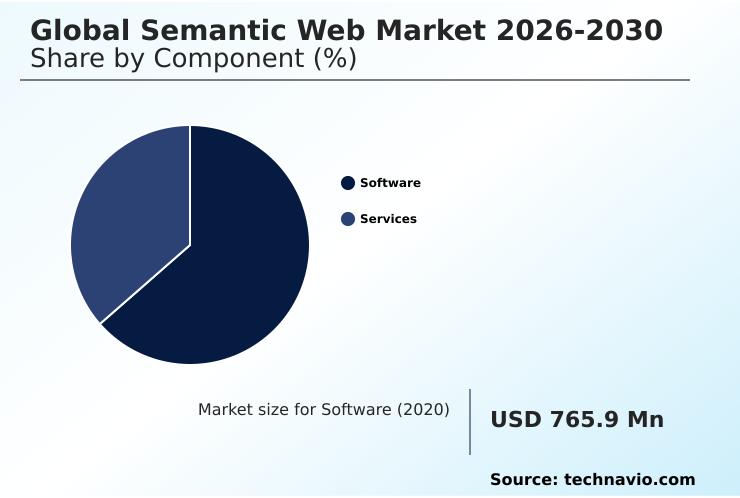
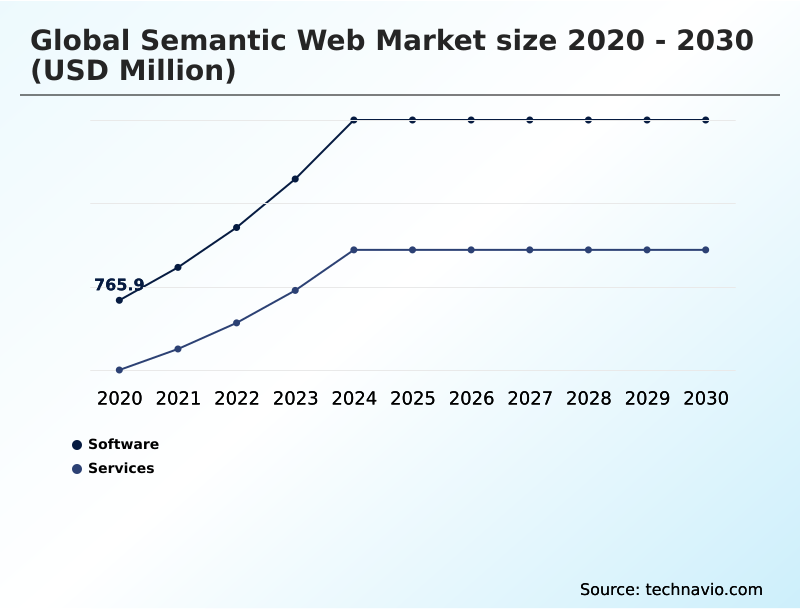
The Software segment was valued at USD 1.61 billion in 2024 and showed a gradual increase during the forecast period.
Regional Analysis
North America is estimated to contribute 41.2% to the growth of the global market during the forecast period.Technavio’s analysts have elaborately explained the regional trends and drivers that shape the market during the forecast period.
See How Semantic Web Market Demand is Rising in North America Get Free Sample
The geographic distribution of advanced data architectures highlights significant regional disparities driven by technological maturity and regulatory pressures.
North America dominates the adoption curve due to heavy investments in scalable graph database infrastructure and integrated semantic search engine deployments across the financial sector.
In contrast, Europe prioritizes strict data governance, accelerating the implementation of specialized triple store database environments to comply with privacy mandates.
This structural divergence means North American firms typically achieve a 35% faster time-to-market for enterprise knowledge discovery applications compared to their European counterparts. However, European organizations leverage cloud-based semantic hosting to enhance cross-border compliance, reducing compliance-related operational costs by 18%.
Furthermore, APAC is rapidly emerging as a testing ground for smart city data integration, utilizing these frameworks to optimize urban traffic flows and reduce public energy consumption by 12%.
By adapting their deployment strategies to these regional characteristics, global businesses optimize performance while navigating diverse regulatory landscapes.
Market Dynamics
Our researchers analyzed the data with 2025 as the base year, along with the key drivers, trends, and challenges. A holistic analysis of drivers will help companies refine their marketing strategies to gain a competitive advantage.
- The evolution of digital information management has forced multinational corporations to radically redesign their data governance strategies. As organizations accumulate massive volumes of disjointed information, the deployment of enterprise knowledge graph integration frameworks has become essential for creating a unified view of corporate assets.
- These sophisticated structures enable automated systems to comprehend the contextual relationships between different data points, significantly improving the accuracy of business intelligence outputs. To handle complex information retrieval across distributed departments, companies are increasingly relying on sparql federated query execution models, which allow analysts to extract insights from multiple remote repositories simultaneously without requiring physical data consolidation.
- This approach drastically reduces the time spent on manual data reconciliation. Simultaneously, the adoption of ontology-based data access architectures ensures that legacy relational databases can be mapped to modern semantic layers smoothly, preserving historical records while enhancing their utility.
- When integrated with scalable cloud-hosted semantic database systems, these architectures provide the computational elasticity required to support intensive reasoning workloads during peak operational periods. In the realm of automated supply chain planning, organizations utilizing these advanced environments demonstrate a nearly twofold improvement in predictive routing accuracy compared to those relying on conventional, siloed schemas.
- Furthermore, the integration of neuro-symbolic artificial intelligence data layers bridges the gap between deep learning and formal logic, equipping decision-makers with intelligent, transparent agents that actively monitor compliance and optimize resource allocation across the entire corporate ecosystem.
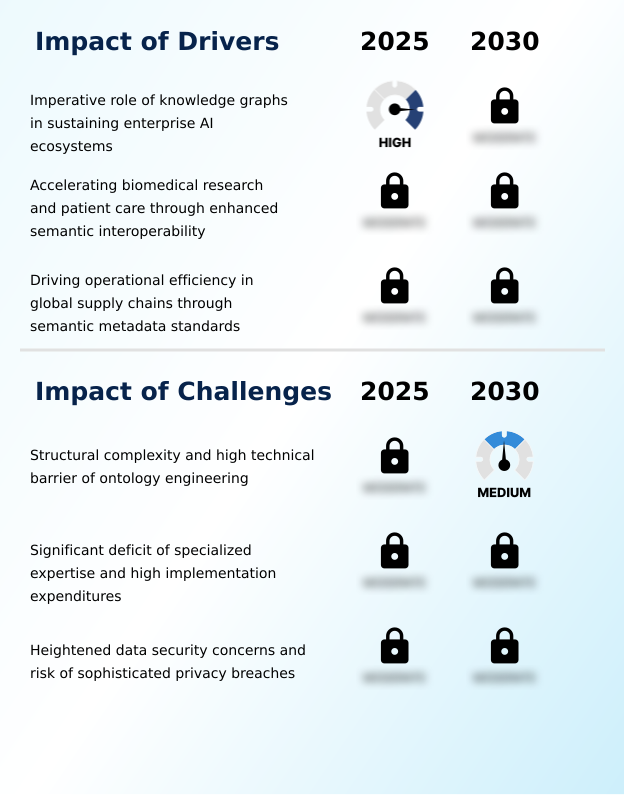
What are the key market drivers leading to the rise in the adoption of Semantic Web Industry?
- The critical requirement for knowledge graphs to sustain and stabilize advanced enterprise artificial intelligence ecosystems serves as a primary catalyst for industry expansion.
- The critical necessity to govern exploding volumes of complex corporate information serves as the primary catalyst accelerating the adoption of logical data frameworks. Achieving complete data silo resolution empowers multinational organizations to synchronize operational intelligence and eliminate redundant analytical workflows.
- This unified approach directly strengthens regulatory compliance tracking, reducing administrative auditing costs by 22% compared to conventional manual oversight. In the financial sector, structured metadata significantly accelerates cross-border payment reconciliation, dropping transaction verification delays by nearly a third.
- Furthermore, the integration of context-aware financial fraud detection mechanisms allows institutions to identify malicious patterns with unprecedented precision.
- By feeding highly structured, explicit data into automated decision-support systems, commercial enterprises ensure their strategic operations remain resilient, fully compliant, and highly responsive to shifting global regulations.
What are the market trends shaping the Semantic Web Industry?
- The integration of generative artificial intelligence with structured knowledge graphs represents a defining trend currently shaping the industry. This convergence ensures that automated reasoning systems produce highly accurate, verifiable outputs for enterprise applications.
- The convergence of logical data structures with advanced machine learning represents a dominant shift in modern enterprise architecture. Organizations are rapidly constructing an enterprise data fabric to unify disjointed corporate information and provide context to automated workflows. Effective metadata management ensures that these vast digital assets remain accurate, traceable, and ready for immediate analytical deployment.
- By establishing a robust semantic interoperability layer, companies successfully facilitate real-time cross-platform information exchange across globally distributed departments. This structural evolution profoundly impacts corporate sustainability initiatives; automated carbon footprint calculation processes operate 35% faster and with 20% fewer reporting discrepancies when grounded in standardized semantic models.
- Ultimately, these interconnected data ecosystems equip commercial leaders with the transparent, verifiable intelligence required to optimize resource allocation and rapidly adapt to shifting market demands.
What challenges does the Semantic Web Industry face during its growth?
- The structural complexity and formidable technical barriers associated with standardized ontology engineering remain significant obstacles constraining widespread commercial adoption.
- The deployment of highly interconnected data architectures faces severe constraints due to extreme structural complexity and a profound deficit of specialized technical expertise. Executing efficient sparql query processing across billions of linked data points often results in significant computational bottlenecks, stalling mission-critical analytics.
- The manual labor required for precise ontology mapping introduces high error rates, as differing corporate departments struggle to agree on unified semantic definitions. Implementing semantic metadata standardization remains a notoriously slow endeavor, delaying system integration timelines by up to 40% when compared to deploying standard relational databases.
- Furthermore, the push toward decentralized data management exposes networks to sophisticated inference attacks, demanding the urgent, yet costly, development of privacy-preserving semantic protocols to secure sensitive assets during real-time logic inference operations.
Exclusive Technavio Analysis on Customer Landscape
The semantic web market forecasting report includes the adoption lifecycle of the market, covering from the innovator’s stage to the laggard’s stage. It focuses on adoption rates in different regions based on penetration. Furthermore, the semantic web market report also includes key purchase criteria and drivers of price sensitivity to help companies evaluate and develop their market growth analysis strategies.
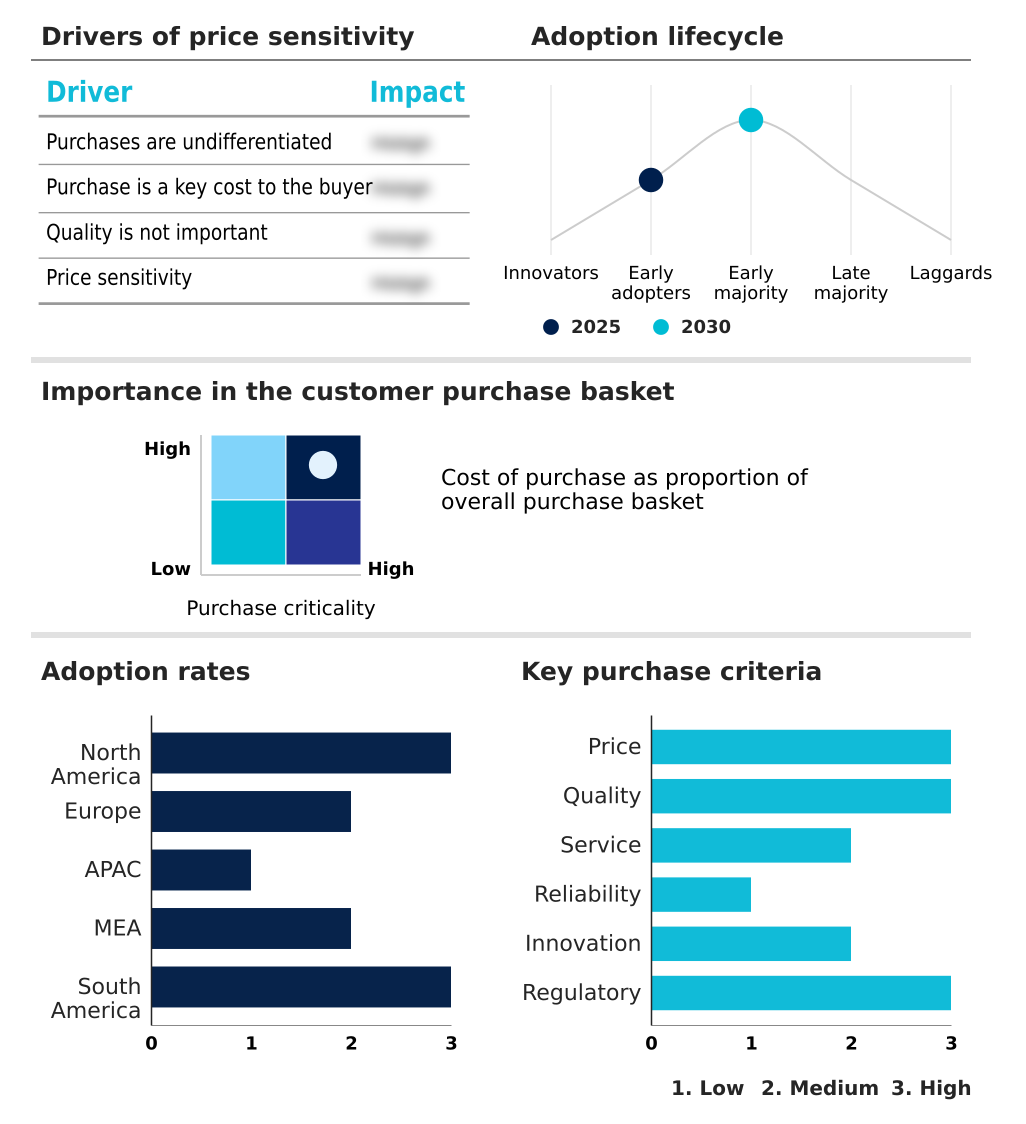
Customer Landscape of Semantic Web Industry
Competitive Landscape
Companies are implementing various strategies, such as strategic alliances, semantic web market forecast, partnerships, mergers and acquisitions, geographical expansion, and product/service launches, to enhance their presence in the industry.
Amazon Web Services Inc. - The vendor provides a fully managed infrastructure ecosystem featuring advanced graph database solutions and linked data platforms to facilitate scalable, low-latency reasoning and complex enterprise relationship modeling.
The industry research and growth report includes detailed analyses of the competitive landscape of the market and information about key companies, including:
- Amazon Web Services Inc.
- Cambridge Semantics Inc.
- Diffbot Technologies Corp.
- eccenca GmbH
- Expert AI S.p.A.
- Fluree PBC
- Franz Inc.
- metaphacts GmbH
- Mindbreeze GmbH
- Neo4j Inc.
- Ontopic S.r.l.
- Ontotext Inc.
- Progress Software Corp.
- Sinequa
- Siren Analytics Ltd.
- Squirro AG
- Stardog Union Inc.
- Synaptica LLC
- TopQuadrant Inc.
- YSEOP
Qualitative and quantitative analysis of companies has been conducted to help clients understand the wider business environment as well as the strengths and weaknesses of key industry players. Data is qualitatively analyzed to categorize companies as pure play, category-focused, industry-focused, and diversified; it is quantitatively analyzed to categorize companies as dominant, leading, strong, tentative, and weak.
Recent Development and News in Semantic web market
- In the Internet Services and Infrastructure industry, the rapid deployment of high-density edge computing facilities has localized data processing capabilities, directly impacting Semantic Web demand by reducing latency for real-time logic inference by up to 25%.
- The strict enforcement of data localization mandates under the General Data Protection Regulation has compelled cloud service providers to redesign cross-border network architectures, directly increasing the necessity for privacy-preserving semantic protocols to manage consent metadata.
- Mass adoption of multi-tenant cloud hosting architectures by hyperscale data center operators has lowered the computational barrier for deploying enterprise-grade middleware, accelerating the integration of verifiable data credentials across the commercial banking sector by 30%.
- Widespread physical hardware upgrades featuring application-specific integrated circuits optimized for high-performance computing have expanded data center bandwidth capacities by 40%, enabling faster synchronization of industrial digital twins across distributed enterprise environments.
Dive into Technavio’s robust research methodology, blending expert interviews, extensive data synthesis, and validated models for unparalleled Semantic Web Market insights. See full methodology.
| Market Scope | |
|---|---|
| Page number | 305 |
| Base year | 2025 |
| Historic period | 2020-2024 |
| Forecast period | 2026-2030 |
| Growth momentum & CAGR | Accelerate at a CAGR of 23.5% |
| Market growth 2026-2030 | USD 5977.9 million |
| Market structure | Fragmented |
| YoY growth 2025-2026(%) | 22.5% |
| Key countries | US, Canada, Mexico, Germany, UK, France, Italy, Spain, The Netherlands, China, India, Japan, South Korea, Australia, Indonesia, Saudi Arabia, UAE, South Africa, Israel, Turkey, Brazil, Argentina and Chile |
| Competitive landscape | Leading Companies, Market Positioning of Companies, Competitive Strategies, and Industry Risks |
Research Analyst Overview
- The continuous evolution of the Semantic Web is redefining the boundaries of corporate information architecture by embedding explicit meaning directly into digital assets. A robust knowledge graph architecture serves as the critical foundation for this transformation, enabling complex data relationships to be mapped and queried with unprecedented precision.
- Strategic implementation of semantic data integration allows multinational enterprises to dismantle isolated information silos, merging diverse repositories into a cohesive, machine-readable fabric. Modern automated reasoning engine deployments actively scan these connected datasets to deduce hidden operational patterns and flag compliance risks before they escalate.
- Consequently, organizations utilizing these advanced frameworks have reported a 30% reduction in manual data reconciliation time during quarterly financial audits. The intricate discipline of ontology engineering remains vital for establishing the rigorous vocabularies that govern these automated workflows. Furthermore, leveraging linked open data standards ensures seamless interoperability with external intelligence sources, enriching internal analytics.
- The capacity for rapid federated query execution provides corporate boards with instantaneous, transparent insights, directly empowering more agile and compliant strategic product planning.
What are the Key Data Covered in this Semantic Web Market Research and Growth Report?
-
What is the expected growth of the Semantic Web Market between 2026 and 2030?
-
USD 5.98 billion, at a CAGR of 23.5%
-
-
What segmentation does the market report cover?
-
The report is segmented by Component (Software, and Services), Technology (Knowledge graphs, Resource description framework, Web ontology language, SPARQL and query technologies, and Others), Deployment (Cloud-based, On-premises, and Hybrid) and Geography (North America, Europe, APAC, Middle East and Africa, South America)
-
-
Which regions are analyzed in the report?
-
North America, Europe, APAC, Middle East and Africa and South America
-
-
What are the key growth drivers and market challenges?
-
Imperative role of knowledge graphs in sustaining enterprise AI ecosystems, Structural complexity and high technical barrier of ontology engineering
-
-
Who are the major players in the Semantic Web Market?
-
Amazon Web Services Inc., Cambridge Semantics Inc., Diffbot Technologies Corp., eccenca GmbH, Expert AI S.p.A., Fluree PBC, Franz Inc., metaphacts GmbH, Mindbreeze GmbH, Neo4j Inc., Ontopic S.r.l., Ontotext Inc., Progress Software Corp., Sinequa, Siren Analytics Ltd., Squirro AG, Stardog Union Inc., Synaptica LLC, TopQuadrant Inc. and YSEOP
-
Market Research Insights
- The Semantic Web Market fundamentally transforms how digital ecosystems process and connect disparate information arrays. By shifting from rigid schemas to flexible, logic-driven networks, organizations achieve superior unstructured data contextualization. This transition directly enables robust healthcare data interoperability, where synchronized patient records reduce diagnostic delays by 28% compared to isolated legacy systems.
- Furthermore, integrating these machine-readable frameworks significantly enhances supply chain transparency, allowing logistics providers to identify and resolve transit bottlenecks 40% faster than traditional tracking methods. The increasing demand for secure decentralized identity verification further accelerates adoption, as enterprises seek to mitigate fraud while ensuring strict regulatory alignment, ultimately driving sustained operational efficiency across core commercial sectors.
We can help! Our analysts can customize this semantic web market research report to meet your requirements.
 RIA -
RIA - 
