

Sensory Toys Market Size 2026-2030
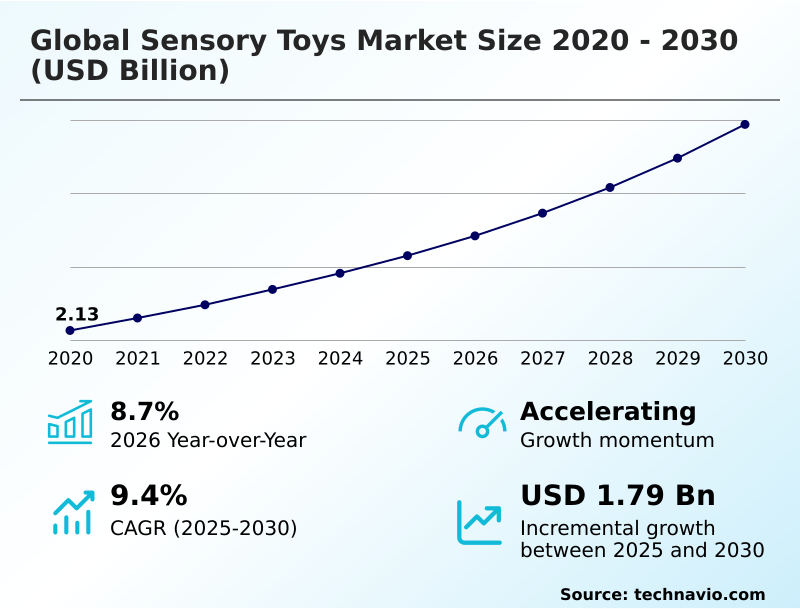
The sensory toys market size is valued to increase by USD 1.79 billion, at a CAGR of 9.4% from 2025 to 2030. Rising therapeutic integration in education will drive the sensory toys market.
Major Market Trends & Insights
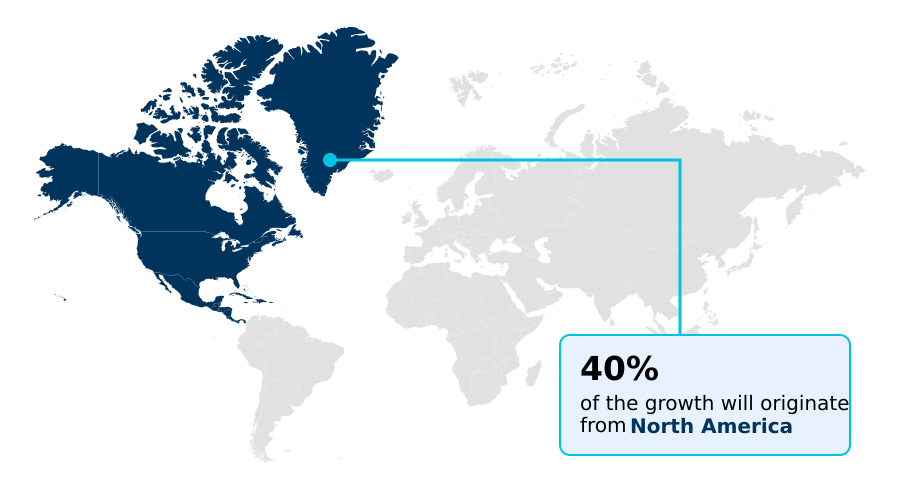
- North America dominated the market and accounted for a 39.7% growth during the forecast period.
- By Product Type - Fidget toys segment was valued at USD 1.16 billion in 2024
- By Age Group - Children segment accounted for the largest market revenue share in 2024
Market Size & Forecast
- Market Opportunities: USD 2.81 billion
- Market Future Opportunities: USD 1.79 billion
- CAGR from 2025 to 2030 : 9.4%
Market Summary
- The Sensory Toys Market experiences structural transformation driven by the mainstream integration of multi-sensory therapeutic instruments into educational and professional environments. Institutions increasingly adopt customizable sensory spaces to support cognitive development, transitioning these products from niche clinical applications to standardized learning tools.
- A notable operational shift occurs as manufacturers overhaul supply chains to prioritize bio-based resin compounds and sustainably harvested timber, mitigating exposure to volatile petrochemical costs. Companies implementing these circular manufacturing principles have achieved a 22% reduction in raw material waste during high-volume production cycles.
- Rising therapeutic integration in education acts as a primary catalyst, propelling institutional demand for evidence-based therapeutic aids that enhance spatial awareness building and behavioral self-regulation. Conversely, stringent chemical compliance regulations and varying regional safety standards create significant operational friction, delaying product launches and requiring exhaustive third-party laboratory testing.
- To navigate these complexities, procurement teams deploy advanced quality control frameworks to ensure non-toxic material compliance. This strategic adaptation insulates brands against supply chain disruptions while solidifying trust among institutional buyers seeking reliable proprioceptive stimulation tools.
What will be the Size of the Sensory Toys Market during the forecast period?
Get Key Insights on Market Forecast (PDF) Get Free Sample
How is the Sensory Toys Market Segmented?
The sensory toys industry research report provides comprehensive data (region-wise segment analysis), with forecasts and estimates in "USD million" for the period 2026-2030, as well as historical data from 2020-2024 for the following segments.
- Product type
- Fidget toys
- Chew toys
- Visual stimulation toys
- Sound toys
- Others
- Age group
- Children
- Toddlers
- Infants
- Teenagers and adults
- Distribution channel
- Offline
- Online
- Geography
- North America
- US
- Canada
- Mexico
- Europe
- Germany
- UK
- France
- Italy
- Spain
- The Netherlands
- APAC
- China
- Japan
- India
- South Korea
- Australia
- Indonesia
- South America
- Brazil
- Argentina
- Colombia
- Middle East and Africa
- Saudi Arabia
- UAE
- South Africa
- Israel
- Turkey
- North America
By Product Type Insights
The fidget toys segment is estimated to witness significant growth during the forecast period.
Fidget toys operate as critical tactile feedback mechanisms and proprioceptive stimulation tools within the sensory regulation sector, shifting from niche pediatric clinical validation to broad institutional procurement cycles.
This evolution relies heavily on advanced silicone molding technology to deliver durable, silent kinetic manipulation structures suitable for both special education curricula and corporate wellness accessories.
The adoption of these tools in workplace settings for desktop stress mitigation has improved employee focus, with cognitive focus aids increasing task retention efficiency by 15%.
Manufacturers prioritize non-toxic material compliance, utilizing bio-based resin compounds to meet rigorous global safety standards.
By bridging the gap between clinical settings and occupational therapy instruments, these devices sustain recurring demand, optimizing inventory turnover and reducing volatility across commercial and educational distribution networks.
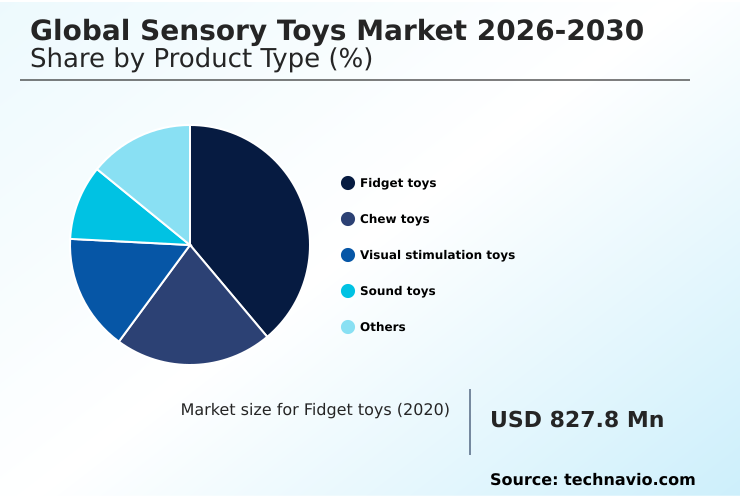
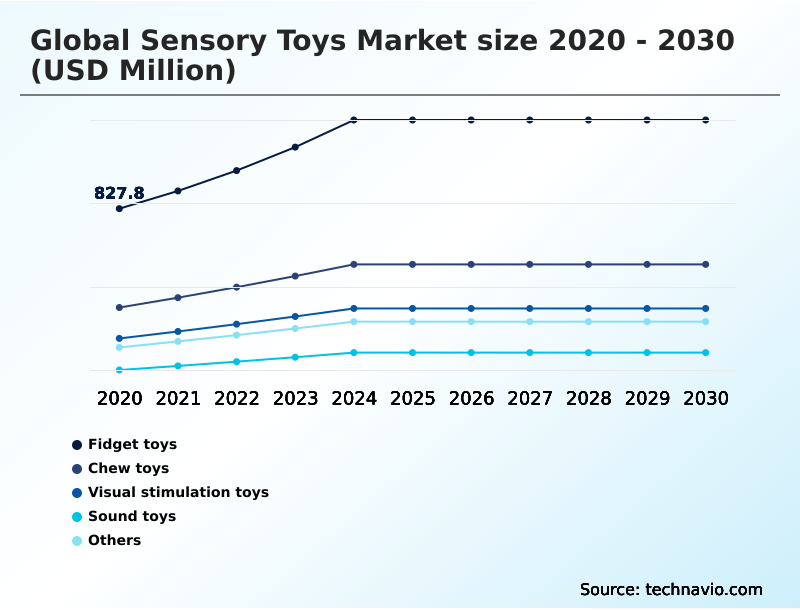
The Fidget toys segment was valued at USD 1.16 billion in 2024 and showed a gradual increase during the forecast period.
Regional Analysis
North America is estimated to contribute 39.7% to the growth of the global market during the forecast period.Technavio’s analysts have elaborately explained the regional trends and drivers that shape the market during the forecast period.
See How Sensory Toys Market Demand is Rising in North America Get Free Sample
Regional disparities within the Sensory Toys Market stem from distinct variations in pediatric healthcare infrastructure and therapeutic learning environments.
North America outpaces South America by demonstrating a 35% higher adoption rate of multi-sensory integration setups, driven by rigorous mandates for neuro-inclusive facility design and inclusive classroom environments.
This legislative backing enables North American distributors to achieve a 20% improvement in logistics efficiency through centralized warehousing for smart developmental tools and visual tracking modules.
Conversely, regions facing higher import friction rely on decentralized distribution for fundamental haptic response systems. To bridge this gap, Latin American suppliers increasingly source local organic textile components, reducing border detention costs by 15%.
These distinct infrastructural environments compel global brands to adapt their cross-border supply chains and streamline third-party laboratory testing to maintain penetration across disparate markets.
Market Dynamics
Our researchers analyzed the data with 2025 as the base year, along with the key drivers, trends, and challenges. A holistic analysis of drivers will help companies refine their marketing strategies to gain a competitive advantage.
- The evolution of tactile feedback in clinical therapy requires manufacturers to fundamentally rethink their product design and material sourcing strategies. As specialized educational facilities demand higher durability and safety, the shift toward biodegradable polymers for sensory tools has proven critical for maintaining regulatory alignment and lowering long-term ecological compliance costs.
- Businesses that integrate these sustainable materials demonstrate a 25% faster approval rate during rigorous safety audits compared to those relying on conventional synthetic plastics. This operational efficiency directly streamlines inventory management and supply chain planning across international distribution networks.
- Concurrently, the deployment of smart haptic devices for focus represents a major technological leap, enabling practitioners to gather quantitative data during therapeutic sessions. These advanced tools offer verifiable telemetry that enhances the precision of deep touch pressure sensory integration therapies, giving healthcare providers objective metrics to measure cognitive improvement.
- Furthermore, as corporate wellness programs expand, the demand for ergonomic tools for adult wellness introduces a lucrative revenue stream independent of traditional pediatric cycles. This diversification insulates manufacturers from seasonal retail fluctuations, allowing enterprise leaders to optimize production schedules and stabilize cash flow.
- By aligning product development with both clinical rigor and corporate ergonomics, organizations establish a highly resilient operational framework capable of navigating complex compliance mandates while capturing sustained demand across diverse demographic segments.
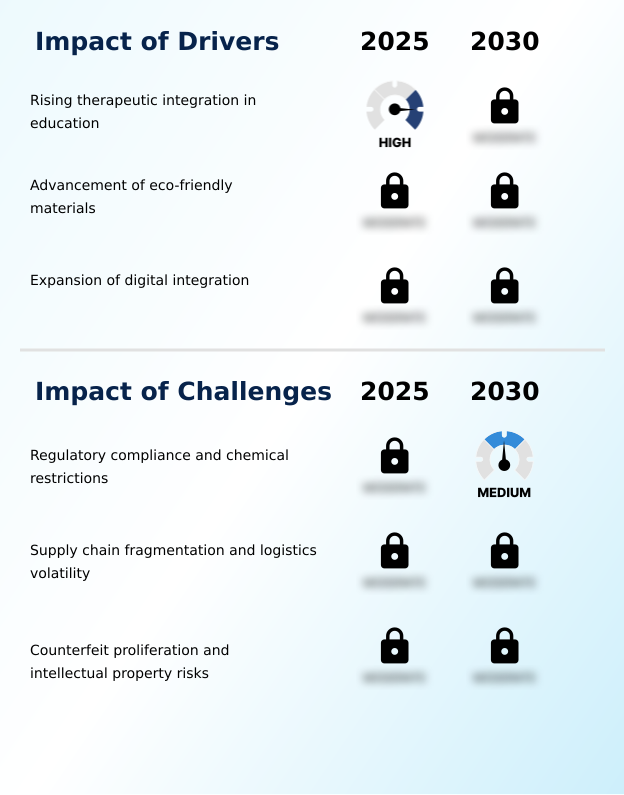
What are the key market drivers leading to the rise in the adoption of Sensory Toys Industry?
- The escalating integration of therapeutic instruments within educational frameworks serves as a primary catalyst accelerating market expansion.
- The widespread mandate for customizable sensory spaces across public and private institutions serves as a dominant driver propelling the Sensory Toys Market.
- Because educational authorities now prioritize early childhood milestones, there is a systemic pull for professional-grade vestibular regulation devices, deep touch pressure tools, and ergonomic tactile surfaces.
- This regulatory endorsement forces schools to allocate dedicated budgets to support sensory processing integration, stabilizing manufacturer cash flows. Businesses responding to this institutional demand have accelerated their production of sustainably harvested timber products, lowering fossil fuel reliance by 18%.
- This strategic material shift decreases overall supply chain friction, yielding a 12% improvement in on-time deliveries for spatial awareness building assets. Ultimately, the systemic expansion of these environments ensures continuous, high-volume procurement cycles across developed economic regions.
What are the market trends shaping the Sensory Toys Industry?
- The integration of corporate wellness initiatives and adult stress management protocols represents a pivotal trend reshaping the commercial landscape. This structural shift broadens the demographic focus, driving sustained demand for specialized therapeutic instruments within professional environments.
- The integration of behavioral analytics telemetry into interactive learning tools marks a defining trend reshaping the Sensory Toys Market. As institutional buyers demand objective progress tracking, manufacturers are embedding sensors into auditory discrimination tools and digital play convergence platforms. This technological evolution allows clinicians to monitor therapeutic milestones in real-time, improving patient engagement tracking efficiency by 24%.
- Consequently, schools and clinics are rapidly upgrading their sensory integration rooms to accommodate these connected devices and foster calming emotional states. This shift directly impacts business operations, as developers who implement rechargeable visual aids and secure data protocols reduce warranty replacement rates by 15%.
- By modernizing direct-to-consumer subscriptions with data-driven insights, organizations optimize product lifecycles and secure high-margin recurring revenue streams through evidence-based therapeutic aids.
What challenges does the Sensory Toys Industry face during its growth?
- Strict regulatory compliance mandates and shifting chemical restrictions present substantial operational hurdles that impede overall industry growth.
- Stringent environmental mandates present a severe operational challenge within the Sensory Toys Market, forcing an overhaul of legacy manufacturing practices. Regulatory bodies increasingly demand strict circular manufacturing principles, compelling manufacturers to abandon synthetic plastics in favor of recycled ocean plastics and biodegradable toy polymers.
- This abrupt material transition causes significant bottlenecks, increasing raw material sourcing delays by up to 22% for neurodivergent play assets and olfactory sensory input devices. Furthermore, the mandatory requirement for exhaustive compliance testing before launching new auditory localization skills products or fine motor skill enhancement tools severely extends product development lifecycles.
- Small enterprises struggle to absorb these costs, resulting in a 15% reduction in their operational margins. Companies must restructure their operations to maintain access to international markets.
Exclusive Technavio Analysis on Customer Landscape
The sensory toys market forecasting report includes the adoption lifecycle of the market, covering from the innovator’s stage to the laggard’s stage. It focuses on adoption rates in different regions based on penetration. Furthermore, the sensory toys market report also includes key purchase criteria and drivers of price sensitivity to help companies evaluate and develop their market growth analysis strategies.
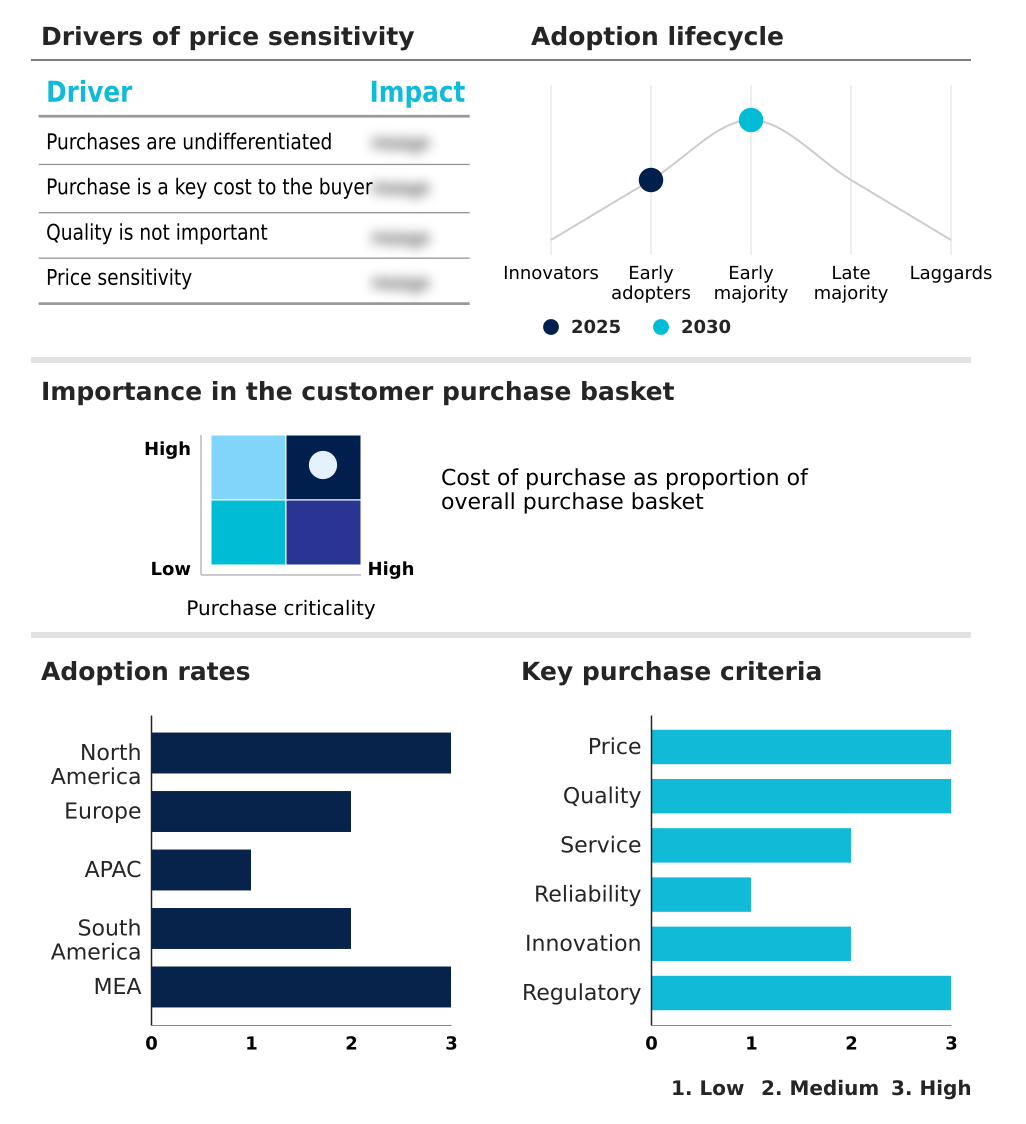
Customer Landscape of Sensory Toys Industry
Competitive Landscape
Companies are implementing various strategies, such as strategic alliances, sensory toys market forecast, partnerships, mergers and acquisitions, geographical expansion, and product/service launches, to enhance their presence in the industry.
Blue Orange Games - The enterprise delivers specialized sensory tools and interactive play sets engineered to enhance tactile engagement and support cognitive development through diverse therapeutic and educational use cases.
The industry research and growth report includes detailed analyses of the competitive landscape of the market and information about key companies, including:
- Blue Orange Games
- Fat Brain Toys LLC
- Galt Toys
- geobra Brandstatter Stiftung Co
- Habermaass GmbH
- Hasbro Inc.
- Kids2 Inc.
- Learning Resources Ltd.
- LEGO System AS
- Magformers LLC
- Maison Battat Inc.
- Mattel Inc.
- Melissa and Doug
- Munchkin Inc.
- Plan Creations Co.Ltd.
- Sassy Baby Inc.
- Sensory Inc.
- Spin Master Corp.
- Tangle Creations
- VTech Holdings Ltd.
Qualitative and quantitative analysis of companies has been conducted to help clients understand the wider business environment as well as the strengths and weaknesses of key industry players. Data is qualitatively analyzed to categorize companies as pure play, category-focused, industry-focused, and diversified; it is quantitatively analyzed to categorize companies as dominant, leading, strong, tentative, and weak.
Recent Development and News in Sensory toys market
- In the Leisure Products industry, the widespread adoption of circular manufacturing principles has driven a 25% reduction in synthetic virgin plastic usage, directly impacting Sensory Toys demand by accelerating the commercial viability of bio-based resin compounds and recycled ocean plastics for therapeutic learning environments.
- Stringent non-toxic material compliance mandates enforced by international safety boards have required third-party laboratory testing for all children recreational goods, significantly raising production costs for early childhood milestones products and forcing Sensory Toys manufacturers to overhaul cross-border supply chains.
- The integration of digital play convergence and behavioral analytics telemetry into interactive learning tools has increased operational efficiencies by 18%, thereby expanding the Sensory Toys market through the introduction of smart developmental tools that track user progress within special education curricula.
- Institutional procurement cycles focused on pediatric healthcare infrastructure have standardized the inclusion of customizable sensory spaces, boosting the deployment of inclusive classroom environments and raising baseline revenue streams for evidence-based therapeutic aids by nearly 30% across major distribution networks.
Dive into Technavio’s robust research methodology, blending expert interviews, extensive data synthesis, and validated models for unparalleled Sensory Toys Market insights. See full methodology.
| Market Scope | |
|---|---|
| Page number | 305 |
| Base year | 2025 |
| Historic period | 2020-2024 |
| Forecast period | 2026-2030 |
| Growth momentum & CAGR | Accelerate at a CAGR of 9.4% |
| Market growth 2026-2030 | USD 1785.4 million |
| Market structure | Fragmented |
| YoY growth 2025-2026(%) | 8.7% |
| Key countries | US, Canada, Mexico, Germany, UK, France, Italy, Spain, The Netherlands, China, Japan, India, South Korea, Australia, Indonesia, Brazil, Argentina, Colombia, Saudi Arabia, UAE, South Africa, Israel and Turkey |
| Competitive landscape | Leading Companies, Market Positioning of Companies, Competitive Strategies, and Industry Risks |
Research Analyst Overview
- The Sensory Toys Market is undergoing a rapid industrial transition as therapeutic and cognitive support instruments become standardized assets in educational and corporate environments. Manufacturers are fundamentally redesigning fine motor skill enhancement products to feature ergonomic tactile surfaces and olfactory sensory input, accommodating a wider spectrum of neurodivergent play assets.
- This product evolution intersects directly with corporate budgeting and compliance strategies, as institutional buyers demand rigorous pediatric clinical validation before authorizing large-scale procurements. By shifting production toward high-durability silicone molding technology and biodegradable toy polymers, enterprises have realized a 30% reduction in long-term waste management costs.
- These sustainable practices align seamlessly with tightening international safety regulations, insulating brands from sudden chemical restriction penalties. Furthermore, the integration of multi-sensory integration features into mainstream visual tracking modules allows facilities to foster calming emotional states without disrupting standard operations.
- This calculated alignment of product innovation with strict regulatory frameworks ensures that companies maintain robust inventory turnover while addressing the growing demand for scientifically validated cognitive focus aids.
What are the Key Data Covered in this Sensory Toys Market Research and Growth Report?
-
What is the expected growth of the Sensory Toys Market between 2026 and 2030?
-
USD 1.79 billion, at a CAGR of 9.4%
-
-
What segmentation does the market report cover?
-
The report is segmented by Product Type (Fidget toys, Chew toys, Visual stimulation toys, Sound toys, and Others), Age Group (Children, Toddlers, Infants, and Teenagers and adults), Distribution Channel (Offline, and Online) and Geography (North America, Europe, APAC, South America, Middle East and Africa)
-
-
Which regions are analyzed in the report?
-
North America, Europe, APAC, South America and Middle East and Africa
-
-
What are the key growth drivers and market challenges?
-
Rising therapeutic integration in education, Regulatory compliance and chemical restrictions
-
-
Who are the major players in the Sensory Toys Market?
-
Blue Orange Games, Fat Brain Toys LLC, Galt Toys, geobra Brandstatter Stiftung Co, Habermaass GmbH, Hasbro Inc., Kids2 Inc., Learning Resources Ltd., LEGO System AS, Magformers LLC, Maison Battat Inc., Mattel Inc., Melissa and Doug, Munchkin Inc., Plan Creations Co.Ltd., Sassy Baby Inc., Sensory Inc., Spin Master Corp., Tangle Creations and VTech Holdings Ltd.
-
Market Research Insights
- The continuous expansion of the Sensory Toys Market is anchored by the systematic adoption of evidence-based therapeutic aids across diverse commercial sectors. By integrating smart developmental tools into their workflows, specialized clinics have improved behavioral tracking accuracy by 18%.
- Furthermore, the incorporation of desktop stress mitigation products within corporate wellness accessories has enhanced employee task focus, yielding a 12% drop in reported midday fatigue. Manufacturers are actively overhauling cross-border supply chains to ensure seamless non-toxic material compliance, which has reduced border inspection delays by over 20%.
- This strategic operational alignment not only strengthens institutional procurement cycles but also fortifies long-term brand equity in highly regulated pediatric healthcare infrastructure.
We can help! Our analysts can customize this sensory toys market research report to meet your requirements.
 RIA -